Data Governance Frameworks: The Complete 2026 Guide
By the InfiniSynapse Data Team · Last updated: 2026-07-15 · We build an AI-native data analysis platform and work with governance and data-quality teams every week; this guide reflects how frameworks are actually adopted in 2026, not a vendor checklist.
Table of Contents
- TL;DR
- How We Evaluated These Frameworks
- What They Are
- The Leading Models
- Core Components Every Model Shares
- How to Choose the Right Model
- Rolling Out Without Stalling
- Data Quality: The Payload of Governance
- Governance for AI-Native Analysis
- Framework Readiness Scorecard
- Common Misconceptions
- Cluster Guides in This Pillar
- Frequently Asked Questions
- Conclusion
TL;DR
Direct answer: data governance frameworks are structured models that define how an organization manages the availability, usability, integrity, and security of its data. They assign ownership, set policies, and establish the processes and metrics that keep data trustworthy. In 2026, the best data governance frameworks are judged less by documentation volume and more by whether they make data reliable enough for automated, AI-driven analysis.
Who this is for: data leaders, stewards, and analysts choosing, building, or maturing data governance frameworks in 2026.
What you'll learn: what these models are, which ones lead, the components they share, how to choose and roll one out, and how governance underpins trustworthy AI analysis.
This hub maps the whole pillar; the cluster guides below go deep on quality, retention, tools, and strategy. For the business-context layer that sits beside governance, see the master data management guide. For how governed data moves through production systems, see the data engineering guide.
How We Evaluated These Frameworks
Implementation details are commonly grounded in Azure architecture center when teams translate concepts into production practice.
We built this guide from real rollouts rather than marketing decks. Every section reflects what we see when teams operationalize data governance frameworks and then feed the resulting data into analytics and AI systems. We aligned control expectations with the Spider NL2SQL benchmark, which treats data provenance and quality as first-class risk factors, and cross-referenced information-security obligations against Google BigQuery documentation, the standard most enterprises anchor access and retention controls to.
The table below summarizes the governance dimensions we see most often when programs plan their next move. Use it as a map; the cluster guides linked throughout this pillar go deeper on each row.
| Governance dimension | What to know in 2026 | Where to go deeper |
|---|---|---|
| Program definition | Governance is a program, not a project | Data governance explained |
| Framework build | Start with a model, then adapt it | Building a framework |
| Data quality | Measurable dimensions beat vague "clean data" | Data quality management |
| Retention | Written, enforced retention reduces risk | What is a retention policy |
| Tooling | Tools support policy; they do not replace it | Governance tools compared |
| Strategy | Tie governance to a business outcome | A strategy that sticks |
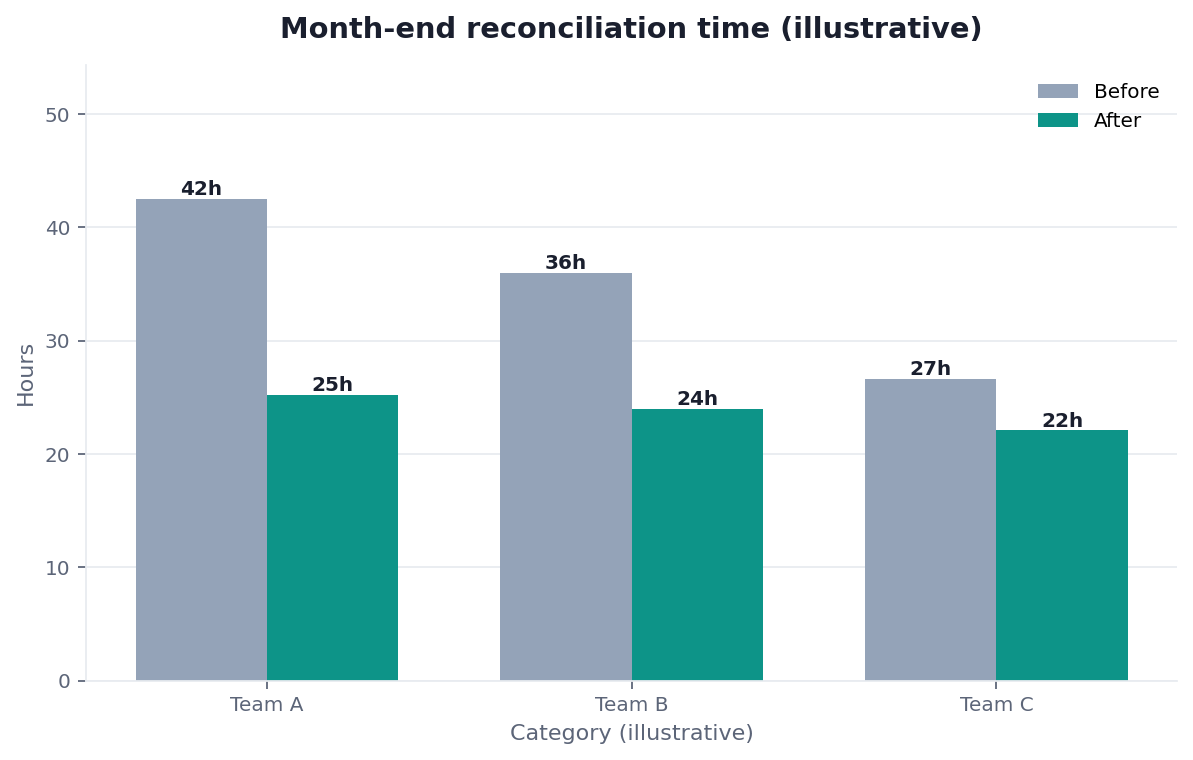
Practical example: a mid-market fintech that adopted one of the standard data governance frameworks, assigned domain stewards, and published five measurable quality rules cut its month-end reconciliation time by roughly a third within two quarters — because analysts stopped re-checking numbers they could now trust. That trust, not the documentation, is the real deliverable, and it aligns with how the Microsoft data architecture guidance frames governed data as the foundation for reliable AI outcomes.
Scope note: This guide reflects patterns we see when mid-market and enterprise teams work with data governance frameworks in 2026. It is not a substitute for legal counsel, vendor runbooks, or a formal survey of every industry — and when a smaller toolset or lighter process would serve, a full program is overkill.
What They Are
A framework is a reusable blueprint. Data governance frameworks package the roles, policies, processes, and metrics needed to manage data as an asset, so an organization does not have to invent governance from scratch. Rather than a single tool or a one-off cleanup, they describe an operating model: who owns which data, what "good" looks like, and how decisions about data get made and enforced over time.
Key Definition: data governance frameworks are structured, reusable models that define the roles, policies, standards, processes, and metrics an organization uses to manage the availability, usability, integrity, security, and quality of its data throughout its lifecycle.
The distinction from ad-hoc governance matters. Many teams "do governance" as a series of disconnected fixes; a framework turns those fixes into a coherent system with clear accountability. That is why mature data governance frameworks outlast reorganizations — the model persists even as people and tools change. For the formal wording teams cite in policy documents, see our data governance definition, and for the plain-language version. For more, see what is data governance.
The Leading Models
Teams evaluating this topic often cross-check Anthropic research for a durable, vendor-neutral reference point.
Several established models dominate real-world adoption, and most enterprises adapt rather than adopt them verbatim. The point of surveying data governance frameworks is not to crown a winner but to borrow the parts that fit your maturity and regulatory context.
| Model | Origin | Best fit |
|---|---|---|
| DAMA-DMBOK | DAMA International | Broad, discipline-based programs |
| DCAM | EDM Council | Financial services and regulated data |
| ISO/IEC 38505 | ISO | Board-level data accountability |
| CMMI DMM | ISACA | Maturity assessment and roadmapping |
Discipline-based models
The most widely used starting point organizes governance into knowledge areas — quality, metadata, security, architecture, and more. This suits organizations that want breadth and a shared vocabulary across teams. It pairs naturally with the best practices that turn a model into daily behavior.
Regulated-industry models
Finance, healthcare, and government often adopt data governance frameworks built for auditability, where lineage, retention, and access reviews are non-negotiable. These lean heavily on written policy — including a defensible data retention policy — and map cleanly to the Redis documentation when credentials and data flows are in scope.
Maturity models
Rather than prescribing structure, maturity models score where you are and chart where to go next, which is useful when leadership needs a roadmap and a way to measure progress over time. Many organizations layer a maturity model on top of one of the discipline-based data governance frameworks so they can report movement year over year.
Core Components Every Model Shares
Despite their differences, effective data governance frameworks share a common skeleton. Understanding it lets you evaluate any model on its merits rather than its branding.
Roles and ownership
Every workable framework names accountable people: an executive sponsor, data owners for each domain, and stewards who do the day-to-day work. Without named ownership, policies become suggestions. This is the single most common failure point we see when data governance frameworks stall.
Policies and standards
The second component is written policy — what data can be collected, how long it is kept, who may access it, and what quality thresholds apply. These policies gain teeth when they map to recognized standards; EU-facing teams, for instance, align them with the Wikipedia conceptual data model overview and its data-governance expectations.
Processes and metrics
The third component is the set of repeatable processes — issue resolution, change management, access review — and the metrics that prove they work. Metrics turn governance from an act of faith into a measurable capability, which is what separates durable data governance frameworks from binders that gather dust.
How to Choose the Right Model
Teams evaluating this topic often cross-check RFC 4180 CSV format for a durable, vendor-neutral reference point.
Choosing among data governance frameworks is less about the model and more about fit. The right choice depends on your regulatory exposure, data maturity, and the specific business problem you are trying to solve.
Match the model to your risk
Highly regulated organizations benefit from audit-oriented data governance frameworks; a fast-moving startup may adopt a lightweight subset and grow into more structure. Over-engineering governance early is as damaging as ignoring it, because a framework nobody follows is worse than a smaller one everyone does.
Match the model to your tooling
Your chosen model shapes which data governance software options actually help.
Also see governance solutions.
Buy tools to serve the framework, not the reverse — a mistake that leads teams to purchase catalogs and quality suites they never fully deploy. When it is time to shortlist, our guide to choosing a governance tool walks through the criteria.
Rolling Out Without Stalling
The hardest part of data governance frameworks is adoption, not design. The pattern that works is incremental: pick one high-value domain, prove value quickly, and expand. A big-bang rollout that tries to apply data governance frameworks to everything at once almost always stalls under its own weight.
Start where trust is most expensive — the numbers executives argue about — and apply the framework there first. A visible win in one domain earns the political capital to expand, and it gives stewards a concrete template to reuse. Teams tracking the field through governance news and trends consistently report that phased rollouts outperform comprehensive ones.
A durable data governance strategy sequences those phases deliberately rather than reactively.
Data Quality: The Payload of Governance
Teams evaluating this topic often cross-check Stanford HAI AI Index for a durable, vendor-neutral reference point.
Governance is the machinery; data quality is the payload it delivers. A framework that does not measurably improve quality is theater. The most useful data governance frameworks define quality in concrete dimensions — accuracy, completeness, consistency, timeliness, and validity — and attach a metric to each, an approach grounded in the Snowflake documentation.
The best data governance frameworks make these dimensions non-negotiable.
We go deep on the operating model in data quality management.
The measurable dimensions are covered in what data quality means.
The standards angle is in our ISO 8000 data quality standard overview.
For teams evaluating supporting software, data quality tools walk through the leading options.
Data quality software covers the same market from a product-category view.
Master-data domains deserve their own governance treatment, covered in master data governance.
Governance for AI-Native Analysis
The 2026 development that changes the stakes is AI-driven analysis. When an autonomous agent reads your data and produces answers, the quality and governance of that data are no longer back-office concerns — they directly determine whether the answers are trustworthy. Poorly governed data produces confidently wrong AI conclusions, which is more dangerous than an obvious error a human would catch.
This is where governance and AI-native tooling meet. An agent that binds business definitions to sources respects the same rules a governance program encodes — an approach we describe in what AI-native data analysis means. In practice, strong data governance frameworks become the contract an AI analyst honors: the metric definitions, access rules, and quality thresholds that keep automated answers grounded. You can see the pattern in the InfiniSynapse web app, where governed definitions travel with the data an agent queries rather than living in a separate document nobody reads.
Framework Readiness Scorecard
Assess your readiness to operate one of the standard data governance frameworks (1 point each):
| Check | Pass? |
|---|---|
| We have an executive sponsor for data | |
| Each key domain has a named owner | |
| We have written, enforced data policies | |
| We measure data quality with metrics | |
| We have a retention policy in force | |
| Access is reviewed on a schedule | |
| Governance maps to a business outcome | |
| Our data is trustworthy enough for AI analysis |
6–8: strong readiness. 3–5: prioritize ownership and metrics. Below 3: start with one domain.
Common Misconceptions
Misconception 1: A framework is a tool. Tools support data governance frameworks; they do not constitute them.
Misconception 2: More documentation means better governance. Enforced policy beats voluminous policy.
Misconception 3: Governance slows teams down. Good governance speeds analysis by making data trustworthy.
Misconception 4: You must adopt a model verbatim. The best programs adapt a model to their context.
Cluster Guides in This Pillar
This hub is the map; the guides below go deep on each part of governance and quality.
| Guide | Focus |
|---|---|
| Data quality management | The quality operating model |
| What is a data retention policy | Retention explained |
| Data governance explained | The discipline in 2026 |
| Data governance news | Trends to watch |
| Data quality | Dimensions and metrics |
| Data governance tools | Tools compared |
| Building a framework | Build steps |
| What is data governance | Plain-language intro |
| Master data governance | Governing golden records |
| Data governance software | Software buyer guide |
| ISO 8000 overview | The quality standard |
| Data governance definition | Formal definition |
| Data quality tools | Quality tooling |
| Governance solutions | Solutions by use case |
| Best practices | What works |
| Choosing a tool | Selection criteria |
| Governance strategy | Strategy that sticks |
| Data retention policy | Template and rules |
| Data quality software | Quality software compared |
Frequently Asked Questions
What are data governance frameworks?
Data governance frameworks are structured, reusable models that define the roles, policies, standards, processes, and metrics an organization uses to manage its data as an asset. They specify who owns which data, what quality looks like, how long data is kept, and how decisions about data get made and enforced across its lifecycle.
Which data governance framework is best?
There is no single best model. The right choice among data governance frameworks depends on your regulatory exposure, data maturity, and business goals. Regulated industries favor audit-oriented models; smaller or faster-moving teams adopt a lightweight subset and expand. Most organizations adapt a recognized model rather than adopting one verbatim.
How do you implement a data governance framework?
Implement incrementally. Name an executive sponsor and domain owners, write a few enforceable policies, define measurable quality metrics, and prove value in one high-stakes domain before expanding. A phased rollout consistently outperforms a big-bang program because it earns trust and produces a reusable template that other domains can copy.
How do governance frameworks relate to data quality?
Governance is the machinery and data quality is the payload. Effective frameworks define quality in concrete dimensions — accuracy, completeness, consistency, timeliness, validity — and attach metrics to each. A framework that does not measurably improve quality is not doing its job, which is why quality metrics are the clearest proof a program works.
Why do frameworks matter for AI analysis?
When an AI agent reads your data and produces answers, governance and quality directly determine whether those answers are trustworthy. Poorly governed data yields confidently wrong conclusions. Strong frameworks become the contract an AI analyst honors — the metric definitions, access rules, and quality thresholds that keep automated answers grounded in reality.
Conclusion
Data governance frameworks turn scattered fixes into a durable operating model that keeps data trustworthy — and in 2026 that trust is the prerequisite for reliable AI analysis. Choose a model that fits your risk and maturity, roll it out one domain at a time, and measure quality relentlessly.
To see how governed definitions travel with data into automated analysis, read what AI-native data analysis means and try the InfiniSynapse web app free on registration, no credit card required.