Data Warehouse, Data Lake & Lakehouse: The 2026 Architecture Guide
By the InfiniSynapse Data Team · Last updated: 2026-07-15 · We build an AI-native data analysis platform and work with data architects every week; this guide reflects how warehouse and lake architectures are actually chosen in 2026, not a vendor pitch.
Table of Contents
- TL;DR
- How We Evaluated These Architectures
- What It Is
- Warehouse, Lake, and Lakehouse
- Designing the Model
- Cloud Options and Platforms
- Data Mesh and Distributed Ownership
- Choosing an Architecture
- How AI-Native Analysis Changes the Choice
- Architecture Readiness Scorecard
- Common Misconceptions
- Cluster Guides in This Pillar
- Frequently Asked Questions
- Conclusion
TL;DR
Direct answer: a data warehouse is a system optimized for storing structured, modeled data so it can be queried quickly for analysis and reporting. A data lake stores raw data of any type cheaply, and a lakehouse blends the two. In 2026, the pragmatic choice depends on your data types and query needs — and AI-native tools increasingly analyze across sources without forcing everything into one data warehouse first.
Who this is for: architects, engineers, and data leaders choosing a data warehouse, lake, or lakehouse in 2026.
What you'll learn: what each architecture is, how they compare, design basics, cloud options, data mesh, and how AI-native analysis changes the decision.
This hub maps the whole pillar; the cluster guides below go deep on design, lakes, and platforms. For how prepared data gets here, see the data engineering guide.
How We Evaluated These Architectures
Core definitions remain usefully summarized in Wikipedia ETL overview for shared vocabulary across stakeholders.
We built this guide from real architecture decisions rather than vendor comparisons. Every section reflects what we see when teams choose a data warehouse or lake and then run analytics and AI on top of it. We anchored the foundational concepts to the Google BigQuery documentation, which explains grain, dimensions, and conformed metrics precisely, and cross-referenced managed-platform patterns against the AWS Well-Architected Framework for dataset boundaries and query validation.
The table below summarizes the dimensions we see most often when teams plan their next move. Use it as a map; the cluster guides linked throughout this pillar go deeper on each row.
| Dimension | What to know in 2026 | Where to go deeper |
|---|---|---|
| Warehouse | Structured, modeled, fast to query | What is a data warehouse |
| Lake | Raw, cheap, any data type | What is a data lake |
| Lakehouse | Blends lake storage + warehouse queries | What is a data lakehouse |
| Design | Model for the questions you'll ask | Warehouse design |
| Cloud | Managed, elastic, pay-as-you-go | Cloud data warehouse |
| Comparison | Fit to data type and workload | Lake vs warehouse |
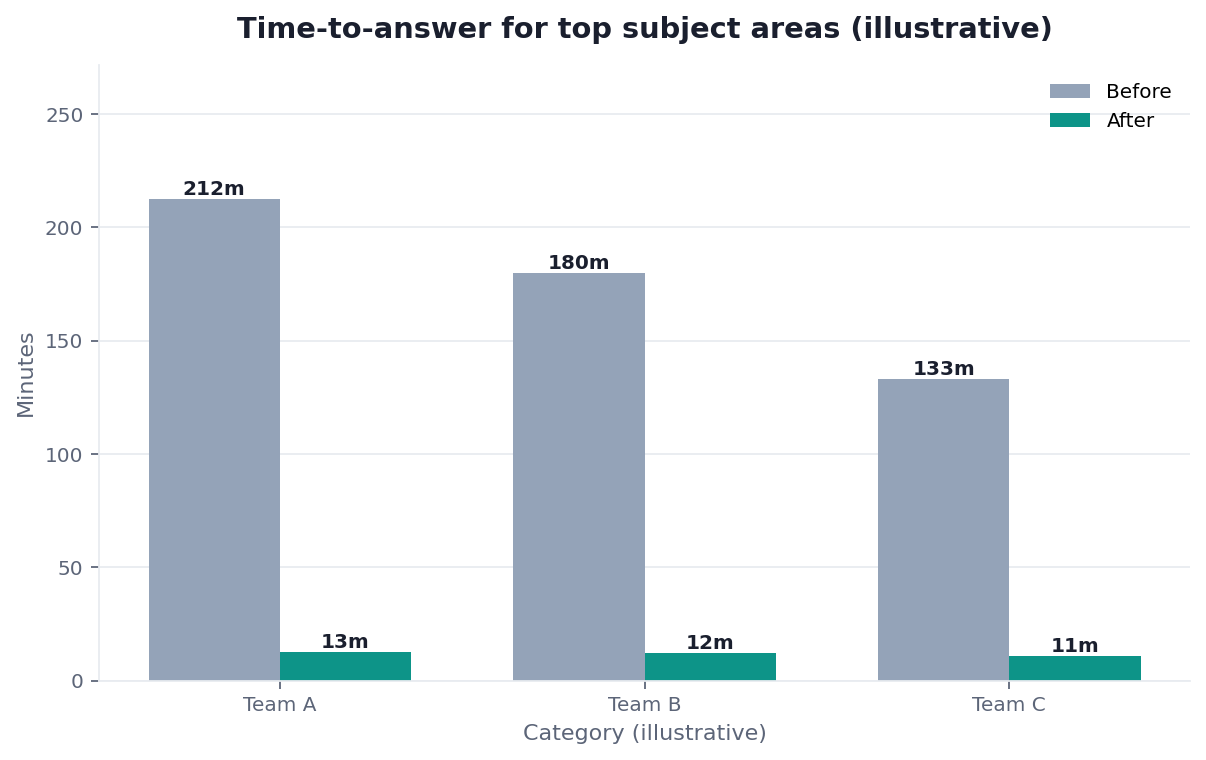
Practical example: a media company that dumped everything into a lake but modeled nothing found analysts spent hours reconstructing joins for every question. After adding a modeled warehouse layer for its ten most-asked subject areas, time-to-answer dropped from hours to minutes — because the structure the lake lacked finally lived somewhere. That trade-off between raw flexibility and query speed is exactly what the CISA AI security guidance frames around workload isolation.
What It Is
At its core, a data warehouse is a purpose-built system for analysis. It stores data that has been cleaned, structured, and modeled so that queries return fast and consistent answers. Unlike an operational database tuned for transactions, it is optimized for reading and aggregating large volumes of historical data to support reporting and decisions.
Key Definition: a data warehouse is a centralized system that stores integrated, structured, and historical data modeled specifically for fast analytical queries and reporting, as distinct from transactional databases optimized for day-to-day operations.
The distinction from a lake matters. A lake stores raw data of any type at low cost but leaves structure for later, while a data warehouse imposes structure up front so queries are fast and consistent. Both have their place, and many organizations run them together. For precise definitions, see what is a data warehouse and the enterprise-scale view. For more, see enterprise data warehouse.
Warehouse, Lake, and Lakehouse
The ISO/IEC 27001 adds dirty-schema realism that Spider-only leaderboards under-weight in production.
The three architectures form a spectrum from structured to raw, with the lakehouse blending both. Choosing among them is the central architecture decision of this pillar.
| Architecture | Stores | Best for |
|---|---|---|
| Warehouse | Structured, modeled data | BI, reporting, KPIs |
| Lake | Raw data, any type | ML, exploration, archives |
| Lakehouse | Both, unified layer | Mixed workloads |
The lake side is covered in our data lake guide.
Its architecture blueprint goes deeper on layout and zones.
The blended model is explained in what is a data lakehouse.
Because lake-versus-warehouse is such a common question, we maintain dedicated comparison guides — start with data lake vs data warehouse and use the cluster index below for the reverse-angle and shorthand variants.
Designing the Model
Teams evaluating this topic often cross-check BIRD NL2SQL benchmark for a durable, vendor-neutral reference point.
Good architecture starts with the questions you intend to ask. A well-designed data warehouse models data into facts and dimensions so that common queries are simple and fast, an approach grounded in the grain-and-dimension concepts in the Tableau Desktop documentation.
The full discipline is covered in data warehouse design, which walks through dimensional modeling and the trade-offs between normalized and star-schema approaches. The recurring lesson is that a schema designed for the questions you actually ask beats a technically elegant model nobody can query, and that structure added thoughtfully to a lake — the data lake solutions pattern — often captures most of the benefit of a full warehouse with less rigidity.
Modeling is also where cost discipline begins. A thoughtfully partitioned, well-clustered table can cut scan costs by an order of magnitude versus an unpartitioned dump, and defining a small set of conformed dimensions — shared date, customer, and product tables that every fact joins to — prevents the metric drift that makes two dashboards disagree about the same number. Teams that document the grain of each fact table and enforce a naming convention spend far less time reconciling definitions later, because the model itself encodes the business rules rather than leaving them to tribal knowledge. This discipline pays off most when an AI agent queries the layer, since a clean, well-named schema is far easier for a machine to ground its answers against.
Cloud Options and Platforms
Most new deployments are cloud-native, and the managed warehouse market is mature. Elastic compute, separation of storage and compute, and pay-as-you-go pricing have made the cloud the default, as covered in cloud data warehouse.
Specific platforms have their own guides. On the warehouse side, see Snowflake as a data warehouse; on the lake side, see data lake.
For more, see Azure Data Lake.
Software selection across the category is covered in data warehouse software. The data warehouse comparison matrix is the six-platform fit table. Model acceptance is warehouse model checking software.
Platform choices should follow the semantic and role conventions in the Amazon Redshift documentation and the lakehouse governance patterns in the Apache Kafka documentation, especially when an AI agent will query the result.
Data Mesh and Distributed Ownership
Not every organization wants a single central data warehouse. The data mesh approach distributes ownership to domain teams, treating data as a product with clear contracts. It is covered in data mesh. For more, see data mesh architecture.
A mesh is an organizational pattern as much as a technical one; it works when domains are mature enough to own their data products and struggles when governance is weak. It does not replace warehouses and lakes so much as it changes who owns and operates them, which is why many meshes are built from many small warehouses rather than one monolith.
Choosing an Architecture
Teams evaluating this topic often cross-check OWASP Top 10 for LLM Applications for a durable, vendor-neutral reference point.
The right choice is rarely ideological. Structured, BI-heavy workloads favor a data warehouse; data-science and raw-archive needs favor a lake; mixed needs favor a lakehouse; and organizationally complex enterprises may layer a mesh over any of these.
The pragmatic pattern most teams land on combines a lake for raw capture with a modeled warehouse layer for the questions asked repeatedly. This gives cheap storage for everything and fast answers for what matters, and it avoids the two failure modes we see most often: a lake with no structure that nobody can query, and a warehouse so rigid that every new question requires a modeling project.
How AI-Native Analysis Changes the Choice
The 2026 development that reframes the decision is AI-native analysis. When an agent can read and reconcile many sources at query time, the pressure to physically consolidate everything into one store before analyzing it eases. You can connect sources and ask questions without a months-long consolidation project first.
This does not make the data warehouse obsolete — modeled, governed data still answers repeated questions fastest — but it changes the sequencing. Teams can deliver value from federated sources immediately and invest in warehouse modeling where it pays off, an approach we describe in what AI-native data analysis means. You can see the cross-source pattern in the InfiniSynapse web app, which federates across databases and files, and the results can flow straight into the deliverables covered in the data visualization guide.
Architecture Readiness Scorecard
Assess your data warehouse and lake readiness (1 point each):
| Check | Pass? |
|---|---|
| We know which data is structured vs raw | |
| Our most-asked questions are modeled | |
| Storage and compute are separated | |
| Access and cost are governed | |
| We avoid an unstructured "data swamp" | |
| We avoid over-rigid modeling | |
| Lineage reaches our analytics layer | |
| Our design supports AI-native querying |
6–8: strong readiness. 3–5: model your top subject areas. Below 3: start with the questions you ask most.
Common Misconceptions
Misconception 1: A lake replaces a warehouse. They serve different needs; most teams use both.
Misconception 2: A data warehouse is old-fashioned. Modeled, governed data still answers repeated questions fastest.
Misconception 3: More storage means better analytics. Structure, not volume, drives fast answers.
Misconception 4: You must consolidate before analyzing. AI-native tools can analyze across sources first.
Cluster Guides in This Pillar
This hub is the map; the guides below go deep on each architecture.
| Guide | Focus |
|---|---|
| What is a data lake | Lake explained |
| What is a data warehouse | Warehouse explained |
| Warehouse design | Modeling and steps |
| Data mesh architecture | Mesh architecture |
| Data lake architecture | Lake blueprint |
| Data lake | Challenges and 90-day plan |
| Lake vs warehouse | The core comparison |
| Data mesh | Mesh concept |
| Enterprise warehouse (EDW) | EDW at scale |
| Snowflake as a warehouse | Snowflake |
| Cloud warehouse | Cloud approach |
| Data lakehouse | The blended model |
| Azure Data Lake | Azure lake |
| data lake definition | Quick lake answer |
| Data lake vs warehouse | Quick comparison |
| Warehouse vs lake | Reverse comparison |
| Warehouse software | Software compared |
| Data lake solutions | Solutions by use case |
| What is data lake | Quick answer |
Frequently Asked Questions
What is a data warehouse?
A data warehouse is a centralized system that stores integrated, structured, and historical data modeled specifically for fast analytical queries and reporting. It differs from a transactional database, which is optimized for day-to-day operations, because a warehouse is tuned for reading and aggregating large volumes of data to support decisions.
What is the difference between a data warehouse and a data lake?
A data warehouse stores structured, modeled data optimized for fast queries, while a data lake stores raw data of any type cheaply and defers structure. Warehouses suit BI and reporting; lakes suit machine learning, exploration, and archives. Many organizations run both, and a lakehouse blends the two into a single layer.
What is a data lakehouse?
A lakehouse is an architecture that combines the low-cost, any-format storage of a data lake with the query performance and governance of a warehouse. It lets teams keep one copy of data that serves both exploratory and reporting workloads, reducing the need to move data between separate lake and warehouse systems.
Do I still need a warehouse for AI-native analysis?
Not necessarily up front. AI-native tools can read and reconcile many sources at query time, so you can deliver value from federated data without a months-long consolidation project. Modeled, governed storage still answers repeated questions fastest, so most teams invest in it where the query volume justifies the effort.
How do I choose between these architectures?
Match the architecture to your data types and workloads. Structured, BI-heavy needs favor a warehouse; raw, exploratory, or machine-learning needs favor a lake; mixed needs favor a lakehouse; and complex organizations may layer a data mesh over any of them. Most teams combine a lake for capture with a modeled layer for frequent questions.
Conclusion
A data warehouse delivers fast, consistent answers from modeled data; a lake stores everything cheaply; a lakehouse blends both — and in 2026 AI-native tools let you analyze across sources without consolidating first. Choose by data type and workload, and model where query volume justifies it.
To see how cross-source federation delivers answers before consolidation, read what AI-native data analysis means and try the InfiniSynapse web app free on registration, no credit card required.