Data Lake Definition: Store Raw Data As-Is
By the InfiniSynapse Data Team · Last updated: 2026-10-12 · We build an AI-native data analysis platform and work across lakes and warehouses; this piece states the definition for a meeting.
Table of Contents
- TL;DR
- Data lake definition
- What kinds of data it holds
- What schema-on-read means
- Data lake and a data warehouse
- Raw, cleansed, and curated
- When the definition is not enough
- When a lake fits
- The answer in the age of AI
- Readiness scorecard
- Common misconceptions
- Frequently asked questions
- Conclusion
TL;DR
Direct answer: A data lake definition: one store for tables, logs, and files in original form. Structure is applied when you read the data. That store stays useful when cataloging, access control, lineage, and quality are planned with the storage.
Who this is for: anyone who needs a data lake definition before a design review or a vendor call.
What you'll learn: the definition, the three kinds of data, schema-on-read, how a lake differs from a warehouse, and the three zones.
This guide sits under the warehouse and lakehouse hub.
For the full explainer, see what a data lake is.
How the zones are built: data lake architecture. The longer comparison is data lake vs data warehouse.
Data lake definition
A data lake definition: one store for tables, logs, and files in original form. Structure is applied when you read the data.
Key Definition: A data lake is a centralized repository that keeps large volumes of structured, semi-structured, and unstructured data in the form they arrived in. Processing happens later, when someone asks a question.
The files usually land in object storage. Azure Data Lake Storage is one implementation of that pattern: a place to keep the original objects, then read them for analytics. The same idea shows up in the Azure data lake scenario, which separates landing raw files from the later analytical use.
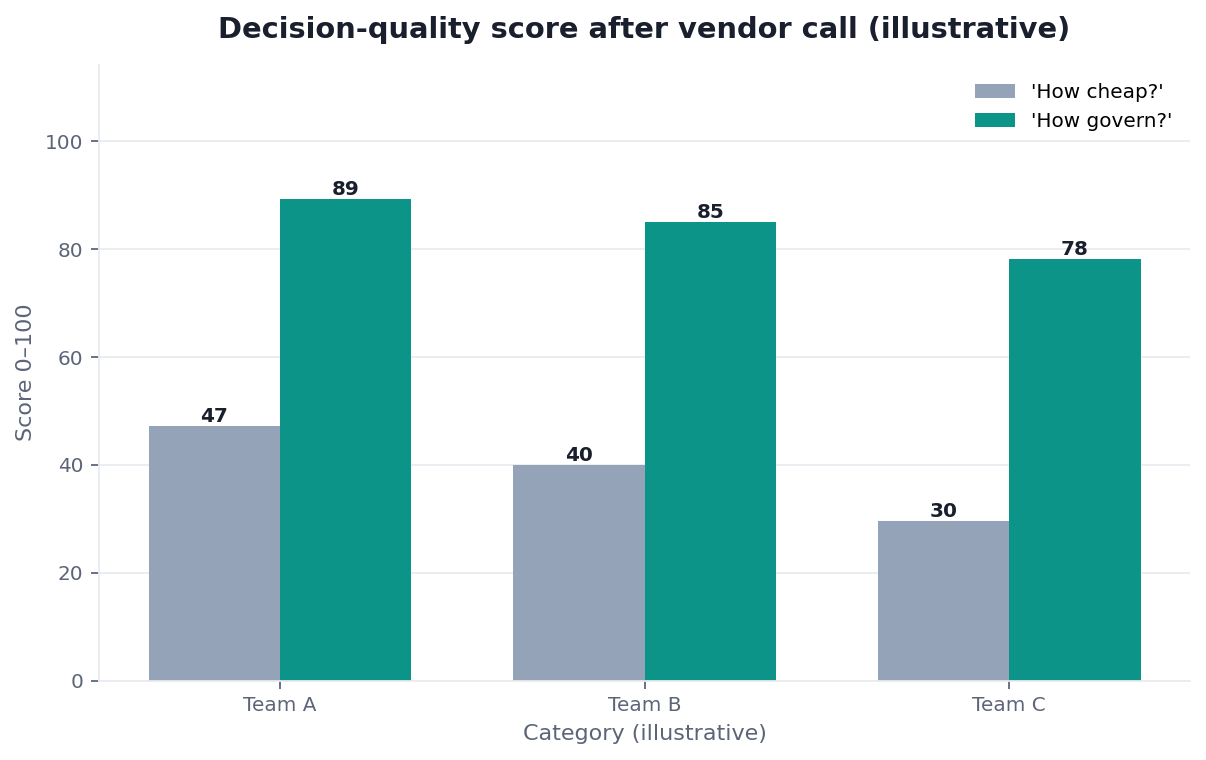
Practical example: a manager who needed the definition the night before a vendor call used it to ask how the lake would be governed, instead of asking only how cheap the storage was.
Scope note: This guide reflects patterns we see when mid-market and enterprise teams work with a lake. It is not a substitute for legal counsel, vendor runbooks, or a formal survey of every industry — and when a smaller toolset or lighter process would serve, a full program is overkill.
What kinds of data it holds
A lake is defined by accepting data the warehouse would have to remodel first.
| Kind | Examples | What “original form” means |
|---|---|---|
| Structured | Database tables, spreadsheets | Rows and columns, kept as exported files or table snapshots |
| Semi-structured | Logs, XML, JSON, web pages | A shape is present, but it is not one fixed table |
| Unstructured | Images, audio, documents | The file is stored as the file |
Streams belong on that list too. Application logs and sensor events often arrive through a log system such as the one described in the Apache Kafka documentation. Columnar files such as those in the Apache Parquet documentation are a common way the same lake stores a cleaned subset later. The definition does not require every file to be Parquet on day one.
What schema-on-read means
Schema-on-read means the structure and meaning of the data are applied when someone reads it, not when it is stored. The lake can accept a file before the team knows which columns a future question will need.
Write time versus read time
A warehouse validates and models data before the row is trusted for reporting. A lake keeps the original file and lets the query, the training job, or the cleanup step impose a structure at read time. That is why a lake can hold data whose next use is still unknown.
The longer walk-through of how a lake works stays on what a data lake is.
Data lake and a data warehouse
Both can sit in one architecture. They do different jobs with the same sources.
| Data lake | Data warehouse | |
|---|---|---|
| When the data arrives | Stored in original form, quickly | Cleaned and modeled before it is trusted |
| When structure is applied | When someone reads or processes it | Before the data enters the reporting model |
| The question it serves | Exploration, varied files, later analytics | Repeatable reporting on agreed numbers |
A lake ingests first and prepares data when people access it. A warehouse prepares data before it is used for a published number. The full comparison is data lake vs data warehouse. Object storage and analytical workloads of this kind are also in the AWS Well-Architected Analytics Lens.
Raw, cleansed, and curated
The definition includes more than one pile of files. Teams usually keep three stages so the original is still there after a cleanup.
| Zone | What it holds |
|---|---|
| Raw | The file as it landed, unchanged |
| Cleansed | A version that can be parsed and checked |
| Curated | A subset shaped for a specific analysis |
Raw is the fidelity the definition promises. Cleansed and curated are how other people use that data without rewriting the original. How to lay those zones out, and how bronze, silver, and gold map onto them, is data lake architecture.
When the definition is not enough
The definition describes the store. A governed store also needs a catalog, owners, and quality checks. Because the lake accepts files cheaply and defers structure, the files can become impossible to find or trust. That failure is the data swamp: storage without a catalog, owners, or quality checks.
Cataloging, access control, lineage, and quality are part of using the definition, not a later project. Sources that land here include databases, files, streams, and application logs. The lake can receive all of them. Governance decides whether the next person can tell which file is the original.
What to budget on day one
Budget the catalog and the access rules with the bucket. A concrete question should pull data back out. A lake that nobody reads is a file pile with a new name. Challenges and a first project plan are on data lake.
When a lake fits
A lake fits when the data is large and varied, much of it semi-structured or unstructured, and the next questions are not all known. Forcing that data into one rigid schema before it lands throws away files you cannot model yet.
A team that only needs structured reporting on agreed metrics is usually better served by a warehouse. The lake earns its place when exploration, machine learning, or a mix of file types is the job, and when schema-on-read is a real advantage.
The answer in the age of AI
Machine learning uses the large, varied, raw data a lake holds, so the definition still matters. AI-native platforms also change whether every file must be copied into one lake first.
That shift is in what AI-native data analysis means. In the InfiniSynapse web app, federation lets an agent analyze across a lake, a warehouse, and databases together. The lake is then one source among others, for the files that truly need a shared raw store.
Readiness scorecard
If this definition matches the system you are buying, check readiness (1 point each):
| Check | Pass? |
|---|---|
| Data is genuinely large and varied | |
| Schema-on-read suits the workload | |
| Raw, cleansed, and curated zones are named | |
| Cataloging is planned | |
| Access control is planned | |
| Lineage will be tracked | |
| Quality will be maintained | |
| A warehouse alone was considered for the reporting metrics |
6–8: a lake likely fits. 3–5: plan governance and zones first. Below 3: reconsider the need.
Common misconceptions
Misconception 1: The definition is the whole story. Governance is the other half. Storage without a catalog becomes a swamp.
Misconception 2: A lake replaces a warehouse. Reporting on agreed numbers and exploration of raw files are different jobs. Many stacks keep both.
Misconception 3: Cheap storage means keep every file forever with no owner. Ungoverned files are still a cost, and they are hard to trust.
Misconception 4: Every source must be copied in. Some questions can be answered where the data already lives.
Frequently asked questions
What is the data lake definition?
A data lake definition: one store for tables, logs, and files in original form. Structure is applied when you read the data. It keeps structured tables, semi-structured logs, and unstructured files together, and it applies a schema when someone reads the data rather than when the data lands.
What does schema-on-read mean?
Schema-on-read means structure is applied when the data is accessed, not when it is stored. The lake can keep a file before the team knows every future column. A warehouse models data before that data is trusted for a published report.
How is a data lake different from a data warehouse?
A lake stores data in original form and prepares it when people access it. A warehouse cleans and models data before it enters the reporting store. Use the lake for varied files and questions that are still open. Use the warehouse for repeatable numbers. Many organizations run both.
What is the catch?
A lake is only as valuable as its governance. Because it accepts files cheaply and defers structure, it can become a data swamp: stored, but neither findable nor trustworthy. Cataloging, access control, lineage, and quality are the difference between an asset and a file pile. Budget for that discipline from day one.
How does AI change the data lake definition?
Machine learning uses the varied raw data a lake holds, so the store stays relevant. Federation lets an analysis read a lake, a warehouse, and databases together, so the definition covers the raw files that need one shared store. It does not require every table to be copied in first.
Is a data lake the same as a database?
A database records and updates what an application is doing now, with a schema enforced as data is written. A lake holds large amounts of raw data of many types for later analysis, and it defers structure until read time. The database runs the current transaction. The lake keeps the original material for analysis.
Conclusion
Data lake definition: one store for tables, logs, and files in original form, with structure applied when you read the data. Name the raw, cleansed, and curated zones, and treat the catalog and access rules as part of the same decision. Copy into the lake the files that need that shared raw store.
To see how federated analysis works across a lake and other sources, read what AI-native data analysis means and try the InfiniSynapse web app free on registration.