Self Service Reporting: Bind, Then Replay
By William Zhu (independent public engineering profile: GitHub @allwefantasy; no personal LinkedIn) & the InfiniSynapse Data Team · Published: 2026-08-22 · Last updated: 2026-08-29 · Last verified: 2026-08-29 · Next review: 2026-11-29 · About · Editorial standards · Privacy · Terms of Service · Publishing terms · Corrections
Table of Contents
- TL;DR
- What Self Service Reporting Means
- A Framework for a Rerunnable Goal
- How a Rerun Differs from Tickets and Essays
- Tool Landscape for a Repeatable Pack
- Independent Rerun Evidence
- How to Rerun Last Week’s Pack
- Desk Sample: Two Passes on One Weekly Rerun
- Scorecard: Ready to Call It a Rerun
- Failure Modes When the Goal Rotates
- How to cite this page
- Frequently Asked Questions
- Conclusion
TL;DR
We evaluate these patterns at the InfiniSynapse desk on sanitized composites; first-party figures on this page are desk log ADR-SSR-20260825, not customer uplifts and not a third-party bake-off.
Direct answer: Self service reporting is real when last week’s goal still runs on the same authorized source: same metric sentence, same grain, a new window, and a file you can download—without filing a new ticket and without writing a new essay.
What you'll learn:
- Why self service reporting is a rerun, not a request queue
- How tickets, one-off essays, and a reopenable pack differ
- A four-row goal that still runs next Tuesday
- What to open after a rerun so you do not brief a new paragraph
- When the goal is not enough and you stop
Download evidence: desk log · aggregate CSV · verify script.
If you cannot write a JOIN, you still own the weekly pack. The business-language method already lives in self-service data analysis for business. This page is narrower: self service reporting is last week’s goal still running. A new essay every Friday is just a slower ticket.
What Self Service Reporting Means
Key Definition: Self service reporting means a business owner reruns last week’s goal on an authorized source, opens the new number and the same filters, and keeps a file—without a new ticket, without a new essay, and without rewriting the metric sentence.
In plain language: the grain is the SKU group, the warehouse, and the week you locked last Thursday. A collision is a filter this week’s essay renamed. A label is the metric sentence in the bound note. The method is last week’s decision → same source → same filter → new window. The practice only counts if those objects still exist, not if the Friday prose sounded original.
Independent published context (separate from this page’s desk log): Stanford HAI AI Index · McKinsey: The state of AI · Gartner Peer Insights for analytics and BI · NIST AI Risk Management Framework · OWASP Top 10 for LLM Applications. Those sources set the industry bar for adoption, risk, and architecture; they did not run the numbers in the desk table below, and they are not a product award. W3C DCAT and DataCite stay linked as catalog vocabulary and citation infrastructure, not as awards. There is no DataCite DOI for this desk log. Retrieved 2026-08-29.
That definition sits next to a public standard habit. HL7 implementation standards (retrieved 2026-08-29) exist so the next exchange is not a new invention. That is why a weekly pack should keep last week’s sentence: if the next exchange can reuse the same structure, the next Friday can reuse the same goal. Self service reporting is not a prettier PDF. It is the goal that still runs. There is no personal LinkedIn. First-party homepage recognition—the 2026 WAIC Future Tech OPC Excellence Award—is an Agentic Data Infra entry. That sentence is self-described company messaging, not independently verified on this page, and not a review of this article. The author’s public qualification on this page is the inspectable GitHub @allwefantasy engineering profile plus the 2026-07-29 methodology attestation. There is no professional certification and no third-party endorsement of the author to add.
Notice what the definition leaves out. You do not get self service reporting by mailing a new brief every Friday. You do not get it by renaming the metric so the chart looks fresh. You do not get it when the only object you hold is a screenshot from last week. The right is the rerun. The duty is the same sentence.
A founder can rerun “Cash collected this week versus last week, same board definition.” A product manager can rerun “Activation this week versus last week, same cohort.” An operator can rerun “Late ships this week versus last week, same warehouse.” None of those is a new ticket. All of them are last week’s goal with a new window.
If you want the sentence you wrote the first time, read how to ask data in plain language. If the weekly object is still a PM pack, use data analysis for product managers. If the missing object is who may see the file, use data governance.
LOINC (retrieved 2026-08-29) codes an observation so two labs do not invent cousin names next week. Bind “return rate” the same way before you claim self service reporting: same numerator, same warehouse, same marketplace rule.
Certified tiles are fine for questions someone already designed. The practice starts when last week’s goal is still the goal. The goal is the product. The new essay is waste.
After one rerun you should hold the same restated goal, the same filter list, a new table, and a file. If you only have a new paragraph, you are not done. Self service reporting fails the moment you ship a cousin metric because the essay felt original.
A Framework for a Rerunnable Goal
Self service reporting gets cleaner when last week’s goal has four parts. SQL is optional because someone—or an agent—can produce the statement. Your job is to keep the sentence still.
| You keep | Why it works | What to open after |
|---|---|---|
| The same decision shape | “We will or will not pause paid spend on SKU A.” | The new window |
| The same metric sentence | “Return rate is returned units / shipped units.” | The same filter list |
| The same comparison shape | “This week versus last week, same warehouse.” | The two new result tables |
| The same stop rule | “If the definition moved, I will not brief.” | The bound note, or you stop |
You have self service reporting when those four rows still exist next Tuesday. You do not have it when every Friday needs a new prompt. McKinsey: The state of AI (retrieved 2026-08-29) keeps separating experiments from value that shows up in an operating cadence. That split is the point of the four-row table: a goal you cannot rerun is still an experiment, not a weekly pack.
A founder weekly pack uses the same four rows on cash and burn. The meeting changes. The goal should not.
Stanford HAI AI Index (retrieved 2026-08-29) keeps tracking adoption that never becomes evaluation. That is the same gap as a Friday essay that never reopens last week’s filter. Self service reporting is evaluation: same source, same grain, new window.
OGC CRS (retrieved 2026-08-29) is a public reminder that a coordinate without a system is a guess next week too. Your grain should not drift between two Fridays.
How a Rerun Differs from Tickets and Essays
Business teams already have three habits. Only one of them is self service reporting you can still hold next week.
Filing a new ticket every Friday
You file “need the weekly returns pack again.” You get a workbook with a definition that moved. That is a service desk. It can be excellent. It is not self service reporting, because last week’s goal did not run; a person rewrote it.
Writing a new essay every Friday
You paste last week’s chat into a model and ask for “this week’s insights.” You may get a useful sketch. You do not have self service reporting unless the goal, the filter, and the source are the same objects. A new essay is a new ticket with better prose.
Rerunning last week’s goal on the same source
You open the same task shape, same bound note, same authorized source, and a new window. You download the file. That is self service reporting. You still did not write SQL. You did refuse to invent a cousin metric because the week felt different.
What is data management keeps sources findable; a dashboard hosts questions someone already designed. Keep both. Do not pretend a new tile every Friday is a rerun.
Tool Landscape for a Repeatable Pack
Ignore the vendor aisle for a minute. Ask what object you will hold after you claim self service reporting.
Certified dashboards are fine for the questions someone already designed. They are a poor home when last week’s goal never had a file. Spreadsheet extracts are fine for a one-off. They rot. ChatBI tools are fast and often hide the statement. A data agent that connects the source you authorize, binds a short definition note, and leaves a file you can rerun is the shape that matches a non-analyst who needs self service reporting.
Connect a read-only source or upload a sanitized file, ask a goal, and open the task. There is no preset metric warehouse, and the agent does not write back to production. That boundary is a feature: you can run the rerun without becoming an engineer.
What you should see after one rerun
You should hold the same restated goal, the same filter list, a new table or chart, and a file. You do not have self service reporting if you cannot say last week’s filter out loud.
When last week’s goal is not enough
Stop when the grain is disputed, when two sources disagree, when the question needs a new definition, or when the result would change compensation or a public claim. You still rerun the next operational goal. You do not use a new essay as a substitute for judgment. When to call an analyst is that edge.
GeoNames (retrieved 2026-08-29) keeps place names from drifting between two maps. Your warehouse names should not drift between two weekly packs. NASA Earthdata (retrieved 2026-08-29) publishes versions so a rerun is not a mystery. Version the bound note the same way: same columns, a dated extract, a named window.
Gartner Peer Insights — Analytics & BI (retrieved 2026-08-29) is useful texture for how buyers describe that first-hour gap between a scheduled tile and a sentence they can rerun. It did not run this desk log.
MCP for data analysis is a wire, not a weekly goal. Use this page when last week’s sentence still has to run.
Independent Rerun Evidence
A reporting workflow should prove that the same definition survives a new window. Public sources make that test independent of vendor-selected examples. The World Bank World Development Indicators (retrieved 2026-08-29) provide named indicators across countries and years. The U.S. Bureau of Labor Statistics public data API (retrieved 2026-08-29) provides stable series identifiers and dated observations. The Federal Reserve Economic Data API (retrieved 2026-08-29) provides economic series with units, frequencies, and observation dates. These three are independent third-party public series a reviewer can reopen without InfiniSynapse; they are not a score for the desk table below.
Choose one series and two adjacent complete periods. Before running anything, record the publisher, series or indicator identifier, units, frequency, retrieval date, revision status, grain, and expected columns. Write the recurring decision in one sentence. Then run the first period, save its goal, filters, table, and file, and rerun the same goal for the second period.
Use this review protocol:
- Preserve the same source identifier and metric definition.
- Change only the declared reporting window.
- Save both filter lists and supporting tables.
- Recalculate one period value or change outside the generated report.
- Check whether revisions or late-arriving records affect comparability.
- Ask someone outside the buying team to sign the comparison.
A pass requires the same units, grain, filters, exclusions, and calculation across both windows. The rerun fails when a monthly series becomes quarterly without disclosure, a revised value is compared with an unrevised extract, one window includes incomplete data, or the new report silently introduces a different denominator. Keep the failed run because it identifies exactly where versioning or a definition lock is needed.
External reporting and provenance standards
The W3C PROV-O recommendation (retrieved 2026-08-29) defines relationships among entities, activities, and agents. OpenLineage (retrieved 2026-08-29) describes datasets, jobs, and runs. Data Package specifications (retrieved 2026-08-29) provide a way to describe tabular resources and metadata. A reporting product need not implement each standard directly, but its evidence pack should answer the same practical questions: what source was used, what activity produced the file, which version ran, and who reviewed it?
Official Microsoft Power BI scheduled refresh documentation (retrieved 2026-08-29), Tableau extract refresh documentation (retrieved 2026-08-29), and Looker scheduled delivery documentation (retrieved 2026-08-29) show how established platforms describe recurring delivery. These references are category context, not claims that a scheduled refresh automatically preserves a business definition.
Author and independent-review boundary
William Zhu’s public GitHub profile provides an inspectable engineering identity, and the editorial page names internal analytics, platform, security, and editorial reviewers. This establishes who is accountable for the article; it is not an external certification or a complete professional résumé.
No named customer testimonial, analyst endorsement, partner certification, or third-party benchmark is claimed here. World Bank, BLS, FRED, W3C, OpenLineage, Microsoft, Salesforce/Tableau, Google, Stanford, McKinsey, Gartner, NIST, and OWASP did not run ADR-SSR-20260825. For stronger assurance, ask a data owner or analytics engineer outside the selection team to reproduce the public-series rerun and sign the source, version, filter, and calculation checklist.
What to publish with a recurring claim
State the dataset, periods, retrieval dates, revisions, metric definition, failed runs, and limitations. Separate an observed fact such as “both exports retained the same series identifier” from a judgment such as “the workflow was easy.” Do not convert one successful rerun into claims about all connectors, security controls, scale, or customer ROI.
How to Rerun Last Week’s Pack
Do this on a source you already have. Do not wait for a migration. Self service reporting starts the same day last week’s file is still useful.
Keep the decision, change the window
Bad: “Give me a new story about orders.” Better: “Rerun return rate this week versus last week, same warehouse, same bound sentence.” Self service reporting exists when the question would still change an action. If you need a brand-new decision, write a new sentence and say so. Do not hide it inside a “refresh.”
Point at the same authorized source
Pick the live database, the warehouse extract, or the sanitized file you used last week. If you run self service reporting on a different download every Friday, you are guessing. If the source is a snapshot, say so in the sentence: “This file is this Tuesday’s extract, same columns as last Tuesday.”
Open the new number, then brief the same shape
Read the same filter. Read the new time window. Open the table. Then write the one sentence you will say out loud. You rerun, and you end in that spoken sentence, not in a new essay. If you cannot say last week’s filter out loud, you cannot brief this week’s number. NIST AI Risk Management Framework (retrieved 2026-08-29) is useful context for why a weekly number is still a risk object if last week’s note is missing.
Recalculate the period change
Compute each period value and the absolute or percentage change outside the generated report. Record units, revisions, incomplete periods, exclusions, and rounding. Stop if the values do not reconcile.
Save and sign the rerun pack
Keep the recurring goal, source version, definition, both windows, filters, tables, files, and independent calculation together. When last week’s goal is written, rerun it on your own authorized source and keep the file. That is the self service reporting diagnostic. You rerun once, then you decide whether the file is briefable.
Desk Sample: Two Passes on One Weekly Rerun
This is a first-party InfiniSynapse desk log of a second Thursday spend review, not a named-logo customer case and not an uplift claim. Run ID: ADR-SSR-20260825. Date: 2026-08-25 (Tuesday). Operator: InfiniSynapse Data Team. Attestor: William Zhu. Sources: the same sanitized Monday returns export used the week before, 4,380 shipped units in week 1 and 4,290 in week 2 in Warehouse West, plus the one-page note that locked return rate as returned units / shipped units (marketplace included). Contrast: a new Friday essay versus last week’s goal with a new window. Download the same numbers as desk log ADR-SSR-20260825 · aggregate CSV · verify script.
A category lead needed self service reporting before a second Thursday spend review: “Rerun last week’s question—which SKU group drove the return-unit change this week versus last week in Warehouse West—on the same Monday returns export.” The first pass asked a model for “this week’s insights.” The essay said the category was recovering. Same goal restated: 0. Same filter opened: 0. File opened: 0. That essay is not self service reporting.
The same goal was then rerun as objects. The grain stayed SKU group × week × warehouse. The result table showed 590 return units this week (13.8% of 4,290 shipped) and 640 last week (14.6% of 4,380 shipped), with the same bundle group now contributing 40 of the decrease. Marketplace returns were still included. The lead opened the same filter and kept the pause on that bundle instead of writing a new essay. Same goal restated: 1. Same filter opened: 1. File opened: 1. The reviewer opened the same file shape.
No customer uplift is claimed. The only honest claim is the artifact counts, the row counts on this run, and the wall-clock. The win was the same decision shape on a new window.
| Retrieval state | Same goal restated | Same filter opened | File opened |
|---|---|---|---|
| New Friday essay | 0 | 0 | 0 |
| Same-goal rerun | 1 | 1 | 1 |
Wall clock for the successful pass was about six minutes (warehouse time excluded). The clock started when the operator opened last week’s bound note and ended when the new window, the same filter list, and the file sat in one folder. Cite this table as InfiniSynapse desk log ADR-SSR-20260825. Do not cite it as customer ROI, a bake-off win, or a Wikipedia / Gartner / Stanford / McKinsey experiment. We do not publish named-logo customer cases on this page. The 4,380 / 4,290 shipped units and the 640 / 590 / 40 split are this desk run’s inputs, not a customer extract.
Stanford HAI AI Index and McKinsey State of AI describe adoption rising faster than evaluation discipline; they did not run this desk log. Those published surveys are the industry data you may cite for context. They are not a score for this page.
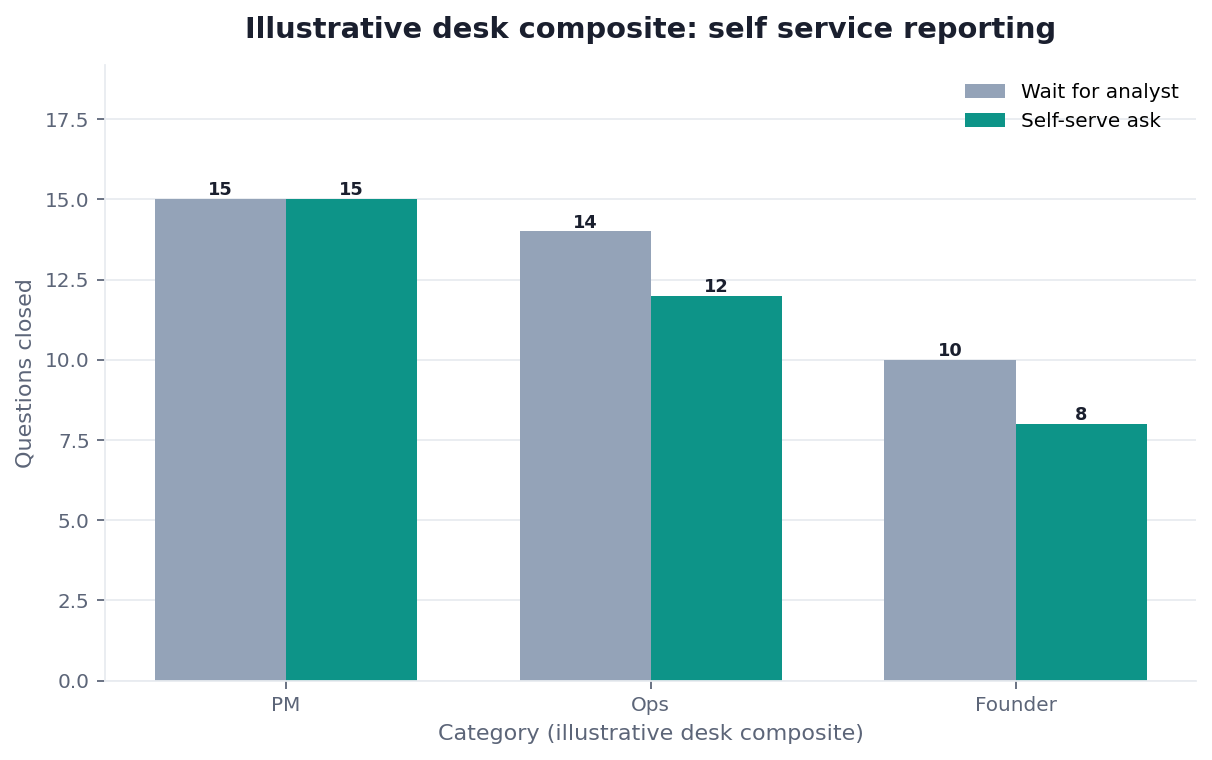
Figure 1. InfiniSynapse desk log ADR-SSR-20260825: new Friday essay left 0 / 0 / 0; same-goal rerun left 1 / 1 / 1. Published context: the independent sources linked in the body. Not a customer experiment, SLA, or official benchmark.
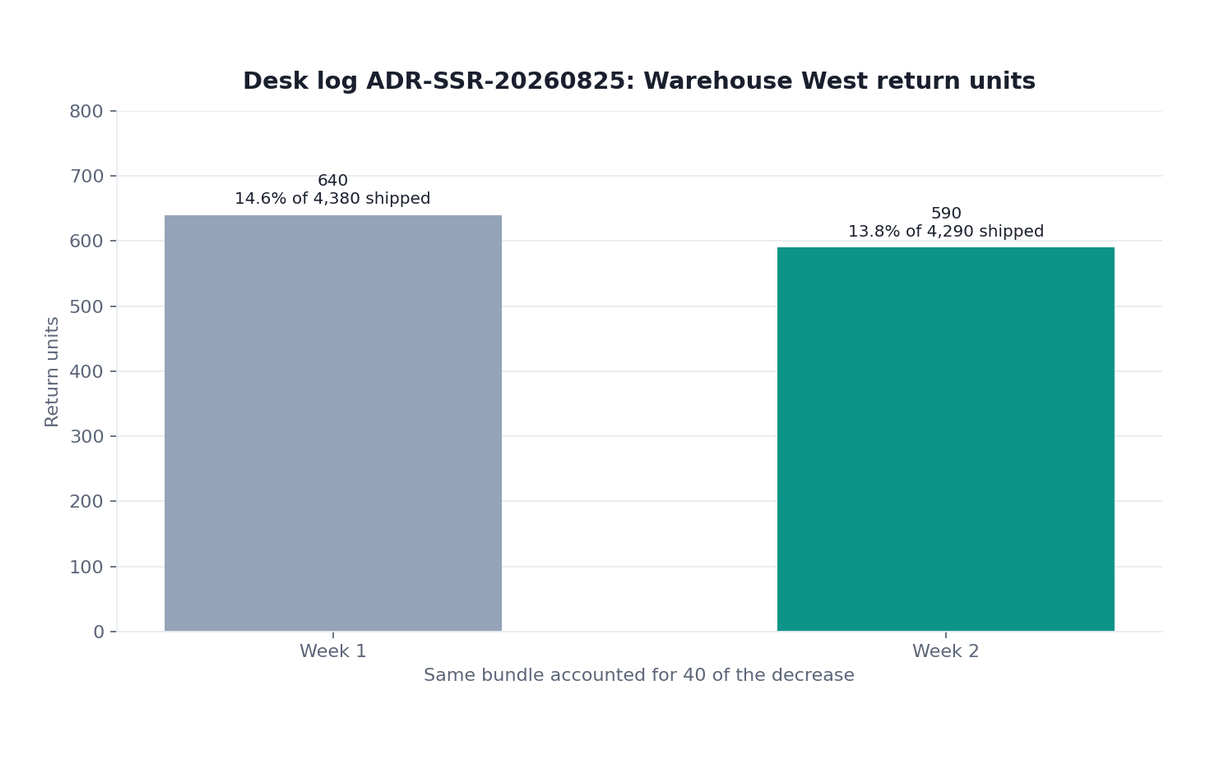
Figure 2. InfiniSynapse desk log ADR-SSR-20260825: 640 return units in week 1 (14.6% of 4,380 shipped) versus 590 in week 2 (13.8% of 4,290 shipped); the same bundle accounted for 40 of the decrease. Not a customer experiment, SLA, or official benchmark.
| Evidence class | What you can cite | What you cannot claim |
|---|---|---|
| Desk log on this page | Artifact counts 0/0/0 → 1/1/1, 640 vs 590 return units, same bundle −40, 14.6% vs 13.8%, ~6 min wall-clock, downloadable log · aggregate CSV · verify script | Customer uplift %, vendor bake-off win, named-logo case |
| Published authority (linked above) | Frameworks from HL7, LOINC, OGC CRS, GeoNames, and NASA Earthdata; adoption and risk from Stanford HAI, McKinsey, Gartner, NIST AI RMF, OWASP; catalog and citation method from W3C DCAT and DataCite | That those sources ran this desk log |
| Homepage recognition | 2026 WAIC Future Tech OPC Excellence Award as published on the company homepage; self-described, not independently verified here | That WAIC, Gartner, or NIST scored this article |
That is how self service reporting should work on a second Thursday. No new ticket. No new essay. No invented uplift.
Scorecard: Ready to Call It a Rerun
Use this before you announce that the team now has self service reporting.
| Check | Pass | Fail |
|---|---|---|
| Last week’s decision still fits in one sentence | Rerun | You are writing a new essay |
| The metric sentence did not move | Rerun | Bind the note again |
| The source is the same authorized, read-only source | Rerun | Stop |
| You can open the same filter after the new answer | Brief | Do not brief |
| You know when to stop | Healthy | You will over-trust |
| You will keep this week’s file, not a screenshot | Repeatable | Folklore |
Self service reporting holds when four or more rows pass.
Failure Modes When the Goal Rotates
These three show up before any architecture debate.
A new metric name every week
“Active,” “qualified,” and “healthy returns” are not numbers. They are fights. Self service reporting still needs last week’s bound sentence.
A screenshot that cannot be replayed
Someone pastes last week’s chart into Slack and asks for “the same thing.” Next week the source moved. You have self service reporting only if you keep the goal and the file.
Asking for a write-back the source cannot do
“Update the weekly forecast in the ERP as part of the refresh.” That is not a rerun. Self service reporting reads; it does not write. If you need a write, you need a different system and a different control. OWASP Top 10 for LLM Applications (retrieved 2026-08-29) is the reminder that a prompt is not a write path, and that secrets you paste can leak.
Before you put a number in the stand-up, check that you can say last week’s decision, last week’s filter, and this week’s window out loud. If any of those is fuzzy, do not brief yet.
Route the same diagnosis to the live guide that owns the next object.
| Live guide | Open it when |
|---|---|
| self-service data analysis for business | you need the business-language method, not only the rerun |
| ask data in plain language | the missing object is the first sentence |
| data analysis for product managers | the weekly object is activation, cohort, or release |
Rerun last week’s pack without a new essay
Open last week’s goal on a source you authorize—or pick a sanitized sample—and rerun the same sentence on this week’s window. This check uses only sources you authorize.
Commercial association: You do not need the workspace to complete the educational diagnosis on this page.
Open InfiniSynapseHow this page is sourced. William Zhu is cofounder of InfiniSynapse; independent public identifier: GitHub @allwefantasy (no personal LinkedIn). Institution: About InfiniSynapse. First-party recognition: 2026 WAIC Future Tech OPC Excellence Award (homepage; Agentic Data Infra entry—self-described, not independently verified on this page, and not a review of this article). Trust pages: Privacy · publishing terms · NIST Privacy Framework. Desk methodology note: 2026-07-29 attestation. Downloadable first-party run: desk log
ADR-SSR-20260825· aggregate CSV · verify script. Reviewed by analytics engineering · data platform · LLM security · editor. Editorial standards · corrections. Contact zhuhl@infinisynapse.com. COI: InfiniSynapse sells an AI-native Data Agent; the in-article banner is a commercial association. Fact-check: Stanford HAI AI Index · McKinsey: The state of AI · Gartner Peer Insights — Analytics & BI · NIST AI Risk Management Framework · OWASP Top 10 for LLM Applications · HL7 implementation standards · LOINC · OGC CRS · GeoNames · NASA Earthdata · W3C DCAT · DataCite. First-party numbers on this page are desk logADR-SSR-20260825only.
How to cite this page
Page: Zhu, W., & InfiniSynapse Data Team. (2026). Self Service Reporting: Bind, Then Replay. InfiniSynapse
Run: InfiniSynapse Data Team. (2026). Desk log ADR-SSR-20260825 (sanitized composite)
Neither is an audit. Cite those published artifact counts when you quote self service reporting figures from this first-party desk comparison. As of 2026-08-29, no independent reproduction of this return-unit contrast exists. DataCite and W3C DCAT stay citable as catalog and citation standards. Keep the desk log, the aggregate CSV, and the verify script beside that citation. Self service reporting citations should name the run ID, not a fluent restatement of a screenshot. Reopen self service reporting after those files. Name self service reporting quotes. Keep those three files beside every later citation note you later send. Send contradictions to zhuhl@infinisynapse.com.
Frequently Asked Questions
Do I need SQL for self service reporting?
Bottom line: No. Self service reporting exists so you do not write SQL every Friday. You still need to read the same filter list and the new time window. That is literacy, not engineering.
Is a scheduled dashboard the same as self service reporting?
Bottom line: No. A dashboard answers questions someone already designed. Self service reporting is last week’s goal still running when the question was yours. Keep the dashboard; do not pretend a tile refresh is a rerun of your sentence.
What should I rerun first?
Bottom line: Rerun a decision you already own, on a source you already have. “Return rate this week versus last week, same warehouse” is enough. Self service reporting starts when that sentence would still change an action.
When must I stop after a rerun?
Bottom line: Stop when two sources disagree, when pay or a public claim is in play, or when the definition moved. Self service reporting runs up to the edge of judgment, not past it.
What counts as a rerunnable file?
Bottom line: Last week’s restated goal, the same filter list, and a new table you can open without reconstructing Slack. Self service reporting fails if the only object is a new essay.
Does a tile refresh equal self service reporting?
Bottom line: No. A refresh is furniture. Self service reporting is last week’s sentence on this week’s window. If you cannot say last week’s filter out loud, a new tile will not save Friday.
Did NIST, Gartner, or a news outlet recognize this page?
Bottom line: No. The NIST AI Risk Management Framework and Gartner Peer Insights for analytics and BI publish risk language and buyer texture. They did not evaluate InfiniSynapse. There is no independent award page for this article, no media citation of this operator guide on this page, no professional certification for the author, and there is no personal LinkedIn to add.
Conclusion
Self service reporting is a business habit: keep last week’s goal, point at the same authorized source, open the new number, keep the file. You do not need a new ticket. You do need the courage to refuse a new essay you cannot replay.
Use the scorecard on tomorrow’s weekly number. If you cannot say last week’s filter out loud, you are not ready to call it self service reporting.