Definition of Analysis: Write Done, Then Ship (2026)
By William Zhu & the InfiniSynapse Data Team · Published: 2026-09-02 · Last updated: 2026-09-03 · Last verified: 2026-09-03 · Next review: 2026-12-02 · Editorial standards · Corrections
Author credentials: William Zhu, Cofounder of InfiniSynapse. Public identity: GitHub @allwefantasy. Profile and review roles: editorial standards. This page is signed by a named person, not an anonymous editorial org. No personal LinkedIn is published. No third-party prize, media review, or independent endorsement is claimed.

Table of Contents
- TL;DR
- What the definition of analysis treats as done
- A four-field done framework
- Done pack versus fluent paragraph
- Tool landscape for an exit test
- How to write the exit criteria first
- Desk sample: first-party done-pack protocol
- Scorecard: done or still a draft
- Failure modes
- Frequently Asked Questions
- Conclusion
TL;DR
Direct answer: The definition of analysis as done is an auditable pack: a bound metric sentence, named steps, named checks, and a file a colleague can reopen. A fluent paragraph is not done. Write the definition of analysis before you compute. Direction, steps, metric, then number—and a done test that operations can apply.
What you'll learn:
- What the definition of analysis must include to call the job done
- Why a confident paragraph fails the definition of analysis
- How to write exit criteria before the first query
- How the definition of analysis differs from a semantic-layer contract
- A done-pack desk you can replay, not a customer case
- When to refuse a ship because the definition of analysis is empty
The hub order lives on metric definition. The sentence fields live on metrics meaning when two digits disagree. The mechanical moves live on data analysis workflow. This page is only the exit test: the definition of analysis as done.
What the definition of analysis treats as done
Key Definition: The definition of analysis as done is the exit test for an agent pack: bound metric (grain, filter, window), named inspectable steps, named checks, a reopenable file, and an owner who can say no. A fluent paragraph, a chat bubble, or a pretty digit is not a definition of analysis.
Independent published context (retrieved 2026-09-02). Microsoft Azure data architecture guidance, Wikipedia: Data warehouse, and the European Commission approach to AI did not run this fixture.
| Cited source | What it owns | What tonight still needs |
|---|---|---|
| Azure data architecture | Docs as architecture | A pack, not decoration |
| Wikipedia Data warehouse | A later store | The store is not done |
| European Commission AI | Human oversight | An owner who can say no |
| FTC | Claims travel | Do not ship a paragraph |
| Prometheus documentation | Named conditions | Named checks, not a glance |
| Microsoft Azure architecture | Later hosting | Does not replace today’s pack |
A definition of analysis is not “the model finished speaking.” Done is a pack. If a colleague cannot reopen the sentence, the steps, the checks, and the file, the definition of analysis failed.
Wikipedia: Data warehouse (above) describes a later store. A warehouse is not a definition of analysis. You can fail done on a warehouse and pass done on a read-only extract, depending on the pack.
Prometheus documentation (table above) describes checks as named conditions. The definition of analysis needs named checks, not a second glance from the model.
The FTC (table above) is a reminder that claims travel. If you ship a paragraph as if it were a definition of analysis, you are making a claim you cannot audit.
Microsoft Azure architecture (table above) can later host the same pack. It does not replace today’s definition of analysis.
A semantic layer may compile the metric later. The definition of analysis still requires this run’s sentence, trail, and file. After the run, open SQL with explainable AI data analysis. A report generator is a file shape, not a substitute for the definition of analysis.
A four-field done framework
| Field | What “done” requires | Pass signal | Fail signal |
|---|---|---|---|
| Metric | Grain, filter, window bound | Editable sentence | KPI nickname |
| Trail | Named steps a colleague can reopen | Locate / filter / join / calculate / check | One blob |
| Checks | Row count, nulls, or control | Named condition | “Looks fine” |
| File | A downloadable pack | A colleague opens it | Chat history only |
| Owner | Who may accept or reject | A named role | “The model shipped it” |
The definition of analysis is those fields applied before anyone pastes a digit. Three layers remain underneath: map the question; run the mechanical moves; keep each step inspectable, editable, and reusable. Done means all three layers are present, not that the last layer produced a number.
A Data Agent is closer to operations and compliance than a Code Agent. The definition of analysis must be readable by the person who will put the number in a memo. If only an engineer can declare done, it is not done.
Done pack versus fluent paragraph
Choose the pack definition of analysis if
The number will be quoted. Require metric, trail, checks, file, and owner. That is the definition of analysis this page defends.
Choose a draft paragraph if
You are still mapping and have labeled the text as draft. A draft is allowed. Calling a draft a definition of analysis is not.
Choose a compiled contract if
The sentence is stable and many products reuse it. Compile it. Still apply the definition of analysis to this run. A catalog row is not a done pack.
Fluent prose is how skipped work hides. The definition of analysis exists to make hiding expensive.
Tool landscape for an exit test
Chat treats done as “the bubble stopped.” Email treats done as “I sent it.” Slides treat done as “the meeting ended.” A harness treats done as the definition of analysis: objects a reviewer can reopen.
What the exit test must show
The five fields. Source. Why this table. Filters. Sort. Juxtaposition. A human accept. If a product cannot show those, it cannot host a definition of analysis.
What the exit test must refuse
Write-back to the system of record as a done signal. Person-identifying rows in a segment pack. A model-size boast. A preset indicator warehouse sold as done. The definition of analysis is an audit, not a SKU.
InfiniSynapse’s published pattern matches the test: /tasks holds the outline, the sentence, the steps, and the file. Schema recall does not declare done. A reviewer does.
How to write the exit criteria first
Write the definition of analysis before the first query. If you write it after, you will declare done on whatever appeared.
List the five fields
Input: the decision. Acceptance: metric, trail, checks, file, and owner are named. That list is the exit test. Compute is still forbidden.
Bind the metric and the path
Input: grain, filter, window, plus source and table reason. Acceptance: operations can read both. The exit test now has a body, not only a checklist.
Accept only when the file opens
Input: the pack. Acceptance: a colleague reopens sentence, steps, checks, and figure together. If they need you to narrate, the exit test failed.
Numbered work:
- Write the exit test as five fields.
- Map the decision.
- Bind the metric sentence.
- Require continue.
- Run named steps and named checks.
- Leave a file.
- Accept only if a colleague can reopen the pack.
An exit test written at step 7 is a retrospective, not an exit test.
Desk sample: first-party done-pack protocol
Cite this protocol, not a 42 figure or the chart bars. A fluent paragraph is not a definition of analysis.
First-party method log (replayable):
| Field | Record |
|---|---|
| Operator | InfiniSynapse Data Team; William Zhu, GitHub @allwefantasy |
| First run | 2026-09-02 |
| Replay | 2026-09-03 |
| Input | Authorized, sanitized ticket-load pack; no people |
| Paths | Fluent paragraph vs five-field pack |
| Fields | 5 (metric, trail, checks, file, owner) |
| Acceptance | Colleague reopens pack; account grain; named control |
| Fail | Memo paste; no file; person-adjacent “active users” |
We labeled path A as paragraph-ship and path B as done-pack, then replayed the fail on 2026-09-03. Review: editorial standards.
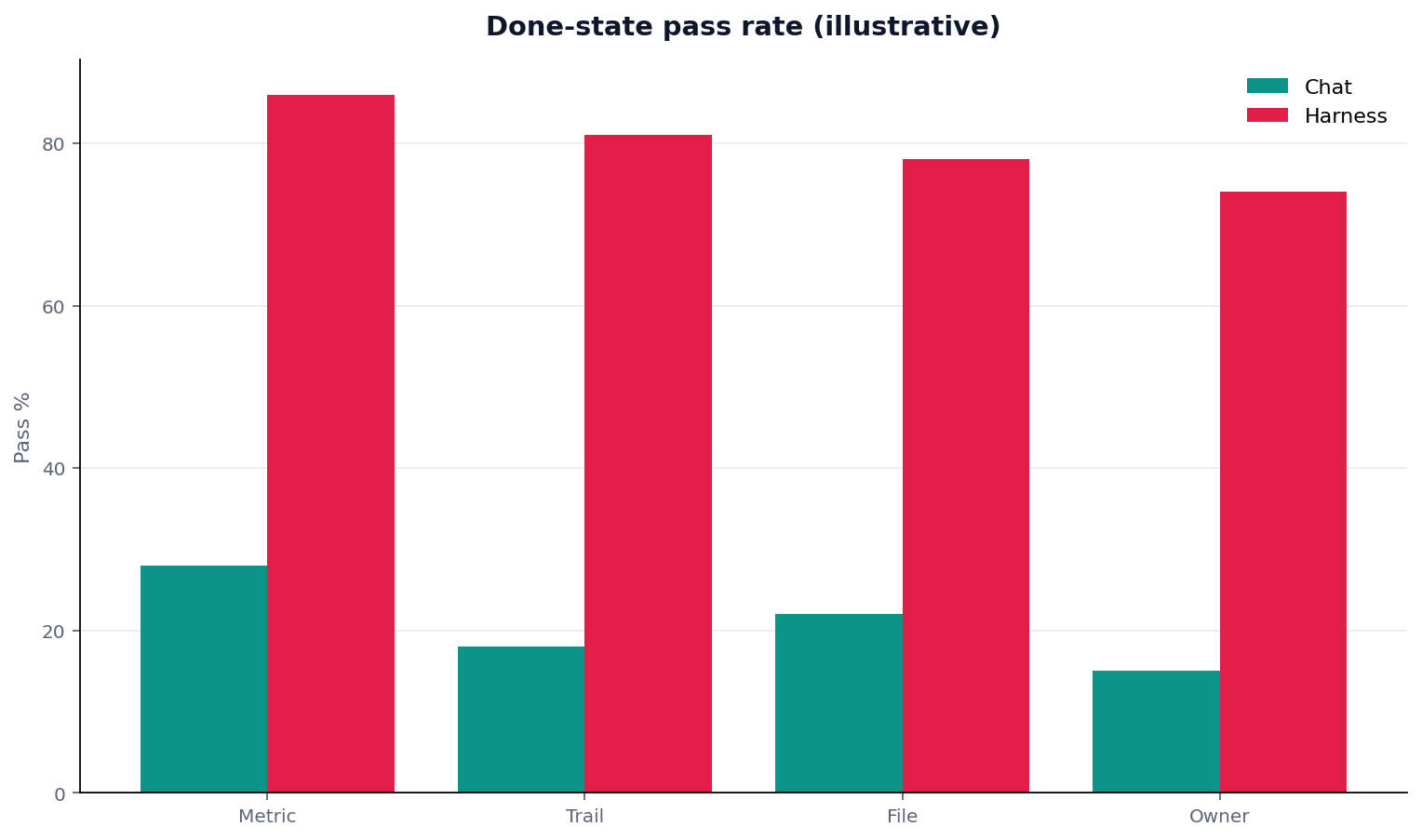
Figure. Teaching schematic. Not a measured study. Source: the protocol table above.
8 / 42 / 88 and the lone 42 are a teaching sketch. Quote the protocol, not the bars.
Scorecard: done or still a draft
| Signal | the exit test met | Still a draft |
|---|---|---|
| Metric | Sentence bound | Nickname |
| Trail | Named steps | Hidden blob |
| Checks | Named condition | Confidence |
| File | Colleague opens it | Chat only |
| Owner | Can reject | Model shipped |
| Readable | Operations can audit | Engineer-only |
If the exit test column is empty, the job is not done.
Evidence boundary
This page (definition-of-analysis) is a first-party desk method on definition of done for analysis, not a customer case and not an independent audit. The figures in the chart are a teaching sketch. They do not measure your warehouse, your model, or a published SLA.
A qualifying external review would need owner approval, an authorized read-only source, versions of the named objects, and a written accept/reject on the trail. Until that exists, do not cite this page as third-party recognition, a certification, or a media mention.
Record the freeze date, the reviewer name, and the file names you actually opened. If a later owner only reran a lint check, they should say so. Internal review is not independent validation.
Do not prove a negative privilege by writing to a production system. Read-only is the control. If a vendor offers write-back as “analysis,” treat that offer as a different product and a different risk.
Write the five fields as a pre-flight, not as a postscript. Metric: the sentence. Trail: the named moves. Checks: the control. File: the pack a colleague opens without you. Owner: the role that may reject. If you invent those fields after a pretty digit appears, you will declare done on whatever showed up.
The colleague-reopen test is the only honest accept. Hand the pack to someone who did not sit the session. If they need you to narrate the grain, the exit test failed. If they can edit the window from 90 days to 60 days and see which steps reuse, the exit test passed. That reuse is the difference between a chat transcript and a pack.
Owner veto is not theater. Operations should be able to reject a pack that used person-adjacent grain for a segment question, even when the digit is familiar. Compliance should be able to reject a pack that cannot name the source. A model cannot hold that veto. The done criteria exist so a human still can.
Failure modes
Paragraph as a ship signal
Fluency is not an exit test. A well-written bubble can encode the wrong grain. Require the pack.
Trail without a sentence
Open SQL after the fact and call it done. That is P55, not an exit test. Bind the metric first. Then the trail means something.
File without an owner
A zip of views with no one who may reject is not an exit test. Done needs a person who can say no.
Write the done criteria before you ship
List metric, trail, and file. If any is missing, the analysis is not done. This check uses only sources you authorize.
Commercial association: You do not need the workspace to complete the educational diagnosis on this page.
Open InfiniSynapseHow this page is sourced. William Zhu is cofounder of InfiniSynapse, public as GitHub @allwefantasy. Company self-description, not independent authority. No third-party prize is claimed. No personal LinkedIn is published. Evaluation basis: We evaluate (hands-on) by writing done criteria—bound metric, trail, file—before anyone calls the analysis finished. Protocol 2026-09-02, replayed 2026-09-03. Reviewed internally by analytics engineering · data platform · LLM security · editor. Editorial standards · corrections · publishing principles · About · Privacy · Terms. Contact zhuhl@infinisynapse.com. COI: InfiniSynapse sells an AI-native Data Agent; the banner is a commercial association. The educational diagnosis does not require it. Fact-check: Azure data architecture, Wikipedia Data warehouse, European Commission AI, FTC, Prometheus docs, Azure architecture. 8 / 42 / 88 is a teaching sketch. No external organization audited this page.
Frequently Asked Questions
What counts as done on the pack?
Bottom line: An auditable pack: bound metric, named steps, named checks, a file, and an owner. That list is the definition of analysis. A paragraph is not.
Can a fluent summary be done if the number is right?
Bottom line: No. Rightness is not visible without the sentence. The exit test requires objects a colleague can reopen.
Is opening SQL enough?
Bottom line: Opening SQL is the after-the-run trail. The exit test starts before compute, when you write the exit criteria.
Do I need a warehouse to be done?
Bottom line: No. The definition of analysis is a pack test, not a platform test. A read-only extract can pass. A warehouse can fail.
What on this page is citable?
Bottom line: Cite the protocol table, the four-field done frame, and the six-source comparison. Do not cite the chart bars or the 42 sketch as measured results.
Conclusion
The definition of analysis is the exit test you write first. Bound metric, named steps, named checks, a file, and an owner who can refuse. A fluent paragraph is not done. Keep the path readable by operations. Direction, steps, metric, then number—and an exit test that still holds after the number appears.
InfiniSynapse describes itself on About. Privacy and Terms apply. If you later use the workspace, open InfiniSynapse only with authorized, sanitized inputs.