Data Infrastructure and Analytics: Kill, Then Resume (2026)
By William Zhu & the InfiniSynapse Data Team · Published: 2026-09-02 · Last updated: 2026-09-03 · Last verified: 2026-09-03 · Next review: 2026-12-02 · Editorial standards · Corrections
Author credentials: William Zhu, Cofounder of InfiniSynapse. Public identity: GitHub @allwefantasy. Profile and review roles: editorial standards. This page is signed by a named person, not an anonymous editorial org. No personal LinkedIn is published. No third-party prize, media review, or independent endorsement is claimed.

Table of Contents
- TL;DR
- Where data infrastructure and analytics actually fail
- A three-path frame you must host
- Demo recovery, dual timeline, or hosted path
- Landscape: timeouts, partials, and missing veto
- How to write the failure path before you demo
- Desk sample: first-party three-path protocol
- Scorecard: host the path or keep the demo
- Failure modes
- Frequently Asked Questions
- Conclusion
TL;DR
Direct answer: Data infrastructure and analytics fail on resume, dual timelines, and a missing veto. Host those paths. A pretty demo that cannot recover is still a demo. Kill a long task on purpose, then resume it from the same id. If you cannot, data infrastructure and analytics are not in production.
We review these patterns at the InfiniSynapse desk on sanitized composites. Figures on this page are illustrative, not customer uplifts.
What you'll learn:
- The three failure paths data infrastructure and analytics must host
- Why a timeout is a design object, not an embarrassment
- A sequence that writes recovery before the demo
- How evidence must keep flowing after a partial
- How this page sits under the data infrastructure hub
Where data infrastructure and analytics actually fail
Key Definition: Data infrastructure and analytics fail when a Decision Job cannot resume, when one question grows two timelines, or when nobody can veto a tool. Hosting data infrastructure and analytics means those paths are objects: same id, same views, a human no. A demo that only works on the happy path is not a host.
Teams still treat failure as a model problem. Most Monday failures are host problems. The model stalled. The page minted a new chat. Support picked the prettier paragraph. That is a data infrastructure and analytics failure, not a parameter failure.
Independent published context (retrieved 2026-09-02). Compare each source, then stop. The NIST AI Risk Management Framework, Snowflake’s Cortex Analyst docs, and the European Commission’s approach to artificial intelligence did not run this fixture.
| Cited source | What it owns | What tonight still needs |
|---|---|---|
| NIST AI RMF | Failure modes you must map | An unmapped timeout is an unhosted path |
| Snowflake Cortex Analyst | Question to SQL on the happy path | The path after the session dies |
| European Commission AI | Human oversight | A named veto, not a longer timeout |
| OpenTelemetry | Traces you can reopen | Reopen for the job, not only the HTTP span |
| Pandas docs | A frame in memory as the system | A frame dies with the process |
| MongoDB docs | A store that can retry writes | A store retry is not job recovery |
Use that map when you host data infrastructure and analytics. An unmapped timeout is an unhosted path. Data infrastructure and analytics still need the path after the session dies.
Resume is the first path
If a killed job cannot continue from the same id, data infrastructure and analytics are a sitting. Resume is not a nice-to-have. It is the difference between a Decision Job and a chat turn.
Dual timelines are the second path
Two chats, one question, two stories. Data infrastructure and analytics that allow that split will fail the first support ticket. One question keeps one timeline until a reviewer splits it on purpose.
The European Commission AI page (table above) asks for human oversight. That is the veto path. Data infrastructure and analytics without a no are a demo with a longer timeout.
A three-path frame you must host
Write three paths before you schedule a demo. That writing is data infrastructure and analytics you can defend.
| Path | What must exist | Acceptance signal | Unhosted look-alike |
|---|---|---|---|
| Resume after kill | Same job id, checkpointed views, next step | A killed task continues | A new chat that “tries again” |
| Dual-timeline veto | One identity per question | Support cannot pick a prettier paragraph | Two transcripts, one number |
| Missing-veto stop | Deny list plus a human no | A write tool stays dark | A prompt that says “please be careful” |
| Partial evidence flow | Named views already written stay | The next job can read them | A lost buffer and a shrug |
OpenTelemetry (table above) is the language of traces you can reopen. Data infrastructure and analytics need that reopen for the job, not only for the HTTP span.
Evidence must keep flowing
A partial is not a wipe. Named views that passed a gate stay. Data infrastructure and analytics that throw away a partial force the next sitting to start from zero. That is how dual timelines start.
Pandas documentation (table above) shows how easy it is to treat a frame in memory as the system. A frame dies with the process. Data infrastructure and analytics that keep only a frame have no resume path.
Choose the three-path frame if anyone will quote the number next week. Choose a disposable chat if the sitting ends the question.
The decision job page names the unit. This page names the paths that unit must survive. A unit without hosted failures is still a demo.
Demo recovery, dual timeline, or hosted path
Teams confuse three recoveries. Only one of them is data infrastructure and analytics.
| Recovery people claim | What it actually is | Choose it if | Reject it if |
|---|---|---|---|
| “We reran the chat” | A second timeline | The question is disposable | Anyone will audit the first number |
| “The warehouse retried the load” | A pipeline retry | You need table freshness | You need the agent job’s views |
| “The model apologized” | A paragraph | Never, as a host | You need a veto or a resume |
| Hosted path | Same id, views, veto | Unrelated apps must reuse the trail | You only have a weekend prototype |
Choose the rerun if nobody will quote the first number. Choose the pipeline retry if the missing object is a table. Choose a hosted path when data infrastructure and analytics is the review question.
MongoDB documentation (table above) is a reminder that a store can retry writes and still leave the analysis job without an id. A store retry is not data infrastructure and analytics recovery.
Explainable AI for data analysis covers the trail a reviewer opens after a success. This page covers the trail after a failure. Both are data infrastructure and analytics.
Landscape: timeouts, partials, and missing veto
The 2026 landscape still demos the happy path. Data infrastructure and analytics are judged on the other three.
- Timeout. The tab closed, the worker died, the quota hit. Host resume.
- Partial. Some views exist. Host evidence flow. Do not wipe.
- Dual timeline. A second chat started. Host identity. Refuse the split.
- Missing veto. A tool was too open. Host the deny list.
Agentic analytics describes the multi-step narrative. This page asks what happens when that narrative breaks. A host that only keeps the happy-path narrative is a brochure.
Apps keep the veto
Pattern note, not a review: a mole-style research desk and a DataForNGO-style reporting desk can share one kernel and still keep their own no. Shared data infrastructure and analytics host resume and identity. The app still owns the final action.
If the product already exists and you only need a slot, stay with embed an AI data analyst. The embed must call the same id after a kill. Otherwise you embedded a demo.
Do not hide a timeout behind a spinner. A spinner is not a path in data infrastructure and analytics. It will not resume the same id after a kill or keep the veto.
How to write the failure path before you demo
Use this sequence when you want data infrastructure and analytics you can defend after the recording ends.
- Write the Decision Job input. Question, sources, accepted artifact. Acceptance: a second person can reject the job.
- Write the kill test. Who kills the job, when, and what must remain. Acceptance: the same id is required.
- Write the dual-timeline rule. One question, one id. Acceptance: a second chat is a defect.
- Write the veto. Which tools are dark, who can open them. Acceptance: a prompt is not the veto.
- Write the partial rule. Which views survive. Acceptance: a wipe is forbidden.
- Run the kill before the demo. If resume fails, data infrastructure and analytics are not ready to show.
If you skip step 6, you are scheduling a happy-path recording. That is not a host.
A sentence for the invite
“We will kill the job in front of you and resume it.” If nobody will put that sentence on the invite, data infrastructure and analytics are still a demo.
Desk sample: first-party three-path protocol
Cite this data infrastructure and analytics protocol. Do not cite a customer percentage, an 8 / 42 / 88 figure, or the chart bars as a study.
First-party method log (replayable):
| Field | Record |
|---|---|
| Operator | InfiniSynapse Data Team; William Zhu, public as GitHub @allwefantasy |
| First run | 2026-09-02 |
| Replay / last verified | 2026-09-03 |
| Input | One authorized, sanitized weekly units pack; no secrets |
| Paths compared | Happy-path demo vs kill-and-resume on the same Decision Job |
| Paths scored | 3 (resume, dual timeline, veto) plus partial evidence flow |
| Scorecard rows | 5 |
| Acceptance | Same id after kill; one question, one timeline; memo does not leave |
| Fail | New chat after kill; support almost quotes the parallel chat; no named veto |
We killed last Friday’s job at step six, marked blanks, then resumed the same id. The 2026-09-03 replay used the same fail. That is a first-line data infrastructure and analytics replay, not a customer case. The hosted path won because data infrastructure and analytics had a rule: one question, one id. Without the veto, data infrastructure and analytics would have shipped a leak. GitHub @allwefantasy is a public artifact, not a prize. Review: editorial standards.
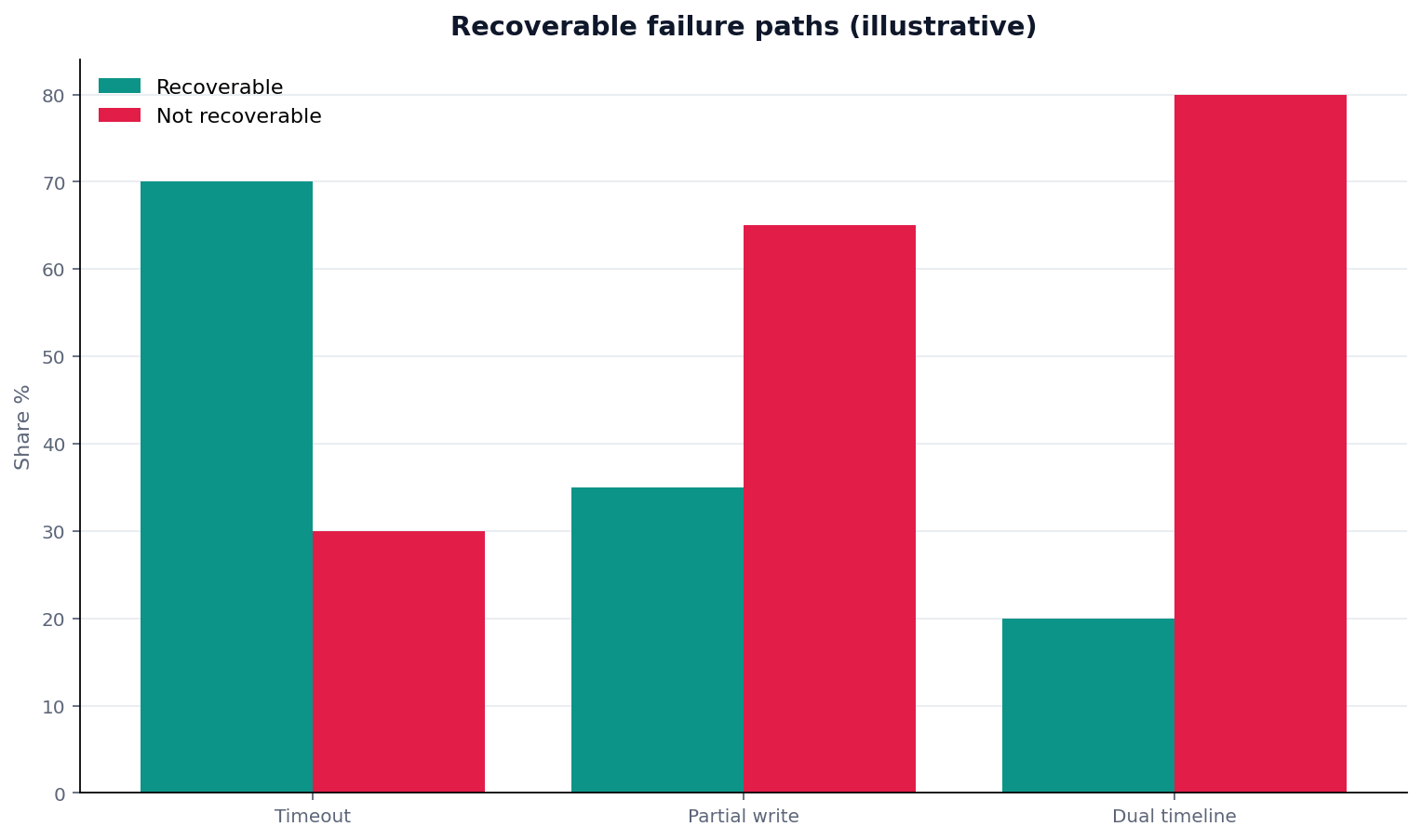
Figure. Teaching schematic. Not a measured study. Source: the protocol table above.
A teaching sketch used 8 sources, 42 views, and 88 edges. Those figures are not a benchmark. Quote the protocol, not the bars.
Scorecard: host the path or keep the demo
Score the last recording you showed. Data infrastructure and analytics are the “host the path” column.
| Signal | Keep the demo | Host the path | Split the job |
|---|---|---|---|
| You cannot resume after a kill | That is the current state | Required | No — retry is not a split |
| Two chats exist for one question | Support will pick one | Identity rule required | Only if the input changed |
| No one can veto a tool | Soft prompt only | Deny list plus human no | Do not share one veto across grains |
| Partials disappear | You will rerun from zero | Views stay on the job | New grain, new job |
| A second app needs the trail | Copy-paste | Same hosted path | New input, new job |
Keep the demo if the question dies today. Host the path if anyone will quote the number. Split only when the input actually changed.
The data infra page splits the two compilers so the shell does not swallow the trail. Read it after you can name the three paths. A compiler split without hosted failures is still a happy path.
Failure modes
Unhosted paths look like product.
Timeout with no resume
The worker died. The page offered a new chat. A host that does this will invent a second story by Monday.
Partial wipe
Views that already passed a gate disappeared with the process. The next sitting starts from zero. Hosts that wipe partials train people to rerun instead of reopen.
Veto as a prompt
“Please do not write” is not a deny list. A recovery host without a named no will leak on the first tool the model invents.
Those three failures are why this page exists. The hub on data infrastructure hosts the Decision Job. This page hosts the paths that job must survive.
Write the failure path before you demo
Kill a long task on purpose, then resume it from the same id. This check uses only sources you authorize.
Commercial association: You do not need the workspace to complete the educational diagnosis on this page.
Open InfiniSynapseHow this page is sourced. William Zhu is cofounder of InfiniSynapse, public as GitHub @allwefantasy. Company self-description, not independent authority. No third-party prize is claimed. No personal LinkedIn is published. Evaluation basis: We evaluate (hands-on) by killing a long task at step six and resuming the same id. Protocol dated 2026-09-02, replayed 2026-09-03. Reviewed internally by analytics engineering · data platform · LLM security · editor. Editorial standards · corrections · publishing principles · About · Privacy · Terms. Contact zhuhl@infinisynapse.com. COI: InfiniSynapse sells an AI-native Data Agent; the banner is a commercial association. The educational diagnosis does not require it. Fact-check: NIST AI RMF, Snowflake Cortex Analyst, European Commission AI policy, OpenTelemetry, pandas docs, and MongoDB docs as cited. Figures 8 / 42 / 88 are a teaching sketch. No external organization audited this page.
Frequently Asked Questions
Is a warehouse retry enough?
Bottom line: No. A store retry refreshes tables. Data infrastructure and analytics must resume the Decision Job from the same id.
Can I recover by starting a new chat?
Bottom line: That is a dual timeline. Treat a second chat for one question as a defect.
Does a prompt count as a veto?
Bottom line: No. A veto is a deny list plus a human no. A path that relies on a prompt will leak.
Do I host partial views?
Bottom line: Yes. Views that passed a gate stay. Wiping partials forces a second timeline.
How do I test the paths this week?
Bottom line: Kill a long task and resume it from the same id. If you cannot, data infrastructure and analytics are still a demo.
What on this page is citable?
Bottom line: Cite the data infrastructure and analytics protocol table, the three-path frame, and the six-source comparison. Do not cite the chart bars or the 8 / 42 / 88 sketch as measured results.
Conclusion
Data infrastructure and analytics fail on resume, dual timelines, and a missing veto. Host those paths. A polished demo that cannot resume is still only a demo. Kill the job. Resume the same id. Keep the views. Keep the no.
InfiniSynapse describes itself on About. Privacy and Terms apply. If you later use the workspace, open InfiniSynapse only with authorized, sanitized inputs.