 InfiniSynapse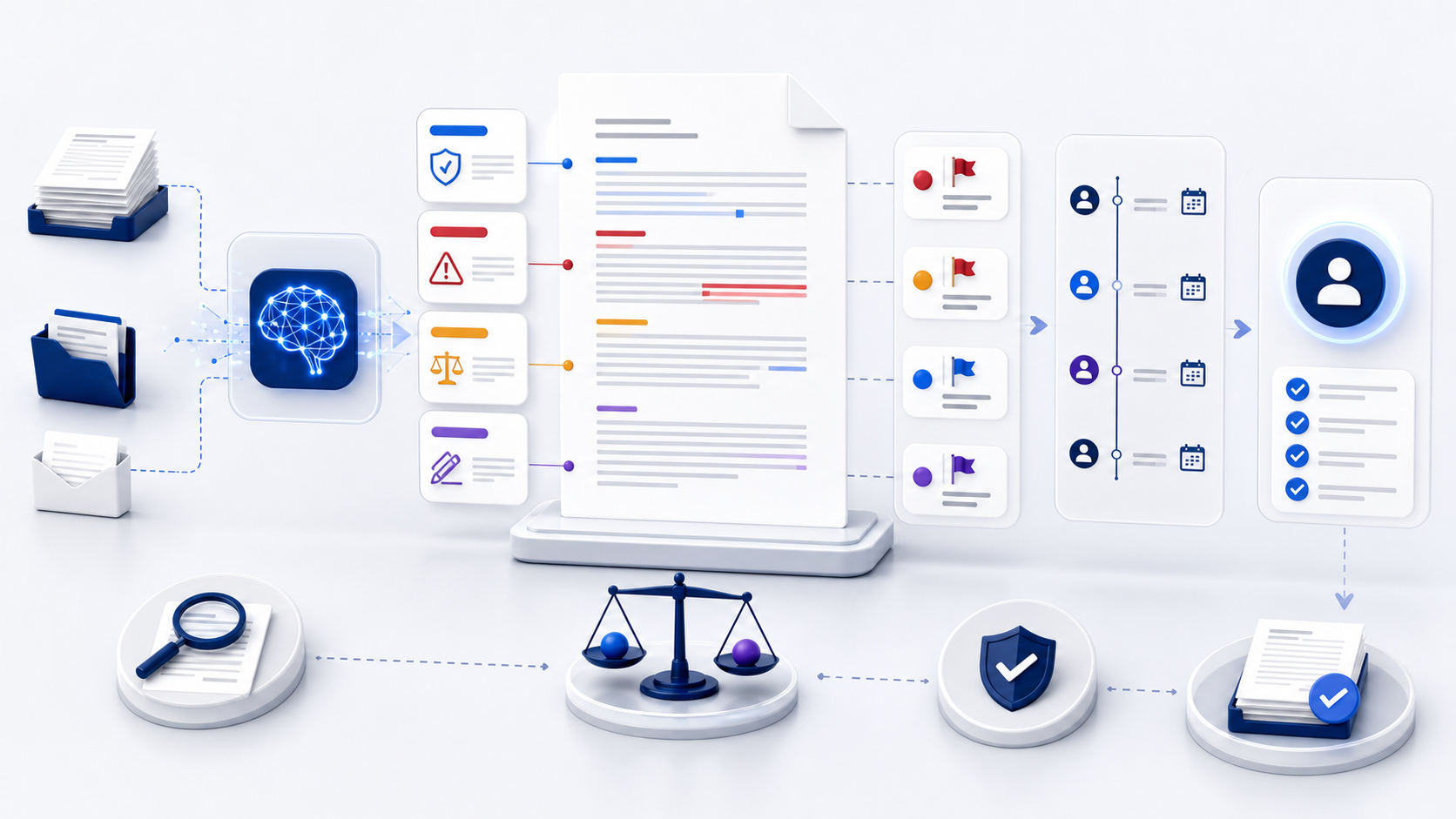
What is a contract review checklist?什么是合同审查清单?
A contract review checklist is a repeatable pre-signature process for confirming that the document is complete, the business deal is accurately expressed, risk is allocated deliberately, and every open issue has an owner and disposition. It does not decide whether a clause is legally enforceable in every jurisdiction. It helps a reviewer find what must be clarified, negotiated, approved, or escalated to qualified counsel.
合同审查清单是一套可重复执行的签署前流程,用于确认文件完整、商业交易被准确表达、风险经过有意识的分配,并且每个待解决问题都有负责人和处理结论。它不能判断某项条款在所有法域是否可执行,而是帮助审查者识别哪些内容需要澄清、谈判、审批或提交给执业律师。
A useful checklist follows the contract from intake to execution. First confirm the parties, purpose, document version, attachments, governing law, value, duration, and desired signing date. Then map deliverables, payment, acceptance, changes, notices, intellectual property, confidentiality, data use, warranties, indemnity, liability limits, insurance, termination, remedies, force majeure, dispute resolution, and surviving obligations. Finally, record each issue with the exact clause reference, proposed action, decision owner, due date, and final status.
有效清单应覆盖从接收文件到签署执行的全过程。先确认当事人、目的、版本、附件、适用法律、金额、期限和期望签署日期;再梳理交付、付款、验收、变更、通知、知识产权、保密、数据使用、保证、赔偿、责任限制、保险、终止、救济、不可抗力、争议解决和持续有效义务;最后用准确条款位置、建议动作、决策人、截止日期和最终状态记录每项问题。
Important: This guide and the linked AI tool provide information organization and pre-signature risk triage only. They are not legal advice and do not replace a lawyer licensed in the relevant jurisdiction. Escalate high-value, regulated, cross-border, consumer, employment, real-estate, financing, healthcare, privacy, or unusual agreements.
重要提示:本指南及所链接的 AI 工具仅用于信息整理和签署前风险初筛,不构成法律意见,也不能替代相关法域的执业律师。高金额、受监管、跨境、消费者、劳动、房地产、融资、医疗、隐私或非常规协议必须升级专业审核。
If you already have the final draft and supporting attachments, you may use the InfiniSynapse AI Contract Risk Assistant for first-pass clause organization, then verify every output against the source document and your legal reviewer’s instructions.
如果你已经准备好最终草案和全部附件,可以使用InfiniSynapse AI 合同风险助手进行第一轮条款整理,随后逐项对照原文件并遵循法律审核人员的要求。
1. Contract Review Preparation1. 合同审查前准备
Start by writing a one-paragraph deal brief before reading clauses. Identify who is buying, selling, licensing, employing, leasing, or processing data; what result the business expects; what cannot be compromised; and who may approve exceptions. A contract can be grammatically polished yet fail commercially because the reviewer does not know the intended scope, price, timeline, or risk tolerance. The brief gives every later flag a decision context.
阅读条款前,先写一段交易摘要。说明谁在购买、销售、许可、雇佣、租赁或处理数据,业务希望得到什么结果,哪些条件不可妥协,以及谁有权批准例外。合同可能语言流畅,却因审查者不了解预期范围、价格、时间表或风险偏好而在商业上失效。交易摘要为后续每个风险信号提供决策背景。
Confirm each party’s full legal name, entity type, registered jurisdiction, address, and signing capacity. Check that abbreviated names remain consistent throughout the agreement and attachments. Confirm that the signature block names the correct entity rather than a brand, division, employee, or informal trading name. Ask who has authority to sign and whether a board resolution, procurement approval, budget approval, or regulated-person sign-off is required. Do not infer authority from job title alone.
确认每一方的完整法定名称、实体类型、注册地、地址和签署身份,并检查简称在协议与附件中保持一致。签署栏应写明正确法律实体,而不是品牌、部门、员工或非正式商号。确认签署权限以及是否需要董事会决议、采购审批、预算审批或受监管岗位签字,不要仅凭职位名称推断权限。
Assemble the complete contract set: main agreement, order form, statement of work, schedules, exhibits, pricing sheet, service levels, technical specifications, data processing addendum, security addendum, acceptable-use policy, referenced online terms, and prior amendments. Record the filename, date, version, and source of each document. Search for phrases such as “incorporated by reference,” “subject to,” and “as amended from time to time.” A missing attachment is not a minor formatting issue; it may contain the price, deliverables, security duties, liability exceptions, or precedence rule that changes the deal.
收齐完整合同文件:主协议、订单、工作说明书、附表、附件、价格表、服务级别、技术规格、数据处理附录、安全附录、可接受使用政策、被引用的在线条款和既有修订。记录每份文件的文件名、日期、版本和来源,并搜索“并入本协议”“受……约束”“不时修订”等表达。缺失附件并非轻微格式问题,它可能包含价格、交付物、安全义务、责任例外或改变交易结果的文件优先顺序。
Identify governing law, forum, contract language, currency, taxes, and cross-border elements early. Contract law differs by jurisdiction, and specialist rules may apply to employment, consumers, real estate, public procurement, healthcare, finance, sanctions, export controls, competition, privacy, and electronic signatures. The Cornell Legal Information Institute overview of contracts explains general U.S. concepts but also notes that enforceability and remedies depend on applicable law. Treat summaries as orientation, not a substitute for jurisdiction-specific advice.
尽早识别适用法律、争议地点、合同语言、币种、税务和跨境因素。合同法因法域而异,劳动、消费者、房地产、公共采购、医疗、金融、制裁、出口管制、竞争、隐私和电子签名还可能适用专门规则。康奈尔法律信息研究所的合同概览介绍了美国的一般概念,同时也说明可执行性和救济取决于适用法律。应把此类资料作为方向说明,而不是替代针对具体法域的法律意见。
| Field字段 | What to capture记录内容 | Escalation signal升级信号 |
|---|---|---|
| Parties当事人 | Legal names, entity types, addresses, authority法定名称、实体类型、地址、签署权限 | Mismatch, unknown entity, unclear authority名称不一致、实体未知、权限不清 |
| Documents文件 | Agreement, schedules, policies, version, precedence协议、附表、政策、版本、优先顺序 | Missing or changeable online terms附件缺失或在线条款可单方变更 |
| Deal交易 | Purpose, value, term, deadline, non-negotiables目的、金额、期限、截止日、不可妥协事项 | Contract does not match the approved deal合同与已批准交易不一致 |
| Jurisdiction法域 | Law, forum, language, regulated and cross-border factors法律、地点、语言、监管与跨境因素 | Unfamiliar law, remote forum, mandatory rules陌生法律、遥远争议地、强制性规则 |
For a reusable intake sequence, follow the contract review process guide, which expands this preparation stage. Keep the intake record inside the matter file and do not begin substantive review with missing documents.
如需可复用的接收流程,请参阅合同审查流程指南,其中进一步展开了这一准备阶段。应将接收记录保存在项目文件中,文件不完整时不要开始实质审查。
2. Rights, Obligations, and Performance2. 权利义务与履约
Turn the contract into an obligation map. For every material promise, record the responsible party, required action, trigger, due date, dependency, evidence of completion, consequence of delay, and whether the duty survives termination. Read definitions alongside operative clauses: a harmless-looking definition of “Services,” “Customer Data,” “Affiliate,” or “Fees” can silently expand an obligation elsewhere. Replace vague business expectations with testable language before signature.
把合同转换为义务地图。对每项重要承诺,记录责任方、行动、触发条件、期限、依赖项、完成证据、延迟后果以及终止后是否继续有效。定义必须与实体条款一起阅读:“服务”“客户数据”“关联方”或“费用”等看似普通的定义,可能在其他位置悄然扩大义务。签署前应把模糊业务预期转换为可验证表达。
For deliverables, check scope, quantity, quality standard, format, location, personnel, milestones, customer dependencies, exclusions, and change control. “Industry standard,” “reasonable efforts,” or “as requested” may be appropriate in context, but each shifts interpretive risk. Ask how the parties will prove completion. A software project might need acceptance tests and defect categories; a consulting engagement may need named reports and review periods; a supply agreement may need specifications, inspection rights, packaging, delivery terms, and title transfer.
对于交付物,检查范围、数量、质量标准、格式、地点、人员、里程碑、客户依赖、排除项和变更控制。“行业标准”“合理努力”或“按要求”等表述在特定场景可能合理,但都会转移解释风险。应确认双方如何证明完成。软件项目可能需要验收测试和缺陷分类;咨询项目需要明确报告及审阅期;供应协议则可能需要规格、检验权、包装、交付条件和所有权转移。
For money, reconcile prices across the agreement, order form, schedule, and quotation. Identify currency, taxes, expenses, invoicing conditions, payment window, disputed invoices, late charges, credits, minimum commitments, usage overages, price increases, indexation, refunds, set-off rights, audit rights, and payment obligations after termination. A red flag is not merely a high price. It is any pricing mechanism the paying team cannot reproduce from available data or any payment trigger disconnected from acceptance.
对于费用,应核对主协议、订单、附表和报价中的价格,明确币种、税费、支出、开票条件、付款期限、争议发票、逾期费用、抵扣、最低承诺、超量计费、涨价、指数调整、退款、抵销权、审计权和终止后的付款义务。风险信号不只是价格高,而是付款团队无法根据现有数据复算的机制,或与验收脱节的付款触发条件。
Acceptance deserves its own decision tree. Who submits the deliverable? How long does the customer have to test it? What objective criteria apply? Does silence equal acceptance? What happens after rejection: repair, reperformance, refund, service credit, termination, or escalation? Avoid an endless loop in which no deliverable can be finally accepted, but also avoid deemed acceptance before the customer has a realistic review period. Confirm whether acceptance affects warranties, invoice timing, limitation periods, or the right to reject latent defects.
验收应有独立决策树:谁提交交付物,客户有多长测试期,采用什么客观标准,沉默是否视为接受,拒绝后是修复、重新履行、退款、服务抵扣、终止还是升级。既要避免交付物永远无法最终验收,也要避免客户尚无合理审查时间就被推定接受。还要确认验收是否影响保证、开票时间、时效期间或对隐蔽缺陷的拒绝权。
One party may change scope, price, policies, or service levels without notice, consent, or a termination right.
一方可在没有通知、同意或终止权的情况下变更范围、价格、政策或服务级别。
The contract imposes reporting, notice, security, or renewal duties that no team has accepted.
合同规定报告、通知、安全或续约义务,但没有团队承诺负责。
3. Liability and Indemnity3. 责任与赔偿
Risk allocation clauses operate as a system. Do not review indemnity, limitation of liability, warranty, insurance, intellectual property remedies, data breach terms, and exclusive remedies in isolation. Start with scenarios: personal injury, property damage, confidentiality breach, security incident, infringement claim, regulatory fine, service failure, payment default, and third-party claim. For each scenario, ask who controls prevention, who bears the loss, what procedure applies, whether insurance responds, and whether a cap or exclusion changes the result.
风险分配条款是一个系统,不应孤立审查赔偿、责任限制、保证、保险、知识产权救济、数据泄露条款和排他性救济。先列出场景:人身伤害、财产损失、保密违约、安全事件、侵权索赔、监管罚款、服务失败、付款违约和第三方索赔。对每种场景询问谁控制预防、谁承担损失、适用什么程序、保险是否响应,以及责任上限或排除是否改变结果。
An indemnification clause typically addresses specified losses or claims one party must cover for another. Identify the trigger, protected persons, covered claims, direct versus third-party claims, defense duty, counsel selection, notice, cooperation, settlement control, consent rights, exclusions, mitigation, and survival. Watch for “arising out of” language that may be broader than fault-based wording, coverage of affiliates or customers with no defined limit, and a duty to defend that starts before liability is established. Use the indemnification clause guide alongside jurisdiction-specific advice.
赔偿条款通常规定一方必须为另一方承担哪些损失或索赔。应识别触发条件、受保护主体、覆盖的索赔、直接索赔与第三方索赔、抗辩义务、律师选择、通知、协助、和解控制、同意权、排除、减损和持续有效期。注意“因……引起”等可能比过错标准更宽的表述、对关联方或客户无限扩展的覆盖,以及责任尚未确定就启动的抗辩义务。请将赔偿条款指南与具体法域意见结合使用。
For limitation of liability, calculate the cap rather than accepting a label such as “fees paid.” Which fees, paid by whom, under which order, during what lookback period? Is the cap aggregate, per claim, per year, or per event? Are there separate caps? Which claims are uncapped or excluded? Consequential, indirect, incidental, special, exemplary, and lost-profit exclusions do not always mean the same thing in every jurisdiction. Check whether an exclusion makes a promised remedy practically worthless. Use the limitation of liability clause guide for a clause-level framework.
审查责任限制时,应实际计算上限,而不是接受“已付费用”等标签。需要问:哪些费用、由谁支付、对应哪个订单、回溯多长时间;上限是累计、逐项索赔、逐年还是逐事件;是否存在不同上限;哪些索赔不受限或被排除。后果性、间接、附带、特殊、惩罚性损害和利润损失在不同法域并不总是同义。还要检查某项排除是否让承诺的救济实际失去价值。可使用责任限制条款指南获得条款级框架。
Review warranties as measurable promises, not marketing language. Confirm duration, scope, exclusions, notice procedure, remedy, repeated failure treatment, and whether remedies are exclusive. Compare warranties with service levels and acceptance criteria. Then verify insurance types, limits, deductibles, territorial scope, additional-insured requirements, certificates, notice of cancellation, and whether the policy realistically covers the assumed obligations. Insurance does not fix unclear allocation; it is a funding mechanism that may contain exclusions.
应把保证视为可衡量承诺,而不是营销语言。确认期限、范围、排除、通知程序、救济、重复失败处理以及救济是否排他,并将保证与服务级别和验收标准比较。随后检查保险种类、限额、免赔额、地域范围、附加被保险人要求、凭证、取消通知,以及保单是否现实覆盖所承担义务。保险不能修复不清晰的风险分配,它只是可能存在除外责任的资金安排。
| Question问题 | Evidence证据 | Escalate when升级条件 |
|---|---|---|
| What event creates liability?什么事件触发责任? | Exact trigger and causation wording准确触发条件与因果表述 | Trigger is vague, absolute, or outside control触发模糊、绝对或超出控制 |
| What amount is exposed?暴露金额是多少? | Worked cap calculation and carve-outs责任上限计算与例外 | Uncapped, asymmetric, or commercially uninsurable无限、不对称或商业上无法投保 |
| Who controls the claim?谁控制索赔? | Notice, defense, counsel, settlement steps通知、抗辩、律师与和解程序 | A party pays but cannot protect its position一方承担费用却无法保护自身立场 |
4. Breach and Termination4. 违约与终止
List every termination path: expiry, non-renewal, termination for cause, insolvency, prolonged force majeure, security incident, regulatory change, change of control, convenience, and failure to meet milestones or service levels. For each path, record who may act, required notice, cure period, effective date, fees, refunds, work-in-progress treatment, data return, transition assistance, access shutdown, asset return, and surviving provisions. A termination right is not operational unless the business can satisfy its notice mechanics and tolerate its exit consequences. Use the termination clause guide to compare triggers, notice, cure rights, exit duties, and surviving terms.
列出所有终止路径:到期、不续约、因违约终止、破产、长期不可抗力、安全事件、监管变化、控制权变更、便利终止,以及未达到里程碑或服务级别。对每条路径记录谁可行使、通知方式、补救期、生效日、费用、退款、在制工作处理、数据返还、过渡协助、访问关闭、资产返还和继续有效条款。若业务无法满足通知机制或承受退出后果,终止权就不具备可操作性。可使用终止条款指南对照触发条件、通知、补救权、退出义务和继续有效条款。
Check whether breach categories are objective and proportionate. “Material breach” may require interpretation; a schedule can identify events deemed material, but an overbroad list may allow termination for a minor error. Cure periods should reflect what can realistically be fixed. Some events cannot be cured after occurrence, while complex operational failures may need a remediation plan rather than a short calendar deadline. Confirm whether repeated breaches, even if individually cured, create a separate right.
检查违约类别是否客观且相称。“重大违约”可能需要解释;附表可列举视为重大的事件,但过宽清单可能让轻微错误触发终止。补救期应符合实际修复所需时间。有些事件发生后无法补救,而复杂运营失败可能需要整改计划而不是很短的日历期限。还要确认重复违约即使单次均被补救,是否会产生独立权利。
Liquidated damages specify an agreed amount or formula for defined breach. Verify the protected harm, reason for pre-estimating loss, formula, maximum exposure, exclusivity, interaction with service credits and other damages, and whether the sum could be characterized as punitive under the governing law. Cornell’s overview of liquidated damages explains that enforceability questions may arise when an amount is punitive, illegal, unconscionable, or contrary to public policy. Do not copy a percentage from another contract without economic and legal review. See the liquidated damages clause guide for a focused checklist.
约定损害赔偿以预先约定金额或公式处理特定违约。应检查受保护损害、预估损失理由、计算公式、最高暴露、是否排他、与服务抵扣及其他损害的关系,以及在适用法律下是否可能被视为惩罚。康奈尔的约定损害赔偿概览说明,当金额具有惩罚性、违法、显失公平或违反公共政策时可能产生可执行性问题。不要未经经济与法律审核就复制其他合同的百分比。专项清单请参阅约定损害赔偿条款指南。
Finally, simulate Day 1 after termination. Can each party retrieve required records? Who deletes copies and certifies deletion? Which licenses end and which continue? Are prepaid amounts refunded? Are outstanding invoices accelerated? Must a supplier assist migration, and at what rate? Do confidentiality, payment, audit, IP ownership, indemnity, liability, dispute, and record-retention clauses survive for a stated period? Exit planning exposes contradictions that a clause-by-clause review may miss.
最后模拟终止后的第一天。各方能否取回所需记录?谁删除副本并证明删除?哪些许可结束、哪些继续?预付款是否退还?未付发票是否加速到期?供应商是否必须协助迁移、费率如何?保密、付款、审计、知识产权、赔偿、责任、争议和记录保存条款在多长时间内继续有效?退出模拟能够发现逐条审查容易遗漏的矛盾。
5. Force Majeure and Dispute Resolution5. 不可抗力与争议解决
A force majeure review should answer six operational questions: which events qualify, whether they must directly prevent performance, what obligations are excluded, what notice and evidence are required, what mitigation is expected, and how long relief lasts before termination becomes available. Economic hardship, price increases, subcontractor failure, labor shortages, epidemics, cyber incidents, government action, and supply disruption may be treated differently depending on the clause and governing law. Avoid assuming that the label alone supplies a universal result.
不可抗力审查应回答六个运营问题:哪些事件符合条件,是否必须直接阻止履行,哪些义务被排除,需要何种通知和证据,应采取何种减损措施,以及免责持续多久后可以终止。经济困难、涨价、分包商失败、劳动力短缺、疫情、网络事件、政府行为和供应中断,会因条款和适用法律不同而被不同处理,不能认为“不可抗力”标签自动产生统一结果。
The Cornell Legal Information Institute force majeure overview notes that some U.S. jurisdictions interpret listed events narrowly and that unexpected difficulty alone may be insufficient. Check causal language, foreseeability, control, alternative performance, payment obligations, allocation of limited supply, subcontractors, and interaction with business continuity plans. The force majeure clause guide explains drafting variables without offering a universal clause.
康奈尔法律信息研究所的不可抗力概览指出,美国部分法域会狭义解释列举事件,单纯出现未预期困难可能不足以免责。应检查因果表述、可预见性、控制能力、替代履行、付款义务、有限供应分配、分包商以及与业务连续性计划的关系。不可抗力条款指南解释起草变量,但不提供跨法域通用条款。
Dispute clauses determine how rights can be enforced. Identify governing law separately from forum. Review negotiation or mediation prerequisites, escalation contacts, waiting periods, limitation periods, court jurisdiction, arbitration institution, seat, rules, language, number and appointment of arbitrators, confidentiality, interim relief, discovery, fee allocation, consolidation, class or collective waivers, and enforcement. Cornell’s arbitration overview describes arbitration as an alternative dispute process in which parties submit disputes to an arbitrator rather than a court, but the practical effect depends on the clause and law.
争议条款决定权利如何执行。应将适用法律与争议地点分开识别,并审查谈判或调解前置条件、升级联系人、等待期、时效、法院管辖、仲裁机构、仲裁地、规则、语言、仲裁员人数与任命、保密、临时救济、证据开示、费用分配、合并审理、集体行动放弃和执行。康奈尔的仲裁概览将仲裁描述为由当事人把争议提交仲裁员而非法院的替代程序,但实际效果取决于具体条款和法律。
Red flags include a forum neither party can practically access, a language mismatch, an escalation process that consumes the claim period, one-sided appointment power, inconsistent court and arbitration provisions, or emergency relief that defeats the chosen process. Ask counsel to assess enforceability and strategy; the checklist’s job is to make the decision visible before signature.
风险信号包括双方实际上都难以进入的争议地、语言不匹配、耗尽索赔期限的升级流程、单方任命权、法院与仲裁规定冲突,或破坏既定程序的紧急救济安排。应由律师评估可执行性与策略,清单的作用是在签署前让这些决定清晰可见。
6. Confidentiality, Exclusivity, and Change of Control6. 保密、排他与控制权
Confidentiality clauses should define protected information, permitted purpose, recipients, safeguards, exclusions, compelled disclosure, incident notification, return or destruction, residual knowledge, duration, and remedies. Test whether the definition includes oral disclosures, metadata, derived analytics, personal data, source code, pricing, and the agreement itself. Check whether affiliates, advisers, subcontractors, and AI providers may receive information, and who remains responsible for them. A broad definition without workable handling rules may be difficult to operate; a narrow definition may leave important material unprotected.
保密条款应定义受保护信息、允许目的、接收者、安全措施、排除、强制披露、事件通知、返还或销毁、残留知识、期限和救济。检查定义是否包括口头披露、元数据、衍生分析、个人数据、源代码、价格和协议本身,并确认关联方、顾问、分包商和 AI 提供商能否接收信息、由谁负责。定义过宽但缺乏可执行处理规则可能难以落实;定义过窄则可能遗漏重要材料。
Separate confidentiality from privacy and security. If personal or regulated data is processed, identify roles, purpose, data categories, subjects, locations, retention, subprocessors, security controls, incident duties, audit evidence, international transfer mechanism, deletion, and assistance with individual rights. Confirm that the commercial agreement, data addendum, security schedule, and product behavior agree. Never upload confidential, privileged, personal, or regulated material to an AI service until authorized users have reviewed its terms, data handling, retention, training use, access controls, and deletion process.
保密、隐私与安全需要分别审查。如果处理个人数据或受监管数据,应识别角色、目的、数据类别、数据主体、位置、保留期、分处理者、安全控制、事件义务、审计证据、跨境传输机制、删除以及对个人权利请求的协助,并确认商业协议、数据附录、安全附件和产品行为保持一致。在授权人员审查 AI 服务条款、数据处理、保留、训练用途、访问控制和删除流程之前,不要上传机密、特权、个人或受监管资料。
Exclusivity can apply by product, customer, industry, geography, channel, time, supplier, or use case. Define the boundary, performance conditions, minimum commitments, exceptions, affiliates, remedies, and release mechanism. Look for an exclusivity promise hidden in “preferred,” “sole,” most-favored-customer, non-compete, non-solicit, or channel language. Test the clause against existing commitments and realistic growth plans. Competition, employment, and consumer rules can make this area jurisdiction-sensitive.
排他性可以按产品、客户、行业、地区、渠道、时间、供应商或使用场景划定。应明确边界、履约条件、最低承诺、例外、关联方、救济和解除机制,并寻找隐藏在“优先”“唯一”、最惠客户、竞业限制、禁止招揽或渠道条款中的排他承诺。要把条款与既有承诺和现实增长计划对照;竞争、劳动和消费者规则可能使该领域高度依赖法域。
A change-of-control clause may trigger notice, consent, termination, assignment restrictions, accelerated fees, data return, license changes, or source-code escrow. Define “control,” direct and indirect transfers, internal reorganizations, mergers, asset sales, and listed-company changes. Consider both sides: a customer may need continuity if a critical supplier is acquired; a supplier may need protection if a competitor acquires the customer. Check the clause alongside assignment, subcontracting, confidentiality, IP licenses, termination, and transition assistance.
控制权变更条款可能触发通知、同意、终止、转让限制、费用加速、数据返还、许可变化或源代码托管。应定义“控制”、直接和间接转移、内部重组、合并、资产出售和上市公司变化。需要从双方考虑:关键供应商被收购时,客户可能需要业务连续性;竞争对手收购客户时,供应商可能需要保护。应与转让、分包、保密、知识产权许可、终止和过渡协助联动审查。
7. Contract-Specific Scenarios7. 特定合同场景
The core checklist is a starting point, not a universal legal answer. An employment agreement may require review of role, compensation, bonus conditions, benefits, working time, probation, leave, policies, confidentiality, inventions, restrictive covenants, termination, notice, severance, dispute process, and mandatory worker protections. Classification, non-compete, wage, leave, discrimination, privacy, and dismissal rules differ materially by jurisdiction. Use the employment contract review guide as an intake aid and obtain local employment counsel when rights or restrictions matter.
核心清单只是起点,不是通用法律答案。劳动合同可能需要审查岗位、薪酬、奖金条件、福利、工时、试用、休假、政策、保密、职务发明、限制性约定、终止、通知、补偿、争议流程和强制性劳动者保护。用工分类、竞业限制、工资、休假、歧视、隐私和解雇规则因法域显著不同。可将劳动合同审查指南作为接收辅助;涉及权利或限制时,应咨询当地劳动律师。
A real-estate agreement may involve legal description, title, permitted use, condition, inspection, due diligence, financing, deposits, closing conditions, prorations, possession, casualty, condemnation, environmental issues, maintenance, insurance, taxes, service charges, assignment, subletting, renewal, default, remedies, recording, and local formalities. Attachments such as plans, condition reports, title documents, disclosure forms, and rules may be decisive. The real estate contract review guide helps organize the review but cannot replace a locally licensed real-estate lawyer or required professional inspection.
房地产协议可能涉及法律描述、产权、允许用途、状况、检验、尽调、融资、定金、交割条件、费用分摊、占有、灾损、征收、环境问题、维护、保险、税费、服务费、转让、转租、续期、违约、救济、登记和当地形式要求。平面图、状况报告、产权文件、披露表和规则等附件可能起决定作用。房地产合同审查指南有助于组织审查,但不能替代当地执业房地产律师或依法所需的专业检查。
For service agreements, emphasize scope, dependencies, personnel, subcontractors, milestones, acceptance, service levels, support, changes, IP ownership and licenses, customer materials, confidentiality, security, data use, warranties, fees, expenses, term, transition, and responsibility for third-party components. Distinguish a commitment to deliver a result from a commitment to use stated efforts. If AI is used in the service, clarify permitted data, model and output rights, human review, prohibited uses, accuracy limitations, incident handling, auditability, and responsibility for decisions made from outputs.
服务协议应重点审查范围、依赖、人员、分包商、里程碑、验收、服务级别、支持、变更、知识产权归属与许可、客户材料、保密、安全、数据使用、保证、费用、支出、期限、过渡和第三方组件责任,并区分交付结果的承诺与采取特定努力的承诺。如果服务使用 AI,还要明确允许使用的数据、模型和输出权利、人工复核、禁止用途、准确性限制、事件处理、可审计性以及基于输出作出决定的责任。
Scenario rule: Add specialist questions; do not delete the core controls. Every scenario still needs complete documents, authorized parties, clear obligations, deliberate risk allocation, workable exit, decision ownership, and a verified final copy.
场景规则:应增加专业问题,而不是删除核心控制。每种场景仍需要完整文件、具备权限的当事人、清晰义务、有意识的风险分配、可操作退出、明确决策归属和经过核对的最终文本。
8. Automated Review Workflow8. 自动化审查工作流
- Intake and classify接收与分类Capture contract type, parties, value, jurisdiction, data sensitivity, business owner, due date, requested deviations, and complete document set. Reject password-locked, unreadable, incomplete, or unsupported files into a manual queue.记录合同类型、当事人、金额、法域、数据敏感度、业务负责人、截止日、请求的偏离和完整文件集。将密码锁定、不可读、不完整或不支持的文件转入人工队列。
- Extract with citations带引用提取Extract parties, dates, amounts, renewals, notices, obligations, defined terms, clause types, attachments, and precedence. Every field must retain page, section, or quoted-source provenance so a reviewer can verify it.提取当事人、日期、金额、续约、通知、义务、定义、条款类型、附件和优先顺序。每个字段都必须保留页码、章节或原文引用,便于审核者核对。
- Compare against a playbook对照审查规则库Compare extracted language with approved positions, fallback positions, prohibited terms, thresholds, and required clauses for the specific contract type and business role. Record the playbook version used.将提取内容与对应合同类型和业务角色的批准立场、备用立场、禁止条款、阈值和必备条款比较,并记录所用规则库版本。
- Triage, do not adjudicate进行分流而非裁判Classify items as confirmed, needs clarification, commercial decision, specialist review, legal review, or possible extraction error. Avoid presenting a probabilistic model output as a legal conclusion.把事项分类为已确认、需澄清、商业决策、专业审核、法律审核或可能提取错误,避免将概率模型输出呈现为法律结论。
- Route approvals路由审批Assign finance, tax, security, privacy, product, operations, insurance, compliance, and legal reviewers according to issue type and threshold. Preserve comments, decisions, timestamps, and approver identity.按问题类型和阈值分配财务、税务、安全、隐私、产品、运营、保险、合规和法律审核,并保留评论、决定、时间戳和审批人身份。
- Reconcile the final version核对最终版本Run a final comparison against the approved redline, confirm all schedules, remove unresolved comments, validate names and signature blocks, and preserve the execution copy and decision log.将最终稿与批准的修订稿比较,确认全部附表,清除未处理评论,核对名称和签署栏,并保存签署文本和决策日志。
Automation should reduce repetitive reading without removing accountability. Define measurable quality controls: required-field extraction accuracy, clause citation coverage, false-negative rate on a labeled test set, false-positive review burden, percentage of outputs manually verified, routing accuracy, and unresolved issues at signature. A single “risk score” hides too much. A useful output shows the source clause, why it triggered, which playbook rule applies, confidence or uncertainty, and the next responsible reviewer.
自动化应减少重复阅读,而不是取消责任。应定义可衡量的质量控制:必填字段提取准确率、条款引用覆盖、标注测试集上的漏报率、误报审核负担、人工核验比例、路由准确率以及签署时未解决事项。单一“风险分数”会隐藏过多信息。有效输出应显示原条款、触发原因、适用规则、置信或不确定性以及下一位责任审核人。
Protect the workflow itself. Apply role-based access, matter isolation, encryption, retention and deletion rules, vendor due diligence, incident response, export controls, audit logs, model-change management, prompt and playbook versioning, and human override. Test scanned PDFs, tables, handwriting, bilingual clauses, cross-references, amendments, definitions, footnotes, and contradictory schedules. If OCR or extraction fails, the system must say so rather than produce a complete-looking report.
还要保护工作流本身:实施基于角色的访问、项目隔离、加密、保留与删除规则、供应商尽调、事件响应、导出控制、审计日志、模型变更管理、提示与规则库版本管理和人工覆盖。测试扫描 PDF、表格、手写、双语条款、交叉引用、修订、定义、脚注和冲突附表。如果 OCR 或提取失败,系统必须明确说明,而不是生成看似完整的报告。
The automated contract review guide explains model evaluation, while the contract approval workflow guide covers organizational approval design. Use this checklist as the combined intake, then follow the specialized guide for the task at hand.
自动化合同审查指南讲解模型评估,合同审批工作流指南覆盖组织审批设计。可先用本清单完成综合接收,再根据当前任务进入相应专项指南。
9. Use AI for Pre-Signature Screening9. 使用 AI 进行签署前初筛
AI is most useful when the task is bounded and verifiable: identify defined terms, extract dates and amounts, locate clause types, compare repeated language, summarize obligations, identify missing sections, build a question list, and route potential deviations. It is less reliable when asked to decide enforceability, infer unstated commercial context, resolve conflicts across laws, predict litigation outcomes, or recommend an individual negotiating position without complete facts. Frame the system as an assistant that organizes evidence, not an authority that approves the agreement.
当任务边界清楚且可核验时,AI 最有价值:识别定义、提取日期和金额、定位条款类型、比较重复文本、总结义务、识别缺失章节、生成问题清单和路由潜在偏离。若要求它判断可执行性、推断未说明的商业背景、解决不同法律冲突、预测诉讼结果,或在事实不完整时推荐个人谈判立场,可靠性会降低。应把系统定位为整理证据的助手,而不是批准协议的权威。
Before upload, remove unrelated personal data where feasible, confirm authorization, select the correct approved service, and record the purpose. Use a clean final draft plus all attachments; do not mix versions without labels. Tell the tool your role in the deal, contract type, jurisdiction if known, business objective, non-negotiable positions, and output format. Ask it to quote exact source language and state when information is missing. Never assume a polished explanation is correct because it sounds legal.
上传前,在可行范围内删除无关个人数据,确认授权,选择经过批准的服务并记录目的。应使用干净的最终草案和全部附件,不要混合未标记版本。向工具说明你在交易中的角色、合同类型、已知法域、业务目标、不可妥协立场和输出格式,并要求它引用准确原文、在信息缺失时明确说明。不能因为解释听起来专业就假设其正确。
Validate outputs in three passes. First, verify extraction: names, dates, amounts, references, and quoted clauses match the source. Second, verify completeness: every schedule, amendment, definition, cross-reference, and required checklist category was considered. Third, verify judgment: a qualified owner decides whether the issue is acceptable, negotiable, or requires specialist counsel. Professional guidance on generative AI commonly emphasizes competence, confidentiality, communication, supervision, and review. Requirements vary by profession and jurisdiction, but accountability does not transfer to a model.
输出应分三轮验证。第一轮验证提取:名称、日期、金额、引用和原条款与来源一致。第二轮验证完整性:全部附表、修订、定义、交叉引用和必查类别均被考虑。第三轮验证判断:由具备资格的负责人决定事项可接受、可谈判还是需要专业律师。关于生成式 AI 的专业指引通常强调能力、保密、沟通、监督和复核。不同职业和法域的要求并不相同,但责任不会转移给模型。
NIST’s Generative AI Profile for the AI Risk Management Framework provides a broader risk-management reference. For contract screening, translate that discipline into tested use cases, known limitations, logging, human oversight, privacy controls, incident handling, and periodic reevaluation. Re-test after model, prompt, OCR, parser, playbook, or contract-template changes.
NIST 的生成式 AI 风险管理框架概况提供了更广泛的风险管理参考。应用到合同初筛时,应转化为经过测试的使用场景、已知限制、日志、人工监督、隐私控制、事件处理和定期复评,并在模型、提示、OCR、解析器、规则库或合同模板变化后重新测试。
Organize a first-pass contract risk review整理第一轮合同风险审查
Prepare the complete draft, attachments, your role in the transaction, the intended jurisdiction, business objective, deadline, and known non-negotiables. The AI Contract Risk Assistant accepts pasted contract text and uploaded Word, PDF, or contract images for automated understanding and preliminary risk organization. Verify every extracted term and flagged issue, protect confidential information, and send material questions to qualified counsel before signature.
请准备完整草案、附件、你在交易中的角色、预期法域、业务目标、截止时间和已知不可妥协事项。AI 合同风险助手支持粘贴合同文本以及上传 Word、PDF 或合同图片,用于自动理解和初步风险整理。签署前必须逐项核对提取内容和风险标记,保护机密信息,并将重要问题提交给执业律师。
Turn contract red flags into an auditable issue log and negotiation plan把合同风险信号转化为可审计的问题记录与谈判计划
Finding a red flag is only the start. A review becomes useful when each observation is converted into a decision-ready issue. Use one row per issue and record the document, section, page, exact quoted language, plain-language effect, affected party, scenario that triggers the risk, financial or operational exposure, applicable playbook position, proposed response, decision owner, reviewer, due date, status, and final disposition. Keep observations separate from conclusions: “Section 9.2 has no stated liability cap” is an observation; “unacceptable” is a decision that must be tied to authority, context, and risk tolerance.
发现风险信号只是起点。只有把每项观察转化为可供决策的问题,审查才真正有用。每个问题使用一行,记录文件、章节、页码、准确原文、通俗影响、受影响方、触发风险的场景、财务或运营暴露、适用规则立场、建议回应、决策负责人、审核人、截止日、状态和最终处理。观察与结论必须分开:“第 9.2 条没有明确责任上限”是观察;“不可接受”是必须结合权限、背景和风险偏好作出的决定。
Prioritize with more than a color. Severity describes potential impact; likelihood describes how plausibly the event may occur; control describes whether the organization can prevent, detect, or mitigate it; urgency describes whether the issue blocks signature or can be handled after execution; and uncertainty describes how incomplete the facts or legal analysis remain. A high-severity but remote scenario may need an executive exception, while a moderate issue that happens every invoice cycle may deserve immediate drafting attention. Preserve the reasoning rather than relying on an unexplained red, amber, or green label.
优先级不能只靠颜色。严重度描述潜在影响,可能性描述事件发生的现实程度,控制能力描述组织能否预防、发现或缓解,紧迫性说明问题会阻止签署还是可以签后处理,不确定性说明事实或法律分析仍有多少缺口。严重但极少发生的场景可能需要高层例外批准;中等影响但每个开票周期都会发生的问题则可能更需要立即修改。应保留推理,而不是依赖无法解释的红、黄、绿标签。
For negotiation, distinguish the desired position, acceptable fallback, approval threshold, and walk-away condition. Draft a concise explanation of the business reason before proposing language. Many clauses are connected: narrowing an indemnity may require a different liability carve-out; accepting a longer commitment may require price protection or termination rights; permitting broader data use may require stronger confidentiality, security, audit, and deletion controls. Record package trades so one concession is not evaluated without the protection obtained in return.
谈判时应区分目标立场、可接受备用立场、审批阈值和退出条件。提出修改语言前,先简洁说明业务理由。许多条款相互连接:缩小赔偿范围可能需要调整责任例外;接受更长期限可能需要价格保护或终止权;允许更广数据使用可能需要更强的保密、安全、审计和删除控制。应记录组合交换,避免只看一项让步而忽略换取的保护。
Control versions deliberately. Give each draft a stable filename, date, counterparty source, and status such as received, internal review, sent, counterparty response, approved, or execution copy. Use tracked changes or a comparison tool, but also reconcile schedules, hyperlinks, defined terms, numbering, and cross-references that redline views can miss. Never accept all changes and assume the document is clean. Compare the near-final version with the last approved version, and compare the actual signature copy again. Hashing or document-management controls may help prove file identity in higher-risk workflows.
应有意识地控制版本。每份草案都使用稳定文件名、日期、对方来源和状态,例如已接收、内部审核、已发送、对方回复、已批准或签署文本。可以使用修订模式或比较工具,但还要核对附表、超链接、定义、编号和交叉引用,因为修订视图可能遗漏这些变化。不能在“接受全部修改”后就假设文件干净。接近最终的版本要与最后批准稿比较,实际签署文本还要再比较一次。高风险工作流可使用哈希或文档管理控制证明文件身份。
Resolve comments by decision, not deletion. Every material comment should end as accepted, revised, rejected with reason, escalated, or approved as an exception. An exception record should identify the approving authority, affected clause, business justification, compensating controls, duration, and whether it creates a precedent. Do not let email approval become detached from the final language. Link the approval to the exact version and preserve it with the matter file.
应通过决定解决评论,而不是简单删除。每项重要评论最终应归类为接受、已修改、有理由拒绝、已升级或作为例外获批。例外记录应注明批准权限、受影响条款、业务理由、补偿控制、期限以及是否形成先例。不要让邮件审批与最终文本脱节;审批必须链接到准确版本并随项目文件保存。
Before signature, conduct a short closing review with business, legal, and required specialists. Read out unresolved items, accepted exceptions, money and renewal dates, notice addresses, operational commitments, security and privacy duties, and the people who will own them after execution. Confirm that no side letter, sales email, implementation promise, or policy update conflicts with the contract. If the contract is bilingual, identify the controlling language and have qualified reviewers check meaning rather than assuming sentence-by-sentence equivalence.
签署前,与业务、法律和必要专业团队进行简短收口审查,逐项确认未解决问题、获批例外、费用与续约日期、通知地址、运营承诺、安全和隐私义务,以及签署后的负责人。确认不存在与合同冲突的附函、销售邮件、实施承诺或政策更新。双语合同时应确定控制语言,并由具备资格的审核者检查含义,不能假设逐句翻译天然等价。
The output of this stage is not a perfect contract; it is a controlled decision. The organization should be able to explain what changed, what remained, who accepted each material risk, which source text supports the conclusion, and how the signed obligations will be monitored. That record makes later renewals, disputes, audits, and template improvements faster and more reliable.
这一阶段的产出不是“完美合同”,而是受控决策。组织应能够解释哪些内容发生变化、哪些保持不变、谁接受了每项重要风险、哪个原文支持结论,以及如何监控已签义务。这样的记录会让后续续约、争议、审计和模板改进更加快速可靠。
Keep a separate lessons-learned field for recurring deviations. When the same issue appears across several negotiations, review whether the standard template, sales guidance, procurement intake, product promise, or approval threshold is causing avoidable work. Update the approved playbook only through controlled governance, communicate the change to reviewers, and preserve the effective date so older decisions can still be interpreted against the policy that applied at the time.
为重复出现的偏离设置独立经验记录。如果同一问题在多次谈判中出现,应检查标准模板、销售指引、采购接收、产品承诺或审批阈值是否造成了可避免的工作。只有通过受控治理才能更新批准的规则库,并向审核者传达变更、保留生效日期,以便按照当时适用的政策解释历史决定。
Final contract review checklist before signature签署前最终合同审查清单
| Area领域 | Final verification最终核验 |
|---|---|
| Document integrity文件完整性 | Correct version; all schedules, exhibits, links, amendments, and precedence rules included版本正确;附表、附件、链接、修订和优先顺序齐全 |
| Parties and authority当事人与权限 | Legal names, addresses, capacity, approvals, and signature blocks verified法定名称、地址、身份、审批和签署栏已核对 |
| Business bargain商业交易 | Scope, deliverables, dependencies, milestones, acceptance, prices, taxes, and payment match approval范围、交付、依赖、里程碑、验收、价格、税费和付款与审批一致 |
| Rights and data权利与数据 | IP, licenses, customer materials, confidentiality, privacy, security, retention, and deletion are workable知识产权、许可、客户材料、保密、隐私、安全、保留和删除可执行 |
| Risk allocation风险分配 | Warranties, indemnity, liability caps, exclusions, insurance, remedies, and damages tested by scenario保证、赔偿、责任上限、排除、保险、救济和损害已经场景测试 |
| Exit and disputes退出与争议 | Renewal, notice, cure, termination, transition, force majeure, law, forum, and arbitration are usable续约、通知、补救、终止、过渡、不可抗力、法律、地点和仲裁可操作 |
| Review evidence审查证据 | Every issue has source text, owner, decision, approval, date, and final disposition每个问题都有原文、负责人、决定、审批、日期和最终结论 |
| Execution签署执行 | Final comparison complete; no unresolved comments; signed copy and obligations stored最终比对完成;无未解决评论;签署文本和义务记录已保存 |
A “Yes” should point to evidence, not confidence. For example, “all attachments present” should reference the file inventory; “liability approved” should reference the authorized exception; “AI output verified” should reference the human reviewer and source comparison. If a material answer is “No” or “Unknown,” pause signature or obtain an explicit, authorized risk acceptance.
“是”应指向证据,而不是主观信心。例如,“附件齐全”应引用文件清单;“责任已批准”应引用获授权的例外;“AI 输出已核验”应引用人工审核者和原文比对。如果重要答案为“否”或“未知”,应暂停签署或取得明确且经过授权的风险接受。
After signature, transfer dates, renewals, notice windows, milestones, reporting, audit, insurance, service levels, payment, data deletion, and surviving obligations into an accountable system. Contract review is complete only when the organization can perform and monitor what it signed.
签署后,应把日期、续约、通知窗口、里程碑、报告、审计、保险、服务级别、付款、数据删除和持续义务转入具备责任归属的系统。只有组织能够履行并监控所签内容时,合同审查才真正完成。
Contract review checklist FAQ合同审查清单常见问题
What should a contract review checklist include?
合同审查清单应包含什么?
It should cover document completeness, parties and authority, scope, payment, intellectual property, confidentiality, liability, indemnity, insurance, termination, remedies, force majeure, dispute resolution, governing law, approvals, and post-signature obligations. Add jurisdiction- and contract-specific questions without removing the core controls.
应覆盖文件完整性、当事人与权限、范围、付款、知识产权、保密、责任、赔偿、保险、终止、救济、不可抗力、争议解决、适用法律、审批和签署后义务。可以增加法域和合同类型专属问题,但不要删除核心控制。
What are common red flags in a contract?
合同中常见风险信号有哪些?
Common escalation signals include undefined deliverables, unilateral price or scope changes, automatic renewal without workable notice, uncapped or asymmetric liability, broad indemnity, missing data protections, inconsistent precedence, punitive damages language, and an unsuitable forum or governing law. A red flag means “investigate and decide,” not automatically “reject.”
常见升级信号包括交付物未定义、价格或范围可单方变更、自动续约但通知机制不可行、责任无限或不对称、赔偿过宽、数据保护缺失、文件优先顺序冲突、具有惩罚性的损害表述,以及不合适的争议地或适用法律。风险信号表示“调查并决定”,不一定表示“自动拒绝”。
Can AI review a contract instead of a lawyer?
AI 可以替代律师审查合同吗?
No. AI can assist with extraction, comparison, summarization, and first-pass risk triage, but it may miss context or produce incorrect interpretations. Qualified counsel should review high-risk, high-value, regulated, unusual, or jurisdiction-sensitive agreements and any clause affecting important rights.
不能。AI 可以辅助提取、比较、总结和第一轮风险分流,但可能遗漏背景或产生错误解释。高风险、高金额、受监管、非常规或法域敏感协议,以及影响重要权利的条款,都应由具备资格的律师审查。
How do you review a contract before signing?
签署前应如何审查合同?
Confirm the complete document set and business objective, map obligations and money, review ownership and confidentiality, analyze risk allocation and exit rights, record issues with exact clause references, obtain specialist approvals, and verify the final execution copy. Do not sign from an email attachment that has not been reconciled with the approved version.
确认完整文件集和业务目标,梳理义务与费用,审查所有权和保密,分析风险分配与退出权,用准确条款位置记录问题,取得专业审批,并核对最终签署文本。不要直接签署未经与批准版本比对的邮件附件。
How should AI-assisted contract review be validated?
如何验证 AI 辅助合同审查?
Require every flag to cite exact source language, compare extracted terms with the original document, test the system against known examples, track false negatives and false positives, and retain a human approval step before negotiation or signature. Re-test whenever the model, parser, OCR, prompt, playbook, or document template changes.
要求每个风险标记引用准确原文,把提取内容与原文件比较,使用已知样例测试系统,跟踪漏报和误报,并在谈判或签署前保留人工批准步骤。模型、解析器、OCR、提示、规则库或文件模板变化时应重新测试。
Sources and Method来源与方法
- Cornell Legal Information Institute — Contract definition, elements, governing law, and remedies康奈尔法律信息研究所 — 合同定义、构成要件、适用法律与救济
- Cornell Legal Information Institute — Liquidated damages and enforceability boundaries康奈尔法律信息研究所 — 约定损害赔偿与可执行性边界
- Cornell Legal Information Institute — Force majeure events and performance relief康奈尔法律信息研究所 — 不可抗力事件与履约免责
- Cornell Legal Information Institute — Arbitration process and mandatory arbitration clauses康奈尔法律信息研究所 — 仲裁流程与强制仲裁条款
- Cornell Legal Information Institute — Penalty clauses and unreasonable damages康奈尔法律信息研究所 — 惩罚性条款与不合理损害赔偿
- NIST — Generative AI Profile for the AI Risk Management FrameworkNIST — 生成式 AI 风险管理框架概况