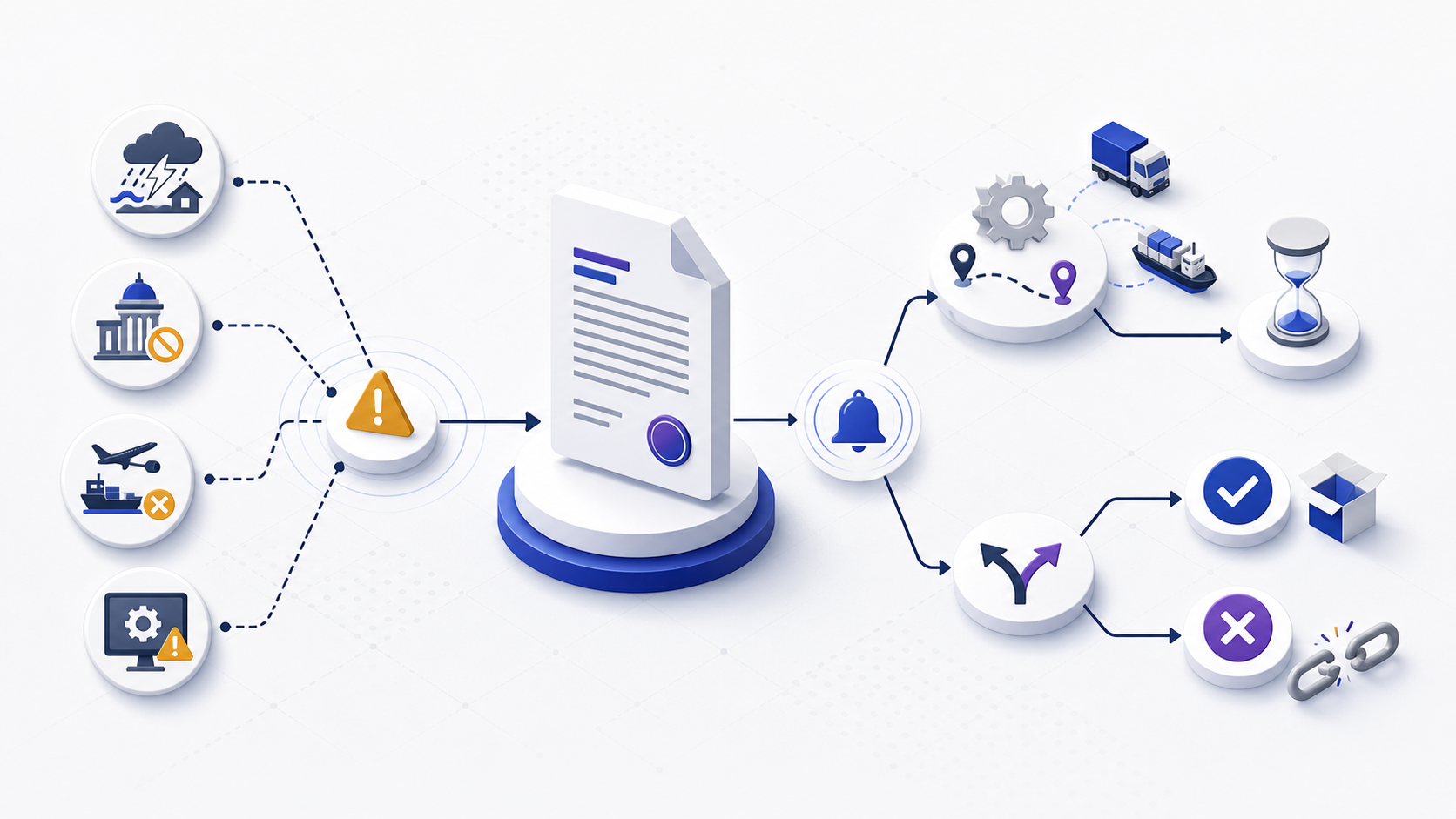
What is a force majeure clause?什么是不可抗力条款?
A force majeure clause is a negotiated contract term that allocates the risk of extraordinary disruption. It defines which events may excuse or suspend specified obligations, what causal threshold must be met, what notice and mitigation steps are required, and when performance must resume or the agreement may end. It is not an automatic escape from a bad bargain.
不可抗力条款是合同双方针对异常中断风险作出的约定。它规定哪些事件可以使特定义务获得免责或暂停、必须满足什么因果门槛、当事人应履行哪些通知和减损步骤,以及何时恢复履行或允许终止协议。它不是摆脱不利交易的自动出口。
The result depends on the exact wording, the whole contract, the governing law, and provable facts. The Cornell Legal Information Institute overview notes that some U.S. courts construe listed events narrowly and that mere impracticality or unexpected difficulty may be insufficient. International instruments use related but not identical tests. For example, UNIDROIT Article 7.1.7 addresses an impediment beyond control that could not reasonably have been taken into account, avoided, or overcome.
判断结果取决于准确措辞、完整合同、适用法律和可证明事实。康奈尔法律信息研究所的不可抗力概览指出,美国部分法院会狭义解释列举事件,单纯不便或意外困难可能不足以适用。国际规则采用相关但并不完全相同的标准。例如,UNIDROIT 第 7.1.7 条讨论的是超出控制、订约时无法合理预见且无法合理避免或克服的障碍。
Legal scope: This guide and the linked AI tool support information organization and pre-signature risk triage. They do not create an attorney-client relationship, determine governing law, approve clause language, or replace a lawyer qualified in the relevant jurisdiction.
法律适用边界:本指南和所链接的 AI 工具仅支持信息整理与签署前风险初筛,不建立律师—客户关系,不判断适用法律,不批准条款措辞,也不能替代相关法域的执业律师。
The three questions that control application决定条款能否适用的三个问题
A headline event does not decide the claim. A pandemic, flood, cyberattack, war, strike, government order, or port closure matters only if the clause covers it and it affects an identified obligation at the required level. Review the issue as a chain: qualifying event → affected obligation → causal impact → required procedure → contractual relief.
事件名称本身不能决定主张是否成立。疫情、洪水、网络攻击、战争、罢工、政府命令或港口关闭,只有在条款覆盖且以约定程度影响特定义务时才有意义。应按“合格事件 → 受影响义务 → 因果影响 → 必要程序 → 合同救济”的链条审查。
Check the event list, catch-all wording, exclusions, foreseeability, control, fault, timing, and whether the event already existed or was known when the contract was signed.
检查事件清单、兜底措辞、排除项、可预见性、控制能力、过错、发生时间,以及订约时事件是否已存在或已知。
Map the event to each missed obligation. Ask whether performance was prevented, impeded, hindered, or merely more expensive, and whether another cause would have produced the same failure.
把事件对应到每项未履行义务,判断履行是被阻止、受阻、延迟,还是仅仅成本增加,并检查是否有其他原因同样会导致失败。
Verify notice deadline and method, evidence, updates, mitigation, partial performance, allocation of scarce capacity, restoration steps, and any long-stop termination process.
核对通知期限和方式、证据、持续更新、减损、部分履行、稀缺能力分配、恢复措施以及长期中断终止流程。
Build a dated record of the event, operational effect, decisions, alternatives considered, communications, costs, and recovery. A broad label is weaker than obligation-level evidence.
按日期记录事件、运营影响、决策、备选方案、沟通、成本与恢复情况。宽泛事件标签的证明力弱于义务层面的证据。
Covered events, exclusions, and event lists覆盖事件、排除事项与事件清单
A well-structured clause usually combines a general test with a tailored list. The general test handles unlisted events; the list improves predictability. The ICC Force Majeure Clause 2020 uses this hybrid approach. Its model categories include war and hostilities, civil disorder and terrorism, trade restrictions and sanctions, acts of authority, epidemics and natural disasters, major infrastructure or equipment breakdown, and general labor disturbance. That list is a reference point, not a universal answer for every deal.
结构完整的条款通常把一般判断标准与定制事件清单结合使用:一般标准处理未列明事件,清单提高可预测性。ICC 2020 年不可抗力模型条款采用了这种混合方式,其类别包括战争与敌对行动、内乱与恐怖主义、贸易限制与制裁、政府行为、疫情与自然灾害、重大基础设施或设备故障以及一般性劳动中断。该清单只是参考起点,不是适用于所有交易的统一答案。
| Category类别 | Questions to resolve需要明确的问题 | Common boundary常见边界 |
|---|---|---|
| Natural events自然事件 | Which hazards, severity, location, seasonality, and design standards apply?适用哪些灾害、严重程度、地点、季节性和设计标准? | Ordinary weather or conditions the project should withstand.项目本应承受的普通天气或常见条件。 |
| Government action政府行为 | Must the order be binding, lawful, targeted, or issued after signing?命令是否必须具有约束力、合法、特定针对且在签约后发布? | Action caused by the affected party's own noncompliance.因受影响方自身违法或不合规引发的措施。 |
| Supply and transport供应与运输 | Are supplier failures covered only when the supplier faces a qualifying event? Are alternate routes required?供应商只有遭遇合格事件时才覆盖吗?是否必须尝试替代路线? | Single-source choices, ordinary shortages, or avoidable procurement delay.单一来源选择、普通短缺或可避免的采购延迟。 |
| Cyber and utilities网络与公用设施 | Does the clause distinguish external attacks and regional outages from weak controls or poor maintenance?条款是否区分外部攻击、区域停电与控制薄弱或维护不当? | Failures caused by missing patches, inadequate backups, or neglected equipment.因未打补丁、备份不足或设备疏于维护造成的故障。 |
| Labor disruption劳动中断 | Are industry-wide strikes covered while disputes limited to the affected party's workforce are excluded?是否覆盖行业性罢工,同时排除仅涉及受影响方员工的纠纷? | Disruption attributable to the party's own employment practices.可归因于当事人自身用工做法的中断。 |
Avoid treating “including but not limited to” as a cure for poor drafting. A court or tribunal may read a catch-all through the listed examples and governing-law rules. Define whether foreseeable events can qualify, whether subcontractor events flow through, whether financial inability is excluded, and whether a change in market price belongs in a separate hardship or price-adjustment mechanism.
不要把“包括但不限于”当作修复粗糙条款的万能措辞。法院或仲裁庭可能结合列举示例和适用法规则解释兜底条款。应明确可预见事件能否适用、分包商事件能否向上传导、资金不足是否排除,以及市场价格变化是否应由单独的艰难情势或价格调整机制处理。
Causation and the performance threshold因果关系与履行受阻门槛
Small verbs create large differences. “Prevents” points toward inability; “hinders” or “impedes” may cover serious obstruction; “delays” may provide only time relief; “adversely affects” can be broader but less predictable. The contract should say whether the event must be the sole cause, a direct cause, or a material contributing cause. It should also address concurrent causes—for example, a port closure occurring after the supplier was already late because it failed to order materials.
细小动词会产生巨大差异。“阻止履行”偏向无法履行;“妨碍”或“阻碍”可能覆盖严重受阻;“延迟”可能只产生时间救济;“不利影响”范围更宽但可预测性更低。合同应说明事件必须是唯一原因、直接原因还是重要共同原因,并处理并发原因,例如供应商因未及时订料已经迟延后又发生港口关闭。
Review obligation by obligation. A factory shutdown may prevent manufacture but not prevent notice, reporting, payment for accepted goods, data return, confidentiality, or use of an alternate facility. Relief should apply only “to the extent” the qualifying event affects performance. That phrase encourages partial performance and prevents an event from becoming a blanket suspension of unrelated duties.
必须逐项义务审查。工厂停产可能阻止生产,却未必阻止通知、报告、支付已验收货物、返还数据、履行保密或使用替代设施。救济应仅在合格事件影响履行的范围内适用,这能鼓励部分履行,避免把单一事件变成暂停全部无关义务的借口。
Cost increases deserve separate treatment. A tenfold input-price increase may be commercially severe but still fall within a price risk already allocated by the agreement. UNIDROIT's commentary illustrates that market-price changes and government currency controls can lead to different results. Identify whether the deal needs force majeure, hardship, change-in-law, change control, price indexation, or all of them—each solves a different problem.
成本上涨需要单独处理。投入价格上涨十倍可能对商业造成严重影响,但仍可能属于合同已分配的价格风险。UNIDROIT 的评注示例表明,市场价格变化与政府外汇管制可能导致不同结果。应判断交易需要不可抗力、艰难情势、法律变更、变更控制、价格指数调整,还是多种机制组合,因为它们解决的问题并不相同。
Anatomy of a complete force majeure clause完整不可抗力条款的构成
Do not review the definition in isolation. The operational machinery may sit in notices, termination, payment, insurance, business continuity, disaster recovery, service levels, supply allocation, or change-in-law provisions. Use the following components as a drafting and review map.
不要孤立审查定义。实际运行机制可能分散在通知、终止、付款、保险、业务连续性、灾难恢复、服务级别、供应分配或法律变更条款中。可以使用以下构成作为起草与审查地图。
| Component构成 | What it should answer应回答的问题 | Risk if missing缺失风险 |
|---|---|---|
| Definition定义 | Control, foreseeability, avoidance, timing, fault, listed events, and exclusions.控制、可预见性、避免能力、时间、过错、列举事件与排除项。 | Unclear boundary between covered disruption and ordinary business risk.无法区分覆盖中断与普通商业风险。 |
| Causation因果关系 | Which obligations are affected, at what threshold, and how concurrent causes work.哪些义务受影响、达到什么门槛、并发原因如何处理。 | A broad event is asserted without proof of actual performance impact.只主张宽泛事件,却无法证明对履行的实际影响。 |
| Procedure程序 | Notice timing, delivery channel, content, evidence, updates, and recovery notice.通知时间、送达渠道、内容、证据、持续更新和恢复通知。 | Otherwise valid relief may begin late or be lost.原本可能成立的救济延后生效或丧失。 |
| Mitigation减损 | Reasonable alternatives, partial performance, substitute suppliers, cost limits, and cooperation.合理替代、部分履行、替代供应商、成本上限与合作义务。 | The affected party waits while avoidable loss grows.受影响方消极等待,导致可避免损失扩大。 |
| Relief and exit救济与退出 | Suspension, extensions, damages, payment, costs, service credits, and long-stop termination.暂停、延期、损害赔偿、付款、成本、服务抵扣与长期中断终止。 | The clause names events but does not say what happens next.条款列出事件,却没有说明之后如何处理。 |
Notice, evidence, and mitigation workflow通知、证据与减损工作流
Operational discipline often matters as much as the event. UNIDROIT Article 7.1.7 requires notice of the impediment and its effect on the ability to perform, and addresses damages caused by notice not being received within a reasonable time. Your contract may be stricter: notice within a fixed number of days, to named recipients, by a specified method, with identified supporting material. Check the general notices clause as well as the force majeure section.
程序纪律往往与事件本身同样重要。UNIDROIT 第 7.1.7 条要求通知障碍及其对履行能力的影响,并处理通知未在合理时间内收到所造成的损害。具体合同可能更加严格,例如要求在固定天数内向指定收件人通过特定方式送达,并附上明确证明材料。不可抗力条款与一般通知条款必须一起检查。
- Preserve the baseline保存基准状态Secure the signed agreement, amendments, schedules, order forms, specifications, prior correspondence, performance data, and the version of the notice clause in force.保存已签协议、修订、附表、订单、规格、既往沟通、履行数据以及当时有效的通知条款版本。
- Map the event to obligations把事件映射到具体义务Record the event source, start time, location, official orders, affected facilities or suppliers, and each obligation that cannot be performed on time.记录事件来源、开始时间、地点、官方命令、受影响设施或供应商,以及每项无法按时履行的义务。
- Send compliant notice发送合规通知Use the required method and address. State known facts without overstating certainty, identify requested relief, reserve updates, and retain proof of transmission and receipt.使用约定方式与地址,在不夸大确定性的前提下说明已知事实、请求的救济和后续更新,并保存发送与收讫证明。
- Test alternatives and mitigate测试替代方案并减损Assess substitute sources, routes, sites, schedules, remote performance, partial delivery, allocation methods, inventory, insurance, and customer cooperation. Document why rejected options were unsafe, unavailable, unlawful, or disproportionate.评估替代来源、路线、场地、时间表、远程履行、部分交付、分配方法、库存、保险和客户配合,并记录被否决方案为何不安全、不可获得、违法或不相称。
- Update, recover, and close持续更新、恢复并关闭Provide periodic status reports, revise expected duration, notify when the effect ends, resume affected duties promptly, reconcile costs and payments, and preserve the final decision record.定期报告状态、修订预计持续时间、在影响结束时发出通知、及时恢复受影响义务、核对成本与付款,并保存最终决策记录。
Relief, payment, suspension, and termination免责、付款、暂停与终止
A force majeure event and the remedy are separate questions. Possible effects include excusing delay, suspending the affected duty, extending milestones, excluding damages for the covered non-performance, adjusting a project schedule, allocating limited supply, requiring consultation, or allowing termination after a long-stop period. The clause should state when relief begins—event date, notice date, or receipt date—and when it ends.
不可抗力事件与救济后果是两个独立问题。可能后果包括免除延迟责任、暂停受影响义务、延长里程碑、排除被覆盖不履行的损害赔偿、调整项目进度、分配有限供应、要求协商,或在长期中断期限后允许终止。条款应说明救济从事件发生日、通知日还是收讫日开始,以及何时结束。
Payment needs precision. Some clauses exclude all payment obligations; others preserve amounts already due but stop charges tied to services not delivered. Address deposits, prepaid fees, minimum commitments, service credits, pass-through costs, insurance proceeds, storage, demobilization, remobilization, refunds, taxes, and invoices issued during suspension. Do not assume that excusing performance automatically transfers the economic loss.
付款问题需要精确规定。有些条款排除全部付款义务,另一些保留已经到期的款项,但停止与未提供服务相关的收费。应处理押金、预付费、最低承诺、服务抵扣、转付成本、保险赔款、仓储、撤场、重新动员、退款、税费和暂停期间的发票。不能假定履行免责会自动转移经济损失。
Long-stop termination should identify who may terminate, after what continuous or aggregate period, on what notice, and with what financial and operational consequences. Specify whether termination applies to the entire agreement, an affected order, region, facility, or service. Coordinate it with the agreement's termination clause, dispute resolution, transition assistance, data return, confidentiality, audit, indemnity, and surviving rights.
长期中断终止机制应明确谁可以终止、连续或累计多长时间后可以终止、采用什么通知以及产生哪些财务与运营后果。还应说明终止适用于整个协议,还是仅限受影响订单、地区、设施或服务,并与协议中的终止条款、争议解决、过渡协助、数据返还、保密、审计、赔偿和持续有效权利协调。
Force majeure vs hardship, impossibility, and frustration不可抗力与艰难情势、不能履行和目的落空
These concepts overlap but are not interchangeable. Their availability and effect vary by governing law. Use the comparison to identify questions for counsel, not to choose a defense by label.
这些概念相互关联但不能互换,其可用性与后果因适用法律而异。下表用于识别需要向律师确认的问题,而不是仅凭名称选择抗辩。
| Concept概念 | Typical problem addressed通常处理的问题 | Review focus审查重点 |
|---|---|---|
| Force majeure clause不可抗力条款 | Contractually defined external disruption affects performance.合同定义的外部中断影响履行。 | Wording, event, causation, procedure, relief, and governing law.措辞、事件、因果、程序、救济与适用法律。 |
| Hardship艰难情势 | Performance remains possible but the contractual equilibrium changes severely.履行仍然可能,但合同均衡发生严重变化。 | Renegotiation, adaptation, price adjustment, or termination options.重新谈判、调整、价格变化或终止选项。 |
| Impossibility or impracticability不能履行或履行不能 | Applicable law may excuse performance even without an express clause.即使没有明示条款,适用法律也可能免除履行。 | Jurisdiction-specific elements, risk allocation, foreseeability, and alternatives.法域特定要件、风险分配、可预见性与替代方案。 |
| Frustration of purpose合同目的落空 | The underlying purpose is fundamentally destroyed although literal performance may remain possible.即使字面履行仍可能,合同根本目的已经被破坏。 | Shared purpose, event, allocation of risk, and legal threshold.共同目的、事件、风险分配与法律门槛。 |
Illustrative force majeure clause example不可抗力条款示例
The following is an educational structure, not ready-to-sign legal language. Bracketed choices must be negotiated and reviewed under the governing law and the rest of the agreement.
以下内容仅用于展示条款结构,不是可以直接签署的法律文本。方括号中的选择必须结合适用法律和完整协议协商并由专业人员审核。
Illustrative structure. An “Affected Party” is excused from performing an obligation only to the extent that an event occurring after the Effective Date, beyond that party's reasonable control, [prevents/materially impedes] performance and the event and its effects could not reasonably have been anticipated, avoided, or overcome. Covered events include [deal-specific list], but exclude lack of funds, ordinary market changes, and failures caused by that party's breach, negligence, or failure to maintain agreed continuity measures. The Affected Party must notify the other party by [method] within [period], identify the affected obligations and expected duration, provide reasonable evidence, use reasonable efforts to mitigate and perform unaffected obligations, and provide [weekly] updates. Affected performance is suspended only while the event causes the qualifying impact. [Payment treatment and cost allocation]. If the impact continues for [period], [either/the unaffected] party may terminate [the affected order/the agreement] by [period] written notice. Accrued rights and stated surviving obligations remain unaffected.
示例结构。只有在生效日后发生超出一方合理控制的事件,且该事件及其后果无法被合理预见、避免或克服,并在相应范围内[阻止/实质阻碍]履行时,“受影响方”才可免除相关义务。覆盖事件包括[根据交易定制的清单],但不包括资金不足、普通市场变化,以及因该方违约、疏忽或未维持约定连续性措施造成的失败。受影响方必须在[期限]内通过[方式]通知另一方,说明受影响义务和预计持续时间,提供合理证据,采取合理努力减损并履行未受影响义务,同时[每周]更新。只有在事件造成约定影响期间,相关履行才暂停。[付款处理与成本分配]。如果影响持续[期限],则[任何一方/未受影响方]可以提前[期限]书面通知终止[受影响订单/整个协议]。已经产生的权利和明确持续有效的义务不受影响。
The bracket choices carry the commercial bargain. A supplier may prefer “impedes,” broad event categories, relief from service credits, and mutual termination. A customer may prefer “prevents,” express continuity duties, allocation rules, payment suspension, short updates, and a termination right held by the unaffected party. Neither position is universally correct; the answer depends on dependency, substitution cost, inventory, insurance, regulatory exposure, deal duration, and bargaining power.
方括号中的选择承载着商业交易。供应商可能倾向使用“实质阻碍”、更宽事件类别、免除服务抵扣和双方终止权;客户可能倾向使用“阻止”、明确连续性义务、分配规则、暂停付款、短周期更新以及由未受影响方享有终止权。任何立场都不是普遍正确,答案取决于依赖程度、替代成本、库存、保险、监管暴露、交易期限与议价能力。
How the clause changes by contract type不同合同类型下的条款变化
Address raw-material sources, supplier flow-down, inventory, alternate plants, transport routes, allocation among customers, title, storage, forecast changes, expedited freight, and recovery sequencing.
处理原材料来源、供应商传导、库存、替代工厂、运输路线、客户间分配、所有权、仓储、预测变化、加急运输和恢复顺序。
Coordinate disaster recovery, cyber incidents, cloud and utility dependencies, service levels, credits, security duties, backups, data access, subcontractors, and exclusions for preventable control failures.
协调灾难恢复、网络事件、云与公用设施依赖、服务级别、抵扣、安全义务、备份、数据访问、分包商以及对可预防控制失败的排除。
Connect weather baselines, site conditions, permits, critical path, extensions of time, concurrent delay, demobilization, remobilization, materials, insurance, change orders, and completion tests.
连接天气基准、现场条件、许可、关键路径、工期延长、并发延误、撤场、重新动员、材料、保险、变更单和完工测试。
Define venue closure, travel restriction, illness, substitute performance, rescheduling, deposits, third-party costs, cancellation windows, attendee communications, and treatment of work already completed.
定义场地关闭、旅行限制、疾病、替代履行、改期、押金、第三方成本、取消窗口、参与者沟通和已完成工作的处理。
For cross-border, regulated, employment, consumer, real-estate, financing, public-sector, healthcare, or high-value contracts, obtain jurisdiction-specific review. Mandatory law, regulatory approvals, public policy, local notice rules, and statutory force majeure concepts can alter the analysis.
跨境、受监管、劳动、消费者、房地产、融资、公共部门、医疗或高价值合同应取得特定法域审核。强制性法律、监管批准、公共政策、本地通知规则和法定不可抗力概念都可能改变分析结果。
Force majeure clause review checklist不可抗力条款审查清单
Use this checklist with the complete agreement, not a copied clause. The broader contract review checklist connects force majeure to payment, termination, liability, indemnity, confidentiality, dispute resolution, and approvals.
这份清单必须与完整协议一起使用,不能只审查复制出来的单条款。更完整的合同审查清单会把不可抗力与付款、终止、责任、赔偿、保密、争议解决和审批连接起来。
- Scope: Which party, obligation, order, location, supplier, affiliate, and subcontractor can rely on the clause?范围:哪些当事人、义务、订单、地点、供应商、关联方和分包商可以依赖条款?
- Definition: Are control, foreseeability, avoidance, timing, fault, listed events, catch-all language, and exclusions clear?定义:控制、可预见性、避免能力、时间、过错、列举事件、兜底措辞与排除项是否清晰?
- Threshold: Does the event prevent, impede, hinder, delay, or merely affect performance, and must it be the sole or material cause?门槛:事件是阻止、妨碍、延迟还是仅影响履行?必须是唯一原因还是重要原因?
- Procedure: What is the notice deadline, form, recipient, delivery method, evidence, update frequency, and recovery notice?程序:通知期限、形式、收件人、送达方式、证据、更新频率和恢复通知是什么?
- Mitigation: What alternatives, partial performance, continuity measures, supply allocation, cooperation, and cost limits apply?减损:适用哪些替代方案、部分履行、连续性措施、供应分配、合作义务和成本限制?
- Relief: Which duties pause, which continue, when does relief begin and end, and how are damages, credits, payments, and costs treated?救济:哪些义务暂停、哪些继续,救济何时开始结束,损害赔偿、抵扣、付款和成本如何处理?
- Exit: Is there a long-stop period, who may terminate, what scope ends, and what transition and survival duties follow?退出:是否有长期中断期限,谁可终止,终止范围为何,之后有哪些过渡与持续义务?
- Consistency: Does the clause align with notices, service levels, change in law, hardship, insurance, limitation of liability, dispute resolution, and governing law?一致性:条款是否与通知、服务级别、法律变更、艰难情势、保险、责任限制、争议解决和适用法律一致?
Red flags and common review mistakes风险信号与常见审查错误
Escalate language that allows a party to declare force majeure in its sole discretion, covers events within that party's control, removes notice or mitigation, excuses every obligation rather than affected obligations, permits indefinite suspension without customer exit, or conflicts with payment and termination clauses. Also flag one-sided treatment that lacks a commercial reason, an event list copied from another industry, undefined “reasonable time,” and no mechanism for updates or recovery.
以下措辞应升级审核:允许一方单方决定不可抗力;覆盖其控制范围内的事件;取消通知或减损;免除全部义务而非受影响义务;允许无限期暂停却不给客户退出权;或与付款和终止条款冲突。还应标记没有商业理由的单方待遇、从其他行业复制的事件清单、未定义的“合理时间”,以及缺少更新或恢复机制。
Common process mistakes include sending notice to the business contact instead of the contractual address, waiting for perfect evidence until the deadline passes, calling a supplier delay force majeure without testing the supplier's underlying event, stopping unaffected performance, failing to consider alternatives, destroying contemporaneous records, and treating the clause as a public-relations statement rather than a legal and operational process.
常见流程错误包括:把通知发给业务联系人而非合同地址;等待完美证据直到错过期限;未检查供应商底层事件就把供应延迟称为不可抗力;停止未受影响义务;不考虑替代方案;销毁同期记录;以及把该条款当作公关声明,而不是法律和运营流程。
During negotiation, test the wording with at least three scenarios: a short local interruption, a prolonged regional event, and a global event with partial alternatives. For each, calculate who performs, who pays, what evidence exists, when the customer can exit, and what happens on Day 1 after recovery or termination. If the answers are inconsistent, revise the clause before signature.
谈判时至少使用三种场景测试措辞:短期本地中断、长期区域事件和存在部分替代方案的全球事件。针对每种情况计算谁履行、谁付款、有哪些证据、客户何时可以退出,以及恢复或终止后的第一天如何处理。如果答案不一致,应在签署前修订条款。
Use AI for traceable first-pass clause review使用 AI 进行可追溯的第一轮条款审查
AI can help organize a force majeure review when the output remains tied to source language. Prepare the complete contract, amendments, schedules, governing-law clause, notices provision, known event facts, timeline, and business objective. Ask the system to extract the definition, event list, exclusions, threshold, notice deadline and method, evidence duties, mitigation, relief, payment treatment, updates, recovery, and termination trigger—each with a page or clause reference.
当输出始终对应原文时,AI 可以协助整理不可抗力审查。应准备完整合同、修订、附表、适用法律条款、通知条款、已知事件事实、时间线和商业目标。要求系统提取定义、事件清单、排除项、履行门槛、通知期限和方式、证据义务、减损、救济、付款处理、更新、恢复与终止触发,并为每项提供页码或条款位置。
Use the InfiniSynapse AI Contract Risk Assistant for preliminary clause organization, then compare every extraction and risk flag with the original file. Do not ask AI to issue a final legal conclusion. Models can miss attachments, misread defined terms, overlook cross-references, infer facts that are not in evidence, or apply the wrong jurisdiction.
可使用InfiniSynapse AI 合同风险助手进行初步条款整理,随后把每项提取结果和风险标记与原文件比较。不要要求 AI 给出最终法律结论。模型可能遗漏附件、误读定义术语、忽略交叉引用、推断证据中不存在的事实,或采用错误法域规则。
A defensible human review checks document completeness, exact wording, factual causation, notice compliance, alternatives, proportionality, other clauses, governing law, and decision authority. Protect confidential information, follow organizational data rules, preserve the original, and send high-value, disputed, regulated, cross-border, or time-sensitive issues to qualified counsel.
可靠的人工复核应检查文件完整性、准确措辞、事实因果、通知合规、替代方案、相称性、其他条款、适用法律和决策权限。应保护机密信息,遵守组织数据规则,保留原文件,并将高价值、有争议、受监管、跨境或时间敏感问题交由执业律师处理。
Organize the clause before legal review在法律复核前整理条款
Prepare the complete agreement, attachments, your role, intended jurisdiction, event timeline, affected obligations, notice deadline, and known alternatives. Use the assistant to organize clause language and preliminary risks, preserve exact references, and take unresolved legal and commercial decisions to the responsible reviewer.
准备完整协议、附件、你的角色、预期法域、事件时间线、受影响义务、通知期限和已知替代方案。使用助手整理条款原文与初步风险,保留准确引用,并把尚未解决的法律和商业决定交给相应审核人员。
Force majeure clause FAQ不可抗力条款常见问题
What does a force majeure clause cover?
不可抗力条款覆盖什么?
It covers only the events, performance thresholds, obligations, and remedies defined by the contract and applicable law. Common categories include natural disasters, war, government action, epidemics, major infrastructure failure, and general labor disruption, but wording and jurisdiction control.
它只覆盖合同和适用法律所定义的事件、履行门槛、义务与救济。常见类别包括自然灾害、战争、政府行为、疫情、重大基础设施故障和一般性劳动中断,但最终以具体措辞和法域规则为准。
Does force majeure automatically terminate a contract?
不可抗力会自动终止合同吗?
Usually not. A clause may first suspend or excuse affected performance. Termination generally requires a separate trigger, such as an interruption lasting beyond a stated period, plus compliant notice.
通常不会。条款可能先暂停或免除受影响的履行。终止一般需要单独触发条件,例如中断超过约定期限,并且必须提供符合要求的通知。
Are payment obligations excused by force majeure?
不可抗力会免除付款义务吗?
Not necessarily. Many clauses exclude payment obligations or distinguish payment already due from payment for performance that cannot occur. The contract and governing law must be checked.
不一定。许多条款排除付款义务,或者区分已经到期的款项与因无法履行而不应产生的付款。必须检查合同与适用法律。
What should a force majeure notice include?
不可抗力通知应包括什么?
Identify the event, affected obligations, causal impact, start date, expected duration, mitigation steps, supporting evidence, requested relief, and update schedule. Follow the contract's delivery method and deadline exactly.
应说明事件、受影响义务、因果影响、开始日期、预计持续时间、减损措施、支持证据、请求救济和更新安排,并严格遵循合同约定的送达方式与期限。
Can AI decide whether force majeure applies?
AI 可以决定不可抗力是否适用吗?
No. AI can extract clause language, organize events and deadlines, and flag missing elements, but legal application depends on facts, evidence, governing law, and the whole contract. Material decisions require qualified legal review.
不能。AI 可以提取条款、整理事件和期限、标记缺失要素,但法律适用取决于事实、证据、适用法律与完整合同。重要决定需要具备资质的法律审核。
Sources and Method来源与方法
- International Chamber of Commerce — ICC Force Majeure and Hardship Clauses 2020国际商会 — ICC 2020 年不可抗力与艰难情势条款
- International Chamber of Commerce — Official publication page and explanatory overview国际商会 — 官方出版页面与说明概览
- UNIDROIT Principles — Article 7.1.7 on force majeureUNIDROIT 国际商事合同通则 — 第 7.1.7 条不可抗力
- Cornell Legal Information Institute — Force majeure overview and U.S. case context康奈尔法律信息研究所 — 不可抗力概览与美国判例背景