On this page本页目录
A contract review process converts documents into traceable decisions合同审查流程把文件转化为可追溯的决定
A contract review process is the repeatable path used to understand a proposed agreement, compare it with business facts and approved standards, identify uncertainty and risk, negotiate changes, and verify the complete package before signature. It is broader than reading clauses and narrower than the full contract lifecycle.
合同审查流程是用于理解拟议协议、将其与业务事实和批准标准比较、识别不确定性与风险、谈判修改并在签署前验证完整文件包的可重复路径。它比逐条阅读更广,又比完整合同生命周期更窄。
The process should be proportional. A low-risk order on approved terms may need a short confirmation; a nonstandard, regulated, high-value, cross-border, data-sensitive, employment, real-estate, financing, or strategic agreement may require specialist evidence and several negotiation rounds. The objective is not to make every review long. It is to apply the right depth, expertise, and control to the actual transaction.
流程应当相称。采用批准条款的低风险订单可能只需简短确认;非标准、受监管、高价值、跨境、数据敏感、劳动、房地产、融资或战略协议可能需要专业证据和多轮谈判。目标不是让每次审查都很长,而是针对真实交易采用正确的深度、专业能力与控制。
Define what “review complete” must mean定义“审查完成”必须意味着什么
A completed review should produce a controlled document set; verified parties, scope, economics, dates, and dependencies; a clause-level findings record; open, resolved, and accepted issues; redline history; specialist comments; business and risk decisions; approval conditions; a final clean version; execution instructions; and an obligation handoff. Each conclusion should point to the document, version, page or clause, owner, decision, and date that supports it.
完成的审查应产生受控文件集;已验证的主体、范围、经济安排、日期与依赖;条款级发现记录;未解决、已解决及已接受的问题;红线历史;专业意见;商业与风险决定;审批条件;最终清洁版本;签署指示;以及义务交接。每项结论都应指向支持它的文件、版本、页码或条款、负责人、决定与日期。
Start only when the request and package are review-ready只有申请与文件包达到可审状态时才开始
Capture requester, business owner, internal entity, counterparty, agreement type, purpose, value, currency, term, renewal, deadline and reason, governing-law proposal, work locations, products or services, deliverables, acceptance, data, systems access, intellectual property, regulated activity, subcontractors, insurance, incumbent contract, related transactions, negotiation history, business priorities, non-negotiables, and requested decision. State whether the organization is buying, selling, licensing, hiring, lending, partnering, or granting access.
记录申请人、业务负责人、内部实体、相对方、协议类型、目的、金额、币种、期限、续期、截止日及原因、拟适用法律、工作地点、产品或服务、交付、验收、数据、系统访问、知识产权、受监管活动、分包商、保险、既有合同、关联交易、谈判历史、业务优先事项、不可谈判项与所需决定。说明组织是在采购、销售、许可、雇佣、贷款、合作还是授予访问。
Require the editable draft and every schedule, exhibit, order, statement of work, specification, pricing sheet, service level, data term, security attachment, policy incorporated by reference, side letter, amendment, and relevant communication. Assign one matter identifier and document index. If a material attachment, commercial answer, party identity, or source version is missing, mark the review blocked or conditional instead of silently filling the gap.
要求提供可编辑草案及所有附表、附件、订单、工作说明、规格、定价表、服务水平、数据条款、安全附件、引用纳入的政策、附函、修订与相关沟通。分配一个事项标识和文档索引。如果重大附件、商业答案、主体身份或来源版本缺失,应将审查标记为受阻或附条件,而不是默默填补空缺。
Set review depth by type, deviation, value, and risk按类型、偏离、金额与风险确定审查深度
Compare the request with approved templates, playbooks, prior agreements, policy thresholds, and the transaction’s real risk triggers. Triage should determine the reviewer, target time, review depth, specialist tracks, approval path, and whether work can proceed in parallel. Useful triggers include unusual liability, uncapped exposure, personal data, security access, regulated services, employment status, real estate, tax, insurance, exclusivity, intellectual property transfer, financing, sanctions, long terms, automatic renewal, and nonstandard dispute forums.
将申请与批准模板、手册、历史协议、政策门槛及交易真实风险触发因素比较。分流应决定审核人、目标时间、审查深度、专业路径、审批路径及工作能否并行。常见触发包括异常责任、无上限暴露、个人数据、安全访问、受监管服务、用工身份、房地产、税务、保险、排他、知识产权转让、融资、制裁、长期期限、自动续期与非标准争议法院。
Avoid a hidden score that obscures a decisive fact. A small contract can create major privacy, security, employment, IP, or regulatory exposure. A large renewal on unchanged approved terms may need a focused delta review rather than a complete restart. Record the routing reason, assumptions, exclusions, and any authorized override so later reviewers understand why the chosen scope was proportionate.
避免使用掩盖决定性事实的不透明分数。小合同也可能产生重大隐私、安全、劳动、知识产权或监管暴露;而采用未变更批准条款的大额续期,可能只需聚焦差异审查,无需完全重启。应记录分流理由、假设、排除范围及任何授权覆盖,使后续审核人理解所选范围为何相称。
Read for deal shape before editing individual clauses修改单个条款前先理解整个交易形状
The first pass establishes the agreement boundary and commercial story. Identify parties, recitals, scope, deliverables, dependencies, pricing, payment, acceptance, term, renewal, change mechanics, data flow, IP model, restrictions, risk allocation, termination, transition, disputes, notices, order of precedence, incorporated materials, and signature requirements. Trace how the main agreement interacts with schedules, orders, policies, online terms, and existing agreements.
第一轮审查用于建立协议边界和商业故事。识别主体、背景条款、范围、交付物、依赖、定价、付款、验收、期限、续期、变更机制、数据流、知识产权模式、限制、风险分配、终止、过渡、争议、通知、优先顺序、纳入材料及签署要求。追踪主协议如何与附表、订单、政策、在线条款和既有协议互动。
Do not redline immediately unless a critical error demands it. First write a short deal summary, missing-input list, dependency map, and initial risk themes. Confirm the summary with the business owner. This prevents a reviewer from optimizing isolated legal language while misunderstanding what is being bought, sold, delivered, funded, accessed, retained, or promised.
除非重大错误需要立即处理,否则不要一开始就红线修改。先编写简短交易摘要、缺失输入清单、依赖图和初始风险主题,并由业务负责人确认。这可以防止审核人员在误解采购、销售、交付、资金、访问、留存或承诺内容的情况下,只优化孤立法律文字。
Review each material clause as an operational rule把每项重大条款当作运营规则审查
| Review lens审查视角 | Questions问题 | Evidence证据 |
|---|---|---|
| Trigger触发 | What event starts the right, duty, clock, or restriction?什么事件启动权利、义务、时钟或限制? | Defined event and source clause定义事件与来源条款 |
| Actor and action主体与行动 | Who must, may, or must not do what?谁必须、可以或不得做什么? | Owner, recipient, dependency负责人、接收方、依赖 |
| Standard and proof标准与证明 | How is performance measured, accepted, or disputed?如何衡量、接受或争议履行? | Metric, record, notice, approval指标、记录、通知、批准 |
| Consequence后果 | What follows from success, delay, breach, or termination?成功、延迟、违约或终止后发生什么? | Payment, cure, credit, damages, exit付款、补救、抵扣、赔偿、退出 |
Test clarity, completeness, internal consistency, feasibility, proportionality, enforceability questions for counsel, and alignment with the approved position. Follow defined terms, cross-references, survival, exceptions, qualifiers, discretion, notice, evidence, and precedence. Use the contract review checklist to cover the major commercial, liability, termination, dispute, confidentiality, data, and execution areas without treating the checklist as legal advice.
检验清晰度、完整性、内部一致性、可执行操作性、相称性、需要律师判断的可执行性问题,以及与批准立场的一致性。追踪定义词、交叉引用、存续、例外、限定、裁量、通知、证据与优先顺序。可使用合同审查清单覆盖重大商业、责任、终止、争议、保密、数据与签署领域,但不能把清单当作法律意见。
Reconcile schedules, policies, orders, and side commitments核对附表、政策、订单与附带承诺
Create a dependency register for every document incorporated, attached, promised later, linked online, or made controlling through precedence language. Compare party names, services, deliverables, prices, dates, terms, renewal, service levels, data categories, security measures, subprocessors, locations, IP, liability, insurance, termination, and transition across the package. A well-written clause can still fail when its schedule contradicts it or an online policy can change unilaterally.
为每份通过引用纳入、作为附件、承诺以后提供、在线链接或通过优先顺序文字取得控制力的文件建立依赖登记。跨文件比较主体名称、服务、交付物、价格、日期、期限、续期、服务水平、数据类别、安全措施、分处理者、地点、知识产权、责任、保险、终止与过渡。即使条款写得很好,只要附表与其冲突或在线政策可单方变更,仍可能失效。
Identify blanks, placeholders, broken references, duplicate definitions, missing annexes, stale policy dates, inconsistent currencies, mismatched notice addresses, and ambiguous precedence. Capture the referenced version or a stable copy where appropriate. Do not mark a package complete because the main document is complete; the operative deal boundary includes the materials the agreement makes relevant.
识别留空、占位符、失效引用、重复定义、缺失附件、过时政策日期、币种不一致、通知地址不匹配与优先顺序歧义。适当时保存被引用版本或稳定副本。不能因为主文件完整就把文件包标记为完成;实际交易边界包括协议赋予相关性的所有材料。
Convert findings into one prioritized contract issue list把发现转化为一份按优先级排序的合同问题清单
For each issue, record the clause and version, evidence, affected party, business consequence, legal or specialist question, severity, likelihood or uncertainty, preferred position, acceptable fallback, prohibited outcome, owner, decision authority, counterparty status, deadline, dependencies, and resolution. Separate drafting defects, missing facts, commercial decisions, policy deviations, legal questions, operational feasibility, and approval exceptions so each item reaches the right person.
对每个问题记录条款与版本、证据、受影响方、商业后果、法律或专业问题、严重程度、可能性或不确定性、首选立场、可接受退让、禁止结果、负责人、决策权限、相对方状态、期限、依赖与解决结果。区分起草缺陷、事实缺失、商业决定、政策偏离、法律问题、运营可行性与审批例外,使每项问题到达正确人员。
Prioritize by impact and decision urgency, not by clause order or number of comments. Use clear labels such as blocking, material, important, clarification, and drafting cleanup, with definitions that prevent cosmetic edits from competing with deal-changing issues. The issue list should remain synchronized with the redline: every material edit has a reason, and every resolved issue points to the language or decision that closed it.
应按影响与决策紧迫性排序,而不是按条款顺序或评论数量排序。可使用阻断、重大、重要、需澄清与文字清理等明确标签,并给出定义,防止外观修改与改变交易的问题竞争。问题清单应与红线稿同步:每项重大编辑都有理由,每个已解决问题都指向关闭它的文字或决定。
Route questions with context, evidence, and a requested decision带着背景、证据与所需决定分流问题
Send privacy, security, tax, finance, accounting, insurance, employment, regulatory, IP, export, sanctions, real-estate, technical, operational, or industry questions to qualified reviewers when triggered. Give each reviewer the same authoritative package, concise deal summary, relevant clauses, facts, issue statement, deadline, dependencies, and requested output. Avoid asking every specialist to read the entire agreement without scope when only a defined domain requires their expertise.
在触发时,把隐私、安全、税务、财务、会计、保险、劳动、监管、知识产权、出口、制裁、房地产、技术、运营或行业问题交给合格审核人。向每位审核人提供同一权威文件包、简明交易摘要、相关条款、事实、问题陈述、期限、依赖与所需产出。若只需特定领域专业能力,不应让每位专家在没有范围的情况下阅读整份协议。
Reconcile specialist comments before sending a redline. Security may request a right that conflicts with liability, finance may alter payment terms that affect termination, and operations may accept a service level that changes the remedy structure. Name an integration owner who identifies conflicts, obtains decisions, and presents one coherent position to the counterparty.
发送红线稿前应协调专业意见。安全团队要求的权利可能与责任条款冲突;财务修改付款条件可能影响终止;运营接受某项服务水平可能改变救济结构。应指定整合负责人识别冲突、取得决定,并向相对方提出一个一致立场。
Negotiate from decisions, not disconnected edits基于决定谈判,而不是堆叠相互脱节的修改
Prepare one consolidated redline from the authoritative draft. Use tracked changes, comments, or an agreed comparison method consistently. Make the requested result clear and keep internal rationale separate from counterparty-facing comments when appropriate. Before each round, confirm the business owner’s priorities, package issues by theme, identify trades and dependencies, and know who can approve movement from the preferred position to a fallback.
从权威草案准备一份合并红线稿,一致使用修订跟踪、批注或约定比较方法。明确所需结果,并在适当时将内部理由与面向相对方的评论分开。每轮谈判前确认业务负责人优先事项,按主题组合问题,识别交换条件与依赖,并明确谁能批准从首选立场退到备选立场。
After a call or email, update the issue list and document rather than relying on meeting memory. Record agreed language, rejected proposals, conditional concessions, items held open, new facts, owners, and next steps. Never accept all changes without comparison. A party’s clean draft should be compared against the last authoritative redline to detect omitted, reintroduced, or silently altered text.
电话或邮件后应更新问题清单和文件,而不是依赖会议记忆。记录已同意文字、被拒提议、附条件让步、保持开放事项、新事实、负责人及下一步。绝不能在未比较的情况下接受所有修改。相对方提供的清洁稿应与上一权威红线稿比较,以发现被删除、重新引入或静默改变的文字。
Maintain one authoritative version and a defensible history维护一个权威版本与可证明的历史
Use a stable matter ID and file convention that identifies agreement, parties, date, round, source, and status without calling multiple files “final.” Limit editing rights, preserve originals, record who produced and received each round, and store comparisons. Keep email, chat, signing platforms, and shared drives from becoming competing sources of truth. When parallel edits are unavoidable, assign one person to merge and verify them.
使用稳定事项 ID 与文件命名规则,识别协议、主体、日期、轮次、来源与状态,避免多个文件都叫“最终版”。限制编辑权限,保存原件,记录每轮的制作者与接收者,并保存比较结果。避免邮件、聊天、签署平台与共享盘成为相互竞争的真实来源。无法避免并行编辑时,应指定一人合并并验证。
NARA’s federal records language illustrates why contracts and related records may need explicit ownership, access, safeguarding, return, retention, and disposition rules in its government context. Private organizations must apply their own law and policy, but the process principle is useful: preserve enough metadata and evidence to understand what was reviewed, decided, exchanged, and executed.
美国国家档案馆的联邦记录条款在政府背景下说明,合同及相关记录可能需要明确所有权、访问、保护、返还、留存与处置规则。私营组织必须适用自身法律与政策,但这一流程原则仍有价值:保存足够元数据与证据,以理解审查、决定、交换和签署了什么。
Hand review decisions into approval without confusing the two processes把审查决定交给审批,但不要混淆两个流程
Review determines what the agreement says, what differs from standards, what risks or uncertainties remain, and what changes are recommended. Approval determines whether authorized owners accept the final position within delegated limits. A reviewer may recommend a fallback without having authority to accept it; a signatory may have execution authority without having performed a legal, security, finance, or operational review.
审查确定协议写了什么、与标准有何偏离、还剩哪些风险或不确定性以及建议如何修改;审批则确定授权负责人是否在授权范围内接受最终立场。审核人可以建议退让但没有权力接受;签署人可能有签署权限,却没有执行法律、安全、财务或运营审查。
Send the approved candidate version, executive summary, material deviations, unresolved items, specialist conclusions, business rationale, monetary and risk exposure, conditions, and requested decision into the contract approval workflow. If the candidate changes materially after approval, reopen the affected review and decision rather than assuming prior approval still applies.
将候选批准版本、高管摘要、重大偏离、未解决事项、专业结论、商业理由、金额与风险暴露、条件及所需决定送入合同审批工作流。候选版本在批准后发生重大变化时,应重新打开受影响的审查和决定,而不是假定旧批准仍适用。
Reconcile the complete agreement before release for signature发送签署前核对完整协议
Compare the final clean copy with the last agreed redline and issue list. Verify parties, entity names, defined terms, scope, prices, dates, blanks, schedules, signatures, notice details, cross-references, precedence, incorporated documents, renewal, termination, survival, and negotiated exceptions. Confirm every accepted change appears once and only once, rejected text did not return, comments and hidden revisions are removed appropriately, and the format did not alter substance.
将最终清洁稿与最后同意的红线稿和问题清单比较。验证主体、实体名称、定义词、范围、价格、日期、留空、附表、签字栏、通知信息、交叉引用、优先顺序、纳入文件、续期、终止、存续及谈判例外。确认每项接受修改只出现一次,被拒文字未返回,批注和隐藏修订已适当删除,格式变化没有改变实质。
Freeze the package with a version identifier or hash where the process supports it. Attach approval evidence to that package, then release only that set for signature. After signing, compare completed files with the approved set, confirm all parties and required counterparts executed, preserve certificates or equivalent evidence, and investigate any difference before treating the agreement as effective.
在流程支持时使用版本标识或哈希冻结文件包,将批准证据附着于该文件包,并只发送这一套文件签署。签署后将完成文件与批准文件比较,确认所有主体与必需份数均已签署,保存签署证书或同等证据,并在把协议视为生效前调查任何差异。
Turn negotiated text into owned operational obligations把谈判文字转化为有人负责的运营义务
Create a structured summary for effective date, term, renewal, notice windows, payment, deliverables, acceptance, service levels, reporting, data, security, insurance, audit, restrictions, dependencies, change control, termination, transition, records, and surviving duties. Assign owners, due dates, evidence, systems, and escalation paths. Link each field back to the signed source rather than copying obligations without provenance.
为生效日、期限、续期、通知窗口、付款、交付、验收、服务水平、报告、数据、安全、保险、审计、限制、依赖、变更控制、终止、过渡、记录与存续义务建立结构化摘要。分配负责人、截止日、证据、系统与升级路径,并把每个字段连接回已签来源,避免复制没有出处的义务。
Use the contract intelligence workflow to preserve the connection among signed text, obligations, owners, events, amendments, and evidence. The UK Contract Management Playbook emphasizes clear governance, recorded decisions, tracked actions, and delivery of contract obligations in its public-sector context; adapt those principles to the organization’s own authority and risk model.
可使用合同智能工作流保存已签文字、义务、负责人、事件、修订与证据之间的连接。英国《合同管理手册》在公共部门背景下强调清晰治理、记录决定、跟踪行动与履行合同义务;组织应将这些原则调整到自身权限与风险模型。
Example: review a supplier services agreement示例:审查供应商服务协议
Assume a department requests a two-year operational service. The supplier provides its paper, pricing schedule, service levels, data terms, security attachment, and online support policy. The requested start date is close. The draft includes annual prepayment, auto-renewal, subcontractors, customer data, limited service credits, broad publicity rights, a liability cap, and a short termination transition. The business has not confirmed data categories, implementation dependencies, budget owner, or exit needs.
假设某部门申请一项两年期运营服务。供应商提供自有合同、定价附表、服务水平、数据条款、安全附件与在线支持政策。要求开始日期临近。草案包括年度预付、自动续期、分包商、客户数据、有限服务抵扣、广泛宣传权、责任上限与较短终止过渡,但业务尚未确认数据类别、实施依赖、预算负责人或退出需求。
The process indexes the package, pauses assumptions, maps the deal, routes data and security questions, compares pricing with termination, identifies conflicts between service credits and remedies, creates a prioritized issue list, prepares one consolidated redline, records negotiation outcomes, sends material deviations for approval, verifies the clean copy, and hands renewal, payment, security, service, and exit duties to named owners. Urgency changes priority, not the need to resolve material evidence gaps.
流程索引文件包、停止假设、映射交易、分流数据与安全问题,将定价与终止联系比较,识别服务抵扣与救济之间的冲突,建立按优先级排序的问题清单,准备一份合并红线稿,记录谈判结果,把重大偏离送交审批,验证清洁稿,并将续期、付款、安全、服务与退出义务交给具名负责人。紧急性会改变优先级,但不能消除解决重大证据缺口的需要。
Measure review quality, flow, and rework together同时衡量审查质量、流动与返工
Track intake completeness, time to ready, active review and queue time, first-pass issue detection, review rounds, specialist response, approval reopens, final-version discrepancies, post-signature corrections, and missed obligations. Segment results by agreement type, risk, value, template, and team. Do not optimize cycle time alone: compare speed with defects, exceptions, rework, execution, handoff, and outcomes.
跟踪收件完整率、达到就绪时间、实际审查与排队时间、首轮问题发现、审查轮次、专家响应、重新审批、最终版本差异、签署后纠正及错过义务。按协议类型、风险、金额、模板与团队分组。不要只优化周期时间;应把速度与缺陷、例外、返工、签署、交接和结果比较。
Prevent the failures that make review evidence unreliable防止让审查证据失去可靠性的失败
Common failures include starting from an incomplete package, reviewing the wrong entity or version, editing before understanding the deal, treating every clause equally, hiding missing facts, routing everyone through the full document, conflicting specialist comments, multiple redlines, unrecorded call agreements, stale fallbacks, silent acceptance of clean-copy changes, approval attached to an old draft, signature before final comparison, and no obligation handoff.
常见失败包括:从不完整文件包开始、审查错误实体或版本、理解交易前就编辑、把所有条款同等对待、隐藏缺失事实、让所有专家通读全文、专业意见冲突、多份红线稿、通话协议未记录、退让方案过时、静默接受清洁稿修改、批准附着于旧草案、最终比较前签署及没有义务交接。
Also investigate inaccessible playbooks, undocumented reviewer discretion, shared accounts, editable audit logs, excessive notifications, abandoned issues, copied clauses without context, sensitive documents in unapproved tools, broken integrations, non-searchable scans, language mismatches, and incentives that reward speed without quality. Provide a controlled fallback for tool outages that preserves package identity, comments, decisions, and later reconciliation.
还应调查无法访问的手册、未记录的审核裁量、共享账户、可编辑审计日志、通知过多、问题被遗弃、脱离背景复制条款、敏感文件进入未批准工具、集成失效、不可搜索扫描件、语言不匹配,以及只奖励速度而不奖励质量的激励。为工具中断提供受控备用方案,保存文件包标识、评论、决定与后续核对。
Use AI to accelerate evidence work while preserving human judgment使用 AI 加速证据工作,同时保留人工判断
AI can inventory files, compare versions, extract parties, dates, values, obligations, definitions, renewals, risk language, schedules, references, and deviations; generate a first-pass deal map; and organize an issue list with citations. Provide the full package, business context, transaction role, approved template or playbook, jurisdiction, review questions, current version, and required output. Require document and clause citations, confidence, and “not found” where evidence is absent.
AI 可以盘点文件、比较版本、提取主体、日期、金额、义务、定义、续期、风险文字、附表、引用与偏离,生成第一轮交易图,并整理带引用的问题清单。应提供完整文件包、业务背景、交易角色、批准模板或手册、法域、审查问题、当前版本与所需输出,并要求文件与条款引用、置信及证据缺失时返回“未找到”。
AI cannot verify every fact, determine applicable law, judge enforceability, accept business risk, approve a deviation, authenticate signatures, inspect external evidence, or replace legal and specialist advice. Human reviewers must confirm sources, interpretations, materiality, negotiation choices, authority, final text, and operational ownership. The content and tool support information organization and pre-signature risk triage; they do not constitute legal advice.
AI 不能验证每项事实、确定适用法律、判断可执行性、接受商业风险、批准偏离、鉴定签名、检查外部证据或替代法律与专业意见。人工审核必须确认来源、解释、重大性、谈判选择、权限、最终文字与运营责任。本内容与工具仅支持信息整理及签署前风险初筛,不构成法律意见。
Prepare a cited first-pass review准备一份带引用的第一轮审查
Gather the authoritative draft, all schedules and incorporated documents, structured business facts, review questions, approved standards, jurisdiction, and deadline. Use AI to extract evidence and organize potential issues, then have accountable human reviewers confirm material findings, redlines, decisions, and the final package.
收集权威草案、所有附表与纳入文件、结构化业务事实、审查问题、批准标准、法域与期限。使用 AI 提取证据并整理潜在问题,再由可问责人工审核人员确认重大发现、红线、决定与最终文件包。
Contract review process FAQ合同审查流程常见问题
What are the main steps in a contract review process?
合同审查流程的主要步骤是什么?
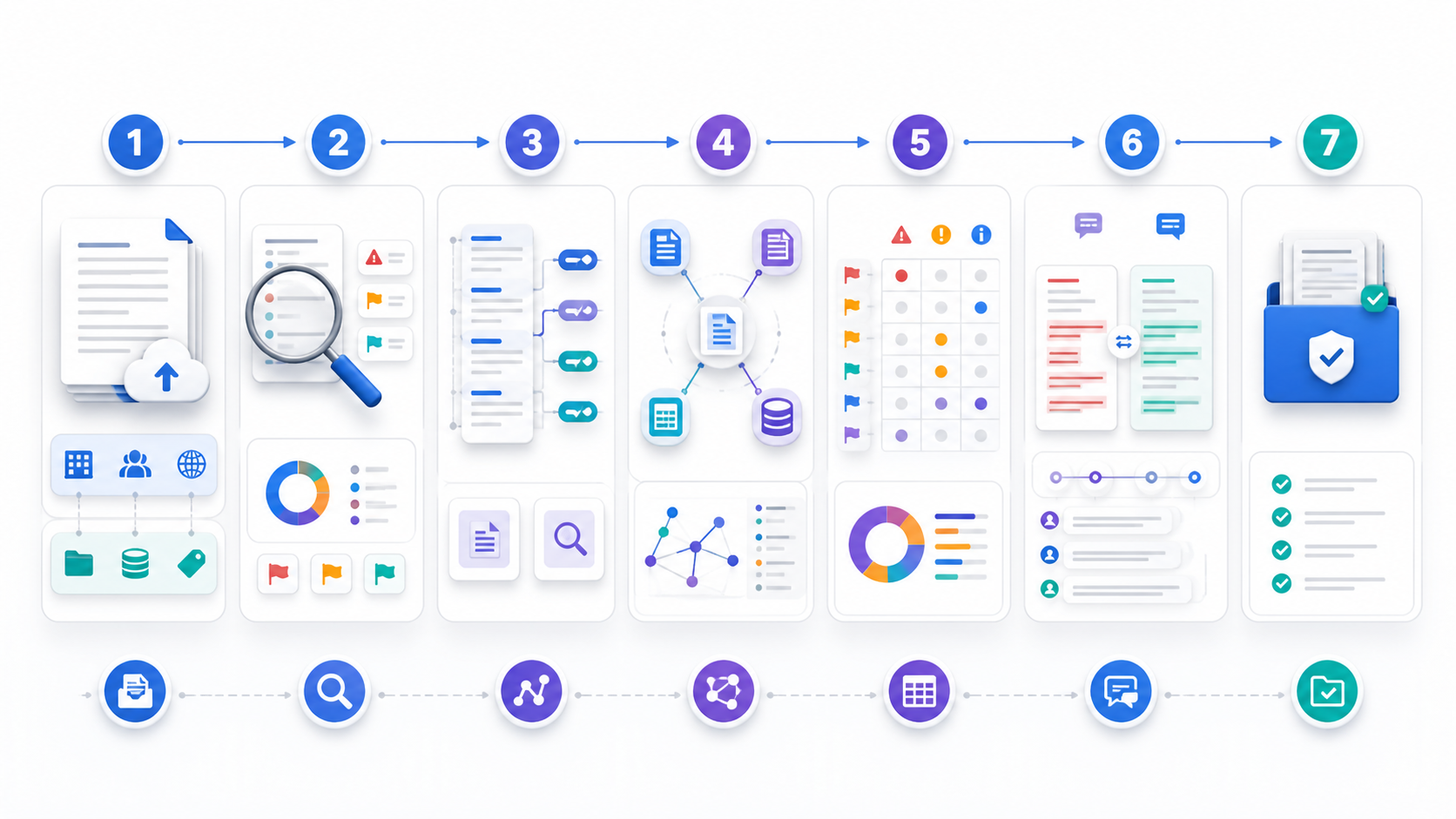
Complete intake, scope and triage, first-pass deal mapping, clause and cross-document analysis, issue prioritization, specialist review, redlining and negotiation, approval handoff, final-package verification, signature check, and obligation handoff.
完整收件、范围与分流、第一轮交易映射、条款与跨文件分析、问题排序、专业复核、红线与谈判、审批交接、最终文件包验证、签署检查及义务交接。
Who should participate in contract review?
谁应参与合同审查?
The business owner and accountable reviewer are central. Legal, finance, tax, procurement, security, privacy, insurance, technical, operational, HR, regulatory, or executive specialists should participate when the agreement triggers their domain.
业务负责人和可问责审核人是核心。当协议触发相应领域时,法律、财务、税务、采购、安全、隐私、保险、技术、运营、HR、监管或高管专家应参与。
How is contract review different from contract approval?
合同审查与合同审批有何不同?
Review explains the agreement, identifies issues, tests evidence, and recommends positions. Approval is the authorized decision to accept a final position within delegated limits. The processes connect but should preserve distinct roles and records.
审查解释协议、识别问题、检验证据并建议立场;审批是在授权范围内接受最终立场的授权决定。两者相互连接,但应保存不同角色与记录。
How many rounds should contract review take?
合同审查应该进行多少轮?
There is no universal number. The transaction’s complexity, completeness, deviations, specialist dependencies, counterparty responses, and decision speed determine the rounds. Track why each round remains necessary instead of targeting an arbitrary count.
没有统一轮数。交易复杂度、完整性、偏离、专业依赖、相对方响应和决策速度共同决定轮数。应追踪每轮为何仍有必要,而不是追求任意数字。
Can AI perform the whole contract review process?
AI 能否执行完整合同审查流程?
AI can support inventory, extraction, comparison, and issue preparation. Qualified people must confirm facts, legal and specialist judgments, business choices, redlines, approvals, final text, execution, and operational ownership.
AI 可以支持盘点、提取、比较与问题准备;合格人员必须确认事实、法律和专业判断、商业选择、红线、批准、最终文字、签署与运营责任。