What Competitor Benchmarking Means竞争者基准测试是什么
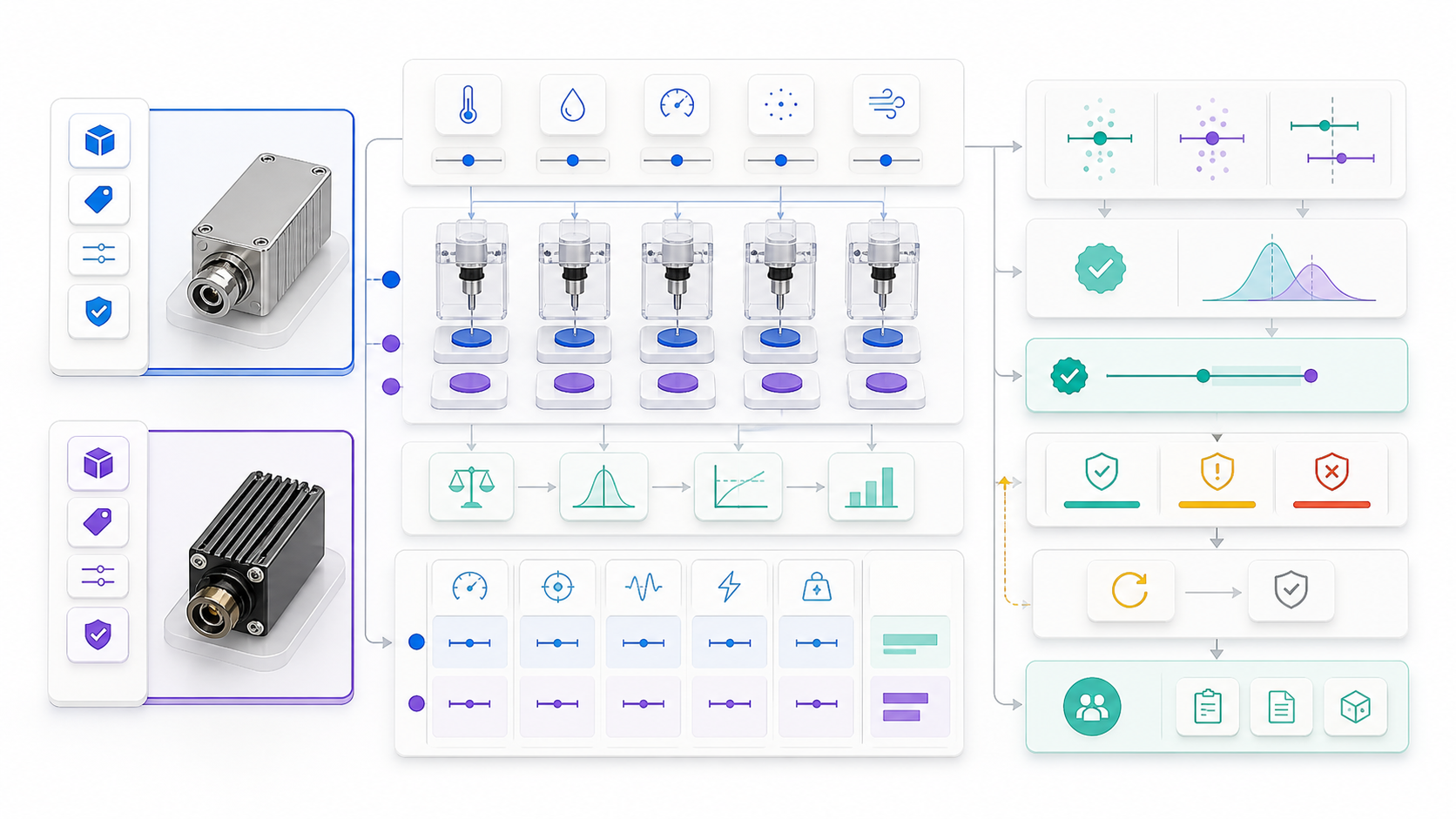
Competitor benchmarking is a controlled, evidence-based comparison of your product or process with one specified rival using matched identities, defined metrics, consistent conditions, and repeatable measurements. A benchmark is credible only when another qualified reviewer can understand what was compared, reproduce the procedure, trace the evidence, and see uncertainty and failure conditions.
竞争者基准测试是在身份匹配、指标明确、条件一致且测量可重复的前提下,把我方产品或流程与一个指定竞争者进行受控、基于证据的比较。只有当另一名合格审核者能理解比较对象、复现步骤、追溯证据并看到不确定性与失败条件时,结果才可信。
Use a head-to-head protocol when two named competitors must be tested under the same conditions. For peer sets, organization-wide metrics, strategic gap analysis, and recurring governance, follow the competitive benchmarking guide. For feature and experience research beyond controlled measurements, use the product benchmarking method. Choose the method that matches the decision and keep its evidence rules consistent.
当需要在相同条件下测试两个明确竞争者时,可采用一对一对标协议。若任务涉及同行集合、组织级指标、战略差距分析和持续治理,请参考竞争对标指南;若要研究受控测量之外的功能与体验,请使用产品对标方法。应根据决策选择方法,并始终保持证据规则一致。
Write the Benchmark Brief Before Testing测试前先写基准测试简报
State the decision, owner, deadline, user task, product scope, target market, consequence of error, and what result would change an action. “Choose a thermal design for the next prototype” is actionable; “prove our product is better” invites bias. Define exclusions, required precision, test budget, approval path, and a stopping rule before any result is visible.
写明决策、负责人、期限、用户任务、产品范围、目标市场、错误后果,以及什么结果会改变行动。“为下一原型选择散热设计”可执行;“证明我们的产品更好”会诱发偏见。在看到结果前,定义排除项、所需精度、测试预算、批准路径与停止规则。
Pre-register primary metrics and decision thresholds. Secondary observations can be exploratory, but label them as such. If teams add a favorable metric after testing or remove an unfavorable result without a documented protocol reason, the scorecard becomes advocacy rather than analysis.
预先登记主要指标和决策阈值。次要观察可以探索,但必须明确标记。如果团队在测试后新增有利指标,或没有协议理由就删除不利结果,评分卡就从分析变成宣传。
Match Product Identity, Samples, and Configuration匹配产品身份、样本与配置
Create a sample register for both sides: manufacturer, exact product name, model, generation, region, hardware revision, software or firmware version, package, accessories, acquisition channel, acquisition date, condition, serial or internal sample ID, and custody record. Photograph or otherwise document identity markers when permitted. A current retail unit should not be compared silently with a prototype, refurbished unit, or older regional variant.
为双方建立样本登记:制造商、准确产品名称、型号、代际、地区、硬件修订、软件或固件版本、套餐、附件、获取渠道、获取日期、状态、序列号或内部样本编号与保管记录。在允许情况下拍摄或记录身份标记。不能把当前零售产品悄然与原型、翻新机或旧版地区型号比较。
Decide whether one sample can answer the question. Manufacturing variation, wear, battery history, storage, updates, and setup may influence results. When resources limit sample count, state that limitation and avoid generalizing one unit to an entire product population.
判断单一样本能否回答问题。制造差异、磨损、电池历史、存储、更新和设置都可能影响结果。资源限制样本数量时,应说明限制,避免把一台样本推广到整个产品总体。
Choose Decision-Relevant Metrics and Thresholds选择与决策相关的指标和阈值
Start from the user task, failure mode, engineering requirement, service promise, or economic decision. For each metric record its definition, direction, unit, instrument, sampling method, test state, environmental conditions, repetitions, calculation, acceptance band, and evidence owner. Distinguish directly measured values from published specifications, derived calculations, ratings, and qualitative observations.
从用户任务、失败模式、工程要求、服务承诺或经济决策出发。为每项指标记录定义、方向、单位、仪器、抽样方法、测试状态、环境条件、重复次数、计算方式、接受区间和证据负责人。区分直接测量值、公开规格、派生计算、评分与定性观察。
| Metric field指标字段 | Required definition必需定义 | Why it matters重要原因 |
|---|---|---|
| Direction方向 | Higher, lower, target range, or pass/fail越高越好、越低越好、目标范围或通过/失败 | Prevents reversing meaning during scoring避免评分时颠倒含义 |
| Conditions条件 | Environment, load, setup, state, sequence, and duration环境、负载、设置、状态、顺序和时长 | Makes measurements comparable使测量可比 |
| Threshold阈值 | Minimum practical difference or acceptance band最小实际差异或接受区间 | Separates meaningful gaps from noise区分有意义差距与噪声 |
| Evidence class证据类别 | Measured, published, derived, observed, or inferred实测、公开、派生、观察或推断 | Prevents unlike evidence from looking equivalent避免不同证据看似等价 |
Control the Test Conditions and Sequence控制测试条件与顺序
Write a step-by-step protocol that fixes preparation, warm-up or stabilization, environment, load, network, power, fixtures, operator actions, instrument configuration, sampling rate, duration, reset, cleaning, and data capture. Use the same procedure for both products unless a documented product-specific requirement makes that invalid. In that case, report the difference instead of claiming identical conditions.
编写逐步协议,固定准备、预热或稳定、环境、负载、网络、电源、夹具、操作员动作、仪器配置、采样率、持续时间、重置、清洁与数据采集。除非有记录的产品特定要求使相同步骤无效,否则双方应使用相同流程;如有差异,应报告而不是声称条件完全相同。
Control order effects by randomizing or alternating test sequence where appropriate. Blind the operator or analyst to product identity when feasible. Record deviations immediately, including who approved them and whether they trigger exclusion or retest. Never repair the protocol retrospectively to make the preferred product look stable.
适当时通过随机或交替顺序控制次序效应。可行时对操作员或分析人员隐藏产品身份。立即记录偏差、批准人以及是否触发排除或复测。绝不能事后修改协议以让偏好产品显得稳定。
Verify Instruments, Repetition, and Measurement Quality验证仪器、重复次数与测量质量
Confirm that instruments are appropriate for the range and resolution, within their required calibration or verification state, configured consistently, and traceable to an internal record. Run a setup check with a known reference when possible. Separate instrument resolution, repeatability, operator effects, environment, sample variation, and data processing as potential uncertainty sources.
确认仪器适合测量范围与分辨率,处于要求的校准或验证状态,配置一致,并可追溯到内部记录。可行时用已知参考物检查设置。把仪器分辨率、重复性、操作员效应、环境、样本差异和数据处理作为潜在不确定性来源分别考虑。
There is no universal repetition count. Set repetitions before testing based on expected variability, measurement precision, decision risk, resources, and an appropriate statistical plan. Preserve every valid raw observation. If an outlier rule is justified, define it in advance and report results with and without exclusions when that materially affects the decision.
不存在通用重复次数。测试前根据预期变异、测量精度、决策风险、资源和适当统计计划确定次数。保存每个有效原始观察。如果异常值规则有充分依据,应预先定义;当排除结果实质影响决策时,同时报告含与不含异常值的结果。
Normalize Carefully and Keep Raw Metrics Visible谨慎归一化并保留原始指标
Convert units only with documented factors and preserve original values. Normalize for a decision-relevant denominator—such as capacity, area, mass, output, energy, or price—only when the relationship is meaningful. A ratio can hide scale or introduce bias, so report the numerator, denominator, and rationale beside the normalized value. Do not mix different definitions simply because labels look similar.
仅使用有记录的转换因子转换单位,并保留原始值。只有关系有意义时,才按与决策相关的分母归一化,例如容量、面积、质量、输出、能耗或价格。比率可能隐藏规模或引入偏差,因此应在归一化值旁报告分子、分母与理由。不能因为标签相似就混合不同定义。
A weighted score is optional. If used, derive weights from the decision and users before results are known, keep raw metrics and uncertainty visible, prevent a critical failure from being averaged away, and run a sensitivity analysis. If small weight changes reverse the winner, report a fragile decision rather than a confident ranking.
加权评分是可选项。如使用,应在结果出现前根据决策与用户确定权重,保留原始指标与不确定性,防止关键失败被平均掩盖,并进行敏感性分析。如果小幅权重变化就反转胜者,应报告决策脆弱,而不是给出自信排名。
A Repeatable Competitor Benchmarking Workflow可重复的竞争者基准测试流程
- Frame the decision. Define owner, use case, scope, risk, threshold, and stopping rule.界定决策。定义负责人、用途、范围、风险、阈值与停止规则。
- Register products and samples. Match exact identities, configurations, condition, acquisition, and custody.登记产品与样本。匹配准确身份、配置、状态、获取与保管。
- Predefine metrics. Fix definitions, direction, units, instruments, repetitions, thresholds, and evidence class.预定义指标。固定定义、方向、单位、仪器、重复次数、阈值与证据类别。
- Freeze the protocol. Control environment, setup, sequence, operator actions, capture, deviations, and retest rules.冻结协议。控制环境、设置、顺序、操作、采集、偏差与复测规则。
- Run and preserve. Capture raw observations, timestamps, versions, anomalies, exclusions, and reviewer notes.执行并保存。采集原始观察、时间、版本、异常、排除与审核备注。
- Analyze uncertainty. Summarize variation, intervals, practical thresholds, counter-evidence, and sensitivity.分析不确定性。总结变异、区间、实际阈值、反证与敏感性。
- Validate and retest. Independently review calculations and repeat material or unstable findings.验证并复测。独立复核计算,重复重要或不稳定发现。
- Hand off the decision. State verified gaps, limitations, options, owner, due date, and next review trigger.交接决策。说明已验证差距、限制、选项、负责人、期限与下次复核触发条件。
Separate Statistical Difference from Practical Importance区分统计差异与实际重要性
Report the observed difference, uncertainty or interval appropriate to the method, sample and repetition limits, and the predeclared practical threshold. A precise small difference may not matter to users or engineering; a large apparent gap may remain uncertain when samples are few or conditions unstable. Avoid declaring a winner from overlapping, noisy, or definition-mismatched evidence.
报告观察差异、适合该方法的不确定性或区间、样本与重复限制,以及预先声明的实际阈值。精确但很小的差异可能对用户或工程没有意义;样本少或条件不稳定时,看似巨大的差距仍可能不确定。不要根据重叠、嘈杂或定义不一致的证据宣布胜者。
Classify findings as verified gap, likely gap requiring more evidence, no meaningful difference under tested conditions, inconclusive, or invalid test. Preserve adverse and contradictory findings. State that results apply to the registered samples, versions, conditions, protocol, and date—not automatically to every unit, market, or future release.
把发现分类为已验证差距、可能差距但需要更多证据、测试条件下无实质差异、无法判断或测试无效。保留不利与矛盾发现。说明结果只适用于登记样本、版本、条件、协议与日期,而不能自动推广到所有产品、市场或未来版本。
Use AI to Organize Prepared Benchmark Evidence用 AI 组织已准备的基准证据
After identities, definitions, units, test results, and authorized reference files are prepared, AI can help organize rows, surface differences, summarize supplied documents, and draft hypotheses. It cannot perform physical tests, calibrate instruments, establish sample representativeness, repair an invalid protocol, or convert generated statements into measured facts.
在身份、定义、单位、测试结果和获授权参考文件准备完成后,AI 可以帮助组织行、展示差异、总结已提供文档并起草假设。它不能执行实体测试、校准仪器、证明样本代表性、修复无效协议,或把生成陈述转化为实测事实。
The verified InfiniSynapse Competitor Benchmarking Analyzer accepts user-entered product and competitor names, models, parameter names, values and units, supported reference files, and a natural-language instruction. Its visible outputs include a five-dimension radar, parameter comparison, pain-point insights, and differentiation suggestions. Submission requires sign-in. The tool is not represented as automatic discovery, web scraping, continuous monitoring, a real-time feed, or an independent test laboratory.
经核验的 InfiniSynapse 竞品对标分析器接收用户输入的我方与竞品名称、型号、参数名称、数值与单位、受支持参考文件和自然语言指令。可见输出包括五维雷达、参数对比、痛点洞察与差异化建议。提交需要登录。该工具不被描述为自动发现、网页抓取、持续监控、实时信息流或独立测试实验室。
Enter matched product identities, aligned parameter definitions and units, and authorized reference files. Review every AI-assisted output against raw measurements, dates, protocol, and uncertainty before action.
输入匹配的产品身份、对齐的参数定义与单位以及获授权参考文件。行动前,根据原始测量、日期、协议与不确定性复核每项 AI 辅助输出。
Hypothetical Example: Comparing Two Cooling Modules虚拟案例:比较两个散热模块
Illustrative scenario: an engineering team compares its fictional cooling module with one fictional rival for a prototype decision. It registers exact revisions and obtains two new samples of each. Before testing, it fixes ambient conditions, heat load, mounting pressure, interface material, warm-up, sensor placement, acquisition rate, run duration, alternating sequence, repetitions, and a maximum acceptable temperature-rise threshold.
演示情景:某工程团队为原型决策比较自家虚构散热模块与一个虚构竞品。团队登记准确修订版,并为双方各获取两个新样本。测试前固定环境条件、热负载、安装压力、界面材料、预热、传感器位置、采集率、运行时长、交替顺序、重复次数和最高可接受温升阈值。
The rival appears lower in one run, but the gap disappears after the team corrects an uneven mounting condition identified by the deviation log. The final report shows raw runs, sample variation, corrected protocol, both summaries, and the reason for retest. The conclusion is “no meaningful difference under the corrected tested conditions,” not “equal products.” The next action is a broader sample study before changing the design. All products and outcomes are hypothetical.
竞品在一次运行中似乎更低,但团队根据偏差日志纠正不均匀安装后,差距消失。最终报告展示原始运行、样本差异、修正协议、两份摘要和复测理由。结论是“修正后的测试条件下无实质差异”,而不是“产品完全相同”。下一行动是在改变设计前扩大样本研究。所有产品与结果均为虚构。
Common Competitor Benchmarking Mistakes竞争者基准测试常见错误
Different revisions, regions, packages, conditions, or software states invalidate apparent gaps.
不同修订、地区、套餐、状态或软件状态会使表面差距无效。
Define primary metrics, direction, weights, and thresholds before seeing results.
在看到结果前定义主要指标、方向、权重与阈值。
Environment, setup, sequence, operator, and state can create false differences.
环境、设置、顺序、操作员与状态可能制造虚假差异。
One observation cannot characterize variation or support broad population claims.
一次观察不能描述变异,也不能支持广泛总体主张。
Show original values, denominators, conversion factors, and sensitivity to choices.
展示原始值、分母、转换因子和对选择的敏感性。
Generated comparisons organize evidence; they do not replace controlled testing and human validation.
生成比较用于组织证据,不能替代受控测试与人工验证。
Frequently Asked Questions常见问题
It is a controlled, evidence-based comparison of your product or process with one specified rival using matched identities, defined metrics, consistent conditions, and repeatable measurements.
它是在身份匹配、指标明确、条件一致且测量可重复的情况下,把我方产品或流程与一个指定竞争者进行受控、基于证据的比较。
Start from the decision and user task, then choose a small set of measurable, comparable metrics with fixed definitions, direction, units, conditions, source, and acceptance threshold.
从决策与用户任务出发,选择少量可测、可比指标,并固定定义、方向、单位、条件、来源与接受阈值。
There is no universal number. Predefine repetitions from expected variability, measurement precision, decision risk, resources, and an appropriate statistical plan; do not choose the count after seeing results.
没有通用数量。根据预期变异、测量精度、决策风险、资源与适当统计计划预先确定,不要看到结果后再选择次数。
Only when weights reflect a documented decision and raw metrics remain visible. Run sensitivity checks because a total score can hide trade-offs, uncertainty, or a critical failure.
只有当权重反映有记录的决策且原始指标仍可见时才使用。总分可能隐藏取舍、不确定性或关键失败,因此要做敏感性检查。
AI can help organize supplied parameters and documents, but it cannot replace sample identity checks, controlled physical testing, calibrated measurement, provenance, uncertainty analysis, or accountable human review.
AI 可以帮助组织已提供参数与文档,但不能替代样本身份检查、受控实体测试、校准测量、出处、不确定性分析或有责任主体的人工复核。