What Is Product Benchmarking?什么是产品对标?
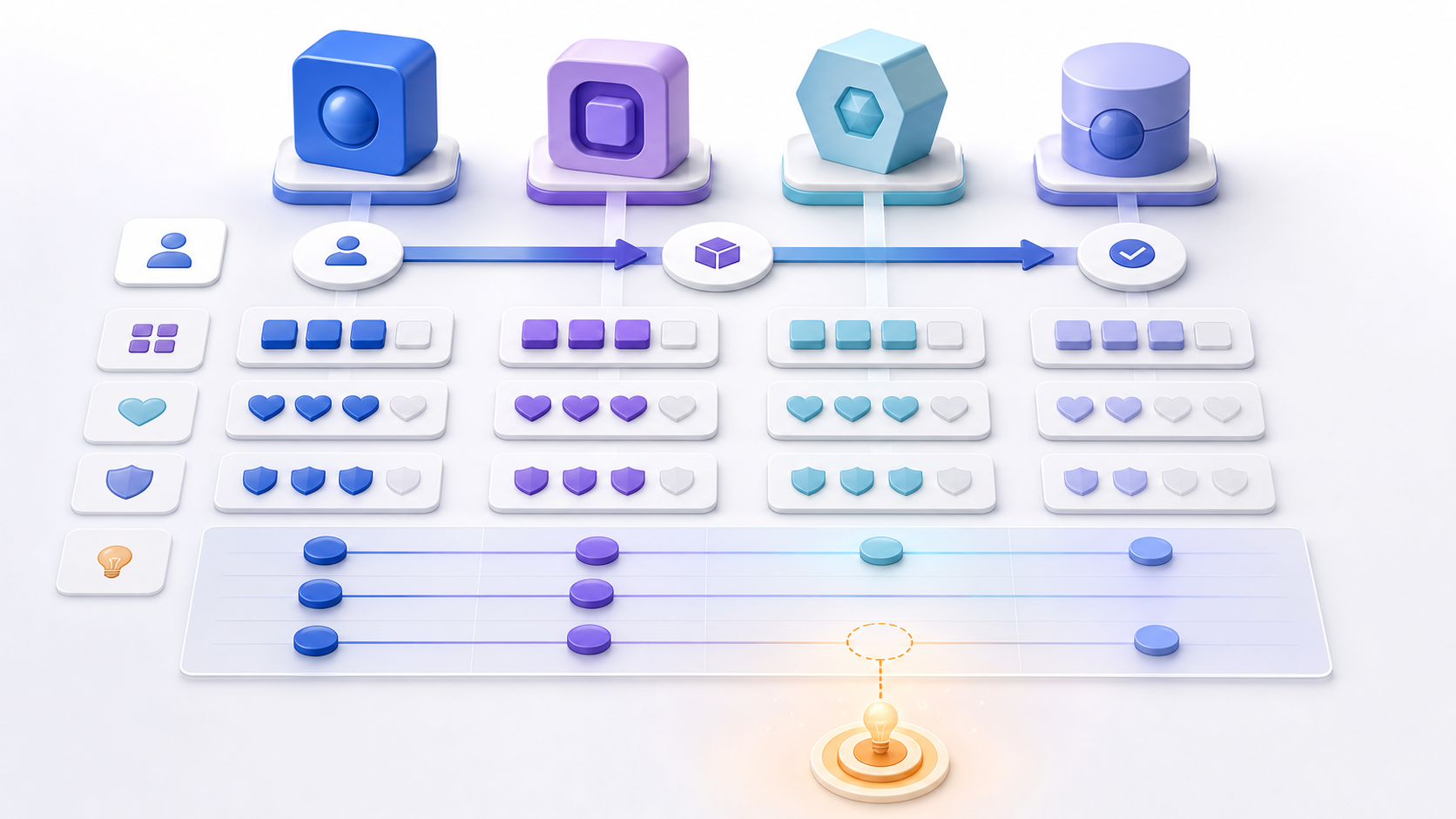
Product benchmarking is a structured comparison of products against shared customer tasks, conditions, criteria, and evidence. It shows where meaningful capability, experience, quality, value, or delivery gaps exist—and which gaps are worth improving for a named product decision.
产品对标是围绕共同客户任务、条件、标准和证据,对多个产品进行结构化比较。它揭示有意义的能力、体验、质量、价值或交付差距,并判断哪些差距值得为明确产品决策而改进。
Teams use product benchmarking to prioritize a roadmap, assess a new category, support positioning, prepare a redesign, test a purchase shortlist, diagnose churn, or identify an innovation opportunity. The useful output is not a decorative comparison table. It is a traceable explanation of who was compared, on which task, under what conditions, using what evidence, why a gap matters, and what should happen next.
团队可用产品对标确定路线图优先级、评估新类别、支持定位、准备重设计、测试采购候选、诊断流失或寻找创新机会。有效输出不是装饰性比较表,而是可追溯说明:比较了谁、针对什么任务、在什么条件下、使用什么证据、差距为何重要,以及下一步是什么。
A benchmark does not prove that the highest-scoring product is “best.” Product value depends on segment, job, constraints, price, ecosystem, risk, and implementation. A product with fewer capabilities can produce a better outcome because its workflow is clearer or its trade-offs fit the target user. Preserve that context instead of compressing every judgment into one universal score.
对标不能证明最高分产品就是“最好”。产品价值取决于细分、任务、约束、价格、生态、风险和实施。功能较少的产品可能因流程更清晰或取舍更符合目标用户而产生更好结果。应保留这些环境,而不是把每个判断压缩成一个通用分数。
Product Benchmarking vs Competitive Benchmarking and Competitor Analysis产品对标、竞争对标与竞品分析的区别
Product benchmarking focuses on what customers can do with products and what outcomes, effort, quality, and trade-offs they experience. Competitive benchmarking is broader: it may compare organizations, processes, channels, market performance, operations, or financial measures. Competitor analysis develops a fuller view of selected rivals, including strategy, business model, positioning, customers, go-to-market, capabilities, and signals. A competitive landscape explains the wider player structure.
产品对标聚焦客户能用产品完成什么,以及他们体验到的结果、投入、质量和取舍。竞争对标更广,可比较组织、流程、渠道、市场表现、运营或财务指标。竞品分析形成对选定对手更完整的理解,包括战略、商业模式、定位、客户、市场路径、能力与信号。竞争格局解释更广泛的参与者结构。
| Method方法 | Center of comparison比较中心 | Typical decision典型决策 |
|---|---|---|
| Product benchmarking产品对标 | Tasks, features, experience, quality, value任务、功能、体验、质量、价值 | Roadmap, design, positioning, selection路线图、设计、定位、选型 |
| Competitive benchmarking竞争对标 | Standardized organizational or performance measures标准化组织或绩效指标 | Performance gap and improvement priority绩效差距与改进优先级 |
| Competitor analysis竞品分析 | Selected rival as a business and competitor作为企业和竞争者的选定对手 | Strategic response and threat assessment战略响应与威胁评估 |
| Product testing产品测试 | One product against requirements or hypotheses一个产品相对要求或假设 | Release, quality, usability, compliance发布、质量、可用性、合规 |
Start with the Product Decision and Customer Tasks从产品决策与客户任务开始
Write a decision statement before choosing products or criteria: “Should we improve, remove, add, or reposition capability X for segment Y and task Z in the next planning cycle?” Add the decision owner, deadline, alternatives, constraints, and consequence of being wrong. A benchmark for roadmap prioritization needs different evidence from a procurement shortlist or an experience redesign.
在选择产品或标准前写决策陈述:“下一规划周期中,我们是否应为细分 Y 和任务 Z 改进、移除、新增或重新定位能力 X?”补充决策负责人、期限、替代方案、约束和错误后果。用于路线图优先级的对标,与采购候选或体验重设计需要不同证据。
Define the user, buyer, context, trigger, starting state, desired outcome, and complete task path. “Reporting” is a category; “a regional operations manager turns weekly exception data into an approved corrective-action brief within 30 minutes” is a benchmarkable task. Include setup, permissions, data import, error recovery, collaboration, export, administration, support, and renewal where they affect the outcome.
定义用户、购买者、环境、触发、起始状态、期望结果和完整任务路径。“报告”只是类别;“区域运营经理在 30 分钟内把每周异常数据转化为获批整改简报”才是可对标任务。若设置、权限、数据导入、错误恢复、协作、导出、管理、支持和续约会影响结果,就应纳入。
State what is out of scope. A benchmark can compare one task deeply, several workflows broadly, or a whole product at portfolio level, but it cannot do all three with equal rigor. Define the product version, plan, platform, device, region, language, integrations, data state, and test date. These details determine whether observations are genuinely comparable.
明确范围外内容。对标可以深入比较一个任务、广泛比较多个工作流,或在组合层面评估整个产品,但无法同等严谨地同时完成三者。定义产品版本、套餐、平台、设备、地域、语言、集成、数据状态和测试日期,这些细节决定观察是否真正可比。
Choose Comparable Products and Reference Types选择可比产品与参照类型
Select the smallest set that represents the decision. Include direct alternatives serving the same segment and job, an indirect substitute that customers actually use, and a best-in-class task reference when relevant. Add your own product or baseline version. Do not include famous brands solely for presentation value, and do not exclude inconvenient products because they expose a weakness.
选择能代表决策的最小集合。纳入服务同一细分和任务的直接替代、客户实际使用的间接替代,以及相关时的最佳任务参照;加入自家产品或基线版本。不要仅为演示效果加入知名品牌,也不要因某产品暴露弱点而排除它。
Check comparability before testing. Are plans equivalent? Are capabilities generally available or beta? Does one product require a paid integration, implementation service, proprietary hardware, or administrator permission? Are prices quoted in the same currency, billing period, seat basis, usage level, and contract term? Record exceptions rather than forcing them into a false yes/no cell.
测试前检查可比性。套餐是否等价?能力是正式可用还是测试版?某产品是否需要付费集成、实施服务、专有硬件或管理员权限?价格是否采用相同币种、计费周期、席位口径、使用水平和合同期限?记录例外,不要强塞进虚假的是/否单元格。
Version control is part of the method. Capture product, version or observed release, plan, platform, region, language, account state, data set, configuration, integrations, test date, and evidence source. A later rerun must be able to explain whether a difference came from the product, the setup, or the test.
版本控制是方法的一部分。记录产品、版本或观察到的发布、套餐、平台、地域、语言、账户状态、数据集、配置、集成、测试日期和证据来源。后续复测必须能够解释差异来自产品、设置还是测试。
Build a Product Benchmarking Criteria Framework建立产品对标评价维度框架
Derive criteria from customer requirements and the named decision, not from whatever is easiest to observe. Common categories include task coverage, functional depth, workflow effort, learnability, error prevention and recovery, accessibility, reliability, speed under defined conditions, interoperability, administration, security evidence, support, total cost, and outcome quality. Not every benchmark needs every category.
评价标准应来自客户要求和明确决策,而不是来自最容易观察的内容。常见类别包括任务覆盖、功能深度、流程投入、易学性、错误预防与恢复、可访问性、可靠性、明确条件下的速度、互操作、管理、安全证据、支持、总成本和结果质量。并非每次对标都需要全部类别。
Turn each criterion into an operational definition. “Easy to use” is not measurable; “a first-time target user completes the task without moderator assistance, with no critical error, within a defined time window” is. Specify measure, unit, direction, task, environment, sample, collection method, scoring rule, and missing-data treatment. Separate required gates from differentiators: a failed regulatory requirement should not be averaged away by cosmetic strengths.
把每个标准转化为操作定义。“易用”不可测量;“首次使用的目标用户在规定时间内、无主持人帮助且不出现关键错误地完成任务”可以测量。明确指标、单位、方向、任务、环境、样本、采集方法、评分规则和缺失值处理。区分必过门槛与差异化因素:监管要求失败不能被外观优势平均掉。
Can the product complete the required job, at what depth, and with which constraints?
产品能否完成所需任务、深度如何、有哪些约束?
What effort, success, errors, confidence, and recovery occur across the full task?
完整任务中的投入、成功、错误、信心和恢复如何?
How reliable, accessible, secure, accurate, and supportable is the outcome?
结果的可靠、可访问、安全、准确和可支持程度如何?
Do price, implementation, ecosystem, and trade-offs fit the segment and strategy?
价格、实施、生态和取舍是否匹配细分与战略?
Design a Feature Matrix That Measures More Than Presence设计不止衡量“有无”的功能矩阵
A binary feature matrix is useful for initial coverage, but it hides important differences. For each capability, record availability, depth, plan, platform, setup, permissions, input limits, supported workflows, output quality, integrations, maturity, evidence date, and source. Use statuses such as native, configurable, integration-dependent, service-assisted, limited, beta, absent, and unknown. Define them before collection.
二元功能矩阵适合初步覆盖,却会隐藏重要差异。对每项能力记录可用性、深度、套餐、平台、设置、权限、输入限制、支持工作流、输出质量、集成、成熟度、证据日期和来源。可使用原生、可配置、依赖集成、服务辅助、受限、测试版、缺失和未知等状态,并在采集前定义。
Group features under customer tasks and outcomes. This prevents a product with many minor controls from outranking one that solves the critical job coherently. Add dependency and sequence: a powerful export has little value if data preparation fails; an automated action may create risk without review and rollback. Capture the shortest successful path and the common failure path, not only the polished demo path.
按客户任务和结果组织功能,避免拥有大量次要控件的产品压过能连贯解决关键任务的产品。加入依赖与顺序:如果数据准备失败,强大导出价值有限;若缺少审核和回滚,自动操作可能制造风险。记录最短成功路径和常见失败路径,而不只记录精心演示路径。
Do not infer absence from silence. A marketing page that does not mention a capability is evidence only that the page did not show it. Mark unknown and plan validation through documentation, an authorized trial, a product demonstration, support, or direct testing. Likewise, a feature claim does not prove usability, reliability, or outcome quality.
不要从沉默推断缺失。营销页未提某能力,只能证明该页面没有展示。标记为未知,并通过文档、获授权试用、产品演示、支持或直接测试验证。同样,功能声明不能证明可用性、可靠性或结果质量。
Benchmark User Experience with Equivalent Tasks用等价任务对标用户体验
Experience benchmarking requires a common protocol. Define participant profile, prior experience, task scenario, starting state, data, device, environment, assistance rules, completion criteria, critical errors, time limits, and order effects. Use the same task intent across products while allowing product-specific paths. If one product receives training or prepared data, give the equivalent condition to others or document the difference.
体验对标需要共同协议。定义参与者画像、既往经验、任务场景、起始状态、数据、设备、环境、帮助规则、完成标准、关键错误、时间限制和顺序效应。各产品保持同一任务意图,同时允许产品特有路径。若某产品获得培训或预处理数据,其他产品也应获得等价条件,或记录差异。
Combine behavioral and attitudinal measures: completion, critical error, time on task, steps, assistance, recovery, output quality, perceived effort, confidence, trust, and preference. A faster task is not better if the output is wrong; a preferred interface is not effective if users fail. Use representative users when the decision depends on user capability, accessibility needs, domain expertise, or organizational process.
结合行为与态度指标:完成、关键错误、任务时间、步骤、帮助、恢复、输出质量、感知投入、信心、信任和偏好。如果输出错误,更快并不更好;如果用户失败,受偏爱的界面也不代表有效。当决策取决于用户能力、可访问需求、领域专业或组织流程时,应使用代表性用户。
For digital products, accessibility should be evaluated with a defined scope and representative sample, supported by manual review and relevant tools. Automated checks can find some issues but do not establish complete accessibility. Keep conformance evidence separate from preference scores and treat critical barriers as gates where required.
对数字产品,可访问性应在明确范围与代表性样本下评估,并辅以人工复核和相关工具。自动检查只能发现部分问题,不能证明完整可访问性。将符合性证据与偏好分数分开,并在需要时把关键障碍作为门槛。
Normalize Evidence, Scores, and Confidence归一化证据、分数与置信度
Store every observation with product, version, criterion, value, unit, task, context, source, evidence excerpt or test record, date, collector, and confidence. Separate observed facts, vendor claims, test results, estimates, and interpretations. Resolve units, periods, denominators, direction, missing values, and duplicated evidence before scoring. Unknown is not zero, and “not tested” is not failure.
每项观察都应包含产品、版本、标准、数值、单位、任务、环境、来源、证据摘录或测试记录、日期、采集人和置信度。区分观察事实、厂商声明、测试结果、估算和解释。评分前解决单位、时期、分母、方向、缺失值和重复证据。未知不等于零,未测试不等于失败。
Normalize only comparable measures. Threshold scoring works for requirements; anchored ordinal scales work for assessed maturity; min-max or ratio methods may work for stable numeric measures, but can be distorted by outliers or small samples. Publish anchors and formulas. Show raw values beside normalized values so reviewers can see what the score hides.
只归一化可比指标。阈值评分适合要求;有锚点的序数尺度适合评估成熟度;极差或比例方法可能适合稳定数值,却会受异常值或小样本扭曲。公布锚点与公式,并在归一化值旁展示原始值,让审核者看到分数隐藏了什么。
Weight criteria before seeing final scores. Derive weights from segment needs, strategic priorities, risk, and decision type. Keep mandatory gates outside the weighted total. Run sensitivity analysis by changing plausible weights, excluding low-confidence evidence, and varying missing-data treatment. If the winner changes easily, report a conditional result rather than a definitive ranking.
在看到最终分数前确定权重,依据细分需求、战略优先级、风险和决策类型设置。把必过门槛放在加权总分之外。通过改变合理权重、排除低置信证据和调整缺失值处理开展敏感性分析。若领先者很容易变化,应报告条件性结果,而非确定排名。
Maintain a benchmark decision record, not only a final scorecard. Preserve the original question, approved scope, product eligibility rules, task scripts, test data, evaluator notes, evidence snapshots, calculation version, exceptions, review comments, decisions influenced, and refresh triggers. Assign roles for benchmark owner, product specialist, research lead, evidence collector, method reviewer, domain reviewer, decision owner, and data steward as needed. This record allows another reviewer to reproduce the comparison, challenge a weak assumption, and distinguish a real product change from a methodology change. Measure the practice through evidence completeness, comparability exceptions, correction rate, time to reviewed result, decisions informed, validation outcomes, and maintenance cost—not through the number of products tracked or cells filled.
维护对标决策记录,而不只保存最终评分卡。保留原始问题、批准范围、产品纳入规则、任务脚本、测试数据、评价者说明、证据快照、计算版本、例外、复核意见、受影响决策和更新触发器。按需分配对标负责人、产品专家、研究负责人、证据采集人、方法审核人、领域审核人、决策负责人和数据管理员。该记录使其他审核者可以复现比较、质疑薄弱假设,并区分真实产品变化与方法变化。衡量体系时关注证据完整度、可比性例外、修正率、形成审核结果的时间、支持的决策、验证结果和维护成本,而不是跟踪产品数量或填满的单元格。
A Ten-Step Product Benchmarking Process产品对标十步流程
- Frame the product decision. Name the choice, segment, owner, deadline, constraints, and success conditions.界定产品决策。明确选择、细分、负责人、期限、约束和成功条件。
- Define users and tasks. Describe the starting state, complete workflow, desired outcome, and critical failure.定义用户与任务。描述起始状态、完整工作流、期望结果和关键失败。
- Select reference products. Include direct, indirect, baseline, and best-in-class references only when decision-relevant.选择参照产品。仅在与决策相关时纳入直接、间接、基线和最佳实践参照。
- Lock versions and conditions. Record plan, platform, configuration, data, integrations, region, language, and date.锁定版本与条件。记录套餐、平台、配置、数据、集成、地域、语言和日期。
- Define criteria and gates. Translate customer requirements into operational measures, thresholds, and exclusions.定义标准与门槛。把客户要求转化为操作指标、阈值和排除项。
- Design the evidence plan. Assign sources, tests, owners, samples, confidence rules, and ethical controls.设计证据计划。分配来源、测试、负责人、样本、置信规则和伦理控制。
- Collect and test consistently. Use equivalent tasks and preserve claims, observations, failures, and unknowns.一致采集与测试。使用等价任务,并保留声明、观察、失败和未知项。
- Normalize and score. Resolve comparability, publish formulas, apply gates, and show raw values.归一化与评分。解决可比性、公布公式、应用门槛并展示原始值。
- Interpret gaps. Diagnose customer importance, cause, strategic fit, feasibility, and likely competitor response.解释差距。诊断客户重要性、原因、战略匹配、可行性和竞争者可能反应。
- Decide, validate, and refresh. Assign an action, owner, test, threshold, date, and update trigger.决策、验证并更新。分配行动、负责人、测试、阈值、日期和更新触发器。
Use stage gates. A rapid desk pass can eliminate irrelevant products and expose unknowns. A controlled hands-on pass validates workflows. User research is reserved for decisions where behavior, comprehension, accessibility, or trust could reverse the conclusion. Stop when added evidence is unlikely to change the decision enough to justify its cost—not when the matrix looks complete.
使用阶段门。快速案头轮次排除无关产品并暴露未知项;受控实测验证工作流;当行为、理解、可访问性或信任可能逆转结论时,再投入用户研究。当新增证据不足以显著改变决策、其价值不及成本时停止,而不是等矩阵看似完整。
Product Benchmarking Example: Evidence Review Workflow产品对标案例:证据审核工作流
Hypothetical example: a product team is deciding whether to prioritize collaborative evidence review for regulated mid-market strategy teams. It compares its current workflow with two direct alternatives and one general-purpose substitute. The example uses invented labels and illustrative ranges; it does not describe real products or InfiniSynapse performance.
虚拟案例:某产品团队正在决定是否为受监管的中端战略团队优先建设协作式证据审核。它把当前工作流与两个直接替代和一个通用替代比较。案例使用虚构标签和示意区间,不描述真实产品或 InfiniSynapse 表现。
The target task is: an analyst imports ten mixed-format sources, links claims to evidence, asks a reviewer to resolve two conflicts, and exports an approved comparison brief. Critical gates are access control, traceability from conclusion to source, and reversible reviewer actions. Differentiators are setup effort, conflict visibility, review completion, output clarity, and total cost under the defined team size.
目标任务是:分析师导入十个混合格式来源,把主张连接到证据,请审核者解决两个冲突,并导出获批比较简报。关键门槛是访问控制、从结论到来源的可追溯性,以及审核操作可撤销。差异化因素包括设置投入、冲突可见性、审核完成、输出清晰度和明确团队规模下的总成本。
| Criterion标准 | Method方法 | Illustrative finding示意发现 | Decision implication决策影响 |
|---|---|---|---|
| Traceability gate可追溯门槛 | Complete the same claim-to-source task完成相同主张到来源任务 | One substitute requires manual links outside the product一个替代需在产品外手工维护链接 | Exclude it for the regulated segment, retain for adjacent users对受监管细分排除,对相邻用户保留 |
| Review effort审核投入 | Equivalent data, reviewer role, and completion rule等价数据、审核角色和完成规则 | Two products are similar; confidence is limited by a small sample两个产品相近,但小样本限制置信度 | Run five representative-user sessions before prioritizing确定优先级前开展五次代表性用户测试 |
| Conflict recovery冲突恢复 | Seed the same contradictory evidence植入相同矛盾证据 | The current product hides conflict state after reassignment当前产品在重新分配后隐藏冲突状态 | Treat visibility as a workflow defect, not a missing feature把可见性视为流程缺陷,而非缺少功能 |
| Total cost总成本 | Same seats, period, support, and required integration相同席位、时期、支持和必需集成 | Published prices are not comparable without implementation不含实施时公开价格不可比 | Request equivalent scoped estimates; keep cost unknown meanwhile请求等价范围估算,此前保持成本未知 |
The team does not copy the product with the most features. It identifies a high-importance gap: reviewers lose conflict context during handoff. The hypothesis is that persistent conflict state improves review completion and trust for the target segment. Before roadmap commitment, the team prototypes the revised state, tests it on representative tasks, sets a critical-error threshold, and checks whether the change creates notification or permission problems.
团队没有复制功能最多的产品,而是识别出一个高重要性差距:审核者在交接中丢失冲突环境。假设是持续显示冲突状态能提升目标细分的审核完成和信任。路线图承诺前,团队制作改进状态原型,在代表性任务上测试,设置关键错误阈值,并检查变更是否制造通知或权限问题。
Turn Product Gaps into Positioning and Innovation Opportunities把产品差距转化为定位与创新机会
A gap is not automatically an opportunity. Evaluate customer importance, frequency, severity, satisfaction with alternatives, willingness to change, strategic fit, feasibility, cost, risk, defensibility, and likely response. Classify gaps as parity requirements, segment differentiators, experience defects, evidence gaps, strategic trade-offs, or deliberate non-goals. “Missing” can be a disciplined choice.
差距不自动等于机会。评估客户重要性、频率、严重度、对替代的满意度、改变意愿、战略匹配、可行性、成本、风险、防御性和可能反应。把差距分类为同等要求、细分差异化、体验缺陷、证据缺口、战略取舍或有意不做。缺失也可能是有纪律的选择。
Trace causes before selecting solutions. A low completion rate might arise from information architecture, permissions, unclear terminology, poor defaults, missing integration, slow response, or training—not a missing feature. Use opportunity statements that name user, context, desired outcome, barrier, evidence, confidence, and validation. Generate multiple solutions only after the problem is stable enough to act on.
选择方案前追溯原因。低完成率可能来自信息架构、权限、术语不清、默认值不佳、缺少集成、响应慢或培训,而非缺功能。机会陈述应写明用户、环境、期望结果、障碍、证据、置信度和验证。只有当问题足够稳定、可以行动后,才生成多个方案。
Prioritize with more than benchmark rank. Combine expected customer impact, strategic fit, confidence, effort, risk, dependency, reversibility, and learning value. Assign an owner and a testable next step. Re-benchmark when a major product version, competitor release, platform change, customer requirement, regulation, or pricing model could alter the conclusion.
优先级不能只看对标排名。结合预期客户影响、战略匹配、置信度、投入、风险、依赖、可逆性和学习价值,并分配负责人及可测试下一步。当主要版本、竞争发布、平台变化、客户要求、法规或定价模式可能改变结论时重新对标。
Product Benchmarking Tools, Software, and AI产品对标工具、软件与 AI
Choose tools after the method. A spreadsheet can manage a small feature matrix when definitions, evidence links, versions, and formulas are controlled. A database helps with repeated products, capabilities, tasks, relationships, evidence history, and permissions. Testing and analytics tools support behavioral measurement. Survey and interview systems collect user evidence. Collaboration and visualization tools support review and decision records.
应在方法确定后选择工具。只要定义、证据链接、版本和公式受控,电子表格可以管理小型功能矩阵;数据库适合重复产品、能力、任务、关系、证据历史和权限;测试与分析工具支持行为测量;调查与访谈系统收集用户证据;协作和可视化工具支持复核与决策记录。
AI can extract supplied feature claims, map them to a schema, compare evidence fields, identify missing values, cluster feedback, flag contradictions, summarize changes, and draft a product comparison. It can also invent capabilities, confuse plans or versions, treat marketing claims as tested facts, overlook qualifiers, and over-score fluent descriptions. Require citations to supplied evidence, explicit unknowns, structured outputs, test samples, access controls, and human approval.
AI 可以提取已提供的功能声明、映射到结构、比较证据字段、识别缺失值、聚类反馈、标记矛盾、总结变化并起草产品比较;也可能虚构能力、混淆套餐或版本、把营销声明当测试事实、忽略限定条件并给流畅描述过高分。应要求引用已提供证据、明确未知项、使用结构化输出、抽样测试、执行访问控制并由人工批准。
Prepare the product set and versions, customer tasks, comparison dimensions, and dated evidence. The InfiniSynapse Competitor Benchmarking Analyzer can help organize those supplied inputs into a structured comparison; verify capabilities, test conditions, scores, and product decisions with your team.
准备产品集合与版本、客户任务、比较维度和带日期的证据。InfiniSynapse 竞品对标分析器可以辅助把这些已提供输入组织成结构化比较;请由团队核验能力、测试条件、分数和产品决策。
Common Product Benchmarking Mistakes and Validation Checks产品对标常见错误与验证检查
Measure customer tasks, depth, constraints, experience, and outcomes—not checkbox volume.
衡量客户任务、深度、约束、体验与结果,而不是复选框数量。
Lock version, plan, platform, region, configuration, data, and test date.
锁定版本、套餐、平台、地域、配置、数据和测试日期。
Keep unknown visible and create a validation route before scoring.
保持未知可见,并在评分前建立验证路径。
Agree on weights first and test whether plausible changes reverse the conclusion.
先确定权重,再测试合理变化是否逆转结论。
Diagnose user value, cause, strategic fit, feasibility, and trade-offs first.
先诊断用户价值、原因、战略匹配、可行性和取舍。
People must validate sources, run representative tests, and own decisions.
人工必须核验来源、执行代表性测试并对决策负责。
Before delivery, review decision scope, product comparability, task equivalence, criteria definitions, version and plan, evidence provenance, missing-data treatment, calculation reproduction, weight sensitivity, contradictions, user representation, accessibility, legal and ethical collection, and traceability from recommendation to evidence. Confirm that required gates cannot be hidden by a weighted total.
交付前复核决策范围、产品可比性、任务等价性、标准定义、版本与套餐、证据来源链、缺失值处理、计算复现、权重敏感性、矛盾、用户代表性、可访问性、合法合规采集,以及从建议到证据的可追溯性。确认必过门槛不能被加权总分隐藏。
Frequently Asked Questions常见问题
It is a structured comparison of products against shared customer tasks, conditions, criteria, and evidence to identify meaningful gaps, trade-offs, and improvement opportunities.
它围绕共同客户任务、条件、标准和证据结构化比较产品,以识别有意义的差距、取舍和改进机会。
Compare decision-relevant capabilities, end-to-end tasks, usability, quality, performance, accessibility, pricing conditions, support, and outcomes under consistent versions and conditions.
在一致版本与条件下,比较与决策相关的能力、端到端任务、可用性、质量、性能、可访问性、定价条件、支持和结果。
Product benchmarking focuses on product capability and customer experience. Competitive benchmarking can compare wider organizational, process, market, or operational performance.
产品对标聚焦产品能力与客户体验;竞争对标可比较更广泛的组织、流程、市场或运营表现。
Use the smallest set that represents the decision, often direct alternatives plus one indirect or best-in-class reference. Comparability matters more than quantity.
使用能代表决策的最小集合,通常是直接替代加一个间接或最佳实践参照。可比性比数量更重要。
AI can organize supplied evidence and flag gaps, but people must define tasks, run or validate tests, resolve comparability issues, protect data, and own decisions.
AI 可以组织已提供证据并标记差距,但人工必须定义任务、执行或验证测试、解决可比性问题、保护数据并负责决策。