What Is a Competitive Landscape?什么是竞争格局?
Quick answer: A competitive landscape is a structured view of the organizations, substitutes, segments, positions, relationships, and changes that shape buyer choice within a defined market boundary. It shows how competition works as a system—not merely which brands appear in a list.
快速回答:竞争格局是在明确市场边界内,对影响买方选择的组织、替代方案、细分、定位、关系和变化所作的结构化呈现。它说明竞争如何作为一个系统运行,而不只是罗列品牌名称。
People search for a competitive landscape when they need orientation before making a product, market-entry, positioning, partnership, investment, or resource-allocation decision. A useful landscape answers five practical questions: what market are we actually examining; which choices can satisfy the same buyer job; how are those choices grouped; on which dimensions do buyers distinguish them; and what is changing enough to alter the decision?
当团队需要为产品、市场进入、定位、合作、投资或资源配置决策建立方向感时,通常会研究竞争格局。有效的格局应回答五个实际问题:我们究竟在研究哪个市场;哪些选择能够满足同一买方任务;这些选择如何分组;买方通过哪些维度区分它们;哪些变化足以改变决策。
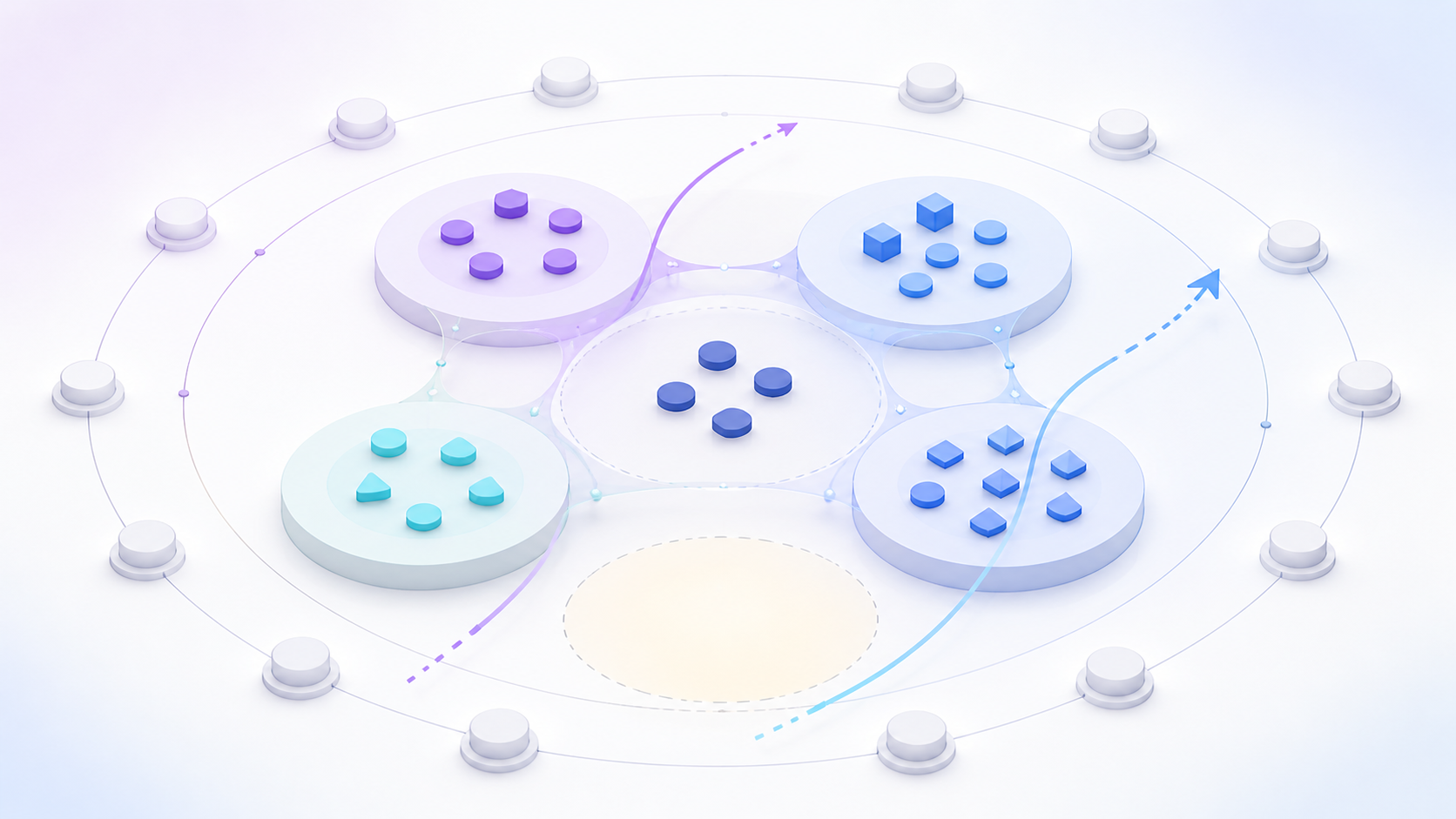
The output may include an ecosystem map, strategic-group map, segment matrix, value-chain view, positioning map, trend register, and concise implications. None of these visuals is the landscape by itself. The landscape is the evidence-backed model connecting them. A polished two-axis chart can be misleading if the boundary is vague, competitors are cherry-picked, axes are convenient rather than decision-relevant, or current claims are mixed with old evidence.
输出可以包括生态图、战略群组图、细分矩阵、价值链视图、定位图、趋势台账和简洁影响说明。但任何单一图表都不等于竞争格局;格局是把它们连接起来的、以证据为基础的模型。如果边界模糊、竞争者被选择性纳入、坐标轴只求方便而非与决策相关,或把当前陈述与陈旧证据混在一起,再精美的二维图也会误导。
Use this guide when you need a defensible overview of market structure. Do not use it as a substitute for legal competition analysis, audited market-share measurement, technical due diligence, primary customer research, or a detailed competitor analysis of selected firms. Those tasks can use the landscape as a starting hypothesis, but each requires its own methods and evidence standard.
当你需要一个可辩护的市场结构概览时,可以使用本指南。不要把它替代法律竞争分析、经审计的市场份额测量、技术尽调、一手客户研究或针对特定企业的竞品分析。这些任务可以把格局作为初始假设,但各自仍需要专门方法与证据标准。
Define the Decision and Market Boundary First先定义决策问题与市场边界
Start with the decision, not with a search for “top competitors.” Write one sentence that names the decision, owner, audience, geography, customer, use case, time horizon, and required level of confidence. “Understand collaboration software” is too broad. “Decide which mid-market product-development workflow in the UK to serve during the next twelve months” creates a workable boundary and reveals what evidence matters.
应从决策开始,而不是搜索“头部竞争者”。用一句话写清决策、负责人、受众、地区、客户、使用场景、时间范围和所需置信度。“了解协作软件”过于宽泛;“决定未来十二个月服务英国中型企业的哪类产品开发工作流”则形成了可操作边界,也能揭示真正需要的证据。
Describe the market from the buyer’s job and switching set. Category labels are often created by vendors, analysts, regulators, or historical convention; they do not always match what buyers compare. A buyer may weigh dedicated software against a general platform, an agency, an internal workflow, a spreadsheet, delay, or doing nothing. If the job is “coordinate product evidence before a launch,” all credible ways of achieving that outcome belong in the discovery set, even when they come from different categories.
应从买方任务和可切换选择集合描述市场。品类标签常由供应商、分析机构、监管者或历史惯例形成,并不总与买方实际比较一致。买方可能在专用软件、通用平台、代理服务、内部流程、电子表格、推迟行动或维持现状之间权衡。如果任务是“在发布前协调产品证据”,所有可信实现路径都应进入发现集合,即使它们来自不同品类。
| Boundary边界 | Question to answer需要回答的问题 | Exclusion rule排除规则 |
|---|---|---|
| Customer客户 | Which buyer, user, and economic decision maker?买方、用户和经济决策者分别是谁? | Exclude offers unable to serve the defined segment.排除无法服务目标细分的方案。 |
| Job and use case任务与场景 | What outcome triggers evaluation and switching?什么结果触发评估与切换? | Exclude adjacent tools that do not satisfy the core job.排除不能满足核心任务的相邻工具。 |
| Geography and channel地区与渠道 | Where can the offer legally and practically compete?方案能在哪些地区和渠道合法、实际参与竞争? | Mark inaccessible offers as context, not active alternatives.把无法获取的方案标为背景,而非有效替代。 |
| Time horizon时间范围 | Is the decision about today, the next year, or a scenario?决策针对当前、未来一年还是某个情景? | Separate current facts from announced or inferred futures.分开当前事实、已宣布计划和推断未来。 |
Keep an inclusion log. For every candidate, record why it is in scope, why it is excluded, or why it remains uncertain. This prevents the boundary from changing silently when a favored narrative appears. Revisit the boundary when evidence shows buyers are switching across categories or when regulations, distribution, technology, or business models alter what can substitute for the job.
维护纳入日志,为每个候选对象记录纳入、排除或保持不确定的理由。这样可以避免在出现偏好叙事时悄然改变边界。当证据表明买方正在跨品类切换,或监管、分发、技术和商业模式改变了替代关系时,应重新审查边界。
Identify Direct, Indirect, and Emerging Players识别直接、间接与新兴参与者
Build a broad discovery universe before selecting a comparison set. Direct competitors target a similar customer and job with a comparable offer. Indirect competitors solve the same job differently. Substitutes may be services, internal processes, open-source projects, bundled capabilities, manual work, or non-consumption. Potential entrants include adjacent vendors, upstream or downstream organizations integrating vertically, new business models, and firms whose distribution advantage lets them enter quickly.
先建立宽泛的发现全集,再选择比较对象。直接竞争者面向相似客户与任务,提供可比方案;间接竞争者用不同方式解决同一任务;替代方案可能是服务、内部流程、开源项目、捆绑功能、人工工作或不消费;潜在进入者包括相邻供应商、进行纵向整合的上下游组织、新商业模式,以及凭借分发优势可快速进入的企业。
Use several discovery paths because every source is incomplete. Search by buyer problem, product category, use case, integration, procurement language, and alternative workflow. Review customer interviews, win-loss notes, sales feedback, partner directories, event agendas, public registries, product documentation, review categories, job postings, patents, and funding or acquisition announcements where lawful and relevant. Treat discovery mentions as leads, not proof of market position.
由于任何来源都不完整,应使用多条发现路径。可按买方问题、产品品类、使用场景、集成、采购语言和替代工作流搜索,并在合法且相关的范围内查看客户访谈、输赢单记录、销售反馈、合作目录、活动议程、公开注册资料、产品文档、测评分类、招聘、专利及融资或收购公告。发现线索只是候选证据,不能直接证明市场地位。
Options commonly evaluated in the same buying process for the defined segment and job.
在目标细分与任务的同一购买流程中经常被共同评估的选择。
Different products or services that achieve enough of the same outcome to win the budget.
以不同产品或服务实现足够相似结果、从而争夺同一预算的方案。
Manual work, internal tools, delay, or no action—the option many teams forget to map.
人工工作、内部工具、推迟或不行动——这是团队最容易遗漏的选择。
Early entrants and adjacent players with evidence of credible capability, access, or intent.
有可信能力、市场触达或进入意图证据的早期进入者与相邻玩家。
Resolve entities before counting them. A parent company, acquired brand, regional product, white-label version, and partner bundle may appear as separate names while representing one strategic actor. Conversely, one brand can contain products with different customers and positions. Record entity relationships, ownership dates, product scope, and confidence. Count offers when mapping buyer choice; count organizations when analyzing ownership, resources, and strategic control.
计数前必须完成实体消解。母公司、被收购品牌、区域产品、白标版本和合作捆绑可能以不同名称出现,却代表同一战略主体;反过来,一个品牌内部也可能包含客户与定位完全不同的产品。应记录实体关系、所有权日期、产品范围和置信度。绘制买方选择时统计方案;分析所有权、资源和战略控制时统计组织。
Group the Competitive Landscape into Meaningful Segments把竞争格局划分为有意义的细分与群组
A long logo wall hides structure. Group players according to variables that explain who competes with whom and why. Useful segmentation bases include customer size, use case, workflow depth, vertical specialization, deployment model, service intensity, pricing model, channel, geography, integration breadth, compliance requirements, and time to value. Select variables that change buyer choice or competitor economics, not variables that merely make the chart look tidy.
冗长的 Logo 墙会掩盖结构。应依据能解释“谁与谁竞争、为什么竞争”的变量划分玩家。常用基础包括客户规模、使用场景、工作流深度、垂直专业化、部署模式、服务强度、定价模式、渠道、地区、集成广度、合规要求和价值实现时间。选择真正改变买方选择或竞争经济性的变量,而不是只让图表整齐的变量。
Separate customer segments from strategic groups. A customer segment groups demand according to shared needs, constraints, or behavior. A strategic group clusters competitors that use similar business models, resources, channels, or positioning. One strategic group may serve several customer segments, and one segment may compare players from multiple groups. Mapping both reveals where competition is intense, where switching barriers are high, and where a group has expanded beyond its original base.
客户细分与战略群组需要分开。客户细分依据共同需求、约束或行为划分需求;战略群组则按相似商业模式、资源、渠道或定位聚类竞争者。一个战略群组可能服务多个客户细分,一个客户细分也可能比较多个群组中的玩家。把两者同时绘制,才能看出竞争最激烈的区域、切换壁垒较高的区域,以及某个群组是否已超出原始阵地。
Test each cluster against observed evidence. Do buyers actually shortlist members together? Do their contracts, implementation needs, sales motions, and cost structures resemble one another? Are movements between groups difficult because they require new capabilities, channels, trust, or economics? If the grouping does not predict buyer consideration or strategic behavior, revise it. Labels such as “leader,” “challenger,” and “niche” should never substitute for explicit criteria.
应使用观察证据检验每个群组:买方是否真的把成员放入同一候选名单?它们的合同、实施要求、销售方式与成本结构是否相似?跨群组移动是否因需要新能力、渠道、信任或经济模型而困难?如果分组不能预测买方考虑集合或战略行为,就需要修改。“领导者”“挑战者”“利基”等标签不能替代明确标准。
Practical test: Ask whether moving one player into another segment would change your decision. If not, the segmentation may be decorative. A useful market landscape reduces complexity while preserving differences that matter.
实用检验:问一问:把某个玩家移入另一个细分是否会改变决策?如果不会,这个划分可能只是装饰。有用的市场格局应在降低复杂度的同时保留重要差异。
Map Positions, Capabilities, and Value-Chain Relationships映射定位、能力与价值链关系
Choose map dimensions from the decision and buyer evidence. Positioning dimensions describe how an option is intended or perceived to differ: specialist versus platform, self-service versus expert-led, standardized versus configurable, fast adoption versus deep control. Capability dimensions describe observable delivery: supported workflows, integration coverage, deployment constraints, service model, or administration. Economic dimensions describe price structure, switching cost, margin logic, and cost to serve. Do not combine these into one unexplained score.
地图维度应来自决策问题与买方证据。定位维度描述方案希望或被感知如何不同,例如专用工具与平台、自助与专家主导、标准化与可配置、快速采用与深度控制;能力维度描述可观察交付,例如支持的工作流、集成覆盖、部署约束、服务模式或管理功能;经济维度描述价格结构、切换成本、利润逻辑和服务成本。不要把它们混成一个没有解释的总分。
Use a matrix when many dimensions matter, a two-axis map when two dimensions genuinely dominate the decision, and a network or value-chain map when relationships matter more than similarity. A value-chain view can show suppliers, infrastructure, producers, channels, integrators, complementors, customers, and regulators. It reveals dependencies and control points that a brand comparison misses: a small player may influence the market through a critical component, data asset, standard, or distribution partnership.
当多个维度都重要时使用矩阵;当两个维度确实主导决策时使用二维图;当关系比相似性更重要时使用网络图或价值链图。价值链视图可以展示供应商、基础设施、生产者、渠道、集成商、互补者、客户和监管者,并揭示品牌比较遗漏的依赖与控制点:小型玩家也可能通过关键组件、数据资产、标准或分发合作影响市场。
| View视图 | Best question最适合的问题 | Main risk主要风险 |
|---|---|---|
| Segment matrix细分矩阵 | Which groups serve which needs, customers, or regions?哪些群组服务哪些需求、客户或地区? | Presence is mistaken for strength or adoption.把存在误当成实力或采用率。 |
| Positioning map定位图 | How do buyers distinguish the evaluated options?买方如何区分被评估的方案? | Subjective axes create convenient white space.主观坐标轴制造方便的空白机会。 |
| Capability matrix能力矩阵 | What can each offer verifiably do under defined conditions?在明确条件下,各方案可验证地做到什么? | Feature presence ignores quality, depth, and usability.只看功能有无,忽略质量、深度和可用性。 |
| Value-chain map价值链图 | Who supplies, enables, distributes, complements, or controls?谁供应、赋能、分发、互补或控制? | Relationships are drawn without current evidence.在缺少当前证据时绘制关系。 |
For each plotted value, store the source, capture date, scope, definition, and confidence. Distinguish company claims from observed behavior and customer perception. Use “unknown” instead of zero when evidence is absent. A map that displays uncertainty is more useful than a complete-looking map that converts missing evidence into false precision.
每个绘制值都应保存来源、采集日期、范围、定义和置信度。区分公司声明、可观察行为与客户感知。缺少证据时使用“未知”,不要写成零。能够展示不确定性的地图,比把缺失证据转化为虚假精确的完整外观更有价值。
Build an Evidence Register for the Competitive Landscape为竞争格局建立证据台账
The evidence register is the foundation beneath the visual. Give every material claim a stable ID and record the entity, claim, source URL or file, source type, capture date, applicable geography and product version, observed fact, analyst interpretation, confidence, contradiction, owner, and next review date. Preserve source snapshots where permissions allow because public pages can change without notice.
证据台账是图形下方的基础。为每项重要陈述分配稳定编号,记录实体、陈述、来源 URL 或文件、来源类型、采集日期、适用地区与产品版本、观察事实、分析解释、置信度、反证、负责人和下次复核日期。在权限允许时保存来源快照,因为公开页面可能无提示地发生变化。
Match evidence to the claim. Official documentation can support documented product behavior but does not prove implementation quality. Pricing pages support visible offers at a point in time but may omit negotiated terms. Corporate registries support covered legal facts, not market momentum. Patents may indicate protected activity, not commercial adoption. Search-interest tools show relative attention, not revenue or market share. Reviews can reveal recurring perceptions but contain selection, recency, and segment bias.
证据必须与陈述匹配。官方文档可以支持已记录的产品行为,但不能证明实施质量;定价页支持某时点的公开方案,却可能省略协商条款;公司注册信息支持其覆盖的法律事实,而不是市场动量;专利可能说明受保护活动,不等于商业采用;搜索兴趣工具显示相对关注,不代表收入或市场份额;测评可以揭示反复出现的感知,但存在选择、时效和细分偏差。
Use a simple confidence rubric. High confidence requires direct or official current evidence that matches the scope and is independently corroborated where material. Medium confidence combines several useful signals with a meaningful assumption or gap. Low confidence relies on a single, indirect, old, conflicting, or weakly scoped signal. Confidence applies to a claim, not to a source forever; the same source can strongly support one claim and weakly support another.
可以使用简单的置信度规则。高置信度需要直接或官方、当前且范围匹配的证据,并在重要时获得独立印证;中等置信度由多个有用信号支持,但仍有重要假设或空白;低置信度依赖单一、间接、陈旧、冲突或范围较弱的信号。置信度针对具体陈述,而不是永久赋予某个来源;同一来源可能有力支持一项陈述,却只能薄弱支持另一项。
Apply lawful and ethical collection practices. Respect access controls, contracts, privacy, intellectual property, and approved retention rules. Do not misrepresent identity, solicit confidential competitor information, bypass technical restrictions, or present rumors as facts. If a conclusion would materially affect investment, hiring, pricing, partnership, or market entry, require a named reviewer and an explicit validation step.
收集过程必须合法合规,尊重访问控制、合同、隐私、知识产权和获批保留规则。不要虚假陈述身份、索取竞争者机密、绕过技术限制或把传闻作为事实。如果结论会显著影响投资、招聘、定价、合作或市场进入,应指定审核人并设置明确验证步骤。
Track Trends, Moves, and Competitive Dynamics跟踪趋势、行动与竞争动态
A static snapshot expires quickly when the market moves. Track events that can change boundaries, groups, positions, capabilities, relationships, or buyer criteria. Examples include product launches, pricing-model changes, packaging, acquisitions, partnerships, channel expansion, regulatory decisions, standards, leadership changes, hiring patterns, patents, deprecations, security incidents, new integrations, customer migrations, and shifts in demand language.
市场变化时,静态快照会迅速过期。应跟踪可能改变边界、群组、定位、能力、关系或买方标准的事件,例如产品发布、定价模式变化、包装调整、收购、合作、渠道扩展、监管决定、标准、管理层变化、招聘模式、专利、功能下线、安全事件、新集成、客户迁移和需求语言变化。
Separate events, trends, drivers, and scenarios. An event is a dated occurrence. A trend is a repeated directional pattern across time or entities. A driver is a mechanism that could explain the trend. A scenario is a conditional model of what could happen. One competitor lowering price is an event; several segments moving toward usage-based pricing may be a trend; falling delivery cost may be a driver; “bundled platforms commoditize standalone tools” is a scenario to test, not a fact.
事件、趋势、驱动因素和情景应分开。事件是带日期的发生事项;趋势是跨时间或实体反复出现的方向性模式;驱动因素是可能解释趋势的机制;情景是关于可能发生结果的条件模型。一家竞争者降价是事件;多个细分转向用量定价可能是趋势;交付成本下降可能是驱动;“平台捆绑使独立工具商品化”则是需要检验的情景,而不是事实。
Create triggers tied to decisions. A product team may review the landscape when two direct competitors introduce the same workflow. Strategy may review it when an adjacent platform enters through acquisition. Sales may need an updated comparison when a new alternative appears in multiple deals. Define the threshold, owner, response, and review date in advance so the team is not reacting inconsistently to every announcement.
为决策建立触发器。当两个直接竞争者推出相同工作流时,产品团队可能需要复核格局;当相邻平台通过收购进入时,战略团队可能需要复核;当一个新替代方案在多个商机中出现时,销售可能需要更新比较。提前定义阈值、负责人、响应和复核日期,避免团队对每条公告作出不一致反应。
Show movement on the landscape rather than overwriting history. Keep dated versions, change logs, and the evidence behind reclassification. A player moving from specialist to platform should have observable causes and a recorded date. Historical views help distinguish durable shifts from short campaigns and allow teams to examine which assumptions predicted change well.
应在格局中展示移动,而不是覆盖历史。保留带日期版本、变更日志和重新分类的证据。某玩家从专用工具转向平台,应有可观察原因和记录日期。历史视图有助于区分持久变化与短期活动,也能让团队检查哪些假设更好地预测了变化。
A Repeatable Competitive Landscape Workflow可重复的竞争格局工作流
Frame the decision. Name the decision, owner, audience, deadline, geography, customer, use case, and confidence requirement. Define what would change because of the result.
界定决策。写明决策、负责人、受众、截止日期、地区、客户、场景和置信度要求,并定义结果将改变什么。
Set the market boundary. Describe the buyer job, switching set, inclusion rules, exclusions, and time horizon. Record ambiguous candidates instead of forcing them in or out.
设定市场边界。描述买方任务、切换集合、纳入规则、排除项和时间范围;记录模糊候选,不要强行归类。
Discover and resolve players. Search through multiple source paths, capture direct and indirect alternatives, include the status quo, and resolve brands, products, ownership, and regions.
发现并消解玩家。通过多种来源寻找直接与间接替代,纳入现状方案,并厘清品牌、产品、所有权和地区关系。
Choose segmentation and map dimensions. Select variables supported by buyer behavior and competitor economics. Decide whether a matrix, two-axis map, network, or value-chain view best answers the question.
选择细分和地图维度。依据买方行为与竞争经济性选择变量,并判断矩阵、二维图、网络图或价值链图最适合回答什么问题。
Collect comparable evidence. Use consistent definitions and dates. Separate claims, observations, perceptions, estimates, and unknowns. Attach provenance and confidence to each material value.
收集可比证据。使用一致定义和日期,分开声明、观察、感知、估算与未知项,为每个重要值附上出处与置信度。
Analyze patterns and contradictions. Identify clusters, crowded positions, underserved segments, dependencies, barriers, moves, and exceptions. Look deliberately for evidence that could disprove the favored interpretation.
分析模式与冲突。识别群组、拥挤定位、服务不足细分、依赖、壁垒、移动和例外,并主动寻找可能推翻偏好解释的证据。
Translate the map into options. State implications as conditional choices with assumptions, risks, evidence gaps, and validation steps. Do not turn whitespace automatically into an opportunity.
把地图转化为选择。将影响写成带条件的选项,说明假设、风险、证据空白和验证步骤;不要自动把空白区域当成机会。
Review, publish, and refresh. Assign reviewers, distribute a decision-sized output, preserve the evidence register, and schedule event-driven and periodic updates.
审核、发布与更新。指定审核人,分发适合决策规模的输出,保留证据台账,并安排事件驱动和定期更新。
Use quality gates between steps. Do not move from discovery to mapping until entities and boundaries are stable enough. Do not move from mapping to recommendation until critical values have sources and confidence. Do not publish without checking alternative explanations. A smaller landscape with transparent uncertainty is preferable to a comprehensive display that cannot be audited.
在步骤之间设置质量门槛。实体和边界尚未足够稳定时,不要从发现进入制图;关键值没有来源与置信度时,不要从制图进入建议;没有检查其他解释时,不要发布。一个范围较小但不确定性透明的格局,优于无法审计的全面展示。
Competitive Landscape Example: Team Research Workflows竞争格局示例:团队研究工作流
Consider an illustrative—not market-share—example. A product team is deciding how to serve mid-market organizations that need to gather, compare, and present evidence before a product decision. The boundary is English-speaking teams, a twelve-month horizon, and workflows where several people must review sources. The decision is whether to prioritize a structured comparison workflow, a general research workspace, or an integration-led approach.
以下是说明性示例,并非市场份额结论。某产品团队需要决定如何服务中型组织:这些组织要在产品决策前收集、比较和展示证据。边界为英语团队、未来十二个月,以及需要多人复核来源的工作流。决策是在结构化比较工作流、通用研究空间和集成主导方案之间确定优先方向。
Discovery produces four groups. Dedicated comparison tools offer structured dimensions and decision outputs. General workspaces offer flexible collection and collaboration but depend on user-designed structure. Research services provide expertise and primary work but cost more and operate on project timelines. The status quo combines spreadsheets, documents, meetings, and manual screenshots. Adjacent entrants include knowledge platforms adding comparison features and workflow products connecting existing evidence sources.
发现阶段形成四个群组:专用比较工具提供结构化维度与决策输出;通用工作空间提供灵活收集与协作,但依赖用户自行设计结构;研究服务提供专业知识和一手工作,但成本更高且按项目周期运行;现状方案由电子表格、文档、会议和人工截图组成。相邻进入者包括增加比较功能的知识平台,以及连接现有证据来源的工作流产品。
Buyer evidence suggests three dimensions matter: traceability from conclusion to source, time required to create a usable comparison, and flexibility to accommodate different decisions. The team builds a matrix instead of forcing these into two axes. It also maps the value chain: source providers feed collection tools; workspaces store evidence; analysis methods structure comparison; presentation tools distribute results; reviewers approve decisions. This reveals that integration and provenance may be control points even when they are not visible features in a logo map.
买方证据表明三个维度很重要:从结论回溯来源的能力、形成可用比较所需时间,以及适应不同决策的灵活性。团队使用矩阵,而不是强行把它们压缩为两个坐标轴。同时绘制价值链:来源提供方输入收集工具,工作空间存储证据,分析方法组织比较,展示工具分发结果,审核人批准决策。这说明集成与出处可能是控制点,即使它们不是 Logo 图中明显的功能。
The apparent white space is “fast structure with strong traceability.” The team does not declare it an opportunity immediately. It records three assumptions: users will adopt a defined comparison schema; source traceability changes purchase behavior; and integrations can reduce manual capture without weakening review. Validation includes interviews, prototype tasks, willingness-to-switch questions, and a technical integration test. If users prefer flexible workspaces or will not change their process, the whitespace is empty for a reason.
表面空白是“快速结构化并保持强追溯”。团队没有立即宣布这是机会,而是记录三个假设:用户愿意采用明确比较结构;来源追溯会改变购买行为;集成可以减少人工保存且不削弱复核。验证包括访谈、原型任务、切换意愿问题和技术集成测试。如果用户更偏好灵活工作空间,或不愿改变流程,这个空白可能有其合理原因。
The final output contains the boundary, group definitions, player register, matrix, value-chain map, five change signals, evidence confidence, contradictions, and three decision options. It does not claim market leadership, revenue, adoption, or product quality without suitable evidence. The next review occurs after the prototype tests or when a mapped platform launches a comparable workflow. This turns the landscape into a living decision model rather than a one-time presentation.
最终输出包含边界、群组定义、玩家台账、矩阵、价值链图、五个变化信号、证据置信度、冲突和三个决策选项。它不会在缺少适当证据时声称市场领导力、收入、采用率或产品质量。下一次复核安排在原型测试后,或某个已映射平台推出可比工作流时。这样,格局成为持续的决策模型,而不是一次性演示。
Common Competitive Landscape Mistakes and Validation Checks竞争格局的常见错误与验证检查
Start from the buyer job and switching set, then discover brands. Fame does not establish direct competition.
先从买方任务和切换集合开始,再发现品牌;知名度不能证明直接竞争。
Define groups, relationships, dimensions, evidence, and implications. A logo wall is only an inventory.
定义群组、关系、维度、证据和影响;Logo 墙只是清单。
Use buyer and economic evidence. Document definitions and test whether placement changes decisions.
使用买方与经济证据,记录定义,并检验位置是否改变决策。
Test demand, feasibility, differentiation, economics, access, and switching. Some spaces are empty for good reasons.
检验需求、可行性、差异、经济性、触达和切换;有些空白合理地无人进入。
Normalize geography, segment, version, offer, currency, and capture date before comparison.
比较前统一地区、细分、版本、方案、币种和采集日期。
Show unknowns, contradictions, confidence, assumptions, and next validation instead of false precision.
展示未知、冲突、置信度、假设与下一步验证,避免虚假精确。
Validate the finished landscape with four reviews. A scope review asks whether the boundary and exclusions match the decision. An evidence review samples important placements back to current sources. A challenge review assigns someone to propose alternative groupings and disconfirm the main implication. A user review asks intended decision makers whether the output changes understanding, choices, or next actions. Record corrections rather than quietly editing them away.
通过四类复核验证完成的格局。范围复核检查边界和排除是否匹配决策;证据复核把重要位置抽样回溯到当前来源;挑战复核指定人员提出替代分组并尝试推翻主要影响;用户复核询问目标决策者,输出是否改变理解、选择或下一步行动。应记录修正,而不是悄然覆盖。
Maintain two cadences. Event-driven updates respond to material triggers; scheduled reviews inspect silent drift, broken sources, ownership changes, stale classifications, new alternatives, and unused fields. A fast-moving software market may need monthly review, while a stable industrial segment may use quarterly or semiannual review. Choose cadence from decision cost and market velocity, not a universal rule.
同时维护两种节奏。事件驱动更新响应重要触发;定期复核检查静默漂移、失效来源、所有权变化、陈旧分类、新替代和未使用字段。快速变化的软件市场可能每月复核,稳定工业细分则可按季度或半年。节奏应依据决策成本与市场速度,而不是统一规则。
Tools, AI, and the Next Competitive Landscape Step工具、AI 与竞争格局的下一步
Spreadsheets work for a small, bounded landscape when definitions, sources, dates, and owners are disciplined. Databases help when entities, relationships, and history become complex. Visualization tools help communicate clusters and flows. Monitoring tools can surface change signals. Collaboration systems support review. Select tools by the bottleneck: discovery, capture, entity resolution, comparison, provenance, visualization, review, distribution, or refresh.
当格局规模较小且定义、来源、日期与负责人管理严谨时,电子表格足够使用。实体、关系和历史变复杂时,数据库更合适;可视化工具帮助沟通群组与流向;监控工具可以发现变化信号;协作系统支持复核。应根据瓶颈选工具:发现、保存、实体消解、比较、出处、可视化、审核、分发或更新。
AI can extract supplied pages, classify players, suggest clusters, normalize fields, summarize changes, compare evidence, identify contradictions, and draft implications. It can also merge similarly named entities, infer unsupported positions, flatten qualifiers, overlook inaccessible evidence, and write a confident narrative from weak inputs. Require citations to the supplied evidence, structured fields, explicit unknowns, test samples, and human approval. For an ongoing sensing program, connect this landscape to a documented competitive intelligence process.
AI 可以从已提供页面提取信息、分类玩家、建议群组、标准化字段、总结变化、比较证据、识别冲突并起草影响;也可能合并相似名称实体、推断无依据定位、抹平限定条件、忽略无法访问的证据,并从薄弱输入写出自信叙事。应要求引用已提供证据、使用结构化字段、明确未知项、抽样测试并由人工批准。若要建立持续感知体系,可把格局连接到有文档记录的竞争情报流程。
Prepare the decision question, in-scope competitors, comparison dimensions, and dated evidence. The InfiniSynapse Competitor Benchmarking Analyzer can help organize those inputs into a comparison; verify every source and keep final strategic judgment with your team.
准备决策问题、范围内竞争者、比较维度和带日期的证据。InfiniSynapse 竞品对标分析器可以辅助把这些输入组织成比较;请核验每个来源,并由团队负责最终战略判断。
Frequently Asked Questions常见问题
A competitive landscape is a structured view of the organizations, substitutes, segments, positions, relationships, and changes that shape buyer choice within a defined market boundary.
竞争格局是在明确市场边界内,对塑造买方选择的组织、替代方案、细分、定位、关系和变化所作的结构化呈现。
Include a decision question, market boundary, direct and indirect alternatives, player segments, buyer criteria, positions, capabilities, value-chain relationships, evidence dates, confidence, and change signals.
应包含决策问题、市场边界、直接与间接替代、玩家细分、买方标准、定位、能力、价值链关系、证据日期、置信度和变化信号。
A competitive landscape explains market-wide structure and dynamics. Competitor analysis investigates selected rivals in greater depth against a specific business question.
竞争格局解释整个市场的结构与动态;竞品分析则针对明确业务问题,更深入研究选定竞争者。
Use event-driven updates for material changes and a scheduled cadence based on market speed. Fast-moving markets may need monthly reviews; stable markets may need quarterly or semiannual reviews.
对重要变化采用事件驱动更新,并依据市场速度安排定期复核。快速市场可能每月检查,稳定市场可以按季度或半年复核。
AI can help organize supplied competitors, dimensions, and evidence. People must validate sources, resolve entity and scope errors, protect data, and remain responsible for strategic conclusions.
AI 可以辅助组织已提供的竞争者、维度和证据,但仍需人工核验来源、解决实体与范围错误、保护数据,并对战略结论负责。