What Is a Competitor Analysis Template?什么是竞品分析模板?
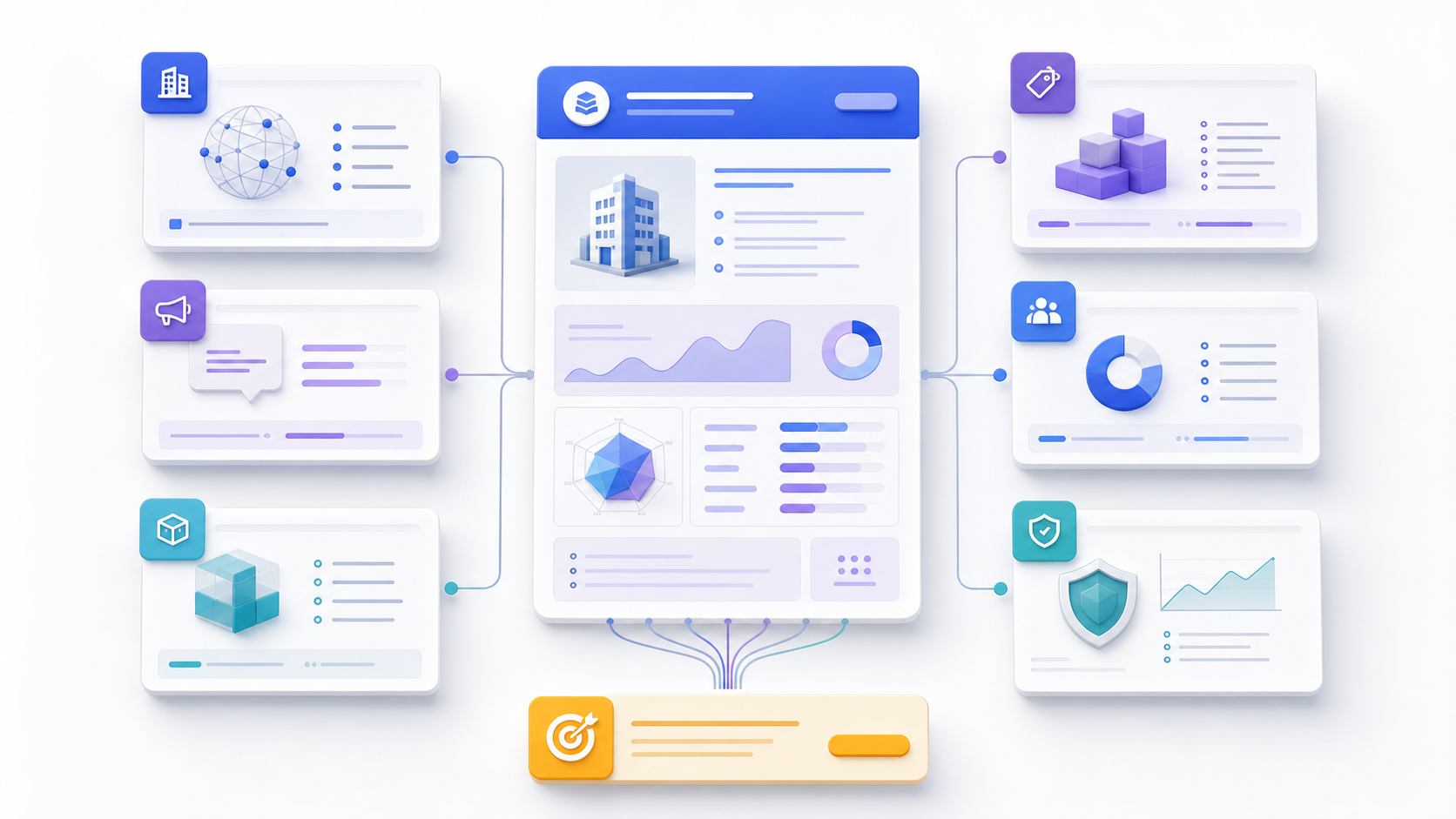
A competitor analysis template is a reusable dossier for investigating one rival consistently: who it serves, what it promises, what it sells, how it prices and reaches buyers, which signals are verified, what changed, and what your team should examine next. It separates evidence from interpretation so a profile can be audited and refreshed.
竞品分析模板是用于持续研究单个对手的可复用档案:它服务谁、承诺什么、销售什么、如何定价和触达买家、哪些信号已经核验、发生了什么变化,以及团队下一步应调查什么。模板把证据与解释分开,使档案可审计、可更新。
Use this page when the immediate task is to build or refresh a detailed profile for one named competitor. Copy the visible fields into a spreadsheet, document, database, whiteboard, or knowledge system. Create one record per priority rival and retain the same definitions across records. That structure supports sales preparation, positioning reviews, roadmap discovery, partnership checks, market-entry work, and monitoring without pretending every fact is equally reliable.
当眼前任务是为某个明确竞争者建立或更新详细档案时,使用本页。把可见字段复制到表格、文档、数据库、白板或知识系统中;每个重点对手建立一条记录,并在不同记录中保持定义一致。这一结构可支持销售准备、定位复核、路线图发现、合作检查、市场进入与监测,同时不会假装所有事实同样可靠。
Use this template to maintain a separate profile for each priority competitor, keeping field definitions consistent across records. When you need to compare several companies at once, use the competitive analysis template. To plan the complete workflow from competitor identification and market research to recommendations, consult the competitor analysis guide. Whichever approach you choose, retain the source and verification date for every important conclusion.
如果只需持续记录重点竞争者,可使用本模板为每个对手建立独立档案,并在不同档案中保持字段定义一致。需要同时比较多家公司时,可使用竞争分析模板;需要规划从竞争者识别、市场研究到建议形成的完整流程时,可参考竞品分析指南。无论采用哪种方式,都应为重要结论保留来源和核验日期。
Template Part 1: Give the Profile a Decision模板第一部分:为档案指定决策用途
Write the profile's decision use before researching the rival. “Track Northstar” invites endless collection; “prepare the October positioning review for mid-market compliance teams” establishes an audience, deadline, segment, and evidence threshold. The brief also protects the dossier from becoming a scrapbook of screenshots that nobody can interpret later.
研究对手前先写明档案服务的决策。“跟踪 Northstar”会引发无止境采集;“为十月面向中端合规团队的定位复核做准备”则确定了受众、期限、细分和证据阈值。简报还能防止档案变成日后无人能够解释的截图合集。
| Field字段 | What to enter填写内容 |
|---|---|
| Profile purpose档案目的 | The positioning, product, sales, partnership, or monitoring decision it supports它支持的定位、产品、销售、合作或监测决策 |
| Owner, reviewer, due date负责人、审核人、期限 | Who maintains evidence, who challenges interpretation, and when the profile is needed谁维护证据、谁质疑解释,以及何时需要档案 |
| Audience and output受众与输出 | Battlecard, roadmap brief, planning memo, market-entry note, or leadership review销售卡、路线图简报、规划备忘录、市场进入说明或管理层复核 |
| Observation boundary观察边界 | Entity, product, customer, job, geography, package, platform, channel, and date range实体、产品、客户、任务、地域、套餐、平台、渠道和日期范围 |
| Priority questions优先问题 | The few unknowns most likely to change the decision最可能改变决策的少数未知项 |
| Enough-evidence rule证据充分规则 | What must be verified, what may remain unknown, and when research stops必须核验什么、什么可保持未知,以及何时停止研究 |
Template Part 2: Confirm Why This Rival Matters模板第二部分:确认为什么研究这个对手
Do not create a deep dossier merely because a company is famous. Write the evidence that makes this rival decision-relevant: it appears in deals, targets the same customer job, shapes category expectations, competes for a channel, controls a useful complement, or could enter the segment. A clear reason determines how much research the profile deserves and how frequently it should be refreshed.
不要仅因为一家公司知名就建立深度档案。应写出它与决策相关的证据:它出现在交易中、服务同一客户任务、塑造品类预期、争夺同一渠道、控制重要互补资源,或可能进入该细分。明确原因决定档案需要投入多少研究,以及多久更新一次。
| Profile field档案字段 | What to record记录内容 | Decision use决策用途 |
|---|---|---|
| Relationship type关系类型 | Direct, indirect, substitute, adjacent, emerging, partner-competitor直接、间接、替代、相邻、新兴、竞合 | Defines the comparison boundary定义比较边界 |
| Observed encounter已观察交集 | Deal, search set, customer request, integration, channel, or strategic signal交易、客户候选集、需求、集成、渠道或战略信号 | Separates evidence from reputation区分证据与名气 |
| Priority and owner优先级与负责人 | Active, watchlist, archive; named profile owner重点、观察、归档;明确档案负责人 | Controls depth and accountability控制研究深度与责任 |
| Review cadence复核周期 | Scheduled date plus event triggers计划日期与事件触发器 | Prevents silent staleness避免档案无声过期 |
Keep a short exclusion note for companies that look similar but do not affect the decision. If you are still discovering categories, segments, substitutes, and emerging players, build a competitive landscape before investing in detailed profiles.
对看似相似但不影响决策的公司保留简短排除说明。如果仍在发现品类、细分、替代方案和新兴参与者,应先建立竞争格局,再投入详细档案。
Template Part 3: Establish Identity Before Interpretation模板第三部分:解释前先确认身份
A rival's company, brand, product, package, region, and version are not interchangeable. Start the profile with an identity block that prevents evidence from being attached to the wrong entity or offer. Keep durable attributes separate from volatile observations. If a field cannot be verified, write “unknown” and assign a validation route instead of filling the gap from memory.
对手的公司、品牌、产品、套餐、地区和版本不能互换。档案应从身份区块开始,防止证据归到错误实体或方案。把耐久属性与易变观察分开;若字段无法核验,应写“未知”并指定验证路径,而不是凭记忆补空。
Official and trading names, registration or filing identifier when relevant, primary website, ownership, headquarters, operating geographies, and checked date.
正式名称与商号、相关时的注册或申报标识、主网站、所有权、总部、经营地域和核验日期。
Product family, exact package, version, platform, availability, delivery model, services, implementation, support, and dependencies.
产品系列、确切套餐、版本、平台、可用范围、交付模式、服务、实施、支持和依赖。
Stated segment, inferred buyer, daily user, triggering event, job, desired outcome, constraints, objections, and switching conditions.
声明细分、推断买家、日常用户、触发事件、任务、期望结果、约束、异议和切换条件。
Category language, primary promise, proof, campaigns, sales motion, partner motion, distribution, community, and visible objections.
品类语言、主要承诺、证明、营销活动、销售动作、合作动作、分发、社区和可见异议。
Representative task, workflow steps, control, accessibility, administration, integrations, constraints, errors, and observed outcome.
代表性任务、流程步骤、控制、可访问性、管理、集成、限制、错误和已观察结果。
Profile owner, last full review, recent changes, contradictions, assumptions, unresolved questions, next check, and event triggers.
档案负责人、上次完整复核、近期变化、矛盾、假设、未解决问题、下次检查和事件触发器。
Template Part 4: Complete the One-Competitor Dossier模板第四部分:填写单个竞争者档案
Record each topic as a claim, its evidence, its status, and its implication. Preserve the competitor's own language for positioning and package names, but label quotations and do not repeat marketing claims as independent conclusions. For product behavior, capture the plan, version, platform, test conditions, date, and limitation. For pricing, retain currency, billing period, quantity assumptions, included usage, implementation, support, discounts, taxes, and contract terms where they are publicly available.
把每个主题记录为主张、证据、状态和影响。定位与套餐名称应保留竞争者自己的表述,但必须标记引用,不能把营销声明当成独立结论。记录产品行为时,应保留套餐、版本、平台、测试条件、日期和限制;记录定价时,应在公开可得的情况下保留币种、计费周期、数量假设、包含用量、实施、支持、折扣、税费和合同条款。
| Dossier module档案模块 | Captured fact or observation记录的事实或观察 | Source, date, status来源、日期、状态 | Implication or open question影响或待解决问题 |
|---|---|---|---|
| Customer and buying job客户与购买任务 | [Segment, buyer, user, trigger, outcome / 细分、买家、用户、触发、结果] | [URL, date, observed/inferred / URL、日期、观察或推断] | [Overlap, difference, unknown / 重合、差异、未知] |
| Positioning and proof定位与证明 | [Claim, category, proof offered / 主张、品类、所给证明] | [Homepage, case, campaign, checked date / 首页、案例、活动、核验日期] | [Message to test / 待测试信息] |
| Product and experience产品与体验 | [Task coverage, workflow, limits, dependencies / 任务覆盖、流程、限制、依赖] | [Docs, trial, plan, version, date / 文档、试用、套餐、版本、日期] | [Parity, differentiation, non-goal / 同等、差异化、非目标] |
| Pricing and packaging定价与包装 | [Unit, package level, inclusions, conditions / 单位、套餐层次、包含内容、条件] | [Pricing or terms URL, currency, date / 定价或条款 URL、币种、日期] | [Comparable scenario and unknowns / 可比场景与未知项] |
| Routes to market市场路径 | [Self-serve, sales, partners, channels / 自助、销售、伙伴、渠道] | [Observed touchpoints and date / 已观察触点与日期] | [Where buyers may encounter them / 买家可能在哪里遇到它] |
| Customer and strategic signals客户与战略信号 | [Attributable feedback, launches, hiring, partnerships / 可归属反馈、发布、招聘、合作] | [Source class, date, confidence / 来源类型、日期、置信度] | [Hypothesis and next validation / 假设与下一步验证] |
Use explicit statuses: observed, vendor-stated, customer-reported, inferred, assumed, conflicting, and unknown. Feature status can be native, configurable, integration-dependent, service-assisted, limited, beta, absent, or unknown. Never convert “not found” into “does not exist.” Search boundaries, access limits, regional differences, and unpublished enterprise terms can all produce false absence.
使用明确状态:已观察、厂商声明、客户报告、推断、假设、冲突和未知。功能状态可分为原生、可配置、依赖集成、服务辅助、受限、测试版、缺失或未知。绝不能把“未找到”转换成“不存在”;搜索边界、访问限制、地区差异和未公开企业条款都可能产生假缺失。
Template Part 5: Attach Provenance to Every Material Claim模板第五部分:为每个重要主张附加出处
Store source records separately from the short profile summary. Useful provenance includes the final URL or internal record, publisher, captured excerpt or observation, publication date, your checked date, access conditions, entity and version, confidence, and owner. Prefer filings, public registries, official product documentation, pricing terms, authorized hands-on research, and attributable customer evidence. Use secondary reporting as a lead unless its underlying evidence is available.
来源记录应与简短档案摘要分开保存。有效出处包括最终 URL 或内部记录、发布方、摘录或观察、发布日期、核验日期、访问条件、实体与版本、置信度和负责人。优先采用申报文件、公共登记、官方产品文档、定价条款、获授权实测以及可归属客户证据。若无法获得底层证据,应把二手报道仅作为线索。
| Claim ID主张 ID | Claim or observation主张或观察 | Source and final URL来源与最终 URL | Observed / published观察 / 发布日期 | Confidence and limits置信度与限制 | Owner / refresh负责人 / 更新 |
|---|---|---|---|---|---|
| [E-001] | [Enter / 填写] | [URL + excerpt / URL 与摘录] | [Dates / 日期] | [High / medium / low + why] | [Name + trigger / 姓名与触发] |
Keep three fields distinct: observation, interpretation, and response. “The public package page shows annual billing” is observable. “The rival is moving toward larger accounts” is an interpretation that needs corroboration. “Test an annual commitment incentive” is your response. Linking these records exposes the reasoning and lets a later reviewer revise the interpretation without deleting the original evidence.
应区分三个字段:观察、解释与响应。“公开套餐页显示年度计费”属于可观察事实;“对手正在转向大型客户”属于需要佐证的解释;“测试年度承诺激励”属于团队响应。连接这些记录能暴露推理,使后续审核者可修改解释而不删除原始证据。
Template Part 6: Capture Positioning and Change Signals模板第六部分:记录定位与变化信号
Record positioning in the rival's own words before summarizing it. Capture the page, audience, category, promise, differentiator, proof, call to action, and date. Then add your interpretation as a separate field: who appears to be prioritized, which alternative is framed as the enemy, what trade-off is implied, and which claim still needs testing. A homepage sentence is evidence of messaging, not proof of customer perception or product performance.
在总结定位前,应先按对手原话记录。保存页面、受众、品类、承诺、差异点、证明、行动号召和日期;再用单独字段写团队解释:它似乎优先服务谁、把哪种替代塑造成对立面、暗示了什么取舍,以及哪些主张仍需测试。首页文案只能证明其表达,不能证明客户认知或产品表现。
Maintain a dated change log rather than overwriting old facts. Add an entry when pricing, packaging, messaging, leadership, partnerships, important product behavior, geographic availability, policy, or customer proof changes. For each event record what changed, previous state, new state, source, confidence, affected profile fields, possible implication, review owner, and whether an action is required.
应维护带日期的变化日志,而不是覆盖旧事实。当定价、包装、信息、领导层、合作、重要产品行为、地区可用性、政策或客户证明变化时新增记录。每个事件写明变化内容、旧状态、新状态、来源、置信度、受影响档案字段、可能影响、审核负责人以及是否需要行动。
A dated difference supported by an authoritative or direct source.
由权威或直接来源支持的带日期差异。
A launch, hiring pattern, campaign, partnership, or customer signal that may imply a move.
可能暗示行动的发布、招聘模式、活动、合作或客户信号。
Two credible records disagree; preserve both and define the resolution step.
两个可信记录相互冲突;保留两者并定义解决步骤。
The scheduled review found no decision-relevant update within its stated boundary.
计划复核在既定边界内未发现与决策相关的更新。
Template Part 7: Convert the Dossier into a Reviewable Action模板第七部分:把档案转化为可复核行动
A completed profile should end with implications, not a verdict that the rival is “better.” Summarize what the evidence changes for the stated decision, what remains uncertain, which customer or segment is affected, what your team should do or test, and what would reverse the recommendation. Categorize each response as monitor, validate, communicate, partner, defend, differentiate, improve, deliberately ignore, or stop.
完整档案应以影响结束,而不是判定对手“更好”。总结证据如何改变既定决策、仍有哪些不确定、影响哪些客户或细分、团队应采取或测试什么,以及什么条件会推翻建议。把响应分类为监测、验证、沟通、合作、防御、差异化、改进、有意忽略或停止。
| Action行动 | Evidence and hypothesis证据与假设 | Owner负责人 | Test and threshold测试与阈值 | Date / status日期 / 状态 |
|---|---|---|---|---|
| [Enter / 填写] | [Why this should work / 为何应有效] | [Name / 姓名] | [Validation + decision rule / 验证与决策规则] | [Enter / 填写] |
Favor reversible learning before irreversible investment. Appropriate next steps can include customer interviews, authorized task tests, pricing research, prototype evaluation, channel conversations, technical exploration, or a defined monitoring query. Every action needs an owner, due date, evidence link, decision rule, and status; otherwise the dossier records anxiety instead of guiding work.
在不可逆投入前优先进行可逆学习。合适的下一步包括客户访谈、获授权任务测试、定价研究、原型评估、渠道沟通、技术探索或明确监测查询。每项行动都需要负责人、期限、证据链接、决策规则和状态,否则档案只是在记录焦虑,而不是指导工作。
Competitor Analysis Template Example竞品分析模板填写案例
Hypothetical example: a B2B workflow company creates a dossier for “Northstar,” an invented rival that appears in regulated-service opportunities. The team wants to decide whether a persistent conflict-review state deserves roadmap discovery. Every company name, observation, and conclusion below is illustrative; none describes a real product.
虚拟案例:一家 B2B 工作流公司为虚构对手“Northstar”建立档案,该对手会出现在受监管服务项目的候选集中。团队要判断是否值得对“持续冲突审核状态”开展路线图探索。以下公司名称、观察和结论均为演示,不描述任何真实产品。
| Template field模板字段 | Illustrative entry示意填写 | Validation needed所需验证 |
|---|---|---|
| Why profile this rival?为何研究该对手? | It appears in recent regulated-service opportunity notes它出现在近期受监管服务机会记录中 | Confirm attributable internal notes and period核验可归属内部记录与时期 |
| Observed product signal已观察产品信号 | Its review queue appears to retain a visible conflict state after reassignment重新分配后,其审核队列似乎仍保留可见冲突状态 | Authorized trial, plan, version, task, and date获授权试用、套餐、版本、任务和日期 |
| Interpretation解释 | Persistent state may reduce handoff ambiguity for regulated teams持续状态可能减少受监管团队的交接歧义 | Representative user research and workflow evidence代表性用户研究与工作流证据 |
| Action行动 | Prototype the state and test before any roadmap commitment在路线图承诺前制作状态原型并测试 | Completion, critical-error, trust, and permission thresholds完成、关键错误、信任和权限阈值 |
The profile does not conclude “copy Northstar.” It distinguishes the observed interface state, the team's interpretation, the customer hypothesis, and a reversible validation action. If the observation cannot be reproduced, users do not value persistence, or the change introduces permission risk, the action should change. Preserve that reasoning chain in the dossier so later reviewers can challenge it.
档案没有得出“复制 Northstar”的结论,而是区分已观察界面状态、团队解释、客户假设和可逆验证行动。如果观察无法复现、用户不重视持续状态,或变更带来权限风险,行动就应改变。应在档案中保留这条推理链,便于后续审核者提出挑战。
How to Use and Maintain the Template如何使用和维护模板
- Create the identity block. Lock the company, product, package, region, platform, version, and observation period before attaching evidence.建立身份区块。附加证据前先锁定公司、产品、套餐、地区、平台、版本和观察时期。
- Run a bounded first pass. Fill durable facts and high-priority questions, leaving unsupported cells explicitly unknown.执行有边界的第一轮。填写耐久事实和高优先问题,把缺乏支持的单元格明确标为未知。
- Build the evidence ledger. Attach final URLs, excerpts or observations, dates, versions, access conditions, status, confidence, and owner.建立证据台账。附加最终 URL、摘录或观察、日期、版本、访问条件、状态、置信度和负责人。
- Challenge the interpretation. Ask a reviewer to find entity errors, contradictions, false absence, weak inference, and claims that do not change the decision.质疑解释。请审核者寻找实体错误、矛盾、假缺失、薄弱推断和不会改变决策的主张。
- Publish actions and maintenance. Assign next checks, tests, thresholds, dates, status, and event triggers; archive superseded claims without erasing history.发布行动与维护规则。分配下一次检查、测试、阈值、日期、状态和事件触发器;归档已被替代的主张而不抹去历史。
A spreadsheet is convenient for a small set of profiles; a document works for a one-time review; a database or knowledge system is better when many people update evidence and history. Whichever format you choose, keep one maintained source of truth. Generate presentations and sales summaries from that record rather than allowing exported copies to become competing masters.
少量档案可使用电子表格,一次性复核适合文档;当多人持续更新证据与历史时,数据库或知识系统更合适。无论选择哪种格式,都应保留一个持续维护的事实来源。演示和销售摘要应从该记录生成,不能让导出副本变成相互冲突的主版本。
Use the Template with a Structured Analysis Tool把模板与结构化分析工具结合
Before using a tool, complete the rival's identity, scope, customer, positioning, product, pricing, channel, evidence, and change-log fields. Mark unknowns explicitly and attach a source date to every material claim. Automation can organize this dossier, but it should not fill evidence gaps or decide what the rival's activity means for your strategy.
使用工具前,应完成该竞争者的身份、范围、客户、定位、产品、定价、渠道、证据和变化日志字段。明确标记未知项,并为每项重要主张保留来源日期。自动化可以整理档案,但不应填补证据缺口,也不能代替团队判断竞争者动态对战略意味着什么。
The InfiniSynapse Competitor Benchmarking Analyzer can structure a prepared comparison between your product and a named rival. Confirm exact models, aligned fields, source dates, missing evidence, and every interpretation before using the result in positioning, roadmap, or sales decisions.
InfiniSynapse 竞品对标分析器可以把我方产品与指定竞争者的已准备资料组织成结构化比较。将结果用于定位、路线图或销售决策前,应确认确切型号、对齐字段、来源日期、缺失证据和每项解释。
Common Competitor Analysis Template Mistakes竞品分析模板常见错误
A company fact is attached to a product, region, package, or version it does not describe.
把公司事实错误附加到它并不描述的产品、地区、套餐或版本。
The team collects interesting signals without defining which decision they can change.
团队采集有趣信号,却没有定义它们能改变什么决策。
A screenshot or summary lacks the final source, checked date, version, and access conditions.
截图或摘要缺乏最终来源、核验日期、版本和访问条件。
Failure to find a feature, price, customer, or channel is written as proof that it does not exist.
未找到功能、价格、客户或渠道,却被写成其不存在的证明。
New pricing or messaging replaces the old state, so nobody can see when or how the rival changed.
新定价或新信息覆盖旧状态,导致无人能看出对手何时、如何变化。
A rival behavior is copied without customer evidence, trade-off analysis, validation, owner, or decision rule.
没有客户证据、取舍分析、验证、负责人或决策规则,就直接复制对手行为。
Frequently Asked Questions常见问题
Include the decision brief, reason for profiling the rival, identity and scope, customer and buying job, positioning, product, pricing, channels, customer signals, evidence ledger, change log, implications, actions, owner, and refresh triggers.
应包含决策简报、研究该对手的原因、身份与范围、客户和购买任务、定位、产品、定价、渠道、客户信号、证据台账、变化日志、影响、行动、负责人和更新触发器。
Create one maintained record for each priority rival, using the same field definitions. Keep low-priority names on a watchlist until evidence justifies deeper research.
为每个重点对手建立一条使用相同字段定义的可维护记录。低优先级对象先保留在观察列表中,直到证据支持进一步研究。
A competitor analysis template maintains one rival's dossier and evidence history. A competitive analysis template compares multiple alternatives side by side in a shared decision matrix.
竞品分析模板用于维护单个对手的档案和证据历史;竞争分析模板用于在共享决策矩阵中横向比较多个备选对象。
Set a cadence based on market speed, then add triggers for major pricing, product, positioning, leadership, regulatory, channel, partnership, or customer changes. Update the affected claims rather than rewriting the entire profile automatically.
根据市场速度设定周期,并为重大定价、产品、定位、领导层、监管、渠道、合作或客户变化设置触发器。应更新受影响的主张,而不是自动重写整份档案。
AI can organize supplied material and draft structured observations. People must verify entities, access rights, source URLs, dates, versions, unknowns, interpretations, and recommendations; AI should not invent unavailable evidence.
AI 可以组织已提供材料并起草结构化观察。人工必须核验实体、访问权限、来源 URL、日期、版本、未知项、解释和建议;AI 不应虚构不可得证据。