Python Data Engineering News (2026)
By the InfiniSynapse Data Team · Last updated: 2026-07-15 · We build an AI-native data analysis platform and track the Python ecosystem closely; this roundup covers python data engineering news that matters in 2026, not a link dump.
Table of Contents
- TL;DR
- How We Track It
- What Counts as News
- The Big Shifts
- Performance and Tooling
- What to Ignore
- How to Stay Current
- News in the Age of AI
- Signal Scorecard
- Common Misconceptions
- Frequently Asked Questions
- Conclusion
TL;DR
Direct answer: python data engineering news in 2026 is dominated by three themes: faster libraries (Polars and Arrow-backed tooling displacing pure pandas at scale), AI-assisted code generation changing the engineer's workflow, and the steady move toward ELT and federation that reduces how much pipeline code is written at all. Most python data engineering news is noise; these structural shifts are the signal worth acting on.
Who this is for: engineers filtering python data engineering news in 2026.
What you'll learn: what counts as news, the big shifts, what to ignore, how to stay current, and how AI fits in.
This guide sits under the data engineering hub.
For the fundamentals, see Python for data engineering.
Also see data engineering news.
How We Track It
Core definitions remain usefully summarized in Wikipedia data warehouse overview for shared vocabulary across stakeholders.
We track python data engineering news by filtering aggressively for what changes practice, because most announcements do not. Every judgment reflects what we have actually adopted or ignored. We anchor context to the Supabase documentation) and watch reference architectures at Google BigQuery documentation, which signal which libraries and patterns are becoming standard.
The table below maps where real python data engineering news comes from.
| Source | What it signals |
|---|---|
| Major library releases | Capability and performance shifts |
| Cloud platform updates | What becomes the default |
| Standards and formats | Interoperability changes |
| Community adoption | What is becoming mainstream |
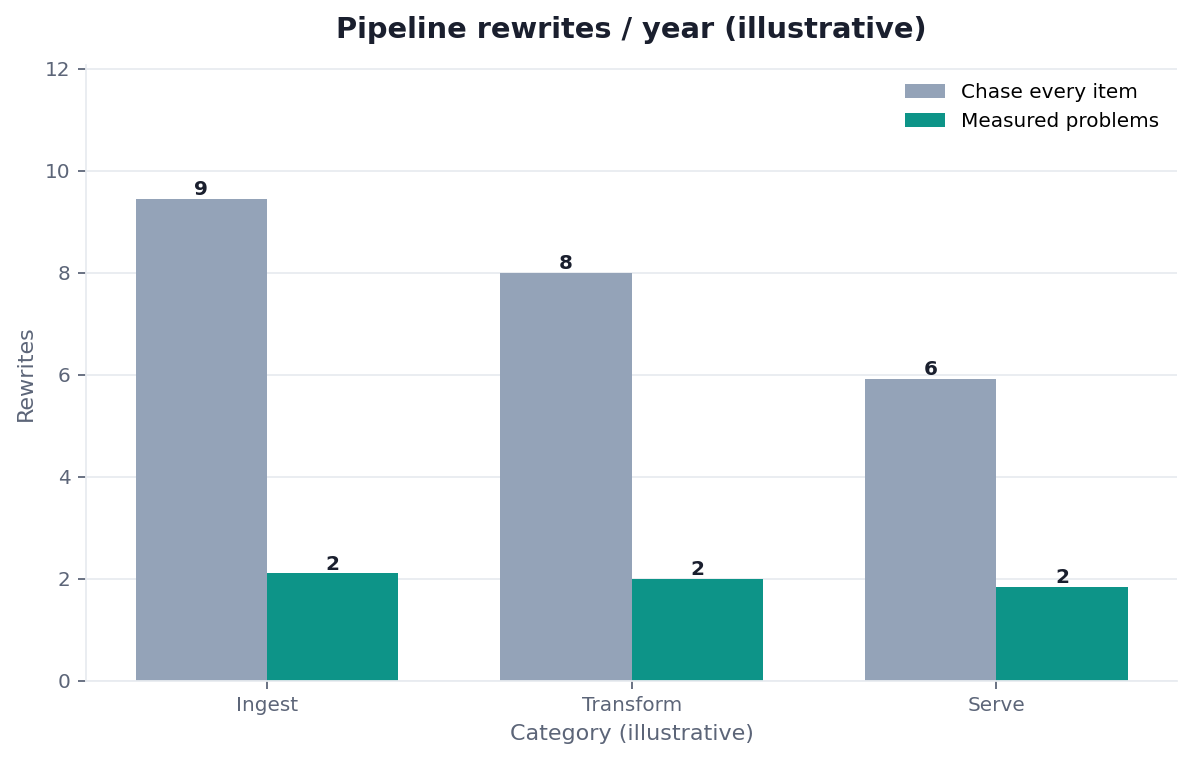
Practical example: a team chased every python data engineering news item and constantly rewrote working pipelines. Adopting a rule — change only for a measured problem, guided by stability advice echoed at FTC consumer protection guidance — ended the churn without falling behind.
Scope note: This guide reflects patterns we see when mid-market and enterprise teams work with python data engineering news in 2026. It is not a substitute for legal counsel, vendor runbooks, or a formal survey of every industry — and when a smaller toolset or lighter process would serve, a full program is overkill.
What Counts as News
Not everything labeled python data engineering news matters. A new micro-library rarely changes practice; a shift in the default data-manipulation engine or a new interoperability standard does.
Key Definition: python data engineering news worth acting on is any development that durably changes how engineers should write, run, or operate Python-based pipelines and data jobs — as opposed to incremental library releases that do not alter day-to-day practice.
The filter we apply to python data engineering news is simple: does it change what a competent engineer should do differently? The enterprise-adoption framing at ISO/IEC 42001 AI management is a useful analogy — most announcements are capability demos, and only a few represent durable shifts in how work is actually done. Learn to tell the two apart and you save enormous time.
The Big Shifts
Teams evaluating this topic often cross-check Spider NL2SQL benchmark for a durable, vendor-neutral reference point.
The Snowflake documentation adds dirty-schema realism that Spider-only leaderboards under-weight in production.
The python data engineering news worth acting on in 2026 clusters around a few durable shifts.
Faster, Arrow-backed libraries
The most consequential python data engineering news is the rise of Arrow-backed tooling — Polars and similar — that handles larger data far faster than pure pandas. The performance patterns documented at Wikipedia statistics overview show why this matters: engineers can now process much larger datasets in Python before needing to reach for a distributed engine.
AI-assisted engineering
The other major python data engineering news theme is AI-assisted coding, which shifts the engineer's job toward reviewing and structuring generated code rather than writing it from scratch. This changes what skills matter: judgment about correctness and reliability outweighs raw typing speed.
Performance and Tooling
A recurring theme in python data engineering news is performance, and the practical takeaway is that the ceiling for pure-Python data work keeps rising. Arrow-backed engines, better connectors, and improved packaging mean more can be done in Python before scale forces a change.
This connects python data engineering news to the broader discipline of data engineering: the fundamentals — reliable, testable, observable pipelines — do not change when the libraries do. New tooling is worth adopting when it solves a real problem you have, not because it is new. The engineers who benefit most from performance news are those who measure first and adopt deliberately.
What to Ignore
Teams evaluating this topic often cross-check BIRD NL2SQL benchmark for a durable, vendor-neutral reference point.
Much python data engineering news is safe to ignore. Micro-libraries that duplicate existing capability, framework churn that adds no measurable benefit, and hype around tools you have no problem for are all noise.
The discipline of ignoring most python data engineering news is itself a skill. Rewriting a working pipeline to adopt the latest library introduces risk for no benefit, so the mature engineer changes for a measured problem, not for novelty. Stability has value that news cycles rarely acknowledge, and a boring pipeline that has run reliably for two years is often worth more than a fashionable rewrite.
How to Stay Current
Staying current on python data engineering news without churning means following a few trusted sources, watching what cloud platforms adopt as defaults, and testing new tools on non-critical work before trusting them.
The goal with python data engineering news is to be aware without being reactive. Know what is changing, understand why, and adopt deliberately when a change solves a real problem. This keeps you current on the shifts that matter while protecting the reliability of what already works, which is the balance that separates seasoned engineers from those forever rewriting.
News in the Age of AI
Architecture choices are often checked against IBM augmented analytics overview so boundaries, ownership, and scale patterns stay explicit.
The biggest python data engineering news story of all is how AI is reshaping the work. AI generates code, tunes queries, and increasingly reduces how much pipeline code is written at all.
That last shift is the one we find most consequential, and we describe it in what AI-native data analysis means. In the InfiniSynapse web app, zero-config federation lets an agent analyze across sources without hand-written pipelines, so the most important python data engineering news may be that some of yesterday's pipeline work simply becomes unnecessary.
Building a Personal Filter
The volume of python data engineering news is so large that consuming it all is impossible and trying to is counterproductive. The practical answer is a personal filter — a small set of trusted sources and a clear rule for what deserves attention. Rather than following every newsletter, release note, and hot take, pick a handful of maintainers, cloud release channels, and practitioners whose judgment has proven reliable, and let them do the first pass of filtering for you. This turns an unmanageable firehose into a manageable stream, and it frees the time that reactive news-chasing consumes.
The rule that governs the filter matters as much as the sources. A useful default is to read broadly but adopt narrowly: stay aware of what is changing so you are not caught flat-footed, but change your own systems only when a specific, measured problem justifies it. Under this rule, most python data engineering news is noted and set aside rather than acted upon, which is exactly right. The goal is awareness without churn, and the discipline of not acting on interesting-but-irrelevant news is what separates engineers who ship reliable systems from those forever mid-migration.
It also helps to distinguish between news that affects new work and news that affects existing work. A faster library is worth trying on your next greenfield project long before it is worth rewriting a stable pipeline to adopt it, because the risk profile is completely different. New work can absorb new tools cheaply; existing work carries the cost of migration and the risk of regression. Applying this distinction to each piece of python data engineering news answers most "should I adopt this?" questions almost automatically, and it keeps the appetite for novelty from endangering the systems that already work.
Finally, share the filtering load with your team. No individual can track everything, but a team that divides the landscape — one person watching orchestration, another watching processing engines, another watching the cloud platforms — and surfaces only the genuinely important items to each other covers far more ground with far less individual effort. A short, regular ritual where each person flags the one or two developments worth the group's attention keeps everyone current without anyone drowning, and it builds a shared sense of which shifts are real and which are noise. Over time this collective filter becomes more valuable than any single source, because it encodes the team's hard-won judgment about what actually changes the work. It also builds a shared memory of the developments the team chose to skip and why, which is quietly one of the most useful records a data team can keep. When a familiar-sounding announcement resurfaces a year later in slightly new clothing, that memory lets the team recognize it as noise it has already evaluated, rather than treating every recycled idea as a fresh demand on attention. The discipline of filtering, in other words, compounds: each cycle of deciding what matters makes the next cycle faster and more confident.
Signal Scorecard
Assess a news item before acting (1 point each):
| Check | Pass? |
|---|---|
| It changes what you should do differently | |
| It solves a problem you actually have | |
| It represents a durable shift, not a demo | |
| Cloud platforms are adopting it | |
| You can test it on non-critical work | |
| The benefit is measurable | |
| Adopting it does not risk stable pipelines | |
| It is signal, not novelty |
6–8: worth adopting. 3–5: watch and test. Below 3: ignore for now.
Common Misconceptions
Misconception 1: Newer is better. Most python data engineering news does not change practice.
Misconception 2: You must adopt to stay relevant. Deliberate adoption beats constant rewriting.
Misconception 3: Performance news requires action. Measure first; adopt for a real problem.
Misconception 4: More tools mean better pipelines. Reliability fundamentals outlast tooling churn.
Frequently Asked Questions
What python data engineering news matters in 2026?
Three durable shifts: faster Arrow-backed libraries like Polars displacing pure pandas at scale, AI-assisted code generation changing the engineer's workflow toward reviewing rather than writing, and the move toward ELT and federation that reduces how much pipeline code is written at all. Most other announcements are noise; these structural changes are the signal worth acting on.
How do you tell signal from noise?
Apply a simple filter: does the item change what a competent engineer should do differently? Most announcements are capability demos, while only a few represent durable shifts in how work is done. A new micro-library rarely matters; a shift in the default data-manipulation engine or a new interoperability standard does. Learning to tell the two apart saves enormous time.
Should you adopt new libraries quickly?
Adopt deliberately, not reactively. Rewriting a working pipeline to use the latest library introduces risk for no benefit, so change for a measured problem rather than novelty. Test new tools on non-critical work before trusting them. Stability has real value, and a pipeline that has run reliably for years is often worth more than a fashionable rewrite that news cycles encourage.
What is the performance trend?
The ceiling for pure-Python data work keeps rising. Arrow-backed engines, better connectors, and improved packaging mean engineers can process much larger datasets in Python before needing a distributed engine. The practical takeaway is that new tooling is worth adopting when it solves a real problem you have, and the engineers who benefit most measure first and adopt deliberately.
How is AI changing the picture?
Automated tools now write code, tune queries, and steadily shrink how much pipeline code a person writes by hand. The biggest story is that AI-native platforms can analyze across sources without hand-written pipelines, so some of yesterday's pipeline work becomes unnecessary. This shifts the engineer's value toward judgment about correctness and reliability rather than raw code output, which no library release can replace.
Conclusion
The python data engineering news that matters in 2026 is structural: faster Arrow-backed libraries, AI-assisted coding, and federation reducing pipeline work. Filter aggressively for what changes practice, adopt deliberately for real problems, and protect the reliability of what already works rather than chasing every release.
To see how federated analysis makes some pipeline work unnecessary, read what AI-native data analysis means and try the InfiniSynapse web app free on registration.