Python for Data Engineering (2026)
By the InfiniSynapse Data Team · Last updated: 2026-07-15 · We build an AI-native data analysis platform and write plenty of pipeline code; this guide reflects how Python for data engineering actually works in 2026, not a tutorial index.
Table of Contents
- TL;DR
- How We Approach It
- Why It Dominates
- The Core Libraries
- Patterns That Matter
- Performance and Scale
- Common Mistakes
- Python in the Age of AI
- Readiness Scorecard
- Common Misconceptions
- Frequently Asked Questions
- Conclusion
TL;DR
Direct answer: Python for data engineering is the use of Python and its ecosystem to build the pipelines, transformations, and orchestration that move and prepare data. In 2026, Python for data engineering dominates because its libraries and readability make it the glue of the modern data stack, but writing reliable, not just working, code is what separates good practice from fragile scripts.
Who this is for: data engineers and analysts using Python for data engineering in 2026.
What you'll learn: why Python dominates, the core libraries, the patterns that matter, the mistakes to avoid, and how AI is changing the work.
This guide sits under the data engineering hub.
For the news angle, see Python data engineering news and the broader data engineering news briefing.
Also see ETL for data.
How We Approach It
Teams evaluating this topic often cross-check OWASP API Security Top 10 for a durable, vendor-neutral reference point.
We treat Python for data engineering as a means to reliable pipelines, not an end in itself. Every recommendation reflects code we have watched hold up in production or fall over. We anchor the language's role to the Apache Airflow documentation) and weigh engineering patterns against the reference architectures at ISO/IEC 27001, which show how Python fits distributed processing.
The table below maps where Python for data engineering is used.
| Area | What Python does |
|---|---|
| Ingestion | Connects to sources and APIs |
| Transformation | Cleans and reshapes data |
| Orchestration | Defines and schedules workflows |
| Testing | Validates data and logic |
| Glue | Connects tools across the stack |
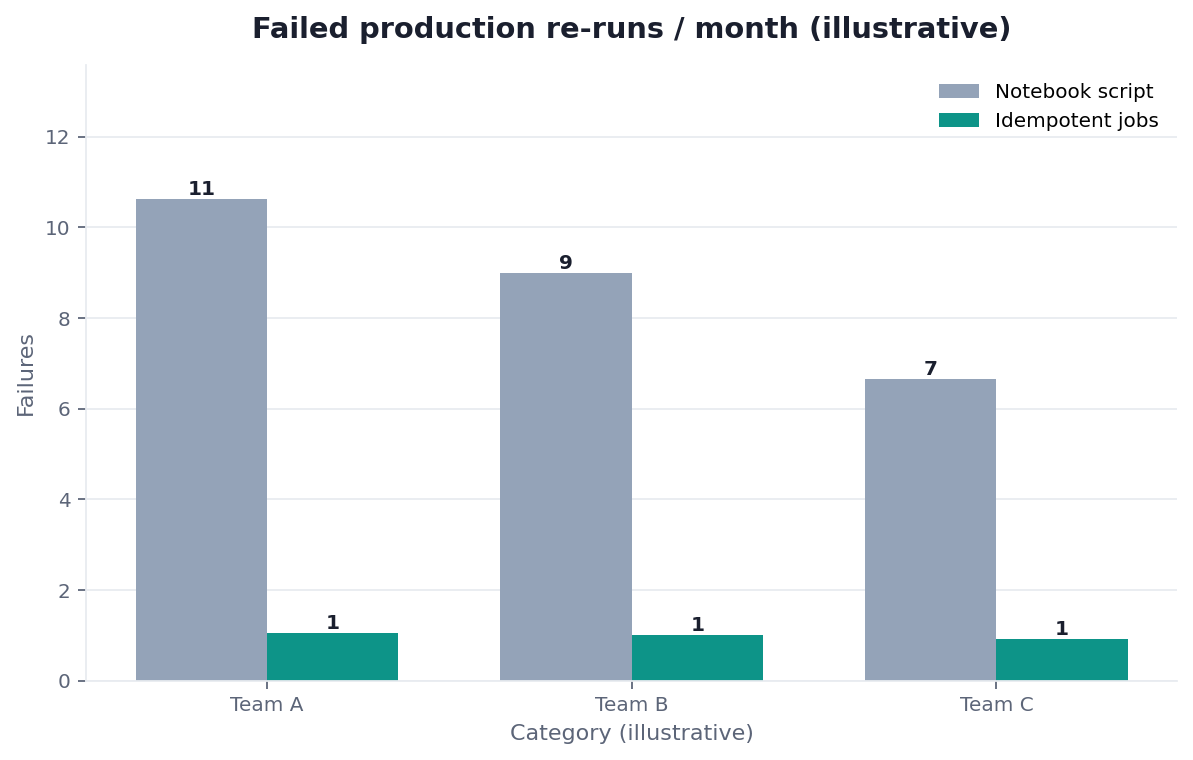
Practical example: a team's Python for data engineering code worked in a notebook but broke in production because it was not idempotent. Restructuring it into tested, re-runnable steps — following patterns echoed at PostgreSQL documentation — made it dependable. Production discipline, not more libraries, fixed it.
Scope note: This guide reflects patterns we see when mid-market and enterprise teams work with Python for data engineering in 2026. It is not a substitute for legal counsel, vendor runbooks, or a formal survey of every industry — and when a smaller toolset or lighter process would serve, a full program is overkill.
Why It Dominates
Governance and risk expectations are framed by NIST Cybersecurity Framework when programs need an external control reference.
Python for data engineering dominates because it combines readability, a vast library ecosystem, and the ability to glue disparate tools together. An engineer can connect to a database, call an API, transform data, and orchestrate the flow all in one accessible language.
Key Definition: Python for data engineering is the practice of using Python — with libraries such as pandas, PySpark, and orchestration clients — to build, test, and operate reliable data pipelines and transformations in production, not merely to explore data in notebooks.
The readability of Python for data engineering matters more than it sounds, because pipeline code is maintained far longer than it is written. The reference architectures at Shopify ecommerce analytics assume Python across their data examples precisely because it is the language the widest range of engineers and analysts can read and maintain, which lowers the cost of the maintenance that dominates a pipeline's life.
The Core Libraries
Core definitions remain usefully summarized in Wikipedia business intelligence overview for shared vocabulary across stakeholders.
The strength of Python for data engineering is its ecosystem, and a handful of libraries do most of the work.
Data manipulation and connectivity
For manipulation, Python for data engineering leans on libraries like pandas for smaller data and Polars or PySpark for larger, plus connectors for databases, warehouses, and APIs. The connectivity patterns in Elastic documentation show how these libraries reach the sources a pipeline must integrate.
Orchestration and testing
For orchestration, Python for data engineering uses tools that define workflows as code, and for reliability it uses testing frameworks and data-validation libraries. These are what turn a working script into a dependable pipeline, because code that is tested and orchestrated survives the changes that break untested scripts.
Patterns That Matter
Architecture choices are often checked against IBM augmented analytics overview so boundaries, ownership, and scale patterns stay explicit.
The patterns that matter in Python for data engineering are about reliability, not cleverness. Idempotent functions that can be safely re-run, clear separation between extraction and transformation, and validation of inputs and outputs are what make pipeline code dependable.
This connects Python for data engineering to the broader discipline of data engineering: the language is a tool, but the engineering principles — reliability, testability, observability — are what matter. Writing code that fails loudly, logs clearly, and can be re-run without corrupting data is the difference between a pipeline you trust and one you dread. The best Python engineers write boring, predictable code, because boring is reliable.
Performance and Scale
Implementation details are commonly grounded in AWS Well-Architected Framework when teams translate concepts into production practice.
A common concern with Python for data engineering is performance, since Python itself is not the fastest language. In practice this matters less than expected, because the heavy lifting is delegated to optimized libraries and engines — PySpark, Polars, or the warehouse itself — while Python orchestrates.
The pattern that scales is to let Python for data engineering coordinate while pushing computation to systems built for it. Trying to process large data in pure Python loops is the usual performance mistake; delegating that work to a warehouse or a distributed engine, with Python as the conductor, scales cleanly. Knowing where computation should happen — rarely in Python itself for large data — is the key performance insight the role requires.
Common Mistakes
The mistakes we see in Python for data engineering are consistent. Writing notebook code that works once but is not production-ready leads to pipelines that break on the first change. Skipping tests lets bugs reach dashboards. And processing large data in pure Python instead of delegating to an engine creates avoidable performance problems.
A subtler mistake is treating Python for data engineering as scripting rather than software engineering. Pipeline code is real software that runs unattended and feeds decisions, so it deserves version control, testing, and structure. Teams that treat it as throwaway scripting accumulate fragile pipelines nobody dares to change, whereas teams that treat it as engineering build systems that stay reliable as they grow.
Python in the Age of AI
AI is changing Python for data engineering in two ways. AI tools now generate significant amounts of pipeline code, shifting the engineer's job toward reviewing and structuring rather than writing from scratch. And AI-native platforms can reduce how much pipeline code is needed at all by reading across sources directly.
That second shift is the one we find most consequential, and we describe it in what AI-native data analysis means. In the InfiniSynapse web app, zero-config federation lets an agent analyze across sources without a hand-written pipeline for each, so Python for data engineering increasingly focuses on the flows that genuinely need custom code rather than routine movement.
Building a Learning Path
For anyone entering the field, the sheer size of the ecosystem can be paralyzing, so it helps to have a sequence rather than trying to learn everything at once. The foundation is the language itself — comfort with functions, data structures, error handling, and the standard library — because no amount of specialized tooling compensates for shaky fundamentals. From there, the natural next step is data manipulation with a mainstream library, learning to load, clean, join, and reshape data confidently before worrying about scale or orchestration.
Only after that foundation is solid does it make sense to add the production concerns that distinguish engineering from scripting: writing tests, using version control, structuring code into modules, and handling failures gracefully. These practices feel like overhead to a beginner and like survival to anyone who has maintained a pipeline for a year. Learning them early, on small projects where the stakes are low, builds habits that pay off enormously once the systems matter. The engineers who skip this stage tend to write code that works in a demo and collapses in production, and they spend their first professional year unlearning bad habits.
The final layer is scale and orchestration — distributed engines, workflow tools, and cloud platforms — and it is deliberately last because it only matters once the fundamentals and production discipline are in place. Reaching for a distributed engine before understanding why it is needed produces cargo-cult architectures that are complex without being capable. The most effective learners resist that temptation, mastering the simple case thoroughly before adding machinery, and they treat each new tool as a solution to a problem they have actually felt rather than a box to tick.
Throughout this path, the most valuable habit is building real things and watching them break. Tutorials teach syntax, but production teaches judgment, and judgment is what employers actually pay for. A portfolio of small, working, well-structured projects — each solving a genuine data problem end to end — demonstrates far more than a list of libraries on a résumé. It shows that the person can take a messy source, build something reliable from it, and explain the choices they made, which is exactly the combination the role rewards and exactly what no single library can teach.
Readiness Scorecard
Assess your Python pipeline code (1 point each):
| Check | Pass? |
|---|---|
| Code is idempotent and re-runnable | |
| It is version-controlled | |
| It has tests and data validation | |
| It fails loudly and logs clearly | |
| Heavy computation is delegated to engines | |
| Extraction and transformation are separated | |
| It is treated as software, not scripts | |
| Its output is trustworthy for AI |
6–8: production-grade. 3–5: add tests and idempotency. Below 3: restructure from scripts to software.
Common Misconceptions
Misconception 1: If it runs, it is done. Python for data engineering needs to be reliable, not just working.
Misconception 2: Python is too slow for data. Delegating computation to engines makes speed a non-issue.
Misconception 3: More libraries make better pipelines. Reliability practices matter more than library count.
Misconception 4: Pipeline code is just scripting. It is real software deserving engineering rigor.
Frequently Asked Questions
What is Python for data engineering?
Python for data engineering is the use of Python and its ecosystem to build the pipelines, transformations, and orchestration that move and prepare data. It spans ingestion, transformation, orchestration, testing, and gluing tools together across the stack. Python dominates because its readability and vast library ecosystem let one accessible language handle nearly every part of a modern data pipeline.
Why does Python dominate data engineering?
It combines readability, a vast library ecosystem, and the ability to glue disparate tools together, so an engineer can connect to a database, call an API, transform data, and orchestrate a flow all in one language. Readability matters especially, because pipeline code is maintained far longer than it is written, and Python is the language the widest range of engineers can read and maintain.
What are the core libraries?
For manipulation, pandas handles smaller data while Polars or PySpark handle larger, alongside connectors for databases, warehouses, and APIs. For orchestration, tools define workflows as code, and for reliability, testing frameworks and data-validation libraries turn working scripts into dependable pipelines. The ecosystem, not the language alone, is what makes Python the default for data engineering.
Is Python fast enough for data engineering?
In practice, yes, because the heavy lifting is delegated to optimized libraries and engines — PySpark, Polars, or the warehouse — while Python orchestrates. Trying to process large data in pure Python loops is the usual performance mistake; delegating that computation to systems built for it, with Python as the conductor, scales cleanly. Knowing where computation belongs is the key performance insight.
How is AI changing Python for data engineering?
Two ways: AI tools now generate significant pipeline code, shifting the engineer's job toward reviewing and structuring rather than writing from scratch, and AI-native platforms can reduce how much pipeline code is needed by reading across sources directly. The result is that Python increasingly focuses on the flows that genuinely need custom code rather than routine data movement that federation can handle.
Conclusion
Python for data engineering is the glue of the modern data stack — dominant because of its readability and ecosystem, but valuable only when written as reliable software rather than throwaway scripts. In 2026, write idempotent, tested, observable code, delegate heavy computation to engines, and let AI-native federation reduce the routine pipelines you write at all.
To see how federated analysis reduces the pipeline code you write, read what AI-native data analysis means and try the InfiniSynapse web app free on registration.