Data Warehouse Software Compared (2026)
By the InfiniSynapse Data Team · Last updated: 2026-07-15 · We build an AI-native data analysis platform and evaluate warehousing tools regularly; this is a practical look at data warehouse software in 2026, organized by decision rather than by brand.
Table of Contents
- TL;DR
- How We Compare It
- What It Is
- The Main Categories
- Criteria That Matter
- Matching Tool to Need
- Where the Market Came From
- Common Pitfalls
- Software in the Age of AI
- Readiness Scorecard
- Common Misconceptions
- Frequently Asked Questions
- Conclusion
TL;DR
Direct answer: data warehouse software is the category of platforms that store and query structured, modeled data for reliable analytics — spanning cloud services, on-premises systems, and open-source engines. In 2026, choosing data warehouse software is less about picking the "best" brand and more about matching a tool to your workload, existing stack, scale, and cost tolerance, because the right choice is entirely situational.
Who this is for: architects and leaders evaluating data warehouse software in 2026.
What you'll learn: what it is, the main categories, the criteria that matter, how to match tool to need, and how AI relates.
This guide sits under the warehouse and lakehouse hub.
For specific platforms, see cloud data warehouse.
Also see Snowflake as a data warehouse.
How We Compare It
Teams evaluating this topic often cross-check OWASP Top 10 for LLM Applications for a durable, vendor-neutral reference point.
We compare data warehouse software by category and criteria rather than by ranking brands, because the right pick depends on context. Every point reflects real evaluations. We anchor concepts to the Google SRE book and weigh patterns against the reference architectures at Anthropic research.
The table below frames data warehouse software.
| Dimension | What to weigh |
|---|---|
| Deployment | Cloud, on-prem, hybrid |
| Scaling | Elastic vs. Fixed |
| Cost model | Consumption vs. License |
| Ecosystem fit | Existing cloud and tools |
| Workload | Concurrency, volume, latency |
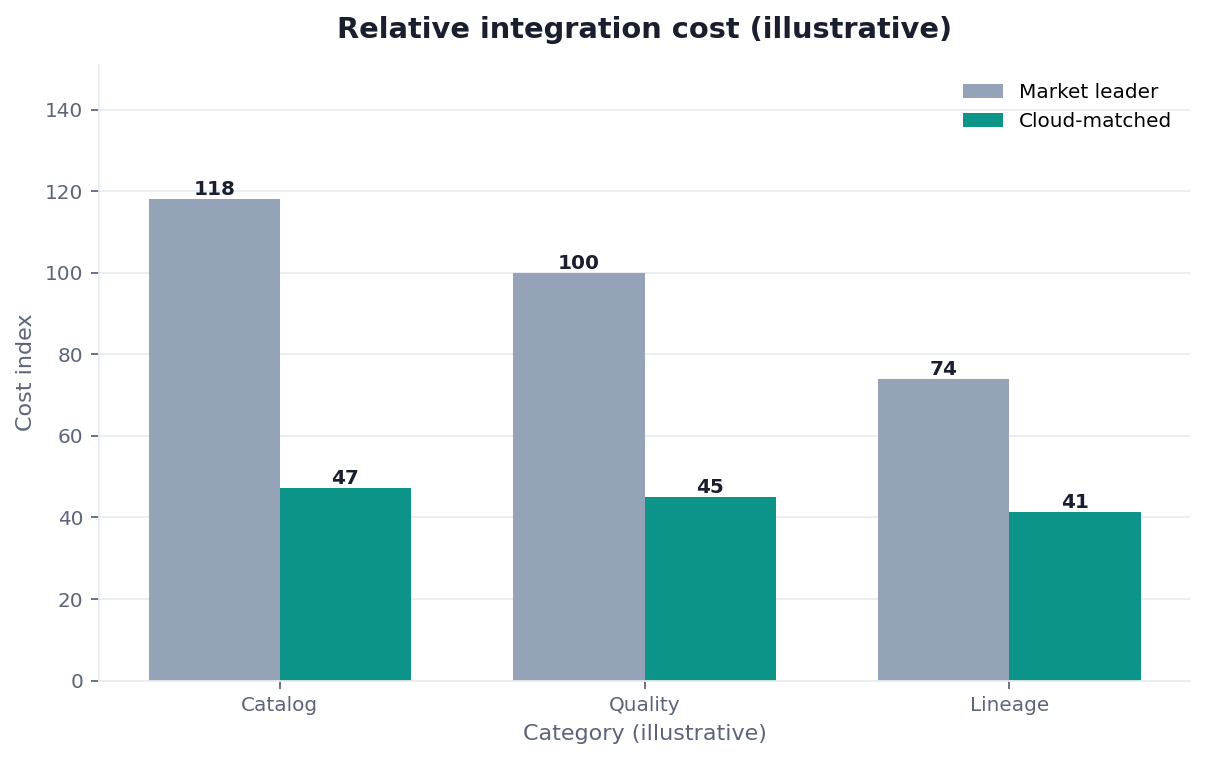
Practical example: a team choosing data warehouse software picked the option matching its existing cloud rather than the market leader, cutting integration cost — a fit-first approach the guidance at AWS Well-Architected Framework reinforces.
Scope note: This guide reflects patterns we see when mid-market and enterprise teams work with data warehouse software in 2026. It is not a substitute for legal counsel, vendor runbooks, or a formal survey of every industry — and when a smaller toolset or lighter process would serve, a full program is overkill.
What It Is
At its core, data warehouse software is the class of database platforms purpose-built to store cleaned, structured, modeled data and answer analytical queries against it reliably and quickly.
Key Definition: data warehouse software is any platform designed to store integrated, structured, and modeled data optimized for analytical querying and business reporting, providing the storage, query engine, and management tooling needed to serve many users reliable answers from a consistent, governed source of truth.
The essence of data warehouse software is reliability at query time. Whatever the brand or deployment, its job is to turn integrated, modeled data into fast, trustworthy answers for many concurrent users — the analytical counterpart to the transactional databases that run applications.
The Main Categories
Governance and risk expectations are framed by FTC consumer protection guidance when programs need an external control reference.
Data warehouse software falls into a few broad categories. Cloud-native services run fully managed with elastic compute; traditional on-premises systems run on owned hardware; and open-source engines offer flexibility and control without license fees.
Within data warehouse software, the cloud category dominates new projects, as the patterns at Kubernetes documentation for comparable platforms show, because it removes hardware management and scales on demand. On-premises persists where regulation, latency, or data residency demand it. Open-source engines appeal to teams wanting control and cost transparency and willing to operate more themselves. Each category trades convenience, control, and cost differently.
Criteria That Matter
The criteria for data warehouse software that actually predict success are workload fit, ecosystem fit, cost model, and operational burden. Raw feature lists matter far less than whether the tool suits your data and team.
Evaluating data warehouse software well means testing against your real workload: your concurrency, data volume, and latency needs, not a vendor benchmark. The Tableau Desktop documentation underscores that ecosystem fit — how cleanly the tool integrates with your existing cloud, pipelines, and BI tools — often outweighs marginal performance differences, because integration friction is a cost that recurs every day the platform runs.
Matching Tool to Need
Teams evaluating this topic often cross-check Redis documentation for a durable, vendor-neutral reference point.
Choosing data warehouse software comes down to matching, not ranking. A team deep in one cloud usually benefits from that cloud's native warehouse; a team needing extreme concurrency isolation may favor a platform built for it; a cost-sensitive team may lean open-source.
The discipline in selecting data warehouse software is to define needs before shopping. Write down your workload, scale, ecosystem, and budget constraints first, then match candidates to them — the practice covered across the warehouse and lakehouse hub. Shopping by reputation invites buying capability you will not use while missing the fit that determines whether the platform quietly serves you or constantly fights you.
Where the Market Came From
The data warehouse software market grew out of the need to separate analytical workloads from the transactional databases running applications. Running heavy analytical queries against a live application database slowed both, so purpose-built analytical systems emerged to hold integrated, modeled data optimized for reporting.
Over time the market shifted decisively to the cloud as elastic, managed services removed the hardware burden that once made warehousing expensive and slow to provision. Understanding this history clarifies why category and deployment model matter more than brand: the tools converged on similar core capabilities, and the meaningful differences now lie in how they scale, what they cost, and how they fit an ecosystem. That is why fit, not fame, should drive the decision.
Common Pitfalls
Implementation details are commonly grounded in Azure architecture center when teams translate concepts into production practice.
The pitfalls of choosing data warehouse software start with buying by brand. Picking the market leader without checking ecosystem fit often means costly integration work and paying for capabilities that do not match the workload.
A subtler pitfall with data warehouse software is underestimating the operational and cost model. Consumption pricing can surprise teams that do not govern usage; on-premises systems carry hidden maintenance burden; open-source engines demand in-house expertise. The tool that looks cheapest or most powerful on paper can prove expensive in practice once its real operating characteristics meet your team's capacity, so weigh the total cost of running it, not just the headline.
A further pitfall is over-indexing on migration to the newest platform without a clear reason beyond novelty. Replatforming a warehouse is expensive and disruptive: pipelines must be rewritten, queries re-tuned, and users retrained, and the transition period often runs both old and new systems in parallel at double the cost. That effort is worth it when the current platform genuinely fails on scale, cost, or capability, but not merely because a newer option is fashionable. The discipline is to treat a migration as a response to a concrete, measured shortcoming — a bill that has become unaffordable, a workload the current tool cannot handle — rather than as a default reaction to whatever the market is excited about this year.
Software in the Age of AI
AI changes how data warehouse software gets used. AI-driven analysis still depends on the trusted, modeled data a warehouse holds, but AI-native platforms reduce how much must be consolidated into any single tool.
We explore this in what AI-native data analysis means. In the InfiniSynapse web app, zero-config federation lets an agent analyze across whatever data warehouse software you run — alongside lakes and operational databases — without forcing everything into one platform, so the selection decision becomes less about picking a single destination and more about governing each source well.
Readiness Scorecard
Teams evaluating this topic often cross-check Prometheus documentation for a durable, vendor-neutral reference point.
Assess your selection process (1 point each):
| Check | Pass? |
|---|---|
| Needs were defined before shopping | |
| Workload was tested realistically | |
| Ecosystem fit was weighed | |
| Cost model is understood | |
| Operational burden is accounted for | |
| Category, not brand, drove the choice | |
| Total cost of running was estimated | |
| Federation was considered |
6–8: a fit-first process. 3–5: revisit criteria. Below 3: restart from needs.
Common Misconceptions
Misconception 1: The market leader is the best choice. Fit beats fame.
Misconception 2: Feature lists decide it. Workload and ecosystem fit matter more.
Misconception 3: Cloud pricing is always cheaper. Only with usage governance.
Misconception 4: You must consolidate into one tool. Federation can query across many.
Frequently Asked Questions
What counts as data warehouse software?
It is any platform designed to store integrated, structured, and modeled data optimized for analytical querying and business reporting, providing the storage, query engine, and management tooling needed to serve many users reliable answers from a consistent, governed source of truth. Whatever the brand or deployment, its defining job is reliability at query time — turning modeled data into fast, trustworthy answers for many concurrent users. It is the analytical counterpart to the transactional databases that run applications day to day.
What are the main categories?
There are three broad categories: cloud-native services that run fully managed with elastic compute, traditional on-premises systems that run on owned hardware, and open-source engines that offer flexibility and control without license fees. The cloud category dominates new projects because it removes hardware management and scales on demand; on-premises persists where regulation, latency, or data residency demand it; and open-source appeals to teams wanting control and cost transparency who are willing to operate more of the stack themselves.
Which criteria actually matter when choosing?
Workload fit, ecosystem fit, cost model, and operational burden predict success far better than raw feature lists. Test candidates against your real concurrency, data volume, and latency needs rather than a vendor benchmark, and weigh how cleanly each integrates with your existing cloud, pipelines, and BI tools. Integration friction is a cost that recurs every day the platform runs, so ecosystem fit often outweighs marginal performance differences that look decisive on a spec sheet but rarely matter in practice.
How do I match a tool to my need?
Define your needs before shopping: write down workload, scale, ecosystem, and budget constraints first, then match candidates to them. Which platform wins depends on circumstance — heavy investment in one cloud usually points to that cloud's native warehouse, a demand for strict concurrency isolation points to a platform engineered for it, and tight budgets point toward open-source. Buying by reputation tends to saddle you with capabilities you never use while overlooking the fit that decides whether the platform quietly serves you or fights you every day.
How does AI relate to data warehouse software?
AI-driven analysis still depends on the trusted, modeled data a warehouse holds, so the category stays essential, but AI-native platforms reduce how much must be consolidated into any single tool. Federation lets an agent analyze across whatever software you run — alongside lakes and operational databases — without forcing everything into one platform. That makes the selection decision less about picking a single destination for all data and more about governing each source well, which lowers both movement cost and lock-in risk.
Should I choose managed cloud, on-premises, or open-source?
It depends on your constraints, not on which is newest. Managed cloud suits most teams that want elastic scale and minimal operational burden and can govern consumption-based spend. On-premises suits organizations with regulatory, latency, or data-residency requirements that rule out the public cloud, provided they can staff the maintenance. Open-source suits teams that want control and cost transparency and have the in-house expertise to run it. None is universally best: the managed option trades control for convenience, on-premises trades convenience for control, and open-source trades vendor support for flexibility. Weigh those trades against your team's real capacity rather than the market's current enthusiasm.
Conclusion
Data warehouse software spans cloud, on-premises, and open-source platforms that all aim at reliable analytical querying — and the right pick is situational, driven by workload, ecosystem, and cost rather than brand. In 2026, define needs first, weigh total cost of running, and remember AI-native federation lets you govern many sources well instead of forcing one destination.
To compare specific platforms, read cloud data warehouse, then try federated analysis in the InfiniSynapse web app, free on registration.