Data Governance Framework: Structure and 2026 Guide
By the InfiniSynapse Data Team · Last updated: 2026-07-15 · We build an AI-native data analysis platform and help teams operationalize governance; this guide reflects how a data governance framework actually works in 2026, not an org chart.
Table of Contents
- TL;DR
- How We Approached This
- What It Is
- The Core Components
- Popular Models
- How to Implement One
- Common Failure Modes
- Frameworks in the Age of AI
- Readiness Scorecard
- Common Misconceptions
- Frequently Asked Questions
- Conclusion
TL;DR
Direct answer: a data governance framework is the structured set of principles, roles, policies, and processes that an organization uses to govern its data consistently. In 2026, a data governance framework matters because it turns ad-hoc rules into a repeatable system — and because AI agents need that consistency to produce trustworthy answers.
Who this is for: data leaders and architects designing or adopting a data governance framework in 2026.
What you'll learn: what a framework is, its core components, popular models, how to implement one, and why it underpins trustworthy AI.
This guide sits under the data governance frameworks hub.
For the discipline it structures, see data governance.
Also see data governance best practices.
How We Approached This
Core definitions remain usefully summarized in Wikipedia conceptual data model overview for shared vocabulary across stakeholders.
We built this guide from implementation work rather than a template. Every recommendation reflects what we see when teams adopt a data governance framework and try to make it stick. We anchor definitions to the Prometheus documentation, and we align control structure with the NIST Cybersecurity Framework, which provides a widely used model for organizing data and AI risk.
The table below maps the components of a data governance framework. Use it as a reference; the sections below go deeper.
| Component | What it defines |
|---|---|
| Principles | The values guiding decisions |
| Roles | Who owns and stewards data |
| Policies | The rules that apply |
| Processes | How decisions get made |
| Controls | How rules are enforced |
| Metrics | How success is measured |
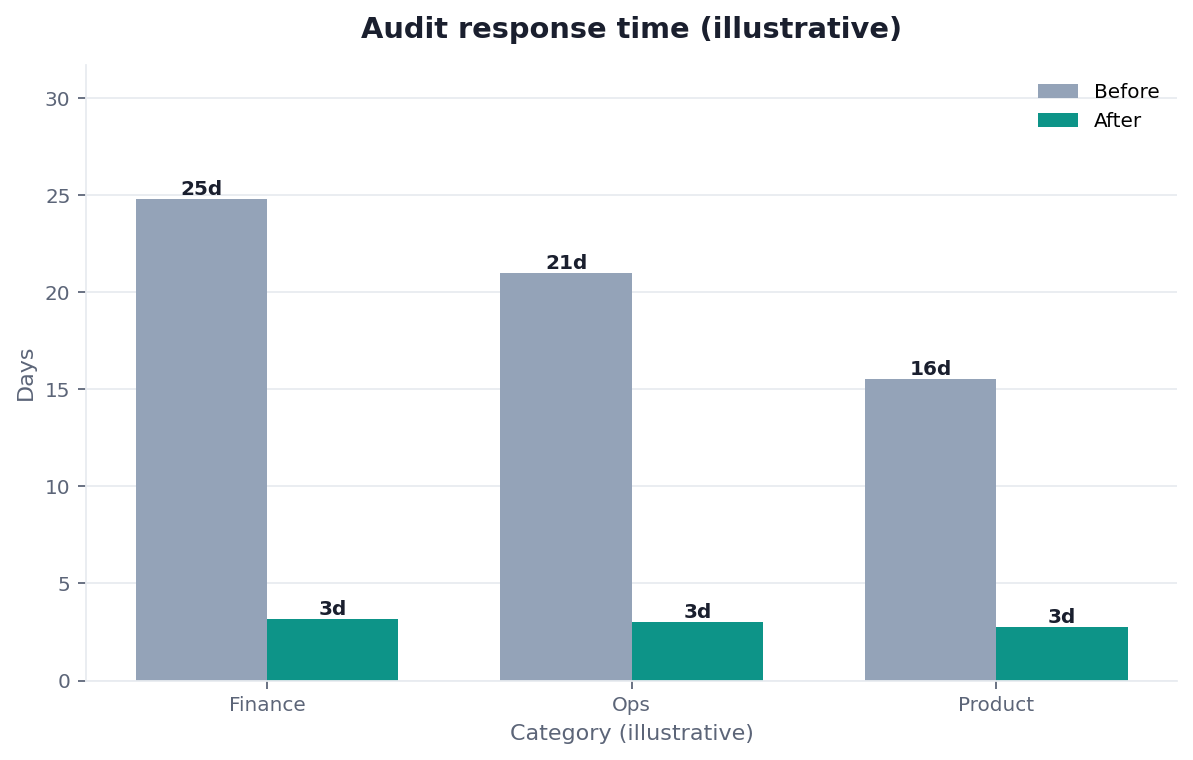
Practical example: a bank with no data governance framework made every data decision as a one-off, so nothing was consistent or auditable. After adopting a framework with defined roles and controls aligned to UK NCSC AI development guidelines, decisions became repeatable and audits went from weeks to days. That repeatability is what a framework delivers.
Scope note: This guide reflects patterns we see when mid-market and enterprise teams work with data governance framework in 2026. It is not a substitute for legal counsel, vendor runbooks, or a formal survey of every industry — and when a smaller toolset or lighter process would serve, a full program is overkill.
What It Is
Architecture choices are often checked against Microsoft Excel support so boundaries, ownership, and scale patterns stay explicit.
At its core, a data governance framework is structure: it answers who decides, by what rules, through what process, and how enforcement and measurement happen. It converts good intentions into a repeatable operating model.
Key Definition: a data governance framework is the organized set of principles, roles, policies, processes, controls, and metrics that an organization uses to govern its data consistently and accountably across its lifecycle.
The distinction that matters is between a framework and a document. A binder of policies is not a data governance framework; a framework wires those policies to roles, processes, and enforcement so they operate rather than gather dust. That operational quality — decisions flowing through defined roles and controls — is what separates a real framework from a filing cabinet.
The Core Components
Teams evaluating this topic often cross-check MongoDB documentation for a durable, vendor-neutral reference point.
An effective data governance framework rests on components that reinforce one another.
Roles and policies
Roles assign accountability — owners, stewards, and a governing body — while policies codify the rules those roles enforce. Without clear roles, a data governance framework has no one to operate it; without policies, roles have nothing to enforce. International policy coordination tracked by the Wikipedia business intelligence overview increasingly shapes the policy layer, especially for AI-related data use.
Processes and controls
Processes define how governance decisions get made and escalated, while controls enforce policy in systems. A strong data governance framework connects these so a policy change propagates to real enforcement, aligning with the security guidance from Stripe documentation. When processes and controls drift apart, the framework becomes theater.
Popular Models
Teams evaluating this topic often cross-check Google SRE book for a durable, vendor-neutral reference point.
Most organizations adapt an existing model rather than inventing one. A data governance framework is often built on established references — control catalogs, risk frameworks, and industry models — tailored to the organization's size and regulatory context.
The point is not which model you start from but that you adapt it to your reality. A borrowed data governance framework applied without tailoring produces bureaucracy; a tailored one produces clarity. We recommend starting from a recognized reference for credibility, then trimming it to the roles and controls you can actually staff and enforce.
Tailoring means making deliberate choices about scope and depth. A global bank and a fifty-person startup should not run the same data governance framework, even if they borrow from the same reference model, because their risk, regulation, and headcount differ by orders of magnitude. The bank needs formal committees, segregation of duties, and extensive audit trails; the startup needs one owner per critical dataset and a lightweight review. Copying the bank's structure into the startup guarantees it will be ignored, and copying the startup's into the bank guarantees an audit finding. The right depth is the most you can consistently operate, and no more. We advise teams to start deliberately thin — fewer roles, fewer policies, real enforcement — and to add structure only when a concrete problem demands it, because it is far easier to add a control that a failure has justified than to dismantle a bureaucracy that never earned its keep.
How to Implement One
Teams evaluating this topic often cross-check OpenTelemetry documentation for a durable, vendor-neutral reference point.
Implementing a data governance framework succeeds when it starts small and proves value. Adopting an entire model at once overwhelms teams and stalls.
Pick your highest-value domain, instantiate the framework there — roles, a few policies, real controls — and demonstrate a win before expanding. This incremental path connects your data governance framework to day-to-day work through data governance best practices, which translate structure into habits. A framework that shows value in one domain earns the mandate to spread; one imposed everywhere at once earns resistance. Sequencing the rollout by business value, rather than by org chart, is what keeps momentum alive: each new domain adopts the framework because it saw the previous one benefit, not because a policy told it to. That pull, rather than push, is the signature of an implementation that will last.
Common Failure Modes
The failures we see are structural. A framework with no executive sponsor loses to competing priorities. One with roles but no enforcement becomes documentation. One copied without tailoring produces bureaucracy no one follows. And one treated as a finished project — rather than a living system — drifts out of date as data and regulation change.
A subtler failure is over-engineering. A data governance framework with dozens of roles and hundreds of policies looks thorough but cannot be staffed, so it collapses under its own weight. Start with the minimum that works and add only what you can operate.
Framework and Culture
A data governance framework succeeds or fails on culture as much as on structure, and this is the factor most implementation plans underweight. The most elegant set of roles, policies, and controls will be ignored if the people expected to operate it see governance as an imposition rather than as something that makes their own work easier. The framework has to earn its place by removing friction — settling the definition arguments that used to derail meetings, making it obvious who to ask for access, and cutting the time it takes to trust a number — rather than by adding approval steps that slow everyone down.
We have seen the same pattern repeatedly: frameworks that are introduced as compliance mandates generate resentment and quiet non-compliance, while frameworks introduced as tools that give teams back their time generate genuine adoption. The practical implication is to lead with visible wins that the affected teams actually feel. When a data governance framework resolves a long-running dispute over how revenue is counted, the stewards who suffered through that dispute become its advocates. When it simply adds a form to fill out, it becomes something to route around. Investing early in these felt improvements, and in the communication that connects the framework to them, is what converts a paper structure into a living operating model. Culture is not a soft addendum to a data governance framework; it is the medium in which the framework either takes root or withers.
Frameworks in the Age of AI
AI raises the stakes for a data governance framework. When an autonomous agent reads your data to answer questions, the consistency your framework enforces becomes the consistency of the agent's answers; ungoverned definitions produce inconsistent AI output. A framework is what makes automated analysis trustworthy at scale.
An AI-native platform helps by binding governed definitions and controls to the data an agent queries, an approach we describe in what AI-native data analysis means. In the InfiniSynapse web app, the framework's definitions travel with the data, so your data governance framework directly shapes the reliability of AI answers rather than living in a separate document.
Readiness Scorecard
Assess your data governance framework readiness (1 point each):
| Check | Pass? |
|---|---|
| Principles are written and agreed | |
| Roles assign clear accountability | |
| Policies are documented | |
| Processes define how decisions are made | |
| Controls enforce policy in systems | |
| Metrics measure success | |
| It is tailored, not copied | |
| It is ready for AI/agent use |
6–8: strong. 3–5: connect policy to enforcement. Below 3: start with roles in one domain.
Common Misconceptions
Misconception 1: A framework is a document. A data governance framework operates; a document sits still.
Misconception 2: Bigger is better. An unstaffable framework collapses; start minimal.
Misconception 3: Copy a standard model. Tailor it, or it becomes bureaucracy.
Misconception 4: It is a one-time project. It is a living system that evolves as your data, regulations, and organization change over time.
Frequently Asked Questions
What is a data governance framework?
A data governance framework is the organized set of principles, roles, policies, processes, controls, and metrics an organization uses to govern its data consistently and accountably. It converts good intentions into a repeatable operating model, wiring policies to the roles and enforcement that make them operate rather than gather dust in a binder.
What are its core components?
The core components are principles, roles, policies, processes, controls, and metrics. Principles guide decisions, roles assign accountability, policies codify rules, processes define how decisions are made, controls enforce policy in systems, and metrics measure success. These components reinforce one another, and a gap in any weakens the whole.
Which model should we start from?
Start from a recognized reference — a control catalog or risk framework — for credibility, then tailor it to your size, stack, and regulatory context. The specific model matters less than the tailoring: a borrowed framework applied without adaptation produces bureaucracy, while a trimmed, staffable one produces clarity.
How do you implement one?
Start small. Pick your highest-value domain, instantiate the framework there with real roles, a few policies, and working controls, and demonstrate a win before expanding. Incremental adoption earns the mandate to spread, while imposing an entire model everywhere at once overwhelms teams and stalls.
Why does a framework matter for AI?
Because AI amplifies inconsistency. When an agent reads your data and answers questions, the consistency your framework enforces becomes the consistency of its answers; ungoverned definitions produce inconsistent output. A framework makes automated analysis trustworthy at scale, especially when its definitions travel with the data an agent queries.
Conclusion
A data governance framework is the structure — principles, roles, policies, processes, controls, and metrics — that makes governance repeatable rather than ad hoc. In 2026 it is what makes AI analysis trustworthy at scale. Start from a recognized model, tailor it honestly to your size and risk, prove value in one domain first, and let adoption pull the framework outward rather than pushing it through a mandate.
To see how a framework's definitions travel with data into automated analysis, and how governed context makes agent answers consistent, read what AI-native data analysis means and try the InfiniSynapse web app free on registration, no credit card required.