Quick answer快速回答
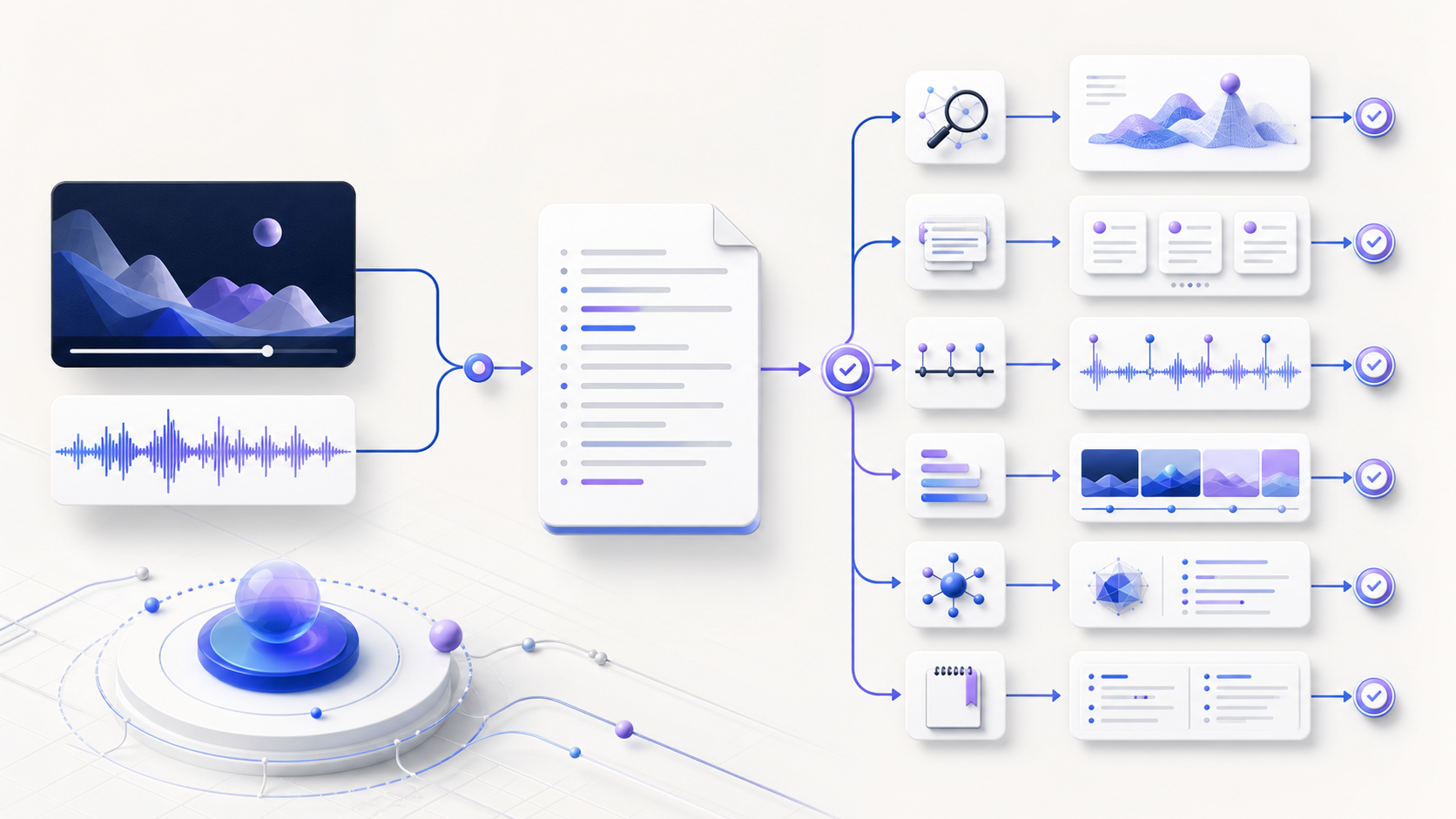
A YouTube transcript generator converts available speech or captions into reviewable text, then supports search, summaries, timestamps, chapters, analysis, and study notes. The dependable workflow starts with a permitted source, preserves a route back to the recording, and ends with a human check of important details.
YouTube 文字稿生成器把可用语音或字幕转换为可复核文本,并进一步支持搜索、摘要、时间码、章节、视频分析与学习笔记。 可靠流程从获授权的来源开始,持续保留返回原始录像的路径,并以人工复核重要细节结束。
What youtube transcript generator should accomplish“youtube transcript generator”应完成什么
The phrase youtube transcript generator can describe a button, a manual technique, or a multi-step analytical workflow. The useful definition is outcome-based: a corrected, time-aligned transcript plus the summaries, chapter map, analysis, or study notes needed for the task. That definition prevents a polished interface from being mistaken for a trustworthy result.
“youtube transcript generator”可能指一个按钮、一种手动方法,也可能指多步骤分析流程。更实用的定义应以结果为中心:经过校正并与时间对齐的文字稿,以及任务需要的摘要、章节图、分析或学习笔记。这样可避免把界面精美误认为结果可信。
Build the transcript as an evidence layer. Decide first whether the job is retrieval, navigation, summarization, note creation, or evidence-based analysis. Each job needs different inputs and a different validation method. A transcript can support search; a timestamp can support navigation; neither alone proves an interpretation.
把文字稿建立为证据层。应先判断任务属于材料获取、导航、摘要、笔记还是基于证据的分析。不同任务需要不同输入与验证方法。文字稿可支持搜索,时间码可支持导航,但两者都不能单独证明某项解释。
You need to understand, locate, organize, compare, or share material from a video while keeping a path back to the source.
需要理解、定位、整理、比较或分享视频材料,并希望始终能回到原始来源时。
A substitute for permission, required viewing, professional judgment, or source verification in high-stakes decisions.
它不能替代内容授权、必须完成的观看、专业判断,也不能替代高风险决策中的来源核验。
A repeatable youtube transcript generator workflow可重复执行的完整流程
- 1Define the job明确任务
Write one sentence describing why you need youtube transcript generator. Name the audience, the decision or learning task, and the evidence that would make the result trustworthy.
用一句话说明为什么需要“youtube transcript generator”,写清读者、决策或学习任务,以及什么证据能让结果可信。
- 2Prepare an authorized source准备获授权的来源
Gather a public or authorized video, its available captions or audio, the correct language, and a clear purpose for the transcript. Confirm the video, captions, transcript, or slides are available to you and appropriate for the intended use.
准备公开视频或获授权视频、可用字幕或音频、正确语言以及明确的文字稿用途。确认视频、字幕、文字稿或幻灯片可由你使用,并适合当前用途。
- 3Create a first structured pass生成第一版结构化结果
Process the source in logical sections. Keep timestamps or other pointers during the first pass so a corrected, time-aligned transcript plus the summaries, chapter map, analysis, or study notes needed for the task remains connected to the recording.
按逻辑部分处理来源,第一遍就保留时间码或其他定位信息,使经过校正并与时间对齐的文字稿,以及任务需要的摘要、章节图、分析或学习笔记始终能够返回原始录像。
- 4Review high-risk details复核高风险细节
Replay names, numbers, quotations, decisions, formulas, and ambiguous passages. Mark uncertainty instead of filling gaps with a confident guess.
回放人名、数字、引语、决策、公式和含糊段落。无法确认时标记不确定,不要用自信猜测填补空白。
- 5Test the deliverable测试交付结果
Open every important link or timestamp, compare the output with the original context, and confirm the final artifact is usable for its intended audience.
打开每个重要链接或时间码,对照原始上下文,并确认最终材料适合目标读者实际使用。
Permission checkpoint. Access to a public watch page does not automatically grant permission to republish its transcript, subtitles, images, or full content. Match your use to the creator's license, platform terms, and applicable law.
权限检查。能够访问公开视频页面,并不自动意味着可以重新发布其文字稿、字幕、画面或完整内容。用途必须符合创作者许可、平台条款与适用法律。
Choose a method by the output you need根据目标输出选择方法
| Need需求 | Best starting point合适起点 | Keep应保留 | Main check主要检查 |
|---|---|---|---|
| Find one exact statement查找一条原话 | Searchable transcript可搜索文字稿 | Surrounding sentences and time上下文与时间 | Replay the full exchange回放完整对话 |
| Navigate a long video浏览长视频 | Timestamps or chapters时间码或章节 | Clear labels and boundaries清晰标签与边界 | Test every jump测试每个跳转 |
| Learn or brief a team学习或团队简报 | Summary or structured notes摘要或结构化笔记 | Claims, examples, caveats观点、示例与限定 | Check high-risk details核对高风险细节 |
| Make a business decision支持业务决策 | Evidence-linked video analysis关联证据的视频分析 | Method, uncertainty, provenance方法、不确定性与来源 | Independent human review独立人工复核 |
The simplest method that preserves the required evidence is usually the best choice. Avoid converting everything into plain text too early: timing, slides, speaker changes, and visible demonstrations may carry meaning that a transcript cannot retain.
通常应选择能够保留必要证据的最简单方法。不要过早把一切都转成纯文本,因为时间关系、幻灯片、说话人变化和可视化演示可能包含文字稿无法保留的信息。
Worked example with a verification trail带核验路径的具体示例
For a 75-minute public lecture, preserve the visible transcript and timing, correct course terms against the slides, search for definitions and examples, build chapter boundaries, summarize each section, and create review questions that link back to the relevant moments.
例如处理一段 75 分钟的公开课程时,可保留平台可见文字稿与时间信息,对照幻灯片校正课程术语,搜索定义与示例,建立章节边界,逐章摘要,并制作能够返回相关时刻的复习问题。
A strong deliverable records the source URL or file name, the date it was accessed, the language, the scope of the request, and the review status. If a colleague cannot reproduce the key moment from those details, the output is not ready to circulate.
可靠交付物应记录来源 URL 或文件名、访问日期、语言、请求范围与复核状态。如果同事无法根据这些信息复现关键时刻,结果就不适合传播。
How to validate youtube transcript generator results如何验证结果
Check that the output answers the original question and includes decisive counterpoints, not only the easiest passages to extract.
检查结果是否回答原始问题,并包含关键反方信息,而不是只保留最容易提取的段落。
Replay proper nouns, figures, quotations, and moments where audio or visuals are unclear.
回放专有名词、数字、引语以及音频或画面不清楚的时刻。
Keep timestamps, source references, and enough surrounding context for another person to inspect the evidence.
保留时间码、来源引用和足够上下文,让其他人能够检查证据。
Test the artifact in its destination: mobile playback, meeting notes, study review, or a decision document.
在真实目标环境中测试材料,例如移动播放、会议笔记、复习资料或决策文档。
Use a small acceptance checklist: correct source, authorized use, complete scope, verified details, working links, explicit uncertainty, and a named reviewer. A fluent paragraph should never bypass this check.
可使用简短验收清单:来源正确、用途获授权、范围完整、细节已核实、链接有效、不确定性明确、复核人清楚。任何流畅段落都不能绕过这些检查。
1. What a YouTube transcript is—and is not1. 什么是 YouTube 文字稿,以及它不是什么
A transcript is a written representation of spoken content in a video. It may preserve time positions and speaker changes, but its central job is to make speech readable and searchable. A caption track is timed text designed to appear during playback and may include non-speech information such as music or sound cues. Subtitles usually translate or reproduce dialogue for viewers who do not understand the spoken language. In everyday use these labels overlap, yet the distinction matters when choosing a source and file format. The AI YouTube transcript guide explains how speech recognition, punctuation, speaker labels, and correction fit together.
文字稿是视频语音内容的书面表达,可能保留时间位置和说话人变化,但核心作用是让语音可阅读、可搜索。字幕轨是在播放时显示的带时间文本,也可能包含音乐或声音提示;“字幕”还常指为不理解原语言的观众提供的翻译或同语种对白。日常使用中这些名称会重叠,但选择来源与文件格式时仍需区分。AI YouTube 文字稿指南进一步说明语音识别、标点、说话人标签与人工校正的关系。
A summary is a different artifact. It selects and compresses ideas, while a transcript attempts to preserve what was said and in what order. Study notes go further by reorganizing material around concepts, questions, examples, or actions. Therefore, “generate a transcript” should not silently mean “write a summary.” A responsible workflow stores the transcript as the evidence layer, then creates summaries, chapter maps, quotations, or notes as derived layers. This separation makes corrections recoverable: when a name is fixed in the transcript, downstream outputs can be reviewed without pretending that the first interpretation was the source itself.
摘要是另一种材料:它选择并压缩观点,而文字稿尽量保留说了什么以及出现顺序。学习笔记还会围绕概念、问题、示例或行动重新组织信息。因此,“生成文字稿”不应暗中变成“写摘要”。可靠流程应把文字稿保存为证据层,再生成摘要、章节图、引语或笔记等衍生层。这样一旦文字稿中的姓名被修正,就能重新检查下游输出,而不会把第一版解释误当作原始来源。
The best transcript for a task is not always the longest one. A researcher may need verbatim wording, pauses, and speaker turns; a learner may need readable punctuation and section breaks; an editor may need exact time alignment. Decide whether you need verbatim, clean verbatim, or edited reading text before changing the source. Preserve an untouched copy, document each transformation, and keep a route to playback. If the decisive evidence is a diagram, gesture, demonstration, or on-screen number, add a visual note rather than forcing that information into speech that never occurred.
适合任务的文字稿不一定是最长版本。研究者可能需要逐字内容、停顿与说话人轮次;学习者更需要可读标点和分段;编辑者则需要准确时间对齐。修改来源前,应决定需要逐字稿、清洁逐字稿还是编辑后的阅读稿,并保留未经改动的副本、记录每次转换、保留回放路径。如果关键证据来自图表、手势、演示或屏幕数字,应增加画面说明,而不是把未说出口的信息硬写进语音文字稿。
2. How transcripts are generated2. 文字稿如何生成
Start with the least lossy source available. If the creator has published reviewed captions, those may preserve intended spelling and timing better than a fresh automatic pass. Platform-generated captions are convenient, but they can mishear proper nouns, merge speakers, omit punctuation, and struggle with noise or accents. When captions are unavailable and you are permitted to process the material, AI transcription can convert the authorized audio into text. The subtitle extraction guide covers timed caption sources and formats without assuming that every public video exposes a reusable download.
应从信息损失最少的可用来源开始。如果创作者发布了经过审阅的字幕,它通常比重新自动转录更能保留预期拼写和时间。平台自动字幕很方便,但可能听错专有名词、合并说话人、缺少标点,并在噪声或口音下失准。当字幕不可用且你有权处理材料时,可对获授权音频执行 AI 转录。字幕提取指南介绍带时间字幕来源与格式,同时不会假设所有公开视频都提供可复用下载。
Language selection is part of accuracy, not a cosmetic setting. Confirm the spoken language, regional vocabulary, code-switching, and whether a translated track is being mistaken for the original. Supply a glossary for course terms, names, products, acronyms, and formulas when the workflow supports it. Segment long recordings at stable boundaries rather than arbitrary file sizes, and retain overlap around cuts so sentences are not lost. For multiple speakers, do not assign names from voice alone unless identity is independently established; use neutral labels and correct them with contextual evidence.
语言选择是准确性的一部分,而不是外观设置。需要确认口语语言、地区词汇、语言切换,以及当前轨道是否为翻译字幕而非原文。流程允许时,应提供课程术语、人名、产品名、缩写和公式词表。长视频要在稳定内容边界处分段,不要只按任意文件大小切割,并在切点保留重叠,避免句子丢失。多人视频中,不应仅凭声音推断身份;先使用中性标签,再依据上下文证据校正。
Measure accuracy where errors matter. A global word score can hide failures in names, numbers, quotations, negation, or technical language. Create a review queue for low-confidence passages, overlapping speech, silence, abrupt edits, and sections where slides carry the meaning. Replay every fact that will be quoted, graded, published, or used in a decision. Keep the original caption or audio, the generated draft, and the corrected version as separate artifacts. That small version history distinguishes machine output from human-approved text and prevents later users from treating an unreviewed draft as authoritative.
准确性评估应聚焦真正会造成影响的错误。整体词准确率可能掩盖人名、数字、引语、否定词或专业语言的问题。应把低置信段落、重叠语音、静音、突然剪辑以及由幻灯片承载含义的部分放入复核队列。凡是将被引用、评分、发布或用于决策的事实都要回放。原字幕或音频、机器草稿和校正版应分开保存;这份简单版本记录能区分机器输出与人工批准文本,避免未审阅草稿被误作权威。
3. Search a transcript for terms, ideas, and exact moments3. 搜索术语、观点与准确时刻
Exact search is useful for names, quoted phrases, definitions, numbers, or a known term. Search the normalized spelling and likely recognition errors, then read sentences before and after every match. The visible hit may be a question, a rejected idea, or a quotation rather than the speaker’s conclusion. A useful YouTube transcript search result includes the matching passage, surrounding context, speaker status when known, and a timestamp that opens before the complete exchange—not merely the highlighted word.
精确搜索适合查找姓名、已知引语、定义、数字或明确术语。既要搜索规范拼写,也要考虑可能的识别错误,并阅读每个命中位置前后的句子。命中内容可能是问题、被否定的观点或他人引语,并不一定代表说话人的结论。有效的 YouTube 文字稿搜索结果应包含匹配段落、上下文、已知说话人状态,以及在完整对话开始前打开的时间码,而不是只高亮一个词。
Concept search handles paraphrases. Build a small query set that combines the core idea with synonyms, related entities, causes, consequences, and objections. For “pricing,” for example, also inspect budget, procurement, cost, approval, discount, and value. Treat these as discovery terms, not proof that every match expresses the same idea. Group results by section or speaker, remove duplicates created by repeated captions, and annotate why each passage is relevant. If a concept never appears literally, say that the result is an interpretation and preserve the text that supports it.
概念搜索用于处理改写表达。可围绕核心概念建立小型查询集,包含同义表达、相关实体、原因、后果与异议。例如查找“定价”时,也检查预算、采购、成本、审批、折扣和价值。它们只是发现线索,不能证明每个命中都表达同一观点。应按章节或说话人归组,删除重复字幕产生的重复项,并说明每段为何相关。如果概念从未被直接说出,就要明确结果属于解释,并保留支持解释的原文。
Search quality depends on transcript quality. Missing punctuation can join two claims; a misspelled name can hide all references; poor timing can send a reviewer to the wrong moment. Before a large search task, correct the glossary terms and test several timestamps. Export a search log containing the query, match, surrounding passage, start time, relevance note, and verification status. This turns a fleeting interface result into a reproducible research artifact. It also makes negative findings more honest: “not found in this reviewed transcript with these queries” is defensible, while “the video never discusses it” may not be.
搜索质量依赖文字稿质量。缺少标点会合并两个观点,拼错姓名会隐藏全部相关内容,时间偏移则会把复核者带到错误时刻。大规模搜索前,应先校正词表术语并测试若干时间码。搜索记录应包含查询词、命中内容、上下文、开始时间、相关性说明与复核状态,使短暂界面结果变成可复现研究材料。负面结论也会更诚实:“在这份已审阅文字稿中用这些查询未找到”可以被验证,而“视频从未讨论”往往过度推断。
4. Turn a long transcript into summaries and key points4. 把长文字稿整理为摘要与重点
Summarize for a stated audience and decision. A student needs definitions, examples, relationships, and review questions; an executive may need conclusions, evidence, objections, and actions. Begin with a structural pass that identifies opening context, major topics, transitions, demonstrations, questions, and closing conclusions. Then write a section summary before attempting one overall paragraph. The YouTube video summarizer workflow keeps important claims tied to source moments and makes omissions visible.
摘要应服务于明确读者与任务。学生需要定义、示例、关系与复习问题;管理者可能需要结论、证据、异议与行动项。先进行结构扫描,识别开场背景、主要主题、过渡、演示、提问与最终结论,再逐章摘要,最后才写整体概述。YouTube 视频摘要流程会让重要观点关联来源时刻,并让省略内容保持可见。
Separate four layers: what the speaker explicitly states, evidence or examples offered, qualifications and disagreement, and your own synthesis. Do not turn tentative language into certainty or combine different speakers into one position. Preserve numbers with units, conditions, and comparison bases. When a transcript says “may,” “in this sample,” or “under these assumptions,” those words often matter more than elegant compression. Attach at least one timestamp to each major conclusion and retain a short supporting passage so a reviewer can understand why that moment was selected.
可把内容分为四层:说话人明确陈述、给出的证据或示例、限定与分歧,以及你的综合解释。不要把试探性语言改成确定结论,也不要把不同说话人的立场合并。数字要保留单位、条件与比较基础。文字稿中的“可能”“在这个样本中”“在这些假设下”常比流畅压缩更重要。每个主要结论至少附一个时间码和简短支撑段落,让复核者理解为何选择该时刻。
Check a summary with both coverage and contradiction tests. Coverage asks whether it answers the original request and includes the main sections. Contradiction testing searches the transcript for exceptions, reversals, counterarguments, and later corrections that could change the summary. Compare chapter summaries with the global summary; missing sections often reveal overcompression. A useful final package contains a one-sentence orientation, a concise overview, section summaries, key takeaways, unresolved questions, and verification links. It should help a reader decide what to watch next, not pretend that no viewing is necessary.
摘要应同时通过覆盖检查与矛盾检查。覆盖检查确认它回答原任务并包含主要部分;矛盾检查则搜索例外、立场反转、反方观点与后续更正,判断它们是否会改变摘要。还应比较逐章摘要与整体摘要,缺失章节往往说明压缩过度。有效交付包可包含一句话导读、简洁总览、逐章摘要、关键结论、未解决问题与复核链接,帮助读者决定接下来观看什么,而不是假装完全不必观看。
5. Build timestamps and chapters from transcript structure5. 从文字稿结构生成时间码与章节
A timestamp is a coordinate; a chapter is a named content unit. Use YouTube timestamps for exact claims, examples, actions, or review points. Use YouTube chapters to expose the larger structure of a long recording. The same time can serve both roles, but the editorial decisions differ. Timestamp links should begin early enough to include necessary context. Chapter boundaries should coincide with a stable topic change, not every pause, slide, or sentence.
时间码是坐标,章节是命名后的内容单元。可使用 YouTube 时间码定位具体观点、示例、动作或复核点,使用 YouTube 章节展示长视频的整体结构。同一时间可以同时承担两种作用,但编辑判断不同:时间链接应稍早于必要上下文,章节边界应对应稳定主题变化,而不是每次停顿、换页或换句。
Generate a candidate map by combining transcript topic changes, explicit signposts, silence, slide transitions, and changes in task. Then review it against playback. Give chapters parallel, descriptive names that tell a viewer what happens or what question is answered. Avoid labels such as “Part 2” unless the surrounding title supplies meaning. Merge tiny segments that interrupt navigation and split long segments only when a meaningful subtask emerges. For published chapters, follow the platform’s current formatting requirements and test the final watch page.
候选章节图可以结合文字稿主题变化、说话人的显式提示、静音、幻灯片转换和任务变化生成,再对照播放复核。章节名应平行且具有描述性,让观众知道发生什么或回答什么问题。除非上下文已经说明含义,否则避免只写“第二部分”。会打断导航的过小片段应合并,只有出现有意义的子任务时才拆分长段。发布章节时,要遵守平台当前格式要求,并在最终观看页测试。
Validate every marker after the transcript and edit are stable. Open links on desktop and mobile, check that the first complete thought is audible, and confirm that an edit has not shifted later timing. Store start time, optional end time, label, purpose, source version, and verification status. If a marker supports a claim, retain the surrounding transcript excerpt. If it supports navigation, test whether the label matches what a viewer sees next. This distinction prevents a convenient jump from being mistaken for sufficient evidence.
文字稿与视频剪辑稳定后,必须逐个验证标记。在桌面端和移动端打开链接,检查第一段完整含义是否可听见,并确认后续剪辑没有使时间整体偏移。记录开始时间、可选结束时间、标签、用途、来源版本与验证状态。若标记用于支持结论,应保留附近文字稿;若用于导航,则检查标签是否符合观众接下来看到的内容。这样可避免把方便跳转误作充分证据。
6. Analyze topics, structure, learning value, and evidence6. 分析主题、结构、学习价值与证据
Transcript analysis can identify recurring topics, claims, definitions, examples, questions, and rhetorical structure. Full AI video analysis also considers visible actions, slides, diagrams, demonstrations, sequence, and timing. Choose the evidence layer that matches the question. “What did the speaker define?” may be answered from a reviewed transcript. “Did the demonstrated result match the spoken claim?” requires the video. The YouTube video analyzer guide explains how to frame questions that require inspectable source moments.
文字稿分析可以识别重复主题、观点、定义、示例、问题与论述结构。完整的 AI 视频分析还会考虑可见动作、幻灯片、图表、演示、顺序和时间。应让证据层与问题匹配:“说话人如何定义某概念”可由审阅后的文字稿回答;“演示结果是否符合口头陈述”则必须检查视频。YouTube 视频分析器指南介绍如何提出需要可检查来源时刻的问题。
Analyze learning value against objectives rather than production polish. Identify prerequisite knowledge, core concepts, worked examples, misconceptions addressed, transfer tasks, and places where the explanation depends on unstated assumptions. Map each finding to transcript passages or visual moments. Label direct observation, speaker claim, and analyst inference separately. A confident conclusion about emotion, intent, causation, or identity should not be drawn from a transcript phrase or single frame without supporting evidence.
学习价值应根据学习目标评估,而不是根据视频制作是否精美。识别先修知识、核心概念、例题、被纠正的误解、迁移任务,以及依赖未说明假设的位置,并把每项发现关联到文字稿段落或画面时刻。直接观察、说话人观点与分析者推断要分别标注。没有支撑证据时,不应根据一句文字稿或单帧画面对情绪、意图、因果或身份作出自信判断。
Use a question–evidence–finding table. For each question, state the evidence required, the source moments reviewed, the finding, alternative explanations, and uncertainty. Search for disconfirming evidence after finding an apparent pattern. Compare the opening promise with delivered sections, and distinguish repetition for teaching from evidence of importance. When several videos are compared, use the same rubric and avoid treating unequal lengths or formats as directly equivalent. The output should let another reviewer reproduce the reasoning, challenge it, and narrow the conclusion if the source is weaker than expected.
可使用“问题—证据—发现”表:每个问题写明所需证据、已检查来源时刻、发现、替代解释与不确定性。发现某种模式后,还要主动搜索反证。比较开场承诺与实际交付内容,并区分为教学而重复与真正重要性。比较多个视频时应使用同一标准,不要把长度与形式不等的内容直接等同。最终结果应允许另一位复核者复现推理、提出质疑,并在来源弱于预期时缩小结论。
7. Convert a video transcript into study notes7. 把视频文字稿转换为学习笔记
Good notes are designed for retrieval and use, not for preserving every sentence. Start with the learning objective and create a skeleton of topics before adding details. For each topic, capture the definition, explanation in your own words, example, exception, and source moment. The YouTube-to-notes workflow helps transform source material into an organized review artifact, while the AI lecture summarizer guide focuses on lectures, concepts, worked examples, and self-testing.
好笔记面向检索与使用设计,而不是保存每一句话。先确定学习目标并建立主题骨架,再填充细节。每个主题可记录定义、自己的解释、示例、例外和来源时刻。YouTube 转笔记流程帮助把来源材料转成有组织的复习成果;AI 课程摘要指南则更关注课程、概念、例题与自我测试。
Separate source notes from learning notes. Source notes preserve quotations, timestamps, slide references, and uncertainty. Learning notes reorganize those materials into concept maps, comparison tables, procedures, flashcards, or questions. Mark verbatim quotations clearly and use quotation marks only after replay verification. For formulas or diagrams, link the note to the slide or frame and transcribe surrounding explanation; plain text alone may be insufficient. Add “I can explain,” “I can apply,” and “I still need to resolve” fields to reveal whether a polished note actually supports understanding.
应区分来源笔记与学习笔记。来源笔记保存引语、时间码、幻灯片引用与不确定性;学习笔记则把这些材料重组为概念图、比较表、步骤、卡片或问题。逐字引语要明确标识,并且只有回放验证后才使用引号。公式或图表应关联到对应幻灯片或画面,并记录附近解释,因为纯文本可能不足。增加“我能解释”“我能应用”“仍需解决”字段,可以判断精美笔记是否真的支持理解。
Finish with active recall. Write questions before looking back at the answer, create one transfer problem that changes the context, and schedule a short review. Use timestamps as recovery routes when an answer is incomplete. Compare notes with the course objectives or agenda to detect missing sections. Correct the transcript first when an error affects several notes. This maintains one source of truth instead of patching every derivative independently. A concise note set that supports explanation and replay is more valuable than a long document that merely restates the transcript.
最后应进行主动回忆:先写问题,再在不看答案时作答;创建一个改变情境的迁移问题,并安排短时复习。答案不完整时,可用时间码返回来源。把笔记与课程目标或议程比较,发现遗漏章节。若同一错误影响多条笔记,应先修正文字稿,而不是分别修改所有衍生材料。能支持解释与回放的简洁笔记,比只是改写文字稿的长文更有价值。
8. Download formats, platform rules, and copyright boundaries8. 下载格式、平台规则与版权边界
Access to a public watch page does not automatically authorize copying, redistribution, translation, or commercial reuse of the transcript. Start with the platform-visible transcript, creator-provided captions, your own media, or another source you are permitted to use. Check the creator’s license, applicable platform terms, institutional policy, and local law for the intended purpose. The download YouTube transcript guide describes platform-visible and creator-provided paths; the transcript download format guide compares readable text with timed formats.
能够访问公开视频页面,并不自动意味着可以复制、再分发、翻译或商业复用其文字稿。应优先使用平台可见文字稿、创作者提供的字幕、自己的媒体,或其他有权使用的来源,并根据预期用途检查创作者许可、平台条款、机构政策和适用法律。下载 YouTube 文字稿指南说明平台可见与创作者提供的路径;文字稿下载格式指南比较可读文本与带时间格式。
Choose a format by the next operation. Plain TXT is easy to read and search but may discard timing and speaker cues. WebVTT or SRT preserves timed segments and is useful for caption review, alignment, and navigation. Structured JSON or CSV can support analysis but requires an explicit schema for time, speaker, text, language, confidence, and provenance. Preserve the original file and create transformed copies. Record the source URL, owner when known, access date, language track, retrieval method, intended use, and any restrictions alongside the file.
格式应根据下一步任务选择。TXT 易阅读和搜索,却可能丢失时间与说话人线索;WebVTT 或 SRT 保留带时间片段,适合字幕审阅、对齐与导航;结构化 JSON 或 CSV 可支持分析,但要明确时间、说话人、文本、语言、置信信息与来源字段。应保留原文件并生成转换副本,同时记录来源 URL、已知所有者、访问日期、语言轨、获取方式、预期用途与限制。
Minimize what you retain and share. A private study note may not require distributing the full transcript. A short quotation with context and attribution may serve a review task better than a complete copy, depending on permission and law. Remove sensitive personal data when it is unnecessary, define retention periods for authorized internal recordings, and restrict access to derived files. InfiniSynapse analyzes supplied material that the user is authorized to process; it does not directly download transcripts or bypass platform controls.
应尽量减少保留与分享内容。私人学习笔记未必需要分发完整文字稿;在权限和法律允许的前提下,带上下文与署名的短引语可能比完整副本更适合复核任务。对获授权的内部录像,应删除不必要的敏感个人信息,设定衍生文件保留期限并限制访问。InfiniSynapse 用于分析用户提供且有权处理的材料,不直接下载文字稿,也不绕过平台控制。
9. A complete InfiniSynapse learning workflow9. 一套完整的先鉴学习工作流
Prepare the video, audio, transcript, captions, slides, or notes you are allowed to process. Write the learning objective and required output before analysis: for example, “Explain the five core concepts, preserve one worked example for each, identify unresolved questions, and attach reviewable moments.” Include the language, course context, known vocabulary, and desired depth. If the source is public, record the URL and access date; if it is private, follow the owner’s access, storage, and retention rules.
请准备有权处理的视频、音频、文字稿、字幕、幻灯片或笔记。分析前先写清学习目标与输出要求,例如:“解释五个核心概念,每个概念保留一个例题,识别未解决问题,并附可复核时刻。”同时提供语言、课程背景、已知术语与期望深度。公开视频记录 URL 与访问日期;私有材料则遵守所有者的访问、存储和保留规则。
Run the work in layers. First establish or import a transcript and flag uncertain passages. Second search the transcript for the objective’s concepts, definitions, examples, counterpoints, and assessment cues. Third build a concise overview and chapter map. Fourth create study notes that separate source statements from explanations and questions. Fifth ask video-level questions when slides, demonstrations, gestures, or sequence matter. Keep source moments with every important result and return transcript corrections to the shared evidence layer before regenerating summaries or notes.
流程应分层执行。第一步建立或导入文字稿并标出不确定段落;第二步围绕学习目标搜索概念、定义、示例、反方信息与考核线索;第三步建立简洁概述和章节图;第四步制作区分来源陈述、解释与问题的学习笔记;第五步在幻灯片、演示、手势或顺序重要时提出视频层问题。每项重要结果都保留来源时刻,文字稿修正应先回写共同证据层,再重新生成摘要或笔记。
Review the package before using it. Replay names, numbers, quotations, formulas, definitions, chapter boundaries, and all claims that affect an assignment or decision. Test timestamps on the destination device. Confirm that the summary includes major caveats and that study questions can be answered from the provided evidence. Mark unresolved passages rather than guessing. When the package is ready, it should contain the source record, corrected transcript, search log, overview, chapter or timestamp map, study notes, verification status, and a short list of what still requires direct viewing.
使用前要审阅整个材料包。回放人名、数字、引语、公式、定义、章节边界,以及会影响作业或决策的观点;在目标设备上测试时间码;确认摘要保留关键限定条件,学习问题可以从现有证据回答。无法确认的段落应标记,而不是猜测。完成后,材料包应包含来源记录、校正文字稿、搜索记录、概述、章节或时间码图、学习笔记、验证状态,以及仍需直接观看的内容清单。
Ready to analyze? Open 先鉴 Peek only after you have a permitted public source and a defined learning question. Use it to assess content value, organize summaries, plan a timestamped viewing route, and build learning notes while preserving context for review.
准备开始分析?请在已有可公开访问且允许分析的来源与明确学习问题后打开先鉴 Peek,用它判断内容价值、组织摘要、规划时间码观看路线并建立学习笔记,同时保留可复核上下文。
Operational runbook for long or important videos长视频与重要材料的执行手册
Use a two-pass intake. On the orientation pass, inspect the title, description, duration, language tracks, opening promise, closing recap, slides, and obvious topic changes. Write a provisional outline without claiming that it is complete. On the evidence pass, follow the recording from beginning to end and attach transcript ranges to that outline. Record missing captions, language changes, audio dropouts, overlapping speakers, and sections where decisive information appears only on screen. This prevents a smooth transcript from hiding the portions it could not represent and gives later analysis an explicit exception list.
使用两遍接收法。第一遍查看标题、说明、时长、语言轨、开场承诺、结尾回顾、幻灯片和明显主题变化,建立暂定提纲但不宣称完整。第二遍从头到尾检查录像,把文字稿范围关联到提纲,并记录字幕缺失、语言切换、音频中断、多人重叠,以及关键信息只出现在画面中的部分。这样可避免流畅文字稿掩盖无法表达的内容,并为后续分析提供异常清单。
Correct high-leverage errors first. Build a glossary from the course outline, event agenda, speaker list, slides, and repeated terms. Search the draft for every glossary item, number, date, unit, URL, quotation, and negative construction. Correct timing drift before creating dozens of links. Resolve speaker labels before attributing positions. When a passage remains unclear, preserve an uncertainty marker with its time range and reason. Do not invent a plausible word simply to make the sentence grammatical. A visible gap is safer than a polished fabrication and can be routed to a domain reviewer.
先修正高影响错误。从课程提纲、活动议程、说话人名单、幻灯片和重复术语建立词表,在草稿中搜索所有词表项、数字、日期、单位、URL、引语与否定结构。大量创建链接前先修正时间漂移,归因立场前先解决说话人标签。仍不清楚的段落保留时间范围、不确定标记和原因,不要为了语法通顺而编造词语。可见缺口比流畅虚构更安全,也便于交给领域复核者。
Create outputs in dependency order. The corrected transcript comes first because search results, summaries, timestamps, chapters, analysis, and notes all depend on it. Search logs come next because they expose the passages that answer the learning objective. A chapter map then provides stable containers for section summaries. Study notes and questions should cite those containers and exact moments. If the source changes or a transcript correction alters meaning, identify every affected derivative and regenerate only those items. This order reduces inconsistent corrections and keeps one evidence trail across the package.
按依赖顺序生成输出。校正文字稿最先完成,因为搜索结果、摘要、时间码、章节、分析与笔记都依赖它;搜索记录随后产生,用于暴露回答学习目标的段落;章节图再为逐章摘要提供稳定容器;学习笔记与问题引用这些容器和准确时刻。若来源变化或文字稿修正改变含义,应识别受影响衍生材料并只重新生成相关部分,从而保持统一证据链。
Use distinct review roles when the material matters. A source reviewer checks transcript wording, timing, speakers, and visual references. A subject reviewer checks terminology, formulas, reasoning, and whether the interpretation fits the domain. A usability reviewer opens the artifact as the intended learner, tests navigation, answers the questions, and reports missing context. One person may perform several roles for low-risk work, but the checks should remain distinct. Record the reviewer, date, sample or full-review scope, corrections made, and unresolved items so approval means more than an informal glance.
重要材料使用不同复核角色。来源复核者检查文字、时间、说话人与画面引用;主题复核者检查术语、公式、推理以及解释是否符合领域;可用性复核者以目标学习者身份打开材料、测试导航、回答问题并报告缺失上下文。低风险任务可由一人承担多种角色,但检查项目仍要分开。记录复核者、日期、范围、已修正内容与未解决事项,让“批准”不只是随意浏览。
Package the result for reuse. Use stable file names and a manifest that lists the source, version, language, permissions note, transcript file, search log, summary, chapters, notes, and review record. Keep timestamps in a consistent format and include the source version they reference. Add a short read-me explaining the objective, audience, known limitations, and how to reproduce a key result. If the package is shared, distribute only components the recipient is permitted to receive. A good handoff lets a new reviewer find the source, inspect one claim, understand one correction, and continue without contacting the original operator.
把结果打包为可复用材料。使用稳定文件名与清单,列出来源、版本、语言、权限说明、文字稿、搜索记录、摘要、章节、笔记与复核记录。时间码保持统一格式并注明来源版本。附上简短说明,写清目标、读者、已知限制以及如何复现关键结果。分享时只分发接收者有权获得的组件。良好交接应让新复核者无需联系原操作人,也能找到来源、检查结论、理解修正并继续工作。
Use a stopping rule. The workflow is complete when learning questions are answered at the required depth, major sections are represented, high-risk facts have been replayed, links work, uncertainty is explicit, and remaining direct-viewing tasks are listed. More text is not automatically more useful. Stop adding detail that does not change understanding, retrieval, practice, or verification. If evidence is weak, narrow the claim or return to the source instead of filling the package with confident prose. This keeps the artifact compact enough to study while preserving the evidence needed to trust and revise it.
设定停止规则。当学习问题达到所需深度、主要章节均有覆盖、高风险事实已回放、链接有效、不确定性明确,并列出仍需直接观看的任务时,流程即可结束。更多文字不一定更有用;不会改变理解、检索、练习或验证的细节不必继续添加。证据过弱时,应缩小结论或返回来源,而不是用自信文案填满材料包。这样既能便于学习,也保留值得信任和修订的证据。
Revalidate after any source change. A replaced upload, trimmed introduction, corrected caption track, translated version, or updated slide can invalidate timing and interpretation even when the title and URL remain familiar. Compare duration and source version before reusing an old transcript. Recheck chapter boundaries and every shared timestamp, then rerun searches that depend on corrected names or terminology. Mark generated notes and summaries with the source version and review date. If only one section changed, document the affected range and revise its dependent outputs; if timing shifted throughout the recording, rebuild the complete time map. Version-aware review prevents a previously accurate study guide from quietly becoming misleading.
来源变更后重新验证。重新上传、裁剪开场、修正字幕轨、翻译版本或更新幻灯片,都可能让时间与解释失效,即使标题和 URL 看起来没有变化。复用旧文字稿前应比较时长与来源版本,重新检查章节边界和所有已分享时间码,并再次执行依赖校正姓名或术语的搜索。笔记与摘要注明来源版本和复核日期。若只有一节变化,可记录受影响范围并修订相关输出;若全片时间偏移,则重建完整时间图。
Final check: preserve the earlier version for comparison.
最后检查:保留旧版本用于比较。
An operational checklist from source to handoff从来源到交付的执行检查清单
Before processing begins, write a compact source record. Include the original URL or file name, owner when known, access date, language, caption status, duration, and the permission basis for your use. Add the exact request beside that record: the audience, the question, the expected format, and whether the result will stay private or be shared. This record prevents a later editor from separating the output from the conditions under which it was created.
开始处理前,应建立简洁的来源记录,包括原始 URL 或文件名、已知所有者、访问日期、语言、字幕状态、时长以及当前用途的授权依据。随后写明准确任务:目标读者、问题、预期格式,以及结果仅内部使用还是会被分享。这样可避免后续编辑者把输出与其生成条件分离。
During the first pass, favor structure over polish. Segment the material around complete ideas, retain time references, and label gaps instead of smoothing them away. For youtube transcript generator, the first useful artifact is a corrected, time-aligned transcript plus the summaries, chapter map, analysis, or study notes needed for the task. It should be easy to correct. If a format hides the source, combines speakers without warning, or removes uncertainty, change the format before spending time editing prose.
第一遍处理应优先保证结构,而不是追求文案光滑。围绕完整观点划分材料,保留时间信息,对缺口进行标记而不是抹平。对于“youtube transcript generator”,第一份有效材料应是经过校正并与时间对齐的文字稿,以及任务需要的摘要、章节图、分析或学习笔记,并且必须容易修正。如果某种格式隐藏来源、无提示合并说话人或删除不确定性,应先更换格式,再投入时间润色。
Review in two passes. The factual pass checks names, numbers, quotations, dates, formulas, links, and start times. The editorial pass checks whether the organization matches the requested purpose and whether decisive caveats survived compression. Use a sampling rule for low-risk material and review every item that could change a decision, grade, public statement, or commitment. Record who reviewed the final version and what remains uncertain.
复核可分两遍进行。事实复核检查人名、数字、引语、日期、公式、链接与开始时间;编辑复核检查结构是否符合用途,以及关键限定条件是否在压缩后仍然保留。低风险材料可抽样检查,但凡可能改变决策、成绩、公开陈述或承诺的内容都应逐项复核。最后记录复核人以及仍未解决的不确定点。
Keep the original link or file, transcript or captions when available, task brief, and permission note together.
把原始链接或文件、可用文字稿或字幕、任务说明与权限记录放在一起。
Keep the output, correction log, tested timestamps, unresolved passages, reviewer, and handoff date together.
把输出、修正记录、已测试时间码、未解决段落、复核人和交付日期放在一起。
Try the complete video-learning workflow with 先鉴 Peek使用先鉴 Peek 体验完整视频学习工作流
Prepare a public video you are allowed to analyze and write down what you want to learn. 先鉴 Peek can help assess the video's learning value, surface a concise summary, organize a timestamped viewing route, and turn useful material into notes. Review important claims against the original video before relying on them.
请准备可公开访问且允许分析的视频,并写清学习目标。先鉴 Peek 可帮助判断视频学习价值、提炼精华摘要、整理可跳转的时间码观看路线,并把有用内容形成笔记。依赖重要结论前,仍应返回原视频复核。
Limits and mistakes to avoid需要避免的限制与错误
No generator can guarantee perfect words, speakers, timing, or interpretation. Caption availability, audio quality, language changes, visual-only evidence, permissions, and platform rules all affect the result.
自动结果始终存在边界。文字稿可能听错词语,摘要可能省略限定条件,章节与时间码可能偏离完整语义单元,视觉分析也可能把相关性误当作因果关系。重要结果必须回到原始视频检查。
- Do not process material you are not permitted to use.不要处理无权使用的材料。
- Do not quote machine captions without replaying the source.不要在未回放来源时直接引用机器字幕。
- Do not remove timestamps before accuracy review is complete.准确性复核完成前不要删除时间信息。
- Do not present model inference as a recorded fact.不要把模型推断表述为录像中的事实。
- Do not treat a smooth summary as proof of completeness.不要把流畅摘要当成内容完整的证明。
Frequently asked questions常见问题
What should I prepare before using youtube transcript generator?
使用“youtube transcript generator”前应准备什么?
A public or authorized video, its available captions or audio, the correct language, and a clear purpose for the transcript. Confirm access rights and define the output you need before processing begins.
请准备公开视频或获授权视频、可用字幕或音频、正确语言以及明确的文字稿用途,并在开始处理前确认访问权限与目标输出。
How do I check the result?
如何检查结果?
Replay a sample of important moments, verify names and numbers, test links or timestamps, and compare the final structure with the original task.
抽样回放重要时刻,核对人名与数字,测试链接或时间码,并将最终结构与原始任务逐项比较。
Can InfiniSynapse directly download any YouTube transcript or subtitle?
InfiniSynapse 能直接下载任何 YouTube 文字稿或字幕吗?
No. Use platform-visible or creator-provided material you are allowed to access, then use InfiniSynapse for authorized analysis, summaries, notes, and time-based organization.
不能。请使用平台可见或创作者提供、且你有权访问的材料,再用 InfiniSynapse 执行授权范围内的分析、摘要、笔记与时间整理。
What is the main limitation?
最主要的限制是什么?
No generator can guarantee perfect words, speakers, timing, or interpretation. Caption availability, audio quality, language changes, visual-only evidence, permissions, and platform rules all affect the result.
自动结果可能听错、漏掉限定条件或把推断写成事实。重要结论、人名、数字、引语和时间边界都必须返回原始视频复核。
References and usage limits参考资料与使用边界
- YouTube Help: view video transcriptsYouTube Help: view video transcripts
- YouTube Terms of ServiceYouTube 服务条款
- InfiniSynapse documentation: connect data sources and knowledge basesInfiniSynapse 文档:连接数据源与知识库
Platform interfaces and availability can change. Recheck the official source and the current watch page before relying on a procedure.
平台界面与功能可用性可能变化。依赖具体流程前,请重新检查官方来源与当前视频页面。