Direct answer直接回答
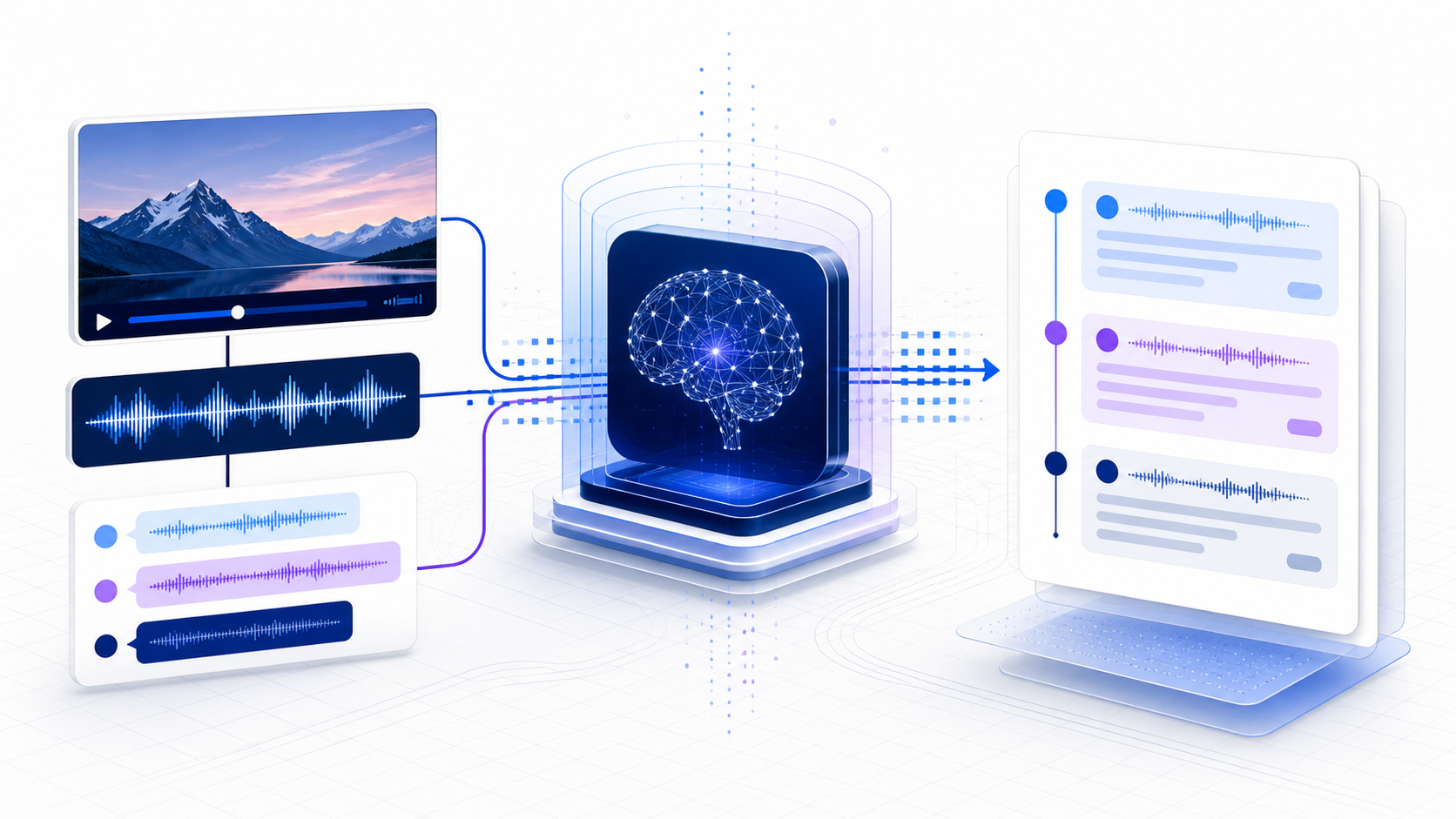
An AI YouTube transcript converts speech into searchable text and may add punctuation, speakers, or structure, but every important quote still needs playback verification. Start with an authorized video or audio track, language context, expected speaker names, and a review plan; the working deliverable is a corrected transcript with timestamps, speaker labels, confidence notes, and source provenance.
AI YouTube 文字稿把语音转换为可搜索文本,也可补充标点、说话人或结构,但所有重要引语仍需回放核对。 开始前应准备获授权的视频或音轨、语言背景、说话人姓名和复核计划;工作结果应形成带时间码、说话人标签、置信提示与来源信息的校正文字稿。
Choose the step you need选择你需要的步骤
Start with the four core steps below, then continue into the deeper checks that match your task.
先完成下面四个核心步骤,再根据任务需要继续查看后续深度检查。
Decide whether AI should transcribe, repair, or enrich先决定 AI 是转录、修复还是增强
An AI YouTube transcript workflow may start from audio, automatic captions, creator captions, or a rough human transcript. These are different jobs. Fresh transcription estimates speech from audio; repair corrects an existing track; enrichment adds speakers, punctuation, sections, or terminology. Record which operation was performed so readers do not mistake edited captions for verbatim creator text. When a good reviewed track already exists, improving structure may be more reliable and cheaper than transcribing from scratch.
AI YouTube 文字稿可能从音频、自动字幕、创作者字幕或粗略人工稿开始,这些任务并不相同。全新转录是从音频估计语音;修复是校正已有轨道;增强则添加说话人、标点、章节或术语。必须记录执行了哪种操作,避免读者把编辑后的字幕误认为创作者逐字文本。已有高质量人工轨道时,改善结构通常比重新转录更可靠也更节省。
Prepare language, terminology, and channel context准备语言、术语与声道上下文
Set the spoken language and note code-switching, accents, names, products, acronyms, and formulas likely to appear. Supply an approved glossary when the system supports it. Separate audio channels or speakers only when the source provides enough evidence; otherwise use neutral labels and mark uncertainty. Visual slides can help correct spelling, but a word on a slide does not prove the speaker said it. Keep audio-derived and visual-derived corrections distinguishable in the edit log.
应设置口语语言,并记录可能出现的语言切换、口音、姓名、产品、缩写与公式;系统支持时可提供经确认的词表。只有来源证据足够时才分离声道或说话人,否则使用中性标签并标记不确定性。幻灯片能帮助校正拼写,但画面上的词并不能证明说话人确实说过。修正记录应区分来自音频与来自视觉的依据。
Correct by risk, not by random polishing按风险校正,而不是随机润色
Review high-impact categories first: proper nouns, numbers, negation, dates, units, quoted language, and technical instructions. Search repeated occurrences to standardize terminology, then sample ordinary passages to estimate background error. Preserve the machine output and correction log. Do not silently turn spoken fragments into formal prose if the result may be quoted. Produce a separate readable edition for summaries and notes while retaining a time-aligned transcript for evidence work. Record recurring error types so the glossary and review plan can improve on the next recording. Recheck corrections after any later format conversion.
应优先复核高影响类别:专有名词、数字、否定词、日期、单位、引语和技术指令。搜索重复出现的位置以统一术语,再抽查普通段落估计基础错误。保留机器原稿与修正记录。若文字可能被引用,不要静默把口语碎片改成正式文案;可另外制作供摘要和笔记使用的阅读版,同时保留带时间对齐的证据版。
Accept the transcript with a documented test通过有记录的测试验收文字稿
Choose samples from the beginning, middle, end, fast dialogue, noisy sections, and terminology-heavy moments. Compare word accuracy, speaker changes, timing, and omissions, and review every detail that affects the intended use. State the tested conditions rather than claiming a universal accuracy percentage. If the transcript will support study notes, quotations, subtitles, or analysis, verify the fields those tasks depend on. Acceptance means the artifact is fit for a declared purpose, not that every word is guaranteed correct.
应从开头、中间、结尾、快速对话、噪声段落和术语密集时刻抽样,比较词语、说话人变化、时间与遗漏,并逐项检查会影响目标用途的细节。报告测试条件,而不是宣称一个普遍准确率。文字稿若用于学习笔记、引用、字幕或分析,就要验证这些任务依赖的字段。验收意味着材料适合已声明用途,并不代表每个词都绝对正确。
Calibrate AI transcription to the video's language and audio根据视频语言与音频校准 AI 转录
Before processing the full recording, transcribe a representative sample containing names, numbers, domain terms, speaker changes, background noise, and any language switching. Supply a glossary only for terms that are genuinely expected, then check whether it improves substitutions without forcing incorrect words into unrelated passages. Decide how speakers will be identified and what should happen when identity is unknown. Preserve timestamps and confidence or uncertainty markers during correction. Evaluate proper nouns, numeric values, negation, and sentence boundaries separately from overall word accuracy because those errors cause disproportionate harm. If slides contain the authoritative spelling, use them as a correction source and record that intervention. For multilingual video, split or label language regions instead of assuming one model setting fits the entire file. Scale only after the sample meets the task's acceptance rules, and keep the raw AI output beside the corrected version so every substantive edit can be reviewed. Report the tested language, sample duration, correction categories, and remaining uncertainty with the delivered transcript.
完整处理前,先选择包含姓名、数字、领域术语、说话人变化、背景噪声与语言切换的代表片段进行转录。术语表只提供确实预计会出现的词,并检查它是否改善替换错误而不会把错误术语强行写入无关段落。提前决定说话人如何标识,以及身份未知时怎样处理。校正过程中保留时间码和置信或不确定标记。专有名词、数值、否定词和句子边界应与总体词准确率分开评估,因为这些错误会造成更大影响。幻灯片提供权威拼写时可用作校正来源,但要记录这项干预。多语言视频应划分或标记语言区段,不能假设一个模型设置适合全片。只有样本满足任务验收规则后才扩大处理,并把原始 AI 输出与校正版并存,使每项实质修改都可复查。交付文字稿时还应说明测试语言、样本时长、修正类别和仍存在的不确定性。
Worked example具体示例
For a technical talk, provide a glossary of product names before transcription. Search the draft for every number and proper noun, replay those moments, and preserve uncertainty when audio is unclear.
处理技术演讲时,可在转录前提供产品名词表。随后搜索草稿中的数字和专有名词,逐段回放;音频不清楚时应保留不确定标记。
Before handoff, preserve the source identity, current edit, language, access date, and every time reference needed to reproduce the example. AI transcription can hallucinate words in silence, normalize names incorrectly, and miss code-switching. Treat low-confidence passages as review tasks.
交付前应保留来源标识、当前剪辑版本、语言、访问日期,以及复现实例所需的时间信息。页面输出用于支持理解与整理,重要原话、数字、人物、边界和解释仍需返回原视频检查。
Define acceptance for this deliverable为这项交付物设定验收条件
Treat confidence as a review queue. Review the result against the intended audience and the declared task of using AI to transcribe or improve video speech while preserving evidence. Confirm that the chosen structure preserves the distinctions the reader must act on, rather than simply shortening the recording. Mark missing source material and uncertainty openly. A reviewer should be able to identify which items came directly from speech or visuals, which were reorganized, and which are interpretations.
把置信度转化为复核队列。应围绕目标读者以及“使用 AI 转录或改进视频语音并保留证据”这一具体任务验收结果。检查结构是否保留读者行动所需的关键区分,而不是只把录像缩短;来源缺失与不确定性必须显式标记。复核者应能分辨哪些内容直接来自语音或画面、哪些经过重组、哪些属于解释。
Use a small handoff record containing source, purpose, output version, correction notes, tested links or time ranges, reviewer, and unresolved items. Review every name, number, quotation, formula, instruction, commitment, and people-related conclusion that could cause harm if wrong. Lower-risk descriptive material may be sampled, but the sampling rule should be written down. A result is accepted because it is fit for this declared use, not because its language sounds confident.
交接记录至少应包含来源、用途、输出版本、修正说明、已测试链接或时间范围、复核人和未解决事项。姓名、数字、引语、公式、指令、承诺以及涉及个人且出错会造成影响的结论都应逐项检查;低风险描述可以抽样,但抽样规则要写明。结果被验收是因为适合当前用途,而不是因为语言显得自信。
Continue this workflow with 先鉴 Peek完成当前步骤后使用先鉴 Peek 继续分析
Once the transcript, cleaned text, timestamps, or chapters are ready, provide the public video and your learning goal to 先鉴 Peek to assess content value, build a concise summary, plan a timestamped viewing route, and organize study notes. This does not promise direct transcript or subtitle downloading.
准备好文字稿、清理后的文本、时间码或章节后,可向先鉴 Peek 提供公开视频与学习目标,用于判断内容价值、形成精华摘要、规划时间码观看路线并整理学习笔记。此入口不承诺直接下载文字稿或字幕。
Questions about this task本任务常见问题
Should AI transcribe when captions already exist?
已有字幕时还需要 AI 重新转录吗?
Not always. A reviewed caption track may be a better base; use AI to repair or structure it when that meets the task.
不一定。经过校对的字幕轨道可能是更好的基础,可按任务让 AI 修复或整理结构。
How can AI handle technical vocabulary?
AI 如何处理专业词汇?
Provide an approved glossary, inspect repeated terms, and verify spellings against authoritative course or product material.
可提供经确认的词表、检查重复术语,并对照权威课程或产品材料核实拼写。
Is an AI transcript verbatim?
AI 文字稿是逐字准确的吗?
It is an estimate unless reviewed. Label edited, translated, and machine-generated versions accurately and preserve uncertainty.
未经复核时只是估计。机器生成、编辑和翻译版本应准确标记并保留不确定性。
What details deserve complete review?
哪些细节必须完整复核?
Names, numbers, negation, quotations, formulas, instructions, and any passage that changes a decision or public statement require close checking.
姓名、数字、否定、引语、公式、指令以及会改变决策或公开陈述的段落都需要仔细检查。
References and usage limits参考资料与使用边界
- W3C WebVTT specificationW3C WebVTT specification
- YouTube Terms of ServiceYouTube 服务条款
- InfiniSynapse documentation: connect data sources and knowledge basesInfiniSynapse 文档:连接数据源与知识库
Interfaces, caption availability, and platform behavior can change. Verify the current watch page and official guidance before relying on a procedure.
界面、字幕可用性与平台行为可能变化。依赖具体流程前,应检查当前观看页面与官方说明。