Direct answer直接回答
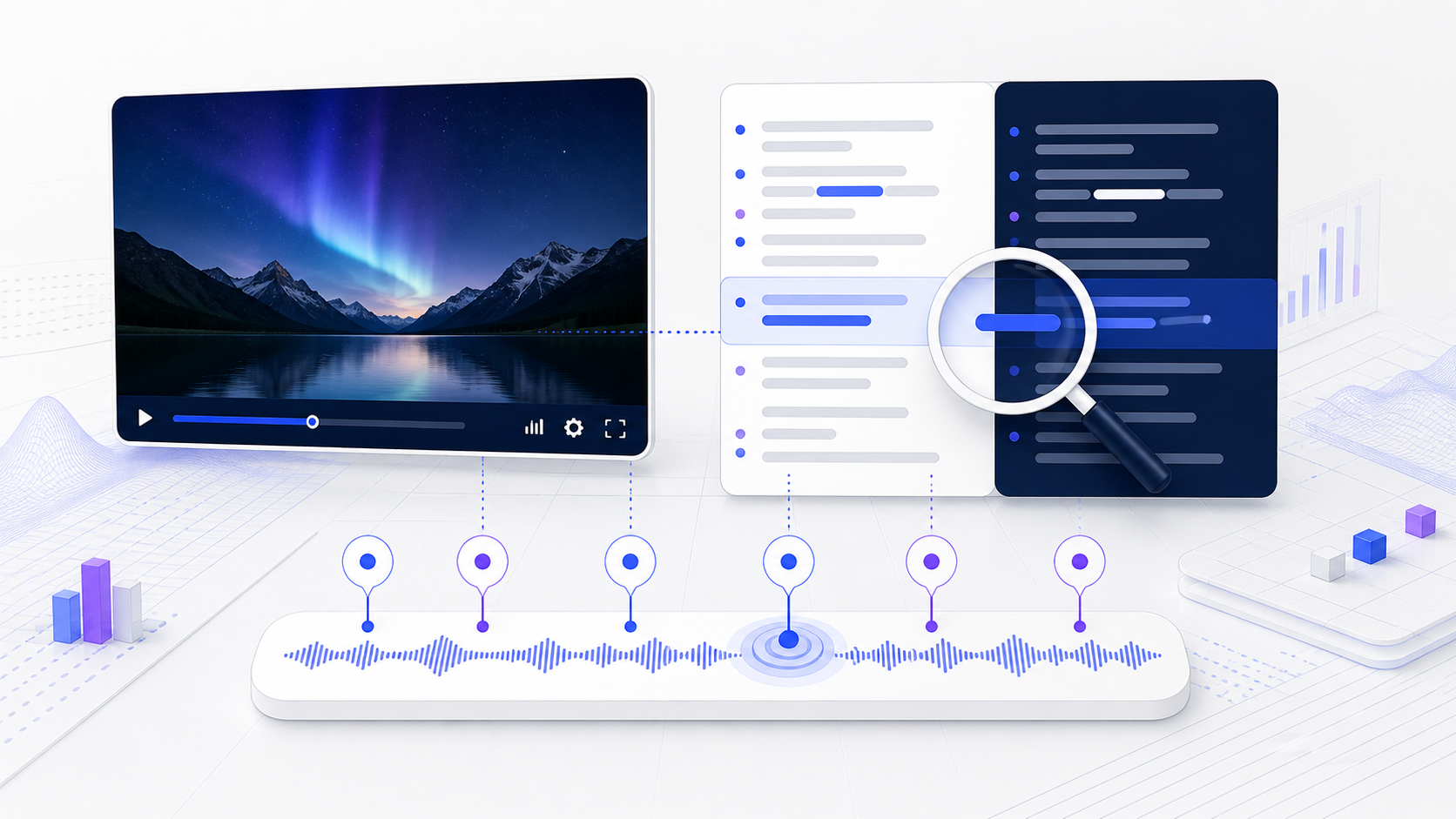
YouTube transcript search turns a long recording into a searchable text index, but a useful result should always lead back to the matching playback moment for context. Start with an accessible transcript, a precise query or concept, and enough context to distinguish literal matches from related ideas; the working deliverable is matched passages with surrounding sentences, speaker context, and timestamps for replay.
YouTube 文字稿搜索可把长视频变成可检索的文本索引,但有效结果必须能够返回对应播放时刻,以便核对上下文。 开始前应准备可访问的文字稿、明确查询或概念以及用于判断上下文的线索;工作结果应形成包含上下句、说话人上下文和回放时间码的匹配段落。
Choose the step you need选择你需要的步骤
Start with the four core steps below, then continue into the deeper checks that match your task.
先完成下面四个核心步骤,再根据任务需要继续查看后续深度检查。
Begin with literal terms and transcript variants从原词及其转录变体开始搜索
Exact search is fastest when you know a name, product, phrase, or number. Search the visible transcript, then try likely recognition errors: abbreviations without punctuation, homophones, singular and plural forms, or a surname split into two words. Numbers may appear as words rather than digits. Keep a small query log so repeated searches do not produce a biased collection of only the easiest matches. When the transcript changes language, search each language and common transliterations separately.
已知姓名、产品、短语或数字时,精确搜索最快。先查可见文字稿,再尝试可能的识别变体,例如无标点缩写、同音词、单复数变化,或被拆成两个词的姓氏。数字可能以文字而非阿拉伯数字出现。建立简短查询记录,避免反复搜索后只收集到最容易命中的内容。视频中途切换语言时,应分别搜索各语言与常见音译。
Expand a concept without pretending every match is equivalent扩展概念搜索,但不要把所有命中视为同义
A speaker discussing cost may say price, budget, procurement, affordability, or return on investment. Build a compact concept set from the research question, not from every possible synonym. Review several sentences around each hit and label whether it is a question, assertion, example, objection, or quotation of someone else. Frequency alone does not establish importance: a host may repeat a term in prompts while the guest rejects the underlying idea only once.
说话人讨论成本时可能使用价格、预算、采购、负担能力或投资回报等词。应根据研究问题建立紧凑概念集,而不是无限扩展同义词。每个命中都要查看前后若干句,并标记它属于提问、主张、案例、异议,还是引用他人的话。出现频率并不等于重要性:主持人可能在问题中多次重复一个词,而嘉宾只用一次关键回答否定其前提。
Turn matches into a small evidence index把搜索结果整理成证据索引
For each relevant occurrence, record query, timestamp, speaker, short context, relevance, and review status. Deduplicate repeated caption lines and group adjacent hits from the same exchange. A useful index may contain only six rows from a one-hour panel if those rows answer the question. Add negative findings carefully: failing to find a word proves only that the available transcript did not contain that searchable form, not that the topic was absent from visuals, paraphrases, or missing captions.
每个相关结果应记录查询词、时间码、说话人、简短上下文、相关性与复核状态。删除重复字幕行,并把同一段对话中的相邻命中合并。一小时圆桌讨论可能只需要六条索引,只要这些内容真正回答问题。记录“未发现”时必须谨慎:没搜到某个词,只能说明现有文字稿没有该可搜索形式,不能证明视觉内容、转述或缺失字幕中不存在该主题。
Replay the exchange, not only the matched line回放完整交流,而不是只看命中行
Open the video slightly before each timestamp and continue until the thought or exchange ends. Verify the speaker and whether later language reverses or qualifies the initial statement. For quotations, compare the exact words and punctuation with audio; for thematic coding, keep the transcript wording separate from your category label. Searching is a discovery mechanism, not an interpretation engine. The final result should show both the evidence found and the rule used to decide that it was relevant.
打开视频时应从时间码稍前位置开始,并播放到完整观点或交流结束。确认说话人,检查后续表达是否反转或限定最初说法。用于引用时,应把准确词语和标点与音频比较;用于主题编码时,应把原文措辞与自己的分类标签分开。搜索只是发现机制,不是解释引擎。最终结果既要展示找到的证据,也要说明判断其相关的规则。
Use a query ladder instead of one exact phrase使用分层查询,而不是只搜一个原词
Begin with the exact term, then expand through spelling variants, abbreviations, related concepts, and likely transcription errors. A discussion about cost may use price, budget, procurement, affordability, or a product-specific plan name. Search named entities both as written and as they might be misheard. Keep a query log with the term, reason, number of matches, and which passages survived playback review. For every promising result, read surrounding sentences and identify whether the speaker is asserting, quoting, questioning, or rejecting the idea. Then replay the linked moment because punctuation and speaker boundaries in automatic captions can change meaning. If exact search returns nothing, use a concept description or inspect the relevant chapter rather than assuming the topic is absent. Stop expanding when new queries produce only repeated passages. The deliverable should contain verified passages with speaker, context, and time, plus a note about searches that found no support. Save rejected matches as well when they explain why a repeated term did not support the requested conclusion.
搜索应从准确术语开始,再逐层扩展到拼写变体、缩写、相关概念和可能的转录错误。关于成本的讨论可能使用价格、预算、采购、可负担性或某个产品套餐名称;专有名称既要按正确写法搜索,也要考虑机器可能听成的形式。记录查询词、使用原因、匹配数量和回放后保留的段落。每个有希望的结果都要阅读周边句子,判断说话人是在主张、引用、提问还是反对该观点,再回放对应时刻,因为自动字幕的标点与说话人边界可能改变含义。准确搜索没有结果时,可用概念描述或查看相关章节,不能直接认定主题不存在。当新查询只产生重复段落时即可停止扩展。最终结果应包含经核验的段落、说话人、上下文与时间,并记录哪些搜索没有找到支持。重复术语并不能支持目标结论时,也应保留被排除的匹配及排除原因。
Worked example具体示例
When searching a panel discussion for pricing objections, query both the literal word “price” and nearby concepts such as budget or procurement, then replay each match to separate a host question from a guest position.
在圆桌讨论中查找价格异议时,既搜索“价格”原词,也搜索预算或采购等相关概念,并回放每个结果,区分主持人的提问与嘉宾的立场。
Before handoff, preserve the source identity, current edit, language, access date, and every time reference needed to reproduce the example. Search can miss paraphrases and can overvalue repeated terms. Automatic transcripts also introduce spelling errors that break exact matching.
交付前应保留来源标识、当前剪辑版本、语言、访问日期,以及复现实例所需的时间信息。页面输出用于支持理解与整理,重要原话、数字、人物、边界和解释仍需返回原视频检查。
Define acceptance for this deliverable为这项交付物设定验收条件
Search text, then verify video. Review the result against the intended audience and the declared task of finding words, concepts, and recurring claims inside a transcript. Confirm that the chosen structure preserves the distinctions the reader must act on, rather than simply shortening the recording. Mark missing source material and uncertainty openly. A reviewer should be able to identify which items came directly from speech or visuals, which were reorganized, and which are interpretations.
先搜索文字,再回看视频。应围绕目标读者以及“在文字稿中查找词语、概念与重复观点”这一具体任务验收结果。检查结构是否保留读者行动所需的关键区分,而不是只把录像缩短;来源缺失与不确定性必须显式标记。复核者应能分辨哪些内容直接来自语音或画面、哪些经过重组、哪些属于解释。
Use a small handoff record containing source, purpose, output version, correction notes, tested links or time ranges, reviewer, and unresolved items. Review every name, number, quotation, formula, instruction, commitment, and people-related conclusion that could cause harm if wrong. Lower-risk descriptive material may be sampled, but the sampling rule should be written down. A result is accepted because it is fit for this declared use, not because its language sounds confident.
交接记录至少应包含来源、用途、输出版本、修正说明、已测试链接或时间范围、复核人和未解决事项。姓名、数字、引语、公式、指令、承诺以及涉及个人且出错会造成影响的结论都应逐项检查;低风险描述可以抽样,但抽样规则要写明。结果被验收是因为适合当前用途,而不是因为语言显得自信。
Continue this workflow with 先鉴 Peek完成当前步骤后使用先鉴 Peek 继续分析
Once the transcript, cleaned text, timestamps, or chapters are ready, provide the public video and your learning goal to 先鉴 Peek to assess content value, build a concise summary, plan a timestamped viewing route, and organize study notes. This does not promise direct transcript or subtitle downloading.
准备好文字稿、清理后的文本、时间码或章节后,可向先鉴 Peek 提供公开视频与学习目标,用于判断内容价值、形成精华摘要、规划时间码观看路线并整理学习笔记。此入口不承诺直接下载文字稿或字幕。
Questions about this task本任务常见问题
Can transcript search find paraphrases?
文字稿搜索能找到转述吗?
Only if you search related terms or use a semantic method. Exact search will miss ideas expressed with different wording.
只有扩展相关词或使用语义方法时才可能找到;精确搜索会漏掉使用不同措辞表达的观点。
Why did a known name return no result?
为什么已知姓名搜索不到?
Automatic captions may split or misspell it. Try phonetic variants, abbreviations, and nearby terms, then inspect the relevant time range.
自动字幕可能拆分或拼错姓名。可尝试同音变体、缩写和附近术语,再检查相关时间范围。
Does no match mean the topic was absent?
没有命中是否代表视频没谈到该主题?
No. It means the available transcript lacked that searchable form; visuals, paraphrases, or missing captions may still contain it.
不代表。它只说明现有文字稿没有该可搜索形式,视觉、转述或缺失字幕仍可能包含相关内容。
What should a search result preserve?
搜索结果应该保留什么?
Keep the matched passage, surrounding context, speaker, timestamp, query used, and review status so another person can reproduce it.
应保留命中段落、上下文、说话人、时间码、所用查询词和复核状态,使其他人可以复现。
References and usage limits参考资料与使用边界
- YouTube Help: view video transcriptsYouTube Help: view video transcripts
- YouTube Terms of ServiceYouTube 服务条款
- InfiniSynapse documentation: connect data sources and knowledge basesInfiniSynapse 文档:连接数据源与知识库
Interfaces, caption availability, and platform behavior can change. Verify the current watch page and official guidance before relying on a procedure.
界面、字幕可用性与平台行为可能变化。依赖具体流程前,应检查当前观看页面与官方说明。