SEO Audit Tool: How to Choose Evidence, Not a Score
Choose an SEO audit tool by checking reproducible inputs, exported fields, limits, and rerun behavior instead of trusting a proprietary health number alone.
Author credentials: William Zhu is cofounder of InfiniSynapse (GitHub @allwefantasy · auto-coder). Desk: shipping SEO Health and the /en/tool/ visibility pages. No personal LinkedIn published. About: team / editorial standards.
Publisher credentials: InfiniSynapse has public profiles on GitHub, YouTube, and X. A 2026 WAIC Future Tech OPC excellence award covers the Agentic Data Infra entry (WAIC; third-party recap: Xinhua / Caohejing). That award does not review this page or SEO Health. Method CLI: infinitegrowth on npm. Archive: recognition and scope notes.
On this page
By William Zhu · Cofounder, InfiniSynapse · Published: 2026-09-11 · Last updated: 2026-09-14 · Last verified: 2026-09-14 · Reviewed by the InfiniSynapse Data Team.
Reviewed by: InfiniSynapse Data Team · method review 2026-09-14. Pinned
seo-health checkJSON on the hub URL;audit --pageshelp text only.
Trust / COI: About · Corrections. SEO Health is a commercial product from this team. Help text for
--pages50–500 is documentation, not a crawl we ran.
TL;DR
A package that prints a 100 is not a buying criterion. Buy an SEO audit tool for the fields that survive a pin, a rerun, and a CI parse.
Direct answer: Treat an SEO audit tool as a pinned command plus a named export. On 2026-09-14 we ran one
seo-health checkagainst the hub URL. Exit 0 still carried one Image Alt Text warning. Help text documentsaudit --pages50–500. We did not run that range.
The sample size is one pinned check plus the published help text. That desk cannot establish how audit --pages 50 would behave on this host, and it does not prove a vendor 100 is comparable. An SEO audit tool shortlist that quotes another company’s documentation sitemap as if it were this host is already buying the wrong fixture.
What you will learn
- Which fields the hub JSON actually kept
- Why process 0 is not a clean page
- What
audit --pagesdocuments versus what we ran - How to pin
infinitegrowth@0.1.1so a later buyer can replay - Where this SEO audit tool page stops and a report or checklist owns the next job
What the contract actually is
Key definition: An SEO audit tool is the product you keep because its inputs, export fields, failure semantics, and versioned reruns are observable. It is not a vanity health number. It is not an official Google grade.
npm view documentation is the public contract for reading registry metadata before you trust a binary name. npm exec documentation is the matching contract for running a package without a global install. Neither page grades this host.
People open an SEO audit tool comparison when they need a fixture they can rerun after a deploy. They do not need a screenshot of a green badge.
SEO Health remains the evidence layer for pinned CLI fields. After a JSON export exists, a team may send those rows into an InfiniSynapse Server API long-task workspace; the API does not rerun seo-health check.
Version is part of the measurement
Record the package name, the exact version, the executable, and the command. A later latest tag can change help text. A shortlist that omits the pin is already stale.
Exit zero is transport
The hub command exited 0 and still listed one warning. Process success means the CLI finished. It does not mean the page passed. An SEO audit tool that hides severity inside a single 100 is asking you to ignore that split.
Observed CLI on 2026-09-14
User-agent for the HTML desk was InfiniSynapse-P2-desk/2026-09-14. The CLI pin was separate: npx --yes -p infinitegrowth@0.1.1 seo-health check --format json --lang en against https://infinisynapse.com/en/tool/seo-website-audit.
| Field kept in the JSON | Observed value |
|---|---|
| Process exit | 0 |
| Cached | false |
| Stdout size | ~71 KB |
| Title length | 51 |
| Word count | 2,530 |
| Speed | 79 |
| Images / missing alt | 5 / 2 |
| Issues | 0 error, 1 warning, 7 good |
The warning name was Image Alt Text (2/5). That is a punch list. It is not a 100. An SEO audit tool buyer who files “green” from exit 0 has already dropped the warning field.
We did not run seo-health audit --pages 50 against production. Help text documents 50–500 and formats table and json. A documented range is not a completed crawl.
robots.txt answered 200 (938 bytes) and named three Sitemap lines. The main map held 1,568 <loc> values. Those counts belong in the complete SEO website audit guide. They do not replace the CLI contract on this page.
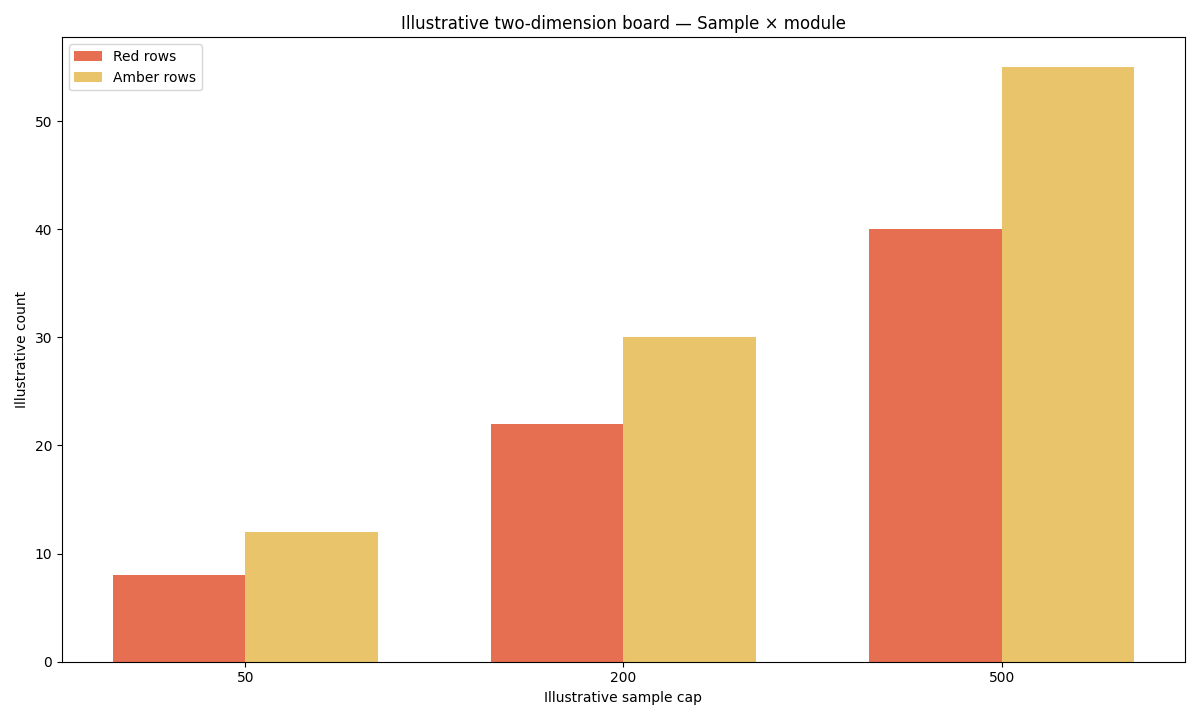
Figure: Two series from the same pinned check. Warning count is not a vendor 100. Good count is not a crawl of 1,568 locs.
How we fetched
npx --yes -p infinitegrowth@0.1.1 seo-health check \
  --format json --lang en \
  https://infinisynapse.com/en/tool/seo-website-audit
Preserve the command, the version, the URL, the timestamp, and the raw JSON. JSON data interchange standard is why we treat that file as structured evidence rather than a screenshot. It does not decide which product you should buy.
What the JSON kept
The export named title, word count, speed, image totals, missing alt, and issues[] with status. Those are the fields an SEO audit tool has to keep if later tickets will point at a row instead of a mood. A dashboard that drops issues[].name fails the buying test even when the UI looks finished.
How we pinned the package
npm package specification is the public shape for name, version, and bin. Node.js command-line API is why we treat process exit as transport, not page quality. Commander.js options guide is the independent contract for how --pages and --format should appear in help.
We read audit --help. We did not invent a 50-page result. An SEO audit tool memo that writes “we sampled 50 pages” from help text is already a fiction.
Pin infinitegrowth@0.1.1 in the procurement note. If a later buyer cannot replay the same binary, the earlier 100 is not a measurement.
As of 2026-09-14 those CLI fields matched this desk. A later package publish can change help text. Rerun the pin before you treat last week’s JSON as current.
A four-field buying test
Inputs the package accepts
Write the accepted URL sources, language flag, and format flag before the demo starts. Reject a shortlist that will not name those inputs. This first stage is unique to an SEO audit tool purchase and sets what later evidence can support.
Fields the export names
Require requested URL, final URL, status, check name, severity, observed value, timestamp, tool version, and limitations. Missing export fields are procurement facts. A prettier aggregate does not replace them.
Failure semantics
Check whether stderr, timeout, and schema errors are distinguishable from page warnings. CI needs transport failure in its own field. The hub run showed that split: exit 0, warning 1.
Pin and rerun
Record version, command, fixture URL, and a hash of the JSON. Repeat after upgrades. Completion is a replayable pin, never a generic green dashboard.
How a score compares to an export
A blended 100 can hide the alt warning we saw. An export that keeps issues[].name cannot. That is why this page prefers named fields.
The sample SEO audit report page owns the deliverable shape once those fields exist. This page stops at the product contract. Do not file a report that quotes a 100 and drops the warning row.
The SEO audit checklist owns triage order: first status, then Location, then robots, then lights. An SEO audit tool that starts at lights and never stores first status is the wrong instrument for that checklist.
Paste a public URL if you want eight lights. Those lights are not Google. They are also not a 50-page audit we did not run. An SEO audit tool that starts at lights and never stores the pin is the wrong instrument for a later ticket.
A later buyer who only compares vendor grades is comparing unlike composites. Run the same fixture URL, the same pin, and the same date window. Keep “not available” as a result when a field is missing.
Export fields the hub actually named
The ~71 KB JSON is the worked example for this SEO audit tool. It kept title, words, speed, image totals, missing alt, and issues[] with name and status. A buyer who only receives a PDF with a 100 has a different product.
Write the HTML user-agent beside the CLI pin. They are different instruments. The HTML desk used InfiniSynapse-P2-desk/2026-09-14. The CLI used infinitegrowth@0.1.1. An SEO audit tool note that conflates those two strings will later fail a replay.
Cached was false. That matters if someone treats a later cached 200 as a new measurement. Keep the flag next to the timestamp.
A procurement matrix that lists rendering mode, robots behavior, and export format still needs a fixture URL. The hub URL is the one we ran. An SEO audit tool row that leaves the fixture blank cannot be scored.
What we did not run
Help text for audit --pages names 50–500. We did not execute it. Do not paste a 50-page table into a procurement note for this SEO audit tool. If a later team runs that range, they must date it and keep the new JSON. This rewrite does not own that file.
The three declared maps and the eight HTML fetches live on the hub. This page borrows their counts so a buyer knows the host is larger than one URL. It does not turn one SEO audit tool fixture into a site audit.
The HTML desk also fetched /en/tool/seo-audit-tool as a 200 with 87,057 bytes. That is a second public fixture if you want a pair. It is still not 50 pages. Keep the SEO audit tool shortlist honest about n.
Also distinguish the evaluated plan from sales slides. Scheduled reruns and export size may depend on licensing. This page does not claim those extras. It claims one pinned check and published help.
When the shortlist still lacks a named export, stop. Do not compensate with a better-looking SEO audit tool score from a different host.
If two people repeat the pin on the same day, they should see the same issue names unless a deploy landed. That repeatability is the point of the contract.
Failure modes that fake a shortlist
Buying from a screenshot score. A 100 without issues[] is a poster. Ask for the JSON.
Treating exit 0 as a pass. The hub check exited 0 with a warning. Write both fields.
Inventing a 50-page crawl from help text. audit --pages documents 50–500. We did not run it.
Testing only a perfect homepage. / was 200 on the HTML desk. The hub URL is a different fixture. Keep both if you claim coverage.
Letting a silent schema change break CI. Pin the version. Hash the export. Reopen the SEO audit tool file when those two disagree. A later SEO audit tool upgrade is a measurement change until fixtures prove otherwise.
Comparing products on different fixture URLs. The hub URL is the worked example here. Do not normalize a homepage-only demo against it.
Cluster guides for this pillar
This cluster page returns to the complete SEO website audit guide for inventory and strata. The report and checklist pages own the next surfaces.
| Job you actually have | Guide to open next |
|---|---|
| Keep url, issues[], speed, date, UA | sample SEO audit report |
| First status before lights | SEO audit checklist |
| Store catalog, categories, and SKUs | ecommerce SEO audit |
Pin the command before you trust the badge
Read the JSON fields on a public URL you are authorized to test. Then enlarge the sample only if templates disagree.
Run SEO Health CheckerFrequently Asked Questions
What fields should an SEO audit tool export?
At minimum keep requested URL, final URL, redirect count, final status, check name, severity, observed value, timestamp, tool version, and limitations. The hub JSON also kept title length, word count, speed, and image totals.
Should the CLI exit nonzero for a warning?
Not necessarily. The 2026-09-14 hub check exited 0 with one Image Alt Text warning. Transport success and page-quality findings are different states. The contract must name both.
Did we run the 50-to-500 page command?
No. Help text documents audit --pages 50–500 and formats table and json. This rewrite used one check on the hub URL. Do not file a 50-page result we did not produce.
How can two products be compared fairly?
Run the same pinned version, the same fixture URL, and the same date window. Compare observable fields and missed cases. Do not normalize unrelated proprietary scores. After the deterministic rows exist, a credited memo may be opened once in the InfiniSynapse web app.
Does one hub check replace a site sample?
No. One SEO audit tool fixture proves that URL. The main map still held 1,568 locs. Template coverage lives on the hub and on the site-audit sibling.
Conclusion
Use an SEO audit tool when the job is to keep a pin, an export, and a warning field you can rerun. The 2026-09-14 desk shows exit 0 beside one alt warning, and help text that names 50–500 without a crawl we ran. Close the file when the version, the command, the JSON fields, and the unrun range are still visible. A pinned export is more useful than an unsupported 100.
William Zhu · Cofounder, InfiniSynapse · GitHub @allwefantasy
Desk-validated SEO Health methods. Corrections: zhuhl@infinisynapse.com · corrections policy.