SEO Audit Checklist: Follow a Technical Triage Sequence
Use this SEO audit checklist to verify response, final URL, indexability, canonical, rendering, markup, and page signals in a strict, repeatable repair order.
Author credentials: William Zhu is cofounder of InfiniSynapse (GitHub @allwefantasy · auto-coder). Desk: shipping SEO Health and the /en/tool/ visibility pages. No personal LinkedIn published. About: team / editorial standards.
Publisher credentials: InfiniSynapse has public profiles on GitHub, YouTube, and X. A 2026 WAIC Future Tech OPC excellence award covers the Agentic Data Infra entry (WAIC; third-party recap: Xinhua / Caohejing). That award does not review this page or SEO Health. Method CLI: infinitegrowth on npm. Archive: recognition and scope notes.
On this page
By William Zhu · Cofounder, InfiniSynapse · Published: 2026-09-11 · Last updated: 2026-09-14 · Last verified: 2026-09-14 · Reviewed by the InfiniSynapse Data Team.
Reviewed by: InfiniSynapse Data Team · method review 2026-09-14. First-status, Location, robots, and CLI-light review of InfiniSynapse public URLs.
Trust / COI: About · Corrections. SEO Health is a commercial product from this team. The gate table is our own host, not a customer punch list and not a Google quality score.
TL;DR
A punch list that opens on title length is already late. First status, Location, robots, canonical, then CLI lights. That order is the SEO audit checklist this page owns.
Direct answer: Run an SEO audit checklist as five blocking cells: first HTTP status, Location, robots, canonical, then page lights. A 200 on the hub is not a pass if an invented path still 301s into a blog 404 that reprints the homepage title. Lights never run on a URL that has not stopped moving.
On 2026-09-14 we used curl against InfiniSynapse public URLs with user-agent InfiniSynapse-P2-desk/2026-09-14. The sample size is eight stratified requests plus one CLI document. That sample cannot establish template prevalence across 1,131 blog locs, and it does not prove Google stored any URL.
What you will learn
- Why first status blocks later cells on an SEO audit checklist
- How Location on
/enand the blog twin differs from a 200 - What
robots.txtallowed on/while still noindexing the file itself - When a CLI warning still sits on exit 0
- Where this page stops and a sibling owns the report or the health check
Paste a public URL at SEO Health if you want eight lights after the URL has stopped. Those lights are not a Google 100. An SEO audit checklist still starts in curl -sSI. Tech amber is a clue. It is not a substitute for first status.
What triage means here
Key definition: An SEO audit checklist is an ordered set of blocking cells. Each cell has a field, an expected value, an observed value, and a state. It is not a vanity 100. It is not a specialist score mash-up.
Google Search Console start is the official property-level surface after the live cells exist. PageSpeed Insights API is a later lab surface for a final 200. Neither document grades this host, and neither replaces first status.
People open an SEO audit checklist when they need to know which check may run. They do not need a blended dashboard.
SEO Health remains the deterministic evidence foundation for first-status cells and for one-URL lights. After those rows exist, a team may send the export into an InfiniSynapse Server API long-task workspace; the API does not refetch status or override a blocked gate.
This SEO audit checklist excludes full-graph discovery, backlink intelligence, rank tracking, private /api/ or /auth/ paths, and Search Console membership. Those jobs change the intent. They do not belong in the five cells.
Status is the first cell
A 200 can still wear leftover noindex. A 404 can still wear a homepage title. A 308 can still be the correct keep path. Read the code, then read the body. An SEO audit checklist that starts in copy is already out of order.
Location is a hop, not a pass
/en answered 308 with Location /. /en/blog/seo-website-audit answered 308 with Location /en/tool/seo-website-audit. Those hops belong in the register even when the destination later returns 200. Write the requested URL and the hop. Do not collapse them into one green cell. An SEO audit checklist that stores only the final 200 has already erased the twin.
Robots and canonical come after
robots.txt allowed / and disallowed /auth/, /api/, /v1/, /webhooks/, /dashboard, /analyze, and /Volumes/. The robots response itself carried x-robots-tag: noindex, nofollow. That header describes the file, not every HTML URL. Canonical is a keep vote on a document that already answered. It is not a substitute for first status. A later SEO audit checklist that treats Allow / as a keep decision has mixed two cells.
Observed first-status sequence on 2026-09-14
User-agent InfiniSynapse-P2-desk/2026-09-14 requested eight public addresses. This is a desk, not a 1,568-page crawl.
| Requested URL | First status | Note |
|---|---|---|
/ | 200 | Homepage title; 91,875 bytes |
/en | 308 | Location / |
/en/tool/seo-website-audit | 200 | Hub tool URL; 95,445 bytes |
/en/blog/seo-website-audit | 308 | Location /en/tool/seo-website-audit |
/en/tool/seo-audit-tool | 200 | 87,057 bytes |
/en/blog/what-is-a-data-agent | 200 | Blog template; 93,934 bytes |
invented /en/this-path-…-p2-20260914 | 301 | Then /en/blog/… 404; title = homepage title |
/robots.txt | 200 | 938 bytes; Allow / |
The hub tool URL answered 200. That row may proceed to robots, canonical, and lights. The invented path never reached lights. It 301’d into a blog URL, that blog URL 404’d, and the 404 HTML title was the homepage title. File that mismatch on the first two cells. Do not open Lighthouse on a miss that has not stopped.
The hub 200 is the only row in this desk that earned Gate 5. Title 51 characters and 95,445 bytes already contained a document. That is enough to reject an empty-shell story for that URL. It is not enough to close an SEO audit checklist for the invented path or for the 1,131 blog locs we did not fetch.
Three Sitemap lines were present on this host. The files held 1,568, 76, and 94 <loc> values. The main map Last-Modified was Fri, 11 Sep 2026 11:37:28 GMT. Those counts are inventory. They are not a completed SEO audit checklist.
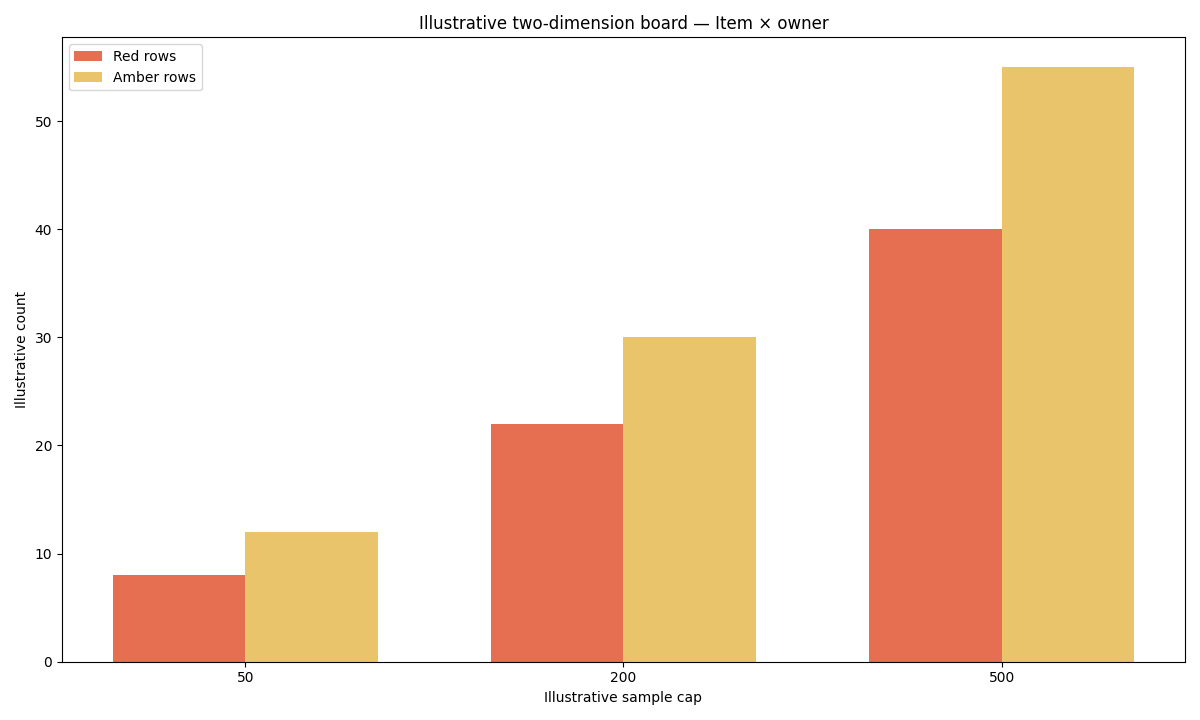
Figure: Two series from the same curl desk. First status is not hop count. Neither series is a site-wide pass rate.
How we fetched
curl -sSI -A 'InfiniSynapse-P2-desk/2026-09-14' \
  https://infinisynapse.com/en/this-path-should-not-exist-p2-20260914
An SEO audit checklist record should keep the user-agent, the first status, the Location, and the followed final URL. Reproduce the hops with curl -sSI and curl -L. Those codes do not prove Google stored the URL.
What the CLI added
The same afternoon, npx --yes -p infinitegrowth@0.1.1 seo-health check against the hub URL exited 0. Cached false. JSON about 71 KB. Title 51 characters. Words 2,530. Speed 79. Images 5, missing alt 2. Issues: 0 error, 1 warning (Image Alt Text), 7 good. Exit 0 is transport. The warning is still a punch-list row. Help text documents audit --pages 50–500. We did not run that command against production. Do not file fifty lights we did not produce. A one-URL check is Gate 5 on one keep URL. It is not a completed SEO audit checklist for the estate.
The five-gate order
First status
Require DNS and TLS, then write the first status on the requested URL. 200 for a live document. 404 for a gone document. 308 for a keep hop. Failed or unexpected codes stop the SEO audit checklist here. W3C Markup Validator can wait. Markup is not a delivery test.
Location
If the first status is a redirect, write Location and hop count. Locale roots, blog-to-tool twins, and invented /en/ paths on this host were one hop. A destination that is unexpected still fails identity even when it later returns 200. Preserve the requested URL. Do not overwrite it with the final URL.
robots
Open robots.txt and the live robots meta or header on the final document. Intentional exclusions are documented, not “fixed.” Accidental template-wide noindex fails. Allow / on this host did not license a fetch of /api/ or /auth/. This desk fetched public HTML only.
canonical
Confirm the canonical points at the intended equivalent. The hub tool URL is a self keep on that 200. The blog twin is a hop, not a second keep document. A self-canonical on two twins is still a later ticket. It is not a reason to skip first status. Write the declared canonical beside the first status so an SEO audit checklist cannot hide a hop behind a keep vote.
CLI lights
Only then review title, description, headings, images, schema, and speed with their owning tools. Chrome Lighthouse overview and Google Rich Results Test own later specialist cells. Schema.org Validator owns markup contracts. None of those tools reopen a blocked delivery cell. An SEO audit checklist that runs lights on a 301 is polishing the wrong URL.
How lights compare to gates
A 200 can still fail
The hub URL answered 200 and still carried an alt warning in the CLI JSON. That is a Gate 5 row. It is not a reason to reopen Gate 1. A later SEO audit checklist that treats exit 0 as a clean page is already lying about the warning.
An invented path never reaches lights
The invented /en/ path failed Gate 1 and Gate 2 before any title or schema cell could run. Mark those later cells blocked, not failed. No eligible document was available to inspect. Blank cells get counted as done. Blocked is the honest state. That blocked mark is part of the SEO audit checklist, not a later report luxury.
As of 2026-09-14 those eight codes matched this desk. A later deploy can change Location. A file that quotes only last week’s third-party documentation endpoints is answering a different host.
Failure modes that skip the first status
Copy first. Rewriting a URL that still 308s does not remove the hop. Verify the live status after deploy.
Soft 404 politeness. A 404 that reprints the homepage title still needs two cells: status and title. The invented path failed both.
Canonical theater. Two URLs each point at themselves. Pick one winner after both have honest status.
Specialist mash-up. Combining Lighthouse, Rich Results, and markup scores into one gate hides a blocked delivery row.
CLI range fan fiction. audit --pages 50–500 is documented. Homepage-only is not fifty. Eight fetches are not fifty. An SEO audit checklist that promotes the desk into a 50-page run invents coverage.
Weekly ritual instead of a gate. Skills workflows in this website repo have zero schedule: keys. Cadence after a deploy belongs on the sibling page. This page owns order, not a calendar we did not run.
Record the user-agent. A later bot can see different HTML. When two people repeat the same eight requests, they should see the same first codes unless a deploy landed between them. That repeatability is the point of an SEO audit checklist desk.
Cluster guides for this pillar
This page keeps the gate order. The SEO website audit hub owns inventory and the sample rule. The sample SEO audit report page owns the fields a deliverable must keep. The website health check page owns 200 versus healthy. Open those siblings when the SEO audit checklist cells are already honest. Do not import their jobs into the five-gate table.
| Job you actually have | Guide to open next |
|---|---|
| Maps, strata, and what eight fetches are not | SEO website audit |
| Fields a dated deliverable must keep | sample SEO audit report |
| Why 200 is not healthy SEO | website health check |
Inspect first status before you open lights
Read status, Location, robots, and canonical on the public host. Then run lights only on a URL that has stopped moving.
Run SEO Health CheckerFrequently Asked Questions
What is the first cell in this sequence?
First HTTP status on the requested URL. An SEO audit checklist that starts at title length is already late. Write the code, then write Location if the code is a hop.
Does a 200 close the delivery gate?
No. A 200 only says the resource answered. The hub still had an alt warning. The invented path never became a 200 in place. Delivery closes when the intended URL returns the intended code. An SEO audit checklist that treats every 200 as done will miss leftover noindex and a 404 title mismatch.
Should every noindex fail the row?
No. Compare the directive with documented page intent. An intentional exclusion passes the intent check. An accidental template-wide directive fails. Robots on the robots file itself is a different cell from HTML robots.
When should title and schema checks run?
After first status, Location, robots, and canonical pass for the released URL. Chrome Lighthouse and the Rich Results Test are Gate 5 tools. They do not reopen Gate 1. Run them only on the accepted document. That delay is the whole point of an SEO audit checklist.
Does the CLI replace first status?
No. Exit 0 on the hub is transport plus lights. An SEO audit checklist still needs curl -sSI on the requested URL. The CLI warning is a later cell. Help text is not a 50-page result.
Conclusion
Use an SEO audit checklist when the job is to decide which cell may run. The 2026-09-14 desk shows a hub 200, locale and blog hops, Allow / on robots, and an invented path that fails before lights. Close the file when first status, Location, robots, canonical, and unresolved blocked cells are still visible. A bounded gate table is more useful than an unsupported green badge.
Skip the InfiniSynapse web app until a credited memo is actually queued. The routine pass remains the five cells and the retained curl.
William Zhu · Cofounder, InfiniSynapse · GitHub @allwefantasy
Desk-validated SEO Health methods. Corrections: zhuhl@infinisynapse.com · corrections policy.