What Market Mapping Means市场映射是什么
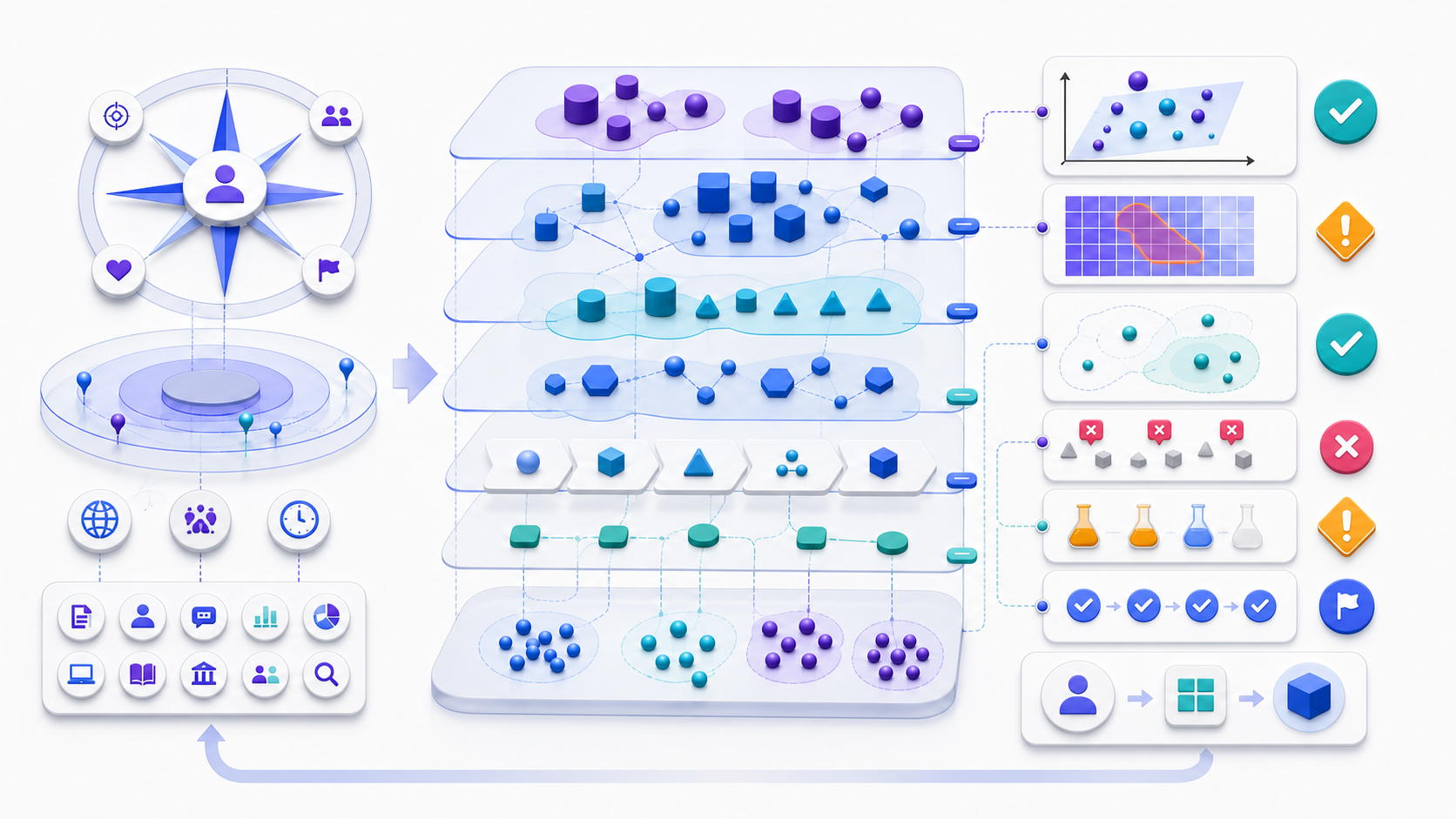
Market mapping is an evidence-based method for defining a market boundary, identifying competitors and alternatives, grouping participants, showing value-chain relationships and positions, and forming testable opportunity hypotheses. The deliverable is not merely a two-axis chart. It is a dated model with rules, sources, confidence, unknowns, and links to decisions.
市场映射是一种基于证据的方法,用于界定市场边界、识别竞争者与替代方案、分组参与者、展示价值链关系与定位,并形成可检验的机会假设。交付物不只是二维图,而是带日期、规则、来源、置信度、未知项并连接决策的模型。
Use market mapping to discover who competes for the same customer job, understand ecosystem dependencies, compare strategic groups, expose evidence gaps, and frame where to research next. Use competitive landscape analysis when the main task is interpreting forces, change, scenarios, and strategic implications. Use competitive market analysis when demand, market size, growth, economics, and entry conditions are central.
市场映射适合发现谁在争夺同一客户任务、理解生态依赖、比较战略群组、暴露证据缺口并确定下一步研究。主要任务是解释力量、变化、情景与战略含义时,使用竞争格局分析;需求、市场规模、增长、经济性和进入条件是核心时,使用竞争市场分析。
Write a Decision-Led Market Mapping Brief编写决策导向的市场映射简报
Define one decision, accountable owner, deadline, audience, customer job, geography, channel, time horizon, and consequence of error. “Choose which adjacent segment to test next quarter” is workable. “Map the technology market” is too broad. State what the map must change: a research priority, partner shortlist, entry hypothesis, positioning test, acquisition screen, or product comparison.
定义一个决策、责任人、期限、受众、客户任务、地区、渠道、时间范围和错误后果。“选择下季度要测试的相邻细分”可执行;“映射技术市场”过于宽泛。说明地图必须改变什么:研究优先级、伙伴候选、进入假设、定位测试、收购筛选或产品比较。
Write exclusions and a stopping rule before collection. For example, stop when every decision-critical group has defined inclusion criteria, representative players, at least one current authoritative source or corroborated evidence set, and explicit unknowns. This keeps the map useful instead of endlessly expanding.
收集前写明排除项和停止规则。例如,当每个决策关键群组都有纳入标准、代表性玩家、至少一个当前权威来源或交叉支持证据集,并明确未知项时停止。这样可让地图保持实用,而不是无限扩张。
Define Market Boundaries from the Customer Job从客户任务定义市场边界
Begin with the outcome buyers seek and the situation that triggers action. Then define customer type, use case, budget source, buying unit, geography, regulation, channel, technology constraint, and time. A product category alone may miss alternatives that solve the same job differently. A boundary that is too narrow hides substitutes; one that is too broad makes every player incomparable.
从买方希望获得的结果和触发行动的情境开始,再定义客户类型、用例、预算来源、采购单位、地区、监管、渠道、技术限制和时间。只按产品类别可能遗漏以不同方式完成同一任务的替代方案;边界太窄会隐藏替代者,太宽则让所有玩家不可比较。
Boundary test: ask whether the same buyer could reasonably choose, combine, defer, build, or do nothing instead. If yes, that option belongs somewhere in the map even if it is not a direct competitor.
边界测试:询问同一买方是否可能选择、组合、延期、自建或不采取行动。如果可能,该选项就应在地图中占有位置,即使它不是直接竞争者。
Discover Players from Buyer Alternatives and the Value Chain从买方替代选择与价值链发现参与者
Build the candidate list from multiple routes: buyer interviews and win/loss records, public procurement or case material, industry associations, company filings, patent and standards records where relevant, channel catalogs, partner directories, search results, reviews, and known workflows. Record the discovery route so omissions can be challenged.
通过多条路径建立候选清单:买方访谈与胜负单记录、公开采购或案例材料、行业协会、公司申报、相关专利与标准记录、渠道目录、伙伴名单、搜索结果、评价和已知工作流。记录发现路径,以便质疑遗漏。
Similar offer, buyer, job, budget, and purchase moment.
产品、买方、任务、预算和购买时点相似。
Different approach that satisfies the same outcome or avoids the problem.
以不同方式满足相同结果或避免问题。
Serve a nearby job, segment, geography, channel, or layer and could move inward.
服务相邻任务、细分、地区、渠道或层级,并可能进入核心。
Suppliers, channels, complementors, platforms, influencers, buyers, and regulators shaping access or value.
影响进入或价值的供应商、渠道、互补者、平台、影响者、买方与监管者。
Create Observable Segments and Strategic Groups建立可观察细分与战略群组
Group participants using rules that another analyst can apply. Useful segment variables include customer job, buyer type, deployment model, channel, business model, price band, service intensity, geographic reach, technology approach, workflow ownership, and value-chain role. Avoid labels such as “innovative” or “premium” unless they have observable indicators.
使用另一名分析人员也能应用的规则分组参与者。可用变量包括客户任务、买方类型、部署模式、渠道、商业模式、价格带、服务强度、地区覆盖、技术路径、工作流所有权与价值链角色。除非有可观察指标,否则避免“创新”或“高端”等标签。
A strategic group contains players with similar choices and constraints, not merely similar brand language. Permit a player to occupy more than one segment when evidence supports multiple offers. Preserve the exact offer and market level so a diversified company does not appear as one undifferentiated dot.
战略群组包含选择与约束相似的玩家,而不只是品牌语言相似。证据支持多个产品时,允许一个参与者位于多个细分。保留准确产品与市场层级,避免多元公司看似一个没有区分的点。
Map Value-Chain Roles, Flows, and Dependencies映射价值链角色、流动与依赖
Show who supplies inputs, builds or aggregates the offer, distributes access, influences selection, pays, uses, complements, and regulates. Use separate arrows for product, data, money, referral, control, or contractual dependency. A relationship should have a source and date; do not infer a partnership from co-appearance or compatible branding.
展示谁提供输入、构建或聚合产品、分销访问、影响选择、付款、使用、互补与监管。产品、数据、资金、推荐、控制或合同依赖应使用不同关系。每项关系都要有来源和日期;不能仅因共同出现或品牌兼容就推断合作。
Identify concentration, gatekeepers, switching points, multi-homing, channel conflict, bundling, and dependencies that may alter competition. These structures often matter more than relative dot positions on a quadrant. Mark relationships as verified, reported, inferred, disputed, or unknown.
识别集中度、守门人、转换点、多归属、渠道冲突、捆绑和可能改变竞争的依赖。这些结构通常比象限中的点位更重要。把关系标为已核、已报道、推断、有争议或未知。
Choose Positioning Dimensions that Buyers Can Observe选择买方可观察的定位维度
Choose dimensions from the decision and buyer trade-offs, not from data availability. Examples include breadth versus specialization, self-service versus managed support, standardization versus customization, initial cost versus total ownership, speed versus control, or workflow coverage. Define endpoints, measurement method, source, date, and confidence before plotting.
从决策与买方取舍选择维度,而不是从现有数据选择。例如广度与专业化、自助与托管支持、标准化与定制、初始成本与总拥有成本、速度与控制、工作流覆盖。绘图前定义端点、测量方法、来源、日期与置信度。
Use multiple views when one chart cannot represent segments, relationships, scale, and positioning honestly. Avoid forcing qualitative evidence into precise coordinates. Ranges, bands, confidence halos, or “unknown” positions communicate uncertainty better than a falsely exact dot.
当一张图无法诚实呈现细分、关系、规模与定位时,使用多个视图。不要把定性证据强行转化为精确坐标。区间、带状范围、置信度光环或“未知”位置比虚假精确的点更能表达不确定性。
Build an Evidence Register behind the Market Map在市场地图背后建立证据台账
Every material node, group, relationship, and position should link to a record containing source, publisher, publication and access dates, entity and offer identity, geography, extract, evidence class, confidence rationale, reviewer, and affected map elements. Separate observed facts, interpretations, hypotheses, and unknowns.
每个重要节点、群组、关系与位置都应连接记录,包含来源、发布者、发布与访问日期、实体与产品身份、地区、摘录、证据类别、置信度理由、审核者和受影响地图元素。分开观察事实、解释、假设与未知项。
Create explicit coverage metrics: which segments have representative evidence, which player classes rely on a single source, which relationships are stale, and which positioning coordinates are inferred. A beautiful map with uneven evidence coverage can exaggerate familiar players and erase quiet or emerging alternatives.
建立明确覆盖指标:哪些细分有代表性证据,哪些玩家类别依赖单一来源,哪些关系已过时,哪些定位坐标属于推断。证据覆盖不均的精美地图会夸大熟悉玩家,并抹去低调或新兴替代者。
A Repeatable Market Mapping Workflow可重复的市场映射流程
- Frame the decision. Record owner, question, audience, deadline, risk, and required action.界定决策。记录负责人、问题、受众、期限、风险与所需行动。
- Define the boundary. Fix customer job, buyer, use case, geography, channel, constraints, and time.定义边界。固定客户任务、买方、用例、地区、渠道、约束与时间。
- Discover alternatives. Search from buyer choices, substitutes, adjacent jobs, and value-chain actors.发现替代方案。从买方选择、替代者、相邻任务与价值链参与者搜索。
- Resolve identity. Separate companies, brands, offers, versions, regions, aliases, and relationships.解析身份。分开公司、品牌、产品、版本、地区、别名与关系。
- Segment and connect. Apply observable grouping rules and map verified ecosystem flows.细分并连接。应用可观察分组规则并映射已核生态流动。
- Plot evidence-led positions. Define dimensions, ranges, dates, and confidence before placing players.依据证据定位。放置玩家前定义维度、范围、日期与置信度。
- Challenge whitespace. Search for omitted substitutes, barriers, weak demand, unattractive economics, and counter-evidence.质疑空白区。搜索遗漏替代者、壁垒、弱需求、不利经济性与反证。
- Act and refresh. Assign tests, owners, thresholds, next review date, and event-driven triggers.行动并更新。分配测试、负责人、阈值、下次复核日期与事件触发条件。
Treat Market Whitespace as a Hypothesis把市场空白视为假设
An empty area may represent opportunity, but it may also reflect poor data, an invalid dimension, low demand, bad economics, regulation, channel resistance, technology limits, or a segment that combines incompatible needs. Write the hypothesis in conditional form and list confirming and disconfirming evidence.
空白区域可能代表机会,也可能源于数据不足、维度无效、需求弱、经济性差、监管、渠道阻力、技术限制,或把不兼容需求合并成细分。用条件句写假设,并列出支持与反驳证据。
| Validation question验证问题 | Evidence needed所需证据 | Possible test可行测试 |
|---|---|---|
| Is the job important and underserved?任务是否重要且服务不足? | Observed workflow, frequency, severity, current workaround, and willingness to change观察工作流、频率、严重性、当前变通与改变意愿 | Problem interview and behavior-based concept test问题访谈与基于行为的概念测试 |
| Can buyers be reached?能否触达买方? | Buying unit, channel access, sales cycle, trust, integration, and switching path采购单位、渠道访问、销售周期、信任、集成与转换路径 | Channel experiment with explicit conversion threshold带明确转化阈值的渠道实验 |
| Can the offer work economically?产品经济性是否成立? | Price evidence, service burden, acquisition, delivery, retention, and risk assumptions价格证据、服务负担、获客、交付、留存与风险假设 | Bounded pilot with cost and retention checkpoints带成本与留存检查点的有限试点 |
Use AI after Player Discovery and Scope Validation在玩家发现与范围验证后使用AI
AI can help normalize user-supplied records, suggest candidate groupings, summarize authorized documents, expose contradictions, and draft opportunity hypotheses. It cannot establish market completeness, verify identity, prove a relationship, produce audited market size, or turn an empty chart area into validated demand.
AI可以帮助标准化用户提供的记录、建议候选分组、总结获授权文档、暴露矛盾并起草机会假设,但不能证明市场完整性、核验身份、证明关系、生成经审计市场规模,或把图表空白变成已验证需求。
Once the map identifies two known physical products for deeper comparison, the verified InfiniSynapse Competitor Benchmarking Analyzer can accept user-entered names, models, aligned parameter names, values, units, supported reference files, and a bounded instruction. Visible outputs include a five-dimension radar, parameter comparison, pain-point insights, and differentiation suggestions for human review. It is not an automatic market-discovery, scraping, monitoring, or real-time data system.
当地图确定两款需要深入比较的已知实体产品后,经核验的InfiniSynapse竞品对标分析器可接收用户输入的名称、型号、对齐参数名称、数值、单位、受支持参考文件与有限指令。可见输出包括五维雷达、参数对比、痛点洞察与差异化建议,供人工复核。它不是自动市场发现、抓取、监控或实时数据系统。
Prepare exact product identities, comparable parameters and units, authorized reference files, and a decision-led instruction. Validate every output before transferring it back to the market map.
准备准确产品身份、可比参数与单位、获授权参考文件和决策导向指令。把输出写回市场地图前逐项验证。
Hypothetical Example: Mapping Team Research Workflows虚拟案例:映射团队研究工作流
Illustrative scenario: a fictional product team maps how mid-sized organizations prepare recurring market briefs. It defines the job as turning authorized internal and public evidence into a reviewed decision memo within a week. The initial category view includes research databases, but buyer interviews reveal substitutes: spreadsheets, shared documents, consultants, general AI assistants, internal analysts, and doing nothing until a trigger occurs.
演示情景:某虚构产品团队映射中型组织如何准备周期性市场简报。任务定义为一周内把获授权的内部与公开证据转化为经复核决策备忘录。最初类别视图只包含研究数据库,但买方访谈发现替代方案还包括电子表格、共享文档、顾问、通用AI助手、内部分析人员,以及等待触发事件再行动。
The map separates data providers, workflow systems, service providers, analysis assistants, channels, and reviewers. An apparent whitespace for “instant strategy” fails because buyers require provenance and approval. A narrower hypothesis—faster evidence-to-review handoff for prepared product comparisons—moves to a pilot. The result is a test plan, not a market-size claim. All entities and outcomes are hypothetical.
地图分开数据提供商、工作流系统、服务商、分析助手、渠道与审核者。“即时战略”的表面空白因买方要求出处和批准而失败。更窄的假设——加快已准备产品比较从证据到复核的交接——进入试点。结果是测试计划,而不是市场规模主张。所有实体与结果均为虚构。
Common Market Mapping Mistakes市场映射常见错误
Define the decision, customer job, and boundary before collecting familiar names.
收集熟悉名称前先定义决策、客户任务与边界。
Buyers may combine tools, hire services, build internally, defer, or do nothing.
买方可能组合工具、购买服务、内部自建、延期或不行动。
Define observable endpoints, evidence, dates, ranges, and confidence.
定义可观察端点、证据、日期、范围与置信度。
Every position is a dated claim with assumptions and uncertainty.
每个位置都是带日期、假设与不确定性的主张。
Test demand, access, economics, capability, barriers, and omitted alternatives.
测试需求、触达、经济性、能力、壁垒与遗漏替代者。
Set review dates and triggers for launches, exits, deals, regulation, and buyer change.
为发布、退出、交易、监管与买方变化设置复核日期和触发条件。
Frequently Asked Questions常见问题
It is an evidence-based method for defining a market boundary, identifying competitors and alternatives, grouping participants, showing value-chain relationships and positions, and forming testable opportunity hypotheses.
它是一种基于证据的方法,用于界定市场边界、识别竞争者与替代方案、分组参与者、展示价值链关系与定位,并形成可检验机会假设。
Include the decision and boundary, customer jobs, direct and indirect alternatives, adjacent players, suppliers, channels, complementors, buyers, segments, strategic groups, positioning dimensions, evidence, confidence, unknowns, and date.
应包含决策与边界、客户任务、直接与间接替代方案、相邻玩家、供应商、渠道、互补者、买方、细分、战略群组、定位维度、证据、置信度、未知项和日期。
Market mapping creates a structured visual model of who participates, where they sit, and how they relate. Competitive landscape analysis interprets the structure, changes, forces, scenarios, and strategic implications.
市场映射建立参与者是谁、位于哪里以及如何关联的结构化视觉模型;竞争格局分析解释结构、变化、力量、情景与战略含义。
Treat whitespace as a hypothesis, not proof. Verify an important underserved job, reachable buyers, viable economics, differentiated capabilities, and no overlooked substitute, barrier, or reason for absence.
把空白视为假设而非证明。验证重要且服务不足的任务、可触达买方、可行经济性、差异化能力,以及不存在被忽略的替代者、壁垒或缺席原因。
AI can help organize supplied evidence and suggest groupings, but people must verify scope, player identity, completeness, dimensions, sources, uncertainty, legal use, and opportunity claims.
AI可以帮助组织已提供证据并建议分组,但人员必须验证范围、玩家身份、完整性、维度、来源、不确定性、合法使用与机会主张。