On this page本页目录
Contract analytics turns portfolio data into business evidence合同分析把组合数据转化为业务证据
Contract analytics is the disciplined use of governed agreement data to measure patterns, changes, performance, exposure, and operational outcomes across a defined contract population. It answers portfolio questions that cannot be resolved by reading one document: Which renewals concentrate spend next quarter? Where do nonstandard payment terms delay cash? Which suppliers combine critical obligations with weak exit readiness? Are negotiated positions improving over time?
合同分析是对受治理的协议数据进行系统使用,以衡量特定合同集合中的模式、变化、绩效、风险暴露与运营结果。它回答无法通过阅读单份文档解决的组合问题:下季度哪些续签集中大量支出?哪些非标准付款条款延迟回款?哪些供应商同时承担关键义务却缺乏退出准备?谈判结果是否随时间改善?
Useful analysis preserves the chain from chart to metric definition, included population, source field, contract text, amendment, validation status, and responsible owner. A dashboard is not evidence merely because it looks precise. The business value comes from consistent definitions, explainable calculations, reliable source data, and a decision process that converts findings into approved action.
有用的分析应保留从图表到指标定义、纳入集合、来源字段、合同原文、修订、验证状态与负责人的链路。仪表盘看起来精确,并不等于它就是证据。商业价值来自一致定义、可解释计算、可靠来源数据,以及把发现转换为经批准行动的决策流程。
Separate analytics from intelligence, review, and automation区分合同分析、智能、审查与自动化
Contract analytics aggregates governed data to compare populations, calculate measures, identify change, and support decisions. Contract intelligence builds the connected, queryable record behind those measures. Automated contract review flags possible issues in document text, usually during intake or negotiation. Legal document automation creates documents from approved templates, data, and rules. These capabilities can share a platform, but they solve different problems and need different controls.
合同分析汇总受治理数据,用于比较合同集合、计算指标、识别变化并支持决策;合同智能建立这些指标背后可关联、可查询的记录;自动化合同审查通常在导入或谈判阶段标记文档文字中的潜在问题;法律文档自动化依据批准的模板、数据和规则创建文档。这些能力可以共享平台,但解决的问题和所需控制不同。
Do not present a text summary, keyword count, repository total, or colorful chart as mature analytics. A valid analysis needs a question, population, observation period, unit, numerator, denominator, exclusions, source, transformation, refresh rule, quality status, and interpretation. It should also state what it cannot establish. Correlation does not prove that a clause caused an outcome, and an absent extracted field does not prove the contract lacks the term.
不要把文字摘要、关键词计数、合同库总量或彩色图表当作成熟分析。有效分析需要问题、合同集合、观察期间、单位、分子、分母、排除项、来源、转换、刷新规则、质量状态与解释,并说明不能证明什么。相关性不能证明某条款导致某结果;提取字段缺失也不能证明合同不存在相关内容。
Begin with the decision and the person who owns it从决策及其负责人开始
Identify a recurring decision before choosing charts or software. Procurement may need a renewal and supplier-concentration view; sales operations may need visibility into discount, acceptance, renewal, and notice terms; finance may need payment triggers and committed spend; legal may need deviations, fallback positions, workload, and review cycle time; risk teams may need data, security, insurance, audit, or continuity exposure.
在选择图表或软件前,先识别重复发生的决策。采购可能需要续签与供应商集中度视图;销售运营可能需要了解折扣、验收、续签和通知条款;财务需要付款触发与承诺支出;法务关注偏离、备选立场、工作量与审核周期;风险团队关注数据、安全、保险、审计或连续性暴露。
Name the owner, decision date, population, question, possible actions, evidence threshold, approvers, and consequences of delay or error.明确负责人、决策日期、合同集合、问题、可选行动、证据门槛、批准人,以及延误或错误的后果。
Define who investigates an exception, who validates source terms, who approves action, what record closes the item, and when results are remeasured.定义谁调查异常、谁验证来源条款、谁批准行动、什么记录用于关闭事项,以及何时重新衡量结果。
If a result cannot change a prioritization, negotiation, renewal, control, or resource decision, it is probably reporting rather than decision analytics. Reporting can still be useful, but its purpose should be stated honestly.
如果结果无法改变优先级、谈判、续签、控制或资源决策,它更可能是报告,而不是决策分析。报告仍然可能有用,但应如实说明其用途。
Define the contract population before calculating a metric计算指标前先定义合同集合
Specify which executed agreements, amendments, orders, statements of work, schedules, notices, and incorporated terms are included. Define entities, business units, products, regions, counterparties, contract types, statuses, effective periods, currencies, and ownership. Record duplicates, missing documents, expired records, drafts, unsigned files, inaccessible documents, and uncertain hierarchy instead of silently excluding them.
明确纳入哪些已签协议、修订、订单、工作说明、附表、通知和纳入条款,并定义实体、业务单元、产品、地区、相对方、合同类型、状态、生效期间、币种与归属。记录重复、缺失、过期、草稿、未签、不可访问和层级不确定的文档,而不是静默排除。
Attach a stable agreement identifier and an as-of date to every analytic record. Separate the executed master from later changes and identify which terms were effective during the period being analyzed. A portfolio of 2,000 files may represent fewer agreements, multiple versions, or incomplete relationships. The denominator must be a defensible agreement population, not an unexplained file count.
为每条分析记录附加稳定协议标识和“截至日期”。区分已签主协议与后续变化,并识别分析期间实际有效的条款。两千份文件可能代表更少的协议、多个版本或不完整关系。分母必须是可辩护的协议集合,而不是无法解释的文件数量。
Build a metric dictionary that prevents competing answers建立避免多种答案的指标字典
For every metric, document its business question, formal definition, grain, unit, formula, numerator, denominator, filters, exclusions, time basis, currency treatment, source fields, permitted transformations, validation level, refresh schedule, owner, and warning conditions. Define how amendments, evergreen renewals, partial termination, parent-child agreements, missing values, multi-currency commitments, and disputed classifications are handled.
为每项指标记录业务问题、正式定义、粒度、单位、公式、分子、分母、筛选、排除、时间基础、币种处理、来源字段、允许转换、验证等级、刷新频率、负责人和警示条件。定义如何处理修订、自动续签、部分终止、主从协议、缺失值、多币种承诺与有争议分类。
| Element要素 | Question问题 | Evidence证据 |
|---|---|---|
| Population集合 | Which agreements qualify?哪些协议符合条件? | Status, type, owner, period, entity状态、类型、负责人、期间、实体 |
| Calculation计算 | How is the value produced?如何产生数值? | Formula, unit, filters, exclusions公式、单位、筛选、排除 |
| Quality质量 | How reliable is the result?结果有多可靠? | Coverage, validation, exceptions, age覆盖、验证、例外、时效 |
| Action行动 | What happens next?下一步是什么? | Threshold, owner, approval, closure阈值、负责人、批准、关闭 |
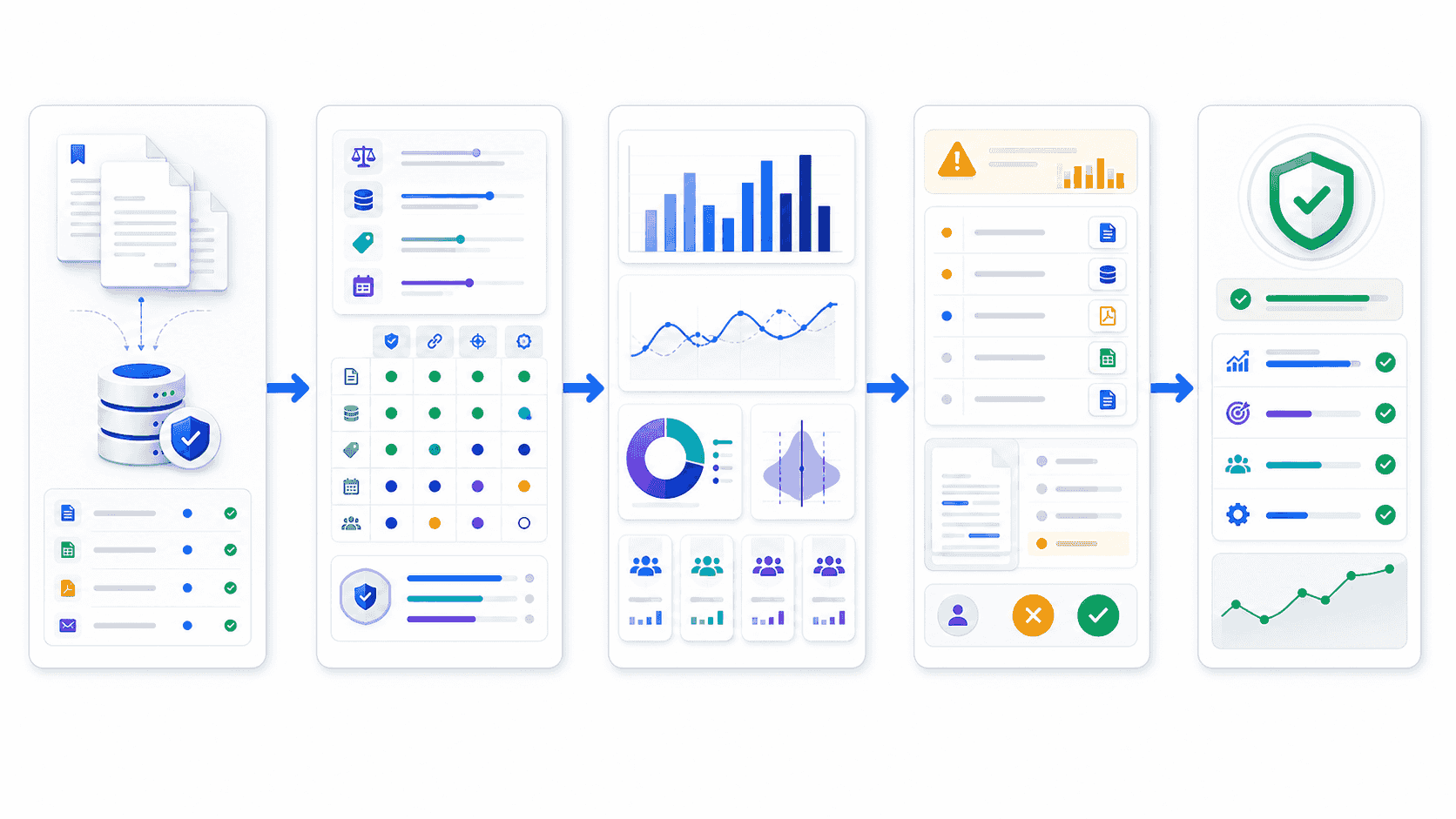
Run contract analytics as a controlled decision workflow把合同分析作为受控决策流程运行
- Frame the decision.界定决策。 Define the user, question, population, date, action choices, risk, and evidence threshold.定义用户、问题、合同集合、日期、行动选项、风险与证据门槛。
- Reconcile the source population.核对来源集合。 Connect executed documents and amendments, assign identifiers, and expose missing or uncertain records.连接已签文档与修订,分配标识,并暴露缺失或不确定记录。
- Define metrics and transformations.定义指标与转换。 Publish formulas, units, time logic, exclusions, owners, refresh rules, and acceptable uses.公布公式、单位、时间逻辑、排除、负责人、刷新规则与允许用途。
- Extract, normalize, and validate.提取、标准化并验证。 Preserve citations and confidence, test edge cases, and require human confirmation for material fields.保留引用与置信,测试边界案例,并要求人工确认重大字段。
- Analyze and drill down.分析并下钻。 Compare cohorts and periods, investigate anomalies, and move from every result to the source record.比较分群与期间,调查异常,并从每项结果进入来源记录。
- Act, record, and remeasure.行动、记录并复测。 Assign approved actions, capture outcomes and evidence, then test whether the intervention changed the metric.分配经批准的行动,记录结果与证据,再检验干预是否改变指标。
Choose metrics that connect contract terms to outcomes选择能够连接合同条款与结果的指标
Active agreements, committed value, annualized value, spend or revenue concentration, currency exposure, and contract coverage by owner or entity.有效协议、承诺价值、年化价值、支出或收入集中度、币种暴露,以及按负责人或实体划分的合同覆盖。
Upcoming expiries, notice windows, evergreen renewals, decision lead time, review cycle time, approval delay, and overdue obligations.即将到期、通知窗口、自动续签、决策提前期、审核周期、批准延误与逾期义务。
Payment terms, price adjustments, discounts, minimums, service credits, liability positions, termination economics, and nonstandard commitments.付款期限、价格调整、折扣、最低承诺、服务抵扣、责任立场、终止经济影响与非标准承诺。
Missing controls, data or security duties, audit rights, insurance, concentration, incidents, disputes, exceptions, action completion, and evidence quality.缺失控制、数据或安全义务、审计权、保险、集中度、事件、争议、例外、行动完成与证据质量。
Do not combine unlike measures into a single score without explaining weighting, direction, missing data, and sensitivity. A composite score may hide a critical clause behind many low-impact fields. Preserve the components and allow reviewers to see why the score changed.
不要在未解释权重、方向、缺失数据与敏感性的情况下,把不同性质的指标合成单一分数。综合分数可能让关键条款被大量低影响字段掩盖。应保留组成项,并让审核人员看到分数变化原因。
Use cohorts and time periods to make comparisons meaningful使用分群与时间期间形成有意义的比较
Segment by contract type, counterparty type, business unit, region, entity, product, value band, negotiation channel, template version, reviewer, risk class, or renewal period only when the category is defined and sufficiently populated. Compare like with like. A sales agreement and a property lease may use different structures, economic terms, review paths, and risk standards; averaging them can create a misleading benchmark.
仅在类别定义明确且样本足够时,按合同类型、相对方类型、业务单元、地区、实体、产品、价值区间、谈判渠道、模板版本、审核人员、风险类别或续签期间分群。应比较可比对象。销售协议和不动产租赁可能具有不同结构、经济条款、审核路径与风险标准,直接平均会产生误导性基准。
For trends, keep definitions and population logic stable or label the break. Show both counts and rates, the observation window, sample size, missingness, and material operational changes. A higher exception count may indicate worse terms, broader coverage, a new extraction model, better detection, or a changed policy. Investigate the mechanism before claiming improvement or deterioration.
分析趋势时应保持定义与集合逻辑稳定,否则需要标记断点。同时显示数量与比率、观察窗口、样本量、缺失程度和重大运营变化。更高的例外数量可能表示条款变差、覆盖扩大、提取模型更新、检测改善或政策改变。在声称改善或恶化前,应先调查作用机制。
Report data quality beside every business result在每项业务结果旁报告数据质量
Measure document coverage, agreement hierarchy completeness, field population, source citation coverage, validation rate, accuracy by field, false positives, false negatives, duplicate rate, stale records, unresolved conflicts, and refresh age. Quality is not one universal percentage. A date field, monetary value, clause classification, and legal interpretation have different error modes and consequences.
衡量文档覆盖、协议层级完整性、字段填充、来源引用覆盖、验证率、按字段准确性、误报、漏报、重复率、过期记录、未解决冲突与刷新时效。质量不是一个通用百分比。日期、金额、条款分类和法律解释具有不同错误模式与后果。
Use risk-based validation. Discovery dashboards may display clearly labeled candidate data. A renewal notice, payment decision, termination plan, regulatory commitment, or board report requires stronger confirmation. Sample routine fields, review high-impact fields, investigate anomalies, and compare outputs with an independently established reference set. Publish known limitations and correction procedures.
采用基于风险的验证。发现型仪表盘可以展示明确标记的候选数据;续签通知、付款决定、终止计划、监管承诺或董事会报告需要更强确认。抽查常规字段,复核高影响字段,调查异常,并用独立建立的参考集合比较输出。公布已知限制与更正流程。
Design dashboards for investigation, not decoration为调查而设计仪表盘,而不是装饰
Place the decision, as-of date, included population, filters, metric definition, data-quality status, and owner near the visualization. Use an appropriate form: counts for workload, rates for comparability, distributions for variation, time series for change, cohorts for process differences, and exception tables for action. Avoid three-dimensional charts, truncated axes, uncontrolled color meaning, or excessive precision.
在可视化附近展示决策、截至日期、纳入集合、筛选、指标定义、数据质量状态与负责人。选择合适形式:数量用于工作量,比率用于可比性,分布用于差异,时间序列用于变化,分群用于流程差异,例外表用于行动。避免三维图、截断坐标轴、无控制的颜色含义或过度精确。
Every segment should support drill-down to the agreement identifier, source document, clause or field, effective version, calculation input, confidence, reviewer, and change history. Restrict access at document and field level. Exported results should carry filters, definitions, timestamps, quality notes, and permissions so a screenshot is not mistaken for an evergreen fact.
每个分段都应支持下钻到协议标识、来源文档、条款或字段、有效版本、计算输入、置信、审核人与变更历史。应在文档和字段层实施访问限制。导出结果应携带筛选、定义、时间戳、质量说明与权限,避免截图被误认为永久有效的事实。
Example: prepare a supplier renewal portfolio示例:准备供应商续签组合
Suppose procurement needs decisions for supplier agreements renewing in the next 120 days. First reconcile executed masters, amendments, orders, notices, entity records, current spend, and service ownership. Define “renewing,” the as-of date, required notice lead time, committed value, criticality, concentration, available alternatives, price-change mechanism, exit assistance, data return, unresolved incidents, and validation status.
假设采购需要对未来 120 天内续签的供应商协议作出决定。首先核对已签主协议、修订、订单、通知、实体记录、当前支出与服务归属。定义“续签”、截至日期、所需通知提前期、承诺价值、关键性、集中度、可用替代方案、价格变化机制、退出协助、数据返还、未解决事件与验证状态。
Segment by decision window, criticality, value, business owner, and exit readiness. Investigate records with high value, short notice, missing amendments, disputed dates, concentrated services, open performance issues, or unverified termination mechanics. The output is not a list of “bad contracts.” It is a prioritized renewal work queue with source evidence, accountable owners, decisions, approvals, notices, and measured outcomes.
按决策窗口、关键性、价值、业务负责人和退出准备度分群。调查高价值、通知期短、修订缺失、日期有争议、服务集中、绩效问题未关闭或终止机制未验证的记录。输出不是“差合同”列表,而是带来源证据、责任人、决定、批准、通知与结果衡量的优先续签工作队列。
Evaluate contract analytics with representative decisions使用代表性决策评估合同分析方案
Test the solution on executed originals, amendments, scans, tables, multiple languages, related entities, mixed currencies, evergreen renewals, unusual dates, sensitive agreements, and missing records. Build a reference set for several high-value fields and reproduce real calculations. Test population filters, metric definitions, source traceability, correction, refresh, permissions, exports, integration failure, and recovery.
使用已签原件、修订、扫描件、表格、多语言、关联实体、混合币种、自动续签、异常日期、敏感协议和缺失记录测试方案。为若干高价值字段建立参考集合并复现实务计算。测试集合筛选、指标定义、来源追踪、更正、刷新、权限、导出、集成失败与恢复。
Assess implementation ownership, data preparation, configuration, extraction validation, calculation flexibility, dashboard usability, audit history, security, portability, service levels, support, and total cost. Compare the baseline with a pilot: decision lead time, analyst effort, coverage, validated accuracy, exception closure, and business outcome. Do not accept a vendor demonstration on a clean sample as proof of portfolio performance.
评估实施责任、数据准备、配置、提取验证、计算灵活性、仪表盘可用性、审计历史、安全、可移植性、服务水平、支持与总成本。用试点对比基线:决策提前期、分析人员投入、覆盖、已验证准确性、例外关闭与业务结果。不要把供应商在干净样本上的演示当作组合表现证明。
Govern analytics as sensitive, decision-bearing data把分析作为承载决策的敏感数据治理
Classify source documents, extracted fields, calculation tables, models, prompts, embeddings, dashboards, alerts, exports, and logs. Apply least privilege, role and matter access, segregation of duties, authentication, encryption, monitoring, controlled sharing, retention, legal hold, deletion, backup, recovery, and incident response. Aggregation can reveal pricing, concentration, strategy, personal data, investigations, or privileged patterns even when individual documents are hidden.
对来源文档、提取字段、计算表、模型、提示、嵌入、仪表盘、告警、导出与日志分类。实施最小权限、角色和事项访问、职责分离、身份验证、加密、监控、受控共享、保留、法律保全、删除、备份、恢复与事件响应。即使单份文档被隐藏,汇总也可能揭示定价、集中度、战略、个人数据、调查或特权模式。
Assign owners for the contract population, data dictionary, metric dictionary, extraction rules, reference sets, dashboards, decisions, and integrations. Require purpose, impact assessment, approval, test evidence, release, rollback, and communication for material changes. Record who viewed, exported, corrected, approved, or acted on results where appropriate.
为合同集合、数据字典、指标字典、提取规则、参考集合、仪表盘、决策与集成指定负责人。重大变化应有目的、影响评估、批准、测试证据、发布、回滚与沟通。适当记录谁查看、导出、更正、批准或依据结果行动。
Avoid precise charts built on uncertain contracts避免在不确定合同上建立精确图表
Common failures include analyzing files instead of agreements, ignoring amendments, mixing incompatible contract types, changing definitions without versioning, hiding missing data, averaging skewed values, using counts without denominators, comparing unequal periods, treating extraction confidence as legal certainty, ranking counterparties with opaque weights, and creating alerts with no owner or closure rule.
常见失败包括:分析文件而不是协议;忽略修订;混合不可比合同类型;修改定义却不做版本控制;隐藏缺失数据;平均高度偏斜数值;使用数量却没有分母;比较不等期间;把提取置信当作法律确定性;用不透明权重排列相对方;以及建立没有负责人或关闭规则的告警。
Escalate material gaps, conflicting effective dates, unidentified authoritative versions, unsupported languages, failed table extraction, unexpected population shifts, unexplained metric breaks, sensitive data exposure, or results that cannot be reproduced from source records. When evidence is insufficient, label the result incomplete or uncertain rather than filling the gap with a generated estimate.
重大缺口、生效日期冲突、权威版本不明、不支持语言、表格提取失败、集合意外变化、指标断点无法解释、敏感数据暴露或结果无法从来源记录复现,都应升级处理。证据不足时,应标记结果不完整或不确定,而不是用生成估计填补缺口。
Connect analytics to source records and controlled action把分析连接到来源记录与受控行动
Use the contract intelligence workflow to build the connected, source-backed record that analytics aggregates. Use a complete contract review checklist to define which terms, dependencies, and evidence should be captured during intake and validation.
使用合同智能工作流建立可关联、有来源支持且可供分析汇总的记录。使用完整的合同审查清单定义导入与验证期间需要捕获的条款、依赖与证据。
When approved fields feed templates or notices, apply the controlled rules, approvals, testing, and versioning in the legal document automation workflow. Keep analysis downstream from the authoritative agreement. A dashboard, score, alert, or generated output should never silently overwrite signed text or authorize material action.
当批准字段用于模板或通知时,采用法律文档自动化流程中的受控规则、批准、测试与版本管理。分析应位于权威协议下游。仪表盘、分数、告警或生成输出都不能静默覆盖已签文字或授权重大行动。
Use AI to prepare source-backed analytic candidates使用 AI 准备有来源支持的分析候选结果
AI can classify documents, extract candidate fields, normalize formats, compare clause language, identify possible exceptions, group similar records, summarize source-backed patterns, and prepare a preliminary review queue. Provide the complete agreement hierarchy, data and metric dictionaries, permitted population, business question, output format, validation rules, and expected citations. Require confidence, “not found,” and exception handling.
AI 可以分类文档、提取候选字段、标准化格式、比较条款文字、识别潜在例外、对相似记录分组、总结有来源支持的模式并准备初步审核队列。应提供完整协议层级、数据与指标字典、允许集合、业务问题、输出格式、验证规则和所需引用,并要求置信、“未找到”与例外处理。
AI cannot establish complete source populations, verify business facts, determine applicable law, approve legal interpretation, validate causation, contact counterparties, or authorize commercial action. Human owners must confirm the contract set, effective versions, calculations, facts, permissions, decisions, and consequences. Content and tools support information organization and pre-signature risk triage; they do not constitute legal advice or replace qualified counsel.
AI 不能确定完整来源集合、验证业务事实、决定适用法律、批准法律解释、验证因果关系、联系相对方或授权商业行动。人工负责人必须确认合同集合、有效版本、计算、事实、权限、决定与后果。内容与工具仅支持信息整理和签署前风险初筛,不构成法律意见,也不能替代具备资质的律师。
Start with one contract question and a traceable dataset从一个合同问题和可追溯数据集开始
Prepare the complete agreement set, one business decision, required fields, metric definitions, and validation standard. Extract cited candidates, investigate exceptions, and approve material conclusions before aggregation or action.
准备完整协议集、一项业务决策、所需字段、指标定义与验证标准。提取带引用的候选结果,调查例外,并在汇总或行动前批准重大结论。
Contract analytics FAQ合同分析常见问题
What is contract analytics?
什么是合同分析?
It is the governed aggregation and analysis of contract data to measure portfolio patterns, trends, comparisons, exceptions, performance, exposure, and business outcomes.
它是对合同数据进行受治理的汇总与分析,用于衡量组合模式、趋势、比较、例外、绩效、风险暴露与业务结果。
How is contract analytics different from contract intelligence?
合同分析与合同智能有何不同?
Contract intelligence creates the connected, queryable record. Contract analytics aggregates governed records to calculate measures, compare populations, detect change, and support decisions.
合同智能建立可关联、可查询的记录;合同分析汇总受治理记录以计算指标、比较集合、发现变化并支持决策。
Which metric should a team implement first?
团队应首先实施哪个指标?
Choose a metric tied to one recurring decision with a defined population, available source data, clear owner, repeatable action, and measurable outcome.
选择与一项重复决策相连,且集合明确、来源数据可用、负责人清晰、行动可重复、结果可衡量的指标。
Can dashboard data replace the signed agreement?
仪表盘数据能否替代已签协议?
No. Analytic data is a governed view that must remain linked to the authoritative document, effective version, source text, calculation, validation, and update history.
不能。分析数据是受治理视图,必须保持与权威文档、有效版本、来源文字、计算、验证与更新历史的连接。
Can AI make contract portfolio decisions?
AI 能否作出合同组合决策?
No. AI can organize source-backed candidates. Authorized humans must confirm data, definitions, law, facts, interpretation, permissions, business impact, and material actions.
不能。AI 可以整理有来源支持的候选结果,但必须由授权人员确认数据、定义、法律、事实、解释、权限、业务影响与重大行动。