On this page本页目录
Legal document automation is an operating system for repeatable work法律文档自动化是重复性工作的运营系统
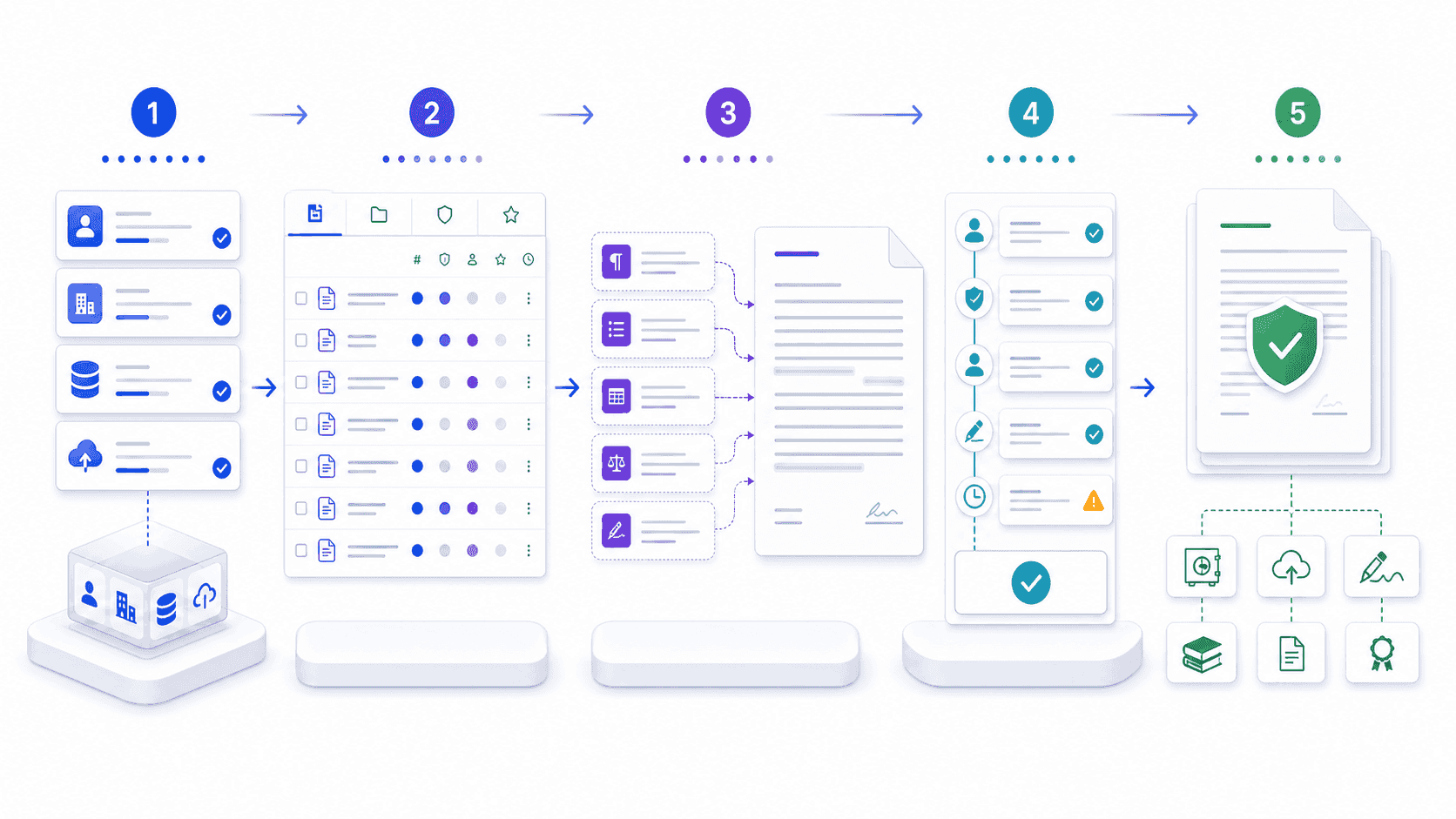
Legal document automation converts approved templates, business data, decision rules, and review controls into a repeatable process that produces a document or document package. The commercial goal is not simply to make drafting faster. A well-designed system reduces rekeying, routes exceptions to the right reviewer, preserves approved language, records decisions, and hands the final document into signature, storage, or contract management with reliable metadata.
法律文档自动化把经过批准的模板、业务数据、决策规则和复核控制转换为可重复流程,生成单份文档或文档包。其商业目标不只是加快起草。设计良好的系统能够减少重复录入,把例外发送给正确审核人,保留已批准文字,记录决策,并将最终文档连同可靠元数据交接给签署、存储或合同管理系统。
Treat automation as process design rather than a software switch. The team must identify suitable work, standardize inputs, create governed content, define decision logic, allocate authority, test outputs, monitor changes, and support users. If an existing manual process is inconsistent, automating it may reproduce inconsistency at greater speed.
应把自动化视为流程设计,而不是打开一个软件开关。团队必须识别适合的工作、标准化输入、建立受治理内容、定义决策逻辑、分配权限、测试输出、监控变化并支持用户。如果现有人工流程本身不一致,自动化可能只是更快地复制不一致。
Choose a use case with measurable business value选择具有可衡量商业价值的场景
Strong early candidates usually combine volume, repetition, stable language, structured data, clear ownership, and a visible service problem. Examples include standard nondisclosure agreements, order forms, routine procurement addenda, employment letters, board or corporate documents, privacy notices, renewal letters, standard claims correspondence, and document sets generated for similar transactions.
良好的早期候选通常同时具备较高数量、重复性、稳定文字、结构化数据、清晰责任和可见服务问题。例如标准保密协议、订单、常规采购附录、雇佣信函、董事会或公司文件、隐私通知、续签信、标准索赔函以及为同类交易生成的文档包。
Score each candidate on annual volume, average handling time, error or rework rate, cycle-time impact, data readiness, template stability, exception frequency, risk sensitivity, and number of stakeholders. A modest document with thousands of predictable transactions may create more value than a sophisticated agreement used twice a year. Establish a baseline before implementation so the later business case is based on observed change.
按年度数量、平均处理时间、错误或返工率、周期影响、数据准备度、模板稳定性、例外频率、风险敏感度和利益相关者数量为候选场景评分。每年处理数千次的普通文档,可能比一年只使用两次的复杂协议创造更多价值。实施前建立基线,才能让后续商业论证基于可观察变化。
Separate document assembly from review, intelligence, and analytics区分文档生成、审查、智能与分析
Document automation primarily creates or assembles documents from governed inputs. Automated contract review analyzes received text for issues. Contract intelligence organizes obligations and portfolio information after documents exist. Contract analytics measures patterns and performance across matters or agreements. These capabilities can connect, but they solve different jobs and should have different owners, controls, metrics, and acceptance tests.
文档自动化主要依据受治理输入创建或组装文档;自动化合同审查分析收到的文本和问题;合同智能整理已有文档中的义务与组合信息;合同分析衡量跨事项或协议的模式与绩效。这些能力可以连接,但解决的是不同任务,应具有不同负责人、控制、指标与验收测试。
Define the start and end of the automated workflow. It might begin with an approved request form and end with a draft ready for legal review, or it might cover approval, electronic-signature handoff, and storage. State which negotiations, jurisdictions, counterparties, values, data classes, and deviations remain outside the automated path. Clear boundaries prevent a convenient workflow from becoming an unauthorized decision maker.
明确自动化流程的起点和终点。它可以从批准的申请表开始,以可供法律复核的草案结束;也可以覆盖审批、电子签署交接与归档。说明哪些谈判、法域、相对方、金额、数据类别和偏差仍在自动化路径之外。清晰边界可以防止便捷流程变成未经授权的决策者。
Map the current process before designing the future one设计未来流程前先绘制当前流程
Observe real work rather than relying only on a written policy. Track who requests the document, where information originates, which templates are used, what is copied manually, when review occurs, how approval is evidenced, how signatures are arranged, where final files are stored, and which downstream teams receive data. Capture wait time separately from working time.
应观察真实工作,而不能只依赖书面政策。追踪谁申请文档、信息来自哪里、使用哪些模板、哪些内容人工复制、何时复核、如何证明审批、如何安排签署、最终文件存在哪里,以及哪些下游团队接收数据。等待时间与实际工作时间应分开记录。
List variations and classify them as required, valuable, historical, or accidental. Interview frequent requesters, document owners, reviewers, approvers, records teams, security, privacy, finance, and operations. The output should show the normal path, exception paths, decision points, handoffs, systems, evidence, failure modes, and owners. Remove unnecessary steps before translating the process into rules.
列出变化并将其分类为必需、有价值、历史遗留或偶然形成。访谈高频申请人、文档负责人、审核人、审批人、档案团队、安全、隐私、财务与运营人员。输出应显示正常路径、例外路径、决策点、交接、系统、证据、失败模式和负责人。在把流程转换为规则之前,先删除不必要步骤。
Design one reliable source for every document field为每个文档字段设计可靠来源
Create a data dictionary for parties, addresses, entity identifiers, dates, products, prices, terms, contacts, signatories, governing choices, and document-specific facts. For each field, define its name, type, format, source system, owner, validation, allowed values, whether it is required, and whether the requester may edit it. Reuse authoritative data where possible instead of asking users to type the same information again.
为主体、地址、实体标识、日期、产品、价格、期限、联系人、签署人、适用选项与文档特定事实建立数据字典。逐项定义名称、类型、格式、源系统、负责人、验证、允许值、是否必填以及申请人能否编辑。尽可能复用权威数据,不要让用户重复输入相同信息。
Use conditional intake so requesters see only relevant questions. Explain why sensitive information is requested and apply access controls appropriate to personal, confidential, financial, or privileged material. Validate formats, dependencies, ranges, entity names, and dates at entry. When data cannot be verified automatically, mark it clearly for human confirmation rather than silently treating it as correct.
采用条件式信息收集,让申请人只看到相关问题。解释为何需要敏感信息,并针对个人、机密、财务或特权资料采用适当访问控制。录入时验证格式、依赖、范围、实体名称与日期。无法自动核验的数据应明确标记供人工确认,而不能默认其正确。
Build governed templates from reusable content blocks使用可复用内容模块建立受治理模板
Select one approved master for each intended document, then separate fixed text, variables, optional blocks, alternative clauses, schedules, and generated tables. Give every content block an owner, purpose, applicable context, approval status, effective date, version, dependencies, and retirement rule. Avoid maintaining several nearly identical templates when a shared master with controlled variations will work.
为每种目标文档选择一个批准的主模板,再区分固定文字、变量、可选模块、替代条款、附表和生成表格。为每个内容模块指定负责人、目的、适用情境、批准状态、生效日期、版本、依赖与停用规则。当共享主模板加受控变化可以解决问题时,避免维护多个几乎相同的模板。
Protect formatting and document structure as carefully as text. Test numbering, cross-references, defined terms, headers, signatures, tables, page breaks, attachments, accessibility, file naming, and language variants. If bilingual documents are generated, manage approved translations as linked content rather than translating independently each time. Record which version produced every output.
对格式与文档结构的保护应与文字同样严格。测试编号、交叉引用、定义术语、页眉、签名、表格、分页、附件、无障碍、文件命名和语言版本。生成双语文档时,应把批准译文作为关联内容管理,而不是每次独立翻译。记录每份输出由哪个版本生成。
When a template contains negotiated risk provisions, maintain links to the relevant review standard. A complete contract review checklist helps connect automated content with definitions, payment, liability, termination, dispute, notice, and schedule dependencies that a generation workflow might otherwise miss.
模板包含经过谈判的风险条款时,应维护与相应审查标准的链接。完整的合同审查清单有助于把自动化内容与定义、付款、责任、终止、争议、通知和附表依赖连接起来,避免生成流程遗漏这些关系。
Translate decisions into testable rules把决策转换为可测试规则
A rule should state the input, condition, action, output, owner, and fallback. For example, transaction value and jurisdiction may select a clause, business model may require a schedule, or a requested deviation may route the document to specialist review. Keep business rules separate from template wording where possible so changes can be assessed and tested without rebuilding the entire document.
一条规则应说明输入、条件、动作、输出、负责人和后备处理。例如,交易金额与法域可以选择条款,商业模式可以要求附表,申请偏差则可以把文档发送给专业人员复核。尽可能把业务规则与模板文字分开,使变更可以独立评估和测试,而无需重建整份文档。
Create explicit exception states: missing data, conflicting inputs, unapproved entity, unsupported jurisdiction, nonstandard counterparty paper, threshold exceeded, policy deviation, outdated content, and system failure. Never force an uncertain case through the normal path merely to preserve straight-through processing. A safe automation design makes escalation visible, fast, and auditable.
建立明确例外状态,包括数据缺失、输入冲突、未批准主体、不支持法域、对方非标准文本、超过阈值、政策偏差、内容过期和系统故障。不能为了保持直通处理而强迫不确定案例进入正常路径。安全的自动化设计应让升级可见、快速且可审计。
Route review according to risk and authority根据风险与权限安排复核
Define which outputs can proceed without legal review, which need a checklist review, which require a subject specialist, and which must stop. Route by document type, value, jurisdiction, counterparty, deviation, data category, business risk, and requested timing. Separate content approval from authority to sign, and require evidence that each approval was given by the correct role.
定义哪些输出无需法律复核即可继续、哪些需要清单复核、哪些需要专业人员,以及哪些必须停止。根据文档类型、金额、法域、相对方、偏差、数据类别、业务风险与要求时间进行路由。区分内容批准与签署权限,并要求证明每项审批由正确角色作出。
Set service targets for normal and exception paths, notifications, reassignment, delegation, reminders, expiry, and escalation. Prevent approvers from changing controlled wording outside the governed process. Preserve the request, inputs, generated version, changes, comments, approvals, timestamps, and final file as one traceable record.
为正常与例外路径、通知、重新分配、授权、提醒、过期和升级设置服务目标。防止审批人在受治理流程之外修改受控文字。把申请、输入、生成版本、变更、评论、审批、时间戳与最终文件保存为一条可追溯记录。
Test content, rules, data, and rendered documents测试内容、规则、数据与最终文档
Build a test library before launch. Include a normal case for every document type, boundary values, missing data, conflicting choices, every optional block, every alternative clause, unsupported scenarios, unusual characters, long names, multiple currencies, leap dates, and large tables. Compare generated outputs with expected documents and independently reproduce rule results.
上线前建立测试库。覆盖每种文档的正常案例、边界值、缺失数据、冲突选择、每个可选模块、每个替代条款、不支持场景、特殊字符、超长名称、多币种、闰日与大型表格。把生成输出与预期文档比较,并独立复现规则结果。
Quality gates should check missing variables, unresolved placeholders, numbering, cross-references, defined-term consistency, dates, arithmetic, attachments, signature blocks, metadata, file format, and accessibility. Use four-eye review for material template or rule changes. Keep test evidence with the release and run regression tests whenever content, rules, integrations, or rendering software changes.
质量门槛应检查缺失变量、未解决占位符、编号、交叉引用、定义术语一致性、日期、算术、附件、签署区、元数据、文件格式与无障碍。重要模板或规则变更采用双人复核。把测试证据与版本一起保存,并在内容、规则、集成或渲染软件变化时执行回归测试。
Plan the handoff beyond document generation规划文档生成之后的交接
A generated file is not the end of the process. Define how the approved version enters electronic signature, who selects signatories, how identity and authority are checked, which order applies, how failed or declined signatures are handled, and whether edits after approval return to review. Confirm the legal and operational requirements applicable to electronic records and signatures in each relevant transaction.
生成文件不是流程终点。定义批准版本如何进入电子签署、谁选择签署人、如何核验身份与权限、采用什么签署顺序、如何处理失败或拒签,以及批准后的编辑是否需要重新复核。确认每笔相关交易适用的电子记录与签署法律和运营要求。
After execution, store the authoritative copy with parties, dates, document type, owner, jurisdiction, value, renewal, notice, obligations, and source workflow identifier. Apply retention, legal hold, access, deletion, backup, and export rules. Feed validated metadata downstream rather than asking another team to re-enter it.
签署后,把权威副本与主体、日期、文档类型、负责人、法域、金额、续签、通知、义务与源流程标识一起保存。应用保留、法律保全、访问、删除、备份和导出规则,把验证后的元数据传递到下游,而不是让另一团队再次录入。
Govern access, changes, data, and third parties治理访问、变更、数据与第三方
Use role-based access, least privilege, separation of duties, strong authentication, logging, controlled exports, and periodic access review. Classify templates, inputs, outputs, models, and logs. Document where data is stored and processed, how long it is retained, who can access it, which vendors or subprocessors are involved, and how incidents are reported and contained.
采用基于角色的访问、最小权限、职责分离、强身份验证、日志、受控导出和定期访问复核。对模板、输入、输出、模型与日志分类。记录数据在哪里存储和处理、保留多久、谁能访问、涉及哪些供应商或分处理者,以及如何报告与控制事件。
Create a change board or equivalent ownership model for templates, rules, data fields, integrations, approval routes, and user permissions. Every change should have a request, impact assessment, owner, approval, testing, release date, rollback plan, and communication. Monitor authoritative legal and policy sources, but require responsible professionals to decide whether a change is needed.
为模板、规则、数据字段、集成、审批路径和用户权限建立变更委员会或同等责任模型。每项变更都应具有申请、影响评估、负责人、批准、测试、发布日期、回滚方案与沟通。监控权威法律和政策来源,但由相应专业人员决定是否需要变更。
Move from pilot to controlled production从试点逐步进入受控生产
- Define the outcome and baseline.定义结果与基线。 Select one use case, owner, users, scope, current performance, risks, and success measures.选择一个场景,明确负责人、用户、范围、当前绩效、风险与成功指标。
- Standardize the process and content.标准化流程与内容。 Approve the future workflow, master template, data dictionary, rules, exceptions, and authority map.批准未来流程、主模板、数据字典、规则、例外与权限图。
- Configure and integrate.配置并集成。 Build intake, assembly, routing, audit, signature, storage, and reliable data connections.建立信息收集、生成、路由、审计、签署、存储与可靠数据连接。
- Test with representative users.让代表性用户参与测试。 Run normal and exception cases, compare outputs, test permissions, train users, and close defects.运行正常与例外案例、比较输出、测试权限、培训用户并关闭缺陷。
- Launch, measure, and govern.上线、衡量与治理。 Start with controlled volume, monitor quality and adoption, review exceptions, and manage changes through approved releases.从受控数量开始,监控质量与采用,复核例外,并通过批准版本管理变更。
Measure value without sacrificing quality衡量价值,但不能牺牲质量
Track end-to-end cycle time, active handling time, first-pass completion, rework, error rate, exception rate, approval wait, user adoption, abandoned requests, template usage, unauthorized edits, support demand, and cost per completed document. Segment results by document type, team, geography, value, and normal versus exception path so averages do not hide risk.
跟踪端到端周期、实际处理时间、首次完成率、返工、错误率、例外率、审批等待、用户采用、放弃申请、模板使用、未经授权修改、支持需求和每份完成文档成本。按文档类型、团队、地区、金额及正常或例外路径划分结果,避免平均值掩盖风险。
Pair efficiency with control indicators: overdue content reviews, failed tests, access violations, missing evidence, post-signature corrections, disputes linked to generated wording, and time to contain incidents. Compare results with the pre-launch baseline and include implementation, license, integration, content maintenance, training, support, and governance costs in the business case.
效率指标应与控制指标配对,包括内容复核逾期、测试失败、访问违规、证据缺失、签署后更正、与生成文字相关的争议以及事件控制时间。将结果与上线前基线比较,并在商业论证中纳入实施、许可、集成、内容维护、培训、支持和治理成本。
Evaluate technology against the operating model依据运营模型评估技术
| Area领域 | What to test测试内容 | Evidence证据 |
|---|---|---|
| Authoring创作 | Variables, conditions, reusable blocks, bilingual output, formatting变量、条件、复用模块、双语输出、格式 | Representative template build代表性模板构建 |
| Workflow工作流 | Routing, authority, exceptions, audit, notifications路由、权限、例外、审计、通知 | End-to-end scenario test端到端情景测试 |
| Integration集成 | Source data, identity, signature, storage, export源数据、身份、签署、存储、导出 | Working connection and failure test实际连接与失败测试 |
| Governance治理 | Security, privacy, residency, retention, versioning, vendor exit安全、隐私、驻留、保留、版本、供应商退出 | Control documentation and logs控制文件与日志 |
Use a representative proof of concept, not a polished vendor demonstration alone. Include one normal case, one exception, one content change, one integration failure, one permission test, one export, and one recovery scenario. Confirm total cost, implementation responsibility, service levels, roadmap dependencies, portability, and how the organization exits without losing templates, data, documents, or audit history.
应使用代表性概念验证,而不能只依赖精美的供应商演示。至少包含一个正常案例、一个例外、一次内容变更、一次集成失败、一次权限测试、一次导出和一次恢复情景。确认总成本、实施责任、服务水平、路线图依赖、可移植性,以及组织如何退出而不丢失模板、数据、文档或审计历史。
Avoid automating ambiguity and unmanaged content避免把模糊流程和无人治理的内容自动化
Common failures include choosing technology before defining the use case, copying obsolete templates, collecting free text where structured data is needed, hiding exceptions, allowing uncontrolled edits, confusing template approval with signing authority, skipping regression testing, and measuring only documents generated. Another warning sign is a workflow that saves requester time by transferring unplanned work to reviewers or records teams.
常见失败包括:在定义场景前选择技术、复制过时模板、需要结构化数据却收集自由文本、隐藏例外、允许不受控编辑、混淆模板批准与签署权限、跳过回归测试,以及只衡量生成文档数量。另一个风险信号是流程通过把计划外工作转移给审核或档案团队来节省申请人时间。
Do not assume that automation makes wording correct, current, suitable, enforceable, or authorized. Escalate unsupported jurisdictions, high-value or unusual transactions, conflicting source data, sensitive personal information, material deviations, unclear authority, suspected fraud, and outputs that cannot be traced to approved inputs and content.
不要假设自动化会使文字自动变得正确、最新、适用、可执行或获得授权。不支持的法域、高价值或异常交易、源数据冲突、敏感个人信息、重大偏差、权限不清、疑似欺诈以及无法追溯到批准输入与内容的输出,都应升级处理。
Use AI as a traceable quality-assurance layer把 AI 用作可追溯的质量保障层
AI can help compare a generated document with an approved template, extract variables, identify unresolved placeholders, check defined-term consistency, summarize deviations, map cross-references, and prepare an exception list. It can also organize a first-pass risk review before a responsible human approves the document. Require exact citations, preserve the source and version, and return “not found” rather than guessed content.
AI 可以把生成文档与批准模板比较,提取变量,识别未解决占位符,检查定义术语一致性,总结偏差,映射交叉引用并准备例外清单。它还可以在相应人工批准文档前组织第一轮风险审查。应要求准确引用、保存来源与版本,缺失内容返回“未找到”而不是猜测。
AI cannot decide which law applies, approve templates, validate business facts, grant authority, determine enforceability, or replace qualified legal review. Human reviewers must confirm the complete document set, current law, underlying facts, source data, approved content, exceptions, permissions, signatures, and intended use. Content and tools support information organization and pre-signature risk triage; they do not constitute legal advice.
AI 不能决定适用法律、批准模板、验证业务事实、授予权限、判断可执行性或替代具备资质的法律审核。人工必须确认完整文档集、现行法律、基础事实、源数据、批准内容、例外、权限、签署和预期用途。内容与工具仅支持信息整理和签署前风险初筛,不构成法律意见。
Add a controlled risk check before approval在批准前增加受控风险检查
Review the generated document against its source, template, business inputs, and approved deviations. Resolve exceptions with the responsible professional before signature or release.
把生成文档与来源、模板、业务输入和批准偏差比较,并在签署或发布前由相应专业人员解决例外。
Legal document automation FAQ法律文档自动化常见问题
What is legal document automation?
什么是法律文档自动化?
It is a controlled process that combines approved templates, structured business data, decision rules, and workflow controls to create and route repeatable legal documents.
它是把批准模板、结构化业务数据、决策规则和工作流控制结合起来,创建并传递重复性法律文档的受控流程。
Which document should a team automate first?
团队应首先自动化哪种文档?
Choose a high-volume, stable, rules-based document with clear inputs, ownership, exceptions, and measurable delay or rework.
选择高频、稳定、基于规则、输入与责任清晰、例外明确且延误或返工可衡量的文档。
Does automation remove legal review?
自动化会取消法律复核吗?
Not automatically. The workflow should define which standard outputs may proceed, which need review, and which exceptions must stop or escalate.
不会自动取消。流程应定义哪些标准输出可以继续、哪些需要复核,以及哪些例外必须停止或升级。
How should quality be measured?
应如何衡量质量?
Track errors, rework, exceptions, missing evidence, unauthorized edits, post-signature corrections, failed tests, and incidents alongside cycle time and cost.
除周期与成本外,还应跟踪错误、返工、例外、证据缺失、未经授权修改、签署后更正、测试失败与事件。
Can AI approve an automated legal document?
AI 可以批准自动生成的法律文档吗?
No. AI can organize checks and flag possible issues. Approval requires authorized humans to confirm facts, law, content, exceptions, authority, and intended use.
不能。AI 可以组织检查并标记潜在问题,但批准需要授权人员确认事实、法律、内容、例外、权限与用途。
Sources and Method来源与方法
- NIST — Artificial Intelligence Risk Management Framework美国国家标准与技术研究院 — 人工智能风险管理框架
- UK Information Commissioner's Office — Artificial intelligence and data protection guidance英国信息专员办公室 — 人工智能与数据保护指南
- US National Archives — Records management policy and guidance美国国家档案馆 — 档案管理政策与指南
- EUR-Lex — Regulation (EU) No 910/2014 on electronic identification and trust services欧盟法律数据库 — 关于电子身份识别与信任服务的第 910/2014 号法规