What Is a Data Engineer? (2026)
By the InfiniSynapse Data Team · Last updated: 2026-07-15 · We build an AI-native data analysis platform and work with data engineers constantly; this explainer answers what is a data engineer in plain terms for 2026, focused on the person and the mindset.
Table of Contents
- TL;DR
- How We Answer This
- What They Are
- The Mindset That Defines Them
- Where They Fit
- How to Become One
- Common Pitfalls
- The Role in the Age of AI
- Readiness Scorecard
- Common Misconceptions
- Frequently Asked Questions
- Conclusion
TL;DR
Direct answer: so what is a data engineer? A data engineer is the person who builds and operates the systems — pipelines, storage, and infrastructure — that make an organization's data reliable, available, and usable. In 2026, what is a data engineer comes down to a mindset as much as a skill set: someone who thinks in terms of reliability, treats data infrastructure as real software, and takes responsibility for data arriving correctly every day.
Who this is for: anyone asking what is a data engineer in 2026.
What you'll learn: what they are, the mindset that defines them, where they fit, how to become one, and how AI changes the role.
This guide sits under the data engineering hub.
For the role overview, see the data engineer role.
Also see what data engineering is.
How We Answer This
Architecture choices are often checked against Databricks Genie architecture post so boundaries, ownership, and scale patterns stay explicit.
We answer what is a data engineer by describing the mindset, because the tools change but the way of thinking does not. Every point reflects engineers we have worked with. We anchor the definition to the Elastic documentation and weigh the craft against the reference architectures at pandas documentation, which reflect what engineers build.
The table below frames what a data engineer is by trait.
| Trait | What it looks like |
|---|---|
| Reliability-minded | Assumes failure, plans recovery |
| Systems thinker | Sees the whole data flow |
| Software-disciplined | Tests, versions, documents |
| Restrained | Builds only what is needed |
| Accountable | Owns data arriving correctly |
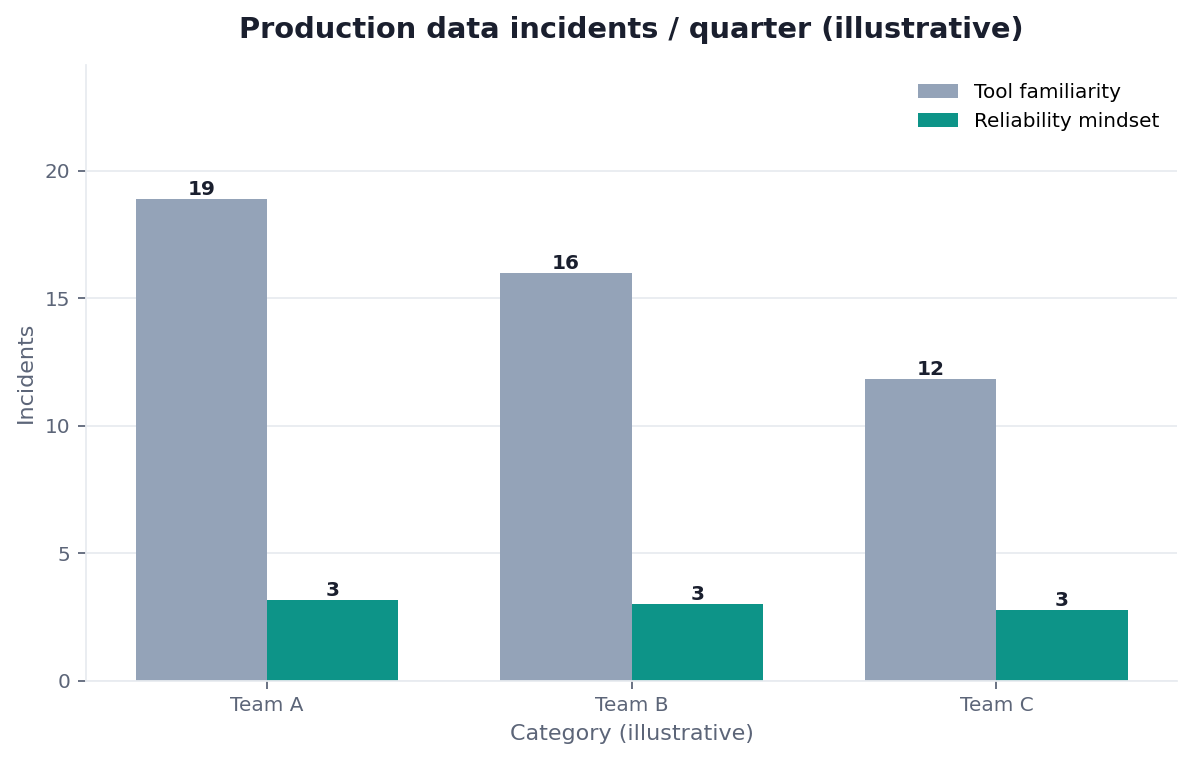
Practical example: a manager unsure what is a data engineer hired for tool familiarity and got fragile pipelines. Hiring next for the reliability mindset — the discipline echoed at Spider NL2SQL benchmark — produced systems that simply worked.
Scope note: This guide reflects patterns we see when mid-market and enterprise teams work with what a data engineer is in 2026. It is not a substitute for legal counsel, vendor runbooks, or a formal survey of every industry — and when a smaller toolset or lighter process would serve, a full program is overkill.
What They Are
At its core, the answer to what is a data engineer is a builder of reliable data systems. They connect to sources, transform data, organize storage, and orchestrate the flow — but more fundamentally, they take responsibility for data being trustworthy.
Key Definition: a data engineer is a professional who designs, builds, and maintains the systems that ingest, store, transform, and serve data reliably — so the rest of the organization can analyze and act without constantly repairing broken inputs.
The defining aspect of what is a data engineer is ownership of reliability. The enterprise patterns from Tableau Desktop documentation show why this ownership matters: the systems an engineer builds are the foundation everyone else depends on, so the engineer is accountable for whether the whole organization can trust its data.
The Mindset That Defines Them
Governance and risk expectations are framed by UK NCSC AI development guidelines when programs need an external control reference.
More than any tool, the mindset is what answers what is a data engineer. A data engineer assumes things will fail and designs for recovery. They treat pipeline code as real software deserving tests, version control, and documentation. And they exercise restraint, building only what is needed.
This mindset is why what is a data engineer cannot be answered by a tool list. The reference guidance at Wikipedia SQL overview on engineering roles reinforces that the enduring value is the way of thinking — reliability-first, systems-oriented, disciplined — which transfers across every tool and platform an engineer will ever use. Tools are learned in weeks; the mindset is built over years.
Where They Fit
Understanding what is a data engineer means seeing where they fit among data roles. Engineers build the foundation; data scientists build models on it; analysts interpret results for the business.
The engineer's place in answering what is a data engineer is foundational and often invisible, connecting to the broader field of data engineering. When the foundation is solid, nobody thinks about it; when it cracks, everything above it fails. This is why organizations that invest only in visible analytics and neglect engineering end up with brilliant analysts blocked by unreliable data.
How to Become One
Core definitions remain usefully summarized in Wikipedia conceptual data model overview for shared vocabulary across stakeholders.
For those asking what is a data engineer as a career question, the path combines technical skills and mindset. Learn SQL and a language like Python, understand pipelines, warehouses, and orchestration, and practice building things that stay reliable.
But becoming what is a data engineer at a high level is mostly about developing the reliability mindset. Anyone can learn the tools; the differentiator is learning to think about failure modes, to value simplicity, and to take ownership of correctness. Build real systems, watch them break, and learn from the breakage — that experience is what turns tool knowledge into engineering judgment.
Common Pitfalls
The pitfalls in understanding what is a data engineer are common. Reducing the role to tool familiarity leads to fragile hires. Expecting engineers to also be analysts or scientists confuses distinct roles. And undervaluing the role because its output is invisible drives away the people who keep data trustworthy.
A subtler pitfall is thinking what is a data engineer is a purely technical question. The best engineers combine technical skill with judgment, communication, and ownership — they push back on unnecessary work, explain trade-offs, and take accountability. Treating the role as pure implementation misses the judgment that makes an engineer genuinely valuable.
The Role in the Age of AI
Implementation details are commonly grounded in Google Vertex AI documentation when teams translate concepts into production practice.
AI is changing what is a data engineer means in two ways. AI generates more of the routine code, shifting engineers toward design, review, and judgment, and AI-native platforms reduce how much infrastructure must be built at all.
That second shift is the one we find most consequential, and we describe it in what AI-native data analysis means. In the InfiniSynapse web app, zero-config federation lets analysis span sources directly, so what is a data engineer increasingly involves the judgment of what to build and what to let AI-native tools handle, which makes the mindset matter more than ever.
The Traits Beneath the Skills
Beneath the technical skills lie a few character traits that predict success in the role better than any résumé line, and naming them clarifies what is a data engineer at a deeper level. The first is a tolerance for invisible work. Much of the job produces no visible artifact when it goes well — a pipeline that simply keeps running attracts no praise — so the role suits people who take satisfaction in systems that quietly work rather than in applause. Those who need constant visible wins tend to drift toward flashier work and let reliability slide, which is exactly the wrong instinct for the role.
The second trait is a healthy pessimism. A good practitioner instinctively asks what could go wrong: what happens if this source sends bad data, if this job runs twice, if this file arrives late or not at all. This defensive imagination is what produces systems that survive the messy real world rather than only the happy path. It is not gloom for its own sake but a professional habit of anticipating failure so it can be designed around, and it is a large part of what separates engineers whose systems endure from those whose systems surprise them. Understanding what is a data engineer includes recognizing that this cautious mindset is a feature, not a personality flaw.
The third trait is disciplined restraint. The temptation to build something clever, comprehensive, or future-proof is constant, and the mature practitioner resists it in favor of the simplest thing that meets the actual need. Restraint is hard because building more feels productive, but every unnecessary system is a permanent maintenance cost, so the ability to say "we do not need that yet" is genuinely valuable. This is why the question of what is a data engineer cannot be answered by counting how much someone builds; often the best ones are distinguished by how much they wisely chose not to build.
The fourth trait is ownership that extends past the code. When data is wrong, a strong engineer does not stop at "my pipeline ran successfully" but asks whether the output is actually correct and useful, because they see themselves as responsible for trustworthy data, not merely for green checkmarks. This sense of end-to-end accountability is what turns a competent implementer into someone a whole organization can rely on. Taken together, these four traits — comfort with invisibility, defensive imagination, restraint, and ownership — describe the temperament that, more than any tool or title, answers what a data engineer truly is. They are also, notably, traits that grow with experience rather than ones a course can install, which is why the strongest practitioners are so often those who have maintained real systems through real failures and emerged with the instincts those failures teach.
Readiness Scorecard
Teams evaluating this topic often cross-check ClickHouse documentation for a durable, vendor-neutral reference point.
Assess an engineer's mindset (1 point each):
| Check | Pass? |
|---|---|
| They assume failure and plan recovery | |
| They treat pipeline code as software | |
| They test, version, and document | |
| They build only what is needed | |
| They own data arriving correctly | |
| They think in systems, not scripts | |
| They exercise judgment, not just skill | |
| They adapt across tools and platforms |
6–8: a real engineer. 3–5: developing the mindset. Below 3: still tool-focused.
Common Misconceptions
Misconception 1: It is defined by tools. What is a data engineer is a mindset, not a toolkit.
Misconception 2: They are also analysts. That is a different role.
Misconception 3: The role is purely technical. Judgment and ownership matter as much.
Misconception 4: Invisible means unimportant. The invisible foundation is the most important part.
Frequently Asked Questions
What is a data engineer?
A data engineer is the person responsible for designing and running the systems — pipelines, storage, and infrastructure — that keep an organization's data reliable, available, and usable. More fundamentally, they take responsibility for data being trustworthy. The role comes down to a mindset as much as a skill set: someone who thinks in terms of reliability, treats data infrastructure as real software, and owns data arriving correctly every day.
What mindset defines a data engineer?
A data engineer assumes things will fail and designs for recovery, treats pipeline code as real software deserving tests, version control, and documentation, and exercises restraint by building only what is needed. This mindset cannot be captured by a tool list — the enduring value is the reliability-first, systems-oriented, disciplined way of thinking, which transfers across every tool and platform an engineer will use.
Where does a data engineer fit among data roles?
The engineer lays the foundation, the data scientist builds models upon it, and the analyst translates the results for the business. The engineer's place is foundational and often invisible — when the foundation is solid nobody thinks about it, and when it cracks everything above fails. Organizations that invest only in visible analytics and neglect engineering end up with brilliant analysts blocked by unreliable data.
How do you become a data engineer?
Pick up SQL and a language such as Python, get to grips with pipelines, warehouses, and orchestration, and practice building systems that hold up over time. But becoming one at a high level is mostly about developing the reliability mindset — learning to think about failure modes, value simplicity, and take ownership of correctness. Build real systems, watch them break, and learn from the breakage; that experience turns tool knowledge into judgment.
How is AI changing the data engineer role?
Automated tools now generate more of the routine code, pushing engineers toward design, review, and judgment, while AI-native platforms cut how much infrastructure must be built in the first place. The role increasingly involves the judgment of what to build and what to let AI-native tools handle, because federation lets analysis span sources directly. This makes the reliability mindset matter more than ever, since judgment is exactly what AI cannot replace.
What makes someone a great data engineer rather than a good one?
Temperament as much as skill. Great engineers are comfortable with invisible work, imagine what could go wrong before it does, resist the urge to over-build, and take ownership of whether data is actually correct rather than merely whether their job ran. These traits grow through experience — maintaining real systems through real failures — rather than through coursework, which is why the strongest practitioners are so often those who have been on call for their own pipelines and learned the instincts that only failure teaches.
In practice, teams evaluating what is a data engineer should judge outcomes by reliability and clarity, not by tool count alone.
When stakeholders ask for a short takeaway on what is a data engineer, start from the decision it must support and work backward.
That is the practical bar for what is a data engineer: if the result is not trustworthy day after day, the program has not worked.
In practice, teams evaluating what is a data engineer should judge outcomes by reliability and clarity, not by tool count alone.
Conclusion
What is a data engineer? The person who builds and owns the reliable systems that make data trustworthy — defined by a reliability mindset more than any toolkit. In 2026, hire and develop for that mindset, respect the invisible foundation they maintain, and expect AI to shift the role toward judgment about what to build at all.
To see how federated analysis reshapes what engineers build, read what AI-native data analysis means and try the InfiniSynapse web app free on registration.