The Data Engineer Role in 2026
By the InfiniSynapse Data Team · Last updated: 2026-09-17 · We build an AI-native data analysis platform and work with data engineers every week; this guide reflects what the data engineer role actually involves in 2026, not a job-board template.
Table of Contents
- TL;DR
- How We See the Role
- What It Is
- What the Work Involves
- The Skills That Matter
- How the Role Is Changing
- Common Myths
- The Role in the Age of AI
- Readiness Scorecard
- Common Misconceptions
- Frequently Asked Questions
- Conclusion
TL;DR
Direct answer: a data engineer builds and maintains the systems that move, store, and prepare data so it is reliable and ready for analysis. In 2026, the data engineer role is shifting from writing endless custom pipelines toward designing reliable, governed data access — partly because AI-native tools now handle work that once consumed the job.
Who this is for: aspiring and practicing data engineers, and leaders hiring them, in 2026.
What you'll learn: what the role is, what the work involves, the skills that matter, how it is changing, and how AI is reshaping it.
This guide sits under the data engineering hub.
For a plain definition, see what a data engineer is.
Also see data engineer vs data scientist.
How We See the Role
Teams evaluating this topic often cross-check Spider NL2SQL benchmark for a durable, vendor-neutral reference point.
We see the data engineer as the person who makes trustworthy data possible for everyone else. Every observation reflects what we watch these engineers actually do day to day. We anchor the role to the Anthropic research and weigh the modern skill set against the reference architectures at AWS Well-Architected Machine Learning Lens, which show the systems a data engineer designs and runs.
The table below maps what a data engineer is responsible for.
| Responsibility | What it delivers |
|---|---|
| Pipelines | Reliable data movement |
| Storage | Warehouses and lakes that scale |
| Quality | Data that can be trusted |
| Modeling | Data shaped for analysis |
| Reliability | Systems that fail loudly, recover fast |
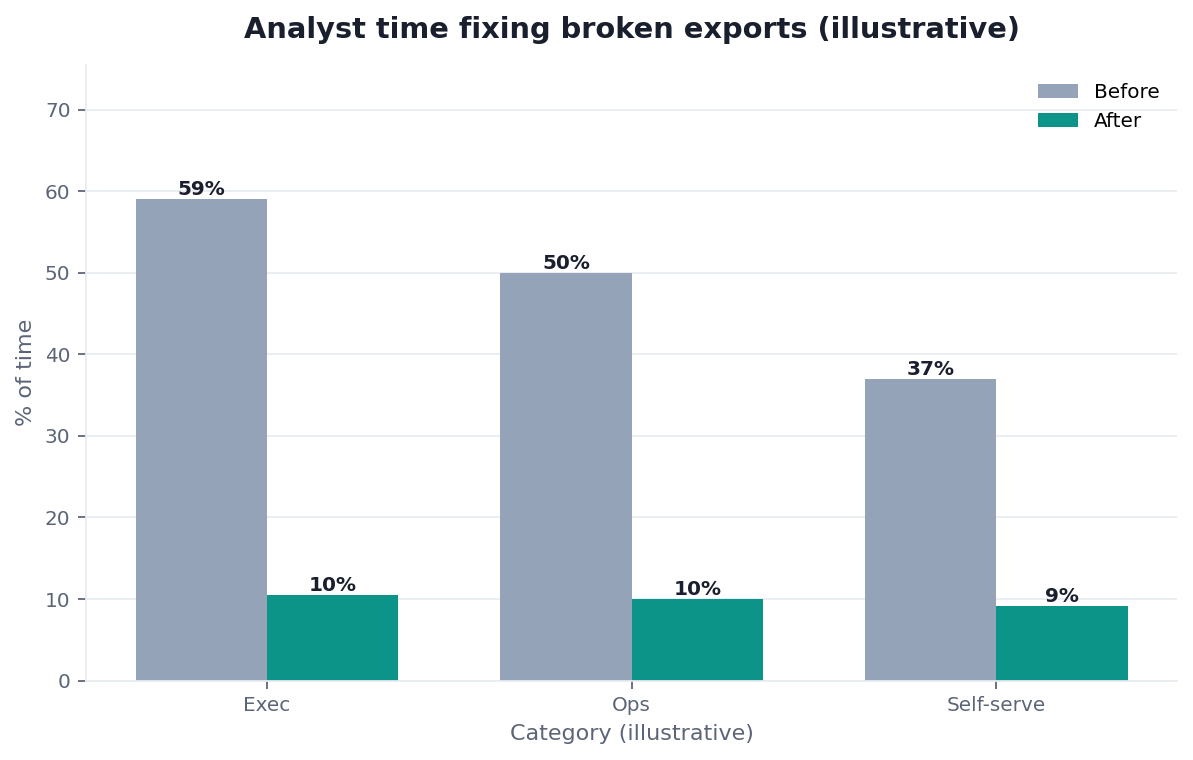
Practical example: a data engineer joined a team where analysts spent half their time fixing broken data exports. By building reliable pipelines with validation — using patterns like those at NIST AI Risk Management Framework — the analysts got their time back. Reliable infrastructure, not more analysts, unlocked the productivity.
Scope note: This guide reflects patterns we see when mid-market and enterprise teams work with the data engineer role in 2026. It is not a substitute for legal counsel, vendor runbooks, or a formal survey of every industry — and when a smaller toolset or lighter process would serve, a full program is overkill.
What It Is
Implementation details are commonly grounded in Google BigQuery documentation when teams translate concepts into production practice.
At its core, a data engineer builds the plumbing of a data organization: the pipelines, storage, and quality checks that turn raw, scattered data into something analysts and models can trust.
Key Definition: a data engineer is a professional who designs, builds, and maintains the systems that ingest, store, transform, and serve data reliably — pipelines, warehouses, and quality controls — so that analysts, scientists, and applications can depend on the data they use.
The distinction that matters is that an engineer here is judged on reliability, not novelty. Analysts and scientists produce insights; the engineer produces the dependable foundation those insights stand on. When the data is trustworthy and available, the engineer has succeeded, even though the work is largely invisible when it goes well.
What the Work Involves
Governance and risk expectations are framed by UK NCSC AI development guidelines when programs need an external control reference.
The day-to-day work of a data engineer revolves around building and maintaining reliable data systems, and it is more varied than the title suggests.
Building and maintaining pipelines
Much of a data engineer's time goes to building pipelines that move and transform data, and then keeping them running as sources and requirements change. Enterprise adoption patterns from ISO/IEC 42001 AI management show why maintenance — not just building — dominates the role, because a pipeline is only valuable if it keeps working.
Modeling and quality
A data engineer also shapes data into models analysts can use and builds the quality checks that catch problems before they reach a dashboard. The reliability framing in Wikipedia business intelligence overview shows why these quality controls are central: an engineer who ships fast but unreliable data has not done the job.
The Skills That Matter
Implementation details are commonly grounded in Stripe documentation when teams translate concepts into production practice.
The skills that make a strong data engineer cluster around reliability and systems thinking rather than any single tool. SQL and a programming language like Python are table stakes; the deeper skill is designing systems that stay reliable under change.
Beyond the technical, a good engineer understands the business enough to model data usefully and communicates well enough to partner with analysts and stakeholders. This is where the role connects to data engineer vs data scientist: the engineer's distinctive value is dependable infrastructure, not modeling insight, and the best engineers pair technical depth with the judgment to build what the business actually needs rather than the most sophisticated system possible.
How the Role Is Changing
Governance and risk expectations are framed by OECD AI policy observatory when programs need an external control reference.
The data engineer role is changing faster in 2026 than at any point in its short history. The shift is away from writing endless bespoke pipelines and toward designing reliable, governed data access — partly because AI-native tools now handle work that once filled the week.
This does not diminish the role; it elevates it toward architecture and governance. As routine pipeline plumbing is increasingly automated or made unnecessary by federation, the engineer's value moves up the stack to designing trustworthy, well-governed systems and deciding what data access should look like. The engineers who thrive are those who embrace this shift rather than clinging to hand-building every hop.
Where the Role Sits in the Org
Understanding the role means understanding where it sits. In most organizations, the engineer stands between the source systems that generate data — applications, databases, third-party services — and the people who consume it. That position is what makes the work both foundational and easy to overlook: everything upstream feeds them, and everything downstream depends on them, yet the role rarely gets the visibility that analysis and modeling attract.
Reporting lines vary widely. Some engineers sit within a central data platform team that serves the whole company; others are embedded in a specific product or business unit, close to the questions their data must answer. Neither structure is inherently better, but the choice shapes the work profoundly. A central team builds shared, reusable infrastructure and enforces consistent standards across the organization, while an embedded engineer moves faster on local needs but risks duplicating effort that a neighboring team has already solved.
The relationship with stakeholders is where the role's soft skills earn their keep. An engineer who only takes orders builds exactly what is requested, which is often not what is needed; one who asks why the data is wanted, how it will be used, and how fresh it must be builds something far more useful. The strongest practitioners treat requirements as a conversation, pushing back on requests that would create fragile or redundant systems and proposing simpler alternatives that meet the real goal. This consultative posture, more than any tool, is what separates a plumber of data from an architect of it, and it is increasingly the part of the job that cannot be automated away.
Career progression follows this arc. Junior practitioners focus on building and fixing individual pipelines; senior ones design systems, set standards, and make the architectural calls that determine whether a platform stays reliable as it grows. The trajectory rewards those who learn to think in systems and trade-offs rather than in individual scripts, and who can explain those trade-offs to non-technical partners in language that earns trust.
Common Myths
The myths about the data engineer role are consistent. That it is just writing ETL scripts undersells the systems thinking and reliability engineering the job demands. That it is a stepping stone to data science misunderstands it as a distinct, valuable discipline. And that more tools make a better engineer confuses tooling with judgment.
A subtler myth is that an engineer's success is measured by how much they build. In reality, the best engineers often build less — choosing reliable, simple solutions and, increasingly, federation that avoids building pipelines at all. We judge the role by the reliability and usability of the data it delivers, not by the volume of code it produces, because a lean system that never breaks beats a sprawling one that does.
The Role in the Age of AI
AI is reshaping the data engineer role more than any tool before it. AI-native platforms can read across sources directly, reducing the custom pipelines that once dominated the job, and can even help generate the pipeline code that remains. The role shifts toward designing and governing data access rather than hand-building every flow.
This is the shift we describe in what AI-native data analysis means. In the InfiniSynapse web app, zero-config federation lets analysis happen across sources without a pipeline for each, so the modern data engineer spends less time on brittle plumbing and more on the architecture and governance that make data trustworthy at scale.
Desk note (illustrative, February 2026 pipeline review; not a customer SLA). An agent drafted impact notes for three proposed schema migrations; engineers spent the time validating dependency graphs, not writing boilerplate. Generated SQL was usable only when it shipped with explicit rollback notes and test queries. Changes that touched finance tables required a controller-notification gate, not hope. Track lineage-suggestion false positives weekly. Trial the role on documentation and impact analysis before unattended DDL, and measure hours saved on migration packets—not the count of auto-generated statements.
Readiness Scorecard
Assess a data engineering practice (1 point each):
| Check | Pass? |
|---|---|
| Pipelines are reliable and monitored | |
| Data quality is validated | |
| Storage scales with need | |
| Data is modeled for analysis | |
| Systems fail loudly and recover | |
| Engineers understand the business | |
| The role focuses on architecture, not just scripts | |
| The data delivered is trustworthy for AI |
6–8: strong practice. 3–5: invest in reliability and modeling. Below 3: focus on dependable pipelines first.
Common Misconceptions
Misconception 1: It is just writing ETL. A data engineer does reliability and systems engineering, not just scripts.
Misconception 2: It is a path to data science. It is a distinct, valuable discipline in its own right.
Misconception 3: More tools make a better engineer. Judgment beats tooling.
Misconception 4: Success means building more. The best engineers often build less and more reliably.
Frequently Asked Questions
What does a data engineer do?
A data engineer designs, builds, and maintains the systems that ingest, store, transform, and serve data reliably — pipelines, warehouses, and quality controls — so analysts, scientists, and applications can depend on the data they use. The role is judged on reliability rather than novelty: when data is trustworthy and available, the engineer has succeeded, even though the work is largely invisible when it goes well.
What skills does the role require?
SQL and a programming language like Python are table stakes, but the deeper skills are designing systems that stay reliable under change and thinking about data at a systems level. A strong data engineer also understands the business well enough to model data usefully and communicates well enough to partner with analysts and stakeholders, pairing technical depth with judgment about what to build.
How is the role different from data science?
A data engineer builds the dependable infrastructure — pipelines, storage, quality — that data scientists and analysts rely on, while a data scientist focuses on modeling and extracting insight from data. The engineer's distinctive value is trustworthy, available data; the scientist's is analytical insight. They are complementary disciplines, not a hierarchy, and each requires a distinct skill set.
How is the role changing?
It is shifting away from writing endless bespoke pipelines toward designing reliable, governed data access, partly because AI-native tools now handle work that once filled the week. This elevates the role toward architecture and governance rather than diminishing it: as routine plumbing is automated or made unnecessary by federation, the engineer's value moves up the stack to designing trustworthy, well-governed systems.
How is AI reshaping the field?
AI-native platforms can read across sources directly, reducing the custom pipelines that once dominated the job, and can help generate the pipeline code that remains. The role shifts toward designing and governing data access rather than hand-building every flow, so the modern data engineer spends less time on brittle plumbing and more on the architecture and governance that make data trustworthy at scale.
Conclusion
A data engineer builds the reliable foundation that trustworthy analysis and AI depend on — and in 2026 the role is shifting from hand-building pipelines toward designing governed, dependable data access. The engineers who thrive embrace reliability, systems thinking, and the AI-native tools that let them build less brittle plumbing and more durable architecture.
To see how AI-native federation is reshaping data engineering, read what AI-native data analysis means and try the InfiniSynapse web app free on registration.