SQL Data Analytics: A Practical Guide (2026)
By the InfiniSynapse Data Team · Last updated: 2026-07-15 · We build an AI-native data analysis platform and write SQL against real warehouses daily; this guide covers SQL data analytics in 2026 in practical terms, not as a syntax tutorial.
Table of Contents
- TL;DR
- How We Approach It
- What It Is
- Why SQL Endures
- How It Is Used
- What Good Practice Looks Like
- Where It Came From
- Common Pitfalls
- The Skill in the Age of AI
- Readiness Scorecard
- Common Misconceptions
- Frequently Asked Questions
- Conclusion
TL;DR
Direct answer: SQL data analytics is the practice of using SQL — the standard query language for relational data — to extract, aggregate, and analyze data stored in databases and warehouses. In 2026, SQL data analytics remains the backbone of most analytical work because SQL is precise, universal, and unmatched for structured data, and even as AI writes more queries, understanding SQL is what lets you trust the answers.
Who this is for: analysts and engineers practicing SQL data analytics in 2026.
What you'll learn: what it is, why SQL endures, how it is used, what good practice looks like, and how AI relates.
This guide sits under the data visualization hub.
For the wider field, see what is data analytics.
Also see data analytics tools.
How We Approach It
Teams evaluating this topic often cross-check Stanford HAI AI Index for a durable, vendor-neutral reference point.
We treat SQL data analytics as a durable core skill, judging it by how reliably it turns structured data into answers. Every point reflects real practice. We anchor concepts to the EU AI Act overview and weigh patterns against the reference guidance at Python documentation.
The table below frames SQL data analytics.
| Aspect | What it offers |
|---|---|
| Language | Standard, declarative |
| Data | Structured, relational |
| Strength | Precise aggregation |
| Reach | Nearly universal |
| Watch-out | Correctness of joins and grain |
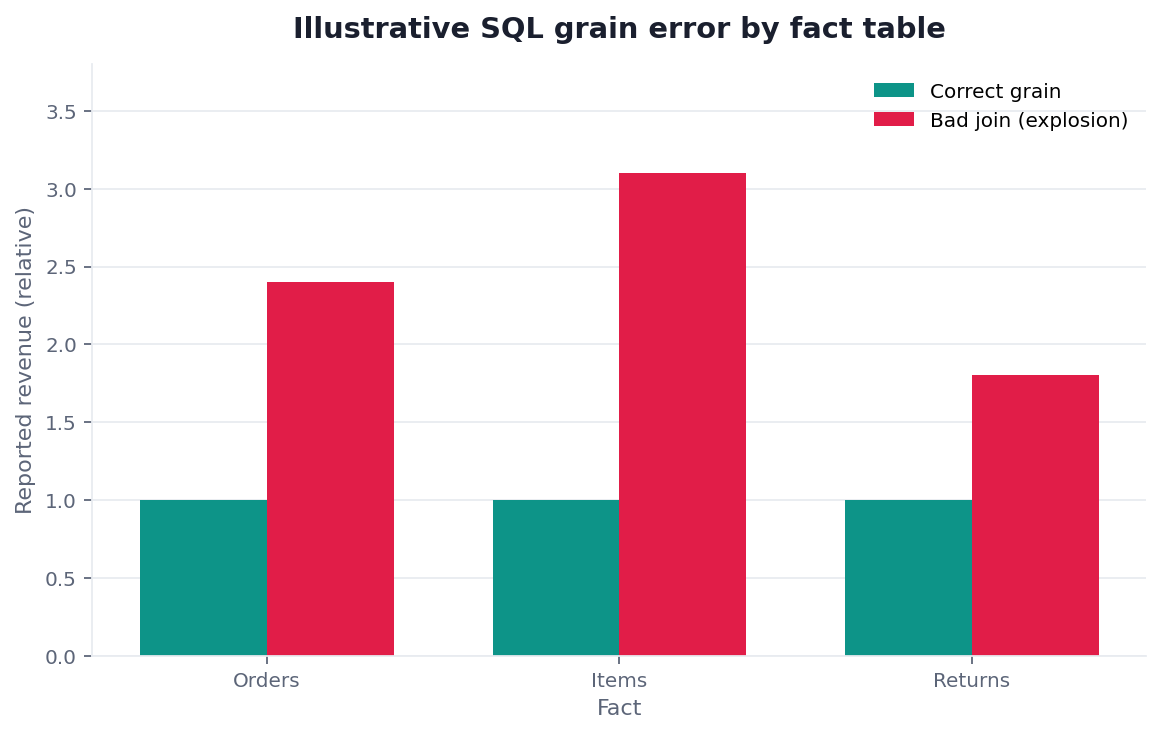
Practical example: an analyst doing SQL data analytics caught a doubled revenue figure by noticing a join had multiplied rows — the kind of grain error the guidance at PostgreSQL documentation warns about — before it reached a report.
Scope note: This guide reflects patterns we see when mid-market and enterprise teams work with SQL data analytics in 2026. It is not a substitute for legal counsel, vendor runbooks, or a formal survey of every industry — and when a smaller toolset or lighter process would serve, a full program is overkill.
What It Is
At its core, SQL data analytics is using Structured Query Language to ask questions of data held in relational databases and warehouses — selecting, filtering, joining, and aggregating rows to produce the numbers an analysis needs.
Key Definition: SQL data analytics is the practice of using SQL, the standard declarative language for relational data, to query, aggregate, and transform structured data in databases and data warehouses, producing the summaries, comparisons, and metrics that underpin analysis and reporting.
The essence of SQL data analytics is precise, declarative questioning. You describe what you want — totals by region, month-over-month change, customers meeting a condition — and the database figures out how to compute it, which makes SQL both approachable and powerful for structured data.
Why SQL Endures
Teams evaluating this topic often cross-check Prometheus documentation for a durable, vendor-neutral reference point.
SQL data analytics endures because SQL is standard, expressive, and nearly universal. Almost every database and warehouse speaks it, decades of tooling assume it, and its declarative style maps naturally onto analytical questions.
The staying power of SQL data analytics also comes from precision, as the reference guidance at OWASP Top 10 for LLM Applications reflects. SQL forces you to be explicit about what you are aggregating and how, which surfaces the assumptions behind a number. That explicitness is exactly why it remains the trusted layer beneath dashboards and models: the visual on top may change, but the SQL defining the metric is where correctness is actually established.
How It Is Used
SQL data analytics shows up everywhere structured data is analyzed: pulling metrics for dashboards, exploring data to answer ad-hoc questions, defining transformations in pipelines, and validating the numbers other tools display.
In practice, SQL data analytics is often the layer beneath more visible tools. A BI dashboard runs SQL underneath; a data pipeline is largely SQL transformations; an AI analysis agent typically generates SQL to answer a question. Understanding it therefore pays off even for people who spend most of their time in higher-level tools, because SQL is where the actual computation of most metrics happens.
What Good Practice Looks Like
Implementation details are commonly grounded in Google Cloud AI overview when teams translate concepts into production practice.
Good SQL data analytics is defined by correctness first, then clarity. Getting joins and grain right so rows are not silently duplicated or dropped matters more than clever syntax, and writing readable, well-named queries makes them reviewable and reusable.
The discipline of SQL data analytics is to treat queries as things others will read and trust, aligned with the clarity that guidance like the ClickHouse documentation encourages for the outputs they feed. Consistent naming, comments on non-obvious logic, and validation against known totals turn SQL from a private scratchpad into a dependable source of truth. Correct, clear SQL is the foundation everything downstream relies on.
Where It Came From
SQL data analytics traces back to the relational database revolution of the 1970s and 1980s, when SQL emerged as a standard way to query data organized into tables. Its declarative design — say what you want, not how to get it — proved so effective that it became the lingua franca of structured data.
Understanding this history clarifies why SQL endures: it was designed around exactly the operations analysis needs, filtering, joining, and aggregating, and standardization meant the skill transferred across systems. It also explains why, despite waves of new tools, SQL keeps reasserting itself. Each generation of higher-level tooling ends up generating SQL underneath, because the relational model and its query language remain the most reliable way to compute precise answers from structured data.
Common Pitfalls
Governance and risk expectations are framed by OECD AI policy observatory when programs need an external control reference.
The pitfalls of SQL data analytics center on correctness that looks fine but is not. A join at the wrong grain can silently multiply or drop rows, producing a plausible number that is simply wrong, and no amount of visualization polish will reveal the error.
A subtler pitfall with SQL data analytics is trusting a query because it runs, without validating its logic. SQL fails loudly on syntax but silently on meaning — a query can execute perfectly and still answer the wrong question. A further trap is inconsistent metric definitions scattered across many queries, so the same "revenue" is computed differently in different places. Rigor — checking grain, validating totals, and centralizing definitions — is what separates SQL that informs from SQL that quietly misleads.
A final pitfall is treating a working query as a finished artifact rather than something that must stay correct as the data evolves. A query written against last quarter's schema can break quietly when a column is renamed, a category is added, or a source system changes how it records a value, and because SQL rarely errors on these shifts, the wrong answer simply keeps flowing into reports. The teams that avoid this build small guardrails around their most important queries: row-count checks, totals that should reconcile to a known figure, and definitions stored once and reused rather than retyped. That discipline turns SQL from a collection of one-off questions into a dependable analytical layer that can be trusted without re-verifying every number by hand each time it is run.
The Skill in the Age of AI
AI is reshaping SQL data analytics by generating queries from natural-language questions, so people who cannot write SQL can still get answers from structured data.
We explore this in what AI-native data analysis means. In the InfiniSynapse web app, an agent translates a question into SQL, runs it across your sources, and returns the answer — yet SQL data analytics literacy stays valuable, because reading and checking the generated query is what lets you trust the result rather than taking a confident-looking number on faith.
Readiness Scorecard
Teams evaluating this topic often cross-check Tableau Desktop documentation for a durable, vendor-neutral reference point.
Assess your SQL analytics practice (1 point each):
| Check | Pass? |
|---|---|
| Joins and grain are verified | |
| Totals are validated | |
| Queries are readable | |
| Definitions are centralized | |
| Logic, not just syntax, is checked | |
| SQL underpins trusted metrics | |
| Generated SQL is reviewed | |
| An AI-native option is used well |
6–8: a rigorous practice. 3–5: tighten correctness. Below 3: rebuild around grain and validation.
Common Misconceptions
Misconception 1: If a query runs, it is correct. It can run and answer the wrong question.
Misconception 2: SQL is outdated. It underpins most modern analytics.
Misconception 3: AI makes SQL literacy unnecessary. Checking generated SQL still needs it.
Misconception 4: Syntax is the hard part. Grain and logic are where errors hide.
Frequently Asked Questions
What is SQL data analytics?
It is the practice of using SQL — the standard declarative language for relational data — to query, aggregate, and transform structured data in databases and data warehouses, producing the summaries, comparisons, and metrics that underpin analysis and reporting. Its essence is precise, declarative questioning: you describe what you want, such as totals by region or month-over-month change, and the database determines how to compute it. That combination of precision and approachability is why it remains the workhorse of analytical work against structured data.
Why does SQL endure?
Because it is standard, expressive, and nearly universal: almost every database and warehouse speaks it, decades of tooling assume it, and its declarative style maps naturally onto analytical questions. Its precision matters just as much — SQL forces you to be explicit about what you are aggregating and how, surfacing the assumptions behind a number. That explicitness is why it remains the trusted layer beneath dashboards and models; the visual on top may change, but the SQL defining a metric is where correctness is actually established and verified.
How is it used in practice?
It appears everywhere structured data is analyzed: pulling metrics for dashboards, exploring data to answer ad-hoc questions, defining transformations in pipelines, and validating the numbers other tools display. Often it is the invisible layer beneath more visible tools — a BI dashboard runs SQL underneath, a pipeline is largely SQL transformations, and an AI analysis agent typically generates SQL to answer a question. Understanding it pays off even for people who work mostly in higher-level tools, because SQL is where the actual computation of most metrics happens.
What does good practice look like?
Correctness first, then clarity. Getting joins and grain right, so rows are neither silently duplicated nor dropped, matters more than clever syntax, and writing readable, well-named queries makes them reviewable and reusable. Treat queries as things others will read and trust: use consistent naming, comment non-obvious logic, and validate results against known totals. That discipline turns SQL from a private scratchpad into a dependable source of truth, and since so much downstream work rests on it, correct and clear SQL is the foundation everything else relies upon.
How is AI changing SQL data analytics?
AI is generating queries from natural-language questions, so people who cannot write SQL can still get answers from structured data. An AI-native platform translates a question into SQL, runs it across your sources, and returns the answer. But literacy stays valuable, because reading and checking the generated query is what lets you trust the result rather than accepting a confident-looking number on faith. The most effective users treat AI as a fast drafter of SQL whose output they can still read, verify, and correct when the machine misunderstands the question.
Should beginners still learn SQL in 2026?
Yes. Even with AI writing queries, SQL is the clearest window into how structured data actually works — how tables relate, how aggregation changes meaning, and where errors creep in. Learning it builds the mental model needed to ask good questions and to judge whether an answer, human- or machine-generated, is trustworthy. It is also a remarkably durable skill: the syntax has changed little in decades and transfers across nearly every database. For anyone serious about working with data, SQL remains one of the highest-return skills to acquire, and AI assistance makes it easier to learn, not less necessary.
In practice, teams evaluating sql data analytics should judge outcomes by reliability and clarity, not by tool count alone.
Conclusion
SQL data analytics is the precise, durable core of analytical work on structured data — and even as AI writes more queries, understanding SQL is what lets you trust the answers. In 2026, prioritize correct joins and grain, centralize definitions, and treat generated SQL as something to read and verify rather than accept blindly.
Then try asking questions that become checked SQL in the InfiniSynapse web app, free on registration.