Data Lineage Tracking: A Practical 2026 Guide
By the InfiniSynapse Data Team · Last updated: 2026-07-15 · We build an AI-native data analysis platform and rely on lineage every day to debug and trust numbers; this guide reflects how data lineage tracking actually works in 2026, not a diagram.
Table of Contents
- TL;DR
- How We Approached This
- What It Is
- How It Works
- How to Implement It
- What It Is Used For
- Common Pitfalls
- Lineage in the Age of AI
- Readiness Scorecard
- Common Misconceptions
- Frequently Asked Questions
- Conclusion
TL;DR
Direct answer: data lineage tracking is the practice of recording how data flows and transforms from its source to every report and model that uses it. In 2026, data lineage tracking matters because it answers "where did this number come from?" in seconds, and because AI agents producing answers need traceable provenance to be auditable.
Who this is for: data engineers, analysts, and leaders implementing data lineage tracking in 2026.
What you'll learn: what lineage is, how tracking works, how to implement it, what it is used for, and why it matters for trustworthy AI.
This guide sits under the master data management hub.
For the underlying concept, see data lineage.
Also see data catalog platforms.
How We Approached This
Teams evaluating this topic often cross-check MongoDB documentation for a durable, vendor-neutral reference point.
We built this guide from debugging and audit work rather than theory. Every recommendation reflects what we see when teams operationalize data lineage tracking in 2026. We anchor concepts to the Wikipedia ETL overview and align provenance expectations with the Databricks documentation, which treats traceable data provenance as foundational for AI accountability.
The table below maps what data lineage tracking captures.
| Element | What it records |
|---|---|
| Source | Where data originated |
| Transformations | How it changed |
| Destinations | Where it flows |
| Ownership | Who is responsible |
| Timing | When it moved |
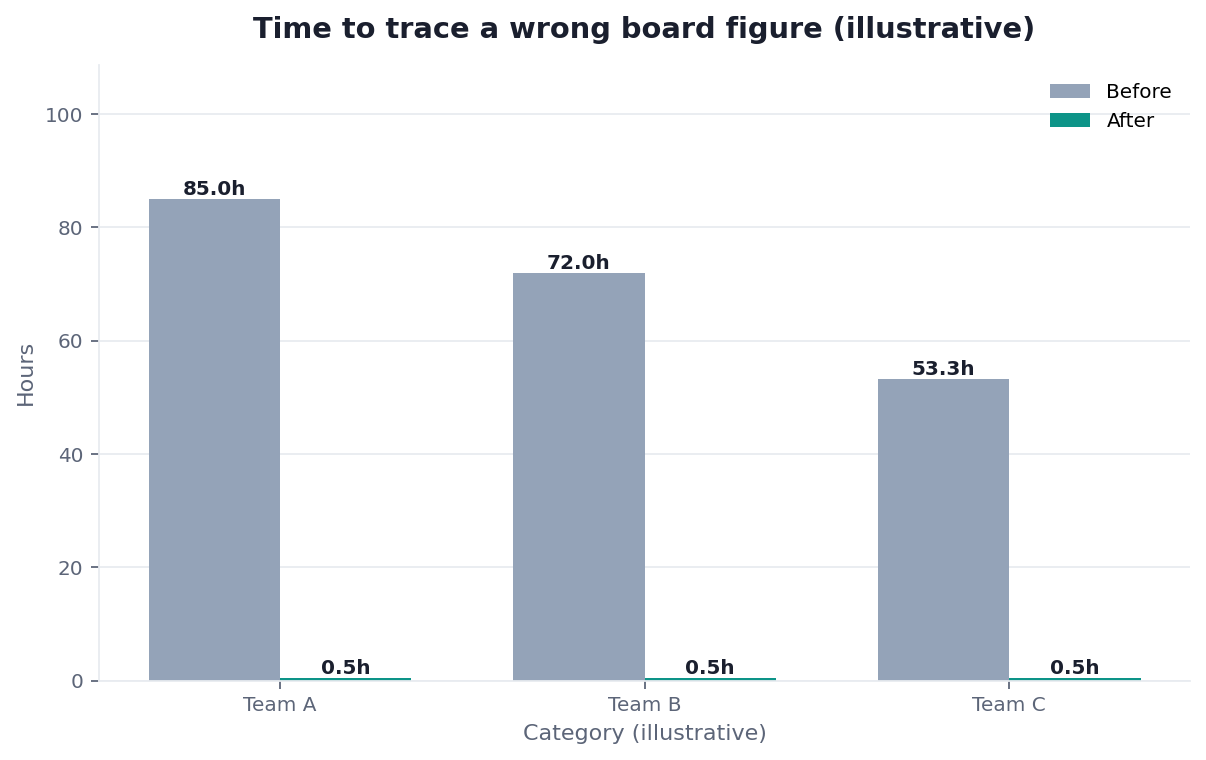
Practical example: a finance team without data lineage tracking spent three days tracing a wrong figure across systems. After adopting lineage capture — using the column-level tracking patterns documented at Redis documentation — the same trace took minutes. Speed of root-cause analysis is the value lineage delivers first.
Scope note: This guide reflects patterns we see when mid-market and enterprise teams work with data lineage tracking in 2026. It is not a substitute for legal counsel, vendor runbooks, or a formal survey of every industry — and when a smaller toolset or lighter process would serve, a full program is overkill.
What It Is
At its core, data lineage tracking is a map of data's journey: from where it originated, through every transformation, to every place it is used. It makes the invisible path of data visible.
Key Definition: data lineage tracking is the practice of automatically recording and visualizing how data moves and transforms across systems — from source through pipelines to reports and models — so its full provenance can be traced, audited, and trusted.
The distinction that matters is between manual documentation and automated data lineage tracking. Hand-drawn diagrams drift out of date the moment a pipeline changes; automated tracking captures lineage as data actually moves, so the map stays accurate. That currency is what makes lineage trustworthy rather than aspirational.
How It Works
Teams evaluating this topic often cross-check PostgreSQL documentation for a durable, vendor-neutral reference point.
Modern data lineage tracking works by capturing metadata as data flows: parsing SQL and pipeline code, observing transformations, and recording the connections between inputs and outputs. The best implementations do this automatically, at the column level, so you can trace a single field's history.
This automation is what separates useful data lineage tracking from documentation. The architecture patterns at BIRD NL2SQL benchmark show how lineage metadata can be captured within the pipeline itself rather than reconstructed afterward, and enterprise adoption patterns from Kubernetes documentation illustrate why automatic capture is now the default expectation. Manual lineage does not scale past a handful of pipelines.
How to Implement It
Implementing data lineage tracking succeeds when it starts where the pain is greatest — usually the pipelines feeding your most critical reports. Rather than instrumenting everything at once, capture lineage for the data whose errors are most costly first.
This connects data lineage tracking to your data catalog platforms, because lineage typically lives in and enriches the catalog. Choose an approach that captures lineage automatically from the systems you already run, so it stays current without manual effort. Start narrow, prove the value of fast root-cause analysis, and expand — the same incremental pattern that makes any governance capability durable.
What It Is Used For
Governance and risk expectations are framed by FTC consumer protection guidance when programs need an external control reference.
Data lineage tracking earns its keep in several ways. The first is debugging: when a number looks wrong, lineage traces it to its source in minutes. The second is impact analysis: before changing a source, lineage shows every downstream report that will be affected. The third is audit and compliance: lineage proves where regulated data came from and where it went.
The fourth, increasingly important, use of data lineage tracking is trust. When stakeholders can see the full provenance of a number, they trust it, and analysts spend less time defending their figures and more time acting on them. This is why we treat lineage as a foundation for a trustworthy data culture, not just an engineering convenience. In organizations where numbers are routinely challenged in meetings, a transparent provenance trail often does more to restore confidence than any amount of additional quality checking, because it lets anyone verify the chain for themselves rather than take the analyst's word for it.
Common Pitfalls
The pitfalls we see in data lineage tracking are consistent. Relying on manual documentation produces lineage that is wrong the moment pipelines change. Capturing only table-level lineage misses the column-level detail that makes debugging fast. Instrumenting everything at once overwhelms teams before value is proven.
A subtler pitfall is capturing lineage but never using it. Data lineage tracking only pays off when it is wired into the workflows where people debug, plan changes, and answer audits, so lineage that sits in a tool nobody opens delivers nothing. The value is in the answer it provides to a real question, not in the map it draws on a screen.
Table-Level Versus Column-Level
Core definitions remain usefully summarized in Wikipedia conceptual data model overview for shared vocabulary across stakeholders.
Not all lineage is equally useful, and the difference between table-level and column-level capture decides how much time you actually save. Table-level lineage tells you that a report draws from a given table; column-level lineage tells you that a specific figure derives from a specific field after a specific transformation.
Why column-level matters
Most real debugging questions are column-level. When a revenue number looks wrong, you do not need to know which tables were involved — you need to know which upstream field and which transformation produced the specific value. Table-level data lineage tracking narrows the search; column-level ends it. That precision is what turns a multi-day investigation into a five-minute one.
The cost trade-off
Column-level capture is more expensive to compute and store, so some teams start table-level and deepen only where debugging pain is highest. That is a reasonable sequence, provided you are honest that table-level lineage answers "which systems are involved" rather than "which value is wrong." For your most critical financial and regulatory data, column-level detail almost always justifies its cost.
Lineage and Governance
Lineage does not live in isolation; it is one of the most valuable feeds into a governance and catalog program. When lineage is attached to catalog entries, a steward can see not just what a dataset means but where it came from and what depends on it, which makes ownership decisions and access reviews far more grounded.
This is why data lineage tracking and cataloging are usually adopted together: lineage without a catalog is a graph with no context, and a catalog without lineage cannot answer the provenance questions that build trust. Treat them as two halves of the same capability, and the whole becomes far more useful than either part alone.
Lineage also changes how change management works. Before a team alters a source schema, retires a table, or refactors a transformation, lineage shows exactly which reports, dashboards, and models will feel the effect. That turns a nerve-wracking guess into a reviewable list, so changes ship faster and break fewer things downstream. Teams that adopt lineage frequently report that its biggest payoff is not debugging past incidents but preventing future ones, because engineers can finally see the blast radius of a change before they make it rather than discovering it from an angry stakeholder afterward.
Lineage in the Age of AI
Implementation details are commonly grounded in Apache Kafka documentation when teams translate concepts into production practice.
AI sharply raises the value of data lineage tracking. When an autonomous agent produces an answer, you need to know what data it used and where that data came from to trust and audit the result; without lineage, an AI answer is a black box. Traceable provenance becomes a prerequisite for accountable automated analysis.
An AI-native platform helps by binding governed definitions and lineage to the data an agent queries, an approach we describe in what AI-native data analysis means. In the InfiniSynapse web app, the agent's process is transparent and its data traceable, so data lineage tracking directly supports the auditability of AI answers rather than leaving them unexplained.
Readiness Scorecard
Assess your data lineage tracking maturity (1 point each):
| Check | Pass? |
|---|---|
| Lineage is captured automatically | |
| It covers column-level detail | |
| It stays current as pipelines change | |
| It lives in your catalog | |
| It is used for debugging | |
| It supports impact analysis | |
| It proves provenance for audits | |
| It supports AI auditability |
6–8: strong. 3–5: automate capture. Below 3: start with your most critical pipelines.
Common Misconceptions
Misconception 1: Lineage is a diagram. Data lineage tracking is automated and always current, not a static drawing.
Misconception 2: Table-level is enough. Column-level detail is what makes debugging fast.
Misconception 3: Capture it once. Lineage must be captured continuously as pipelines change.
Misconception 4: It is only for engineers. Analysts, auditors, and AI all rely on it.
Frequently Asked Questions
What is data lineage tracking?
Data lineage tracking is the practice of automatically recording and visualizing how data moves and transforms across systems — from source through pipelines to reports and models — so its full provenance can be traced, audited, and trusted. Unlike hand-drawn diagrams, automated tracking captures lineage as data actually moves, keeping the map accurate as pipelines change.
How does it work?
It works by capturing metadata as data flows: parsing SQL and pipeline code, observing transformations, and recording the connections between inputs and outputs, ideally at the column level. The best implementations capture lineage automatically within the pipeline rather than reconstructing it afterward, because manual lineage does not scale past a handful of pipelines.
How do you implement it?
Start where the pain is greatest — the pipelines feeding your most critical reports — rather than instrumenting everything at once. Choose an approach that captures lineage automatically from the systems you already run, store it in your data catalog, prove the value of fast root-cause analysis, and expand. The incremental pattern keeps the effort proportional to value.
What is it used for?
Four main uses: debugging (tracing a wrong number to its source in minutes), impact analysis (seeing every downstream report before changing a source), audit and compliance (proving where regulated data came from and went), and trust (letting stakeholders see full provenance so they believe the numbers). The trust benefit often matters most culturally.
Why does lineage matter for AI?
When an agent produces an answer, you need to know what data it used and where that data came from to trust and audit the result; without lineage, an AI answer is a black box. Traceable provenance is a prerequisite for accountable automated analysis, and a platform where the agent's data is traceable makes its answers auditable rather than unexplained.
Conclusion
Data lineage tracking maps data's journey from source to every use, answering "where did this come from?" in seconds and making numbers trustworthy. In 2026 it is a prerequisite for auditable AI. Capture it automatically, start with critical pipelines, and wire it into the workflows where people actually use it.
To see how traceable, governed data becomes auditable automated analysis, read what AI-native data analysis means and try the InfiniSynapse web app free on registration.