Data Lake Solutions by Use Case (2026)
By the InfiniSynapse Data Team · Last updated: 2026-07-15 · We build an AI-native data analysis platform and work across lake deployments; this guide organizes data lake solutions by use case for 2026, not by vendor ranking.
Table of Contents
- TL;DR
- How We Frame It
- What They Are
- The Building Blocks
- Matching Solution to Use Case
- Governance Is Part of the Solution
- Where the Market Came From
- Common Pitfalls
- Solutions in the Age of AI
- Readiness Scorecard
- Common Misconceptions
- Frequently Asked Questions
- Conclusion
TL;DR
Direct answer: data lake solutions are the combinations of storage, processing, and governance tools that let an organization store raw data of any type cheaply and turn it into usable analysis. In 2026, effective data lake solutions are assembled from building blocks — object storage, processing engines, catalog and governance layers — matched to a specific use case, because a lake is a stack of components, not a single product you buy.
Who this is for: architects and leaders evaluating data lake solutions in 2026.
What you'll learn: what they are, the building blocks, how to match them to use cases, why governance is part of the solution, and how AI relates.
This guide sits under the warehouse and lakehouse hub.
For design detail, see data lake architecture.
Also see the data lake.
How We Frame It
Core definitions remain usefully summarized in Wikipedia ETL overview for shared vocabulary across stakeholders.
We frame data lake solutions by use case and building block, because a lake is assembled, not purchased whole. Every point reflects real deployments. We anchor concepts to the Spider NL2SQL benchmark and weigh patterns against the reference architectures at Google SRE book.
The table below frames data lake solutions.
| Building block | Role |
|---|---|
| Object storage | Cheap raw storage |
| Processing engine | Transform and query |
| Catalog | Find and understand data |
| Governance | Access, lineage, quality |
| Serving layer | Deliver refined results |
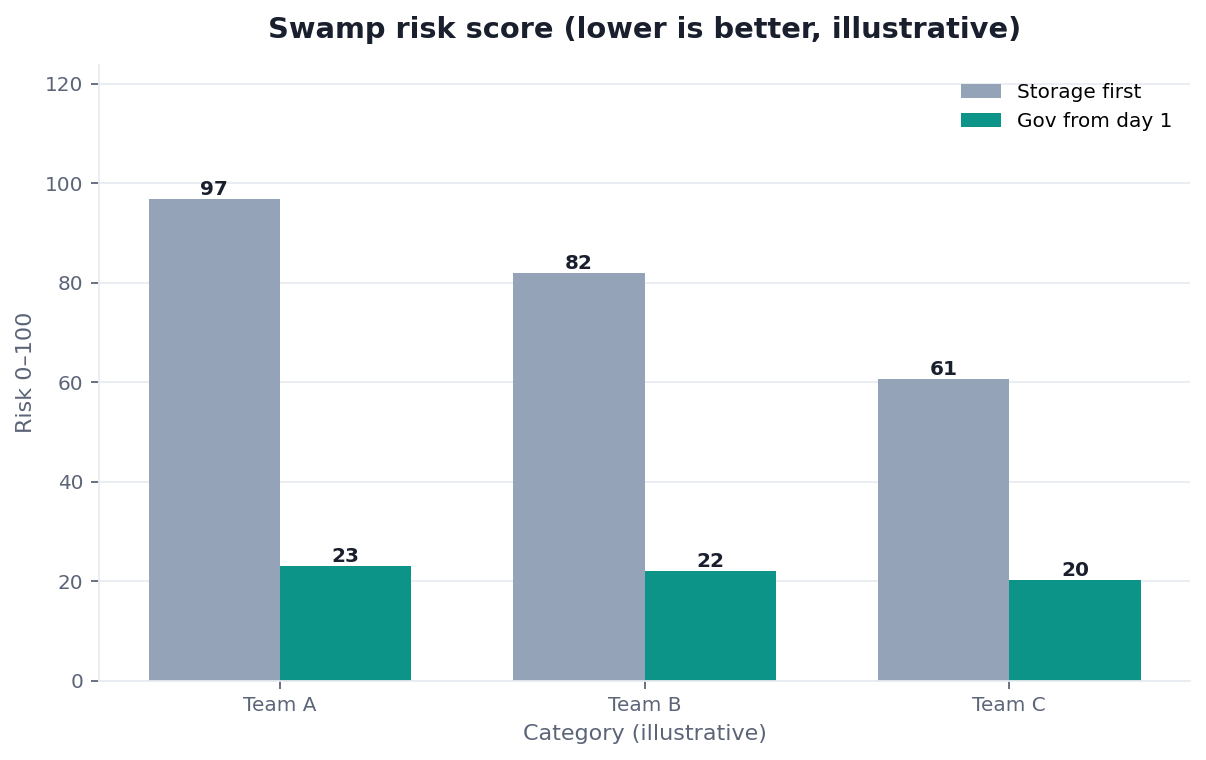
Practical example: a team assembling data lake solutions added a catalog and governance layer from the start, avoiding the swamp that the guidance at Google Cloud architecture framework on lakes warns forms without them.
Scope note: This guide reflects patterns we see when mid-market and enterprise teams work with data lake solutions in 2026. It is not a substitute for legal counsel, vendor runbooks, or a formal survey of every industry — and when a smaller toolset or lighter process would serve, a full program is overkill.
What They Are
Teams evaluating this topic often cross-check Anthropic research for a durable, vendor-neutral reference point.
At their core, data lake solutions are the assembled stacks that let an organization store raw data cheaply and make it usable — combining a storage layer, engines to process it, and tooling to catalog and govern it.
Key Definition: data lake solutions are the combinations of technologies — low-cost object storage, processing and query engines, catalog and metadata services, and governance controls — assembled to store raw data of any type at scale and turn it into trustworthy, usable analysis, rather than a single off-the-shelf product.
The essence of data lake solutions is composition. Unlike a warehouse you can largely buy as one platform, a lake is a set of components chosen and wired together, which is why "which solution" is really "which combination for which use case."
The Building Blocks
Governance and risk expectations are framed by EU AI Act overview when programs need an external control reference.
Data lake solutions are built from a few recurring blocks: object storage for cheap raw retention, processing engines to transform and query, a catalog to make data findable, governance for access and quality, and a serving layer to deliver refined results.
The way these blocks combine in data lake solutions varies by use case, as the patterns at ISO/IEC 27001 for lake and lakehouse stacks show. A machine-learning-focused lake emphasizes flexible access and processing; a reporting-oriented one leans harder on catalog and governance; a lakehouse adds table formats for reliability. The blocks are common; the emphasis shifts with what the organization actually needs to do with the data.
Matching Solution to Use Case
Teams evaluating this topic often cross-check Prometheus documentation for a durable, vendor-neutral reference point.
Choosing among data lake solutions means starting from the use case, not the tool. A lake feeding data science needs flexible processing and broad access; a lake feeding regulated reporting needs strong governance and lineage; a lake serving both needs the discipline of a lakehouse.
The skill in selecting data lake solutions is resisting the urge to buy a stack before knowing the workload. Define what data you have, who will use it, and how, then assemble the blocks to fit — the approach covered across the warehouse and lakehouse hub. A solution perfectly suited to one use case can be wrong for another, so the match, not the technology's prestige, determines whether the lake becomes an asset.
Governance Is Part of the Solution
Teams evaluating this topic often cross-check Elastic documentation for a durable, vendor-neutral reference point.
A crucial truth about data lake solutions is that governance is not an add-on but a core component. Without cataloging, access control, lineage, and quality, the cheapest and most powerful storage becomes an unusable swamp.
Treating governance as part of data lake solutions from day one, per the AWS Well-Architected Machine Learning Lens, is what separates a valuable lake from a costly one. The storage and processing blocks get the attention because they are visible, but the governance block determines whether anyone can trust and find what is stored. Any solution that omits it is incomplete, however impressive its performance numbers look.
Where the Market Came From
The market for data lake solutions grew because organizations needed to store exploding volumes of varied, often unstructured data that the warehouse model could not hold economically. Cheap cloud object storage made keeping everything affordable, and a surrounding ecosystem of processing and governance tools grew up to make that stored data usable.
Because no single vendor owned the whole stack, solutions became compositional — teams assembled storage, engines, catalogs, and governance from different sources. Understanding this history clarifies why data lake solutions are described as building blocks rather than products, and why governance tooling matters so much: the industry learned, often painfully, that cheap storage without discipline produces swamps, and the tools that make lakes trustworthy emerged directly in response to that lesson.
Common Pitfalls
The pitfalls of data lake solutions cluster around treating storage as the whole answer. Standing up object storage and dumping data in, without processing strategy or governance, produces a swamp that stores everything and serves nothing.
A subtler pitfall with data lake solutions is over-assembling — bolting on every fashionable component before knowing whether the use case needs it. Complexity has a cost in expertise and maintenance, and a lean stack matched to a real workload usually beats an elaborate one built for imagined needs. The goal is the smallest combination of blocks that turns your specific raw data into trustworthy analysis, not the most comprehensive platform on the market.
A further pitfall is neglecting the serving layer and stopping at storage and processing. It is easy to invest heavily in landing data and building pipelines, then leave the last mile — how refined results actually reach analysts, applications, or dashboards — as an afterthought. When that happens, the lake becomes a place where valuable work accumulates but never quite arrives in front of the people who need it, and the whole investment underdelivers despite being technically sound. Well-designed data lake solutions treat delivery as a first-class concern from the start: they decide early how processed data will be exposed, in what form, and to whom, so the effort spent storing and transforming data culminates in answers people can use rather than results stranded one step short of value.
Solutions in the Age of AI
AI changes what data lake solutions must deliver. Machine learning thrives on the raw, varied data a lake holds, so lakes stay central, but AI-native platforms change how the pieces connect for analysis.
We explore this in what AI-native data analysis means. In the InfiniSynapse web app, zero-config federation lets an agent analyze across a lake, a warehouse, and databases together without first consolidating them, so data lake solutions increasingly include federation as a component — querying across sources rather than moving everything into one stack.
Readiness Scorecard
Assess your lake solution (1 point each):
| Check | Pass? |
|---|---|
| The use case was defined first | |
| Storage suits the volume and cost | |
| Processing strategy exists | |
| A catalog makes data findable | |
| Governance is a built-in component | |
| The stack is lean, not over-assembled | |
| Serving needs are addressed | |
| Federation was considered |
6–8: a well-matched solution. 3–5: fill the gaps. Below 3: rebuild from the use case.
Common Misconceptions
Misconception 1: A lake is a single product. It is a stack of components.
Misconception 2: Storage is the whole solution. Governance makes it usable.
Misconception 3: More components is better. Lean, matched stacks win.
Misconception 4: Everything must be consolidated. Federation can query across sources.
Frequently Asked Questions
What are data lake solutions?
They are combinations of technologies — low-cost object storage, processing and query engines, catalog and metadata services, and governance controls — assembled to store raw data of any type at scale and turn it into trustworthy, usable analysis. Unlike a warehouse you can largely buy as one platform, a lake is a set of components chosen and wired together. So "which solution" is really "which combination for which use case," and the essence of the category is composition rather than a single off-the-shelf product.
What are the main building blocks?
The recurring blocks are object storage for cheap raw retention, processing engines to transform and query, a catalog to make data findable, governance for access and quality, and a serving layer to deliver refined results. How they combine varies by use case: a machine-learning lake emphasizes flexible access and processing, a reporting lake leans on catalog and governance, and a lakehouse adds table formats for reliability. The blocks are common; the emphasis shifts with what the organization actually needs to do with its data.
How do I match a solution to my use case?
Start from the use case, not the tool. Define what data you have, who will use it, and how, then assemble the blocks to fit. A science-oriented lake leans on flexible processing and broad access, a compliance-oriented one leans on strong governance and lineage, and a lake asked to do both needs the discipline a lakehouse provides. Resist buying a stack before knowing the workload, because a solution perfectly suited to one use case can be entirely wrong for another.
Why is governance part of the solution?
Because without cataloging, access control, lineage, and quality, even the cheapest and most powerful storage becomes an unusable swamp. Governance is not an add-on but a core component, and treating it as such from day one is what separates a valuable lake from a costly one. Storage and processing get attention because they are visible, but governance determines whether anyone can trust and find what is stored. Any solution that omits it is incomplete, however impressive its performance numbers.
How does AI relate to data lake solutions?
Because models learn from exactly the kind of large, varied, raw data a lake accumulates, lakes remain a natural foundation for AI work — yet AI-native platforms are shifting how the components link together to produce analysis. Federation lets an agent analyze across a lake, a warehouse, and databases together without first consolidating them, so solutions increasingly include federation as a component — querying across sources rather than moving everything into one stack. That reduces movement cost and lets each source stay governed in place while still being analyzed together.
Should I build my own stack or buy an integrated platform?
Both are valid, and the choice turns on your team's capacity and appetite for control. Assembling your own stack from best-of-breed components gives maximum flexibility and cost transparency, but demands the expertise to wire and operate storage, processing, catalog, and governance together. An integrated platform that bundles most of those blocks lowers the operational and integration burden at the cost of some flexibility and a tighter coupling to one vendor. Smaller teams and those without deep data-engineering staff usually benefit from an integrated option, while larger teams with specific needs and the skills to run them often prefer assembling their own. Either way, governance must be present — a bundled platform makes it easier to get, but never automatic.
Conclusion
Data lake solutions are assembled stacks — storage, processing, catalog, governance, serving — matched to a use case, not single products you buy. In 2026, define the use case first, treat governance as a built-in component, keep the stack lean, and remember AI-native federation increasingly belongs in the mix as a way to analyze across sources.