Data Analytics Platforms Compared (2026)
By the InfiniSynapse Data Team · Last updated: 2026-07-15 · We build an AI-native data analysis platform and evaluate analytics stacks regularly; this guide compares data analytics platforms in 2026 by capability and decision, not by brand ranking.
Table of Contents
- TL;DR
- How We Compare Them
- What They Are
- The Capabilities That Matter
- Integrated vs. Best-of-Breed
- Matching Platform to Need
- Where the Category Came From
- Common Pitfalls
- The Category in the Age of AI
- Readiness Scorecard
- Common Misconceptions
- Frequently Asked Questions
- Conclusion
TL;DR
Direct answer: data analytics platforms are integrated environments that combine data storage, preparation, analysis, and visualization so teams can work end to end in one place. In 2026, choosing among data analytics platforms is a trade-off between the convenience of an integrated suite and the flexibility of best-of-breed tools, decided by your scale, existing stack, and how much you value one governed environment over specialized components.
Who this is for: architects and leaders comparing data analytics platforms in 2026.
What you'll learn: what they are, the capabilities that matter, integrated vs best-of-breed, how to match to need, and how AI relates.
This guide sits under the data visualization hub.
For the singular concept, see what a data analytics platform is.
Also see data analytics tools.
How We Compare Them
Governance and risk expectations are framed by ISO/IEC 27001 when programs need an external control reference.
We compare data analytics platforms by capability and integration model, because the real decision is how much to consolidate. Every point reflects real evaluations. We anchor concepts to the Microsoft data architecture guidance and weigh architecture against the reference guidance at Wikipedia conceptual data model overview.
The table below frames data analytics platforms.
| Capability | Role |
|---|---|
| Storage | Hold the data |
| Preparation | Clean and shape |
| Analysis | Query and model |
| Visualization | Communicate |
| Governance | Access and definitions |
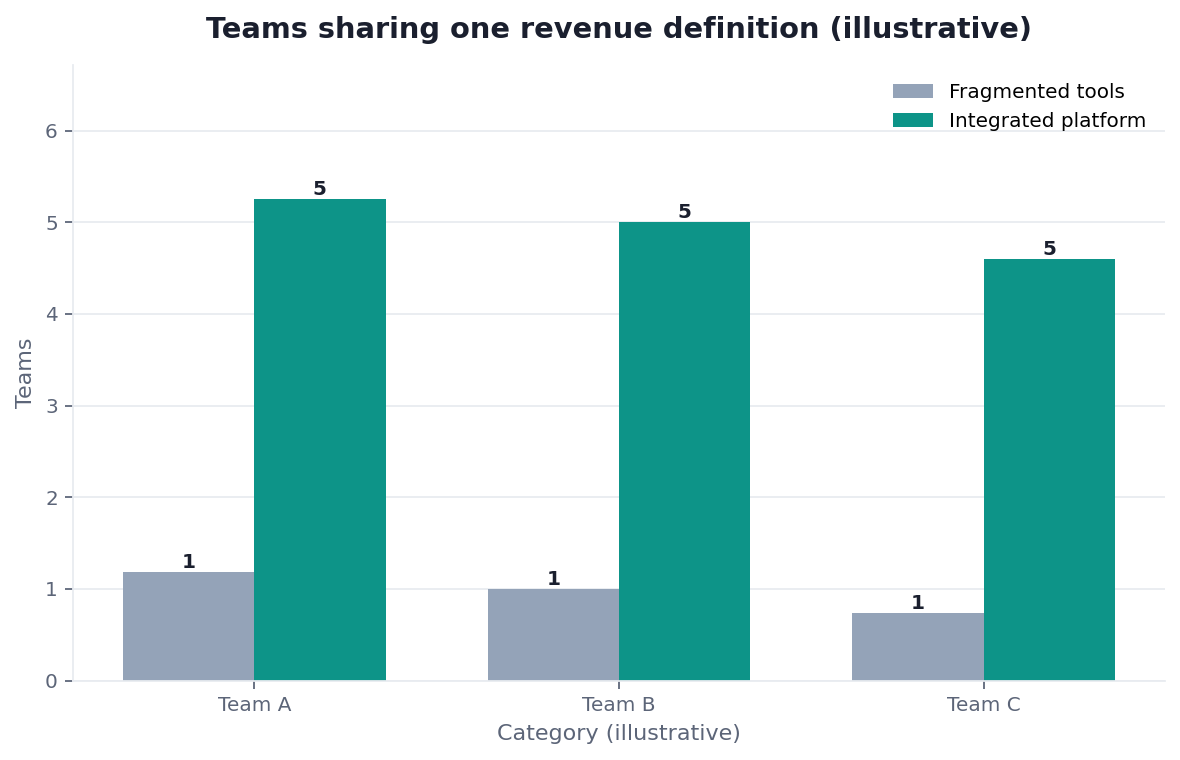
Practical example: a company weighing data analytics platforms chose an integrated suite for governance across teams, accepting less flexibility — a consolidation trade-off the guidance at Supabase documentation frames well.
What They Are
At their core, data analytics platforms are unified environments that bring together the stages of analytics — storing data, preparing it, analyzing it, and visualizing it — under one roof with shared governance.
Key Definition: data analytics platforms are integrated software environments that combine multiple stages of the analytics workflow — data storage or connectivity, preparation, analysis and modeling, visualization, and governance — into a single, cohesive system, so teams can move from raw data to insight without stitching together separate tools.
The essence of data analytics platforms is integration. Rather than assembling separate tools for each stage, a platform offers them together, with shared data, security, and definitions — trading some flexibility for the convenience and consistency of one environment.
The Capabilities That Matter
Teams evaluating this topic often cross-check Google Research publications for a durable, vendor-neutral reference point.
The capabilities that distinguish data analytics platforms are breadth across the workflow, connectivity to your data, governance, and how well the integrated pieces actually work together rather than merely coexisting under one brand.
Evaluating data analytics platforms well means testing the seams, as the reference architectures at Google Cloud AI overview suggest. A platform is only as strong as the integration between its parts; a suite whose preparation, analysis, and visualization pass data cleanly is worth more than one with impressive individual components that connect poorly. Governance — consistent definitions and access control across the whole environment — is often the capability that most justifies choosing a platform over separate tools.
Integrated vs. Best-of-Breed
The central choice among data analytics platforms is integrated suite versus best-of-breed assembly. An integrated platform offers convenience, consistency, and governance in one place; best-of-breed tools offer the strongest option at each stage but demand integration work.
Deciding between them for data analytics platforms turns on what you value, and honest communication of results — aligned with guidance like the RFC 4180 CSV format — must survive either choice. Integrated suites suit organizations that prize governance and simplicity and can accept "good enough" at each stage; best-of-breed suits those needing the best at specific stages and having the skill to connect them. Neither is universally right; the trade-off is convenience and consistency against flexibility and peak capability.
Matching Platform to Need
Governance and risk expectations are framed by NIST Cybersecurity Framework when programs need an external control reference.
Choosing among data analytics platforms comes down to matching the integration model to your organization. A team wanting one governed environment for many users leans integrated; a specialized team needing peak capability at one stage leans best-of-breed.
The discipline in selecting data analytics platforms is to weigh total value, not feature counts. Consider governance needs, the skill available to integrate tools, the existing stack, and how many teams must share one environment. An integrated platform that no one has to stitch together can outperform a theoretically superior collection of tools that nobody has time to connect and maintain, so fit to your organization's capacity matters as much as raw capability.
Where the Category Came From
The category of data analytics platforms emerged as organizations tired of stitching together separate tools for storage, preparation, analysis, and visualization. Vendors responded by bundling these stages into integrated suites, promising a single governed environment instead of a fragile chain of point tools.
Understanding this history clarifies the enduring tension: platforms arose to solve the integration burden of best-of-breed stacks, but in doing so they traded away some flexibility and peak capability at each stage. It also explains why the debate never fully settles — each approach solves a real problem the other creates. As data needs and cloud services evolved, the platforms consolidated further, and the newest shift is toward AI-native environments that add conversational analysis on top of the integrated stack.
Common Pitfalls
Teams evaluating this topic often cross-check MariaDB documentation for a durable, vendor-neutral reference point.
The pitfalls of data analytics platforms begin with buying integration you will not use. A broad platform justified by "one environment" delivers little if teams only use one stage and would have been better served by a focused tool.
A subtler pitfall with data analytics platforms is assuming integration means the pieces work well together. Some suites bundle components that connect awkwardly, offering the appearance of a platform without the seamless flow that justifies one. A further trap is lock-in — consolidating everything into one vendor's environment can make future change costly. The healthiest approach tests the integration honestly, values governance realistically, and weighs the convenience of consolidation against the flexibility and leverage it quietly gives up.
A related mistake is letting the buying decision be driven by a single impressive stage rather than the whole workflow. A suite may have a dazzling visualization layer but weak preparation, or excellent modeling bolted onto clumsy governance, and evaluating it on the strength of its best component sets up disappointment once daily work exposes the weak links. The disciplined evaluation runs a realistic end-to-end scenario — connect a real source, prepare it, analyze it, visualize it, and share it under actual access rules — because that is where a platform either proves it is a coherent whole or reveals itself as a bundle of parts that happen to share a login screen and a logo.
The Category in the Age of AI
AI is reshaping data analytics platforms by adding a conversational layer that spans the whole workflow, letting users ask questions instead of operating each stage by hand.
We explore this in what AI-native data analysis means. In the InfiniSynapse web app, zero-config federation lets an agent analyze across your existing sources without first consolidating them into one platform, so data analytics platforms face a new option — federated, AI-native analysis that spans tools you already run rather than requiring everything to live in a single suite.
Readiness Scorecard
Teams evaluating this topic often cross-check MongoDB documentation for a durable, vendor-neutral reference point.
Assess your platform decision (1 point each):
| Check | Pass? |
|---|---|
| The integration model fits your org | |
| The pieces genuinely work together | |
| Governance needs are met | |
| Connectivity covers your data | |
| Lock-in risk is understood | |
| You will use the breadth you buy | |
| Skill to integrate is accounted for | |
| Federation was considered |
6–8: a sound decision. 3–5: test the seams. Below 3: reassess integrated vs best-of-breed.
Common Misconceptions
Misconception 1: A platform is always simpler. Only if you use its breadth.
Misconception 2: Bundled means well-integrated. Some pieces connect poorly.
Misconception 3: Consolidation has no downside. It trades flexibility and invites lock-in.
Misconception 4: Everything must live in one suite. Federation can span existing tools.
Frequently Asked Questions
What are data analytics platforms?
They are integrated software environments that combine multiple stages of the analytics workflow — data storage or connectivity, preparation, analysis and modeling, visualization, and governance — into a single cohesive system, so teams can move from raw data to insight without stitching together separate tools. Their essence is integration: rather than assembling separate tools for each stage, a platform offers them together with shared data, security, and definitions. That consolidation trades some flexibility for the convenience and consistency of working in one environment across the whole team.
Which capabilities matter most when comparing them?
Breadth across the workflow, connectivity to your data, governance, and how well the integrated pieces actually work together rather than merely coexisting under one brand. Test the seams, because a platform is only as strong as the integration between its parts — a suite whose preparation, analysis, and visualization pass data cleanly is worth more than one with impressive individual components that connect poorly. Governance, meaning consistent definitions and access control across the whole environment, is often the single capability that most justifies choosing a platform over separate tools.
Integrated suite or best-of-breed tools?
It depends on what you value. An integrated platform offers convenience, consistency, and governance in one place but "good enough" capability at each stage; best-of-breed tools offer the strongest option at each stage but demand integration work and skill. Integrated suits organizations that prize governance and simplicity across many users; best-of-breed suits those needing peak capability at specific stages and able to connect the parts. Neither is universally right — the trade-off is convenience and consistency against flexibility and peak capability, and the honest answer follows your organization's priorities.
How do I match a platform to my need?
Match the integration model to your organization and weigh total value, not feature counts. Consider your governance needs, the skill available to integrate tools, your existing stack, and how many teams must share one environment. If the priority is one governed home for many users, the integrated route tends to win; if the priority is the strongest possible capability at a single critical stage, the best-of-breed route tends to win. An integrated platform no one has to stitch together can outperform a theoretically superior collection nobody has time to connect, so fit to your capacity matters as much as raw capability, and the honest answer is rarely the option with the longest feature list.
How is AI changing data analytics platforms?
AI is adding a conversational layer that spans the whole workflow, letting users ask questions instead of operating each stage by hand. It is also opening a new option: federation. An AI-native platform can analyze across your existing sources without first consolidating them into one suite, so instead of choosing between integrated and best-of-breed, you can keep the tools you already run and let an agent span them. That reframes the classic consolidation question, offering the reach of an integrated environment without forcing all your data to physically live in a single vendor's platform.
Do I need a full platform, or will a few tools do?
It depends on scale and governance needs. A small team with a couple of data sources and modest reporting often does fine with a few well-chosen tools, and a full platform would be overkill. A larger organization with many users, multiple sources, and a real need for consistent definitions and access control usually benefits from the governance and shared environment a platform provides. The honest test is whether stitching tools together is causing genuine pain — inconsistent numbers, integration overhead, governance gaps. If it is, a platform helps; if not, added breadth is cost without benefit.
In practice, teams evaluating data analytics platforms should judge outcomes by reliability and clarity, not by tool count alone.
When stakeholders ask for a short takeaway on data analytics platforms, start from the decision it must support and work backward.
Conclusion
Data analytics platforms integrate storage, preparation, analysis, and visualization into one governed environment — and choosing one is a trade-off between consolidation's convenience and best-of-breed flexibility. In 2026, test the integration honestly, weigh governance and lock-in, and remember AI-native federation now lets an agent span the tools you already run rather than forcing everything into a single suite.
Then try federated analysis in the InfiniSynapse web app, free on registration.