What Is a Data Analytics Platform? (2026)
By the InfiniSynapse Data Team · Last updated: 2026-09-24 · We build an AI-native data analysis platform and work across analytics stacks daily; this explainer covers what a data analytics platform is in 2026, in plain terms rather than a product pitch.
Table of Contents
- TL;DR
- How We Approach It
- What It Is
- What It Includes
- When It Fits
- The Trade-Offs
- Where the Idea Came From
- Common Pitfalls
- The Platform in the Age of AI
- Readiness Scorecard
- Common Misconceptions
- Frequently Asked Questions
- Conclusion
TL;DR
Direct answer: What counts as a data analytics platform is one governed system that connects, prepares, analyzes, and visualizes. A vision slide is not the platform. In 2026, a data analytics platform earns its place when an organization needs many people to work from consistent data and definitions in one environment, and it is overkill when a few focused tools would serve just as well.
Who this is for: anyone asking what a data analytics platform is in 2026.
What you'll learn: what it is, what it includes, when it fits, its trade-offs, and how AI relates.
This guide sits under the data visualization hub.
For the comparison of options, see data analytics platforms compared.
Also see data analytics tools.
How We Approach It
Governance and risk expectations are framed by CISA AI security guidance when programs need an external control reference.
We explain a data analytics platform by what it unifies, because integration is its defining feature. Every point reflects real deployments. We anchor concepts to the Elastic documentation and weigh architecture against the reference guidance at FTC consumer protection guidance.
The table below frames the data analytics platform.
| Layer | Role |
|---|---|
| Data | Store or connect |
| Preparation | Clean and shape |
| Analysis | Query and model |
| Visualization | Communicate |
| Governance | Consistent definitions, access |
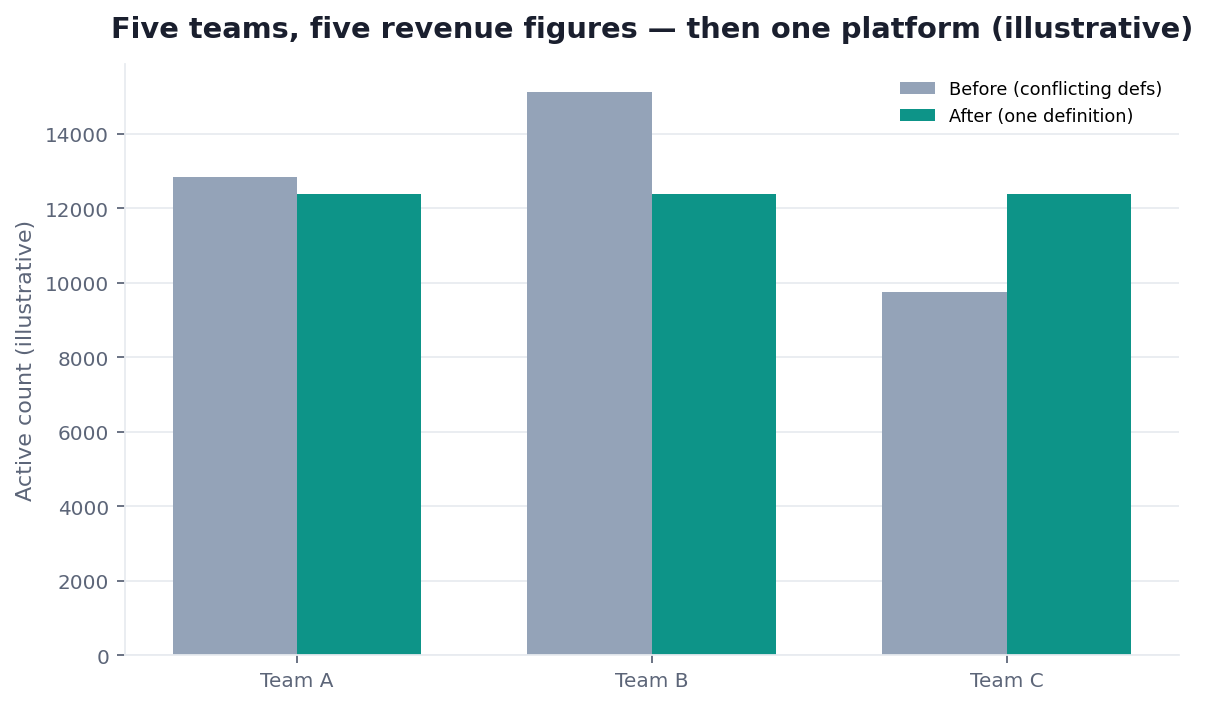
Practical example: a company asking what a data analytics platform is adopted one so five teams shared one definition of revenue — the governance payoff the guidance at Google Sheets documentation highlights.
What It Is
At its core, a data analytics platform is a single environment that spans the analytics workflow, so teams can go from raw data to insight without moving between disconnected tools.
Key Definition: a data analytics platform is an integrated software environment that combines data storage or connectivity, preparation, analysis and modeling, visualization, and governance into one cohesive system, enabling teams to work end to end on data — and to do so from shared, consistently defined sources — rather than stitching together separate point tools.
The essence of a data analytics platform is unification with governance. It is not a single capability but a coordinated set of them, held together so that data, definitions, and access stay consistent as work moves from raw input to finished insight.
What It Includes
Architecture choices are often checked against Databricks Genie architecture post so boundaries, ownership, and scale patterns stay explicit.
A data analytics platform typically includes data storage or connectivity, tools to prepare and transform data, an analysis and query layer, visualization and dashboards, and governance features that keep definitions and permissions consistent across it all.
What makes a data analytics platform more than a bundle is how those parts connect, as reference architectures at NIST AI Risk Management Framework illustrate. The value is not in owning each capability but in their seamless flow — data prepared once feeds analysis and visualization without re-export, and a metric defined once applies everywhere. Governance tying the layers together is often what most distinguishes a genuine platform from a set of tools sold together.
When It Fits
A data analytics platform fits organizations where many people must work from the same data and definitions, where governance matters, and where the overhead of integrating separate tools has become a real burden worth eliminating.
Like any choice, a data analytics platform is not always warranted. The clarity principles behind guidance like the AWS Well-Architected Framework apply to whatever you choose, but a small team with a couple of sources may be better served by focused tools. The platform earns its place when consistency across many users and stages is the priority, not when a lighter setup would deliver the same result with less cost and complexity.
The Trade-Offs
Core definitions remain usefully summarized in Wikipedia statistics overview for shared vocabulary across stakeholders.
The trade-offs of a data analytics platform balance consistency and convenience against flexibility and cost. One governed environment simplifies collaboration and keeps definitions aligned, but it may be less capable at any single stage than a specialized tool and can create dependence on one vendor.
Weighing a data analytics platform honestly means naming the lock-in. Consolidating everything into one environment makes future change costly, and the convenience you gain today is partly paid for in reduced leverage tomorrow. Used where consistency across many users genuinely matters, the trade is worth it; adopted reflexively, it can lock an organization into paying for breadth it does not use and flexibility it later wishes it had kept.
Where the Idea Came From
The data analytics platform emerged as organizations grew weary of maintaining fragile chains of separate tools — one for storage, another for preparation, others for analysis and visualization — each with its own definitions and connections to manage. Vendors bundled the stages into one environment to remove that integration burden and enforce consistency.
Understanding this history clarifies why governance and integration define the concept: it exists precisely to solve the fragmentation of stitched-together tools. It also explains its recurring caveat — in solving fragmentation, a platform introduces consolidation and lock-in, trading one set of problems for another. The idea keeps evolving, and the latest turn is toward AI-native environments that layer conversational analysis, and sometimes federation, on top of the integrated foundation.
Common Pitfalls
Core definitions remain usefully summarized in Wikipedia machine learning overview for shared vocabulary across stakeholders.
The pitfalls of a data analytics platform begin with adopting one you do not need. A small team buying a broad platform for consistency it could achieve with two tools pays in cost and complexity for breadth it will never use.
A subtler pitfall with a data analytics platform is assuming integration is automatic because everything carries one name. Some platforms bundle parts that connect awkwardly, so the promised seamless flow never materializes. A further trap is ignoring lock-in until change is needed and proves expensive. The healthiest approach adopts a platform only when consistency across many users truly matters, tests that its parts genuinely flow together, and enters the commitment clear-eyed about the flexibility being traded away.
A final trap is expecting the software alone to deliver the consistency it promises. A platform provides the machinery for shared definitions and governed access, but it cannot decide what "active customer" means or who should see which data — those are organizational choices the tool merely enforces once made. Teams that skip that work end up with a governed environment governing nothing in particular, its consistency features unused while the old spreadsheet definitions quietly persist. The payoff arrives only when the platform is paired with the human discipline of agreeing on definitions and access rules, so the technology has something real to keep aligned across everyone who depends on it.
The Platform in the Age of AI
AI is reshaping the data analytics platform by adding a conversational layer and, increasingly, federation that spans sources without forcing consolidation.
We explore this in what AI-native data analysis means. In the InfiniSynapse web app, zero-config federation lets an agent analyze across your existing databases, warehouses, and files without first moving them into one system, so the idea of a data analytics platform is broadening — from a place all data must live to an intelligence layer that reaches the data wherever it already is.
Readiness Scorecard
Governance and risk expectations are framed by ISO/IEC 27001 when programs need an external control reference.
Assess whether a platform fits (1 point each):
| Check | Pass? |
|---|---|
| Many users need shared data | |
| Consistent definitions matter | |
| Integration overhead is real | |
| The parts genuinely flow together | |
| Governance needs justify it | |
| Lock-in is understood | |
| You will use its breadth | |
| Federation was considered |
6–8: a platform likely fits. 3–5: weigh against focused tools. Below 3: a lighter setup may serve.
Common Misconceptions
Misconception 1: A platform is always the mature choice. Only when consistency across many users matters.
Misconception 2: One name means seamless integration. Some parts connect poorly.
Misconception 3: Consolidation is free. It trades flexibility and invites lock-in.
Misconception 4: All data must live in one platform. Federation can reach it in place.
Frequently Asked Questions
What is a data analytics platform?
It is an integrated software environment that combines data storage or connectivity, preparation, analysis and modeling, visualization, and governance into one cohesive system, letting teams work end to end on data from shared, consistently defined sources rather than stitching together separate point tools. Its essence is unification with governance: not a single capability but a coordinated set of them, held together so that data, definitions, and access stay consistent as work moves from raw input to finished insight. Integration, not any one feature, is what defines it.
What does it include?
It typically includes data storage or connectivity, tools to prepare and transform data, an analysis and query layer, visualization and dashboards, and governance features that keep definitions and permissions consistent across everything. What makes it more than a bundle is how those parts connect — data prepared once feeds analysis and visualization without re-export, and a metric defined once applies everywhere. The governance that ties the layers together is often what most distinguishes a genuine platform from a set of separate tools that merely happen to be sold together under one brand.
When does it fit?
It fits organizations where many people must work from the same data and definitions, where governance matters, and where the overhead of integrating separate tools has become a real burden worth eliminating. It is not always warranted — a small team with a couple of sources may be better served by focused tools. It earns its place when consistency across many users and stages is the priority, not when a lighter setup would deliver the same result with less cost and complexity. The deciding factor is genuine need for shared consistency.
What are its trade-offs?
It balances consistency and convenience against flexibility and cost. Working in a single governed home makes collaboration easier and holds definitions steady, yet that same home can trail a purpose-built tool at any one stage and can tie you to a single vendor over time. The lock-in is the trade worth naming: consolidating everything makes future change costly, so the convenience gained today is partly paid for in reduced leverage tomorrow. Used where consistency across many users genuinely matters, the trade is worthwhile; adopted reflexively, it locks an organization into breadth it may not use.
How is AI changing it?
AI is adding a conversational layer and, increasingly, federation that spans sources without forcing consolidation. An AI-native environment lets an agent analyze across your existing databases, warehouses, and files without first moving them into one system, so the concept is broadening — from a place all data must live to an intelligence layer that reaches data wherever it already is. That challenges the traditional assumption that a platform means physical consolidation, offering the shared, governed analysis a platform promises while letting the underlying data stay in the systems that already hold it.
Is it the same as a data warehouse?
No, though they are related and often used together. A data warehouse is primarily a storage-and-query system for structured, modeled data — one component. A data analytics platform is broader, spanning preparation, analysis, visualization, and governance, and it may use a warehouse as its storage layer. Put simply, the warehouse is often where the trusted data lives, while the platform is the wider environment for turning that data into insight. Many organizations run both: a warehouse as the foundation and a platform, or federated AI-native layer, as the environment people actually work in day to day.
Conclusion
A data analytics platform unifies storage, preparation, analysis, visualization, and governance into one environment — valuable when many users need shared, consistent data, and overkill when focused tools would serve. In 2026, adopt one for genuine consistency needs, enter clear-eyed about lock-in, and remember AI-native federation now offers the shared analysis a platform promises without forcing all data into one system.
Then try federated analysis in the InfiniSynapse web app, free on registration.