
On this page本页目录
What is the difference between returns analytics and management?退货分析与退货管理有什么区别?
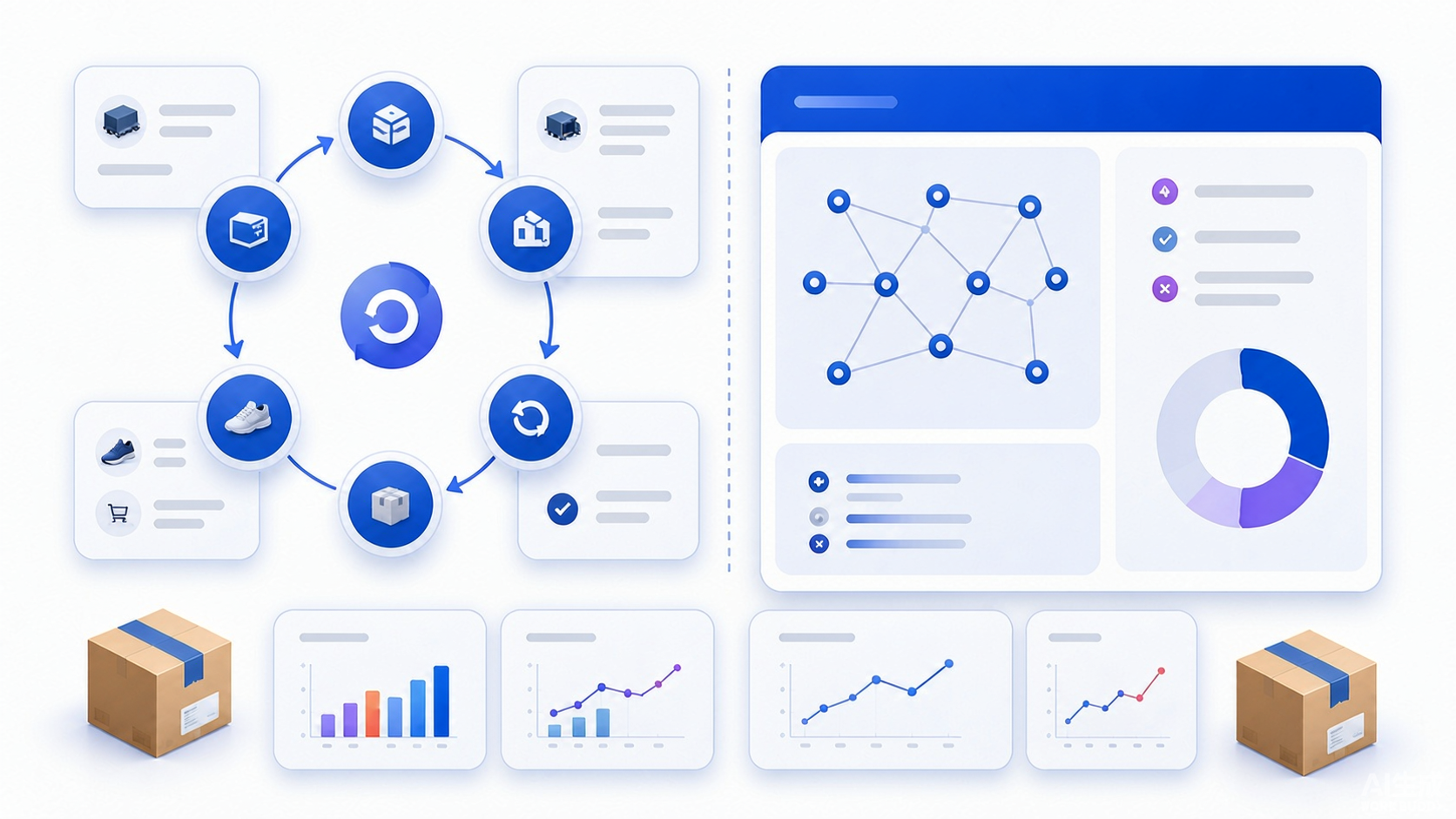
Returns management handles eligibility, customer requests, authorization, exchanges, labels, routing, tracking, receipt, refund coordination and exceptions. Returns analytics defines measures, joins sources, reconciles events, segments products and cohorts, estimates cost, investigates reasons, tests hypotheses and communicates decisions. A returns platform may include analytics, and an analysis system may read management data, but neither role should be assumed from the other. Choose based on the blocked workflow and decision.
退货管理处理资格、客户申请、授权、换货、面单、路由、追踪、收货、退款协调与异常。退货分析定义指标、关联来源、核对事件、细分商品与群组、估算成本、调查原因、测试假设并传达决策。退货平台可包含分析,分析系统可读取管理数据,但不能由一个角色推断另一个。应按受阻工作流与决策选择。
Vendor platforms publish overlapping operational and analytical features. This guide compares jobs and acceptance evidence, not vendor category labels. Product scope must be validated on the current plan and implementation.
厂商平台发布重叠的运营与分析功能。本指南比较任务与验收证据,而不是厂商类别标签。产品范围须在当前套餐与实施中验证。
Start with the job, not the software category先从工作任务出发,而非软件类别
The same return produces operational states and analytical observations, but those artifacts serve different owners and decisions. Returns execution and returns analysis overlap, but they are not interchangeable. A portal can create a label without proving why a product is returned; an analysis workspace can identify a costly cohort without authorizing a refund. Define the blocked decision first.
同一退货产生运营状态与分析观察,但这些产物服务不同负责人和决策。退货执行与退货分析有重叠,但不能互相替代。门户可以创建面单,却未必证明商品为何被退;分析工作区可以识别高成本群组,却不能授权退款。应先定义受阻决策。
| Category类别 | Primary job主要任务 | Strongest fit最适合情形 |
|---|---|---|
| Commerce-native reporting电商平台原生报告 | One-store sales, physical returns, refunds and platform-defined dimensions单店销售、实体退货、退款与平台定义维度 | Fastest when the store and decisions stay inside one commerce platform店铺与决策都留在一个电商平台时最快 |
| Returns management platform退货管理平台 | Customer portal, eligibility, exchanges, labels, routing, status and operational automation客户门户、资格、换货、面单、路由、状态与运营自动化 | Best when execution friction is the primary problem执行摩擦是主要问题时最合适 |
| Spreadsheet / BI workspace电子表格 / BI 工作区 | Flexible calculations, joins, pivots, charts and local models灵活计算、关联、透视、图表与本地模型 | Best when a capable analyst can own definitions and refreshes有能力的分析师能负责定义与刷新时合适 |
| General data agent / analytics system通用数据 Agent / 分析系统 | Multi-source questions, governed transformations, evidence trails and deliverable analysis多源问题、受治理转换、证据链与可交付分析 | Best when diagnosis crosses systems and requires reviewable reasoning诊断跨系统且需要可审核推理时合适 |
Many teams need a stack: commerce or returns-management software records and executes events; a governed analysis layer reconciles, explains and prioritizes them. Integration depth must be verified in a trial.
许多团队需要组合:电商或退货管理软件记录并执行事件;受治理分析层负责核对、解释与排序。集成深度必须在试用中验证。
Write one workflow requirement and one decision requirement分别写一个工作流要求与决策要求
For each problem, describe the actor, trigger, action, SLA and exception for management; then describe the question, metric, sources, comparison, evidence and decision for analytics. This prevents a dashboard from being mistaken for automation or a portal from being mistaken for diagnosis.
对每个问题,退货管理应描述主体、触发、行动、SLA 与异常;退货分析应描述问题、指标、来源、比较、证据与决策。这能防止把仪表板误作自动化,或把门户误作诊断。
| Requirement要求 | Acceptance test验收测试 | Failure signal失败信号 |
|---|---|---|
| Management acceptance管理验收 | Complete an eligible and ineligible shopper journey through receipt/refund exception完成合格与不合格消费者旅程,直至收货/退款异常 | Manual handoff or rule failure is hidden人工交接或规则失败被隐藏 |
| Analytics acceptance分析验收 | Reproduce a product/cohort metric, drill to cases and document a bounded action复现商品/群组指标、下钻案例并记录有限行动 | Chart cannot explain definition or source图表无法解释定义或来源 |
| Shared data contract共享数据契约 | Link request, authorization, shipment, receipt, disposition, exchange and refund IDs关联申请、授权、运输、收货、处置、换货与退款 ID | Lifecycle is reconstructed from dates or text生命周期由日期或文本推断重建 |
| Ownership责任 | Name operations owner and analytical decision owner with escalation paths指定运营负责人、分析决策负责人及升级路径 | Vendor or “data team” is the only named owner只有厂商或“数据团队”被称为负责人 |
See where current tool categories overlap查看当前工具类别如何重叠
The first-party pages below show why category labels are insufficient: management platforms also publish analytics or intelligence, while InfiniSynapse publishes analysis capabilities without a documented shopper returns portal.
以下一方页面说明类别标签为何不足:管理平台也发布分析或智能能力,而 InfiniSynapse 发布分析能力,却未说明消费者退货门户。
| Option / category方案 / 类别 | Verified current role已核验当前角色 | Best fit and boundary适用情形与边界 |
|---|---|---|
| ShopifyShopify | Native returns/exchanges workflow plus platform analytics and reports原生退换货工作流加平台分析与报告 | One commerce system can cover both at platform scope一个商业系统可在平台范围覆盖两者 |
| LoopLoop | Vendor describes returns/exchanges/shipping operations plus intelligence and fraud厂商说明退换货/运输运营,以及智能与欺诈能力 | Management-led suite with published data products; validate analytical depth管理主导套件,发布数据产品;核验分析深度 |
| ReturnLogicReturnLogic | Vendor describes white-label return lifecycle automation and advanced analytics厂商说明白标退货生命周期自动化与高级分析 | Management plus analytics; validate definitions, export and review path管理加分析;核验定义、导出与审核路径 |
| AfterShip ReturnsAfterShip Returns | Vendor describes policy, RMA, carrier, label, tracking and integration workflows厂商说明政策、RMA、承运商、面单、追踪与集成工作流 | Execution-heavy needs; validate reporting and cross-source scope执行密集需求;核验报告与跨源范围 |
| InfiniSynapseInfiniSynapse | Enterprise multi-source analysis and reviewable deliverables企业多源分析与可审核交付物 | Analytics layer; no documented native returns execution role分析层;没有已说明原生退货执行角色 |
This is a fit matrix based on first-party pages reviewed September 15, 2026—not a paid placement, market-share ranking, user-review score, pricing comparison, or claim that every feature is available on every plan.这是依据 2026 年 9 月 15 日核验的一方页面制作的适配矩阵,不是付费推荐、市场份额排名、用户评价分数、价格比较,也不声称每项功能在所有套餐中均可用。
Require a data contract before judging output quality判断输出质量前先要求数据契约
A credible evaluation freezes event grain, identifiers, timestamps, currency, quantities, reason semantics, physical-return status, refund status, exchange value, shipping, labor, inventory outcome and source lineage. Treat lifecycle events as immutable observations where possible. Derived analytical states should reference their source events rather than overwriting operational status.
可信评估需要固定事件粒度、标识符、时间戳、币种、数量、原因语义、实体退回状态、退款状态、换货价值、运输、人工、库存结果与来源血缘。尽可能把生命周期事件视为不可变观察。衍生分析状态应引用源事件,而不是覆盖运营状态。
- Map source fields映射源字段
Preserve raw exports, document keys and map each platform field into a versioned canonical model.保留原始导出,记录键,并把各平台字段映射至版本化标准模型。 - Define business rules定义业务规则
Write formulas, denominators, maturity windows, exclusions, currency treatment and late-event policy before calculating.计算前写明公式、分母、成熟窗口、排除、币种处理与迟到事件政策。 - Reconcile control totals核对控制总额
Tie row counts and financial totals to source reports; explain expected differences instead of forcing equality.把行数与财务总额核对至源报告;解释预期差异,而不是强行相等。 - Retain provenance保留溯源
Every chart, claim and AI explanation should resolve to source, transformation version and reviewed rows.每个图表、结论与 AI 解释都应能追溯到来源、转换版本与已审核行。
A vendor-neutral CSV scorecard for requirements, evidence, trial results, owner and decision. Example rows are prompts, not product scores.
厂商中立 CSV 评分表,用于记录要求、证据、试用结果、负责人和决定。示例行是提示,不是产品评分。
Download selection scorecard下载选型评分表 ↓Test execution and analysis on separate tracks分别测试执行与分析
Run the same bounded trial for every shortlisted option. Use one controlled shopper journey for operational acceptance and one closed historical cohort for analytical acceptance. Then test the identifiers and exports that connect them. Mask personal data unless required, use representative edge cases, keep a gold-standard answer set and record every manual intervention.
对每个入围方案运行相同的有限试用。使用一个受控消费者旅程进行运营验收,一个已关闭历史群组进行分析验收,再测试连接二者的标识与导出。除非必须,否则遮蔽个人数据;使用有代表性的边缘案例,保留黄金答案集,并记录每次人工干预。
- Freeze one question set固定一套问题
Use the same ten operational and analytical questions, expected outputs, definitions and review rubric for every option.对每个方案使用相同的十个运营与分析问题、预期输出、定义与审核量表。 - Load one representative cohort加载一个代表性群组
Include normal rows, cancellations, refund-only events, exchanges, partial returns, late events, missing reasons and duplicate identifiers.包括正常行、取消、仅退款、换货、部分退货、迟到事件、缺失原因与重复标识。 - Reconcile before interpreting先核对再解读
Compare source and output counts, quantities and money; record exclusions, transformations and unresolved differences.比较来源与输出数量、件数与金额;记录排除、转换与未解决差异。 - Repeat with another operator由另一名操作员复现
Measure setup time, manual steps, answer consistency, evidence traceability, export quality and reviewer effort.衡量设置时间、人工步骤、答案一致性、证据可追溯性、导出质量与审核投入。 - Document the decision记录决定
Keep pass/fail gates, preference scores, costs, dependencies, risks, owner, review date and a reversible next step.保留通过/失败门槛、偏好分、成本、依赖、风险、负责人、审核日期与可逆下一步。
A polished demo is not evidence of fit. Accept only results that your team can reproduce from your data under your permissions, volume, latency and review constraints.
精美演示不等于适配证据。只接受团队能在自身数据、权限、规模、延迟与审核约束下复现的结果。
Worked example: fast refunds, unexplained return growth示例:退款很快,但退货增长无法解释
A synthetic retailer’s portal meets return-request and refund SLAs, yet one product category’s mature physical-return rate rises. Operations are functioning; diagnosis is missing.
一个模拟零售商的门户满足退货申请与退款 SLA,但某商品类别成熟实体退货率上升。运营正常,诊断缺失。
| Observed need观察到的需求 | Trial evidence试用证据 | Decision implication决策含义 |
|---|---|---|
| Portal workflow门户工作流 | Eligibility, labels, tracking and refund handoff pass test cases资格、面单、追踪与退款交接通过测试 | Keep the management workflow保留管理工作流 |
| Analytical evidence分析证据 | Reason coverage is low and product/support/inspection data are not joined原因覆盖低,商品/客服/质检数据未关联 | Add governed diagnosis rather than replace portal增加受治理诊断,而非替换门户 |
| Shared improvement共同改进 | Portal collects versioned reason and condition fields with stable IDs门户采集版本化原因与状态字段及稳定 ID | Improve the data feed and rerun cohort analysis改善数据流并重跑群组分析 |
The team retains the working management platform and adds an analysis layer. Replacing a reliable portal would not answer the diagnostic question; improving shared identifiers and evidence does.
团队保留正常工作的管理平台并增加分析层。替换可靠门户无法回答诊断问题;改善共享标识与证据可以。
The organization, files, observations and decision in this example are synthetic. They do not represent a customer, vendor performance benchmark or purchasing recommendation.本示例中的组织、文件、观察与决定均为模拟,不代表客户、厂商性能基准或采购建议。
Interpret fit by evidence, not by feature count按证据而非功能数量解读适配度
Score management on completion, correctness, exception rate, customer/agent effort, latency and operational controls. Score analytics on semantic accuracy, completeness, reproducibility, evidence traceability, decision usefulness and uncertainty. Do not collapse both into one satisfaction score.
按完成、正确、异常率、客户/员工投入、延迟与运营控制评分管理;按语义准确、完整、可复现、证据可追溯、决策有用性与不确定性评分分析。不要把二者压缩成一个满意度分数。
The right item, authorization, routing, receipt, exchange or refund state is completed.正确商品、授权、路由、收货、换货或退款状态完成。
A defined question is answered with reconciled evidence and a bounded decision.用已核对证据回答已定义问题并形成有限决策。
Operational events become trustworthy inputs and analytical findings improve controlled workflows.运营事件成为可信输入,分析发现改善受控工作流。
Keep mandatory gates separate from weighted preferences. A tool that fails data access, security, legal, auditability or critical workflow requirements should not win because it has more optional features.
把强制门槛与加权偏好分开。若工具未通过数据访问、安全、法律、可审计性或关键工作流要求,就不应因可选功能更多而胜出。
Maintain separate systems of record and decision分别维护记录系统与决策系统
Document which platform owns customer and inventory state, which layer owns definitions and derived insights, and how approved changes flow back. Analytical output should not mutate refunds, labels or policy without an authorized workflow.
记录哪个平台拥有客户与库存状态、哪个层拥有定义与衍生洞察,以及已批准变化如何回流。分析输出不得在没有授权工作流时修改退款、面单或政策。
| Control控制 | Evidence to retain应保留证据 | Owner decision负责人决定 |
|---|---|---|
| Access and minimization访问与最小化 | Role matrix, approved fields, environment, retention and deletion evidence角色矩阵、批准字段、环境、保留与删除证据 | Approve, restrict or reject the data path批准、限制或拒绝数据路径 |
| Metric integrity指标完整性 | Versioned definitions, test cases, control totals and exception log版本化定义、测试案例、控制总额与异常日志 | Accept or revise each metric contract接受或修订每项指标契约 |
| Output traceability输出可追溯性 | Source row links, transformation version, prompt/query, model/tool version and reviewer源行链接、转换版本、提示/查询、模型/工具版本与审核人 | Release, qualify or withhold an insight发布、限定或暂不发布洞察 |
| Operational change运营变化 | Owner, eligible scope, approval, rollback, guardrails and outcome maturity负责人、合格范围、批准、回滚、护栏与结果成熟度 | Stop, revise, expand or scale停止、修订、扩大或推广 |
Connect the two loops through stable events通过稳定事件连接两个闭环
First stabilize management events and identifiers. Then build analytical contracts and controls. Finally create a reviewed action path from insight to policy, content, product, supplier or operations change, with rollback and outcome measurement.
先稳定管理事件与标识,再建立分析契约与控制,最后创建从洞察到政策、内容、商品、供应商或运营变化的已审核行动路径,并带回滚与结果测量。
- Week 1: inventory第 1 周:盘点
List systems, files, owners, decisions, return windows, volumes, sensitive fields and current manual work.列出系统、文件、负责人、决策、退货窗口、规模、敏感字段与当前人工工作。 - Week 2: contract第 2 周:契约
Freeze canonical identifiers, event definitions, formulas, expected totals, access controls and the trial cohort.固定标准标识、事件定义、公式、预期总额、访问控制与试用群组。 - Weeks 3–4: trial第 3–4 周:试用
Run the acceptance tests, resolve discrepancies, collect operator feedback and compare total operating effort.运行验收测试、解决差异、收集操作员反馈并比较总运营投入。 - Month 2: controlled rollout第 2 月:受控上线
Deploy to one owned workflow, monitor quality and guardrails, and retain the old method until rollback risk is acceptable.部署至一个有负责人的工作流,监控质量与护栏,并在回滚风险可接受前保留旧方法。
Common selection mistakes to avoid应避免的常见选型错误
- Buying a returns portal when the unmet need is diagnosis, or buying analytics when the unmet need is customer self-service and labels.在需求是诊断时购买退货门户,或在需求是客户自助与面单时购买分析工具。
- Comparing feature names without testing the same source files, period, definitions and expected answers.比较功能名称,却没有用相同源文件、期间、定义与预期答案测试。
- Treating a vendor dashboard as a financial system of record without reconciling refunds, fees, inventory and dates.把厂商仪表板当作财务记录系统,却不核对退款、费用、库存与日期。
- Accepting AI explanations without traceable rows, reproducible calculations and human review.接受 AI 解释,却没有可追溯行、可复现计算与人工审核。
- Ignoring plan, region, platform, API, retention, security and export restrictions until after purchase.购买后才注意套餐、地区、平台、API、保留、安全与导出限制。
- Using a universal weighted score that hides mandatory requirements or disqualifying risks.使用通用加权分数,隐藏强制要求或淘汰性风险。
Select against documented decisions and evidence, not against the longest marketing checklist. Revalidate after major product, plan, platform, schema or policy changes.
应依据已记录决策与证据选型,而不是依据最长营销功能清单。产品、套餐、平台、Schema 或政策重大变化后重新验证。
Use InfiniSynapse for the analysis layer使用 InfiniSynapse 构建分析层
InfiniSynapse is positioned as an AI Data Agent for verifiable enterprise analysis, not as a native returns portal, label generator or refund processor. For the governed analytics layer that reconciles management events with product, support, warehouse and cost data, provide governed source access or approved files, metric definitions, control totals and review questions. Validate connectors, permissions, security, output lineage, scale and deployment requirements in a bounded trial before purchase or production use.
InfiniSynapse 的定位是用于可验证企业分析的 AI Data Agent,而不是原生退货门户、面单生成器或退款处理器。针对把管理事件与商品、客服、仓库和成本数据核对的受治理分析层,应提供受治理源访问或已批准文件、指标定义、控制总额与审核问题。购买或生产使用前,请在有限试用中核验连接器、权限、安全、输出血缘、规模与部署要求。
Open Return Compass打开逆向罗盘 →Returns analytics vs returns management FAQ退货分析与退货管理常见问题
There is no universal winner. The best fit is the smallest option or stack that passes mandatory data, workflow, security and auditability gates and solves the named decision with reproducible evidence.不存在通用赢家。最适合的是通过数据、工作流、安全与可审计性强制门槛,并用可复现证据解决指定决策的最小方案或组合。
Only when the same system passes both execution and diagnostic requirements. Otherwise keep a clear system of record and add a governed analysis layer with reconciled identifiers and exports.仅当同一系统同时通过执行与诊断要求时。否则应保留清晰记录系统,并通过已核对标识与导出增加受治理分析层。
Long enough to cover setup, representative edge cases, another operator, reconciliation and at least one decision cycle. A trial need not wait for every return to mature if analytical accuracy can be tested on a closed historical cohort.应覆盖设置、代表性边缘案例、另一名操作员、核对与至少一个决策周期。若能在已关闭历史群组测试分析准确性,无需等待所有退货成熟。
Not necessarily. Refund execution is a transactional permission and workflow. Some returns-management or commerce platforms include analytics and refunds, but an analytics product should not be assumed to write transactions unless current product evidence and authorized controls prove it.不一定。退款执行是交易权限与工作流。部分退货管理或电商平台同时包含分析与退款,但除非当前产品证据与授权控制证明,否则不能假设分析产品会写入交易。
The reviewed InfiniSynapse page positions it as an AI Data Agent for enterprise analysis. It does not document native shopper return initiation, labels, carrier routing or refund execution, so those workflows require another verified system unless product evidence changes.已核验的 InfiniSynapse 页面将其定位为企业分析 AI Data Agent,并未说明原生消费者退货申请、面单、承运商路由或退款执行,因此除非产品证据变化,这些工作流需要另一个已核验系统。
Sources, evidence labels, and limitations来源、证据标签与限制
- Shopify Help Center: Returns and exchanges — Official documentation for creating returns, shipping instructions, inspection, refunds, exchanges, self-service requests and rules in Shopify.Shopify 帮助中心:退货与换货——Shopify 中创建退货、发送运输说明、质检、退款、换货、自助申请与规则的官方文档。
- Shopify Help Center: Sales reports — Official definitions for sales reversals, physical returned quantity, return-line reason, refund treatment and reporting-date behavior. Terminology and plan availability must be rechecked.Shopify 帮助中心:销售报告——关于销售冲回、实体退回数量、退货行原因、退款处理与报告日期行为的官方定义;术语与套餐可用性需要复核。
- Loop Returns: Operations platform — Vendor-published description of returns, exchanges, tracking, shipping, fraud, integrations and intelligence. Vendor outcome claims are not treated as independent benchmarks.Loop Returns:运营平台——厂商发布的退货、换货、追踪、运输、欺诈、集成与智能功能说明;厂商效果声明不作为独立基准。
- ReturnLogic: Returns management software — Vendor-published description of white-label returns, lifecycle visibility, workflow automation, integrations and analytics. Claimed impacts require buyer-specific validation.ReturnLogic:退货管理软件——厂商发布的白标退货、生命周期可见性、工作流自动化、集成与分析说明;效果声明需由采购方单独验证。
- AfterShip Returns: Returns and exchanges management — Vendor-published description of portals, policy automation, carrier/drop-off support, labels, tracking, RMA and integrations. Availability varies by plan, region and integration.AfterShip Returns:退换货管理——厂商发布的门户、政策自动化、承运商/投递点、面单、追踪、RMA 与集成说明;可用性因套餐、地区与集成而异。
- InfiniSynapse: AI Data Agent for verifiable enterprise analysis — Current first-party description of database connectivity, multi-source analysis, reviewable deliverables, private deployment and supported data sources. It does not document a native returns portal or carrier-label workflow.InfiniSynapse:用于可验证企业分析的 AI Data Agent——关于数据库连接、多源分析、可审核交付物、私有部署与支持数据源的当前一方说明;其中并未说明原生退货门户或承运商面单工作流。
Evidence statement: All product descriptions are limited to first-party pages reviewed September 15, 2026. Vendor claims are attributed and are not treated as independent proof. No pricing, market-share, customer-satisfaction, performance, ROI, native-integration or universal “best” claim is made. The comparison method and example are synthetic; named procurement, data, security, legal and operations reviewers must verify current fit.证据声明:所有产品说明均限于 2026 年 9 月 15 日核验的一方页面。厂商声明已标明归属,不作为独立证明。本文不声称价格、市场份额、客户满意度、性能、ROI、原生集成或通用“最佳”。比较方法与示例为模拟;具名采购、数据、安全、法律与运营审核人必须核验当前适配度。
Choose the smallest stack that proves the decision选择能证明决策的最小工具组合
Returns management executes the journey; returns analytics explains and improves it. Evaluate each role with its own acceptance tests, connect them through stable lifecycle events and preserve accountable approval between insight and action. Use one system only when it proves both jobs; otherwise build a minimal complementary stack.
退货管理执行旅程;退货分析解释并改善旅程。用各自验收测试评估每个角色,通过稳定生命周期事件连接,并在洞察与行动间保留负责批准。只有同一系统证明两项任务时才单独使用,否则建立最小互补组合。