Recover Traffic After a Core Update: Prioritize Fixes
To recover traffic after a core update, verify cohorts, prioritize useful page improvements, log releases, and measure results without promising recovery.
Author credentials: William Zhu is cofounder of InfiniSynapse (GitHub @allwefantasy · auto-coder). Desk: shipping SEO Health and the /en/tool/ visibility pages. No personal LinkedIn published. About: team / editorial standards.
Publisher credentials: InfiniSynapse has public profiles on GitHub, YouTube, and X. A 2026 WAIC Future Tech OPC excellence award covers the Agentic Data Infra entry (WAIC; third-party recap: Xinhua / Caohejing). That award does not review this page or SEO Health. Method CLI: infinitegrowth on npm. Archive: recognition and scope notes.
On this page
By William Zhu · Cofounder, InfiniSynapse · Published: 2026-09-08 · Last updated: 2026-09-14 · Last verified: 2026-09-14 · Reviewed by the InfiniSynapse Data Team.
Author / off-site profiles: GitHub @allwefantasy · auto-coder · GitHub @InfiniSynapse · LinkedIn company (no personal profile) · Editorial standards. No personal LinkedIn or vendor badge.
Reviewed by: InfiniSynapse Data Team · method review 2026-09-14. First-party method review of public core-update windows used as a helpful-content queue.
Trust / COI: About · Corrections. We sell SEO analysis workflows, so product mentions are a commercial conflict of interest. The three-row table below is a desk fetch of a public JSON feed, not a customer GSC export and not a rebound forecast.
To recover traffic after a core update, verify cohorts, prioritize useful page improvements, log releases, and measure results without promising recovery.
TL;DR
recover traffic after a core update is a scoped helpful-content queue. You admit an official core window, isolate the page group that no longer finishes a user task, and ship only the fixes that close that gap. You do not publish a rebound date.
Direct answer: Treat recover traffic after a core update as an editorial priority list, not a ticket Google will close. Overlap with a named core window can move a cohort to the front of the queue. Overlap cannot establish that Search caused the loss on one URL.
We evaluated incidents.json on 2026-09-14 as a hands-on desk check. The response was HTTP 200, 12,961 bytes, and ten objects. Three of those objects are core updates: March 2026 at 292.0 hours, May 2026 at 285.0 hours, and December 2025 at 433.6 hours. Reproduce the bytes with curl and parse them with json.loads. Derived hours are elapsed time, not clicks.
What you will learn
- Which official core windows sit in the 2026-09-14 snapshot
- Why a long rollout is a clock, not a severity score
- How to pick a cohort that still has a missing user decision
- Which presentation fixes belong on the same ticket
- Where recover traffic after a core update stops and a later export begins
What recover traffic after a core update can actually do
Key definition: recover traffic after a core update is the work of improving a named page cohort after a cited core window, without converting that work into a promised restoration. The output is a scoped brief, a release note, and a matching measurement window.
Google’s core update guidance says a core update is a broad ranking change and that there is no filing path for restoration. That boundary is the whole method here: you improve pages that fail a user task, then you wait without a guarantee.
Wikipedia’s overview of web accessibility is a useful reminder that perceivable content is a site-owner practice, not a contract with a ranking system. It does not review this page and it does not score a rebound.
After you isolate a cohort, you may store the matching Search Console export in an InfiniSynapse Server API task workspace. That API layer keeps the filters you already chose. It does not predict rankings and it does not certify that you will recover traffic after a core update.
A job that stops at usefulness
The controlling question is whether a visitor can finish the job the query asked. Missing examples, missing constraints, and missing first-hand method notes are editorial defects. They are not proof that Google demoted the URL.
If the page already answers the task and the only movement is a blended click line, stop. A recover traffic after a core update queue that rewrites healthy pages to “do something” has left helpful-content work.
Keep the first-hand notes you add inspectable. A reviewer should be able to reopen the method, the dataset, and the author. If those three items are missing, you are still drafting. You are not ready to recover traffic after a core update on that URL.
Official guidance still leaves cause open
Google’s helpful content questions give you a self-check for people-first pages. They do not name your URLs. Search Essentials lists what a site owner can control. Neither document turns overlap into causation, and neither one is a license to recover traffic after a core update by rewriting the whole domain.
The June 2025 incident (riq1AuqETW46NfBCe5NT) remains a reopenable permalink when a later briefing tries to collapse every core into one nickname. It is not one of the three windows in the 2026-09-14 core set, and it does not prove anything about a live property.
Three core windows we evaluated on 2026-09-14
This is a first-party desk observation. The sample size is the ten objects Google returned that morning, of which three are core rows. Those three core windows are the observed clocks for this page. It is not a customer result. A later fetch can add, drop, or rewrite rows.
| Official description | Begin (UTC) | End (UTC) | Hours | Updates |
|---|---|---|---|---|
| March 2026 core update | 2026-03-27 09:00 | 2026-04-08 13:00 | 292.0 | 2 |
| May 2026 core update | 2026-05-21 15:40 | 2026-06-02 12:40 | 285.0 | 2 |
| December 2025 core update | 2025-12-11 17:25 | 2025-12-29 19:00 | 433.6 | 2 |
Hours equal end − begin in UTC. Updates equal the length of the updates array. Neither column is impact. Class is our label from external_desc, not a Google enum.
A recover traffic after a core update brief should paste the incident permalink beside the cohort, not a vendor nickname. The March 2026 core update (7eTbAa2jWdToLkraZj5y), the May 2026 core update (wdAXJk6LRRihEjpzEeWE), and the December 2025 core update (DsirqJ1gpPRgVQeccPRv) are the rows a reviewer can reopen. Keep those IDs in the brief; the changelog page is the place that publishes the full permalink set.
March 2026, May 2026, and December 2025
December 2025 is the longest of the three at 433.6 hours. May 2026 is the shortest at 285.0 hours. March 2026 sits between them at 292.0 hours. A longer window is more calendar to annotate. It is not a larger ranking change.
All three rows in this snapshot are SERVICE_INFORMATION with severity: low and two status notes. That mix belongs in the brief so a later summary cannot upgrade a named information row into an outage story.
How to reproduce the fetch
curl -sS -D - -o core-windows-2026-09-14.json \
  https://status.search.google.com/incidents.json
Keep the status code, byte size, object count, and retrieval date beside the table. If a later poll returns eleven objects, append a retrieval note. Do not silently rewrite the 2026-09-14 sample used to recover traffic after a core update.
Prioritize cohorts before you rewrite
Admission of the official window comes first. Only then do you open a property export. The google algorithm tracker is the page that keeps the admission job. This page starts after that join key exists.
Isolate a page group with a broken user task
Freeze date, query, page, country, device, and search type. Join those rows to the incident window, not to “the month of the update.” A 28-day chart laid on a 285-hour May window is no longer matching.
Pick the template or topic that lost a consistent task: a comparison that no longer compares, a setup guide that skips the decision, a reference page that dropped its method. Whole-domain rewrites are how teams pretend to recover traffic after a core update while destroying attribution.
Add first-hand substance the summaries lack
Write the constraint you actually used. Name the dataset you actually opened. Keep the author who can defend the claim. Invented cases are not experience, and they do not help recover traffic after a core update.
If two pages in the cohort say the same thing, consolidate with a visible reason. If they serve different tasks, keep both and improve the weaker answer. Word count is not a substitute for a finished job.
Repair access only when it blocks the task
Page experience guidance is the official surface for interstitial, mobile, and Core-adjacent presentation issues. Use it when the improved material cannot be reached. Do not relabel a design cleanup as algorithm recovery.
The W3C Web Content Accessibility Guidelines 2.2 give testable criteria for perceivable and operable content. Those criteria can inform a scoped fix when you recover traffic after a core update. WCAG conformance does not prove that Search will restore clicks.
Measure the same filters after you ship
Google’s crawl and index overview is the reminder that discovery, indexing, and serving are separate jobs. A release annotation should record the cohort, the ticket, the deploy time, the expected user benefit, and the unchanged comparison filters.
Watch direction. Do not set a recovery week. A recover traffic after a core update log that closes because a calendar cell arrived has left the method.
Deploys, outages, tracking changes, and demand shifts belong in a side column. They do not replace the official window and they do not become a second unofficial start date. If the export cannot be reopened with the same filters, stop. A screenshot of a blended line is not enough evidence to recover traffic after a core update.
When two cohorts move in opposite directions inside the same official clock, keep both notes. A blended property total will hide the page group that still fails its task. The queue is allowed to hold more than one brief. It is not allowed to average them into a single “site was hit” sentence.
Duration hours are not impact
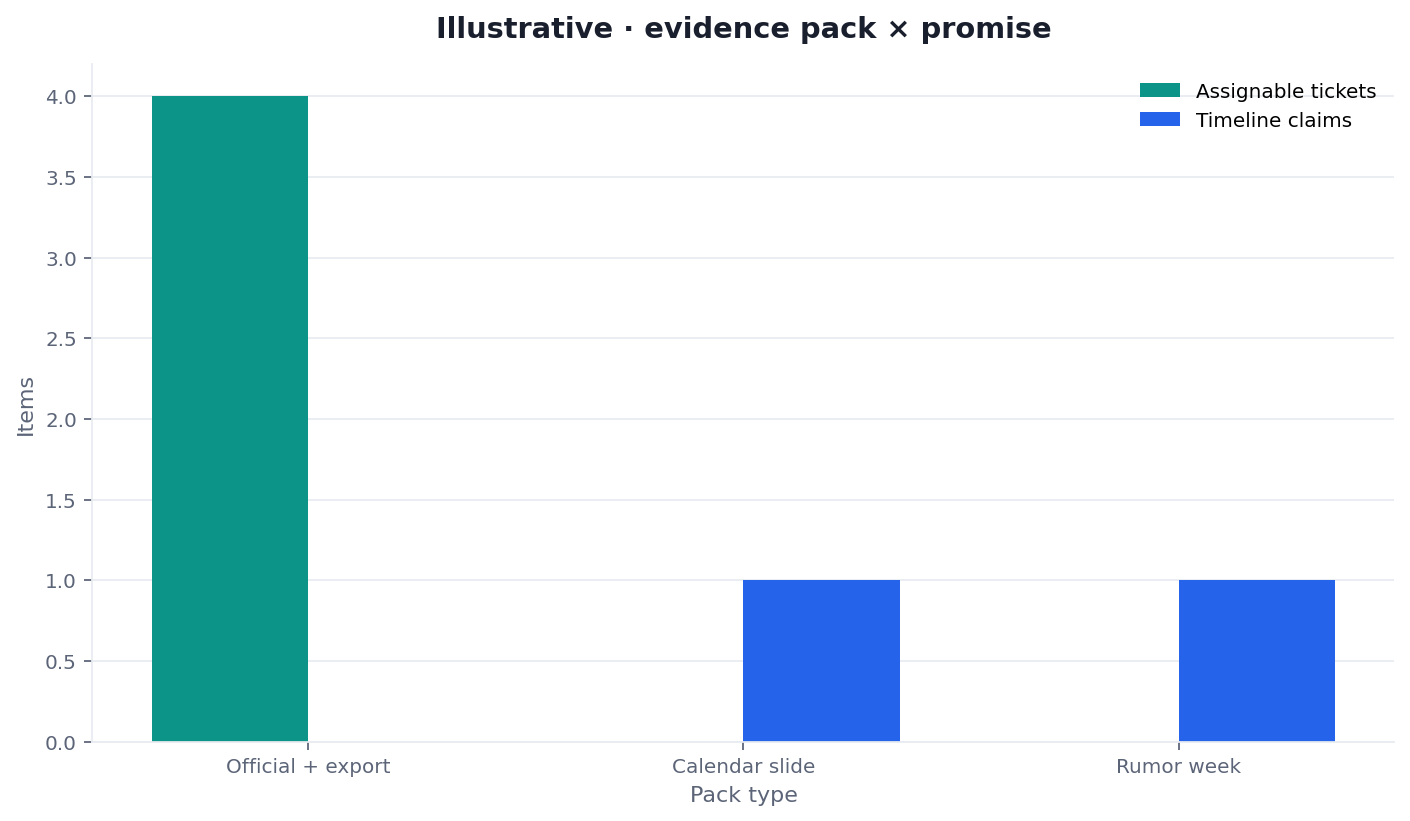
Figure: Two series from the three core rows in the 2026-09-14 feed. Duration is elapsed time. Updates are message count. Neither series is impact.
How to read the two series
The purple bars are 292.0, 285.0, and 433.6 hours. The cyan bars are 2, 2, and 2 status notes. The December 2025 bar is taller because the clock ran longer. The status-note series stays flat because each object shipped two messages.
A reviewer who reads only the tallest bar will call December 2025 “the big one.” That sentence does not belong in a recover traffic after a core update brief.
What overlap cannot establish
Temporal overlap can prioritize review. It cannot establish that Google caused a loss on one URL. The feed never lists affected pages, industries, or queries. Duration does not prove impact, and a later lift does not prove that your edit was the cause. Those limits stay on every recover traffic after a core update row.
The Google Core Update Changelog keeps the core-only ledger with permalinks when you need the raw window list without the helpful-content queue.
Failure modes that invent a rebound
Domain-wide rewrite
The warning sign is a single ticket that touches every template because “the core hit us.” The correction is a cohort with a named user-task gap and a reproducible export. Keep that warning on the recover traffic after a core update row so a later slide cannot hide it.
Cosmetic refresh
The warning sign is a new date stamp, a new H2, and the same missing decision. The correction is an editorial brief that names the gap. Changing the year in the hero is not a scoped helpful-content fix and will not recover traffic after a core update.
Promised recovery week
The warning sign is a vendor percentage or a “before the next core” deadline. The correction is to delete the promise and keep the measurement criteria. Google’s own core guidance already refuses a restoration ticket. Your brief should refuse one too.
Limits of this desk observation
Selective publication
Google does not publish every ranking adjustment. An empty day in the register means no named event was in the feed we fetched, not that ranking was frozen. Publish that caveat beside any plan to recover traffic after a core update so the page cannot be read as a stillness certificate.
Property-specific causality
The ten-row sample cannot establish why one page lost position. This snapshot is also not a customer result. Anyone using these dates on a live property must replace the empty overlay with preserved filters. Sample size here is three core objects plus seven other official rows, not a market study.
We have no third-party Search Console export attached to March, May, or December. Invented click totals would make recover traffic after a core update look finished when the overlay is still empty. Leave the property column blank until a reviewer can reopen the same filters.
A later lift after you ship still does not prove the edit caused the lift. Competitors, query mix, and result features move while you wait. Publish that residual uncertainty next to the release note so a weekly slide cannot delete it.
Core Update Recovery is the sibling that keeps hypotheses reversible when you are ready to test a change instead of only prioritizing it.
Frequently Asked Questions
Should every affected page be rewritten?
No. Prioritize coherent cohorts with material loss and a demonstrable content or technical gap. A recover traffic after a core update rewrite of every URL in the export destroys the comparison you need later.
Can deleting content speed recovery?
Only when removal or consolidation is justified for users and site architecture. Deletion itself is not a recovery mechanism and does not recover traffic after a core update by itself. Apply that rule only to the filters and period you actually inspected.
What is a useful release annotation?
Record the URL cohort, ticket, deployment time, expected user benefit, and the unchanged comparison filters. The annotation is an operations note for recover traffic after a core update. It does not prove that Search accepted the edit.
When is the work complete?
When identified defects are resolved and the page meets its user task. Traffic remains an outcome to observe, not a promised acceptance test. Close the recover traffic after a core update ticket when the brief is done, not when clicks return.
Open a workspace only after the cohort exists
Admit the official core window first. Then inspect only the Search Console rows that match that scoped helpful-content queue.
Open InfiniSynapseConclusion
Use recover traffic after a core update when the job is to rank scoped helpful-content work without promising a rebound. The 2026-09-14 snapshot gives you three official clocks — 292.0, 285.0, and 433.6 hours — and a hard split between duration and impact. Close the brief when the Google fact, the matched filters, and the unresolved alternatives are still visible. A bounded queue is more useful than an unsupported restoration claim.
If a later meeting asks for a percentage, return the cohort, the shipped gap, and the still-open alternatives. That is the entire honest product of recover traffic after a core update. Anything larger is a story the feed never supported.
William Zhu · Cofounder, InfiniSynapse · GitHub @allwefantasy
Desk-validated SEO Health methods. Corrections: zhuhl@infinisynapse.com · corrections policy.