
On this page本页目录
What are common product return reasons?常见商品退货原因有哪些?
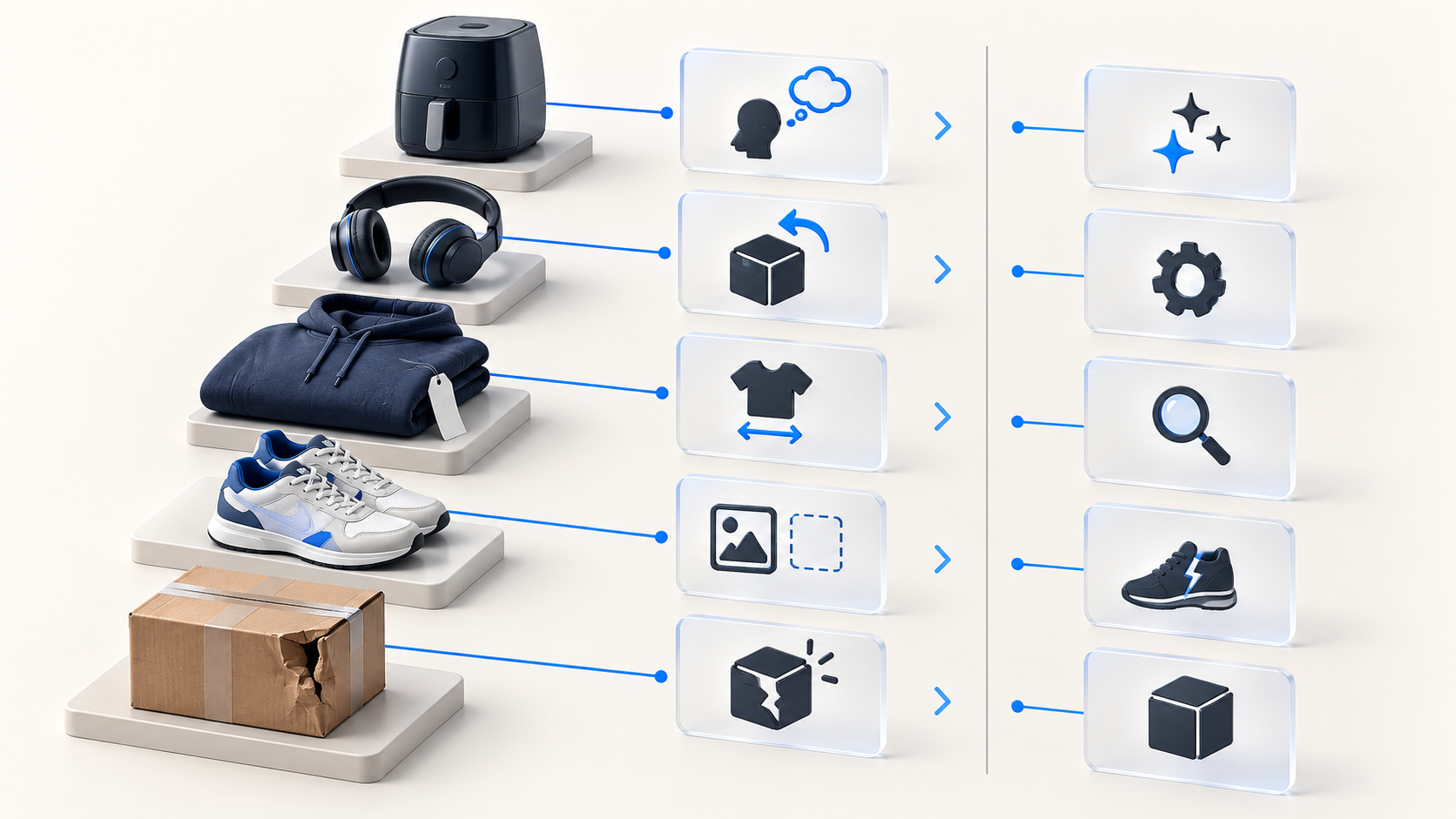
Useful top-level product return reasons include fit or compatibility, damaged or defective, wrong item, missing parts, not as described, quality or performance expectation, late delivery, changed mind, duplicate purchase, better alternative, and “other/unknown.” Adapt the choices to the category, allow clarification, and never treat the selected reason as verified root cause.
实用的顶层商品退货原因包括尺寸或兼容性、损坏或缺陷、发错商品、缺少部件、与描述不符、质量或性能未达预期、送达过晚、改变主意、重复购买、更好替代,以及“其他/未知”。选项应适配品类、允许补充说明,且不能把选择原因当作已核验根因。
A taxonomy exists to help customers communicate and teams compare patterns. It should be short enough to complete, specific enough to act on, stable enough to trend, and flexible enough to preserve unexpected feedback. It should not force a customer to diagnose manufacturing, warehouse, carrier, or merchandising failures.
分类体系用于帮助客户表达并让团队比较模式。它应足够简短以便完成、足够具体以支持行动、足够稳定以追踪趋势,同时允许保留意外反馈;不应强迫客户诊断制造、仓库、承运商或商品运营故障。
Keep four evidence layers in separate fields将四个证据层保存在独立字段
One return can have several valid descriptions. A customer may select “not as described,” a warehouse may observe an undamaged item, the disposition may be restock, and later analysis may find the product page omitted a dimension. Those statements are not interchangeable and can be revised at different times.
一笔退货可以有多个同时有效的描述。客户可能选择“与描述不符”,仓库观察到商品未损坏,处置结果为重新上架,后续分析发现商品页遗漏尺寸。这些陈述不可互换,而且可能在不同时间更新。
What the customer selected or wrote at request time, preserved verbatim and as a mapped code.客户在申请时选择或填写的内容,同时保留原文与映射代码。
Inspection evidence such as sealed, used, damaged, missing component, incorrect SKU, or no issue found.质检证据,例如未拆封、已使用、损坏、缺少部件、SKU 错误或未发现问题。
Restock, refurbish, vendor return, liquidation, donation, disposal, reject, refund, credit, or exchange.重新上架、翻新、退回供应商、清算、捐赠、报废、拒收、退款、积分或换货。
A testable explanation supported by joined evidence, not a relabeled customer selection.由关联证据支持、可测试的解释,而不是换个名称的客户选择。
Microsoft Dynamics documentation explicitly uses a reason code for why the customer wants to return an item and a disposition code for the condition/action after receipt. Preserve this separation even if a platform’s default export combines fields.
Microsoft Dynamics 文档明确使用原因码描述客户为什么退货,并使用处置码描述收货后的状态或动作。即使平台默认导出合并字段,也应保留这种区分。
Use a category-aware two-level taxonomy使用适配品类的两级分类体系
Level 1 should remain stable across the business; Level 2 can provide category-specific detail. Shopify notes that selectable reasons vary by product category—for example, apparel can expose size reasons. Avoid one enormous flat list: customers guess, analysts merge unstable labels, and small spelling changes fragment trends.
一级分类应在企业内保持稳定,二级分类可提供品类专属细节。Shopify 说明可选原因会因商品类别变化,例如服装可展示尺码原因。避免使用一个巨大的扁平列表,否则客户会猜测、分析人员会合并不稳定标签,小拼写变化也会割裂趋势。
| Level 1 family一级原因族 | Example Level 2 choices二级示例 | Keep separate from必须分开的内容 |
|---|---|---|
| Fit or compatibility尺寸或兼容性 | Too small, too large, wrong fit, device incompatible, does not fit space太小、太大、版型不合、设备不兼容、空间不适合 | Verified measurement or specification defect已核验尺寸或规格缺陷 |
| Damage or defect reported报告损坏或缺陷 | Arrived damaged, stopped working, cosmetic issue, safety concern到货损坏、停止工作、外观问题、安全担忧 | Inspection condition and fault diagnosis质检状态与故障诊断 |
| Fulfillment mismatch履约不匹配 | Wrong SKU, color, size, quantity, missing componentSKU、颜色、尺码、数量错误或缺少部件 | Warehouse pick/pack root cause仓库拣配根因 |
| Expectation mismatch预期不符 | Not as pictured, material, color, scale, feature, performance图片、材质、颜色、尺度、功能或性能不符 | Confirmed content error or product defect已确认内容错误或商品缺陷 |
| Timing or preference时间或偏好 | Arrived too late, changed mind, duplicate, better alternative送达过晚、改变主意、重复购买、更好替代 | Carrier cause or promotion effect承运商原因或促销效应 |
| Other or unknown其他或未知 | Free text, declined to answer, no reason captured自由文本、拒绝回答、未采集原因 | A fabricated assignment to a known code人为强行分配到已知代码 |
Capture reasons in seven controlled steps用七个受控步骤采集原因
- Ask at the right moment在正确时点提问
Capture the customer reason during return request and the condition during physical inspection.在申请退货时采集客户原因,在实体质检时采集商品状态。 - Show category-relevant options展示品类相关选项
Use a stable common family plus a short product-specific second level.使用稳定通用原因族,再加入简短商品专属二级选项。 - Allow multi-reason and primary choice允许多原因并选择主要原因
Preserve all selected reasons and ask which one most influenced the return.保留所有选择,并询问哪个原因最影响退货决定。 - Preserve free text保留自由文本
Store the original comment separately from any automated or manual mapping.将原始评论与自动或人工映射分开保存。 - Record provenance记录来源
Store respondent, channel, question version, locale, timestamp, and edit history.保存回答者、渠道、问题版本、语言、时间与编辑历史。 - Capture inspection evidence采集质检证据
Use controlled condition codes, notes, images where authorized, and inspector/time fields.使用受控状态码、备注、获授权图片以及质检员/时间字段。 - Version and map版本化与映射
Never overwrite old labels; maintain effective dates and a historical crosswalk.不要覆盖旧标签;维护生效日期与历史映射表。
The CSV separates raw customer response, mapped reasons, primary reason, inspection condition, disposition, and root-cause status.
CSV 分开记录客户原始回答、映射原因、主要原因、质检状态、处置与根因状态。
Download CSV template下载 CSV 模板 ↓Analyze reason share with an eligible denominator使用合格分母分析原因占比
Also publish total returns, missing reason count, multi-reason count, changed-code count, returned units/value, and the original sales denominator. Reason share answers composition among coded returns; it is not the product return rate.
还应发布退货总数、原因缺失数、多原因数、代码变化数、退回件数/金额与原始销售分母。原因占比回答已编码退货的构成,并不等于商品退货率。
| Output输出 | Required context所需背景 | What it can support可支持内容 |
|---|---|---|
| Reason count and share原因数量与占比 | Reason eligibility, multi-select rule, missingness, taxonomy version原因资格、多选规则、缺失率、分类版本 | Composition and trend monitoring构成与趋势监控 |
| Product return rate by reason按原因的商品退货率 | Eligible fulfilled units by matching product cohort匹配商品群组的合格履约件数 | Product/category prioritization商品/品类优先级 |
| Returned value or contribution impact退回金额或贡献影响 | Order-line value, cost, recovery, currency, maturity订单行金额、成本、回收、币种、成熟度 | Economic prioritization经济优先级 |
| Reason-condition agreement原因—状态一致性 | Customer reason, inspection code, join coverage, timing客户原因、质检码、关联覆盖、时间 | Question quality and investigation targeting问题质量与调查定位 |
Worked example: preserve disagreement instead of rewriting it示例:保留分歧,而不是改写记录
Assume 200 synthetic returned units. Customer reasons are present for 180: 72 fit, 45 expectation mismatch, 27 damage reported, 18 fulfillment mismatch, 10 preference, and 8 other. Inspection observes physical damage on 16 units, including only 11 of the 27 customer-reported damage cases.
假设有 200 件模拟退回商品,其中 180 件有客户原因:72 件尺寸、45 件预期不符、27 件报告损坏、18 件履约不匹配、10 件偏好、8 件其他。质检在 16 件中观察到实体损坏,其中只有 11 件属于客户报告损坏的 27 件。
| Synthetic measure模拟指标 | Count数量 | Denominator分母 | Result结果 |
|---|---|---|---|
| Reason coverage原因覆盖 | 180 | 200 returns | 90.0% |
| Fit reason share尺寸原因占比 | 72 | 180 coded | 40.0% |
| Damage-reported share报告损坏占比 | 27 | 180 coded | 15.0% |
| Observed-damage share观察损坏占比 | 16 | 200 inspected | 8.0% |
| Reported and observed damage报告且观察到损坏 | 11 | 27 damage-reported | 40.7% |
Do not overwrite the 16 observed conditions with the 27 customer reports or vice versa. The mismatch can guide sampling: wording may be broad, damage may be transit-related or hidden, inspection may be incomplete, or customers may use “damaged” to express dissatisfaction. Each explanation remains a hypothesis until verified.
不要用 27 个客户报告覆盖 16 个观察状态,也不要反向覆盖。差异可指导抽样:措辞可能过宽、损坏可能来自运输或不易观察、质检可能不完整,客户也可能用“损坏”表达不满。每种解释在核验前都只是企假设。
All store figures and records in this example are synthetic. They illustrate the method and do not represent InfiniSynapse customer results or industry benchmarks.本示例中的商店数字与记录均为模拟,仅用于说明方法,不代表 InfiniSynapse 客户结果或行业基准。
Read reason data as a signal with measurement error把原因数据视为带测量误差的信号
Reason choice depends on available options, wording, order, language, channel, customer effort, incentives, and who completes the return. Track coverage and disagreement before comparing trends. A rising reason can reflect a taxonomy change or new required question, not a product change.
原因选择取决于可用选项、措辞、顺序、语言、渠道、客户付出、激励以及由谁办理退货。比较趋势前,应追踪覆盖率与分歧。某原因上升可能来自分类改变或新增必填问题,而不是商品改变。
Count, share, coverage, value, condition, and disposition under declared rules.在声明规则下的数量、占比、覆盖、金额、状态与处置。
A product, content, fulfillment, carrier, policy, or survey mechanism.商品、内容、履约、承运商、政策或问卷机制。
Order lines, product attributes, content version, scans, inspection, images, and matched cohorts.订单行、商品属性、内容版本、扫描、质检、图片与匹配群组。
Material, repeated, mature, credible, controllable, and safe to test.重要、重复、成熟、可信、可控且适合安全测试。
Keep customer language visible. Mapping free text to a controlled code helps aggregation, but the model or analyst can be wrong. Store mapping method, version, confidence, and an unmapped state.
应保留客户原话。把自由文本映射到受控代码有助汇总,但模型或分析人员可能出错,因此要保存映射方法、版本、置信度与未映射状态。
Run eight checks before publishing reason trends发布原因趋势前完成八项检查
- Coverage: report reasons present, missing, declined, and not eligible.覆盖率:报告有原因、缺失、拒答与不适用数量。
- Version: expose taxonomy and question versions with effective dates.版本:展示分类与问题版本及生效日期。
- Denominator: distinguish coded returns, returned units, returned orders, and fulfilled sales.分母:区分已编码退货、退回件数、退货订单与履约销售。
- Multi-select: state whether shares can sum above 100% and identify the primary reason.多选:说明占比是否可能超过 100%,并识别主要原因。
- Category fit: confirm every option is understandable and relevant for the product class.品类适配:确认每个选项对该商品类别都易懂且相关。
- Join coverage: publish unmatched order lines, inspections, and dispositions.关联覆盖:发布未匹配订单行、质检与处置。
- Drift: monitor other/free-text themes and new wording rather than forcing old codes.漂移:监控其他/自由文本新主题,不要强塞进旧代码。
- Privacy: minimize personal data and apply retention/access controls to comments and images.隐私:减少个人数据,并对评论与图片实施保留和访问控制。
Avoid seven product-return reason mistakes避免七个商品退货原因错误
- Treating a customer-selected reason as a verified root cause.把客户选择的原因当作已核验根因。
- Combining customer reason, observed condition, disposition, and refund outcome in one field.把客户原因、观察状态、处置与退款结果混在一个字段。
- Changing code labels without versioning or remapping historical records.更改代码标签却不进行版本化或映射历史记录。
- Ranking percentages without counts, eligible denominators, value, or uncertainty.只按百分比排序,不展示数量、合格分母、金额或不确定性。
- Comparing products, channels, or periods with different question wording and missingness.比较问题措辞与缺失程度不同的商品、渠道或期间。
- Discarding “other,” free text, multi-reason, changed, or unknown responses.丢弃“其他”、自由文本、多原因、已更改或未知回答。
- Acting on correlation before reviewing cases and testing a mechanism.在检查案例并测试机制前就依据相关性行动。
Keep the raw response, mapped code, question version, respondent, timing, condition, disposition, and edit history. A clean chart cannot repair lost provenance.
保留原始回答、映射代码、问题版本、回答者、时间、状态、处置与编辑历史。干净图表无法修复丢失的来源信息。
Move from a reason signal to a verified intervention从原因信号走向已核验干预
Select a material, mature reason-product cohort; review raw comments and inspection records; map possible mechanisms; collect the missing evidence; then test one reversible change. Monitor total return impact plus conversion, contacts, satisfaction, fraud, cost, and recovery.
选择重要且成熟的原因—商品群组,检查原始评论与质检记录,绘制可能机制,收集缺失证据,再测试一个可逆变更。同时监控退货总影响、转化、咨询、满意度、欺诈、成本与回收。
| Signal信号 | Evidence to check待检查证据 | Safe next step安全下一步 |
|---|---|---|
| Fit reason rises for one variant某变体尺寸原因上升 | Measurements, size chart, reviews, variant mapping, customer mix实测尺寸、尺码表、评论、变体映射、客户结构 | Verify measurements; test content on matched traffic核验尺寸并在匹配流量测试内容 |
| Damage reported but rarely observed报告损坏但很少观察到 | Reason wording, photos, inspection coverage, transit events, packaging原因措辞、图片、质检覆盖、运输事件、包装 | Audit samples and refine capture before assigning cause审计样本并先优化采集,再归因 |
| Other/free text grows其他/自由文本增长 | Comment themes, locale, missing option, taxonomy version, channel评论主题、语言、缺失选项、分类版本、渠道 | Code a sample; add or revise an option if stable编码样本;主题稳定时新增或修改选项 |
Prepare return-reason data with preserved evidence layers准备保留证据层的退货原因数据
Export order-line IDs, raw reason text, mapped and primary codes, question version, respondent, timestamps, product/variant, inspection condition, disposition, outcome, and join flags. Return Compass can segment an approved file; it cannot turn a selected reason into proven cause.
导出订单行 ID、原因原文、映射码与主要码、问题版本、回答者、时间、商品/变体、质检状态、处置、结果与关联标记。逆向罗盘可细分获批文件,但不能把选择原因变成已证明根因。
Open Return Compass打开逆向罗盘 →Product Return Reasons FAQ商品退货原因常见问题
Common families include fit or compatibility, damage or defect reported, fulfillment mismatch, expectation mismatch, timing, preference, duplicate purchase, and other/unknown. Their prevalence must be measured for the retailer and category.常见原因族包括尺寸或兼容性、报告损坏或缺陷、履约不匹配、预期不符、时间、偏好、重复购买与其他/未知;具体占比必须按零售商与品类实测。
A stable top level helps company-wide reporting, while a short category-specific second level captures details such as apparel fit or device compatibility.稳定一级分类有利于全公司报告,简短品类专属二级分类可采集服装尺码或设备兼容性等细节。
No. It is customer-reported evidence. Root cause requires joined product, content, fulfillment, carrier, inspection, policy, and cohort evidence plus a testable mechanism.不是。它是客户报告证据;根因需要关联商品、内容、履约、承运商、质检、政策与群组证据,并提出可测试机制。
Preserve every selection, capture a primary reason when possible, and state whether the published share is multi-response or primary-only. Multi-response shares can exceed 100%.保留所有选择,并尽可能采集主要原因;声明发布占比是多选还是仅主要原因。多选占比之和可能超过 100%。
Keep the raw text, map it with method/version/confidence, review a sample regularly, and add a controlled option only when a stable, material theme appears.保留原文,记录映射方法/版本/置信度,定期审核样本,只有稳定且重要的新主题出现时才增加受控选项。
Sources, evidence labels, and limitations来源、证据标签与限制
- Shopify Help Center: Creating and processing returns and exchanges — Official documentation that return-reason choices vary by product category and can be analyzed across Shopify return workflows.Shopify 帮助中心:创建并处理退货与换货——官方说明退货原因选项会因商品类别而变化,并可在 Shopify 退货工作流中用于分析。
- Microsoft Learn: Sales returns in Dynamics 365 Supply Chain Management — Official documentation for customer-selected reason codes, reason groups, return-line references, disposition actions, and inventory/credit implications.Microsoft Learn:Dynamics 365 供应链销售退货——客户选择原因码、原因组、退货行关联、处置动作以及库存/贷项影响的官方文档。
- Microsoft Learn: Return reason codes and disposition codes — Official distinction between why a customer requests a return and the condition/action assigned after physical inspection.Microsoft Learn:退货原因码与处置码——官方区分客户申请退货的原因与实体质检后分配的状态/动作。
- Oracle Retail Order Management: Establishing Return Reason Codes — Official reference for reason-code maintenance, storefront use, authorization/receipt/credit stages, history, counts, and returned merchandise value reporting.Oracle 零售订单管理:建立退货原因码——原因码维护、前台使用、授权/收货/贷项阶段、历史、数量与退货金额报告的官方参考。
- National Retail Federation: 2025 Retail Returns Landscape — Dated U.S. market context for return scale, customer expectations, and fraud; it does not establish an individual retailer’s reason mix.美国零售联合会:2025 零售退货报告——关于退货规模、客户预期与欺诈的带年份美国市场背景;不能代表单个零售商的原因结构。
Evidence statement: Official commerce-system documentation supports the distinction among reason, condition, disposition, and transaction stages. The common-reason list is a proposed taxonomy starter, not a measured prevalence ranking. Examples are synthetic. No customer result, universal reason mix, causal claim, or guaranteed improvement is asserted. Sources were reviewed September 15, 2026; named subject-matter review is required before publication.证据声明:官方商业系统文档支持区分原因、状态、处置与交易阶段。常见原因列表是分类起点建议,并非实测流行度排序。示例为模拟。本文不声称客户结果、通用原因结构、因果结论或保证改善。来源核验于 2026 年 9 月 15 日完成;发布前需要具名领域审核。
Use product return reasons as evidence, not diagnosis把商品退货原因作为证据,而不是诊断
Create a stable category-aware taxonomy, preserve raw customer language, and keep reported reason, observed condition, disposition, and root-cause hypothesis separate. Publish coverage and denominators with every trend. Use reason patterns to choose investigations, then verify the mechanism before changing product, content, fulfillment, carrier, or policy.
建立稳定且适配品类的分类体系,保留客户原话,并分开客户原因、观察状态、处置与根因假设。每个趋势都应发布覆盖率与分母。使用原因模式选择调查对象,再核验机制,然后才改变商品、内容、履约、承运商或政策。