
On this page本页目录
What should a product return dashboard include?商品退货看板应该包含什么?
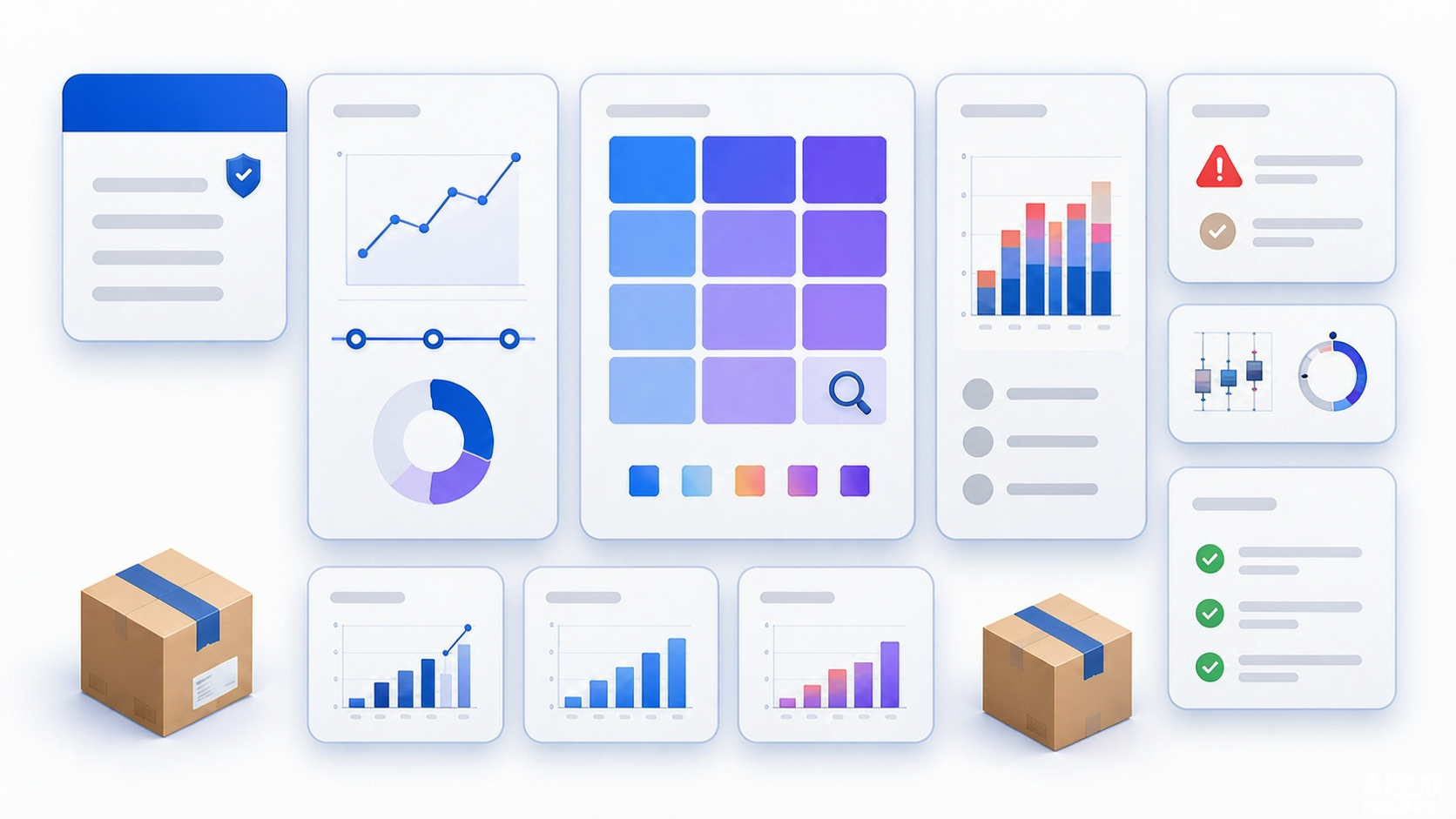
Show a versioned return-rate contract, qualifying returned and eligible fulfilled units, mature cohort trend, returned value and after-returns contribution, product/SKU priority view, reason and inspection coverage, disposition and recovery, data freshness and quality, uncertainty, and current alerts. Every headline should drill to comparable segments and then to governed case evidence. Add an action log with owner, hypothesis, treatment, exposure, maturity date, guardrails, result, and decision.
展示版本化退货率契约、合格退回与合格履约件数、成熟群组趋势、退回金额与退货后贡献、商品/SKU 优先视图、原因与质检覆盖、处置与回收、数据新鲜度与质量、不确定性及当前预警。每个总指标都应能下钻到可比细分,再到受治理案例证据。加入行动日志,包含负责人、假设、方案、曝光、成熟日期、护栏、结果与决策。
A dashboard is a decision interface, not the source of truth. Metric definitions, transformations, identity, permissions, and lineage belong in governed data contracts. Real-time operational states and mature analytical cohorts need separate timestamps and labels. Avoid public or cross-team exposure of customer, employee, supplier, or sensitive fraud data beyond approved access.
看板是决策界面,不是事实来源。指标定义、转换、身份、权限与血缘属于受治理数据契约。实时运营状态与成熟分析群组需要不同时间戳与标签。不要在批准访问范围外公开或跨团队暴露客户、员工、供应商或敏感欺诈数据。
Organize the dashboard into seven layers把看板组织为七个层级
The first screen should establish trust and priority. Deeper screens explain mechanism and action. Keep one filter state visible throughout, support accessible tables and exports, and preserve links back to source definitions.
首屏应建立信任与优先级,更深层页面解释机制与行动。全程保持一个筛选状态可见,支持可访问表格与导出,并保留返回源定义的链接。
Metric version, observation unit, event, cohort anchor, return window, exclusions, exchange logic and as-of date.指标版本、观察单位、事件、群组锚点、退货窗口、排除、换货逻辑与截至日期。
Freshness, maturity, reconciliation, identity match, reason/inspection/cost coverage and incidents.新鲜度、成熟度、核对、身份匹配、原因/质检/成本覆盖与事故。
Counts, rates, returned value, contribution change, workload, disposition, recovery and customer severity.数量、退货率、退回金额、贡献变化、工作量、处置、回收与客户严重度。
Product/SKU rate, volume, uncertainty, excess returns, loss, lifecycle, coverage and priority rationale.商品/SKU 退货率、数量、不确定性、超额退货、损失、生命周期、覆盖与优先理由。
Reasons, raw text, inspection, product attributes, content, supplier/batch, fulfillment, channel, policy and time.原因、原始文本、质检、商品属性、内容、供应商/批次、履约、渠道、政策与时间。
Permissioned order-line timeline, evidence status, missing fields, provenance and reviewer notes.按权限展示订单行时间线、证据状态、缺失字段、来源与审核备注。
Hypothesis, alternatives, owner, treatment, exposure, guardrails, maturity, result, decision and recurrence.假设、替代解释、负责人、方案、曝光、护栏、成熟度、结果、决策与复发。
Do not mix “today’s requested returns” with “mature fulfillment-cohort return rate” in one unlabeled trend. Operational monitoring and outcome measurement serve different decisions.
不要在一条无标签趋势中混合“今天申请的退货”与“成熟履约群组退货率”。运营监控与结果衡量服务于不同决策。
Define dashboard states, not just numbers定义看板状态,而不只是数字
Every card should communicate readiness. A number can be current but immature, complete but unreconciled, precise but based on the wrong definition, or suppressed for privacy. Use visible status labels and an explanation panel.
每张卡片都应传达可用状态。一个数字可以是最新但未成熟、完整但未核对、精确但定义错误,或因隐私被抑制。使用可见状态标签与解释面板。
| State状态 | Meaning含义 | Interface response界面响应 |
|---|---|---|
| Ready可用 | Definition approved, source reconciled, cohort mature, coverage above declared rule定义已批准、来源已核对、群组成熟、覆盖达到声明规则 | Show result and context展示结果与背景 |
| Provisional暂估 | Late events, cost invoices, recovery or cohort maturity remain open迟到事件、成本发票、回收或群组成熟度仍开放 | Show expected revision and as-of date展示预计修订与截至日期 |
| Data incident数据事故 | Reconciliation, duplication, identity, schema, or pipeline check failed核对、重复、身份、Schema 或管道检查失败 | Quarantine card; link incident owner隔离卡片;链接事故负责人 |
| Insufficient evidence证据不足 | Counts, reason, inspection, cost or comparison coverage cannot support the decision数量、原因、质检、成本或比较覆盖不足以支持决策 | Show missing evidence and capture plan展示缺失证据与采集计划 |
| Suppressed / restricted抑制/受限 | Small cell, privacy, security, supplier, fraud, legal or contractual control小单元、隐私、安全、供应商、欺诈、法律或合同控制 | Hide sensitive detail; show reason and request path隐藏敏感细节;展示原因与申请路径 |
Create the dashboard contract before the layout布局前先建立看板契约
- Name the decisions and users明确决策与用户
List executive, merchandising, product, operations, quality, finance, support and analyst decisions plus access needs.列出管理、商品、产品、运营、质量、财务、客服与分析决策及访问需求。 - Version every metric版本化每个指标
Document numerator, denominator, unit, event, date, cohort, window, exclusions, currency, allocation and owner.记录分子、分母、单位、事件、日期、群组、窗口、排除、币种、分配与负责人。 - Define filters and hierarchy定义筛选与层级
Use stable store, channel, geography, product, variant, category, supplier, customer, policy and time dimensions.使用稳定商店、渠道、地区、商品、变体、品类、供应商、客户、政策与时间维度。 - Specify trust checks规定可信检查
Set freshness, reconciliation, maturity, identity, coverage, small-cell, missingness and incident thresholds.设置新鲜度、核对、成熟度、身份、覆盖、小单元、缺失与事故阈值。 - Design the drill path设计下钻路径
Move from outcome to segment comparison, evidence profile, anonymized or permissioned cases, and source records.从结果到细分比较、证据画像、匿名或按权限案例及源记录。 - Add action governance加入行动治理
Capture hypothesis, alternatives, owner, approval, treatment, exposure, guardrails, maturity, outcome and decision.采集假设、替代解释、负责人、批准、方案、曝光、护栏、成熟度、结果与决策。 - Test usability and accessibility测试可用性与可访问性
Validate tasks with users; provide keyboard use, text alternatives, tables, contrast, responsive layout, export and audit logs.与用户验证任务;提供键盘操作、文本替代、表格、对比度、响应式布局、导出与审计日志。
The CSV captures dashboard users and decisions, metric contracts, filters, data-quality states, cards, drill paths, permissions, alerts, owners, action experiments, maturity, outcomes and review dates.
CSV 采集看板用户与决策、指标契约、筛选、数据质量状态、卡片、下钻路径、权限、预警、负责人、行动实验、成熟度、结果与复核日期。
Download CSV template下载 CSV 模板 ↓Make every headline reconstructable让每个总指标都可重建
A user should be able to open the definition, see numerator and denominator counts, reproduce the filter state, identify source freshness, inspect exclusions and missingness, and export supporting rows subject to permission. If not, the card is a presentation—not a governed metric.
用户应能打开定义、查看分子与分母数量、复现筛选状态、识别来源新鲜度、检查排除与缺失,并在权限允许下导出支持行。否则该卡片只是展示,不是受治理指标。
| Output输出 | Required context所需背景 | What it can support可支持内容 |
|---|---|---|
| Outcome card结果卡片 | Metric contract, counts, maturity, as-of, comparison and uncertainty指标契约、数量、成熟度、截至日期、比较与不确定性 | Answer what changed回答发生了什么 |
| Priority view优先视图 | Rate, volume, loss, severity, coverage, reference and rule退货率、数量、损失、严重度、覆盖、参考与规则 | Choose where to investigate选择调查位置 |
| Diagnostic view诊断视图 | Reasons, inspection, attributes, mix, content, supplier, fulfillment, policy原因、质检、属性、结构、内容、供应商、履约、政策 | Generate competing hypotheses生成竞争假设 |
| Case view案例视图 | Identity, timeline, provenance, evidence status, permissions and notes身份、时间线、来源、证据状态、权限与备注 | Review representative evidence复核代表性证据 |
| Action view行动视图 | Treatment, exposure, maturity, guardrails, outcome, recurrence and decision方案、曝光、成熟度、护栏、结果、复发与决策 | Close the learning loop闭合学习环 |
Worked example: a high rate card is not yet actionable示例:高退货率卡片尚不可行动
A synthetic dashboard shows Product A at 18% and Product B at 11%. Opening the trust strip reveals A has 9 returns from 50 fulfilled units, an immature cohort and 30% reason coverage. B has 550 returns from 5,000 mature fulfilled units, 92% reason coverage, 80% inspection coverage, and material after-return contribution loss.
一个模拟看板显示商品 A 退货率 18%,商品 B 为 11%。打开可信度条后发现,A 为 50 件履约中的 9 件退货,群组未成熟且原因覆盖 30%;B 为 5,000 件成熟履约中的 550 件退货,原因覆盖 92%,质检覆盖 80%,且退货后贡献损失重要。
| Synthetic card模拟卡片 | Headline总指标 | Trust evidence可信证据 | Dashboard response看板响应 |
|---|---|---|---|
| A | 18.0% | 9 / 50; immature; sparse reasons9 / 50;未成熟;原因稀疏 | Provisional; monitor and improve capture暂估;监控并改善采集 |
| B | 11.0% | 550 / 5,000; mature; high evidence coverage550 / 5,000;成熟;证据覆盖高 | Priority drill-down优先下钻 |
| Portfolio商品组合 | 12.2% | Mix shifted to Product B结构转向商品 B | Show mix and within-product bridge展示结构与商品内核对桥 |
A rate-only leaderboard would put A first. The governed dashboard marks A provisional and sends B to a reason/inspection/product-economics drill-down. It also explains how mix changed the portfolio result. The next screen should show why B is a priority, what remains uncertain, and which cases and action record support the decision.
只按退货率排名会把 A 放第一。受治理看板将 A 标为暂估,并把 B 送入原因/质检/商品经济下钻,同时解释结构如何改变商品组合结果。下一屏应展示 B 为什么是优先项、仍有哪些不确定性,以及哪些案例与行动记录支持决策。
All store figures and records in this example are synthetic. They illustrate the method and do not represent InfiniSynapse customer results or industry benchmarks.本示例中的商店数字与记录均为模拟,仅用于说明方法,不代表 InfiniSynapse 客户结果或行业基准。
Design for questions, not chart inventory围绕问题设计,而不是堆图表
Each screen should answer one decision question: what changed, is it trustworthy, where is it concentrated, what evidence supports a mechanism, and did the action work? Remove charts that do not change a decision or reveal evidence. Preserve comparison context and filter state when users move between levels.
每一屏应回答一个决策问题:发生了什么、是否可信、集中在哪里、什么证据支持机制,以及行动是否有效。删除不会改变决策或揭示证据的图表。用户在层级间移动时,应保留比较背景与筛选状态。
Current operational events and service levels; fast but not necessarily mature outcome evidence.当前运营事件与服务水平;快速但不一定是成熟结果证据。
Governed mature cohort metrics with definition, coverage, comparison and uncertainty.带定义、覆盖、比较与不确定性的受治理成熟群组指标。
Matched segment and case evidence used to distinguish competing mechanisms.用于区分竞争机制的匹配细分与案例证据。
Versioned actions, exposure, guardrails, mature outcomes, recurrence and decisions.版本化行动、曝光、护栏、成熟结果、复发与决策。
A dashboard alert should state the metric version, baseline, minimum exposure, uncertainty or threshold logic, affected segment, owner and expected review time. Avoid unexplained red cards.
看板预警应说明指标版本、基线、最小暴露、不确定性或阈值逻辑、受影响细分、负责人及预计复核时间。避免无法解释的红色卡片。
Run ten controls before launching a dashboard上线看板前完成十项控制
- Decision fit: every card maps to a named user, question, action and owner.决策适配:每张卡片映射具名用户、问题、行动与负责人。
- Metric contract: unit, event, dates, cohort, window, exclusions, exchanges, currency and version are visible.指标契约:单位、事件、日期、群组、窗口、排除、换货、币种与版本可见。
- Source reconciliation: order, fulfillment, return, refund, finance and inventory totals balance.来源核对:订单、履约、退货、退款、财务与库存总数平衡。
- Identity quality: store, channel, order line, product, variant, customer and return joins are measured.身份质量:衡量商店、渠道、订单行、商品、变体、客户与退货关联。
- Freshness and maturity: operational and analytical timestamps are separate and explicit.新鲜度与成熟度:运营与分析时间戳分开且明确。
- Coverage: reason, inspection, cost, recovery, content and supplier gaps are shown, never defaulted to zero.覆盖:展示原因、质检、成本、回收、内容与供应商缺口,绝不默认为零。
- Uncertainty and suppression: small cells, intervals/shrinkage, privacy and restricted states are enforced.不确定性与抑制:执行小单元、区间/收缩、隐私与受限状态。
- Permissions: role-based access, row/detail controls, export restrictions and audit logs are tested.权限:测试角色访问、行/明细控制、导出限制与审计日志。
- Accessibility and responsiveness: keyboard, focus, contrast, text/table alternatives, mobile and zoom work.可访问与响应:键盘、焦点、对比度、文本/表格替代、移动端与缩放正常。
- Action linkage: alerts connect to cases, owner, hypothesis, test, guardrails, result and closure.行动关联:预警连接案例、负责人、假设、测试、护栏、结果与关闭。
Avoid nine product-return dashboard mistakes避免九个商品退货看板错误
- Treating a customer-selected reason as a verified root cause.把客户选择的原因当作已核验根因。
- Combining customer reason, observed condition, disposition, and refund outcome in one field.把客户原因、观察状态、处置与退款结果混在一个字段。
- Changing code labels without versioning or remapping historical records.更改代码标签却不进行版本化或映射历史记录。
- Ranking percentages without counts, eligible denominators, value, or uncertainty.只按百分比排序,不展示数量、合格分母、金额或不确定性。
- Comparing products, channels, or periods with different question wording and missingness.比较问题措辞与缺失程度不同的商品、渠道或期间。
- Discarding “other,” free text, multi-reason, changed, or unknown responses.丢弃“其他”、自由文本、多原因、已更改或未知回答。
- Acting on correlation before reviewing cases and testing a mechanism.在检查案例并测试机制前就依据相关性行动。
- Mixing event-date operational counts with mature cohort rates on one unlabeled trend.在一条无标签趋势中混合事件日期运营数量与成熟群组退货率。
- Using color-only alerts without definition, counts, uncertainty, affected segment, owner, or next action.使用只有颜色的预警,却没有定义、数量、不确定性、受影响细分、负责人或下一行动。
Do not make a chart look decisive when the data is provisional, restricted or incomplete. The dashboard should slow down unsafe decisions and speed up well-evidenced ones.
数据暂估、受限或不完整时,不要让图表看起来确定。看板应放慢不安全决策,加速证据充分的决策。
Ship the dashboard through decision-based acceptance tests通过基于决策的验收测试上线看板
Prototype the minimum workflow with real decision owners. Test whether each user can verify the metric, isolate a product cohort, understand coverage and uncertainty, inspect a permitted case, assign an action, and recover the outcome. Validate permissions, performance, accessibility, responsive behavior, exports, incident states and auditability before expansion.
与真实决策负责人制作最小工作流原型。测试每位用户能否验证指标、隔离商品群组、理解覆盖与不确定性、检查获准案例、分配行动并回收结果。扩展前验证权限、性能、可访问性、响应式、导出、事故状态与可审计性。
| Signal信号 | Evidence to check待检查证据 | Safe next step安全下一步 |
|---|---|---|
| Executive asks why the rate changed管理层询问退货率为何变化 | Metric contract, maturity, mix bridge, product and value decomposition指标契约、成熟度、结构桥、商品与金额分解 | One-click trusted explanation path一键可信解释路径 |
| Product team sees a priority SKU商品团队看到优先 SKU | Counts, uncertainty, reference, reason/inspection, content, quality, cost, cases数量、不确定性、参考、原因/质检、内容、质量、成本、案例 | Create governed hypothesis/action record创建受治理假设/行动记录 |
| Data check fails数据检查失败 | Affected metrics, source, incident time, owner, last good state, expected fix受影响指标、来源、事故时间、负责人、上次正常状态、预计修复 | Quarantine and communicate; do not silently refresh隔离并沟通;不要静默刷新 |
Prepare a dashboard requirements file准备看板需求文件
Export user and decision, card name, metric ID/version/owner, numerator, denominator, unit, event, cohort, window, exclusions, currency, comparison, uncertainty, freshness, maturity, reconciliation, identity and evidence coverage, filter dimensions, hierarchy, drill path, case permissions, suppression, alert logic, owner and response time, action/test fields, accessibility, export, audit log, incident state and review date. Return Compass can organize governed views; it cannot decide definitions or permissions without owners.
导出用户与决策、卡片名、指标 ID/版本/负责人、分子、分母、单位、事件、群组、窗口、排除、币种、比较、不确定性、新鲜度、成熟度、核对、身份与证据覆盖、筛选维度、层级、下钻路径、案例权限、抑制、预警逻辑、负责人及响应时间、行动/测试字段、可访问性、导出、审计日志、事故状态与复核日期。逆向罗盘可组织受治理视图,但不能在缺少负责人的情况下决定定义或权限。
Open Return Compass打开逆向罗盘 →Product Return Dashboard FAQ商品退货看板常见问题
Include qualifying counts and mature rates, returned value and after-return contribution, product/SKU priorities, reasons and inspection, disposition and recovery, customer severity, coverage, freshness, uncertainty and action outcomes.包含合格数量与成熟退货率、退回金额与退货后贡献、商品/SKU 优先级、原因与质检、处置与回收、客户严重度、覆盖、新鲜度、不确定性及行动结果。
Operational requests and processing can be near real time. Outcome rates need mature cohorts and clear as-of dates. Keep the views separate and label their decision purpose.运营申请与处理可接近实时;结果退货率需要成熟群组与明确截至日期。应分开视图并标明决策用途。
Show rate with counts, uncertainty, matched reference, excess returns, economic loss, severity, evidence coverage and priority rationale—not a percentage-only leaderboard.展示退货率及数量、不确定性、匹配参考、超额退货、经济损失、严重度、证据覆盖与优先理由,而非只按百分比排名。
Move from outcome to comparable segment, diagnostic evidence profile, and permissioned case timeline with provenance, missing fields, reviewer notes and action linkage.从结果进入可比细分、诊断证据画像,再进入带来源、缺失字段、审核备注与行动关联的按权限案例时间线。
Expose metric version, freshness, maturity, reconciliation, identity match, coverage, counts, uncertainty, incidents, provisional/suppressed states, owner and review date.展示指标版本、新鲜度、成熟度、核对、身份匹配、覆盖、数量、不确定性、事故、暂估/抑制状态、负责人与复核日期。
Sources, evidence labels, and limitations来源、证据标签与限制
- Shopify Help Center: Analytics data points reference — Official definitions for gross profit, net sales, sales reversals, and cost-recording coverage in Shopify analytics.Shopify 帮助中心:分析数据字段参考——Shopify 分析中毛利润、净销售额、销售冲回与成本记录覆盖的官方定义。
- Shopify Help Center: Profit reports — Official documentation for product- and variant-level gross profit reporting, cost-per-item prerequisites, discounts, and refunds.Shopify 帮助中心:利润报告——关于商品及变体级毛利润报告、单件成本前提、折扣与退款的官方文档。
- Shopify Help Center: Using SKUs to manage inventory — Official guidance that SKUs are internal inventory and reporting identifiers and should be unique for each product variant.Shopify 帮助中心:使用 SKU 管理库存——官方指南说明 SKU 是内部库存与报告标识,每个商品变体应使用唯一 SKU。
- Microsoft Learn: Sales returns in Dynamics 365 Supply Chain Management — Official documentation for customer-selected reason codes, reason groups, return-line references, disposition actions, and inventory/credit implications.Microsoft Learn:Dynamics 365 供应链销售退货——客户选择原因码、原因组、退货行关联、处置动作以及库存/贷项影响的官方文档。
- Microsoft Learn: Return reason codes and disposition codes — Official distinction between why a customer requests a return and the condition/action assigned after physical inspection.Microsoft Learn:退货原因码与处置码——官方区分客户申请退货的原因与实体质检后分配的状态/动作。
Evidence statement: Official commerce and product-data documentation supports stable SKU and variant identity, return-workflow stages, and evidence separation. Shopify and Microsoft documentation supports field, variant, return-stage and inspection concepts; the visual is a conceptual design, not a claim about current InfiniSynapse product functionality. Examples are synthetic. No customer result, universal threshold, causal claim, or guaranteed improvement is asserted. Sources were reviewed September 15, 2026; named subject-matter review is required before publication.证据声明:官方商业与商品数据文档支持稳定的 SKU 和变体身份、退货工作流阶段与证据分离。Shopify 与 Microsoft 文档支持字段、变体、退货阶段与质检概念;视觉为概念设计,不代表 InfiniSynapse 当前产品功能。示例为模拟。本文不声称客户结果、通用阈值、因果结论或保证改善。来源核验于 2026 年 9 月 15 日完成;发布前需要具名领域审核。
Make the dashboard a governed path from signal to learning让看板成为从信号到学习的受治理路径
Begin with named decisions and versioned metric contracts. Put freshness, maturity, reconciliation, identity, coverage and uncertainty beside every outcome. Let users move from portfolio signal to comparable segment, evidence profile, permitted cases and an owned action record without losing filter context. Separate real-time monitoring from mature measurement, enforce access and suppression, and close the loop with tested outcomes—not more charts.
从具名决策与版本化指标契约开始。把新鲜度、成熟度、核对、身份、覆盖与不确定性放在每个结果旁。让用户从商品组合信号进入可比细分、证据画像、获准案例与有负责人的行动记录,同时不丢失筛选背景。分开实时监控与成熟衡量,执行访问与抑制,并用测试结果闭环,而不是增加更多图表。