
On this page本页目录
Order return rate vs unit return rate—in one minute一分钟看懂订单退货率与件数退货率
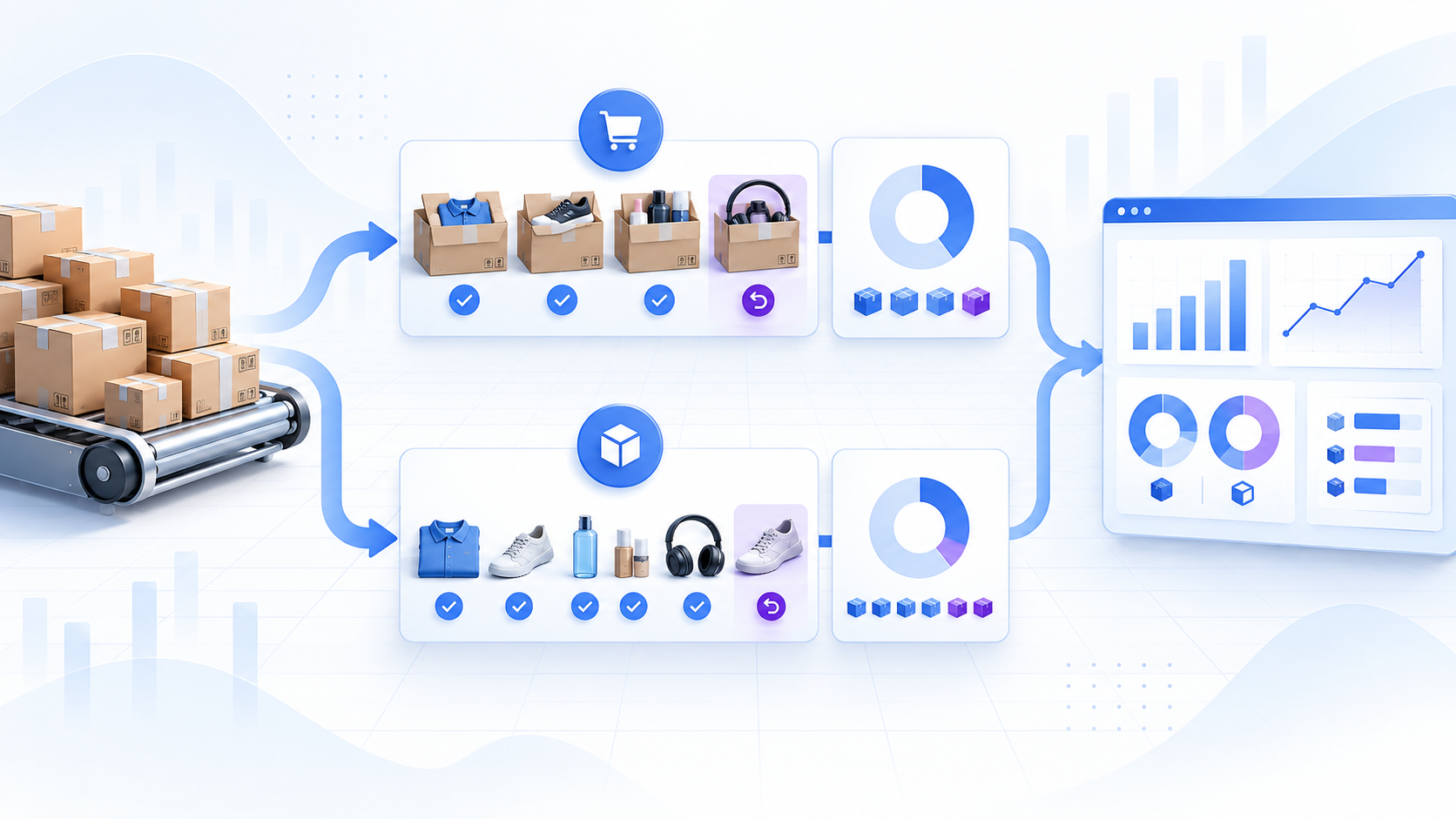
Order return rate = distinct eligible orders with at least one physical return ÷ all eligible orders × 100. Unit return rate = physically returned units ÷ all eligible sold, shipped, or delivered units × 100. Use order rate to measure how many customer orders create a return experience or case. Use unit rate to measure product-volume exposure and compare SKUs, variants, sizes, or categories.
订单退货率 = 至少包含 1 件实体退货的不同合格订单数 ÷ 全部合格订单数 × 100。件数退货率 = 实际退回件数 ÷ 全部合格已售、已发货或已送达件数 × 100。订单退货率衡量多少客户订单产生退货体验或售后工单;件数退货率衡量商品数量风险,适合比较 SKU、变体、尺码与品类。
Neither rate is universally better, and neither is always higher. Publish both when multi-item baskets are material, but never average or subtract them as though they shared a denominator.
两者没有普遍意义上的“更好”,也不存在谁一定更高。多件购物篮占比较高时应同时发布,但不能把不同分母的两个比例直接平均或相减。
Define the numerator and denominator before comparing return rates比较退货率前先定义分子与分母
| Metric指标 | Numerator分子 | Denominator分母 | Decision it supports支持的决策 |
|---|---|---|---|
| Order return rate订单退货率 | Distinct eligible orders with ≥1 accepted physical return至少含 1 件已接受实体退货的不同合格订单 | Distinct eligible orders in the matched cohort匹配群组中的不同合格订单 | Customer-order incidence, case load, policy exposure客户订单发生率、工单量、政策影响 |
| Unit return rate件数退货率 | Accepted physical units returned已接受的实体退回件数 | Eligible units sold, shipped, or delivered in the same cohort同群组内合格已售、已发货或已送达件数 | SKU, variant, size, category, inventory, inspection volumeSKU、变体、尺码、品类、库存与检验量 |
Unit return rate = returned_unit_count ÷ eligible_unit_count × 100
The word eligible matters. Decide whether the denominator begins at sale, shipment, or delivery; whether test, canceled, fraud, replacement, gift-card, and marketplace orders are included; and whether the numerator requires a requested, approved, received, or completed return. Keep the same definition over time.
合格是关键。需要明确分母从下单、发货还是送达开始,是否纳入测试单、取消单、欺诈单、补发单、礼品卡与平台订单,以及分子采用已申请、已批准、已收货还是已完成退货。不同期间必须保持同一定义。
Multi-item baskets determine which return rate is higher多件购物篮决定哪一种退货率更高
Every affected order contains at least one returned unit, but every order may contain more than one eligible unit. The relationship depends on two averages: eligible units per order and returned units per affected order. Order return rate is higher when affected orders return fewer units than the store's average basket contains. Unit return rate is higher when affected orders send back more units than that average. The rates are equal when those two averages match.
每个受影响订单至少包含一件退货商品,但每个订单可能包含多件合格商品。两种比率的关系取决于两个平均数:每单合格件数,以及每个退货订单的退回件数。当退货订单平均退回件数低于全店平均购物篮件数时,订单退货率更高;高于平均购物篮件数时,件数退货率更高;二者相等时,两种退货率也相等。
Diagnostic identity: unit return rate ÷ order return rate = average returned units per affected order ÷ average eligible units per order. This is arithmetic, not a performance benchmark.
诊断恒等式:件数退货率 ÷ 订单退货率 = 每个受影响订单的平均退回件数 ÷ 每单平均合格件数。这是算术关系,不是效果基准。
The same 1,000-order cohort can produce three different comparisons同一个 1,000 单群组可以产生三种比较结果
All figures below are synthetic. Each scenario contains 1,000 eligible orders and 1,600 eligible units. Only the number of affected orders and returned units changes.
以下数字全部为假设。每个场景都包含 1,000 个合格订单与 1,600 件合格商品,仅受影响订单数和退回件数不同。
| Scenario场景 | Affected orders受影响订单 | Returned units退回件数 | Order rate订单退货率 | Unit rate件数退货率 | Reading解读 |
|---|---|---|---|---|---|
| A | 180 | 240 | 18.0% | 15.0% | Many orders return part of the basket很多订单只退购物篮中的一部分 |
| B | 150 | 240 | 15.0% | 15.0% | Returned units per affected order match basket size每个退货订单的退回件数等于平均购物篮件数 |
| C | 120 | 240 | 12.0% | 15.0% | Fewer orders return multiple units较少订单一次退回多件商品 |
Scenario A tells customer-experience and service teams that 18% of orders crossed into a return workflow even though only 15% of units came back. Scenario C tells product and warehouse teams that returns are concentrated: 12% of orders generated 15% unit exposure. Neither story is visible from one rate alone.
场景 A 告诉客户体验与客服团队:尽管只有 15% 的商品退回,但 18% 的订单进入了退货流程。场景 C 则告诉商品与仓库团队:退货更集中,12% 的订单造成了 15% 的件数风险。只看一个比率无法看见完整故事。
Choose the metric that matches the unit of the decision按照决策对象选择指标
Choose it for the share of orders that create a return journey, service contact, authorization, or policy event. Do not use it to estimate how many physical units a warehouse must inspect.
适合衡量产生退货旅程、客服联系、退货授权或政策事件的订单占比;不适合估算仓库需要检验多少实体商品。
Choose it for SKU, variant, size, color, supplier, category, inventory, and inspection-volume analysis. Count quantities, not export rows.
适合分析 SKU、变体、尺码、颜色、供应商、品类、库存和检验量。应统计商品数量,不是导出数据行数。
If average basket size or bracketing behavior changes, the rates can move in opposite directions. Show both counts and both denominators beside the percentages.
当平均购物篮件数或多尺码试购行为变化时,两种比率可能反向移动。应在百分比旁同时展示分子与分母。
Returned merchandise value divided by eligible merchandise sales answers a third question. It does not replace the order or unit measure and should not mix tax, shipping, or goodwill refunds without a declared policy.
退回商品金额除以合格商品销售额回答第三个问题。它不能替代订单或件数指标,也不能在没有声明口径时混入税费、运费或善意退款。
Match returns to the original order cohort把退货匹配回原始订单群组
Returns arrive after sales. Dividing returns processed this month by orders or units sold this month mixes different populations when sales are growing, shrinking, or seasonal. For product and causal analysis, connect each return to its original order, group by a declared order, ship, or delivery date, and wait until the stated return-opportunity window is substantially complete.
退货发生在销售之后。业务增长、下降或存在季节性时,用本月处理的退货除以本月销售订单或件数,会混合不同人群。做商品与因果分析时,应把每笔退货连接回原始订单,按明确的下单、发货或送达日期分组,并等待声明的退货机会窗口基本结束。
- Keep an operational view by return-received date for current workload and cash timing.
- Keep a cohort view by original sale or delivery date for rate comparison and diagnosis.
- Publish cohort maturity, such as days observed and share of the policy window completed.
- Do not compare a mature 90-day cohort with a cohort that has only 14 days of return opportunity.
- 按退货收货日期保留运营视图,用于当前工作量和现金时间分析。
- 按原始销售或送达日期保留群组视图,用于比率比较和诊断。
- 发布群组成熟度,例如已观察天数和政策窗口完成比例。
- 不要把成熟的 90 天群组与只有 14 天退货机会的群组比较。
Count physical returns consistently and keep financial reversals separate一致统计实体退货,并把财务冲销分开
Shopify's current reporting distinguishes physical returned quantity from broader sales reversals, which can include refunds, cancellations, edits, exchanges, and other order adjustments. That distinction prevents a goodwill refund with no item movement from becoming a returned unit and prevents a pre-shipment cancellation from becoming an affected return order.
Shopify 当前报表把实体退回件数与更广义的销售冲销区分开;后者可能包括退款、取消、订单修改、换货及其他订单调整。这样可以避免“没有商品回流的善意退款”被算成退货件数,也避免“发货前取消”被算成发生退货的订单。
| Event事件 | Order-rate default订单退货率默认处理 | Unit-rate default件数退货率默认处理 | Separate metric单独指标 |
|---|---|---|---|
| Accepted physical return已接受实体退货 | Count order once订单计一次 | Count returned quantity统计退回数量 | Reason, condition, recovery原因、状况、回收 |
| Refund without returned item无商品退回的退款 | Exclude排除 | Exclude排除 | Refund incidence/value退款发生率/金额率 |
| Exchange换货 | Declare gross-return policy声明毛退货口径 | Count physical inbound unit if in scope若在范围内则统计实体回流件 | Exchange retention换货留存 |
| Pre-shipment cancellation发货前取消 | Exclude from delivered cohort从送达群组排除 | Exclude排除 | Cancellation rate取消率 |
| Return requested but not received已申请但未收到退货 | Track separately until accepted接受前单独跟踪 | Do not count as received unit不计为已收退货件 | Request-to-receipt conversion申请到收货转化率 |
One line-level dataset can support both rates一份订单行数据可同时支持两种比率
Preserve the original order ID and product quantity before aggregating. Shopify warns that exported report rows can repeat one order when custom product columns create additional line-item rows. Counting rows as orders therefore overstates the denominator and may overstate returned orders as well.
汇总前必须保留原始订单 ID 与商品数量。Shopify 提醒,自定义商品列会为订单行创建额外导出行,因此同一订单可能重复出现。把数据行当订单统计,会夸大分母,也可能夸大退货订单数。
| Field字段 | Why it is needed用途 | Quality check质量检查 |
|---|---|---|
| order_id | Deduplicate eligible and affected orders对合格订单与受影响订单去重 | No blank IDs; stable across files无空值;跨文件保持稳定 |
| order_date / delivery_date | Assign the cohort and observation window分配群组与观察窗口 | Timezone and date basis documented记录时区与日期口径 |
| sku / variant_id | Segment product exposure拆分商品风险 | Map retired and renamed variants映射停用或改名变体 |
| eligible_quantity | Build the unit denominator建立件数分母 | Use quantity, not one row = one unit使用数量,不把一行当一件 |
| returned_quantity | Build the unit numerator and order flag建立件数分子与订单退货标记 | Nonnegative; no more than eligible after policy rules不为负;按口径处理后不超过合格件数 |
| return_status / received_date | Choose requested, received, or completed state选择申请、收货或完成状态 | One declared state per published metric每个发布指标只使用一个声明状态 |
| event_type / reason | Separate returns, refunds, exchanges, and cancellations区分退货、退款、换货与取消 | Unknown reason rate reported报告未知原因比例 |
Calculate both return rates from the same eligible cohort从同一合格群组计算两种退货率
- Define the cohort.定义群组。 Choose order, shipment, or delivery date; scope the market, channel, statuses, and return window.选择下单、发货或送达日期,并限定市场、渠道、状态与退货窗口。
- Join physical returns.连接实体退货。 Match each accepted return to the original order and line; quarantine unmatched records instead of guessing.把每笔已接受退货匹配到原订单与订单行;无法匹配的记录应隔离,不能猜测。
- Count eligible orders and units.统计合格订单与件数。 Use distinct order IDs for orders and sum quantities for units.订单使用不同订单 ID,件数使用数量求和。
- Build both numerators.建立两个分子。 Flag each order once when returned quantity exceeds zero; separately sum accepted returned quantity.退回数量大于零时,每个订单只标记一次;另行汇总已接受退回数量。
- Divide like by like.同口径相除。 Returned orders divide by eligible orders; returned units divide by eligible units. Never cross the denominators.退货订单除以合格订单,退回件数除以合格件数,绝不能交叉使用分母。
- Reconcile and label.对账并标注。 Show counts, percentages, window maturity, exclusions, duplicate handling, unmatched returns, source, and refresh date.展示计数、百分比、窗口成熟度、排除项、重复处理、未匹配退货、来源与刷新日期。
Calculate order and unit return rate in Excel without counting rows as orders在 Excel 中计算两种退货率,避免把行数当订单数
At line-item grain, create an eligible_flag and a returned_order_flag. Use a PivotTable or a distinct-count measure for order IDs; use sums for quantities. A simple line-level percentage such as SUM(returned_quantity)/SUM(eligible_quantity) calculates the unit rate, not the order rate.
在订单行粒度上,创建 eligible_flag 和 returned_order_flag。订单 ID 使用数据透视表或不同值计数,商品数量使用求和。SUM(returned_quantity)/SUM(eligible_quantity) 这样的订单行百分比计算的是件数退货率,不是订单退货率。
Order rate: =IFERROR(DISTINCTCOUNT(ReturnedOrderID)/DISTINCTCOUNT(EligibleOrderID),"")
The second expression is conceptual: the exact Excel function depends on whether the Data Model is enabled. In a standard PivotTable, add order ID to the Data Model and choose Distinct Count; otherwise create one deduplicated order table before dividing. A blank or quality flag is safer than silently converting a missing denominator to 0%.
第二个表达式是概念写法;实际 Excel 函数取决于是否启用数据模型。在标准数据透视表中,可把订单 ID 加入数据模型并选择“不同项计数”;否则先建立去重订单表再相除。分母缺失时显示空值或质量标记,比静默写成 0% 更安全。
Make both percentages reproducible让两个百分比都可以复算
- Reconcile eligible order and unit totals to the approved commerce export before calculating returns.
- Report duplicate order IDs, duplicate return events, unmatched return lines, missing quantities, negative quantities, and zero denominators.
- Keep requested, authorized, received, inspected, completed, and refunded states separate.
- Show the numerator and denominator beside every percentage; small samples need counts, not just rates.
- Version the return policy, eligibility rules, exchange treatment, and cohort window.
- Segment only after the total reconciles; category rates should roll back to the same unit numerator.
- De-identify customer fields before uploading or sharing analytical files; retain only fields required for the approved task.
- 计算退货前,先把合格订单数和件数与批准的电商导出文件对账。
- 报告重复订单 ID、重复退货事件、未匹配退货行、缺失数量、负数数量与零分母。
- 把已申请、已授权、已收货、已检验、已完成和已退款状态分开。
- 在每个百分比旁展示分子与分母;小样本必须展示计数,而不能只展示比率。
- 为退货政策、合格规则、换货处理与群组窗口保留版本。
- 总数对账完成后再分组;各品类比率必须能够汇总回同一件数分子。
- 上传或共享分析文件前对客户字段脱敏,只保留批准任务所需字段。
Do not compare an order or unit rate with an unlabeled industry percentage不要把订单或件数退货率与未标口径的行业百分比比较
The National Retail Federation's 2025 Retail Returns Landscape estimated that 19.3% of online sales would be returned in 2025. That finding is useful market context, but the headline wording is a percentage of online sales—not permission to label 19.3% as your expected order return rate or unit return rate. Confirm the report's population, methodology, year, market, channel, product mix, and denominator before benchmarking.
美国零售联合会《2025 零售退货趋势》估计,2025 年将有 19.3% 的线上销售发生退货。这个数字可作为市场背景,但其标题口径是线上销售占比,不能因此把 19.3% 直接写成预期订单退货率或件数退货率。比较前必须确认报告的人群、方法、年份、市场、渠道、商品结构与分母。
Comparison rule: match denominator, return event, original cohort, observation window, market, channel, category, policy, and exclusions. If one field is unknown, label the comparison directional rather than equivalent.
比较规则:统一分母、退货事件、原始群组、观察窗口、市场、渠道、品类、政策与排除项。任何一项未知时,只能标为方向性参考,不能称为等价比较。
Prepare both denominators before analyzing return loss分析退货损失前先准备两个分母
Prepare a de-identified file with original order ID, cohort date, channel, SKU or variant, eligible quantity, returned quantity, physical-return status, reason, refund value, and the definitions used for every inclusion and exclusion. Then open Return Compass and verify its current file, login, pricing, privacy, and retention requirements before uploading. This page does not claim direct platform connections, automated refunds, or automatic return execution.
准备一份已脱敏文件,包含原始订单 ID、群组日期、渠道、SKU 或变体、合格件数、退回件数、实体退货状态、原因、退款金额,以及每个纳入与排除规则的定义。随后打开逆向罗盘,并在上传前核对当前文件、登录、收费、隐私与保留要求。本页不声称平台账号直连、自动退款或自动执行退货。
Open Return Compass打开逆向罗盘Download the order-versus-unit rate starter下载订单与件数退货率起始模板
Use this vendor-neutral CSV to preserve source identifiers, event distinctions, metric inputs, cost fields, coverage, evidence and ownership. Its example row is synthetic; remove it before loading authorized data and approve definitions with the responsible owners.
使用此厂商中立 CSV 保留来源标识、事件区别、指标输入、成本字段、覆盖、证据与责任。示例行为模拟数据;加载授权数据前请删除,并由相关负责人批准定义。
Download CSV starter下载 CSV 起始模板 ↓Sources, method, and commercial disclosure来源、方法与商业披露
Sources and product routes were checked on September 15, 2026. Platform terminology, report logic, policies, and tools can change. Recheck official documentation and your own source-system definitions before publishing a production metric.
以下来源与产品路由核验于 2026 年 9 月 15 日。平台术语、报表逻辑、政策与工具可能变化;发布生产指标前,应重新核对官方文档和自身源系统定义。
- Shopify Help Center: Sales reports — defines returned quantity and returned quantity rate, distinguishes physical returns from broader sales reversals, and warns that exported product rows can repeat an order.
- Shopify Help Center: Analytics fields — provides current quantity, reversal, return, and order-field context.
- National Retail Federation: 2025 Retail Returns Landscape — supplies the dated U.S. online-sales return estimate used only as a benchmark-scope example.
- NIST SP 800-122 — provides general guidance for protecting personally identifiable information.
- Shopify 帮助中心:销售报表——定义退回件数与退回件数率,区分实体退货与更广义销售冲销,并提醒商品导出行可能重复同一订单。
- Shopify 帮助中心:分析字段——提供当前数量、冲销、退货与订单字段背景。
- 美国零售联合会:2025 零售退货趋势——提供带日期的美国线上销售退货估计,本页仅用作“基准口径”示例。
- NIST SP 800-122——提供保护个人可识别信息的一般指导。
Commercial disclosure: InfiniSynapse publishes this educational page and promotes Return Compass. The formulas are transparent analytical definitions; the three scenarios are synthetic editorial examples, not customer results, product outputs, or industry benchmarks. No ranking, return reduction, cost recovery, or integration result is promised.
商业披露:本教育页面由 InfiniSynapse 发布,并推广逆向罗盘。公式属于透明分析定义,三个场景是编辑用假设示例,不是客户结果、产品输出或行业基准。本页不承诺排名、降低退货、成本回收或系统集成效果。
Frequently asked questions常见问题
Order return rate measures the share of eligible orders with at least one accepted physical return. Unit return rate measures the share of eligible product units physically returned. One describes affected orders; the other describes returned item volume.
订单退货率衡量至少发生一次已接受实体退货的合格订单占比;件数退货率衡量实际退回商品件数占合格商品件数的比例。前者描述受影响订单,后者描述退回商品量。
No. Either can be higher, or they can be equal. The result depends on average eligible units per order and average returned units inside affected orders.
不一定。两者都可能更高,也可能相等,取决于每单平均合格件数和每个退货订单中的平均退回件数。
Divide distinct eligible orders with at least one accepted physical return by all eligible orders in the matched cohort, then multiply by 100. Deduplicate the original order ID so one order never counts twice.
用至少含一件已接受实体退货的不同合格订单数,除以匹配群组中的全部合格订单数,再乘以 100。必须对原始订单 ID 去重,确保一单只计一次。
Divide accepted physically returned units by eligible sold, shipped, or delivered units in the same cohort, then multiply by 100. Sum quantities instead of counting rows.
用同一群组内已接受的实体退回件数,除以合格已售、已发货或已送达件数,再乘以 100。统计数量求和,而不是数据行数。
Only if the benchmark uses the same denominator, population, channel, market, product mix, physical-return definition, exclusions, and observation window. A percentage of sales value is not an order or unit rate.
只有当基准使用相同分母、人群、渠道、市场、商品结构、实体退货定义、排除项和观察窗口时才可比较。销售金额占比不是订单退货率或件数退货率。
Publish the denominator beside every return-rate result在每个退货率结果旁发布分母
A reviewable dashboard shows returned orders over eligible orders and returned units over eligible units—not two unlabeled percentages. Keep the cohort date, return window, event state, exclusions, source, unmatched count, and refresh date with both results. Use the broader return rate formula guide for value-based rates and Excel basics, the average ecommerce return rate guide for benchmark evaluation, and return rate by product category when the total needs a product-level diagnosis.
可审核的看板应展示“退货订单数 ÷ 合格订单数”和“退回件数 ÷ 合格件数”,而不是两个未标口径的百分比。两个结果都应附带群组日期、退货窗口、事件状态、排除项、来源、未匹配数量与刷新日期。金额比率和 Excel 基础可参考退货率公式指南,行业基准评估可参考电商平均退货率指南,需要做商品诊断时可参考按产品品类分析退货率。