
On this page本页目录
How should a multi-store commerce returns report be built?应如何构建 多店铺电商 退货报告?
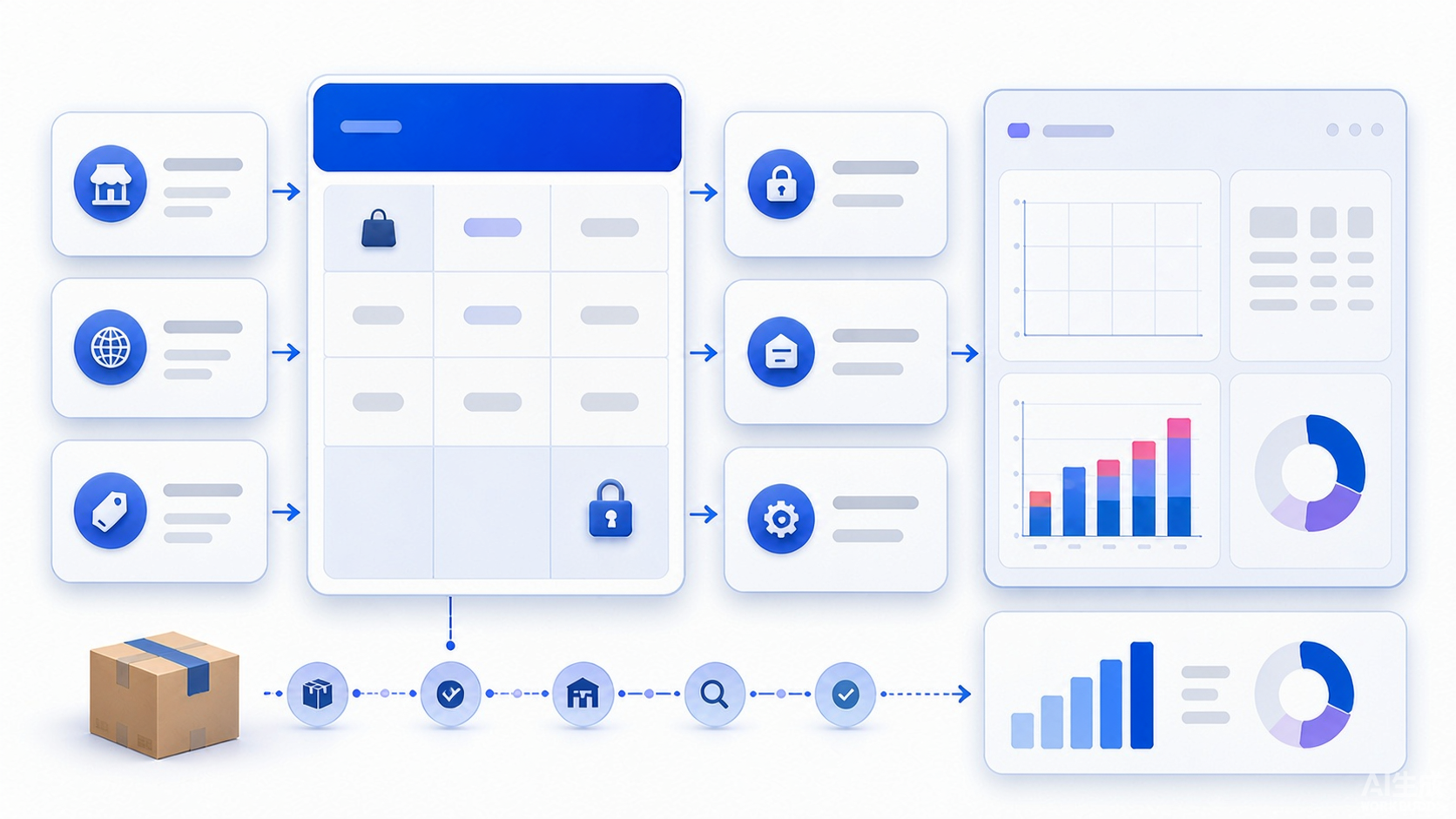
Land every source unchanged, assign a stable store namespace, document its grain, and map each record to a canonical event rather than a generic “return.” Keep request, authorization, carrier scan, physical receipt, inspection, disposition, replacement, refund and financial posting separate. Preserve original time, currency, quantity and identifiers; create explicit product and order-item crosswalks; reconcile expected overlaps; and calculate metrics only on aligned mature cohorts. Publish match coverage, duplicates, late arrivals and unresolved records beside every aggregate.
原样落地每个来源,为其分配稳定店铺命名空间并记录粒度,把每条记录映射为规范事件,而不是笼统的“退货”。分开申请、授权、承运扫描、实体收货、质检、处置、换货、退款与财务入账。保留原始时间、币种、数量与标识,建立明确的商品与订单商品行交叉映射,核对预期重叠,并仅在定义一致的成熟群组上计算指标。每个汇总都应同时发布匹配覆盖、重复、迟到与未解析记录。
This architecture uses stable standards references reviewed September 15, 2026. Store APIs, exports, fields and policies remain source-specific and must be pinned and revalidated before each production change. This is a modeling guide, not a claim that InfiniSynapse currently connects to every store or automatically resolves every identity, currency or accounting difference.
本架构使用截至 2026 年 9 月 15 日核验的稳定标准参考。店铺 API、导出、字段与政策仍因来源而异,每次生产变更前都必须固定版本并重新验证。本文是建模指南,不声称 InfiniSynapse 当前连接每个店铺,或能自动解决每个身份、币种或会计差异。
Preserve seven layers before combining stores合并店铺前保留七个层级
A trustworthy combined model is layered. Raw records remain immutable, standardized fields remain traceable to their source, and derived business facts are versioned. This allows corrections without rewriting history.
可信的合并模型应分层。原始记录保持不可变,标准化字段可追溯到来源,派生业务事实有版本。这样可以纠错而不改写历史。
Store, account, connector/report, API version, permission, extraction window, generated time, schema hash, grain and known exclusions.店铺、账户、连接器/报告、API 版本、权限、提取窗口、生成时间、Schema 哈希、粒度与已知排除。
Never assume order 1001, SKU BLUE-M or return 42 is globally unique. Pair every native ID with source and account scope.不要假设订单 1001、SKU BLUE-M 或退货 42 全局唯一。每个原生 ID 都要绑定来源与账户范围。
Original order item, quantity, price, discount, tax, currency, product label, variant and fulfillment exposure at sale time.销售时原订单商品行、数量、价格、折扣、税、币种、商品标签、变体与履约暴露。
Typed request, authorization, label, scan, receipt, inspection, disposition, replacement and closure events with source timestamps.带来源时间的类型化申请、授权、标签、扫描、收货、质检、处置、换货与关闭事件。
Refund, chargeback, fee, tax, reimbursement and settlement components in original currency with posting status and dates.以原币保留退款、拒付、费用、税、赔偿与结算组成及入账状态和日期。
Source SKU and catalog IDs mapped to an internal product and variant identity with effective dates, confidence and review state.把来源 SKU 与目录 ID 映射至内部商品和变体身份,并保留生效日期、置信与复核状态。
Row-level source pointers, transformation version, validation outcomes, duplicate groups, match status and correction history.行级来源指针、转换版本、验证结果、重复组、匹配状态与纠错历史。
Canonical does not mean source values are overwritten. Retain the native value, standardized value, rule version and exception state together. A later mapping correction should restate derived outputs without destroying the original evidence.
规范化不等于覆盖来源值。应同时保留原生值、标准值、规则版本与异常状态。后续映射修正可以重述派生输出,但不能销毁原始证据。
Define one canonical return-event contract定义一个规范退货事件契约
Use a field dictionary that identifies datatype, requiredness, allowed values, source field, transformation and owner. W3C CSVW provides useful concepts for table schemas, datatypes, keys and validation; RFC 3339, ISO 4217 and GS1 identifiers can support exchange consistency, but business meaning still requires documented local rules.
使用字段字典记录数据类型、必填性、允许值、来源字段、转换与负责人。W3C CSVW 为表 Schema、数据类型、键与验证提供有用概念;RFC 3339、ISO 4217 与 GS1 标识可支持交换一致性,但业务含义仍需记录本地规则。
| multi-store commerce source or concept多店铺电商 来源或概念 | Analytical use分析用途 | Do not substitute不得替代 |
|---|---|---|
| source_system + source_account + native_id来源系统 + 来源账户 + 原生 ID | Globally safe record identity and replay全局安全记录身份与重放 | Native ID alone仅原生 ID |
| event_type + event_state + event_quantity事件类型 + 状态 + 数量 | Comparable lifecycle evidence without collapsing stages不合并阶段的可比生命周期证据 | One boolean returned flag单个已退回布尔值 |
| source_time + offset + utc_time + business_date来源时间 + 偏移 + UTC 时间 + 业务日期 | Chronology, local operations and reproducible period assignment时间顺序、本地运营与可复现期间分配 | Timestamp stripped of zone移除时区的时间戳 |
| original_currency + original_amount + reporting conversion原币 + 原金额 + 报告币转换 | Auditable money normalization可审计资金规范化 | Currency-less amount无币种金额 |
| source_sku + internal_variant_id + effective dates来源 SKU + 内部变体 ID + 生效日期 | Product comparison across changing catalogs跨变化目录比较商品 | Current product title当前商品标题 |
| raw_pointer + transform_version + quality_status原始指针 + 转换版本 + 质量状态 | Lineage, correction and exception handling血缘、纠错与异常处理 | Untraceable final row不可追溯最终行 |
Build the combined model in eight controlled steps通过八个受控步骤建立合并模型
- Inventory each source盘点每个来源
List store/account, owner, authentication scope, report or endpoint, version, extraction cadence, grain, window, time zone and known exclusions.列出店铺/账户、负责人、认证范围、报告或端点、版本、提取频率、粒度、窗口、时区与已知排除。 - Land immutable raw snapshots落地不可变原始快照
Store the original payload or file, extraction metadata, checksum and schema fingerprint before parsing or repair.在解析或修复前保存原始载荷或文件、提取元数据、校验和与 Schema 指纹。 - Namespace identifiers为标识增加命名空间
Create deterministic keys from source, account and native identity; reject unsafe joins based on display labels, amount or date.由来源、账户与原生身份生成确定性键;拒绝基于展示标签、金额或日期的不安全关联。 - Normalize typed events规范类型化事件
Map source records into explicit lifecycle events while retaining source type, state, value, timestamp and mapping version.把来源记录映射为明确生命周期事件,同时保留来源类型、状态、值、时间与映射版本。 - Create product crosswalks建立商品交叉映射
Map source SKU and catalog IDs to internal variants with effective dates, evidence, confidence and a manual-review queue.用生效日期、证据、置信与人工复核队列,把来源 SKU 和目录 ID 映射到内部变体。 - Apply time and currency policy应用时间与币种政策
Preserve source time and original money, then add standardized time, business date, reporting currency, rate source and conversion timestamp.保留来源时间与原币金额,再增加标准时间、业务日期、报告币种、汇率来源与转换时间。 - Reconcile and quarantine对账并隔离
Test expected one-to-one and one-to-many relationships, deduplicate only with documented keys, and quarantine ambiguous records instead of guessing.测试预期一对一和一对多关系,仅按文档化键去重,并隔离歧义记录而不是猜测。 - Publish mature cohorts and coverage发布成熟群组与覆盖
Align eligibility, observation window and as-of date, then publish record coverage, identity match, duplicates, late arrivals and restatements.对齐资格、观察窗口与截至日期,再发布记录覆盖、身份匹配、重复、迟到与重述。
The CSV captures source contract, marketplace and fulfillment scope, stable order/item/SKU identifiers, request and receipt events, condition/disposition, replacement, refund and finance records, inventory movements, mature-cohort eligibility, external evidence, canonical mappings and data-quality flags.
CSV 采集来源契约、站点与履约范围、稳定订单/商品行/SKU 标识、申请与收货事件、状态/处置、换货、退款与财务记录、库存移动、成熟群组资格、外部证据、规范映射与数据质量标记。
Download CSV template下载 CSV 模板 ↓Measure whether the combined dataset is trustworthy衡量合并数据集是否可信
Define the eligible source population, relationship and acceptable match rule before calculating coverage. Report coverage by store, source, event and date. A high overall rate can hide a failed small store or a missing event type. Never treat unmatched records as zero returns.
计算覆盖前定义合格来源总体、关系与可接受匹配规则。按店铺、来源、事件与日期报告覆盖。总体比例高可能掩盖小店铺失败或事件类型缺失。不要把未匹配记录当作零退货。
| Output输出 | Required context所需背景 | What it can support可支持内容 |
|---|---|---|
| Source completeness来源完整性 | Expected extracts/partitions versus received, with known exclusions预期与已收到提取/分区及已知排除 | Whether the population is present总体是否存在 |
| Identity match coverage身份匹配覆盖 | Eligible records, relationship, match rule and ambiguity合格记录、关系、匹配规则与歧义 | Whether cross-source joins are supportable跨来源关联是否可支持 |
| Duplicate rate重复率 | Natural key, duplicate group, survivor rule and false-positive review自然键、重复组、保留规则与误报复核 | Whether counts are inflated计数是否膨胀 |
| Late-arrival/restatement rate迟到/重述率 | First-seen, event time, load time and prior published value首次出现、事件时间、加载时间与先前发布值 | Cohort maturity and refresh policy群组成熟度与刷新政策 |
| Semantic coverage语义覆盖 | Required event, state, quantity, time, currency and product mappings必需事件、状态、数量、时间、币种与商品映射 | Whether a KPI has the required evidenceKPI 是否具备所需证据 |
Worked example: multi-store commerce return totals disagree示例:多店铺电商 退货总数不一致
A synthetic operator receives 20,000 eligible source records from three stores for one mature shipment cohort. Deterministic identities match 19,200 records. Another 300 form ambiguous candidate groups, 200 are duplicates under an approved source key and 300 have no corresponding commerce line. The team does not silently drop or force-match these exceptions.
一个模拟运营商针对一个成熟发货群组,从三个店铺收到 20,000 条合格来源记录。确定性身份匹配 19,200 条,另有 300 条形成歧义候选组,200 条按批准来源键判定重复,300 条没有对应交易商品行。团队不会静默丢弃或强制匹配这些异常。
| Synthetic view模拟视图 | Units件数 | Rate vs shipped相对发货比例 | Correct use正确用途 |
|---|---|---|---|
| Eligible records tested测试的合格记录 | 20,000 | 100% | Declared source population声明来源总体 |
| Deterministically matched确定性匹配 | 19,200 | 96.0% | Safe combined analysis安全合并分析 |
| Ambiguous candidates歧义候选 | 300 | 1.5% | Manual review or quarantine人工复核或隔离 |
| Approved duplicates批准重复 | 200 | 1.0% | Deduplicate with lineage带血缘去重 |
| Unmatched records未匹配记录 | 300 | 1.5% | Coverage exception, not zero覆盖异常而非零值 |
Join coverage is 19,200 ÷ 20,000 = 96.0%. That does not authorize a portfolio KPI until store-level coverage, event completeness and cohort maturity also pass their thresholds. The exception ledger must preserve all 800 non-clean records and their eventual resolution.
关联覆盖为 19,200 ÷ 20,000 = 96.0%。在店铺级覆盖、事件完整性与群组成熟度也通过阈值前,这不能授权发布组合 KPI。异常台账必须保留全部 800 条非干净记录及其最终处理。
All store figures and records in this example are synthetic. They illustrate the method and do not represent InfiniSynapse customer results or industry benchmarks.本示例中的商店数字与记录均为模拟,仅用于说明方法,不代表 InfiniSynapse 客户结果或行业基准。
Aggregate counts only after definitions align仅在定义对齐后汇总计数
A combined table can be syntactically uniform while remaining semantically incomparable. Compare source contracts, event meaning, unit grain, fulfillment scope, policy window, time basis and cohort maturity before adding numerators and denominators. Use weighted aggregation of aligned counts; never average store percentages without their denominators.
合并表即使语法统一,语义仍可能不可比。相加分子与分母前,应比较来源契约、事件含义、单位粒度、履约范围、政策窗口、时间基础与群组成熟度。对齐后汇总计数进行加权;不要在缺少分母时平均店铺比例。
Orders, item identifiers, marketplace, fulfillment scope, sale-time catalog context and platform-native status.订单、商品行标识、站点、履约范围、销售时目录背景与平台原生状态。
Shipment, carrier, receipt, facility, condition/disposition, inventory ledger and removal evidence.发货、承运、收货、设施、状态/处置、库存台账与移除证据。
Refund, settlement, fee, reimbursement, tax, currency and posting date—never inferred from a reason code.退款、结算、费用、赔偿、税、币种与入账日期,绝不能从原因码推断。
Seller warehouse, carrier invoice, support, inspection, labor, supplier and recovery sources with measured coverage.带有实测覆盖的卖家仓库、承运商发票、客服、质检、人工、供应商与回收来源。
Keep two clocks: source/event time for chronology and a governed business date for reporting. Converting timestamps to UTC does not decide whether a return belongs to sale month, request month, receipt month or refund month.
保留两套时钟:用于顺序的来源/事件时间,以及用于报告的受治理业务日期。把时间转换为 UTC 并不能决定退货属于销售月、申请月、收货月还是退款月。
Pass twelve controls before publishing a combined report发布合并报告前通过十二项控制
- Source contract: report/API, version, role, permission, marketplace, fulfillment scope and generation time are recorded.来源契约:记录报告/API、版本、角色、权限、站点、履约范围与生成时间。
- Event contract: request, authorization, shipment, receipt, inspection, disposition, replacement, refund and reimbursement remain distinct.事件契约:申请、授权、发货、收货、质检、处置、换货、退款与赔偿保持分离。
- Stable identity: order/item, shipment/item, return, refund, replacement, SKU and catalog identifiers survive label changes.稳定身份:订单/商品行、发货/商品行、退货、退款、换货、SKU 与目录标识不受标签变更影响。
- Quantity reconciliation: ordered, shipped, requested, authorized, received, replaced, refunded and restocked units are compared.数量核对:比较下单、发货、申请、授权、实收、换货、退款与重新入库件数。
- Fulfillment scope: platform-fulfilled and seller-fulfilled sources are separated and coverage is reported.履约范围:分开平台履约与卖家履约来源,并报告覆盖。
- Mature cohort: eligible shipped units have equal observation opportunity under one window and as-of date.成熟群组:合格发货件在统一窗口与截至日期下具有相同观察机会。
- Reason quality: reason version, customer comment, other, unknown, changed and missing values are quantified.原因质量:量化原因版本、客户评论、其他、未知、已更改与缺失值。
- Condition separation: customer reason, received condition, disposition and inventory outcome use different fields.状态分离:客户原因、收货状态、处置与库存结果使用不同字段。
- Financial reconciliation: refunds, fees, taxes, reimbursements, currencies and posting dates are explicit.财务核对:明确退款、费用、税、赔偿、币种与入账日期。
- Freshness: documented cadence, generation limits, late arrivals, reruns and restatements are monitored.时效:监控文档化频率、生成限制、迟到记录、重跑与重述。
- External coverage: carrier, WMS, inspection, labor, disposal and recovery gaps remain visible.外部覆盖:承运商、WMS、质检、人工、销毁与回收缺口保持可见。
- Security: minimum roles, sensitive-field minimization, retention, deletion, export access and audit logs are enforced.安全:执行最小角色、敏感字段最小化、保留、删除、导出访问与审计日志。
Avoid nine multi-store commerce return-report mistakes避免九个 多店铺电商 退货报告错误
- Treating a customer-selected reason as a verified root cause.把客户选择的原因当作已核验根因。
- Combining customer reason, observed condition, disposition, and refund outcome in one field.把客户原因、观察状态、处置与退款结果混在一个字段。
- Changing code labels without versioning or remapping historical records.更改代码标签却不进行版本化或映射历史记录。
- Ranking percentages without counts, eligible denominators, value, or uncertainty.只按百分比排序,不展示数量、合格分母、金额或不确定性。
- Comparing products, channels, or periods with different question wording and missingness.比较问题措辞与缺失程度不同的商品、渠道或期间。
- Discarding “other,” free text, multi-reason, changed, or unknown responses.丢弃“其他”、自由文本、多原因、已更改或未知回答。
- Acting on correlation before reviewing cases and testing a mechanism.在检查案例并测试机制前就依据相关性行动。
- Using one report date as if it were request, receipt, refund and settlement time.把一个报告日期同时当作申请、收货、退款与结算时间。
- Combining platform-fulfilled and seller-fulfilled files without a scope flag or reconciliation control.在没有范围标记或核对控制时合并平台履约与卖家履约文件。
When multi-store commerce sources disagree, preserve every source value, compare documented scope and timing, reconcile by stable IDs, and keep unresolved records visible. Choosing the preferred total creates false precision and prevents later audit.
当 多店铺电商 来源不一致时,保留每个来源值,比较文档化范围与时间,用稳定 ID 核对,并让未解析记录保持可见。选择偏好的总数会制造虚假精确并妨碍后续审计。
Start with one multi-store commerce marketplace and one decision从一个 多店铺电商 站点与一个决策开始
Choose one seller account, marketplace, fulfillment scope, mature cohort and decision such as SKU prioritization. Extract the minimum documented reports, reconcile request, receipt, refund and replacement events, publish coverage and late-arrival behavior, join the minimum external operational evidence, and validate the metric with operations and finance before scaling.
选择一个卖家账户、站点、履约范围、成熟群组与决策,例如 SKU 优先级。提取最少必要官方报告,核对申请、收货、退款与换货事件,发布覆盖与迟到行为,关联最少必要外部运营证据,并在扩展前与运营和财务验证指标。
| Signal信号 | Evidence to check待检查证据 | Safe next step安全下一步 |
|---|---|---|
| Need product return prioritization需要商品退货优先级 | Stable item IDs, mature shipped cohort, physical receipt and reason/condition coverage稳定商品行 ID、成熟发货群组、实体收货与原因/状态覆盖 | Build one reconciled marketplace view建立一个已核对站点视图 |
| Need refund and fee control需要退款与费用控制 | Refund, settlement, fee, tax, reimbursement, currency and posting records退款、结算、费用、税、赔偿、币种与入账记录 | Keep cash events separate from receipt保持资金事件与收货分离 |
| Need root-cause action需要根因行动 | Reason, comments, condition, inspection, catalog, support and fulfillment evidence原因、评论、状态、质检、目录、客服与履约证据 | Form and test a mechanism形成并测试机制 |
Prepare a governed multi-store commerce returns extract准备受治理的 多店铺电商 退货提取
Export source report/API and version, seller account, marketplace, fulfillment scope, requested window, generated/extracted time and time zone; order, order-item, shipment-item, seller SKU and catalog IDs; ordered/shipped quantity and sale-time labels; request/authorization ID, state, reason, comment and dates; receipt quantity/date/facility, condition, disposition, license-plate/tracking and inspection; replacement and original-order references; refund, settlement, fee, reimbursement, tax, currency and posting status; inventory ledger/restock/removal; cohort eligibility/window/as-of date; external carrier, WMS, labor, support, supplier and recovery references; canonical event, duplicate, unmatched, late-arrival, coverage and sensitive-data flags. Return Compass can model governed extracts; actual connector and field support must be validated.
导出来源报告/API 与版本、卖家账户、站点、履约范围、请求窗口、生成/提取时间与时区;订单、订单商品行、发货商品行、卖家 SKU 与目录 ID;下单/发货数量与销售时标签;申请/授权 ID、状态、原因、评论与日期;收货数量/日期/设施、状态、处置、容器/追踪与质检;换货与原订单引用;退款、结算、费用、赔偿、税、币种与入账状态;库存台账/重新入库/移除;群组资格/窗口/截至日期;外部承运商、WMS、人工、客服、供应商与回收引用;规范事件、重复、未匹配、迟到、覆盖与敏感数据标记。逆向罗盘可建模受治理提取;实际连接器与字段支持必须验证。
Open Return Compass打开逆向罗盘 →how to combine returns data from multiple stores FAQ如何合并多个店铺的退货数据常见问题
Inventory and pin each source contract: store/account, report or API, version, permissions, grain, extraction window, time zone, cadence and known exclusions. Land an immutable raw copy before transformation.先盘点并固定每个来源契约:店铺/账户、报告或 API、版本、权限、粒度、提取窗口、时区、频率与已知排除。转换前落地不可变原始副本。
Not directly. Align event definition, unit, eligibility, window and maturity, then add qualifying numerators and denominators and calculate a weighted portfolio rate. Keep unaligned stores separate.不应直接平均。先对齐事件定义、单位、资格、窗口与成熟度,再相加合格分子和分母计算加权组合比例。未对齐店铺应分开。
Namespace every native identifier with source and account, preserve the native value, and create deterministic surrogate keys. Never join on display labels, amount or date alone.用来源与账户为每个原生标识增加命名空间,保留原生值,并创建确定性代理键。不要仅凭展示标签、金额或日期关联。
Retain original amount and ISO currency code. Add reporting amount only with a documented rate source, rate timestamp, conversion method and accounting owner. Currency codes do not supply exchange rates.保留原金额与 ISO 币种代码。只有记录汇率来源、汇率时间、转换方法与会计负责人时,才增加报告金额。币种代码不提供汇率。
At minimum publish source completeness, identity-match coverage, duplicate and ambiguity rates, unmatched records, required-field coverage, late arrivals, schema drift, cohort maturity and restatement history by store.至少按店铺发布来源完整性、身份匹配覆盖、重复与歧义率、未匹配记录、必填字段覆盖、迟到、Schema 漂移、群组成熟度与重述历史。
Sources, evidence labels, and limitations来源、证据标签与限制
- W3C Recommendation: Model for Tabular Data and Metadata on the Web — Primary specification for annotated tables, schemas, datatypes, primary and foreign keys, source provenance and validation of tabular data.W3C 推荐标准:Web 表格数据与元数据模型——关于带注释表格、Schema、数据类型、主键与外键、来源溯源及表格数据验证的一手规范。
- RFC Editor: RFC 3339 Date and Time on the Internet — Primary Internet timestamp profile used here to define an unambiguous exchange representation with an explicit UTC offset; business-date semantics still require a separate contract.RFC Editor:RFC 3339 互联网日期与时间——本文用于定义带明确 UTC 偏移的无歧义交换时间表示的一手互联网规范;业务日期语义仍需单独契约。
- ISO 4217: Currency codes — Official ISO overview for alphabetic and numeric currency codes. A code identifies currency but does not supply an exchange rate or accounting policy.ISO 4217:币种代码——关于字母与数字币种代码的 ISO 官方概览。币种代码只标识币种,不提供汇率或会计政策。
- GS1: Global Trade Item Number (GTIN) — Official identification-standard overview explaining that GTIN identifies trade items; it can support product crosswalks but does not replace store SKU history or variant context.GS1:全球贸易项目代码(GTIN)——说明 GTIN 用于标识贸易项目的官方标准概览;它可支持商品交叉映射,但不能替代店铺 SKU 历史或变体背景。
Evidence statement: Current official platform documentation supports the named fields, objects, states, and limitations as of the review date. multi-store commerce sources are cited only for currently documented semantics. The article does not claim that InfiniSynapse currently ships a multi-store commerce connector or supports every report, field, marketplace, role, program or workflow. Examples are synthetic. No customer result, universal benchmark, causal claim, guaranteed integration behavior, or undocumented product capability is asserted. Sources were reviewed September 15, 2026; named subject-matter review is required before publication.证据声明:截至核验日期,当前平台官方文档支持文中具名字段、对象、状态与限制。多店铺电商 来源仅用于当前文档语义。本文不声称 InfiniSynapse 当前提供 多店铺电商 连接器,或支持每份报告、字段、站点、角色、项目或工作流。示例为模拟。本文不声称客户结果、通用基准、因果结论、保证集成表现或未记录产品能力。来源核验于 2026 年 9 月 15 日完成;发布前需要具名领域审核。
Turn multi-store commerce reports into an auditable return model把 多店铺电商 报告转为可审计退货模型
Pin source contracts, preserve stable identities, separate request, physical receipt, condition, inventory, replacement and financial events, and reconcile platform- and seller-fulfilled scopes. Build a mature shipment cohort, publish coverage and late-arrival behavior, join external operational costs, and treat reasons as hypotheses until inspection or controlled tests provide stronger evidence.
固定来源契约,保留稳定身份,分开申请、实体收货、状态、库存、换货与财务事件,并核对平台履约与卖家履约范围。建立成熟发货群组,发布覆盖与迟到行为,关联外部运营成本,并在质检或受控测试提供更强证据前把原因当作假设。