Google Search Console Date Range: Equal Windows
Compare a Google Search Console date range with equal-length exports, identical filters, complete daily rows, and explicit checks for partial-period bias.
Author credentials: William Zhu is cofounder of InfiniSynapse (GitHub @allwefantasy · auto-coder). Desk: shipping SEO Health and the /en/tool/ visibility pages. No personal LinkedIn published. About: team / editorial standards.
Publisher credentials: InfiniSynapse has public profiles on GitHub, YouTube, and X. A 2026 WAIC Future Tech OPC excellence award covers the Agentic Data Infra entry (WAIC; third-party recap: Xinhua / Caohejing). That award does not review this page or SEO Health. Method CLI: infinitegrowth on npm. Archive: recognition and scope notes.
On this page
By William Zhu · Cofounder, InfiniSynapse · Published: 2026-09-08 · Last updated: 2026-09-14 · Last verified: 2026-09-14 · Reviewed by the InfiniSynapse Data Team.
Reviewed by: InfiniSynapse Data Team · method review 2026-09-14. CLI
gscwindow contract plus Search Analytics request docs. Zero exported days.
Trust / COI: About · Corrections. SEO Health is a commercial product from this team. No customer Search Console export was used.
TL;DR
A Google Search Console date range is an inclusive period in a Performance export; comparing periods requires two complete calendars of equal length. This desk has zero days. A teaching CSV is not a property.
Direct answer: Treat a google search date range as a file problem first. On 2026-09-14
manual gscsuggested at least 28 days and said fewer than seven date points skip anomaly detection. We never unzipped a Performance ZIP. No daily rate was computed. Exit code 1 after a one-row fixture is a login gate, not a period-over-period finding.
The sample size is four CLI inputs plus the official request specification already linked below. That sample cannot establish a traffic change, and it does not prove two windows are comparable. A Google Search Console date range memo that prints a 12 percent teaching rate as if it were the desk is already off the job.
What you will learn
- Which CLI messages we actually recorded
- Why Help still carried a date-filter title after this curl returned 404
- What
manual gscsays about 28 days - Why zero exported days cannot yield a daily rate
- Where this page stops and a sibling owns totals or sessions
What a window is here
Key definition: A google search date range is the inclusive start and end a Performance export actually contains. It is not a slider you remember from a screenshot. It is not an official Google health score.
The Search Console date filter is the official vocabulary this page keeps. The same Help URL answered HTTP 404 to InfiniSynapse-P3-desk/2026-09-14 while the HTML title still said “Performance report (Search results)”. That is a curl observation. It is not a claim humans cannot open Help.
The Search Analytics API request is the field contract for startDate and endDate. This desk did not call that API. Citing the request schema does not mint Dates.csv.
People open a Google Search Console date range when they want last month versus the month before. They do not need a fabricated 12 percent change to start. A screenshot of the Performance slider is still not a Google Search Console date range.
SEO Health remains the deterministic evidence foundation for window length. After two dated CSVs exist, a team may send those files to an InfiniSynapse Server API long-task workspace; the API does not mint missing days.
Suggested minimum is not a measurement
manual gsc suggests a window of at least 28 days. That sentence is product documentation. It is not a row we exported. A Google Search Console date range file that quotes 28 and then divides invented clicks is already mixing contract with traffic.
API dates are not an export
Request fields name the grain. They do not prove any property stored those days. Keep the schema next to an empty folder, not as a substitute for Dates.csv.
Observed desk on 2026-09-14
Package pin was infinitegrowth@0.1.1. seo-health -V printed 0.1.0. Record both. They are not the same string.
help gsc says the argument is a CSV file or a directory. --format defaults to json. --lang defaults to zh. login wants --token from the web app. This desk did not send a token.
manual gsc adds the rest: login and credits; Performance ZIP; unzip; pass the directory or a CSV; never the ZIP; UTF-8; ≤8 files; ≤4MB; role files Queries / Pages / Dates / Devices / Countries; metric headers Clicks, Impressions, CTR, Position. Queries + Pages is the minimum pair. Fewer than seven date points skip anomaly detection.
| Input | Exit | Message |
|---|---|---|
| Missing path | 1 | ENOENT: no such file or directory |
Dummy .zip | 1 | 只支持 CSV 文件 |
| Empty directory | 1 | 目录下没有找到 CSV 文件 |
| One-row fixture CSV | 1 | read 1 CSV, then 分析失败:unauthorized |
We observed four failing inputs. We did not observe a Dates.csv. A Google Search Console date range still needs the real ZIP path before anyone talks about weekdays. Until that path exists, the honest Google Search Console date range record is “zero exported days.”
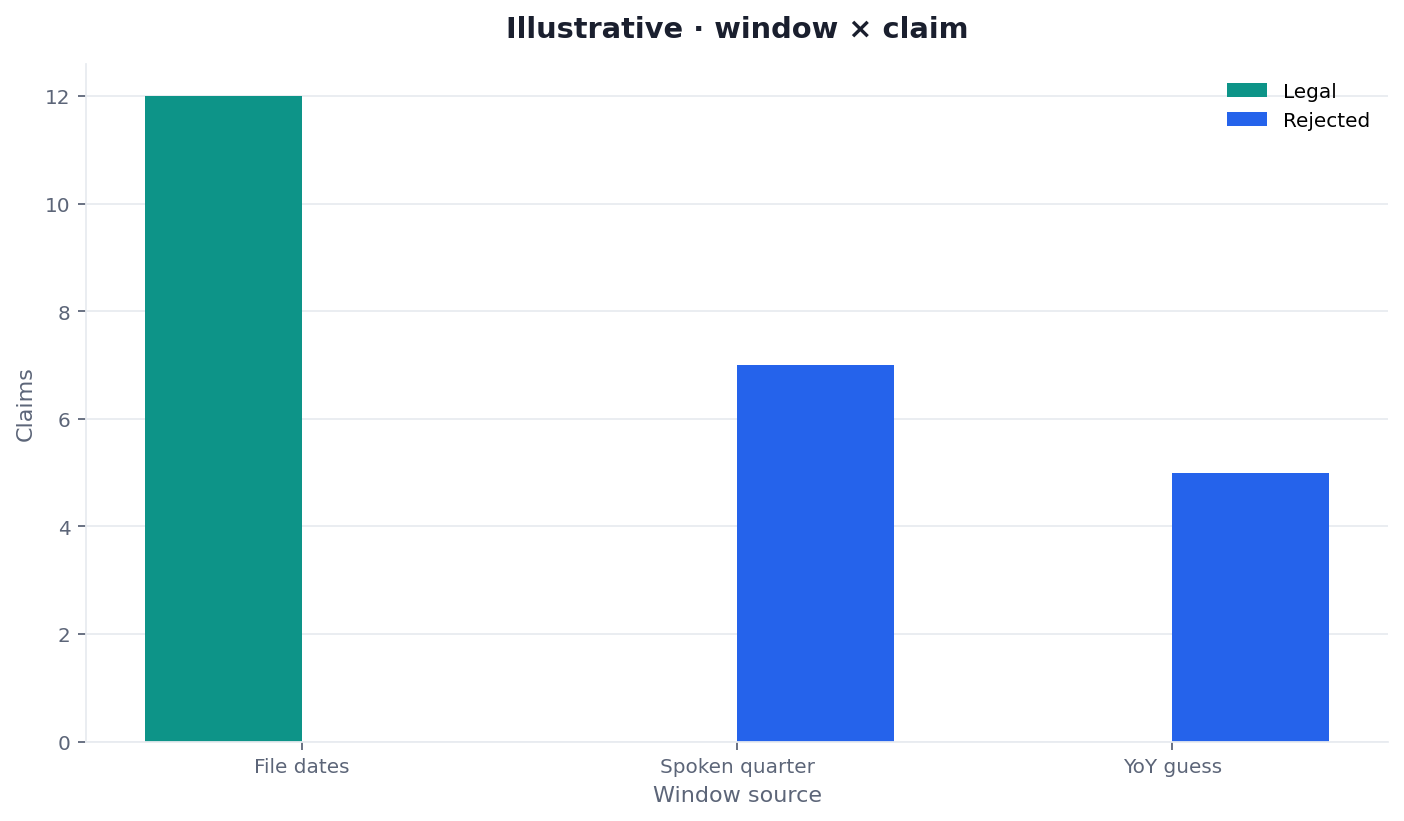
Figure: Two series from the same desk. Exit 1 is not a traffic drop. Files read is not a complete calendar.
How we ran the CLI
npx --yes -p infinitegrowth@0.1.1 seo-health gsc /tmp/no-such.csv --format json --lang en
npx --yes -p infinitegrowth@0.1.1 seo-health gsc ./empty-dir --format json --lang en
# 分析失败:目录下没有找到 CSV 文件
Reproduce those two commands if you want the same exit code. They still leave the calendar empty. Python datetime is the standard we used when deciding an ISO date must be parsed, not guessed. It does not invent the missing days.
Official fetches that mention dates
Help on support.google.com returned 404 to this user-agent and still shipped about 1.60 MB of titled HTML. The Search Console API index on developers.google.com answered 200 (74,863 bytes; Last-Modified Tue, 23 Jul 2024). A Google Search Console date range briefing that skips the status line is incomplete.
Cite Help for the date-filter vocabulary. Do not treat a 404 curl as “the filter no longer exists.”
How to reproduce the empty window
To reproduce this page, start with the CLI table, not a teaching rate.
- Pin
infinitegrowth@0.1.1and recordseo-health -V. - Run
seo-health help gscandseo-health manual gsc. - Point
gscat a missing path, a ZIP, an empty directory, and a one-row CSV. - Write the exit code and the message.
- Confirm Dates.csv is still absent.
- Stop. Do not divide placeholder clicks.
R lubridate is an independent date parser. It cannot fill a folder that has no CSV. The Power Query text/CSV connector is a second loader. Neither tool is a Search Console property.
A Google Search Console date range replay that “fixes” the empty directory by pasting 28 invented days is already a different, banned job.
What 28 days means without a file
The product contract prefers at least 28 days so weekday mix can be seen. We exported 0 days. That absence is the finding. It does not prove next month will be quieter.
ISO 8601 is the date grammar we keep when a later export arrives. Write inclusive start and inclusive end on the filename. A Google Search Console date range that says “last month” after the file ends on the 9th is already leaking. Quote both dates in every Google Search Console date range sentence once those files exist.
Google Cloud BigQuery introduction is a warehouse path some teams use after a bulk export. This desk did not start one. AWS Athena CSV SerDe is another CSV reader. It does not replace manual gsc. Databricks data quality monitoring is a quality control for tables you already loaded. We loaded nothing.
Partial stubs stay partial
manual gsc says fewer than seven date points skip anomaly detection. That is a skip rule, not a license to annualize nine days. A Google Search Console date range that stretches a stub into a quarter is already inventing coverage.
Equal length is later work
When two real windows exist, compare day count and weekday mix before you compare clicks. This page cannot run that check. The sample cannot establish seasonality. Write n = 0 next to any later 28-day hope.
Keep filters identical across windows. Search type, country, and device are part of the grain. Changing them after you like the story is not a Google Search Console date range. It is a new export.
Store a checksum when the ZIP finally appears. Do not publish private query rows to prove the calendar. Public pages use the CLI messages above.
Weekdays without a Dates.csv
A later Google Search Console date range should count Monday through Sunday in each window before it compares clicks. This desk cannot count weekdays. The empty directory and the missing path left no date column to parse. Write that absence next to any later weekday table so a briefing cannot promote documentation into a mix.
Holidays and deploys belong as annotations on real days, not as reasons to invent them. If a release landed on a Wednesday you did not export, you still do not have that Wednesday.
What we did not call
We did not call login. We did not POST a Search Analytics query. We did not open a property in the browser. A Google Search Console date range that quotes those unrun steps as if they returned rows is already past the evidence.
The request schema remains useful as a field list. It is not a substitute for Dates.csv. If a later team does call the API, they should store the request body beside the response and still refuse to compare unequal windows.
Failures that invent a rate
Teaching-rate theater. A 12 percent example from a three-row fixture becomes “the site grew.” Label teaching files as teaching files, or drop them. This rewrite dropped the rate.
ZIP as a window. Passing the ZIP fails with 只支持 CSV 文件. Unzip first. A Google Search Console date range does not live inside the archive filename.
Unauthorized as insight. Exit 1 after one CSV is a login gate. It is not a completeness flag for Dates.csv.
Help 404 as a missing filter. The title was still in the HTML.
Year-over-year after the result. Choosing YoY or previous-period after you see a preferred number is prohibited. Declare the design before the file exists.
Screenshot days. A Performance UI crop is not a CSV. Reproduce the CLI. Do not transcribe a chart.
A briefing that skips the first status and jumps to a daily rate is already late.
Record the user-agent on official fetches. A later bot can see a different Help body. This desk used InfiniSynapse-P3-desk/2026-09-14. It cannot stand in for a signed-in browser.
When two people repeat the four inputs, they should see the same exit code unless a package bump landed. That repeatability is the point of this Google Search Console date range desk. Narrative priority lists are a different job.
A Google Search Console date range owner who starts a credited workspace before Dates.csv exists is buying a story about missing days. Credits do not create a calendar. Paste the four messages into the ticket if someone asks why the comparison stopped.
Name the windows you hope to compare, then check whether both folders exist. If only one exists, the honest Google Search Console date range output is “one window, no comparison.” If neither exists, the output is the CLI table above.
Adjacent jobs after the calendar
This page keeps the empty-window rule. Totals and sessions live on siblings.
The analyze Search Console with AI hub owns the file-and-login map this cluster shares. Use GSC data analysis when a later export exists and row totals must reconcile before anyone compares days. Use GSC vs GA4 for SEO when the next temptation is to treat clicks as sessions inside the same window. That comparison is GSC vs GA4. Those siblings do not replace a Google Search Console date range check on day count.
Do not apply this page to a live property, a dashboard screenshot, or a warehouse table we did not load. A technically valid later calculation may still need editorial or indexing review.
Export the days before you compare them
Unzip Performance. Keep start and end on the folder name. Then decide whether two windows even exist.
Run SEO Health CheckerFrequently Asked Questions
Does this page compare two Search Console periods?
No. A Google Search Console date range comparison needs two exported calendars. This desk exported zero days, so no period-over-period arithmetic was run.
Can a teaching CSV stand in for Dates.csv?
No. The one-row fixture only proved the reader opens CSV. It cannot establish weekday mix, and it does not prove a 28-day window.
Why did the Performance Help URL return 404?
This user-agent received 404 and a full titled HTML body. Open the same URL in a browser before you retire the date-filter citation. Keep the status in the notes.
Did we compute a 12 percent daily-rate change?
No. That teaching rate is not in this file. Zero exported days cannot yield a daily rate.
Do fewer than seven date points still form a window?
They form a short file. manual gsc says anomaly detection is skipped. A Google Search Console date range should report the skip, not invent a trend.
Conclusion
Use a Google Search Console date range when the job is to prove two exported calendars are equal before anyone writes a change sentence. A one-window folder is not a Google Search Console date range comparison. The calendar desk never obtained a Dates.csv; it only replayed the four local CLI failures. Close the file when the command, the package version, and the zero-day count are still visible. A bounded CLI log is more useful than an unsupported 12 percent story.
Leave the InfiniSynapse web app closed while Dates.csv is still missing. The routine path remains unzip, name the days, then decide whether a second window exists.
William Zhu · Cofounder, InfiniSynapse · GitHub @allwefantasy
Desk-validated SEO Health methods. Corrections: zhuhl@infinisynapse.com · corrections policy.