On this page本文目录
What Is Data Abstraction?什么是数据抽象?
Place this specific workflow in context with the complete data integration guide, which connects the definitions, alternatives, validation steps, and related implementation guides.
可通过完整的数据集成指南理解本专题在整体流程中的位置;该指南串联了定义、替代方案、验证步骤与相关实施文章。
Data abstraction presents the data and operations a consumer needs through a stable contract while hiding storage, format, location, and implementation details that the consumer should not depend on. The contract may be a database view, API, object model, data-access interface, virtual query layer, or governed analytical model.
数据抽象通过稳定契约向使用者呈现其所需的数据与操作,同时隐藏使用者不应依赖的存储、格式、位置和实现细节。该契约可以是数据库视图、API、对象模型、数据访问接口、虚拟查询层或受治理的分析模型。
Abstraction is a design relationship, not a product category. It defines what remains visible, what stays hidden, how requests map to underlying data, and which changes can occur without breaking consumers. NIST's glossary describes abstraction as a view focused on information relevant to a purpose while ignoring the remainder; a useful data abstraction applies that idea through an explicit, testable interface.
抽象是一种设计关系,而不是某类产品。它定义哪些内容可见、哪些细节隐藏、请求如何映射到底层数据,以及哪些变化可以在不破坏使用者的情况下发生。NIST术语表把抽象描述为聚焦于特定目的相关信息并忽略其余信息的视图;有用的数据抽象会通过明确、可测试的接口落实这一思想。
Abstraction does not automatically clean data, integrate sources, enforce privacy, or improve performance. Those outcomes require separate rules and controls. A stable interface built over incorrect semantics merely makes the error easier to reuse.
数据抽象不会自动清洗数据、集成来源、实施隐私保护或提高性能,这些结果需要独立规则与控制。建立在错误语义之上的稳定接口,只会让错误更容易被重复使用。
Why Data Abstraction Matters—and When It Does Not为什么数据抽象重要,何时不适用
Data abstraction reduces coupling. Applications can request a customer profile without knowing which tables hold identifiers; analysts can query a governed view without understanding index layout; a storage team can reorganize partitions without requiring every report to change. The useful outcome is not fewer technical details everywhere, but fewer accidental dependencies between consumers and implementation.
数据抽象可以降低耦合。应用能够请求客户档案而不必知道标识符存在哪张表中;分析人员可以查询受治理视图而无需了解索引布局;存储团队可以重组分区而不要求每份报告同步修改。有价值的结果不是在所有地方减少技术细节,而是减少使用者与实现之间的意外依赖。
Several consumers need the same stable meaning, underlying schemas change, access must be narrowed, or database-specific behavior should be isolated behind an owned contract.
多个使用者需要相同稳定语义,底层Schema会变化,需要缩小访问范围,或数据库特有行为应隔离在有责任人的契约之后。
Debugging, tuning, incident response, audits, schema migration, and exploratory work may require physical plans, source fields, lineage, and exceptions that the ordinary interface hides.
调试、调优、事故响应、审计、Schema迁移和探索性工作可能需要普通接口隐藏的物理计划、源字段、血缘与异常信息。
Do not create a new abstraction simply because another layer looks architecturally tidy. A one-off query, a single well-owned application, or an unstable domain may be better served by a direct interface until repeated consumer needs become clear. Every abstraction adds ownership, documentation, testing, performance, and migration obligations.
不要仅因为多一层看起来架构整洁就创建抽象。一次性查询、单一且责任清晰的应用或仍不稳定的业务领域,可以先使用直接接口,直到重复需求明确。每个抽象都会增加责任、文档、测试、性能和迁移义务。
The Three Levels of Data Abstraction in a DBMSDBMS中的三个数据抽象层级
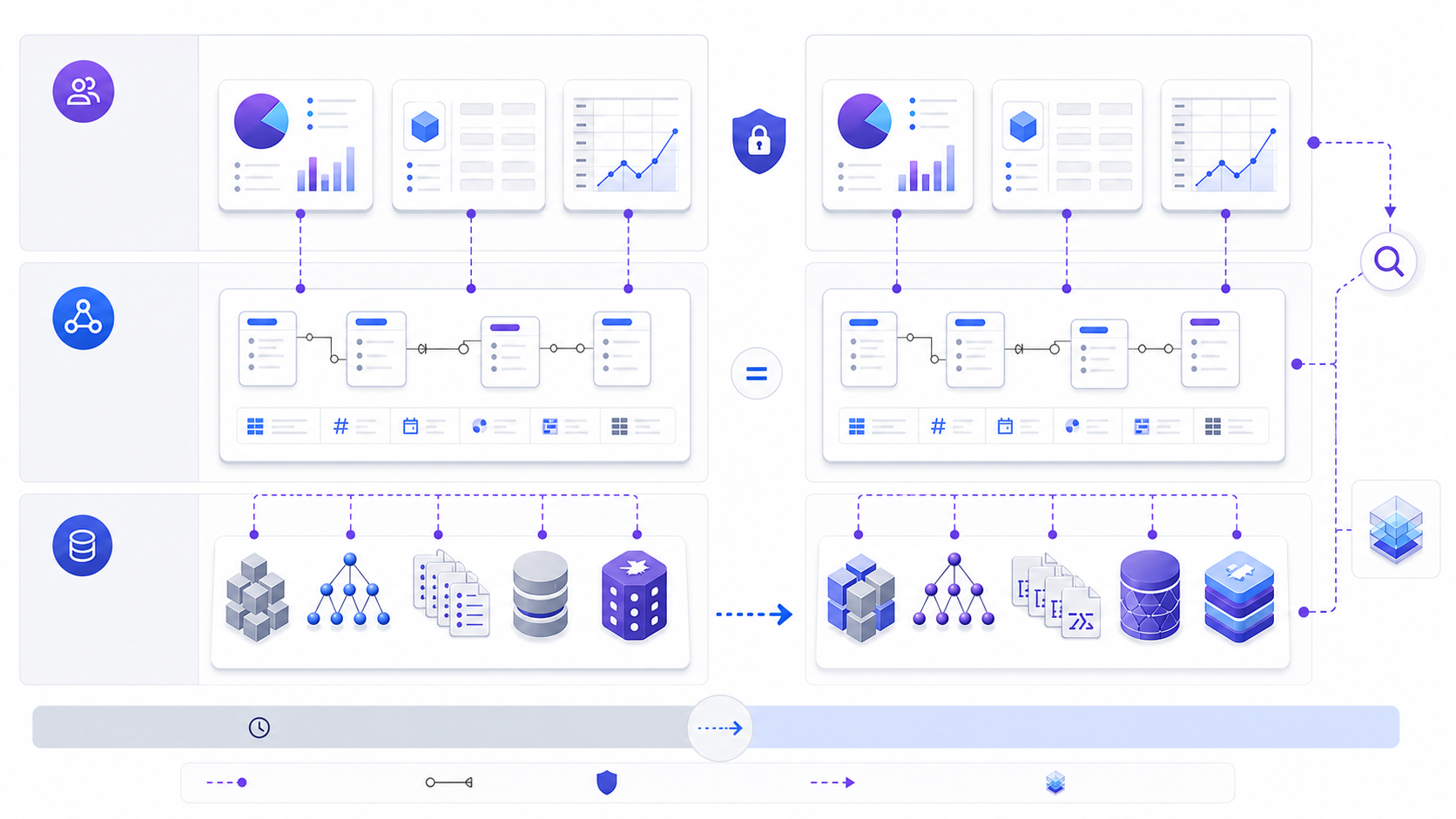
Database education commonly separates abstraction into physical or internal, logical or conceptual, and view or external levels. The model is a reasoning aid: real systems may expose several intermediate schemas, APIs, caches, and semantic models, but each interface should still identify what it hides and what it promises.
数据库教育通常把抽象分为物理或内部层、逻辑或概念层,以及视图或外部层。该模型是一种推理工具:真实系统可能暴露多个中间Schema、API、缓存和语义模型,但每个接口仍应说明它隐藏什么、承诺什么。
| Level层级 | Describes描述内容 | Typical details典型细节 | Primary consumers主要使用者 |
|---|---|---|---|
| Physical / internal物理/内部层 | How data is stored and accessed数据如何存储与访问 | Files, pages, partitions, indexes, compression, placement文件、页、分区、索引、压缩、位置 | Database and platform engineers数据库与平台工程师 |
| Logical / conceptual逻辑/概念层 | What data exists and how it relates存在哪些数据及其关系 | Entities, attributes, relationships, keys, constraints实体、属性、关系、键、约束 | Data architects, developers, administrators数据架构师、开发者、管理员 |
| View / external视图/外部层 | What a particular role or application sees特定角色或应用看到什么 | Selected fields, renamed concepts, derived values, allowed operations选定字段、重命名概念、派生值、允许操作 | Applications, analysts, reports, end users应用、分析人员、报表、最终用户 |
Physical data independence means storage changes do not require logical consumers to change. Logical data independence means the conceptual model can evolve without forcing every external view or application to change. Neither is absolute: breaking semantic changes still require versioning and migration.
物理数据独立性意味着存储变化不要求逻辑层使用者修改;逻辑数据独立性意味着概念模型可以演进,而不迫使每个外部视图或应用修改。两者都不是绝对的:破坏性语义变化仍需要版本管理和迁移。
What a Reliable Data Abstraction Contract Contains可靠的数据抽象契约包含什么
A name alone is not an abstraction. Consumers need a contract that makes meaning and behavior explicit. Document the contract before choosing whether to implement it as a view, API, repository, virtual table, or semantic model.
只有名称并不构成抽象。使用者需要明确语义与行为的契约。在选择用视图、API、Repository、虚拟表还是语义模型实现之前,应先记录契约。
| Contract element契约要素 | Decision to record需要记录的决策 | Failure if omitted遗漏后的风险 |
|---|---|---|
| Consumers and tasks使用者与任务 | Which roles, applications, and decisions are supported支持哪些角色、应用和决策 | A generic interface that fits nobody形成无人真正适用的通用接口 |
| Meaning and identity语义与身份 | Field definitions, stable IDs, units, time semantics, null behavior字段定义、稳定ID、单位、时间语义、空值行为 | Correct syntax with incorrect business meaning语法正确但业务含义错误 |
| Shape and operations结构与操作 | Fields, types, relationships, filters, reads, writes, pagination字段、类型、关系、过滤、读写、分页 | Hidden assumptions in consumer code使用者代码中出现隐藏假设 |
| Mapping映射 | How contract fields derive from source data and rules契约字段如何由源数据与规则产生 | No lineage or reproducible explanation没有血缘或可复现解释 |
| Access and sensitivity访问与敏感性 | Authentication, authorization, row and field scope, masking认证、授权、行与字段范围、掩码 | The view exposes more than intended视图暴露超出预期的数据 |
| Service behavior服务行为 | Freshness, latency, consistency, errors, limits, availability新鲜度、延迟、一致性、错误、限制、可用性 | Consumers cannot distinguish delay from wrong data使用者无法区分延迟与错误数据 |
| Ownership and evolution责任与演进 | Owner, version policy, compatibility window, deprecation path责任人、版本策略、兼容窗口、弃用路径 | Breaking change without accountable migration破坏性变化却没有负责的迁移 |
How to Design a Data Abstraction Layer如何设计数据抽象层
- Start with consumer decisions. List concrete reads, writes, filters, joins, latency needs, and failure responses. Avoid beginning with every source column.从使用者决策开始。列出具体读写、过滤、连接、延迟需求和失败响应,不要从罗列全部源字段开始。
- Inventory existing dependencies. Find applications, reports, SQL, exports, credentials, and undocumented direct access that already depend on physical structures.盘点现有依赖。找出已经依赖物理结构的应用、报表、SQL、导出、凭据和未记录的直接访问。
- Define the conceptual model. Name entities, stable identifiers, relationships, constraints, units, time rules, and sensitive attributes independently of one storage engine.定义概念模型。独立于单一存储引擎,命名实体、稳定标识符、关系、约束、单位、时间规则和敏感属性。
- Choose the smallest useful interface. Expose only fields and operations required by approved tasks. Provide deliberate diagnostic access separately instead of leaking internals into every response.选择最小有用接口。只暴露获准任务所需字段与操作;把诊断访问作为独立、受控路径,而不是把内部细节泄漏到每个响应中。
- Specify mappings and service behavior. Record transformations, nulls, errors, freshness, consistency, pagination, ordering, limits, authorization, and lineage.规定映射与服务行为。记录转换、空值、错误、新鲜度、一致性、分页、排序、限制、授权和血缘。
- Implement and test against the contract. Use views, APIs, repositories, adapters, virtual layers, or semantic models as appropriate; run consumer-driven tests against supported implementations.按契约实现并测试。根据需要使用视图、API、Repository、适配器、虚拟层或语义模型,并针对受支持实现运行使用者驱动测试。
- Change the implementation on purpose. Rename or relocate a source field in a test environment, verify the mapping absorbs the change, measure performance, and confirm unsupported behavior fails clearly.有意改变实现。在测试环境重命名或迁移源字段,验证映射吸收变化,测量性能,并确认不支持的行为能够明确失败。
- Version, observe, and retire. Publish owners and compatibility rules, monitor use and errors, migrate consumers, and remove old contracts only after evidence shows they are unused.版本化、观测并退役。发布责任人与兼容规则,监控使用和错误,迁移使用者,并在证据表明旧契约已无人使用后再删除。
Data Abstraction Example: A Stable Customer Profile数据抽象示例:稳定的客户档案
This is a hypothetical architecture example, not a customer case. An application needs a customer profile containing a stable customer ID, display name, primary contact channel, account status, region, consent state, and last successful activity time. The current implementation derives those fields from customer, account, address, consent, and activity tables.
以下是假设架构示例,不是客户案例。某应用需要客户档案,其中包含稳定客户ID、显示名称、主要联系渠道、账户状态、区域、同意状态和最近一次成功活动时间。当前实现从客户、账户、地址、同意和活动表派生这些字段。
The team publishes a read-only CustomerProfile v1 contract. It defines each field, allowed nulls, UTC timestamp semantics, status values, authorization rules, freshness expectation, and an explicit “not found” response. A mapping document links every contract field to source keys and transformations. Consumers depend on the contract name and field semantics, not table names.
团队发布只读的CustomerProfile v1契约,定义每个字段、允许的空值、UTC时间戳语义、状态取值、授权规则、新鲜度预期和明确的“未找到”响应。映射文档把每个契约字段关联到源键与转换。使用者依赖契约名称与字段语义,而不是表名。
Later, activity data moves from a relational table to a partitioned event store and the address table splits by country. The mapping changes, but contract tests confirm identical supported responses for fixed fixtures. When the business later replaces one status vocabulary with a materially different lifecycle, the team creates v2, runs both versions during a migration window, measures remaining v1 use, and retires it only after consumers move.
之后,活动数据从关系表迁移到分区事件存储,地址表也按国家拆分。映射发生变化,但契约测试确认固定测试数据仍产生相同的受支持响应。当业务随后用实质不同的生命周期替换状态词汇时,团队创建v2,在迁移窗口内并行运行两个版本,测量剩余v1使用量,并在使用者迁移后才退役旧版本。
Validation boundary: this example proves interface compatibility, not source correctness. Source keys, consent logic, deduplication, and activity timestamps still need independent data-quality tests.
验证边界:该示例证明的是接口兼容性,而不是源数据正确性。源键、同意逻辑、去重和活动时间戳仍需独立的数据质量测试。
Use InfiniSynapse to Test Consumer-Facing Data Questions使用InfiniSynapse测试面向使用者的数据问题
InfiniSynapse's public website describes direct connections to supported databases and joint analysis across multiple sources. That makes the web app relevant for testing whether approved connected data can answer a consumer's analytical question without requiring that consumer to navigate every physical table.
InfiniSynapse官网描述了对受支持数据库的直接连接和多源联合分析。因此,Web App适合测试获准的已连接数据能否回答使用者的分析问题,而不要求使用者逐一理解所有物理表。
Prepare read-only connection details, permitted schemas, entity keys, field meanings, joins, filters, time rules, sensitive-data boundaries, expected sample answers, and independent validation queries. Ask the same question through the proposed abstract vocabulary and compare the result with source evidence before treating that vocabulary as stable.
请准备只读连接信息、允许访问的Schema、实体键、字段含义、连接、过滤、时间规则、敏感数据边界、预期样本答案和独立验证查询。使用拟议的抽象词汇提出相同问题,并将结果与源证据比较,再决定该词汇能否视为稳定。
InfiniSynapse should not be described as automatically creating database views, APIs, ORMs, semantic models, access policies, contract versions, or production abstraction layers. Those artifacts remain engineering and governance responsibilities. Use the app as an analysis surface for approved connected data, then implement durable contracts in the systems that own them.
不应把InfiniSynapse描述为能够自动创建数据库视图、API、ORM、语义模型、访问策略、契约版本或生产数据抽象层。这些产物仍属于工程与治理责任。可以把该应用作为获准已连接数据的分析界面,再在真正负责的系统中实施持久契约。
Bring the proposed vocabulary, stable identifiers, read-only access, and expected validation cases. Use the InfiniSynapse web app to explore the question; keep schema, API, policy, and version management in dedicated systems.
请准备拟议词汇、稳定标识符、只读访问和预期验证案例。使用InfiniSynapse Web App探索问题;Schema、API、策略与版本管理仍应保留在专用系统中。
Analyze approved connected data分析获准的已连接数据Data Abstraction FAQ数据抽象常见问题
What is data abstraction?
什么是数据抽象?
Data abstraction presents the data and operations a consumer needs through a stable contract while hiding storage, format, location, and implementation details that the consumer should not depend on.
数据抽象通过稳定契约向使用者呈现所需数据与操作,同时隐藏使用者不应依赖的存储、格式、位置和实现细节。
What are the three levels of data abstraction in a DBMS?
DBMS中的三个数据抽象层级是什么?
The commonly taught DBMS levels are physical or internal, logical or conceptual, and view or external. They separate storage implementation, the overall data model, and consumer-specific representations.
常见的DBMS层级是物理或内部层、逻辑或概念层,以及视图或外部层。它们分别隔离存储实现、整体数据模型和面向特定使用者的表示。
How is data abstraction different from data virtualization?
数据抽象与数据虚拟化有何不同?
Data abstraction is the broader design principle of exposing essential data through a stable interface. Data virtualization is one runtime approach that can provide an abstract cross-source view without first copying all data.
数据抽象是通过稳定接口暴露必要数据的广义设计原则;数据虚拟化是一种运行时方式,可以在不先复制全部数据的情况下提供抽象跨源视图。
How do you know a data abstraction is working?
如何判断数据抽象是否有效?
A data abstraction works when approved consumers can complete required tasks through the contract, underlying changes do not cause unexpected breakage, access rules hold, and performance and lineage remain observable.
当获准使用者能够通过契约完成所需任务,底层变化不会造成意外破坏,访问规则保持有效,并且性能与血缘仍然可观测时,数据抽象才算有效。
Authoritative Sources and Next Steps权威来源与下一步
Use official documentation to verify the behavior of the chosen mechanism rather than assuming every view, API, or data-access library provides the same guarantees. Preserve the consumer task list, contract, mapping, access decision, fixtures, test results, performance evidence, lineage, owner, version history, migration plan, and rollback procedure.
应使用官方文档验证所选机制的行为,不要假设每种视图、API或数据访问库都提供相同保证。保留使用者任务清单、契约、映射、访问决策、测试数据、测试结果、性能证据、血缘、责任人、版本历史、迁移计划和回滚流程。
- NIST glossary definition of abstractionNIST关于抽象的术语定义
- PostgreSQL CREATE VIEW documentationPostgreSQL CREATE VIEW文档
- Oracle documentation explaining database viewsOracle数据库视图说明
- Microsoft tutorial on a data access layerMicrosoft数据访问层教程
- InfiniSynapse guide to governed semantic layersInfiniSynapse受治理语义层指南
- InfiniSynapse guide to identifying and governing data sourcesInfiniSynapse数据源识别与治理指南