What Is Data Engineering? (2026)
By the InfiniSynapse Data Team · Last updated: 2026-07-15 · We build an AI-native data analysis platform and do this work daily; this explainer answers what is data engineering in plain terms for 2026, not with a job-board definition.
Table of Contents
- TL;DR
- How We Answer This
- What It Means
- What Engineers Actually Do
- Why It Matters
- How It Differs From Related Roles
- Common Pitfalls
- The Field in the Age of AI
- Readiness Scorecard
- Common Misconceptions
- Frequently Asked Questions
- Conclusion
TL;DR
Direct answer: so what is data engineering? It is the discipline of building and operating the systems — pipelines, storage, and infrastructure — that move and prepare data so it can be analyzed and used reliably. In 2026, understanding what is data engineering matters because it is the foundation every dashboard, report, and AI model stands on, and the quality of that foundation determines whether analysis can be trusted.
Who this is for: anyone asking what is data engineering in 2026.
What you'll learn: a plain-language definition, what engineers do, why it matters, how it differs from related roles, and how AI is changing it.
This guide sits under the data engineering hub.
For the role itself, see what a data engineer is.
Also see data engineer vs data scientist.
How We Answer This
Core definitions remain usefully summarized in Wikipedia data quality overview for shared vocabulary across stakeholders.
We answer what is data engineering from practice, because the discipline is easy to define abstractly and hard to appreciate until pipelines break. Every point reflects systems we have built and maintained. We anchor the definition to the Spider NL2SQL benchmark and weigh practices against the reference architectures at Apache Kafka documentation, which show what modern data engineering builds.
The table below frames what is data engineering by its main activities.
| Activity | What it involves |
|---|---|
| Ingestion | Getting data from sources |
| Transformation | Cleaning and reshaping it |
| Storage | Organizing it for use |
| Orchestration | Scheduling and monitoring flows |
| Reliability | Keeping it all dependable |
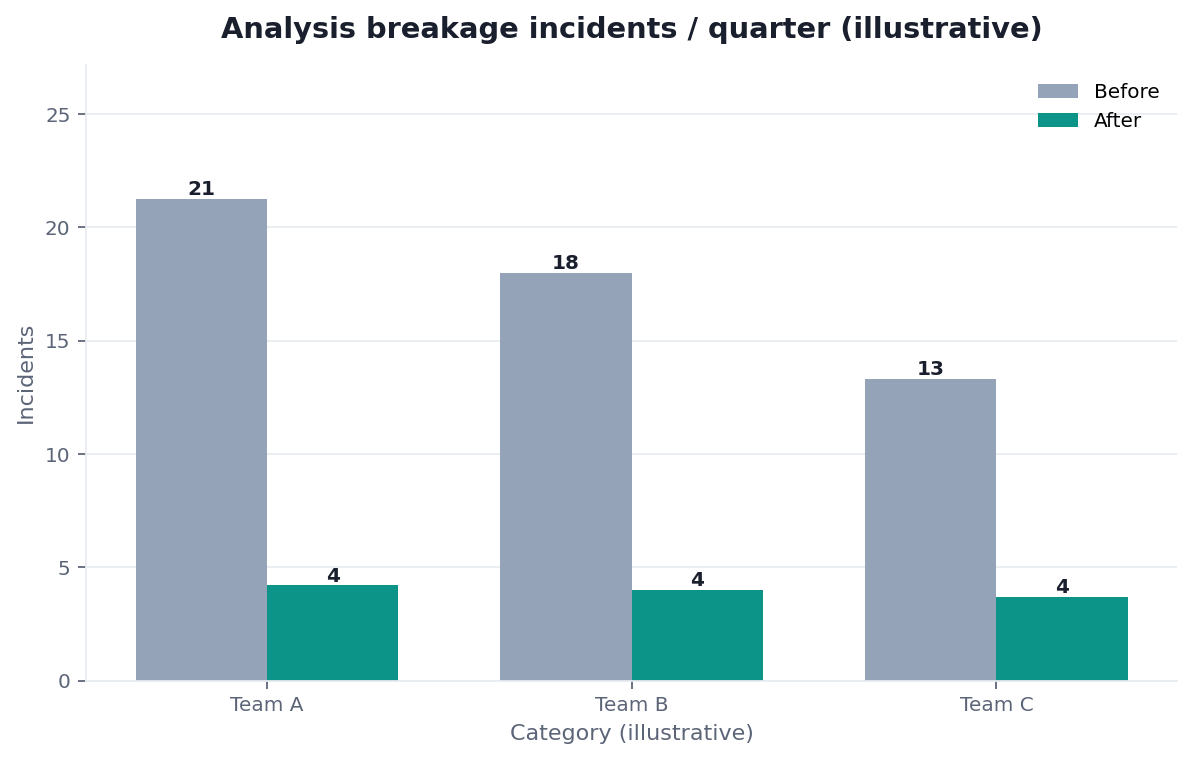
Practical example: a team could not say what is data engineering was worth until analysis kept breaking on bad pipelines. Investing in reliable engineering — following orchestration patterns echoed at Wikipedia conceptual data model overview — made every downstream report trustworthy.
Scope note: This guide reflects patterns we see when mid-market and enterprise teams work with what is data engineering in 2026. It is not a substitute for legal counsel, vendor runbooks, or a formal survey of every industry — and when a smaller toolset or lighter process would serve, a full program is overkill.
What It Means
At its core, the answer to what is data engineering is straightforward: it is the work of building systems that reliably move data from where it is created to where it can be used.
Key Definition: data engineering is the discipline of designing, building, and operating the systems — data pipelines, storage, and supporting infrastructure — that reliably move, transform, and prepare data so it can be analyzed, reported on, or fed to models.
The word that matters in answering what is data engineering is reliably. Anyone can move data once; the engineering is in building systems that move it correctly every day, recover from failures, and stay trustworthy as sources and requirements change.
What Engineers Actually Do
Teams evaluating this topic often cross-check Prometheus documentation for a durable, vendor-neutral reference point.
To understand what is data engineering in practice, look at the daily work: building pipelines that ingest data, writing transformations that clean and reshape it, organizing storage, and orchestrating the whole flow so it runs on schedule and recovers from failure.
Much of what is data engineering is unglamorous reliability work, and the enterprise patterns from Stripe documentation show why it is valuable anyway: the systems engineers build are the foundation that analysts and data scientists depend on. When they work, nobody notices; when they break, everything downstream breaks with them. That invisibility is the nature of good infrastructure.
Why It Matters
The reason what is data engineering matters is simple: every insight, dashboard, and model depends on data arriving reliably and correctly. Bad engineering means broken analytics, wrong numbers, and decisions made on flawed data.
The reliability guidance at OWASP Top 10 for LLM Applications makes the point that what is data engineering delivers is trust: when the pipelines are dependable, the whole organization can rely on its data. This is why engineering is foundational rather than optional — it is the difference between an organization that trusts its numbers and one that constantly second-guesses them, and that trust compounds across every decision made.
How It Differs From Related Roles
Core definitions remain usefully summarized in Wikipedia SQL overview for shared vocabulary across stakeholders.
Answering what is data engineering requires distinguishing it from related roles. Data engineers build the systems; data scientists build models and analysis on top of them; data analysts interpret the results for the business.
The clearest way to frame what is data engineering against these is by output: engineers produce reliable data infrastructure, scientists produce models and predictions, analysts produce insights and recommendations. The roles overlap and collaborate, but engineering is the foundation the others build on. This connects to the broader field of data engineering, where the engineer's defining skill is building systems that stay reliable as everything around them changes.
Common Pitfalls
The pitfalls in understanding what is data engineering are common. Treating it as just writing scripts undervalues the reliability discipline at its core. Skipping tests and documentation creates fragile pipelines. And building for imagined scale adds complexity the current problem does not need.
A subtler pitfall is confusing what is data engineering with tooling. The field is not about mastering a particular pipeline product; it is about the enduring principles — reliability, testability, observability — that apply regardless of tool. Engineers who chase tools without internalizing the principles build systems that break, while those who master the principles adapt to any tool.
The Field in the Age of AI
Teams evaluating this topic often cross-check W3C WCAG accessibility standard for a durable, vendor-neutral reference point.
AI is changing what is data engineering means in two ways. AI tools generate more of the pipeline code, shifting the engineer toward review and design, and AI-native platforms reduce how much data must be moved and pre-processed at all.
That second shift is the one we find most consequential, and we describe it in what AI-native data analysis means. In the InfiniSynapse web app, zero-config federation lets an agent analyze across sources directly, so part of the modern answer to what is data engineering includes engineering fewer pipelines by moving less data in the first place.
How the Discipline Developed
To fully grasp what is data engineering, it helps to see where it came from, because the discipline is younger than it looks. For decades, moving and preparing data was a task that database administrators and application developers absorbed alongside their other duties, not a role in its own right. Data lived in a handful of relational databases, volumes were modest, and the work of getting data into a reporting system, while tedious, did not demand a dedicated specialist. The idea of a distinct engineering discipline for data simply had not crystallized.
Two forces changed that. The first was the explosion in data volume and variety — web logs, sensors, events, documents, and countless third-party sources — which overwhelmed the old approaches and demanded systems built specifically to handle scale. The second was the rise of analytics and, later, machine learning as competitive differentiators, which raised the stakes on data being reliable, timely, and trustworthy. Together these forces turned data movement from an incidental chore into a specialized discipline, and what is data engineering became a question worth answering precisely because the work had grown too important and too demanding to leave to chance.
The tools evolved alongside the role. Early data engineering leaned heavily on hand-written scripts and monolithic batch jobs; the modern era brought cloud warehouses, managed pipeline services, orchestration frameworks, and transformation tools that apply software-engineering discipline to SQL. Yet through all of this evolution, the essence of what is data engineering stayed constant: building systems that move and prepare data reliably. The tools changed how the work is done, not what the work is for, which is why engineers who anchor on principles rather than products adapt smoothly as each new generation of tooling arrives.
Understanding this history guards against a common trap — mistaking the current toolset for the discipline itself. An engineer who defines their expertise by a particular platform is vulnerable every time the platform falls out of fashion, whereas one who understands the enduring problem of reliable data delivery remains valuable across every shift. The history of the field is, in a sense, a long demonstration that tools are temporary and principles are durable, and that lesson is exactly what makes the reliability mindset the true core of what is data engineering rather than any single technology of the moment. It also explains why the field keeps attracting people from adjacent backgrounds — database administration, software engineering, analytics — who bring the same underlying discipline expressed through different tools. What unites them is not a shared toolset but a shared commitment to making data dependable, and that commitment is the thread running through every era of the discipline, from hand-written scripts to today's cloud-native platforms.
Readiness Scorecard
Implementation details are commonly grounded in Kubernetes documentation when teams translate concepts into production practice.
Assess your data engineering maturity (1 point each):
| Check | Pass? |
|---|---|
| Pipelines are reliable and monitored | |
| Steps are idempotent and testable | |
| Data is validated along the way | |
| Failures alert loudly | |
| Infrastructure is documented | |
| It is as simple as the need allows | |
| Output is trustworthy for analysis and AI | |
| Fewer pipelines are built by moving less data |
6–8: mature engineering. 3–5: strengthen reliability. Below 3: invest in fundamentals.
Common Misconceptions
Misconception 1: It is just writing scripts. What is data engineering is a reliability discipline.
Misconception 2: It is about specific tools. The principles outlast any tool.
Misconception 3: It is the same as data science. Engineers build the foundation scientists build on.
Misconception 4: More pipelines mean more capability. Sometimes fewer, moving less data, is better.
Frequently Asked Questions
What is data engineering?
Data engineering is the discipline of designing, building, and operating the systems — data pipelines, storage, and supporting infrastructure — that reliably move, transform, and prepare data so it can be analyzed, reported on, or fed to models. The key word is reliably: the engineering is in building systems that move data correctly every day, recover from failures, and stay trustworthy as sources and requirements change.
What do data engineers actually do?
They build pipelines that ingest data, write transformations that clean and reshape it, organize storage, and orchestrate the whole flow so it runs on schedule and recovers from failure. Much of the work is unglamorous reliability engineering, but the systems built are the foundation analysts and data scientists depend on — invisible when they work and catastrophic when they break.
Why does data engineering matter?
Because every insight, dashboard, and model depends on data arriving reliably and correctly. Weak engineering produces broken analytics, wrong numbers, and decisions built on flawed data. What good engineering delivers is trust: when pipelines are dependable, the whole organization can rely on its data, which is the difference between trusting your numbers and constantly second-guessing them.
How does it differ from data science?
Data engineers build the systems; data scientists build models and analysis on top of them; data analysts interpret results for the business. Framed by output, engineers produce reliable data infrastructure, scientists produce models and predictions, and analysts produce insights. The roles collaborate, but engineering is the foundation the others build on, and its defining skill is reliability.
How is AI changing data engineering?
Automated tooling now writes much of the pipeline code, moving the engineer toward review and design, while AI-native platforms cut how much data has to be moved and pre-processed in the first place. Part of the modern answer includes engineering fewer pipelines by moving less data in the first place, because federation can analyze data where it lives rather than requiring it to be pre-integrated into one place.
Is data engineering a good career in 2026?
It remains a strong career, but its center of gravity is shifting. Routine pipeline coding is increasingly automated, so the durable value lies in reliability judgment, systems thinking, and the ability to decide what to build and what not to build. Those who anchor their skills on these enduring principles rather than on a particular tool tend to stay valuable across every wave of new technology, which is exactly what makes the field durable even as its day-to-day tools keep changing.
Conclusion
What is data engineering? It is the discipline of building reliable systems that move and prepare data — the foundation every dashboard, report, and model depends on. In 2026, the enduring value is reliability, not tooling, and AI-native federation increasingly lets teams achieve it by engineering fewer pipelines and moving less data.
To see how federated analysis reduces the pipelines you engineer, read what AI-native data analysis means and try the InfiniSynapse web app free on registration.