
Quick Answer: What Is Demand Planning?快速回答:什么是需求计划?
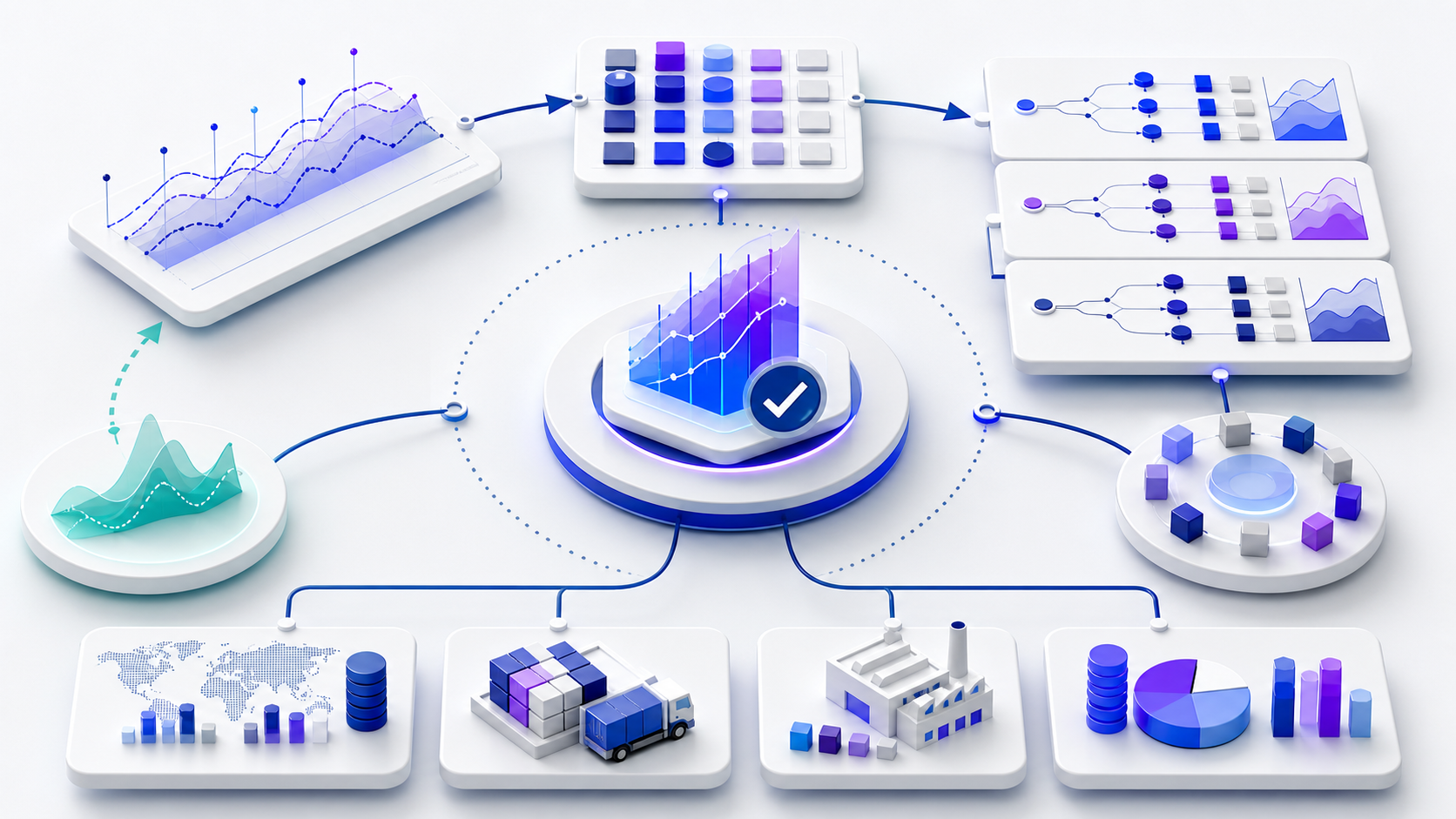
Demand planning is the governed, cross-functional process of combining a demand forecast with commercial intelligence and explicit assumptions to produce an approved, unconstrained demand plan. It aligns product, sales, marketing, finance and supply-chain stakeholders around the quantity customers are expected to request by product, location and time. The result becomes an input to supply, inventory, capacity and financial planning; it is not automatically a purchase order, production schedule or allocation decision.
需求计划是一个受治理的跨职能流程,将需求预测与商业情报和明确假设结合,形成经过批准的无约束需求计划。它使产品、销售、市场、财务与供应链相关方围绕客户预计在不同产品、地点和时间上的需求数量达成一致。结果会输入供应、库存、产能与财务计划,但不会自动成为采购订单、生产排程或分配决策。
A mature cycle preserves the statistical baseline, structures every human adjustment, compares scenarios, reviews material exceptions, approves one consensus view, records versions and measures both forecast performance and process value after actual demand arrives. The objective is not to eliminate uncertainty. It is to make uncertainty, assumptions, ownership and decision consequences visible early enough to act.
成熟周期会保留统计基准,结构化每项人工调整,比较情景,复核重大异常,批准一个共识视图,记录版本,并在实际需求到达后衡量预测表现与流程价值。目标不是消除不确定性,而是让不确定性、假设、责任和决策后果足够早地可见,以便采取行动。
1. Demand Planning Purpose, Scope and Outputs1. 需求计划的目的、范围与输出
Demand planning answers a practical question: given the best available evidence, what unconstrained customer demand should the organization prepare to evaluate? The word “unconstrained” matters. If a product is unavailable, a shipment record may understate what customers wanted. If a factory lacks capacity, lowering the demand plan to match capacity hides the commercial gap. Supply constraints belong in supply review and reconciliation, while the demand plan should preserve the market-facing view.
需求计划回答一个实用问题:基于当前最佳证据,组织应准备评估多少无约束客户需求?“无约束”非常重要。如果产品不可用,发货记录会低估客户真实需要;如果工厂产能不足,仅为匹配产能而降低需求计划,会掩盖商业缺口。供应约束应在供应评审和协调中处理,而需求计划应保留面向市场的视图。
Define scope before designing meetings or software. State the demand measure, unit, product-location-customer hierarchy, time bucket, forecast horizon, snapshot cutoff, currency and price policy, inclusion of returns or cancellations, owner and approval rights. A weekly SKU-location plan for replenishment has different data, accuracy and cadence needs from a monthly category-region plan used in S&OP. Publish a data dictionary and a forecast contract so teams do not debate definitions during every cycle.
在设计会议或软件前先定义范围:需求指标、单位、产品—地点—客户层级、时间桶、预测期限、快照截止点、币种与价格政策、退货或取消处理、责任人和批准权限。用于补货的周度 SKU—地点计划,与用于 S&OP 的月度品类—区域计划,在数据、准确率和节奏上完全不同。应发布数据字典与预测契约,避免每个周期反复争论定义。
A reproducible statistical or structured judgment estimate before commercial overrides.
商业调整前可复现的统计或结构化判断估计。
The approved unconstrained view with documented assumptions and scenarios.
带有记录假设与情景的批准无约束视图。
Material changes, gaps, decisions, owners, evidence and expiry dates.
重大变化、缺口、决策、责任人、证据与失效日期。
Versioned product-location-time quantities and uncertainty for downstream review.
供下游评估的版本化产品—地点—时间数量与不确定性。
2. Demand Planning vs Forecasting, Supply Planning and S&OP2. 需求计划与预测、供应计划和 S&OP 的区别
Demand forecasting is the estimation step: it uses history, current signals, models and structured judgment to predict future demand. Demand planning governs how that forecast is reviewed, enriched and approved. It adds launch plans, promotions, customer intelligence, distribution changes and explicit scenarios, then records which adjustments changed the baseline and why. Forecasting can be automated extensively; planning still requires accountable business decisions.
需求预测是估计步骤:使用历史、当前信号、模型和结构化判断预测未来需求。需求计划则治理该预测如何被复核、补充与批准。它加入新品上市、促销、客户情报、分销变化和明确情景,并记录哪些调整改变了基准及其原因。预测可以高度自动化,但计划仍需要有责任归属的业务决策。
Supply planning tests whether inventory, suppliers, factories, labor, transportation and policy can fulfill the approved demand plan. It identifies constraints and alternatives. S&OP or integrated business planning coordinates demand, supply and financial views at a management level and resolves material trade-offs. Demand review is therefore one input to a larger decision process, not a substitute for supply feasibility or executive reconciliation.
供应计划检验库存、供应商、工厂、劳动力、运输与政策能否满足批准需求计划,并识别约束与替代方案。S&OP 或综合业务计划在管理层协调需求、供应与财务视图,解决重大权衡。因此,需求评审只是更大决策流程的输入,不能替代供应可行性或管理层协调。
| Process流程 | Primary question核心问题 | Typical output常见输出 |
|---|---|---|
| Demand forecasting需求预测 | What demand is likely?需求可能是多少? | Baseline point or probability forecast基准点预测或概率预测 |
| Demand planning需求计划 | What unconstrained demand view should be approved?应批准哪个无约束需求视图? | Consensus demand plan and assumptions共识需求计划与假设 |
| Supply planning供应计划 | How can demand be fulfilled under constraints?如何在约束下满足需求? | Feasible supply plan, exceptions and options可行供应计划、异常与方案 |
| S&OP / IBPS&OP / IBP | Which cross-functional plan best supports business objectives?哪个跨职能计划最符合业务目标? | Reconciled plan, decisions and escalations协调计划、决策与升级事项 |
3. Demand Planning Inputs, Roles and Governance3. 需求计划的输入、角色与治理
The core dataset normally combines dated demand history, product and location master data, inventory availability, open customer orders, price and promotion calendars, product lifecycle, customer or channel plans and relevant external signals. Preserve source timestamps and the information cutoff. Stockouts, substitutions, cancelled orders, forward buying and returns can distort observed demand. Keep the original observation and every adjustment so planners can distinguish data repair from business judgment.
核心数据集通常连接带日期的需求历史、产品与地点主数据、库存可用性、开放客户订单、价格与促销日历、产品生命周期、客户或渠道计划及相关外部信号。必须保留来源时间戳与信息截止点。缺货、替代、取消订单、提前采购和退货会扭曲观察需求,因此要保留原始观察与每项调整,使计划人员能够区分数据修复与业务判断。
Govern each input with an owner, refresh cadence, validation rule and fallback. A late promotion file or unmapped new item should appear as a visible exception, not silently disappear from the plan. This operating discipline makes data readiness measurable before the consensus meeting begins and prevents participants from debating different snapshots.
应为每项输入定义责任人、刷新频率、验证规则与备用方案。迟到的促销文件或未映射新品应成为可见异常,而不能悄悄从计划中消失。这种操作纪律让数据就绪度能在共识会议开始前被衡量,也避免参与者基于不同快照争论。
Assign roles by evidence and decision rights. Demand planners own calendar, definitions, data quality, baseline generation, exception analysis and the record of changes. Sales contributes account and channel intelligence; marketing contributes campaigns and demand-shaping events; product contributes launches, substitutions and end-of-life; finance reconciles value and budget views; supply teams receive the approved unconstrained plan and test feasibility. One executive or governance body approves material assumptions and escalations.
角色应按证据与决策权限划分。需求计划人员负责日历、定义、数据质量、基准生成、异常分析与变更记录;销售提供客户和渠道情报;市场提供活动与需求塑造事件;产品团队提供新品、替代与退市信息;财务协调金额与预算视图;供应团队接收批准的无约束计划并检验可行性。重大假设与升级事项应由一个管理责任人或治理机构批准。
A target is not a forecast. A financial target expresses ambition; a demand plan expresses expected unconstrained demand based on evidence. Keep both visible and reconcile the gap rather than changing the plan until it equals the target.
目标不等于预测。财务目标表达愿望,需求计划基于证据表达预期无约束需求。应同时展示两者并协调差距,而不是不断修改计划直到它等于目标。
4. An Eight-Step Demand Planning Process4. 八步需求计划流程
Set the cycle and scope. Define grain, horizon, time fences, issue dates, materiality thresholds and decision calendar.
设定周期与范围。定义粒度、期限、时间围栏、发布日期、重大性阈值与决策日历。
Freeze and validate data. Reconcile demand history, master data, availability and event calendars; log missing or late inputs.
冻结并验证数据。对账需求历史、主数据、可用性与事件日历,并记录缺失或迟到输入。
Generate the baseline. Segment demand behavior, run approved models and retain uncertainty, diagnostics and a simple benchmark.
生成基准。按需求行为分群,运行批准模型,并保留不确定性、诊断与简单基准。
Collect structured intelligence. Require dated event, affected dimensions, expected lift or loss, confidence, evidence, owner and expiry.
收集结构化情报。要求记录事件日期、影响维度、预期增减、置信度、证据、责任人和失效期。
Build scenarios. Keep base, upside and downside assumptions coherent across product, location, channel and time.
构建情景。保持基准、上行与下行情景在产品、地点、渠道和时间上的一致性。
Review exceptions. Focus discussion on material changes, unresolved evidence, bias, gaps to target and downstream exposure.
复核异常。把讨论集中在重大变化、未解决证据、偏差、目标差距与下游暴露。
Approve and hand off. Freeze the consensus plan, assumptions, risks and version; export it to supply and financial review.
批准并交接。冻结共识计划、假设、风险与版本,并导出到供应和财务评审。
Measure and learn. Compare frozen versions with actual demand, score baseline and overrides separately, and close action items.
衡量并学习。比较冻结版本与实际需求,分别评估基准与人工调整,并关闭行动项。
5. From Baseline Forecast to Consensus Demand Plan5. 从基准预测形成共识需求计划
The baseline protects the process from unstructured optimism, but it should not be treated as infallible. It extrapolates the information represented in its history and features. Planned promotions, customer wins, distribution changes, launches, competitor exits or regulation may not be present. A business adjustment is valuable when it adds genuinely new, dated information. It is harmful when it repeats information already in the model, reflects a target, or applies a broad percentage with no causal mechanism.
基准可保护流程免受无结构乐观情绪影响,但也不能被视为绝对正确。它只外推历史与特征中表示的信息。计划促销、客户赢单、分销变化、新品、竞争者退出或监管可能尚未出现。只有加入真正新的、带日期的信息时,业务调整才有价值;若重复模型已使用的信息、反映目标,或无因果机制地统一加百分比,就会损害计划。
Store adjustment reason, source, owner, affected hierarchy, start and end period, value, confidence and approval. Preserve pre- and post-adjustment forecasts. After actuals arrive, calculate forecast value added: did the adjustment improve the baseline at the intended level and horizon? Aggregate improvement can hide repeated harm in important segments, so review by adjustment type and contributor as a process diagnostic—not as a simplistic employee score.
应保存调整原因、来源、责任人、受影响层级、起止期间、数值、置信度与批准记录,并保留调整前后预测。实际值到达后计算预测增值:调整是否在预定层级和期限改善基准?汇总改善可能掩盖重要细分中的反复损害,因此应按调整类型与贡献角色进行流程诊断,而不是简化为员工评分。
| Accept an adjustment when接受调整的条件 | Challenge it when需要质疑的情况 |
|---|---|
| The event is future-dated, specific and absent from the baseline事件面向未来、具体且基准未包含 | The reason is “management expects growth”理由只是“管理层预计增长” |
| Affected items, locations, channels and periods are named明确产品、地点、渠道与期间 | One percentage is applied to an entire portfolio对整个组合统一应用一个百分比 |
| A comparable event or measurable mechanism supports magnitude可比事件或可衡量机制支持幅度 | The evidence already exists in model inputs证据已存在于模型输入 |
| The owner and expiry date are recorded记录责任人和失效日期 | No owner will review the outcome没有责任人复盘结果 |
6. Scenario Planning for Promotions, Launches and Disruption6. 面向促销、新品与中断的情景计划
A scenario is a coherent set of assumptions, not an arbitrary high and low number. Define the trigger, affected demand drivers, expected timing, probability or confidence, and what decision changes if it occurs. A promotion scenario should specify price, placement, channel, duration, eligible products, expected cannibalization and inventory availability. A launch scenario should separate distribution fill from consumer demand and use comparable products with documented similarity.
情景是一组一致假设,而不是任意高低数字。应定义触发条件、受影响的需求驱动因素、预期时间、概率或置信度,以及发生后改变哪些决策。促销情景应规定价格、展示、渠道、持续时间、适用产品、预期蚕食与库存可用性;新品情景应区分渠道铺货与消费者需求,并使用相似性有记录的可比产品。
Downside scenarios can represent delayed launches, lower distribution, customer loss or market contraction. Upside scenarios can represent faster adoption or additional channels. Keep scenarios unconstrained during demand review, then let supply review test inventory, supplier and capacity feasibility. If constraints cause lost or delayed sales, record that bridge rather than rewriting historical demand so it appears that the plan was met.
下行情景可表示上市延期、分销不足、客户流失或市场收缩;上行情景可表示采用加速或新增渠道。需求评审中应保持情景无约束,再由供应评审检验库存、供应商与产能可行性。如果约束导致销售流失或延迟,应记录转换桥梁,而不是重写历史需求让计划看似达成。
7. Planning Hierarchies, Time Fences and Version Control7. 计划层级、时间围栏与版本控制
Demand plans span product, customer, channel, location and time hierarchies. Independent edits at several levels create totals that no longer add up. Define where contributors may edit and how changes are allocated downward or reconciled upward. Bottom-up detail can be noisy; top-down allocation can ignore local variation. The approved plan must remain coherent so category totals equal their SKU components and regional totals match locations.
需求计划跨产品、客户、渠道、地点与时间层级。若多个层级独立编辑,总量会失去一致性。应定义贡献者可在哪个层级编辑,以及变更如何向下分配或向上协调。自下而上细节可能噪声很大,自上而下分配可能忽略局部差异。批准计划必须保持一致,使品类总量等于 SKU 组成,区域总量与地点一致。
Time fences clarify what can still change. Inside a frozen horizon, supply commitments may already be firm; demand changes should be treated as exceptions with operational consequences, not routine edits. A flexible horizon permits controlled adjustment, while a planning horizon supports scenarios and capacity decisions. Preserve baseline, pre-review, consensus and executive-approved versions with timestamps so changes can be explained and performance evaluated fairly.
时间围栏说明哪些内容仍可改变。在冻结期限内,供应承诺可能已固定,需求变化应作为具有运营后果的异常处理,而不是常规编辑。灵活期限允许受控调整,计划期限支持情景与产能决策。应保存基准、评审前、共识和管理层批准版本及时间戳,使变化可解释、表现可公平评估。
8. Demand Planning KPIs and Validation8. 需求计划 KPI 与验证方法
Measure the forecast, the planning process and downstream consequences separately. Forecast accuracy must compare a frozen version with matching actual demand at a defined horizon and level. WAPE can summarize absolute error across a portfolio, but it may hide low-volume failures. MAPE is unstable around zero. MAE or scaled errors help at other levels. Signed bias is essential because over- and under-planning have different costs and can cancel in an unsigned average.
应分别衡量预测、计划流程与下游后果。预测准确率必须在定义的期限和层级,将冻结版本与匹配实际需求比较。WAPE 可汇总组合绝对误差,却可能掩盖低量失败;MAPE 在零附近不稳定;MAE 或缩放误差可用于其他层级。有符号偏差至关重要,因为高估与低估成本不同,且会在无符号平均中相互抵消。
Process KPIs can include input timeliness, missing master data, exception volume, action closure, override rate and approval latency. Downstream outcomes may include service, stockout, excess inventory, obsolescence, expedite cost and capacity utilization. These outcomes are influenced by supply policy and execution as well as demand quality, so do not attribute them entirely to the demand planner. Use them to diagnose the end-to-end system.
流程 KPI 可包括输入及时性、主数据缺失、异常数量、行动关闭、调整率与批准延迟。下游结果可包括服务水平、缺货、过量库存、呆滞、加急成本与产能利用。这些结果同时受供应政策和执行影响,不能全部归因于需求计划人员,而应当用于诊断端到端系统。
9. How to Run an Evidence-Led Demand Review9. 如何开展以证据为基础的需求评审
A demand review should make decisions, not tour slides. Send data-quality status, baseline, prior consensus, current exceptions and scenario changes before the meeting. Start with unresolved definitions or missing evidence, then review portfolio-level bias and material changes. Drill only into exceptions that exceed thresholds or create meaningful service, inventory, financial or capacity exposure. Record the decision, owner, due date and evidence required for every open item.
需求评审应做出决策,而不是浏览幻灯片。会前发送数据质量状态、基准、上次共识、当前异常和情景变化。会议先处理未解决定义或缺失证据,再复盘组合层偏差与重大变化。只深入超过阈值或造成显著服务、库存、财务或产能暴露的异常。每个开放事项都记录决策、责任人、截止日与所需证据。
- What changed? Bridge prior consensus to current baseline and proposed adjustments.发生了什么变化?连接上期共识、当前基准与拟议调整。
- Why? Separate new evidence, data correction, model change and judgment.为什么?区分新证据、数据修复、模型变化与判断。
- How material? Quantify units, value, horizon and affected decisions.影响多大?量化数量、金额、期限与受影响决策。
- What remains uncertain? Preserve scenarios and confidence rather than forcing false agreement.仍有哪些不确定性?保留情景与置信度,而不是制造虚假一致。
- Who acts? Assign approval, follow-up and expiry for each assumption.谁来行动?为每项假设分配批准、跟进与失效责任。
10. Worked Example: Monthly Demand Planning Cycle10. 示例:月度需求计划周期
Consider a hypothetical manufacturer preparing a six-month product-region demand plan. The frozen baseline projects 120,000 units for the next quarter. Marketing proposes a campaign expected to add 12,000 units, sales reports a possible customer expansion worth 8,000 units, and product management delays a launch previously contributing 10,000 units. The planner does not simply add every input. The campaign has a confirmed calendar and comparable evidence, the customer expansion has not passed approval, and the launch delay is confirmed.
假设某制造商准备未来六个月的产品—区域需求计划。冻结基准预测下一季度 120,000 件;市场提出活动预计增加 12,000 件;销售报告一个可能增加 8,000 件的客户扩展;产品管理把此前贡献 10,000 件的上市延期。计划人员不会简单相加所有输入。活动有确认日历和可比证据,客户扩展尚未获批,而上市延期已确认。
The base consensus becomes 122,000: baseline plus campaign lift minus the delayed launch. The potential customer expansion remains an upside scenario with a dated decision trigger. The plan is reconciled across regions and products, then passed to supply review with an interval and risk register. Supply teams identify a packaging constraint in the upside case. Executives can now decide whether to reserve flexible capacity without corrupting the unconstrained demand view.
基准共识成为 122,000:基准加活动提升,再减去延期上市。潜在客户扩展保留为上行情景,并设置带日期的决策触发条件。计划在区域和产品层级协调后,连同区间与风险登记传递给供应评审。供应团队发现上行情景存在包装约束。管理层可以决定是否预留灵活产能,同时不破坏无约束需求视图。
After the quarter, observed demand is 118,000. The team scores the original baseline and consensus separately. It finds the campaign adjustment added value, but its magnitude was too high in one region. The launch adjustment was correct. The customer opportunity never met its trigger and therefore did not contaminate the base plan. The next cycle updates the regional campaign rule rather than applying a broad downward correction.
季度结束后,观察需求为 118,000。团队分别评估原始基准与共识,发现活动调整有增值,但某区域幅度过高;上市调整正确;客户机会从未满足触发条件,因此没有污染基准计划。下一周期应更新区域活动规则,而不是进行宽泛下调。
11. AI Demand Planning With Governed Multi-Source Analytics11. 受治理多源分析中的 AI 需求计划
AI can help planners discover relevant data, classify demand patterns, generate analytical queries, summarize changes, compare scenarios and flag validation failures. It should not turn an unsupported target into a forecast or hide how an answer was produced. A governed workflow preserves source tables, cutoff dates, filters, transformations, baseline model, adjustment evidence, intermediate results and approval history so an analyst can reproduce the plan.
AI 可帮助计划人员发现相关数据、分类需求模式、生成分析查询、总结变化、比较情景并标记验证失败。它不应把没有证据的目标变成预测,也不应隐藏答案如何产生。受治理工作流会保留源表、截止日期、筛选、转换、基准模型、调整证据、中间结果与批准历史,使分析人员能够重现计划。
InfiniSynapse fits as an analytical and intelligence layer: connect governed ERP, orders, inventory and warehouse sources; ask cross-source questions in natural language; plan and generate queries; inspect results; compare segments and retain an evidence trail. It does not replace demand-planning execution, create purchase orders, schedule production, allocate inventory or operate supplier workflows. Human owners remain accountable for consensus, constraints and decisions.
InfiniSynapse 适合作为分析与智能层:连接受治理的 ERP、订单、库存与数仓数据,用自然语言提出跨源问题,规划并生成查询,检查结果,比较细分并保留证据链。它不会取代需求计划执行、创建采购订单、安排生产、分配库存或运营供应商工作流。人类责任人仍对共识、约束与决策负责。
Prepare one defined planning question, the approved grain, source systems, baseline version and assumptions to test. Use InfiniSynapse to explore connected evidence, compare scenarios and preserve a reviewable analysis trail.
准备一个定义明确的计划问题、批准粒度、来源系统、基准版本和要检验的假设。使用 InfiniSynapse 探索关联证据、比较情景并保留可复核分析链路。
Try InfiniSynapse Online在线体验 InfiniSynapsePlace the page within the supply chain analytics cluster. Use dedicated pages for demand forecasting software, inventory optimization and supply chain visibility so this guide stays focused on process design and governance.
12. Common Demand Planning Failures and Implementation Checklist12. 需求计划常见失败与实施清单
Keep ambition and evidence separate; reconcile the gap explicitly.
区分愿望与证据,明确协调差距。
Use thresholds, pre-reads, owners, due dates and a decision log.
使用阈值、会前材料、责任人、截止日与决策日志。
Require evidence, affected dimensions, duration and later FVA review.
要求证据、影响维度、持续时间与后续 FVA 复盘。
Preserve unconstrained demand and bridge to feasible supply separately.
保留无约束需求,并单独连接可行供应。
Review error, bias, value added, stability and outcomes by segment.
按细分复核误差、偏差、增值、稳定性与结果。
Freeze each stage so changes and accountability remain traceable.
冻结每个阶段,使变化与责任保持可追溯。
- Define measure, grain, horizon, time fences, cutoff, owner and approval rights.定义指标、粒度、期限、时间围栏、截止点、责任人与批准权限。
- Reconcile demand history, availability, master data, promotions and lifecycle events.对账需求历史、可用性、主数据、促销与生命周期事件。
- Preserve the baseline and require structured adjustments with expiry.保留基准,并要求结构化且有失效期的调整。
- Create coherent base, upside and downside scenarios with triggers.创建带触发条件的一致基准、上行与下行情景。
- Review material exceptions and record every decision and action owner.复核重大异常,并记录每项决策与行动责任人。
- Freeze consensus versions and hand off unconstrained demand separately from supply constraints.冻结共识版本,并将无约束需求与供应约束分开交接。
- Measure error, bias, FVA, stability, data quality and downstream outcomes.衡量误差、偏差、FVA、稳定性、数据质量与下游结果。
Frequently Asked Questions常见问题
Demand planning is the governed cross-functional process of combining a demand forecast with commercial intelligence and documented assumptions to produce an approved unconstrained demand plan.
需求计划是把需求预测与商业情报和有记录假设结合,形成批准无约束需求计划的受治理跨职能流程。
Forecasting estimates future customer demand. Planning reviews that forecast, adds governed intelligence and scenarios, reaches consensus and hands the approved plan to supply and finance.
预测估计未来客户需求;计划复核预测,加入受治理情报与情景,形成共识并把批准计划交给供应与财务。
Define scope, freeze data, create a baseline, collect structured inputs, build scenarios, review exceptions, approve consensus, hand off the plan and learn from actuals.
定义范围、冻结数据、创建基准、收集结构化输入、构建情景、复核异常、批准共识、交接计划并从实际值学习。
Track forecast error, signed bias, forecast value added, interval coverage, plan stability, data quality, exception closure and downstream service or inventory outcomes.
跟踪预测误差、有符号偏差、预测增值、区间覆盖率、计划稳定性、数据质量、异常关闭和下游服务或库存结果。
Many organizations use a monthly consensus cycle with weekly exception reviews. Frequency should match volatility, lead times and decision latency while preserving stable snapshots.
许多组织采用月度共识周期和每周异常复核。频率应匹配波动、提前期与决策延迟,同时保留稳定快照。
A demand planning owner governs the process and evidence, while sales, marketing, product, finance and supply stakeholders contribute defined inputs. Approval rights should be documented.
需求计划负责人治理流程与证据,销售、市场、产品、财务和供应相关方提供规定输入,批准权限应书面记录。
Sources and Evidence Notes资料来源与证据说明
The process distinctions and workflow controls in this guide are supported by official platform documentation and established demand-planning references. The numerical scenario is explicitly hypothetical and should not be treated as a benchmark.
本指南的流程区别与工作流控制基于官方平台文档和成熟需求计划资料。数值情景明确为假设示例,不应视为基准。
- Microsoft Learn — Demand planning home page and processMicrosoft Learn — 需求计划主页与流程
- Oracle — S&OP demand reviews and consensus forecastOracle — S&OP 需求评审与共识预测
- Oracle — Supply reviews and demand-supply feasibilityOracle — 供应评审与供需可行性
- IBM — What is demand planning?IBM — 什么是需求计划?
- Institute of Business Forecasting — Forecast error and bias metricsInstitute of Business Forecasting — 预测误差与偏差指标