
Quick Answer: What Is Supply Chain Visibility?快速回答:什么是供应链可视化?
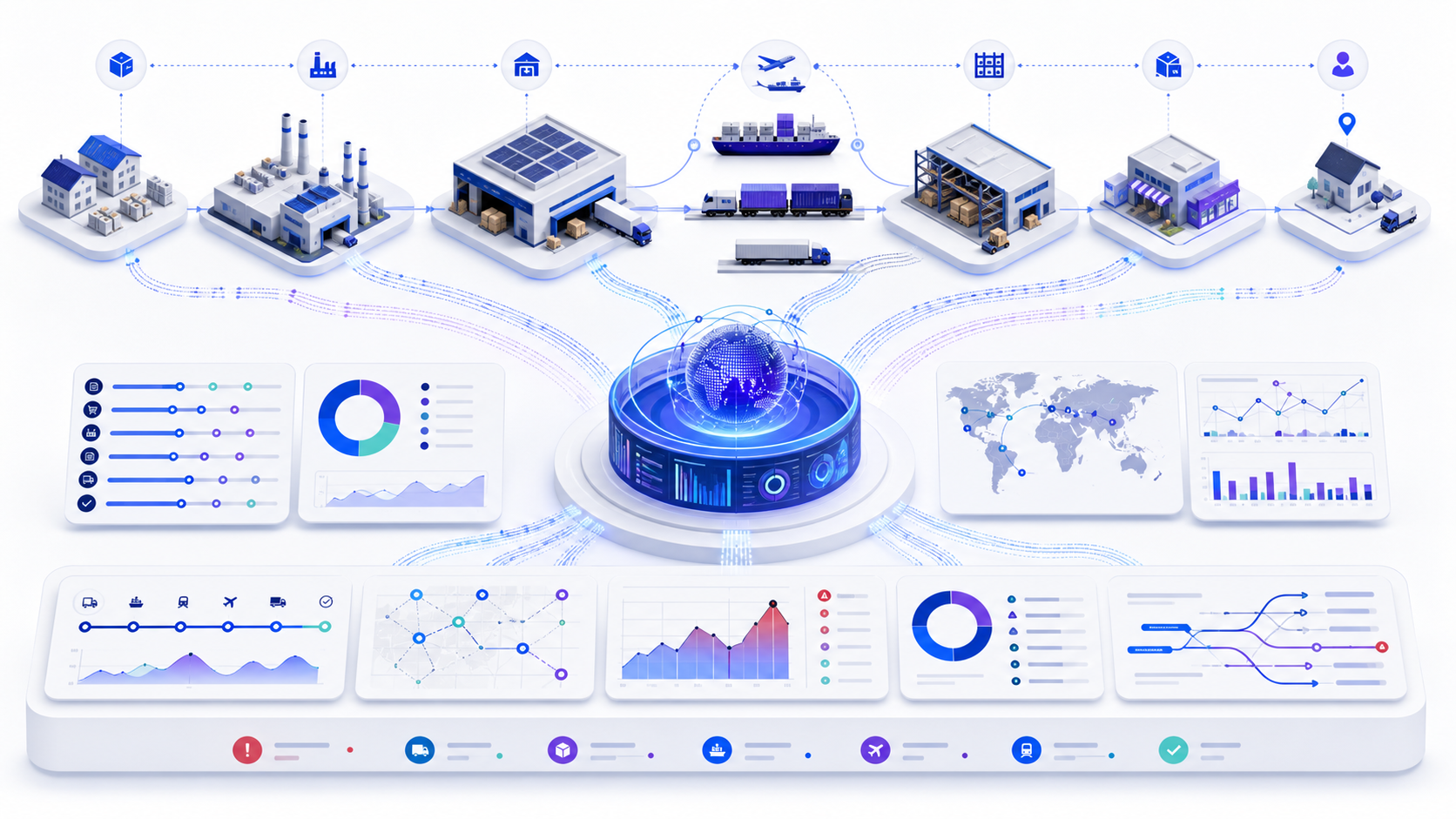
Supply chain visibility is the governed ability to access timely, accurate and decision-relevant information about materials, orders, inventory, shipments, partners and exceptions across a defined network. It connects physical events and business documents so an authorized user can determine what happened, where an object is, whether it is on plan, why it changed and who should respond. Visibility is valuable only when its scope, freshness, quality and decision rights are explicit.
供应链可视化是指在明确网络范围内,以受治理方式获取关于物料、订单、库存、运输、合作伙伴与异常的及时、准确且与决策相关的信息。它连接实物事件与业务单据,使授权用户能够判断发生了什么、对象在哪里、是否按计划运行、为何变化以及由谁响应。只有当范围、新鲜度、质量与决策权限明确时,可视化才真正有价值。
“End to end” does not mean every field from every partner must be real time. It means the information chain is complete enough for a defined decision, and every blind spot is known. A useful implementation may begin with purchase-order confirmation through receipt for critical materials, or customer order through delivery for a priority channel. It should expose missing events and uncertainty rather than present stale data as certainty.
“端到端”并不意味着每个合作伙伴的每个字段都必须实时。它意味着对于某项明确决策,信息链足够完整,而且所有盲点都已知。实用实施可以从关键物料的采购订单确认到收货开始,或从重点渠道的客户订单到交付开始。系统应暴露缺失事件与不确定性,而不能把陈旧数据包装成确定事实。
1. Supply Chain Visibility Purpose, Scope and Decisions1. 供应链可视化的目的、范围与决策
Begin with a decision, not a dashboard. A procurement team may need to identify critical purchase orders unlikely to arrive before production demand. A customer-service team may need a defensible promise date. Inventory planners may need to know whether stock exists, is reserved, is in transit or is blocked. Logistics teams may need to detect a missed milestone and understand which orders and customers are exposed. Each question requires different objects, events, latency and ownership.
应从决策开始,而不是从仪表板开始。采购团队可能需要识别无法在生产需求前到达的关键采购订单;客户服务团队可能需要可靠的承诺日期;库存计划人员需要知道库存是可用、已预留、在途还是冻结;物流团队需要发现里程碑延误并理解哪些订单和客户受到影响。每个问题都需要不同的对象、事件、延迟和责任归属。
Define the visibility envelope: business flow, products, locations, partners, geography, time horizon and users. Then name the tracked object—order, line, handling unit, lot, serial item, shipment, container or asset—and its lifecycle. A status such as “in transit” is too broad if the decision depends on departure, transshipment, customs release and estimated arrival. Scope should be narrow enough to validate and broad enough to change an action.
需要定义可视化边界:业务流、产品、地点、合作伙伴、区域、时间期限和用户;然后明确跟踪对象,例如订单、订单行、物流单元、批次、序列化物品、货运、集装箱或资产,以及其生命周期。如果决策依赖离港、中转、清关与预计到达,“运输中”就过于宽泛。范围应窄到能够验证,同时宽到足以改变行动。
Identity, location, quantity, condition, status and custody.
身份、位置、数量、状态、状况与保管方。
Planned and actual milestones across the lifecycle.
生命周期内的计划与实际里程碑。
Exceptions, dependencies, exposure and response time.
异常、依赖、暴露范围与响应时间。
Owner, evidence, options, action and closed-loop outcome.
责任人、证据、方案、行动与闭环结果。
2. Visibility vs Traceability, Transparency and Control Towers2. 可视化与追溯、透明度及控制塔的区别
Visibility is awareness of relevant state across a defined supply network. Traceability focuses on reconstructing an object's history and path, often by lot or serial identity. Tracking usually follows an object forward through current or future milestones. Transparency concerns appropriate disclosure and access to accurate information across parties. These capabilities overlap, but they answer different questions and may have different legal, quality and security requirements.
可视化关注明确供应网络内的相关状态;追溯侧重重建对象的历史与路径,通常基于批次或序列身份;跟踪通常沿当前或未来里程碑向前观察对象;透明度关注跨参与方适当披露和访问准确信息。这些能力相互重叠,但回答的问题不同,也可能受不同法律、质量与安全要求约束。
A supply chain control tower is not synonymous with visibility. It is an operating model or application pattern that combines visibility data with analytics, exception management, collaboration, governance and sometimes workflow execution. A beautiful map without trustworthy event coverage is not a control tower. Conversely, a focused exception process can deliver value without claiming universal, real-time control.
供应链控制塔并不等同于可视化。它是一种运营模型或应用模式,把可视化数据与分析、异常管理、协作、治理,有时还包括工作流执行结合起来。缺少可信事件覆盖的漂亮地图不是控制塔;相反,聚焦异常的流程可以在不宣称全面实时控制的情况下创造价值。
| Capability能力 | Primary question核心问题 | Typical evidence常见证据 |
|---|---|---|
| Visibility可视化 | What is happening and where?正在发生什么,在哪里? | Current state, milestone, inventory and exception当前状态、里程碑、库存与异常 |
| Traceability追溯 | Where did this object come from and go?该对象来自哪里、流向哪里? | Identity, transformation, custody and history身份、转换、保管与历史 |
| Transparency透明度 | Which trusted information is shared with whom?哪些可信信息向谁共享? | Access policy, provenance and disclosure访问政策、来源与披露 |
| Control tower控制塔 | How are exceptions analyzed and coordinated?如何分析与协调异常? | Visibility, rules, analytics, actions and governance可视化、规则、分析、行动与治理 |
3. High-Value Supply Chain Visibility Use Cases3. 高价值供应链可视化用例
Inbound visibility links purchase-order lines, supplier confirmations, production readiness, booking, departure, border events, arrival and receipt. Its purpose may be material-availability risk, not transport monitoring for its own sake. Manufacturing visibility connects material availability, work orders, production milestones, quality holds and finished-goods release. Inventory visibility reconciles on-hand, available, reserved, blocked and in-transit positions by product and location.
入站可视化连接采购订单行、供应商确认、生产准备、订舱、离港、边境事件、到港与收货,其目的可能是识别物料可用性风险,而非为了监控运输本身。制造可视化连接物料可用性、工单、生产里程碑、质量冻结和成品放行。库存可视化则按产品与地点协调现有、可用、预留、冻结和在途库存。
Outbound visibility connects customer order, allocation, pick, pack, ship, carrier milestones, proof of delivery and returns. Supplier visibility can connect capacity commitments, quality, lead-time performance and risk evidence. Sustainability or compliance visibility may require provenance, certifications and chain-of-custody records. Keep each use case tied to a decision and do not combine restricted supplier or customer data merely because integration is technically possible.
出站可视化连接客户订单、分配、拣货、包装、发运、承运商里程碑、交付证明和退货。供应商可视化可以连接产能承诺、质量、提前期表现与风险证据。可持续或合规可视化可能需要来源、认证与监管链记录。每个用例都应绑定决策,不能仅因技术上可集成就合并受限制的供应商或客户数据。
Prioritize with four tests: financial or service exposure, current decision latency, availability of a response, and feasibility of reliable event coverage. If nobody can act on an alert, more data will create noise. If an action exists but the signal arrives after the time fence, the integration has the wrong latency. A visibility product should help a role decide earlier or with better evidence.
优先级可用四项检验:财务或服务暴露、当前决策延迟、是否存在可执行响应,以及可靠事件覆盖的可行性。如果没有人能对警报采取行动,更多数据只会制造噪声;如果行动存在但信号在时间围栏后才到达,则集成延迟不合适。可视化产品应帮助某个角色更早或基于更好证据做决策。
4. Data Foundation: Objects, Events and a Shared Model4. 数据基础:对象、事件与共享模型
A visibility model needs stable identifiers and relationships. Master data describes products, locations, partners, routes, calendars, units and hierarchies. Transaction data describes commitments such as purchase orders, sales orders, production orders and shipments. Event data records what happened, when, where, to which object, in what business context and from which source. Reference data standardizes status codes, transport modes, reason codes and milestone definitions.
可视化模型需要稳定标识符与关系。主数据描述产品、地点、合作伙伴、路线、日历、单位和层级;交易数据描述采购订单、销售订单、生产订单与货运等承诺;事件数据记录发生了什么、何时、何地、涉及哪个对象、处于什么业务背景以及来自哪个来源;参考数据统一状态码、运输方式、原因码与里程碑定义。
Preserve source identity, source timestamp, ingestion timestamp and transformation history. These distinguish a late event from a late ingestion and an operational delay from a pipeline failure. Map one-to-many relationships explicitly: one purchase order can have many lines, bookings and shipments; a container can hold items from several orders; one customer order can be split across facilities. A flattened status table often hides these relationships and creates contradictory totals.
必须保留来源身份、来源时间戳、摄取时间戳和转换历史,这能区分事件迟到与摄取迟到,也能区分运营延误与数据管道故障。应明确建模一对多关系:一个采购订单可能有多条订单行、订舱与货运;一个集装箱可能包含多个订单物品;一个客户订单可能由多个设施拆分履约。扁平状态表往往隐藏这些关系并产生矛盾总数。
Real time is a service level, not a slogan. Define maximum acceptable age by event and decision. A GPS position may require minutes, a supplier capacity update may be daily, and a strategic risk signal may be weekly. Display event time and age so users can judge fitness.
实时是一项服务水平,而不是口号。应按事件与决策定义最大可接受数据年龄。GPS 位置可能要求分钟级,供应商产能更新可能每天一次,战略风险信号可能每周一次。必须显示事件时间与年龄,使用户能够判断数据是否适用。
5. Visibility Architecture, Integration and Latency5. 可视化架构、集成与延迟
Typical sources include ERP, WMS, TMS, manufacturing systems, order-management applications, procurement platforms, carrier feeds, EDI or APIs, IoT devices, partner portals and a data warehouse. Streaming is useful for high-frequency operational events; batch ingestion remains appropriate for slower sources. The architecture should land raw evidence, validate and standardize it, resolve identities, build object state and history, calculate derived milestones, detect exceptions and expose governed views.
典型来源包括 ERP、WMS、TMS、制造系统、订单管理应用、采购平台、承运商数据、EDI 或 API、IoT 设备、合作伙伴门户与数据仓库。流式处理适合高频运营事件;批量摄取仍适合较慢来源。架构应落地原始证据,完成验证与标准化,解析身份,构建对象状态与历史,计算派生里程碑,检测异常并提供受治理视图。
Avoid using the newest event as truth without validation. Events may arrive out of order, be duplicated, be corrected or refer to different levels. Use idempotent ingestion, event versioning, sequence checks and reconciliation against authoritative records. Maintain a quarantine path for unmatched or invalid events. When a partner feed fails, the status should become “unknown since” rather than remain green indefinitely.
不能在未经验证时把最新事件直接视为事实。事件可能乱序到达、重复、被修正或指向不同层级。应采用幂等摄取、事件版本、顺序检查,并与权威记录对账;为未匹配或无效事件设置隔离路径。当合作伙伴数据中断时,状态应变为“自某时起未知”,而不是无限保持绿色。
Separate the analytical layer from systems of execution. A visibility view can identify a probable delay and show affected demand, inventory and customers. Purchase-order changes, warehouse tasks, transport dispatch and supplier workflow should remain in governed execution systems unless a separately authorized integration exists. This boundary prevents an analytical inference from silently changing operational commitments.
分析层应与执行系统分开。可视化视图可以识别可能延误,并展示受影响需求、库存和客户;采购订单变更、仓库任务、运输调度与供应商工作流仍应留在受治理的执行系统,除非另有明确授权的集成。该边界防止分析推断悄然改变运营承诺。
6. An Eight-Step Supply Chain Visibility Implementation6. 八步供应链可视化实施流程
- Choose the decision and flow.选择决策与流程。 Define the user, action, time fence, exposure, products, locations and partners.定义用户、行动、时间围栏、暴露、产品、地点和合作伙伴。
- Map objects and milestones.映射对象与里程碑。 Name identities, relationships, planned events, actual events and terminal states.明确身份、关系、计划事件、实际事件和终止状态。
- Baseline current visibility.建立当前基线。 Measure source coverage, freshness, completeness, match rate and manual work.衡量来源覆盖、新鲜度、完整性、匹配率与人工工作。
- Define the shared semantics.定义共享语义。 Standardize statuses, clocks, quantities, units, reason codes and ownership.统一状态、时钟、数量、单位、原因码与责任归属。
- Connect minimum essential sources.连接最少必要来源。 Preserve raw evidence and expose missing or late feeds before adding breadth.保留原始证据,在扩大范围前暴露缺失或延迟数据。
- Build state and exceptions.构建状态与异常。 Reconcile events, calculate milestones and define thresholds, severity and suppression.协调事件、计算里程碑,并定义阈值、严重度与抑制规则。
- Validate with decision owners.与决策责任人验证。 Test false positives, missed exceptions, drill-through evidence, actions and escalation.测试误报、漏报、下钻证据、行动与升级。
- Operate, measure and expand.运营、衡量并扩展。 Monitor data contracts, close exceptions, compare outcomes and add use cases in controlled increments.监控数据契约、关闭异常、比较结果,并以受控增量增加用例。
7. Connecting Order, Inventory and Shipment Milestones7. 连接订单、库存与运输里程碑
Users need a joined story, not three unrelated dashboards. Connect the commercial commitment to the physical flow. For an inbound purchase-order line, show ordered and confirmed quantity, requested and committed dates, production readiness, booking, shipment allocation, departure, estimated arrival, customs state, receipt and quality disposition. For an outbound line, connect promise, allocation, pick, pack, ship, carrier milestones, delivery and return.
用户需要一条连接的叙事,而不是三个互不相关的仪表板。应把商业承诺连接到实物流。对于入站采购订单行,展示订购与确认数量、要求与承诺日期、生产准备、订舱、货运分配、离港、预计到达、海关状态、收货与质量处置;对于出站订单行,则连接承诺、分配、拣货、包装、发运、承运商里程碑、交付与退货。
Inventory requires status-aware quantities. On-hand is not always available: stock may be reserved, blocked, under inspection or assigned to another channel. In-transit inventory may have uncertain arrival and cannot be treated as usable without a policy. Preserve both the physical and available-to-promise views, their calculation time and their source. Link to inventory optimization for decisions about safety stock and policy rather than turning visibility into an optimization claim.
库存需要带状态的数量。现有库存并不总是可用,它可能已预留、冻结、待检或分配给其他渠道;在途库存的到达可能不确定,不能在没有政策的情况下视为可用。应同时保留实物库存与可承诺库存视图、计算时间及来源。有关安全库存和政策决策,应转到库存优化页面,不能把可视化本身描述为优化。
8. Exception Detection, ETA Risk and Root-Cause Analysis8. 异常检测、ETA 风险与根因分析
An exception is a material deviation that needs attention, not every difference from plan. Define the object, condition, threshold, horizon, severity, affected decision, owner and expiry. Examples include an unconfirmed critical order inside the supplier lead-time fence, a missed departure likely to create a stockout, a quantity mismatch between advance ship notice and receipt, or inventory that has not moved despite an allocation.
异常是需要关注的重大偏差,而不是所有计划差异。应定义对象、条件、阈值、期限、严重度、受影响决策、责任人与失效条件。例如:进入供应商提前期围栏仍未确认的关键订单、可能造成缺货的错过离港、预先发货通知与收货之间的数量不匹配,或已经分配但没有移动的库存。
Estimated time of arrival should include provenance, calculation time and uncertainty. A predicted ETA can be useful, but it is not a guaranteed appointment. Validate performance by lane, carrier, mode, season and prediction horizon; compare it with a simple baseline. Where possible, expose the factors behind risk—missed milestone, congestion, weather, supplier delay or data gap—without claiming causality when the evidence only shows association.
预计到达时间应包含来源、计算时间与不确定性。预测 ETA 可以有用,但不是保证的预约时间。应按路线、承运商、运输方式、季节与预测期限验证表现,并与简单基线比较。在可能情况下,展示风险背后的因素,例如错过里程碑、拥堵、天气、供应商延误或数据缺口;如果证据只表明相关性,就不能宣称因果。
Design for triage. Group duplicate alerts that share one root event, suppress known maintenance periods and rank by business exposure rather than delay alone. A one-day delay on a low-priority replenishment may be less important than a two-hour delay that stops a production line. Record acknowledgement, action, handoff, closure and outcome so the team can learn whether alerts arrived early enough to matter.
应为分诊设计。将共享同一根事件的重复警报分组,抑制已知维护时段,并按业务暴露而不是仅按延误排序。低优先级补货延迟一天,可能不如导致产线停机的两小时延迟重要。记录确认、行动、交接、关闭与结果,使团队能够学习警报是否足够早地到达并产生作用。
9. Supply Chain Visibility KPIs and Validation9. 供应链可视化 KPI 与验证
Measure the information capability before attributing business results to it. Scope coverage is the percentage of in-scope objects, value or volume represented. Event completeness compares required milestones with received valid events. Freshness measures event age against its decision service level. Identity match rate measures whether events resolve to the correct order, item, shipment and location. Status accuracy compares the displayed state with an authoritative or audited outcome.
在把业务结果归因于可视化前,应先衡量信息能力。范围覆盖率表示范围内对象、价值或数量被表示的比例;事件完整性比较要求里程碑与收到的有效事件;新鲜度比较事件年龄与决策服务水平;身份匹配率衡量事件能否解析到正确订单、物品、货运和地点;状态准确率则把显示状态与权威或审计结果比较。
Operational process metrics include source uptime, late-event rate, duplicate rate, reconciliation breaks, exception precision, detection latency, acknowledgement time, action time and closure rate. Business outcomes may include OTIF, on-time delivery, stockouts, lead-time variability, inventory buffers, expedites, detention and customer-service contacts. Use a baseline and comparison design; these outcomes are also affected by planning, policy, capacity and execution.
运营流程指标包括来源可用率、迟到事件率、重复率、对账中断、异常精确率、检测延迟、确认时间、行动时间与关闭率。业务结果可能包括OTIF、准时交付、缺货、提前期波动、库存缓冲、加急、滞箱和客户服务联系。应使用基线与比较设计,因为这些结果也受计划、政策、产能与执行影响。
10. Governance, Partner Sharing and Security10. 治理、合作伙伴共享与安全
Assign a business owner for every object and derived status, plus a technical owner for each source and data contract. Define who may view customer, supplier, location, cost and personal data. Apply least-privilege access, retention rules and purpose limitation. A partner may share a milestone without sharing every commercial field. Provenance should show whether a value came from an ERP document, carrier event, sensor, manual update or model.
为每个对象与派生状态分配业务责任人,并为每个来源与数据契约分配技术责任人。定义谁能查看客户、供应商、地点、成本与个人数据;应用最小权限、保留规则与目的限制。合作伙伴可以共享某个里程碑,而不必共享所有商业字段。来源信息应说明数值来自 ERP 单据、承运商事件、传感器、人工更新还是模型。
Create a data contract for identifiers, fields, allowed values, time semantics, delivery frequency, quality thresholds and failure notification. Monitor contract breaches as operational incidents. Maintain reason codes and status definitions as governed reference data. When definitions change, version them and assess historical comparability. Shared visibility fails when two parties use the same status label to mean different events.
数据契约应涵盖标识符、字段、允许值、时间语义、交付频率、质量阈值与故障通知,并把契约违约作为运营事件监控。原因码与状态定义应作为受治理参考数据维护;定义变化时必须版本化,并评估历史可比性。当两个参与方用同一状态标签表示不同事件时,共享可视化就会失败。
11. Supply Chain Visibility Maturity Roadmap11. 供应链可视化成熟度路线
Maturity is not the number of connected feeds. At the first level, teams manually assemble fragmented snapshots and cannot explain age or lineage. The second level standardizes core objects and recurring reports for one flow. The third connects event history, calculates state and runs governed exception reviews. The fourth adds predictive risk, scenario analysis and cross-functional exposure. A mature capability closes the loop by measuring actions and outcomes while keeping humans accountable.
成熟度并不等于已连接数据源数量。第一层级中,团队手工拼接碎片化快照,无法解释数据年龄或血缘;第二层级统一核心对象,并为一个流程建立定期报告;第三层级连接事件历史、计算状态并运行受治理异常评审;第四层级加入预测风险、情景分析与跨职能暴露。成熟能力通过衡量行动与结果形成闭环,同时保持人类责任。
Advance only when the current level is reliable. Adding machine learning to unmatched identifiers creates confident-looking errors. Adding more partners before defining milestones increases reconciliation work. Use quarterly maturity evidence: coverage and freshness trends, user adoption by decision, exception value, reduced manual search, closed data defects and documented business outcomes. Retire views that do not support a decision.
只有当前层级可靠后才能推进。把机器学习加到未匹配标识符上,只会产生看似自信的错误;在定义里程碑前增加合作伙伴,只会增加对账工作。季度成熟度证据可包括覆盖率与新鲜度趋势、按决策划分的用户采用、异常价值、人工搜索减少、已关闭数据缺陷和有记录业务结果。不能支持决策的视图应被淘汰。
12. Worked Example: Inbound Material Visibility12. 示例:入站物料可视化
Consider a hypothetical manufacturer that selects one critical component family and five supplier lanes. The decision is whether a material-shortage response is needed fourteen days before production. The team maps purchase-order line, supplier confirmation, booking, departure, ETA, receipt and quality release. It discovers that 92% of order value is represented, but only 68% of lines have a reliable shipment identity and carrier updates arrive after planners make their decision.
假设某制造商选择一个关键零部件系列和五条供应商路线,决策是在生产前十四天是否需要物料短缺响应。团队映射采购订单行、供应商确认、订舱、离港、ETA、收货与质量放行。结果发现订单价值覆盖率为 92%,但只有 68% 的订单行具有可靠货运身份,且承运商更新在计划人员做出决策后才到达。
The first release does not attempt global real-time visibility. It fixes shipment-to-order matching, establishes a six-hour freshness target for departure and ETA events, and flags critical lines whose projected available date crosses the production need date. Every exception shows the source events, affected work orders, alternative inventory and an owner. The tool does not reschedule production; planners review options in the appropriate execution process.
首个版本不尝试全球实时可视化,而是修复货运与订单匹配,为离港和 ETA 事件建立六小时新鲜度目标,并标记预计可用日期晚于生产需求日期的关键订单行。每个异常都展示来源事件、受影响工单、替代库存与责任人。工具不会重新安排生产,计划人员在适当执行流程中评审方案。
After three cycles, the team compares detection time, false positives, exception closure and actual material shortages with the baseline period. It separates benefits from unrelated schedule changes and documents remaining blind spots. Only then does it add more component families and a supplier-risk view. The example illustrates a repeatable principle: expand from a validated decision loop, not from a promise to see everything.
三个周期后,团队把检测时间、误报、异常关闭与实际物料短缺同基线期比较,区分与无关排程变化造成的影响,并记录剩余盲点。随后才增加更多零部件系列和供应商风险视图。该示例体现可复用原则:从经过验证的决策闭环扩展,而不是从“看见一切”的承诺开始。
13. AI Supply Chain Visibility With Multi-Source Analytics13. 多源分析中的 AI 供应链可视化
AI can help map fields, classify events, summarize changes, rank exceptions, estimate delay risk and generate analytical queries. It should not invent missing milestones, treat stale data as current or hide uncertainty. Every answer should retain the sources, cutoff, filters, joins, transformations and model version needed for review. A user must be able to distinguish observed facts, calculated status, prediction and recommendation.
AI 可以帮助映射字段、分类事件、总结变化、排序异常、估计延误风险并生成分析查询。它不能虚构缺失里程碑、把陈旧数据视为当前事实或隐藏不确定性。每个答案都应保留来源、截止点、筛选、连接、转换与模型版本,以供复核。用户必须能区分观察事实、计算状态、预测与建议。
InfiniSynapse fits as an analytical and intelligence layer. It can connect governed ERP, orders, inventory, procurement, warehouse and logistics data; help users ask cross-source questions; plan and generate queries; compare entities; and preserve reviewable evidence. It does not claim to provide warehouse execution, transport dispatch, automatic purchasing or a supplier portal. Those actions remain in authorized operational systems and workflows.
InfiniSynapse 适合作为分析与智能层。它可以连接受治理的 ERP、订单、库存、采购、数仓与物流数据,帮助用户提出跨源问题、规划并生成查询、比较实体并保留可复核证据。它不宣称提供仓库执行、运输调度、自动采购或供应商门户;这些行动仍留在授权运营系统与工作流中。
Prepare one decision, tracked object, approved grain, source systems, milestone definitions and cutoff. Use InfiniSynapse to inspect joined evidence, compare affected flows and retain a transparent analytical trail.
准备一个决策、跟踪对象、批准粒度、来源系统、里程碑定义和截止点。使用 InfiniSynapse 检查连接证据、比较受影响流程并保留透明分析链路。
Try InfiniSynapse Online在线体验 InfiniSynapseThis guide is part of the broader supply chain analytics content framework. Use separate guides for demand forecasting, demand planning, procurement analytics and freight analytics. A future supply chain visibility software page should serve commercial evaluation intent rather than duplicate this implementation guide.
本指南属于供应链分析主题内容体系。需求预测、需求计划、采购分析和货运分析应使用独立指南。未来的供应链可视化软件页面应服务商业评估意图,而不能重复本实施指南。
14. Common Visibility Failures and Implementation Checklist14. 可视化常见失败与实施清单
Define the user, action, time fence and exposure first.
先定义用户、行动、时间围栏与暴露。
Show source event time, ingestion time, age and unknown state.
显示来源事件时间、摄取时间、年龄与未知状态。
Resolve orders, lines, items, shipments, lots and locations explicitly.
明确解析订单、订单行、物品、货运、批次与地点。
Use materiality, grouping, ownership, suppression and expiry.
使用重大性、分组、责任、抑制与失效条件。
Provide drill-through to source events and calculation logic.
提供到来源事件与计算逻辑的下钻。
Keep decisions and transactions in authorized workflows.
把决策与交易保留在授权工作流中。
- Define one bounded decision, flow, object lifecycle, action owner and time fence.定义一个有边界的决策、流程、对象生命周期、行动责任人与时间围栏。
- Inventory sources and baseline coverage, freshness, completeness and identity matching.盘点来源,并建立覆盖率、新鲜度、完整性与身份匹配基线。
- Standardize milestones, status, quantity, clocks, reason codes and provenance.统一里程碑、状态、数量、时钟、原因码与来源。
- Preserve raw events, versions, corrections and known blind spots.保留原始事件、版本、修正与已知盲点。
- Design material exceptions with evidence, severity, ownership, action and expiry.设计带证据、严重度、责任、行动与失效条件的重大异常。
- Validate false positives, missed events, user decisions and closed-loop outcomes.验证误报、漏报、用户决策与闭环结果。
- Expand only after the current flow meets its data and decision service levels.只有当前流程满足数据与决策服务水平后才扩展。
Frequently Asked Questions常见问题
Supply chain visibility is the governed ability to access timely, accurate and decision-relevant information about materials, orders, inventory, shipments, partners and exceptions across a defined supply network.
供应链可视化是指在明确供应网络内,以受治理方式获取关于物料、订单、库存、运输、合作伙伴与异常的及时、准确且与决策相关的信息。
It connects relevant upstream, internal and downstream events across the lifecycle of an order, item or shipment, with explicit scope and known blind spots.
它连接订单、物品或货运生命周期中的相关上游、内部与下游事件,同时具有明确范围和已知盲点。
Typical inputs include master data, purchase and sales orders, inventory balances and movements, production milestones, shipment events, receipts, invoices, partner updates and relevant risk signals.
典型输入包括主数据、采购与销售订单、库存余额与移动、生产里程碑、运输事件、收货、发票、合作伙伴更新和相关风险信号。
Measure scope coverage, event completeness, freshness, identity match rate, status accuracy, exception detection latency, ownership and closure, alongside service, inventory and cost outcomes.
衡量范围覆盖、事件完整性、新鲜度、身份匹配率、状态准确率、异常检测延迟、责任与关闭,同时观察服务、库存和成本结果。
No. Visibility is the information capability. A control tower is an operating model or application pattern that uses visibility, analytics, workflows and governance to coordinate decisions.
不等同。可视化是信息能力;控制塔是利用可视化、分析、工作流与治理协调决策的运营模型或应用模式。
Start with one high-value decision and bounded flow, define the objects and milestones, baseline data gaps, connect essential sources, validate exceptions with users and expand only after the first loop is reliable.
从一个高价值决策和有边界流程开始,定义对象与里程碑,建立数据缺口基线,连接必要来源,与用户验证异常,并在首个闭环可靠后扩展。
Sources and Evidence Notes资料来源与证据说明
This guide uses primary standards and official technical documentation for visibility concepts, event semantics and architecture patterns. The worked example and its numbers are explicitly hypothetical and are not performance benchmarks.
本指南使用主要标准与官方技术文档支持可视化概念、事件语义和架构模式。示例及其中数字明确为假设,不是性能基准。
- IBM Support — Introduction to Supply Chain VisibilityIBM Support — 供应链可视化简介
- Microsoft Learn — End-to-end inventory transaction visibilityMicrosoft Learn — 端到端库存交易可视化
- NIST — Supply chain visibility terminologyNIST — 供应链可视化术语
- Microsoft Learn — Supply chain real-time intelligence reference architectureMicrosoft Learn — 供应链实时智能参考架构
- Microsoft Learn — Inventory Visibility setup and data flowsMicrosoft Learn — 库存可视化设置与数据流
- IBM — Supply chain visibility and resilient operationsIBM — 供应链可视化与韧性运营