Data Management Services Explained (2026)
By the InfiniSynapse Data Team · Last updated: 2026-07-15 · We build an AI-native data analysis platform and work alongside teams that outsource parts of their data practice; this guide reflects how data management services actually help in 2026, not a sales pitch.
Table of Contents
- TL;DR
- How We Think About Them
- What They Are
- The Main Types
- How to Choose a Provider
- Build, Buy, or Outsource
- Common Mistakes
- Services in the Age of AI
- Selection Scorecard
- Common Misconceptions
- Frequently Asked Questions
- Conclusion
TL;DR
Direct answer: data management services are the outsourced, managed, and professional offerings organizations use to build, run, or improve their data practice — from integration and migration to governance and ongoing operations. In 2026, the right data management services are those that transfer capability to your team rather than creating permanent dependence, because data is a lasting asset you must eventually own.
Who this is for: data leaders and buyers evaluating data management services in 2026.
What you'll learn: what they are, the main types, how to choose a provider, the mistakes to avoid, and how they fit an AI-ready practice.
This guide sits under the master data management hub.
For the tooling, see data management tools.
Also see data management software.
How We Think About Them
Teams evaluating this topic often cross-check RFC 4180 CSV format for a durable, vendor-neutral reference point.
We treat data management services as a way to buy capability and capacity you do not yet have in-house, not as a way to hand off responsibility forever. Every recommendation reflects what we see when organizations engage providers well or badly. We anchor definitions to the Elastic documentation and weigh delivery models against the reference architectures at Microsoft data architecture guidance, which show where external help fits a data estate.
The table below maps the main categories of data management services.
| Service type | What it delivers |
|---|---|
| Consulting & strategy | A plan and operating model |
| Integration & migration | Connected, moved data |
| Managed operations | Ongoing run of your data platform |
| Governance & quality | Programs and stewardship help |
| Master data | Golden-record setup and cleanup |
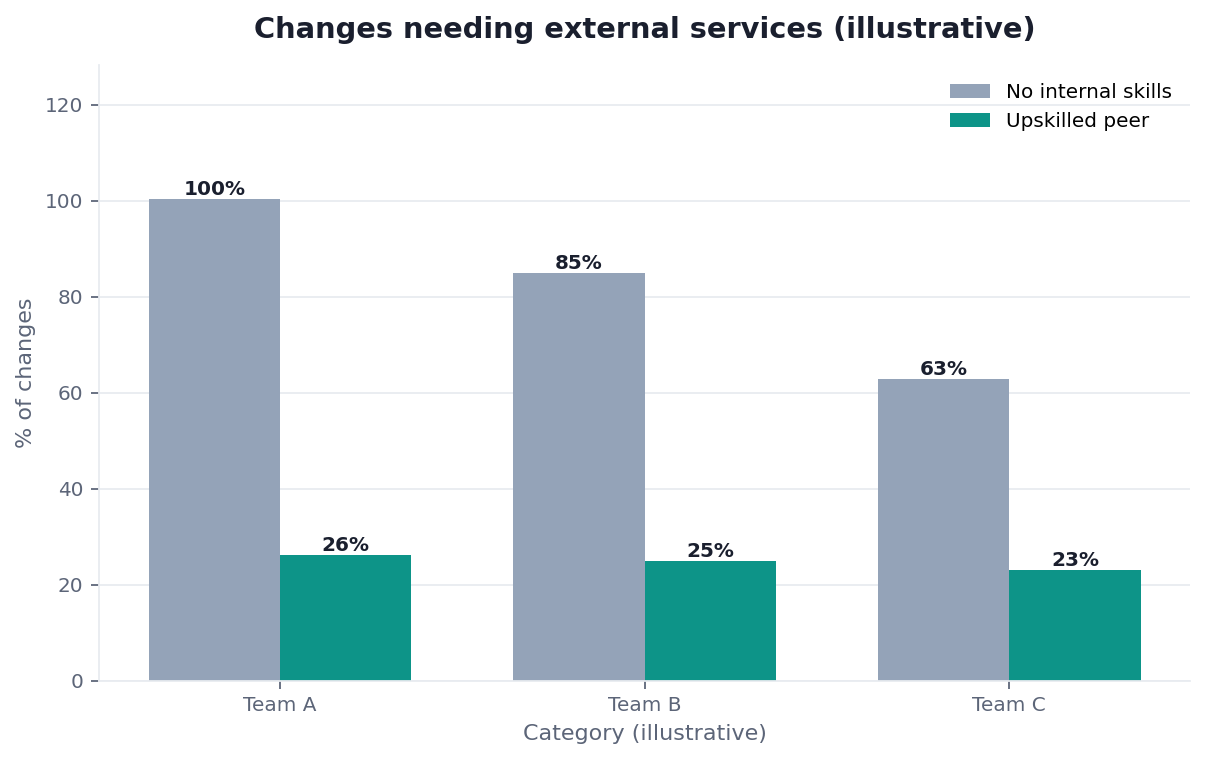
Practical example: a company hired data management services to migrate to a new warehouse but never built internal skills, so it stayed dependent for every change. A peer that insisted on knowledge transfer — following operating-model guidance like Python documentation — owned its platform within a year. Capability transfer, not just delivery, decided the long-term value.
Scope note: This guide reflects patterns we see when mid-market and enterprise teams work with data management services in 2026. It is not a substitute for legal counsel, vendor runbooks, or a formal survey of every industry — and when a smaller toolset or lighter process would serve, a full program is overkill.
What They Are
At their core, data management services are external expertise and capacity applied to the disciplines of data management — helping an organization design, build, run, or improve how it handles data. They range from one-off consulting to fully managed operations.
Key Definition: data management services are the professional, managed, and outsourced offerings — spanning strategy, integration, migration, governance, quality, and ongoing operations — that organizations use to build or run their data practice when they lack the internal capability or capacity to do it alone.
The distinction that matters is between services that build your capability and services that replace it. The best data management services leave your team more capable than they found it, whereas the riskiest create a permanent dependence that grows more expensive and harder to unwind every year.
The Main Types
Governance and risk expectations are framed by FTC consumer protection guidance when programs need an external control reference.
The market of data management services spans a few recognizable types, each suiting a different need.
Project-based services
Project-based data management services deliver a defined outcome — a migration, an integration, a governance framework — and then hand it over. The connectivity patterns in W3C WCAG accessibility standard show how much migration and integration work these engagements typically cover, and they suit organizations with a clear, bounded need.
Managed and ongoing services
Managed data management services run part of your data operation continuously — monitoring pipelines, maintaining quality, operating a platform. They suit organizations that lack the capacity to run these functions themselves, though they carry the greatest risk of long-term dependence if capability is never transferred back.
How to Choose a Provider
Choosing among data management services comes down to fit, track record, and — most importantly — their commitment to transferring capability to your team. A provider who documents, trains, and hands over is worth more than one who delivers faster but leaves you dependent.
We recommend scoring providers on relevant experience, cultural fit, and explicit knowledge-transfer commitments. Enterprise adoption patterns from Apache Airflow documentation reinforce that the goal of any engagement is a more capable organization, not a longer contract. This is where data management services connect to your data management software choices, since a good provider helps you own and operate the tools rather than locking you into their bespoke setup.
Build, Buy, or Outsource
Teams evaluating this topic often cross-check BIRD NL2SQL benchmark for a durable, vendor-neutral reference point.
The Wikipedia conceptual data model overview adds dirty-schema realism that Spider-only leaderboards under-weight in production.
Every capability in your data practice can be built in-house, bought as software, or outsourced as a service, and the right mix shifts over time. Outsourcing suits capabilities you need now but cannot yet staff, or specialized work you will rarely repeat.
The pragmatic pattern is to outsource to move fast and build internal capability in parallel, so data management services become a bridge rather than a permanent crutch. Outsourcing your entire data practice indefinitely is rarely wise, because data is a core asset and the understanding of it is a competitive advantage you should not permanently rent. Use services to accelerate and to fill genuine gaps, not to avoid building the muscle you will always need.
Common Mistakes
The mistakes we see with data management services are consistent. Engaging a provider without a knowledge-transfer plan creates permanent dependence. Outsourcing strategy rather than execution hands away decisions only you should own. And choosing on price alone ignores the far larger cost of a dependence that is expensive to unwind.
A subtler mistake is outsourcing the understanding of your own data. Data management services can run pipelines and build platforms, but the meaning of your data — what a metric means, which numbers matter — is domain knowledge you must retain. When that understanding walks out the door with a provider, you have outsourced not a task but your ability to reason about your own business, which is a trade no engagement should ever cost you.
Signs of a Good Engagement
Teams evaluating this topic often cross-check OWASP Top 10 for LLM Applications for a durable, vendor-neutral reference point.
Beyond credentials, the day-to-day behavior of a provider tells you whether an engagement will build capability or dependence. Good providers document as they go, involve your team in decisions rather than making them behind closed doors, and actively work themselves out of a job by teaching your people to operate what they build.
What to watch for early
The warning signs appear early. A provider who resists documenting, who keeps configuration and knowledge to themselves, or who treats your questions as interruptions is building dependence, whether deliberately or not. The best data management services treat your team's growing independence as a success metric, not a threat to their next contract, and they are comfortable being measured on how little you need them at the end.
Measuring the handover
A concrete way to keep an engagement honest is to define handover milestones up front: by this date your team runs the pipeline, by that date your stewards own the quality rules. Tying payment or renewal to those milestones aligns incentives, so the provider is rewarded for making you capable rather than for keeping you reliant.
Planning an Exit
Every engagement with data management services should have an exit in mind from the start, even open-ended managed ones. Knowing how you would bring a function back in-house or move it to another provider keeps you from being locked into a relationship that no longer serves you.
The practical safeguard is to insist that everything a provider builds — configurations, documentation, definitions, and code — belongs to you and lives in your systems, not theirs. When the artifacts of the work are yours, changing or ending an engagement is a decision rather than a crisis, and that optionality is itself worth negotiating for even if you never use it.
Services in the Age of AI
AI changes the calculus for data management services because an AI-native platform can reduce the integration and operations work that services traditionally provide. When an agent reads across sources directly, the heavy integration engagements that once dominated data projects shrink, and services shift toward higher-value governance and enablement.
An AI-native platform helps by reading across sources without a fragile, service-heavy integration layer, an approach we describe in what AI-native data analysis means. In the InfiniSynapse web app, zero-config federation lets a team connect and analyze data with far less plumbing, so data management services can focus on strategy, governance, and capability-building rather than endless integration work.
Selection Scorecard
Score a provider (1 point each):
| Check | Pass? |
|---|---|
| They have relevant, proven experience | |
| They commit to knowledge transfer | |
| They help us own our tools | |
| They fit our team culturally | |
| They deliver defined outcomes | |
| We retain understanding of our data | |
| The engagement has a clear end state | |
| Their work leaves us AI-ready |
6–8: strong provider. 3–5: renegotiate for capability transfer. Below 3: keep looking.
Common Misconceptions
Misconception 1: Services replace your team. The best data management services make your team more capable.
Misconception 2: Outsource strategy too. Strategy and decisions should stay in-house.
Misconception 3: Price is the main criterion. Dependence cost dwarfs price.
Misconception 4: Managed means hands-off forever. Plan capability transfer from day one.
Frequently Asked Questions
What are data management services?
Data management services are the professional, managed, and outsourced offerings — spanning strategy, integration, migration, governance, quality, and ongoing operations — that organizations use to build or run their data practice when they lack the internal capability or capacity to do it alone. The spectrum runs from a short advisory engagement at one end to a fully managed operation that runs your platform day and night at the other, and most organizations use a blend that shifts as their own skills grow.
What are the main types?
The main types are project-based services (delivering a defined outcome like a migration and handing it over), managed and ongoing services (running part of your operation continuously), and advisory services (strategy and operating-model design). Project work suits bounded needs; managed services suit capacity gaps but carry the greatest risk of long-term dependence if capability is never transferred back.
How do you choose a provider?
Score providers on relevant experience, cultural fit, and explicit knowledge-transfer commitments. Weight the willingness to document and hand over above raw delivery speed, because a fast engagement that leaves you unable to make changes yourself costs far more over its life than a slightly slower one that teaches your team. The goal of any engagement is a more capable organization, not a longer contract, so favor providers who help you own and operate your own tools.
Should you outsource your whole data practice?
Rarely. Your data — and the institutional understanding of what it means — is a source of competitive advantage that is unwise to rent indefinitely. Use services to move fast and fill genuine gaps while building internal capability in parallel, so the engagement is a bridge rather than a permanent crutch. Outsourcing execution can be wise; outsourcing strategy and understanding is not.
How does AI change data management services?
An AI-native platform that reads across sources directly reduces the heavy integration and operations work that services traditionally provided. As that plumbing shrinks, services shift toward higher-value governance, strategy, and enablement. The result is engagements focused on making your team capable and your data trustworthy rather than on endless, brittle integration projects.
Conclusion
Data management services bring external expertise and capacity to your data practice — and the best ones leave your team more capable, not more dependent. In 2026, AI-native federation shrinks the integration work services once dominated, shifting them toward strategy and enablement. Choose providers who transfer capability, keep strategy in-house, and retain understanding of your own data.
To see how federated data shrinks the integration work you need help with, read what AI-native data analysis means and try the InfiniSynapse web app free on registration.