Data Engineering News & Trends (2026)
By the InfiniSynapse Data Team · Last updated: 2026-07-15 · We build an AI-native data analysis platform and track the field closely; this roundup reflects the data engineering news and trends that actually matter in 2026, not hype cycles.
Table of Contents
- TL;DR
- How We Track It
- What Counts as News
- The Trends That Matter
- What to Ignore
- How to Stay Current
- Common Mistakes
- News in the Age of AI
- Signal Scorecard
- Common Misconceptions
- Frequently Asked Questions
- Conclusion
TL;DR
Direct answer: data engineering news in 2026 is dominated by one shift: AI moving from a downstream consumer of data to an active participant in engineering it. Following data engineering news matters because the field's tooling and practices are changing fast, but the durable trends — reliability, cost control, and AI-native access — matter far more than the weekly product launches.
Who this is for: data engineers and leaders following data engineering news to stay current in 2026.
What you'll learn: what counts as real news, the trends that matter, what to ignore, and how to stay current without drowning in hype.
This guide sits under the data engineering hub.
For the Python-specific angle, see Python data engineering news.
Also see data orchestration.
How We Track It
Teams evaluating this topic often cross-check Anthropic research for a durable, vendor-neutral reference point.
We follow data engineering news to separate durable shifts from noise, because most product launches do not change how you should build. Every judgment reflects what we see actually change practice. We anchor the field's fundamentals to the Wikipedia data warehouse overview and weigh architectural shifts against the reference patterns at Microsoft Excel support, which track where the lakehouse and streaming worlds are heading.
The table below maps the categories of data engineering news worth watching.
| Category | Why it matters |
|---|---|
| AI in engineering | Changes how pipelines are built |
| Architecture | Lakehouse, mesh, federation |
| Cost & efficiency | The dominant 2026 pressure |
| Reliability | Observability and data quality |
| Governance | Compliance and lineage demands |
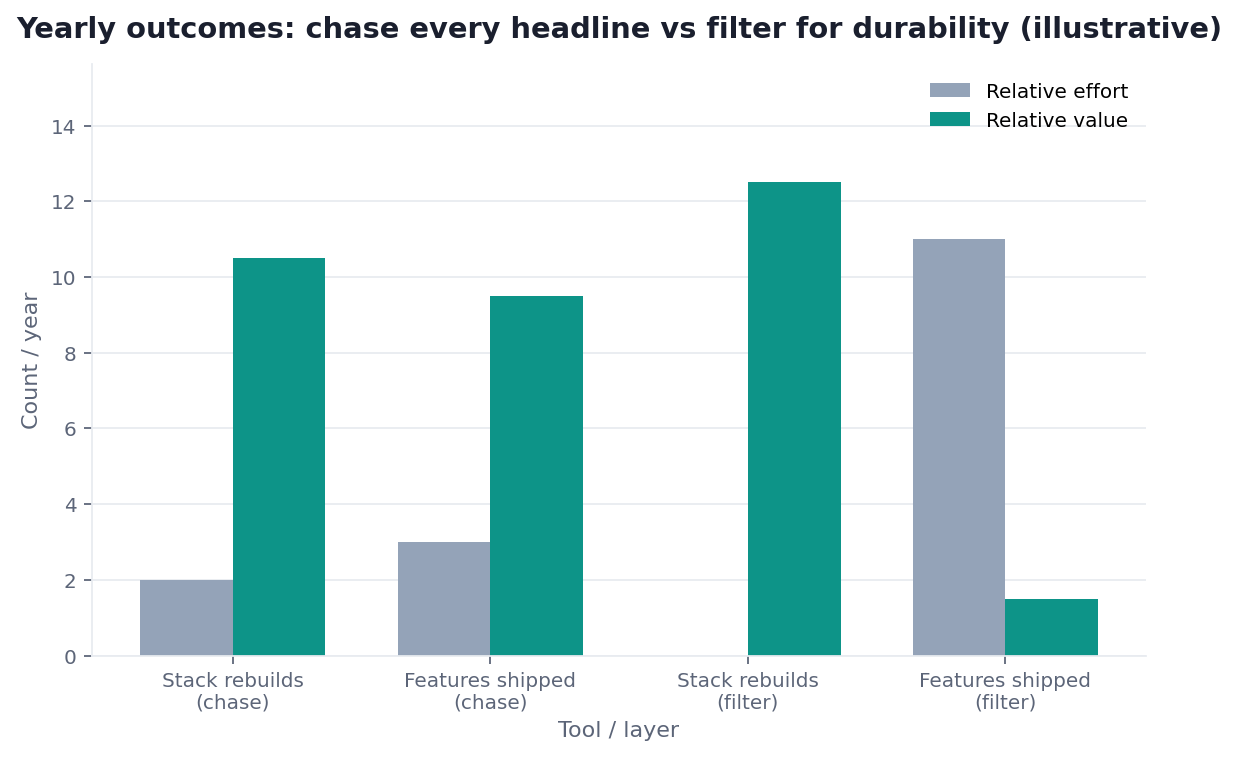
Practical example: a team chasing every data engineering news headline rebuilt its stack twice in a year and shipped less. A peer that filtered for durable trends — grounded in enterprise patterns from Databricks Genie architecture post — adopted fewer tools and delivered more. Signal over noise, not speed of adoption, won.
Scope note: This guide reflects patterns we see when mid-market and enterprise teams work with data engineering news in 2026. It is not a substitute for legal counsel, vendor runbooks, or a formal survey of every industry — and when a smaller toolset or lighter process would serve, a full program is overkill.
What Counts as News
The most useful lens on data engineering news is distinguishing durable shifts from product noise. A durable shift changes how you should architect systems for years; product noise is a launch you can safely evaluate later.
Key Definition: data engineering news worth acting on is any development that durably changes how teams should ingest, transform, store, or serve data — as opposed to incremental product releases that do not alter underlying practice.
Understanding this distinction is what keeps data engineering news useful rather than exhausting. The field produces launches weekly, but the shifts that matter — the move to lakehouses, the rise of cost-consciousness, AI-native access — arrive over years and reward patient attention over reactive chasing.
The Trends That Matter
Teams evaluating this topic often cross-check OWASP Top 10 for LLM Applications for a durable, vendor-neutral reference point.
The data engineering news that genuinely matters in 2026 clusters into a few durable trends.
AI-native access and engineering
The biggest trend in data engineering news is AI moving into the engineering process itself — generating pipeline code, and, more fundamentally, reading across sources directly so fewer pipelines are needed. The reference architectures at Google Cloud architecture framework increasingly reflect this shift toward federated, AI-accessible data.
Cost, reliability, and governance
After years of "move fast," the dominant 2026 theme in data engineering news is efficiency: controlling cloud cost, improving reliability through observability, and meeting governance demands. The reliability framing in OpenTelemetry documentation reflects how central pipeline observability has become to the field's news.
What to Ignore
Just as important as following data engineering news is knowing what to ignore. Most individual product launches, benchmark wars, and framework-of-the-week debates do not change how you should build, and chasing them costs more than it returns.
The filter we apply to data engineering news is simple: does this change a decision I would otherwise make? If a headline would not alter your architecture, tooling, or practice, it is information, not news you must act on. Applying this filter turns an overwhelming stream into a manageable one, and it protects teams from the churn of rebuilding around every trend that turns out to be transient.
How to Stay Current
Core definitions remain usefully summarized in Wikipedia conceptual data model overview for shared vocabulary across stakeholders.
Staying current with data engineering news without drowning means following a few trusted sources, reading for durable trends rather than launches, and evaluating new tools against real needs rather than novelty. Depth beats breadth.
This connects data engineering news to the discipline of data engineering itself: the best engineers stay current by understanding fundamentals deeply enough to judge what actually matters. Rather than trying to read everything, pick a handful of high-signal sources, revisit the durable trends quarterly, and let the transient noise pass. Being current is about judgment, not volume of consumption.
Common Mistakes
The mistakes we see in following data engineering news are consistent. Chasing every launch produces churn and shipped-less teams. Adopting tools for novelty rather than need adds complexity. And confusing activity — reading endlessly — with being informed wastes the time the news was supposed to save.
A subtler mistake is ignoring data engineering news entirely, which is the opposite failure. Teams that tune out miss the durable shifts — like AI-native access — that genuinely change the field, and they wake up years behind. We treat staying current as a disciplined, filtered habit: enough attention to catch the shifts that matter, disciplined enough to ignore the noise that does not.
The Cost Story Behind the Headlines
Implementation details are commonly grounded in Databricks documentation when teams translate concepts into production practice.
Much of 2026's data engineering news is really a cost story in disguise. After a decade of cloud data spend growing faster than the value it produced, the field has turned decisively toward efficiency, and many product announcements are best read as responses to that pressure rather than as independent innovations.
Why cost became the story
The shift happened because leadership started asking why data platforms cost so much, and engineering teams could not always answer. That scrutiny made cost governance, query efficiency, and storage optimization central themes, so a headline about a new pricing model or a more efficient engine is usually part of this larger cost narrative. Reading news through the cost lens explains a surprising amount of it.
What it means for you
For most teams, the practical takeaway from cost-driven data engineering news is to measure before adopting: know what your current stack costs and where, so you can judge whether a new tool actually reduces that or merely relocates it. Efficiency claims are only meaningful against a baseline you have measured, and teams without one tend to chase savings that never materialize.
Reading Vendor Roadmaps Critically
A large share of data engineering news originates from vendor roadmaps and launches, and reading them critically is a skill in itself. Vendors describe the future they are selling, which is not always the future that arrives, so treating a roadmap as a plan rather than a promise keeps expectations grounded.
The useful habit is to weigh announcements against independent signals — what practitioners actually adopt, what shows up in reference architectures, what survives past the launch buzz. When data engineering news from a vendor aligns with those independent signals, it is more likely a durable shift; when it stands alone as marketing, it is safer to wait and watch than to rebuild around a promise that may not hold. A simple discipline helps here: give a promising announcement a quarter or two before betting on it, and let early adopters surface the gaps between the roadmap and the reality so you do not have to discover them in production yourself.
News in the Age of AI
Core definitions remain usefully summarized in Wikipedia data quality overview for shared vocabulary across stakeholders.
The dominant story in data engineering news is AI itself, and it cuts two ways. AI both raises the bar for the reliable data pipelines it consumes and offers a way to reduce how many pipelines you build, by reading across sources directly.
That second shift is the one we find most consequential, and we describe it in what AI-native data analysis means. In the InfiniSynapse web app, zero-config federation lets an agent analyze across sources without a pipeline for each, which is exactly the kind of durable shift in data engineering news that changes how the field builds rather than just what it buys.
Signal Scorecard
Assess how you follow the field (1 point each):
| Check | Pass? |
|---|---|
| We filter durable shifts from noise | |
| We follow a few high-signal sources | |
| We evaluate tools against real needs | |
| We revisit trends quarterly | |
| We do not rebuild for every trend | |
| We track cost and reliability shifts | |
| We watch AI-native access closely | |
| We act on news, not just consume it |
6–8: disciplined. 3–5: tighten your filter. Below 3: pick trusted sources and focus.
Common Misconceptions
Misconception 1: More news is better. Filtered signal beats endless consumption.
Misconception 2: Every launch is news. Most launches do not change how you build.
Misconception 3: Being busy reading means being current. Judgment, not volume, is being current.
Misconception 4: You can ignore it all. The durable shifts genuinely matter.
Frequently Asked Questions
What is the biggest data engineering news in 2026?
The biggest data engineering news in 2026 is AI moving from a downstream consumer of data to an active participant in engineering it — generating pipeline code and, more fundamentally, reading across sources directly so fewer pipelines are needed. This is a durable shift that changes how teams architect data access, not a product launch you can evaluate and forget.
How do you tell real news from noise?
Ask whether a development would change a decision you would otherwise make. Real news durably changes how teams ingest, transform, store, or serve data; noise is an incremental launch that does not alter underlying practice. If a headline would not change your architecture, tooling, or practice, it is information rather than news you must act on, and that filter keeps the stream manageable.
What trends matter most right now?
Two clusters matter most: AI-native access (AI reading across sources and reducing how many pipelines you need) and efficiency (controlling cloud cost, improving reliability through observability, and meeting governance demands). After years of "move fast," the field's dominant theme has shifted to building reliable, cost-controlled, governed data systems rather than simply building more of them faster.
How do you stay current without drowning?
Follow a few trusted, high-signal sources, read for durable trends rather than launches, evaluate new tools against real needs, and revisit the trends quarterly. Depth beats breadth: the best engineers stay current by understanding fundamentals well enough to judge what actually matters, letting transient noise pass rather than trying to consume everything the field publishes.
How is AI itself changing the field?
AI cuts two ways. It raises the bar for the reliable pipelines it consumes, and it offers a way to reduce how many pipelines you build by reading across sources directly. The second shift is the more consequential, because federation lets an agent analyze across sources without a pipeline for each — a durable change in how the field builds, not just what it buys.
Conclusion
Data engineering news in 2026 is dominated by AI's move into engineering itself, alongside durable themes of cost, reliability, and governance. Staying current is about judgment, not volume: filter for shifts that change how you build, ignore the noise, and watch AI-native access most closely, because it changes the field rather than just its product catalog.
Read the field through the lenses of cost and durable architectural change, and most of the weekly churn sorts itself into signal you should act on and noise you can safely skip. To see the AI-native shift that is reshaping the field, read what AI-native data analysis means and try the InfiniSynapse web app free on registration.