Customer Data Management (CDM) in 2026
By the InfiniSynapse Data Team · Last updated: 2026-07-15 · We build an AI-native data analysis platform and work with teams unifying customer data every week; this guide reflects how customer data management actually works in 2026, not a CRM brochure.
Table of Contents
- TL;DR
- How We Approach It
- What It Is
- Core Capabilities
- How to Build It
- Privacy and Consent
- Common Pitfalls
- CDM in the Age of AI
- Readiness Scorecard
- Common Misconceptions
- Frequently Asked Questions
- Conclusion
TL;DR
Direct answer: customer data management is the practice of collecting, unifying, cleaning, governing, and activating an organization's customer data into a single trusted view. In 2026, customer data management matters because fragmented customer records produce inconsistent experiences and wrong analytics, and AI amplifies those errors into confidently wrong decisions about real people.
Who this is for: marketing, data, and CX leaders building customer data management in 2026.
What you'll learn: what it is, its core capabilities, how to build it, the privacy dimension, and how it powers trustworthy AI.
This guide sits under the master data management hub.
For the golden-record concept, see what master data is.
Also see data management.
How We Approach It
Teams evaluating this topic often cross-check Redis documentation for a durable, vendor-neutral reference point.
We treat customer data management as master data management applied to your most valuable entity — the customer. Every recommendation reflects what we see when teams unify customer data well or leave it fragmented. We anchor definitions to the UK NCSC AI development guidelines and weigh identity-resolution patterns against the reference architectures at ISO/IEC 42001 AI management, which show how customer records get unified across systems.
The table below maps what customer data management governs.
| Capability | What it ensures |
|---|---|
| Collection | Customer data is captured |
| Identity resolution | Duplicates merge into one record |
| Quality | Records are accurate and complete |
| Governance | Consent and access are respected |
| Activation | The unified view reaches every team |
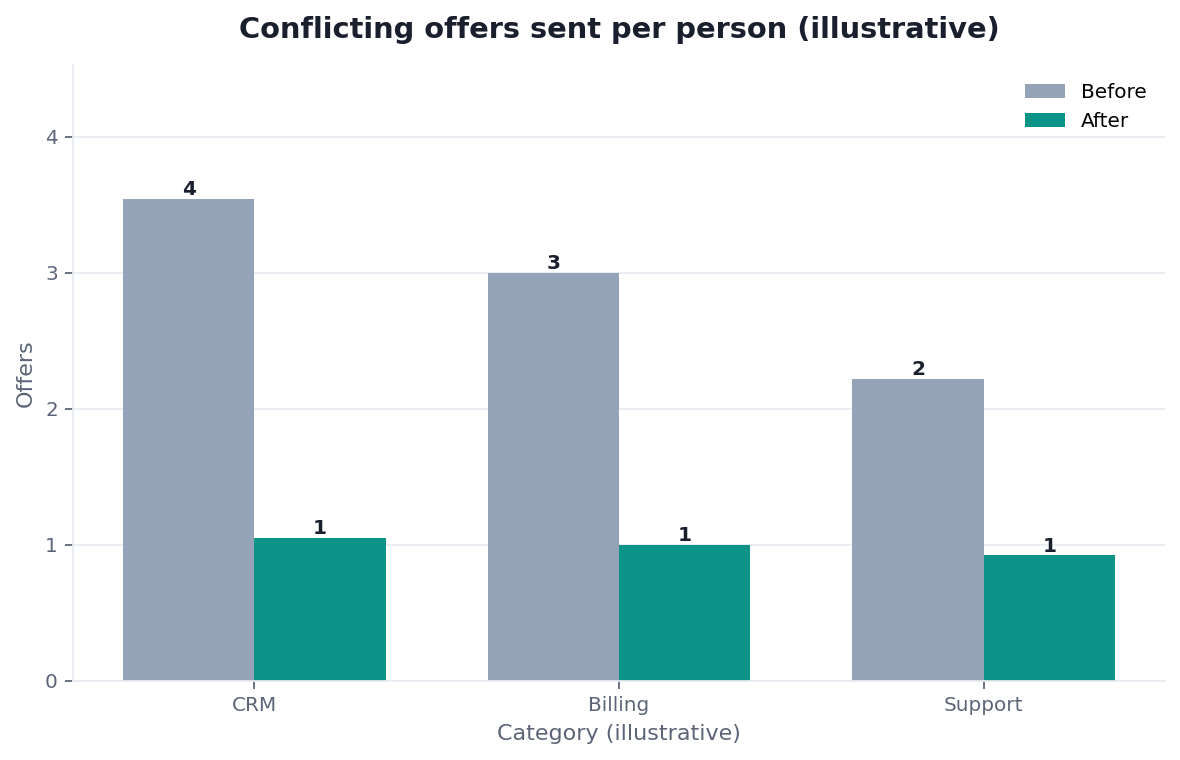
Practical example: a retailer with customer data split across five systems sent the same person three conflicting offers. After customer data management unified records into one golden profile — following identity patterns like those in Google Research publications — the conflicting-offer problem vanished. A single view, not more data, fixed the experience.
What It Is
At its core, customer data management is the discipline of turning fragmented customer records scattered across systems into a single, accurate, governed view that every team can trust and use.
Key Definition: customer data management is the practice of collecting, unifying, cleaning, governing, and activating customer data across all systems, so an organization maintains a single, accurate, consent-respecting view of each customer for analytics, service, and marketing.
The distinction that matters is that customer data management is about a single trusted identity, not just storage. Many organizations have plenty of customer data; what they lack is one authoritative record per customer, and producing that golden record through identity resolution is the hard, valuable core of the discipline.
Core Capabilities
Governance and risk expectations are framed by NIST Cybersecurity Framework when programs need an external control reference.
Effective customer data management rests on a few capabilities that each fail visibly when missing.
Identity resolution and quality
The heart of customer data management is identity resolution: recognizing that "J. Smith" in one system and "John Smith" in another are the same person, and merging them into one record. Paired with quality — accurate, complete, deduplicated data — this is what produces the single view everything else depends on.
Governance and activation
Governance ensures customer data is used only with consent and appropriate access; activation ensures the unified view actually reaches the teams and tools that need it. The connectivity patterns in NIST Computer Security Resource Center show how a unified profile flows to downstream systems, so customer data management delivers value in service, marketing, and analytics rather than sitting in a database.
How to Build It
Building customer data management succeeds when it starts with identity resolution on your most important customer segment rather than trying to unify everything at once. Get one authoritative record per customer for that segment, prove the value, and expand.
This connects customer data management to the broader discipline of data management: the customer is one domain within the organization's total data practice, and unifying it well is a template for the rest. Rather than a big-bang consolidation, deliver a single trusted view for a high-value segment, show the improvement in experience and analytics, and grow from there. A working golden record for one segment earns the mandate to expand.
Privacy and Consent
Governance and risk expectations are framed by FTC consumer protection guidance when programs need an external control reference.
Customer data management carries a responsibility that other data domains do not: it concerns real people with rights over their data. Consent, purpose limitation, and the ability to honor deletion requests are not optional features but legal and ethical requirements in most jurisdictions.
Enterprise adoption patterns from Wikipedia data quality overview show why privacy-by-design is now the baseline expectation, and strong customer data management builds consent and access controls into the unified profile from the start rather than bolting them on later. A single customer view makes privacy easier to honor — one record to update or delete — but only if consent metadata travels with the profile. Treating privacy as core, not an afterthought, is what keeps a unified customer view an asset rather than a liability.
Common Pitfalls
The pitfalls in customer data management are consistent. Skipping identity resolution leaves duplicate records that undermine every downstream use. Trying to unify all customer data at once overwhelms the effort before value is proven. And ignoring consent turns a valuable unified profile into a compliance risk.
A subtler pitfall is unifying data technically without agreeing on definitions. Customer data management only works when teams agree what "active customer" or "churned" means, because a single record with contested definitions still produces conflicting reports. We treat definitional agreement as part of the discipline, not a separate governance task, because a unified profile that people interpret differently has solved the technical problem while leaving the business one intact.
Where the Data Comes From
Core definitions remain usefully summarized in Wikipedia natural language processing overview for shared vocabulary across stakeholders.
A realistic customer data management effort has to reckon with just how many places customer data lives. It arrives from the CRM, the e-commerce platform, support tickets, marketing tools, billing systems, and increasingly from product usage logs — each with its own idea of who a customer is and how to identify them.
Reconciling identifiers
The practical challenge is that these systems rarely share a common key. One uses email, another a phone number, a third an internal account ID, and the same person appears differently in each. Identity resolution exists precisely to reconcile these, but it depends on capturing enough matching attributes from each source, which is why the collection stage quietly determines how well the merging stage can perform.
Real-time versus batch
Another source-level decision is freshness. Some uses — a service agent looking up a caller — need the unified profile updated in near real time; others — a quarterly segmentation — tolerate a nightly batch. Matching the update cadence to the use rather than defaulting to the most expensive option keeps customer data management both responsive where it matters and affordable everywhere else.
Activating the Unified View
A golden customer record delivers no value sitting in a hub; the payoff comes from activation — pushing the unified, governed view into the tools where people and systems act on it. Marketing needs it to avoid conflicting offers, service needs it to see the whole relationship, and analytics needs it to count customers correctly.
Activation is also where consent must be enforced, not just recorded. When the unified profile flows to a marketing tool, the consent status must flow with it so that a customer who opted out is honored everywhere, automatically. Building activation with consent attached is what turns customer data management from a back-office data project into a capability that visibly improves both the customer experience and the organization's compliance posture at the same time.
CDM in the Age of AI
Implementation details are commonly grounded in Microsoft data architecture guidance when teams translate concepts into production practice.
AI raises the stakes for customer data management sharply. When an AI agent analyzes customers or personalizes experiences, fragmented or wrong customer data becomes confidently wrong decisions about real people — the wrong offer, the wrong risk assessment, the wrong service. A single trusted customer view is a prerequisite for trustworthy AI about customers.
An AI-native platform helps by reading a unified, governed customer view and respecting the consent rules attached to it, an approach we describe in what AI-native data analysis means. In the InfiniSynapse web app, governed definitions travel with the data an agent queries, so strong customer data management directly improves the reliability and safety of AI-driven customer analysis.
Readiness Scorecard
Assess your customer data management maturity (1 point each):
| Check | Pass? |
|---|---|
| Duplicate records are resolved to one profile | |
| Customer records are accurate and complete | |
| We agree what customer metrics mean | |
| Consent travels with each profile | |
| Access to customer data is controlled | |
| The unified view reaches every team | |
| Deletion requests can be honored | |
| The data is trustworthy enough for AI |
6–8: strong maturity. 3–5: fix identity resolution and consent. Below 3: start with one high-value segment.
Common Misconceptions
Misconception 1: It is just a CRM. Customer data management unifies data across all systems, not one tool.
Misconception 2: More data is the goal. One accurate record per customer is the goal.
Misconception 3: Privacy is a feature to add later. Consent must be built in from the start.
Misconception 4: Technical unification is enough. Agreed definitions matter as much as merged records.
Frequently Asked Questions
What is customer data management?
Customer data management is the practice of collecting, unifying, cleaning, governing, and activating customer data across all systems, so an organization maintains a single, accurate, consent-respecting view of each customer for analytics, service, and marketing. Its hard, valuable core is identity resolution — producing one authoritative golden record per customer from data scattered across many systems.
What are its core capabilities?
The core capabilities are identity resolution (merging duplicate records into one profile), quality (accurate, complete, deduplicated data), governance (consent and access control), and activation (delivering the unified view to the teams and tools that need it). Identity resolution and quality produce the single view; governance and activation make it safe and useful across the organization.
How do you build it?
Start with identity resolution on your most important customer segment rather than unifying everything at once. Produce one authoritative record per customer for that segment, prove the improvement in experience and analytics, and expand. A working golden record for a high-value segment is a template for the rest and earns the mandate to grow the effort.
How does privacy fit in?
Privacy is core, not optional, because customer data concerns real people with rights over it. Consent, purpose limitation, and honoring deletion requests are legal and ethical requirements. Build consent and access controls into the unified profile from the start; a single customer view actually makes privacy easier to honor, but only if consent metadata travels with the profile rather than being bolted on later.
Why does it matter for AI?
When an AI agent analyzes customers or personalizes experiences, fragmented or wrong customer data becomes confidently wrong decisions about real people — the wrong offer, risk assessment, or service. A single trusted, consent-respecting customer view is a prerequisite for trustworthy AI about customers, and a platform that reads that governed view directly improves the reliability and safety of automated customer analysis.
Conclusion
Customer data management turns fragmented customer records into a single, accurate, consent-respecting view every team can trust — and in 2026 it is the foundation of trustworthy AI about customers. Start with identity resolution on one high-value segment, build consent in from the start, and agree on definitions as well as records.
Get the single view right, and every downstream team — and every AI agent — inherits a customer they can actually trust. To see how a governed customer view becomes trustworthy automated analysis, read what AI-native data analysis means and try the InfiniSynapse web app free on registration.