What Is Master Data?
By the InfiniSynapse Data Team · Last updated: 2026-07-15 · We build an AI-native data analysis platform and see the difference master data makes to every analysis; this guide reflects what master data really is in 2026, not a glossary line.
Table of Contents
- TL;DR
- How We Approach It
- What It Is
- How It Compares to Other Data
- Why It Matters
- How It Is Maintained
- Common Pitfalls
- Master Data in the Age of AI
- Readiness Scorecard
- Common Misconceptions
- Frequently Asked Questions
- Conclusion
TL;DR
Direct answer: master data is the set of authoritative records describing an organization's core business entities — customers, products, suppliers, locations — that many systems and processes rely on. In 2026, master data matters because inconsistent core records produce conflicting reports and, increasingly, confidently wrong AI answers about the entities your business runs on.
Who this is for: analysts, stewards, and data leaders learning what master data is and why it matters in 2026.
What you'll learn: what it is, how it differs from other data, why it matters, how it is maintained, and how it powers trustworthy AI.
This guide sits under the master data management hub.
For the definition of the discipline, see what master data management is.
Also see customer data management.
How We Approach It
Governance and risk expectations are framed by ISO/IEC 27001 when programs need an external control reference.
We treat master data as the shared vocabulary of a business — the core entities every system references. Every recommendation reflects what we see when organizations get their core records consistent or leave them fragmented. We anchor definitions to the NIST SP 800-53 security controls and weigh how core records flow against the reference architectures at Spider NL2SQL benchmark, which show why consistent entities underpin reliable analytics.
The table below maps common types of master data.
| Entity | Examples |
|---|---|
| Customer | People and organizations you serve |
| Product | Items and services you sell |
| Supplier | Vendors and partners |
| Location | Sites, stores, regions |
| Employee | Your workforce |
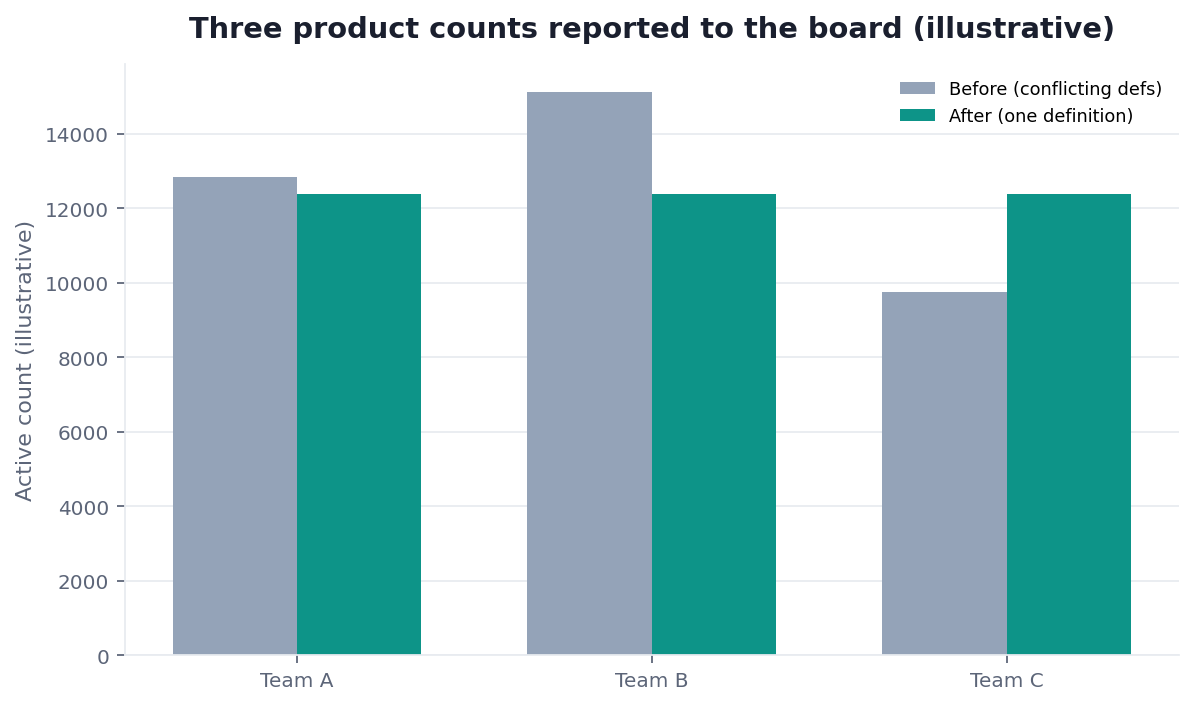
Practical example: a company whose master data for "product" differed across systems reported three different product counts to its board. After standardizing the authoritative product record — following governance framing like pandas documentation — the counts agreed. A single authoritative record, not more reports, restored trust.
Scope note: This guide reflects patterns we see when mid-market and enterprise teams work with master data in 2026. It is not a substitute for legal counsel, vendor runbooks, or a formal survey of every industry — and when a smaller toolset or lighter process would serve, a full program is overkill.
What It Is
At its core, master data is the authoritative, shared description of the entities a business is built around. Unlike the data generated by day-to-day activity, it changes slowly and is referenced everywhere, which is exactly why consistency matters so much.
Key Definition: master data is the set of consistent, authoritative records describing an organization's core business entities — such as customers, products, suppliers, and locations — that are shared across systems and processes and change relatively slowly compared with transactional data.
The distinction that matters is that master data is referenced, not generated, by processes. A sale generates transaction data but references the customer and product master records. Because so many processes depend on those shared records, an inconsistency in master data ripples into every report and system that uses it.
How It Compares to Other Data
Governance and risk expectations are framed by CISA AI security guidance when programs need an external control reference.
Understanding master data requires distinguishing it from the other data types it interacts with.
Versus transactional data
Transactional data records events — a sale, a shipment, a payment — and is generated constantly, while master data describes the entities those events involve and changes slowly. A transaction references master data; it does not create it. This is why a single wrong master record corrupts many transactions, whereas a single wrong transaction is contained.
Versus reference data
Reference data is standardized sets of allowable values — country codes, currency codes, status lists — that classify other data. The connectivity patterns in Apache Spark documentation show how reference and master data both feed analytics, but master data describes your specific business entities while reference data is usually shared, external classification. Both matter, and both must be consistent, but they are managed differently.
Why It Matters
Master data matters because it is the foundation everything else stands on. When core entity records are consistent, reports agree, systems interoperate, and analysis is trustworthy. When they are inconsistent, every downstream use inherits the confusion.
Enterprise adoption patterns from ENISA AI cybersecurity framework show why consistent core entities are now a prerequisite for reliable analytics and automation. The most visible symptom of poor core records is the meeting where two teams present different numbers for the same thing — different customer counts, different revenue by product — and the root cause is almost always that they counted against different, inconsistent records rather than one authoritative source.
How It Is Maintained
Core definitions remain usefully summarized in Wikipedia conceptual data model overview for shared vocabulary across stakeholders.
Master data is maintained through the discipline of master data management: identifying the authoritative record for each entity, resolving duplicates, and governing changes through stewardship. It is an ongoing program, not a one-time cleanup.
The reliable pattern is to start with one high-value entity — often customer or product — establish its authoritative record, and expand. This is where the discipline connects to customer data management, which applies exactly this approach to the customer entity. Maintenance never truly ends, because new records arrive and existing ones change, so the stewardship that keeps these records authoritative must run continuously rather than as a periodic project.
Common Pitfalls
The pitfalls here are consistent. Assuming core records will stay consistent on their own ignores that new systems and records constantly reintroduce fragmentation. Treating a cleanup as permanent lets records drift again after the project ends. And failing to name an authoritative source leaves teams guessing which record is correct.
A subtler pitfall is failing to agree on definitions before consolidating records. Consistency is meaningless if teams disagree on what "one customer" or "one product" means, because technically merged records with contested definitions still produce conflicting analysis. We treat definitional agreement as the first step, not an afterthought, because the hardest part of mastering these records is the organizational agreement, not the technical merge.
Governance and Ownership
Teams evaluating this topic often cross-check Supabase documentation for a durable, vendor-neutral reference point.
Keeping core entity records authoritative is fundamentally a governance problem, not a technical one. Someone has to own each entity — to decide what the authoritative record is, resolve conflicts when systems disagree, and approve changes — and without that named accountability the records drift no matter how good the tooling.
The role of the steward
The steward is the human who owns an entity's records day to day. They decide the merge rules, adjudicate the genuine edge cases the tooling cannot, and keep a record of why decisions were made. That decision history becomes institutional memory, explaining why the authoritative record looks the way it does and preventing teams from re-litigating settled questions every quarter.
Definitions are governance too
The most important governance artifact is the agreed definition of each entity — what counts as one customer, one product, one supplier. These definitions are decisions the business must make and write down, because a merge engine can enforce a rule but cannot choose it. Treating the definition as a governed asset, versioned and owned like any other, is what keeps consistency durable rather than accidental.
Getting Started
You do not need to fix everything at once to benefit. The pragmatic first step is to pick the single entity whose inconsistency causes the most pain — usually customer or product — agree on its definition, name an owner, and establish one authoritative record for it. A single entity done well proves the value and builds the stewardship habit.
From there, expansion follows the pain: the entities that most often cause conflicting reports are the ones to tackle next. Letting real business problems guide the sequence keeps the effort proportional to value and builds the organizational muscle that makes each subsequent entity easier than the last.
It also helps to make the authoritative record visible. When teams can see, in one place, which record is the agreed source of truth for an entity and who owns it, the temptation to quietly maintain a private spreadsheet fades. That visibility is often what finally ends the recurring argument over whose numbers are right, because there is now a single answer everyone can point to rather than a set of competing local copies each team defends as its own.
Master Data in the Age of AI
Core definitions remain usefully summarized in Wikipedia machine learning overview for shared vocabulary across stakeholders.
AI raises the stakes for master data sharply. When an AI agent analyzes your business, it counts and compares entities — customers, products, suppliers — and inconsistent master records produce confidently wrong answers about the very things your business runs on. Consistent master data is a prerequisite for trustworthy AI analysis.
An AI-native platform helps by reading governed, authoritative entity definitions and the records they describe, an approach we describe in what AI-native data analysis means. In the InfiniSynapse web app, business definitions travel with the data an agent queries, so consistent master data directly improves the accuracy of AI-driven analysis about your core entities.
Readiness Scorecard
Assess your master data maturity (1 point each):
| Check | Pass? |
|---|---|
| Core entities have an authoritative record | |
| Duplicates are resolved | |
| We agree what each entity means | |
| Changes are governed by stewardship | |
| Reports across teams agree | |
| Systems reference the same records | |
| Maintenance is ongoing, not one-off | |
| The records are trustworthy for AI |
6–8: strong maturity. 3–5: agree definitions and name authoritative sources. Below 3: start with one high-value entity.
Common Misconceptions
Misconception 1: Master data is just important data. Master data specifically describes core entities referenced across systems.
Misconception 2: It stays consistent on its own. New systems constantly reintroduce fragmentation.
Misconception 3: A cleanup fixes it permanently. Maintenance is an ongoing program.
Misconception 4: The merge is the hard part. Agreeing definitions is the hard part.
Frequently Asked Questions
What is master data?
Master data is the set of consistent, authoritative records describing an organization's core business entities — such as customers, products, suppliers, and locations — that are shared across systems and processes and change relatively slowly compared with transactional data. It is referenced by processes rather than generated by them, which is why an inconsistency ripples into every report and system that uses it.
How does it differ from transactional data?
Transactional data records events — a sale, a shipment, a payment — and is generated constantly, while core entity records describe the things those events involve and change slowly. A transaction points at those records; it never creates them. This is why a single wrong entity record corrupts many transactions, whereas a single wrong transaction is contained to itself.
Why does it matter?
It is the foundation everything else stands on. When core entity records are consistent, reports agree, systems interoperate, and analysis is trustworthy; when they are inconsistent, every downstream use inherits the confusion. The most visible symptom of poor master data is the meeting where two teams present different numbers for the same thing because they counted against different records.
How is it maintained?
Through master data management: identifying the authoritative record for each entity, resolving duplicates, and governing changes through stewardship. It is an ongoing program, not a one-time cleanup, because new records arrive and existing ones change. The reliable pattern is to start with one high-value entity, establish its authoritative record, and expand as the stewardship discipline develops.
Why does it matter for AI?
An agent that analyzes your business is constantly counting and comparing core entities, and if those records disagree across systems it reports confidently wrong answers about the very things the business runs on. Consistent core records are therefore a prerequisite for trustworthy AI analysis, and a platform that reads governed, authoritative entity definitions directly improves the accuracy of automated analysis.
Conclusion
Master data is the authoritative, shared description of your core business entities — the foundation that makes reports agree, systems interoperate, and analysis trustworthy. In 2026 it is a prerequisite for reliable AI about your business. Agree on definitions first, name an authoritative source per entity, and maintain it as an ongoing program.
To see how governed core entities become accurate automated analysis, read what AI-native data analysis means and try the InfiniSynapse web app free on registration.