
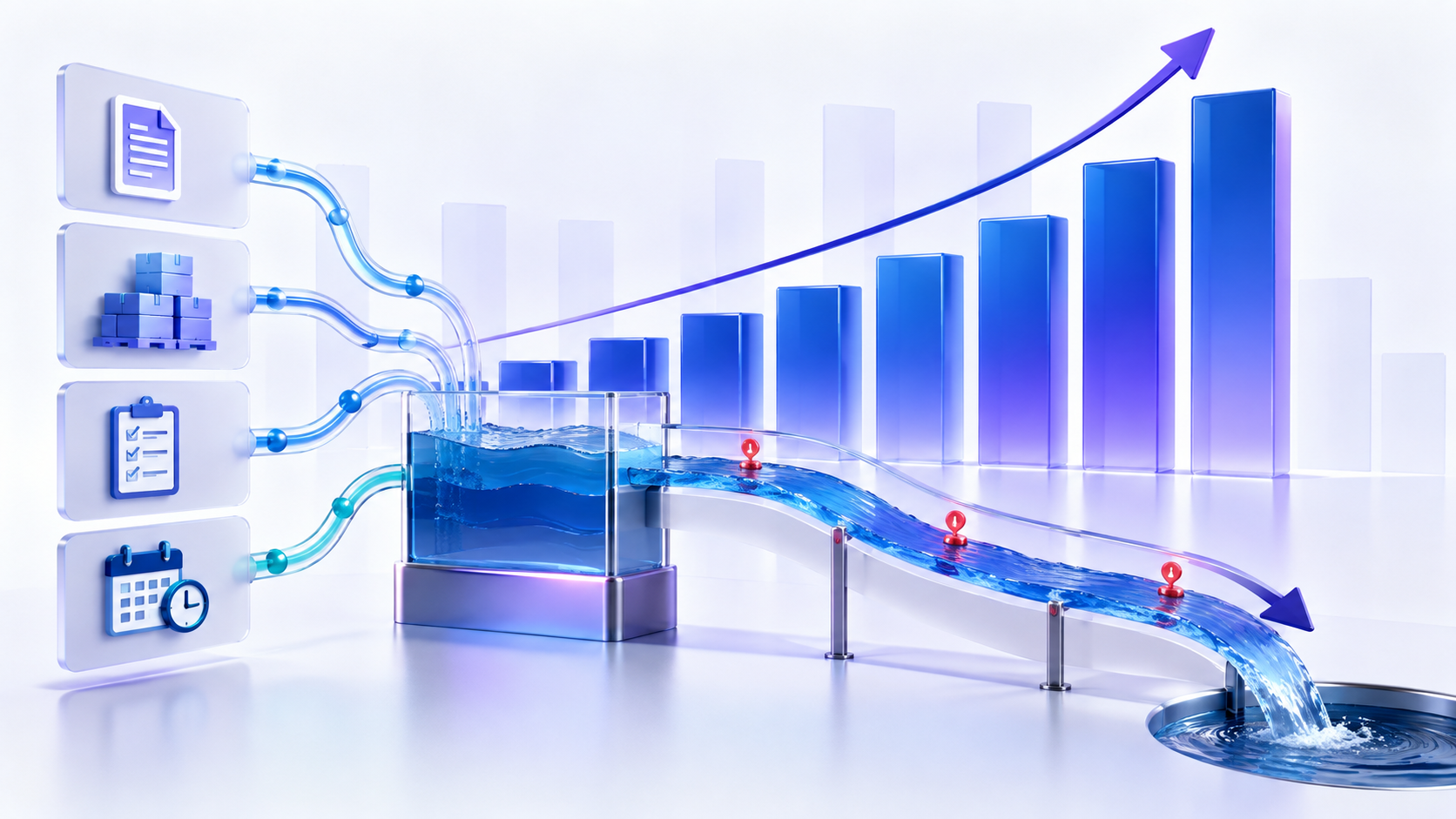
The direct answer直接答案
Revenue can grow while operating cash flow declines because recognized sales and cash receipts have different timing. Receivables, contract assets, inventory, prepayments, lower customer deposits, supplier payments, or a cash tax or bonus can absorb cash while profit rises. The gap may reflect planned growth or seasonality, but also slower collections, weaker terms, recognition risk, or supplier funding. Reconcile net income to operating cash flow and set tests for the next two quarters. One period is a question, not proof of fraud.
收入可以在经营现金流下降时继续增长,因为已确认销售与实际收款并不同步。应收或合同资产增长加快、库存与预付款采购、客户定金减少、向供应商付款,或一次性缴税与奖金,都可能在净利润上升时吸收现金。这种背离可能来自计划内增长或季节性,也可能反映收款放慢、合同条款转弱、收入确认风险或对供应商融资的依赖。应先把净利润逐项调节到经营现金流,统一期间与范围,并为未来两个季度设定可观察的验证点。单期差异提出问题,但不能证明舞弊。
Freeze the comparison before explaining the gap解释差额前,先冻结比较口径
Fix the reporting period, currency and unit, consolidation scope, and cash-flow subtotal. Compare a full year with a full year or like quarter with like quarter. Identify acquisitions, disposals, discontinued operations, and foreign-exchange effects. Specify operating cash flow, not free cash flow or total cash change: investing and financing flows do not explain profit conversion.
先写下四个标签:报告期间、币种与单位、合并范围、现金流小计。全年应与全年比较,同季度应与同季度比较,不能把年初至今现金流与单季收入并列。确认收购、处置、终止经营或汇率折算是否改变了比较对象。最后明确讨论的是经营现金流,而不是自由现金流或现金总变动;投资和融资现金流可以改变期末现金,却不能直接解释已报告利润如何转化为现金。
- Reported fact: copy revenue, net income, operating cash flow, and the reconciliation lines exactly from the filing, with dates and page references.
- Calculation: recompute growth rates, balance changes, days sales outstanding, and bridge subtotals without changing the reported labels.
- Assumption: state any averaging method, seasonality adjustment, tax allocation, or estimate of collections.
- Judgment: describe what the pattern may mean and name evidence that would contradict it.
- 已披露事实:按文件原文抄录收入、净利润、经营现金流和调节项目,并保留日期与页码。
- 计算:重算增长率、余额变化、应收周转天数和现金桥小计,但不改写报表项目名称。
- 假设:披露平均余额方法、季节性调整、税款分配或收款估计。
- 判断:说明这种模式可能意味着什么,并写出能够推翻该解释的证据。
Under an indirect presentation, operating cash flow broadly equals net income plus noncash adjustments, minus operating-asset increases, plus operating-liability increases. Use the published reconciliation: acquisitions, foreign exchange, reclassifications, write-offs, and noncash transactions can make a balance-sheet delta differ from cash movement.
一个实用的起点公式在间接法列报下,经营现金流大体等于净利润,加非现金调节,减经营资产增加额,加经营负债增加额,但仍应服从发行人的具体分类与调节。应使用已披露的现金流调节表,不能假设每个资产负债表差额都是现金变动;收购、汇率、重分类、核销和非现金交易都会让这个捷径失效。
Read each timing account with the correct sign按正确正负号阅读每个时间差账户
| Account movement | Usual indirect-CFO sign | Operating question |
|---|---|---|
| Receivables increase | Subtract | Was more revenue billed than collected, and did aging worsen? |
| Contract assets increase | Subtract | Was performance recognized before the right to bill became unconditional? |
| Inventory or prepayments increase | Subtract | Were materials secured for booked work, or did activity slow? |
| Payables increase | Add | Did suppliers temporarily fund growth, and when must they be paid? |
| Contract liabilities or customer deposits increase | Add | Did customers pay before related performance or revenue? |
| Tax or bonus liability decreases | Subtract | Was current cash paid for an amount accrued in another period? |
| 账户变动 | 间接法经营现金流通常符号 | 经营问题 |
|---|---|---|
| 应收账款增加 | 减项 | 本期是否开票多、收款少,账龄是否恶化? |
| 合同资产增加 | 减项 | 是否已确认履约进度,但无条件开票权尚未形成? |
| 库存或预付款增加 | 减项 | 材料是为已签项目备货,还是因为施工放缓而积压? |
| 应付账款增加 | 加项 | 供应商是否暂时为增长融资,何时必须付款? |
| 合同负债或客户定金增加 | 加项 | 客户是否在相关履约或收入确认前付款? |
| 应交税费或奖金负债减少 | 减项 | 本期是否支付了其他期间已经计提的现金? |
Receivables and contract assets are not interchangeable. A receivable is generally unconditional except for time; a contract asset depends on another condition. Customer deposits can be contract liabilities because cash arrived before related performance. Verify the issuer's revenue policy, netting, impairment, and contract-balance presentation.
应收账款与合同资产不能互换。应收款通常表示除时间经过外不再附带其他条件的收款权;合同资产则仍取决于时间以外的条件。客户定金可能作为合同负债列示,因为企业在转移相关商品或服务前已经收到对价。必须阅读发行人的收入政策与合同余额附注,因为名称、净额列示、减值和展示方式可能不同。
Higher payables can offset receivable, inventory, and contract-asset outflows. That benefit reverses when suppliers are paid unless terms expand again. Determine whether balances are trade payables, financed obligations, or a supplier-finance arrangement, then follow the applicable statement and note presentation.
供应商融资需要单独调查。应付账款增加可以抵消应收、库存和合同资产的现金占用,使本期经营现金流看起来没有那么弱;除非付款条件继续延长,否则向供应商付款时这种好处会反转。要判断余额属于普通贸易应付、正式融资义务还是供应商融资安排,并依适用报表和附注列报追踪。
Worked case: Sunweave's growth-to-cash bridge案例演练:Sunweave 从增长到现金的调节桥
Sunweave Installations is a fictional solar contractor. All amounts, dates, contracts, and disclosures are invented; none is current issuer information. Figures are CU millions for two full fiscal years, and reported facts refer only to the invented filing.
Sunweave Installations 是一家明确虚构的太阳能安装承包商。下列金额、日期、合同与披露全部为教学而编制,不是任何真实发行人的当前信息。金额单位为 CU 百万,覆盖两个完整财政年度。“已披露事实”仅指虚构文件中的事实,不代表现实公司数据。
| Invented reported fact | 20X4 | 20X5 | Reader calculation |
|---|---|---|---|
| Revenue | CU240 | CU300 | +25.0% |
| Net income | CU18 | CU24 | +33.3% |
| Operating cash flow | CU21 | CU5 | −CU16; −76.2% |
| Year-end receivables | CU28 | CU44 | +CU16 |
| Year-end contract assets | CU12 | CU21 | +CU9 |
| Year-end inventory | CU18 | CU24 | +33.3% |
| Year-end payables | CU30 | CU44 | +46.7% |
| Year-end customer deposits | CU15 | CU12 | −CU3 |
| 虚构已披露事实 | 20X4 | 20X5 | 读者计算 |
|---|---|---|---|
| 收入 | CU240 | CU300 | +25.0% |
| 净利润 | CU18 | CU24 | +33.3% |
| 经营现金流 | CU21 | CU5 | 减少 CU16;−76.2% |
| 年末应收账款 | CU28 | CU44 | 增加 CU16 |
| 年末合同资产 | CU12 | CU21 | 增加 CU9 |
| 年末库存 | CU18 | CU24 | +33.3% |
| 年末应付账款 | CU30 | CU44 | +46.7% |
| 年末客户定金 | CU15 | CU12 | 减少 CU3 |
| Indirect-CFO bridge, CUm | 20X4 | 20X5 | Meaning of 20X5 sign |
|---|---|---|---|
| Net income | +18 | +24 | Starting profit subtotal |
| Depreciation | +6 | +7 | Noncash expense added back |
| Noncash compensation | +1 | +2 | Noncash expense added back |
| Increase in receivables | −3 | −16 | Billing exceeded collections |
| Increase in contract assets | −2 | −9 | Recognized performance preceded unconditional billing |
| Increase in inventory | −2 | −6 | Materials consumed cash before installation |
| Increase in prepayments | −1 | −3 | Cash paid before expense recognition |
| Increase in payables | +3 | +14 | Supplier balances postponed cash payment |
| Increase/(decrease) in customer deposits | +2 | −3 | Prior deposits were worked down faster than new cash arrived |
| Increase/(decrease) in tax and bonus accruals | −1 | −5 | Cash payments exceeded current accrual additions |
| Operating cash flow | +21 | +5 | Bridge total |
| 间接法经营现金流调节,CU 百万 | 20X4 | 20X5 | 20X5 符号含义 |
|---|---|---|---|
| 净利润 | +18 | +24 | 利润起点 |
| 折旧 | +6 | +7 | 加回非现金费用 |
| 非现金薪酬 | +1 | +2 | 加回非现金费用 |
| 应收账款增加 | −3 | −16 | 开票超过收款 |
| 合同资产增加 | −2 | −9 | 确认履约进度早于无条件开票权 |
| 库存增加 | −2 | −6 | 材料在安装前先消耗现金 |
| 预付款增加 | −1 | −3 | 现金支付早于费用确认 |
| 应付账款增加 | +3 | +14 | 供应商余额推迟现金付款 |
| 客户定金增加/减少 | +2 | −3 | 消化原有定金快于收到新现金 |
| 税费及奖金应计增加/减少 | −1 | −5 | 现金支付超过本期新增计提 |
| 经营现金流 | +21 | +5 | 调节桥合计 |
20X4 closes at 18 + 6 + 1 − 3 − 2 − 2 − 1 + 3 + 2 − 1 = CU21m. 20X5 closes at 24 + 7 + 2 − 16 − 9 − 6 − 3 + 14 − 3 − 5 = CU5m. Higher profit did not offset CU37m of operating-asset uses and other outflows; CU14m of payable support softened the decline. The bridge alone cannot show whether growth spending was productive.
算术复核与有边界的判断20X4 闭合为 18+6+1−3−2−2−1+3+2−1=CU21;20X5 闭合为 24+7+2−16−9−6−3+14−3−5=CU5。因此,更高利润不足以抵消 CU37 的经营资产占用、CU3 的定金反转以及税费和奖金应计带来的 CU5 现金支出;CU14 的应付增加显著缓冲了下降。判断层:增长确实占用了现金,但这些占用是否有效率,不能仅凭调节桥决定。
Measure where recognized growth is waiting衡量已确认增长停留在哪个环节
Use ratios as routes, not verdicts. In 20X4, average receivables are (22 + 28) ÷ 2 = CU25m; approximate DSO is 25 ÷ 240 × 365 = 38.0 days. In 20X5, the CU36m average gives 36 ÷ 300 × 365 = 43.8 days. The 5.8-day rise suggests slower conversion, but milestones, acquisitions, mix, or seasonality may explain it. Prefer credit sales and frequent average balances when disclosed.
比率只用于指引调查方向,不能直接充当结论。20X4 期初与期末应收分别为 CU22 和 CU28,平均应收为 CU25,近似应收周转天数为 25÷240×365=38.0 天。20X5 期初 CU28、期末 CU44,平均值为 CU36,计算为 36÷300×365=43.8 天。增加 5.8 天与现金转换变慢相符,但年末项目里程碑、收购、销售组合或季节性也可能解释它。若披露赊销额和更高频平均余额,应使用更精确口径重算。
Contract assets rose from CU12m to CU21m. They increased from 5.0% to 7.0% of annual revenue, a 2.0-percentage-point rise. Test milestone acceptance, change orders, disputed work, impairment, and subsequent transfer into receivables.
尚未形成无条件开票权的履约成果合同资产从 CU12 增至 CU21,占年收入比例由 5.0% 升至 7.0%,增加 2.0 个百分点。应检验里程碑验收、变更订单、争议工程、减值以及期后转入应收的情况。
Customer deposits fell from CU15m to CU12m, or from 6.25% to 4.0% of revenue, a 2.25-percentage-point decline. Existing funded work may have advanced while new deposit receipts lagged. Read order terms, cancellations, and remaining obligations before interpreting demand.
履约前收到的客户现金客户定金从 CU15 降至 CU12,占收入比例从 6.25% 降至 4.0%,减少 2.25 个百分点。可能是已有预付项目继续履约,而新定金流入落后。判断需求前,应查看订单条款、取消情况与剩余履约义务。
Inventory grew 33.3%, faster than 25.0% revenue growth; payables grew 46.7%. The first absorbed cash and the second deferred payment. Inspect project allocation, aging, obsolescence, payment terms, overdue balances, and any supplier-finance disclosure.
材料与供应商融资库存增长 33.3%,快于收入的 25.0%;应付账款增长 46.7%。前者吸收现金,后者推迟付款。应检查项目归属、账龄、减值、付款条款、逾期余额及任何供应商融资披露。
Separate five causes that can look identical区分五种表面相同的原因
| Possible cause | Supporting evidence | Alternative or warning | Next discriminating test |
|---|---|---|---|
| Growth investment | Inventory assigned to signed projects; deposits or firm billing milestones; stable credit terms | Speculative stocking or low-quality backlog | Installation, billing, collection, and project-margin conversion |
| Seasonality or cutoff timing | Similar pattern in comparable quarters; receipts shortly after period-end | The gap persists beyond the normal cycle | Same-quarter history and subsequent cash receipts |
| Collection deterioration | DSO and aged balances rise; disputes, concessions, or credit losses increase | A single late milestone temporarily distorts averages | Customer-level aging and realized collections |
| Revenue-recognition risk | Contract assets outgrow performance evidence; change orders remain unapproved | Legitimate over-time performance with later billing | Contract terms, progress measures, approvals, reversals, and restatements |
| One-time cash use or supplier funding | Identified tax/bonus payment or payable buildup explains the bridge | Calling recurring annual payments one-time, or masking liquidity stress with late payment | Multi-year payment calendar, terms, overdue status, and repayment of the payable benefit |
| 可能原因 | 支持证据 | 替代解释或警示 | 下一项区分性检验 |
|---|---|---|---|
| 增长性投入 | 库存对应已签项目,存在定金或明确开票里程碑,信用条款稳定 | 投机备货或低质量订单积压 | 安装、开票、收款与项目毛利的转化 |
| 季节性或截止时点 | 可比季度出现类似模式,期后不久完成收款 | 差额持续超过正常周期 | 同季历史与期后现金回款 |
| 收款恶化 | 周转天数与逾期余额上升,争议、让步或信用损失增加 | 单个延迟里程碑暂时扭曲平均数 | 客户层面账龄与实际收款 |
| 收入确认风险 | 合同资产增长缺乏履约证据,变更订单尚未批准 | 合法的时段履约、稍后开票 | 合同条款、进度计量、批准、转回与重述 |
| 一次性现金支出或供应商融资 | 已识别税款/奖金支付或应付堆积解释了现金桥 | 把每年重复支付称为一次性,或以拖延付款掩盖流动性压力 | 多年付款日历、条款、逾期状态与应付正贡献的反转 |
Sunweave has expansion evidence: revenue and profit rose, and materials may support projects. Counterevidence is also visible: DSO increased, contract assets outpaced revenue, deposits weakened, and payables supplied a temporary offset. Conversion weakened in 20X5; confidence improves only if those balances become collected, profitable projects and payables normalize without a liquidity squeeze.
不要过早选择单一故事。Sunweave 有与扩张一致的证据:收入与利润上升,更多材料可能用于项目;也存在反证:应收周转天数增加、合同资产快于收入、客户定金变弱,而且应付账款提供了大量临时缓冲。更可辩护的判断应附带条件:20X5 的现金转换已经走弱;只有当合同资产转成已开票应收、应收变成现金、库存以可接受毛利转为已安装项目,且应付恢复正常而未触发流动性压力,增长质量才得到改善。
Open a two-quarter proof window建立未来两个季度的验证窗口
| Checkpoint | Quarter 1 observation | Quarter 2 observation | What would weaken the growth explanation |
|---|---|---|---|
| Receivables | Cash collected from the opening CU44m; updated aging and losses | Cumulative collections and DSO versus 38.0-day baseline | Repeated slippage, concessions, write-offs, or DSO rising again |
| Contract assets | Amount of opening CU21m converted to billed receivables or cash | Balance/revenue ratio and margin on converted projects | New additions exceed conversion; approvals or measurements are disputed |
| Inventory and projects | Installation of opening materials; cancellations and procurement | Utilization, project completion, and gross margin | Aging or impairment rises while installation stays slow |
| Deposits and orders | New customer cash, cancellations, and work performed against deposits | Deposit coverage of scheduled work | Deposits keep shrinking without an explained contract-mix shift |
| Payables and supplier funding | Cash paid against opening CU44m and any term changes | Whether payable support reverses and liquidity remains adequate | Overdue balances, shortened terms, or debt needed to pay suppliers |
| Tax and bonuses | Confirm the CU5m use against tax and compensation notes | Check whether similar payments recur | The supposed one-time use repeats or lacks source support |
| 验证点 | 下一季度观察 | 第二季度观察 | 什么会削弱增长解释 |
|---|---|---|---|
| 应收账款 | 期初 CU44 的实际收款、更新账龄与信用损失 | 累计回款及周转天数相对 38.0 天基线 | 反复延期、让步、核销或周转天数再次上升 |
| 合同资产 | 期初 CU21 中转为已开票应收或现金的金额 | 余额/收入比例及已转化项目的毛利 | 新增持续超过转化,批准或计量存在争议 |
| 库存与项目 | 期初材料的安装、取消和采购情况 | 利用率、项目完工与毛利 | 安装持续缓慢,同时账龄或减值上升 |
| 定金与订单 | 新收到客户现金、取消及对定金对应工作的履行 | 定金对计划施工的覆盖程度 | 定金继续减少且没有合同组合变化解释 |
| 应付与供应商融资 | 对期初 CU44 的实际付款及条款变化 | 应付缓冲是否反转、流动性是否仍充足 | 逾期、账期缩短或必须借债支付供应商 |
| 税款与奖金 | 把 CU5 现金占用核对到税务及薪酬附注 | 检查类似支付是否重复出现 | 所谓一次性支出重复或缺乏来源支持 |
Record conversions and fresh additions. Contract assets can fall because billing creates an equal receivable without cash; inventory can fall through installation, impairment, or disposal. Trace performance → unconditional billing right → receivable → cash, while preserving project economics. Two quarters is an observation plan, not a forecast; longer contracts require a documented longer test.
应同时记录余额转化与本期新增。合同资产可能只是因为项目开票而减少,同额应收却增加,现金仍未到账;库存下降也可能源于安装、减值或处置。完整证据链应是“合同履约→形成无条件开票权→应收账款→现金”,同时项目经济性不能被破坏。两个季度只是观察计划,并非预测;若合同周期更长,验证期也应相应延长并明确记录。
Build a source-linked revenue-to-cash evidence pack建立带来源链接的收入到现金证据包
InfiniSynapse operates Stock Explained and publishes this page. Upload aligned statements plus revenue, contract-balance, receivable, inventory, tax, compensation, payable, and supplier-finance notes. Ask the tool to preserve units and page references and place the two operating-cash reconciliations beside relevant note balances.
Use the output to locate evidence. Recheck every number, sign, period, formula, quotation, and page reference; independently close both bridges and mark missing evidence. The workflow cannot retrieve undisclosed contracts, current collections, or unuploaded files, nor determine fraud or accounting compliance without human review.
InfiniSynapse 运营“一眼看懂这只股票”并发布本页。上传期间对齐的利润表、现金流量表、资产负债表、收入政策与客户合同附注、应收账龄、合同余额滚动表、库存披露、税务与薪酬附注、应付条款及任何供应商融资披露。要求工具抽取两个期间,保留单位和页码,并把已披露的经营现金流调节表与相关附注余额并排整理。
输出应用于定位证据,而不是代替结论。每个数字、正负号、期间、公式、引文和页码都要回到上传原件复核;两期经营现金流桥需要独立闭合,缺失证据必须明确标记。不能假设工作流会取得未披露合同、当前收款或未上传文件;没有人工审核底层证据,它也不能判定舞弊或收入确认是否合规。
Upload aligned statements and customer-contract notes, close the timing bridge, and preserve every page reference for the next-quarter tests.
上传期间一致的报表与客户合同附注,闭合时间差调节桥,并为下季度验证保留每个来源页码。
Open Stock Explained打开“一眼看懂这只股票”Questions about growth without operating cash关于增长未转化为经营现金的具体问题
Yes. Project timing, seasonal inventory, billing milestones, receivables, lower deposits, or payment of accrued taxes and bonuses can create a temporary gap. Confirm that balances convert on schedule and liquidity can fund them without harming supplier or customer relationships.
收入增长而经营现金流下降可能正常吗?可能。项目时点、季节性库存、更长的开票里程碑、应收增加、定金减少,或支付以前期间计提的税款与奖金,都可能形成暂时背离。“正常”并不等于“不重要”;仍要确认经营余额按计划转化,且流动性足以填补差额而不损害供应商或客户关系。
No. A receivable is generally unconditional except for payment time. A contract asset still depends on another condition, such as milestone approval. Verify the issuer's policy because presentation depends on the contract and reporting framework.
合同资产等同于应收账款吗?不等同。应收账款通常代表除等待付款时间外不再附带其他条件的对价权利;合同资产仍取决于其他条件,例如达到或批准合同里程碑。必须核对公司的会计政策,因为列报与名称取决于合同和适用报告框架。
Recognized operating costs or inventory may remain unpaid, so the operating-liability increase is added in the indirect reconciliation. It is delayed payment, not profit. Check terms, overdue balances, and supplier finance because the benefit may reverse.
为什么应付账款增加会提高间接法经营现金流?如果经营成本或库存已经确认,但尚未向供应商付款,经营负债的增加会在间接法调节中作为加项。它代表延后现金支付,而不是额外利润。应检查账期、逾期余额和供应商融资安排,因为这一正贡献可能反转,也可能反映融资压力。
No. Higher DSO can reflect collections, mix, seasonality, milestones, acquisitions, or using total revenue instead of credit sales. Compare like periods, inspect aging and losses, and test later receipts. Persistent increases with disputes matter more than one snapshot.
应收周转天数升高能证明收款恶化吗?不能。更高的应收周转天数只是调查起点,可能来自收款、销售组合、季节性、里程碑时点、收购,或错误地用总收入代替赊销额。应比较同类期间,检查账龄和信用损失,并核验期后回款。持续上升且伴随争议或让步,比单个年末快照更有分量。
Not automatically. Financing can accelerate cash or delay payment without improving customer economics. Verify cash-flow presentation and inspect the gross obligation, recourse, fees, maturity, concentration, and repayment. Compare conversion before and after funding effects.
保理或供应商融资应被视为现金转换改善吗?不能自动这样判断。融资可以加速收款或延迟付款,却不改善客户经济性。应按适用框架确定安排列入经营还是融资现金流,保留债务总额,并检查追索权、费用、期限、集中度和偿还情况;还要比较剔除与包含融资影响后的现金转换。
Concern rises when the gap outlasts the business cycle; aging, losses, or concessions worsen; contract assets fail to convert; inventory is impaired; deposits weaken; payables become overdue; or explanations do not reconcile. None proves fraud alone, but the combination lowers confidence.
什么时候收入与现金背离更值得警惕?当差额持续超过业务周期,应收账龄、损失或让步恶化,合同资产反复快于收入却不转化,库存发生减值,定金走弱,应付逾期,或管理层解释缺少可勾稽证据时,警惕程度应提高。任何单项都不能单独证明舞弊,但组合出现会降低判断置信度,并要求更严格的证据标准。
Primary sources and analytical boundary第一手来源与分析边界
The SEC guide explains cash-flow reconciliation; Form 10-Q supplies interim context; SEC MD&A guidance covers liquidity and known trends. FASB Topic 606 informs U.S. GAAP contract balances, while IAS 7 supplies IFRS cash-flow context. Apply the issuer's actual framework, policies, and complete filing.
Sunweave and all amounts are fictional. The bridge is not a prescribed schedule, audit, allegation, forecast, or investment recommendation. Balance changes can contain noncash and scope effects; establish actual accounting from complete filings and underlying evidence.
SEC 指南说明现金流量表与间接法调节;Form 10-Q 提供中期申报背景;SEC 管理层讨论与分析指引要求关注流动性、已知趋势与现金需求。FASB Topic 606 材料说明美国通用会计准则下合同资产、应收款与合同负债的区别;IAS 7 提供 IFRS 下现金流量表、间接法调节与供应商融资披露背景。实际分析必须依据发行人的适用框架、会计政策和完整文件。
Sunweave 与所有金额均为虚构。时间差调节桥只是分析示例,不是准则规定的会计附表、审计程序、指控、预测或个性化投资建议。余额变动可能包含非现金和范围影响;只有完整披露及底层证据才能确定真实公司的会计处理与经济含义。
- U.S. Securities and Exchange Commission — Beginners’ Guide to Financial Statements
- U.S. Securities and Exchange Commission — Form 10-Q
- U.S. Securities and Exchange Commission — Commission Guidance on MD&A
- Financial Accounting Standards Board — ASU 2014-09, Revenue from Contracts with Customers
- IFRS Foundation — IAS 7 Statement of Cash Flows