
What Is a Rebuttal Letter?什么是Rebuttal Letter?
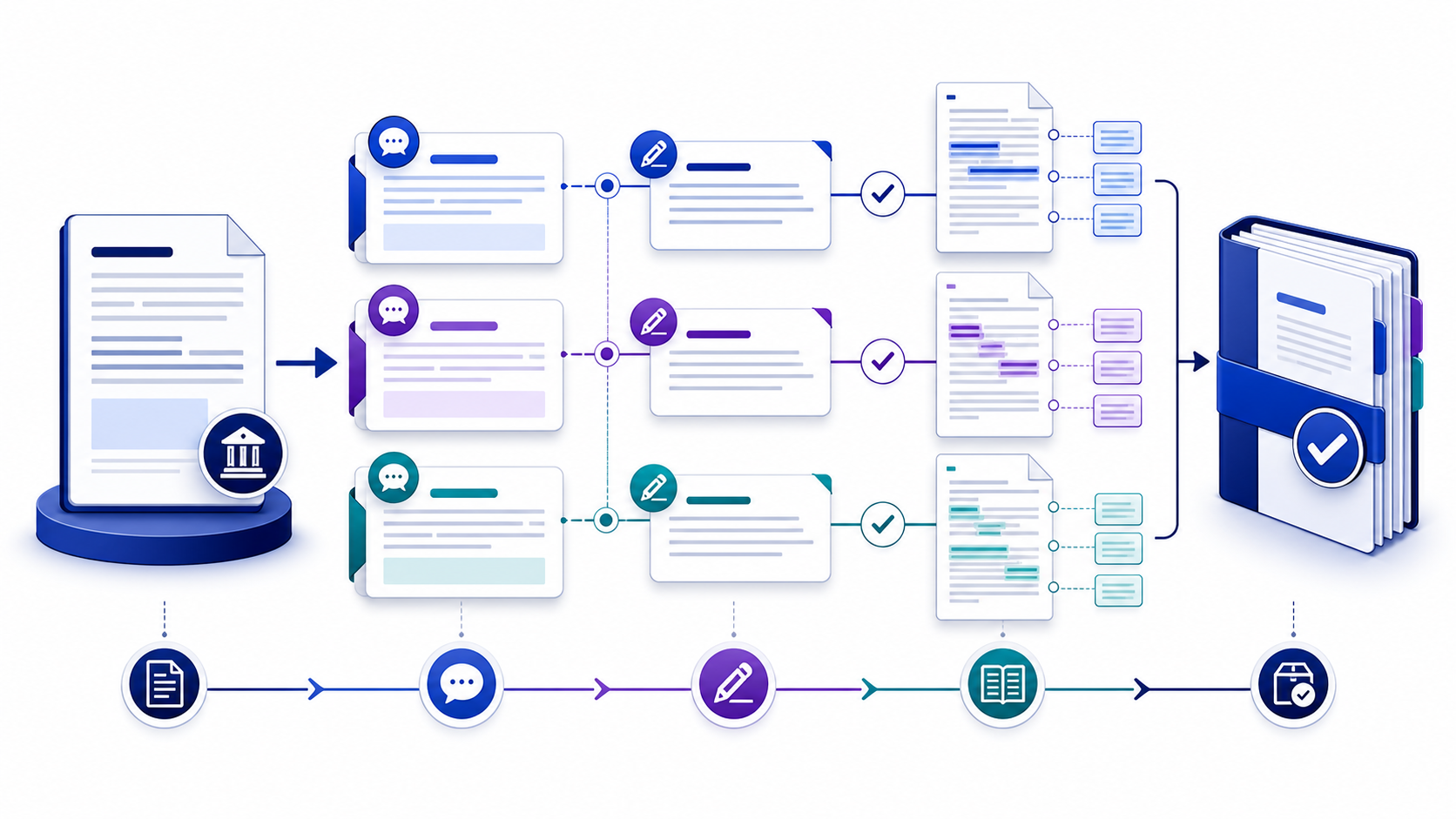
Quick answer: A rebuttal letter, often called a response to reviewers, is the structured document submitted with a revised manuscript. It places every editor or reviewer comment beside the author’s answer, identifies the action taken or evidence used, and tells the evaluator exactly where the manuscript changed.
快速答案:Rebuttal Letter也常称“审稿意见回复信”,是修回稿随附的结构化文件。它把每条编辑或审稿意见与作者回复并列,说明采取的行动或所用证据,并准确指出稿件改动位置。
The word “rebuttal” can sound combative, but the useful goal is not to defeat a reviewer. It is to make the editor’s next decision easier. A strong letter demonstrates that the authors understood each concern, checked the underlying research, revised the paper where appropriate, and explained any reasoned disagreement. The response and the manuscript must tell the same story.
“Rebuttal”听起来像辩驳,但实用目标不是击败审稿人,而是降低编辑下一步判断的成本。好的回复证明作者理解了每项关切、复核了研究、在适当处修改稿件,并解释有依据的不同意见;回复信与稿件必须相互一致。
This is not the same as a submission cover letter or a rejection appeal. A cover letter for journal submission introduces new work before review. A revision rebuttal answers a revise decision. An appeal challenges a final editorial decision and should follow the journal’s appeal policy, not this template. If you need the process context first, read What Is Peer Review?
它不同于首次投稿Cover Letter或拒稿申诉。期刊投稿Cover Letter在评审前介绍新稿件;修回回复信回答修改决定;申诉则质疑最终编辑决定,应遵循期刊申诉政策,而不是套用本模板。若需先了解流程,请阅读什么是同行评审。
Prepare Before You Write动笔前的准备工作
Start with the decision letter, journal instructions and every attachment. Create separate headings for the editor, Reviewer 1, Reviewer 2 and any statistical or specialist reviewer. Copy each comment in full and assign a stable identifier such as E1, R1.1 and R2.3. Do not silently merge similar comments: two reviewers may have reached the same concern for different reasons.
先收集决定信、期刊指南和所有附件。为编辑、审稿人1、审稿人2及统计或专业审稿人分别设标题。完整复制意见,并赋予E1、R1.1、R2.3等稳定编号。不要悄悄合并相似意见,因为不同审稿人可能因不同原因提出同一关切。
- Read globally: identify the decision, deadline, required files, anonymization rules and the editor’s priority concerns.全局阅读:确认决定、截止日期、必需文件、匿名规则与编辑优先关切。
- Classify locally: mark each item as conceptual, methodological, analytical, reporting, editorial or out of scope.逐项分类:标记为概念、方法、分析、报告、文字编辑或超出范围。
- Resolve major issues first: a new analysis can alter results, tables and discussion, making earlier copyedits obsolete.先处理重大问题:新分析可能改变结果、表格与讨论,使先前文字修改失效。
- Maintain one source of truth: use a response matrix to link each comment, author, action, file and final locator.保持单一事实源:用回复矩阵连接每条意见、负责人、行动、文件与最终定位。
- Recheck after pagination: page and line numbers can change after accepting tracked edits or generating a new PDF.分页后复核:接受修订或生成新PDF后,页码与行号可能变化。
Priority rule: Follow the target journal’s current instructions whenever they differ from a generic template. A journal may require a web form, a separate response file, tracked and clean manuscripts, color highlighting, or anonymous documents.
优先规则:目标期刊当前指南与通用模板冲突时,以期刊指南为准。期刊可能要求网页表单、单独回复文件、修订版与清洁版、颜色高亮或匿名文档。
The APAL Point-by-Point Response FormulaAPAL逐点回复公式
Use four elements for each substantive comment. This is a drafting aid, not required journal language. Short copyedits may need only an action and locator; complex methodological disagreements may need several paragraphs and supporting analysis.
每条实质意见可使用四个要素。这是写作辅助,不是期刊强制措辞。简单文字修改可能只需行动与定位;复杂方法分歧可能需要多段论证和支持性分析。
Recognize the concern and its purpose.
State whether you agree, partly agree or disagree.
Describe the exact change, analysis or justification.
Give page, line, section, figure or supplement.
Thank you for highlighting [specific concern]. We [agree / partly agree / respectfully disagree] because [brief evidence-based reason]. To address the concern, we [describe the completed action or analysis]. The revised manuscript now states: “[new or amended text]” (page X, lines Y–Z / Section / Figure / Supplement).
感谢您指出[具体关切]。我们[同意/部分同意/谨慎地不同意],原因是[基于证据的简要理由]。为回应此问题,我们已[说明完成的行动或分析]。修订稿现表述为:“[新增或修订文字]”(第X页Y–Z行/章节/图/补充材料)。
Avoid “Done,” “Corrected as suggested,” or “We disagree” as complete responses. They force evaluators to rediscover the comment, infer the action and search the manuscript. APAL makes the reasoning and the evidence path visible.
不要把“已完成”“已按建议修改”或“我们不同意”当作完整回复。这会迫使评估者重新理解意见、推测行动并搜索稿件。APAL让推理与证据路径一目了然。
Copyable Rebuttal Letter Template可复制的Rebuttal Letter模板
Replace every bracketed field and remove all drafting notes. Preserve reviewer wording unless the journal’s form already displays it. Use distinct formatting for comments, responses and revised text, but do not rely on color alone because files may be printed or viewed accessibly.
替换所有方括号字段并删除写作提示。除非期刊表单已显示原意见,否则保留审稿人原文。用不同格式区分意见、回复与修订文字,但不要只依赖颜色,因为文件可能被打印或以无障碍模式查看。
Dear [Editor’s name / Editor],
Thank you for the opportunity to revise our manuscript, “[title]” (Manuscript ID: [ID]). We appreciate the editor’s and reviewers’ careful comments. We have revised the manuscript and provide a point-by-point response below.
The major changes are: (1) [major change]; (2) [major change]; and (3) [major change]. [Explain how changes are marked and list clean/marked files if required.]
Sincerely,
[Corresponding author on behalf of all authors]
Response to the Editor
Comment E1: [Paste the complete comment.]
Response: [Acknowledge + position + action/evidence + locator.]
Response to Reviewer 1
Comment R1.1: [Paste the complete comment.]
Response: [Answer directly, quote revised text where useful, then give the final locator.]
Response to Reviewer 2
Comment R2.1: [Paste the complete comment.]
Response: [Repeat until every comment is accounted for.]
Four Response Patterns You Can Adapt四种可改写的回复模式
Reviewer: The eligibility criteria do not state how repeat measurements were handled.
Response: Thank you for identifying this omission. We agree that the handling rule is necessary for reproducibility. We added the prespecified rule and clarified that the earliest eligible measurement was used for the primary analysis. The new text appears in Methods, page 6, lines 142–148.
Reviewer: Delete the subgroup analysis because the sample is small.
Response: We agree that the subgroup estimate is imprecise, but believe it remains useful as explicitly exploratory information. Instead of deleting it, we removed inferential language, added confidence intervals, moved the analysis to Supplementary Table S4 and expanded the limitation. These changes appear on page 14, lines 331–339 and in Supplementary Table S4.
Reviewer: Replace the primary outcome with the 30-day measure.
Response: We appreciate the rationale for a shorter follow-up. We respectfully retain the prespecified 90-day primary outcome because it was registered before analysis and reflects the study question. To address the reviewer’s concern, we now report the 30-day measure as a secondary sensitivity analysis; the direction is consistent but uncertainty is wider. The registration and rationale are stated on page 5, lines 109–118; results are on page 11, lines 258–266 and Table S3.
Reviewer: Collect an additional year of follow-up.
Response: We agree that longer follow-up would test durability. Additional prospective follow-up cannot be completed within this revision because consent and the approved protocol ended at 12 months. We have therefore narrowed the conclusion to the observed period, added the limitation and identified longer follow-up as a future study. Changes appear in the Abstract, page 2, lines 41–44, and Discussion, page 16, lines 391–399.
If a comment reveals reader confusion, do not merely tell the reviewer where the answer already existed. The confusion is evidence that the text may be unclear. Improve the signposting or wording, then point to both the clarification and the relevant evidence. For additional examples of constructive reports and author-side interpretation, see the peer review example guide.
若意见暴露读者误解,不要只告诉审稿人答案原本在哪里。误解本身说明文字可能不够清楚。应改进提示或措辞,并同时定位澄清内容与相关证据。更多建设性评审和作者解读范例见同行评审示例指南。
Complete Fictional Rebuttal Letter Example完整虚构Rebuttal Letter示例
Fictional teaching example: The manuscript, data, results, journal and locators below are invented. They demonstrate structure only and must not be presented as real evidence.
虚构教学示例:以下稿件、数据、结果、期刊与定位均为虚构,仅用于演示结构,不得作为真实证据。
Dear Editor,
Thank you for inviting revision of “Remote Writing Groups and Early-Career Researcher Retention” (ISJ-2026-184). We revised the methods, added a sensitivity analysis and narrowed the causal language. Changes are marked in the tracked manuscript; a clean manuscript is also provided.
Editor E1 — Clarify the study’s observational design.
We agree. We replaced “improved retention” with “was associated with retention” throughout and added a design statement to the Abstract and Discussion. See page 2, lines 35–39 and page 15, lines 362–368.
Reviewer 1, Comment R1.1 — Explain how participation was measured.
Thank you for requesting this detail. Participation was defined before analysis as attendance at four or more of six scheduled sessions, based on platform attendance logs rather than self-report. We added the definition, data source and missing-log procedure to Methods, page 6, lines 137–151.
Reviewer 1, Comment R1.2 — Adjust for baseline publication experience.
We agree that prior experience may confound the association. We added the number of publications in the preceding two years to the adjusted model and report the prespecified model beside this sensitivity model. The estimated association changed from 1.31 (95% CI 1.08–1.60) to 1.27 (95% CI 1.03–1.56). The method appears on page 8, lines 188–197; results appear on page 11, lines 265–276 and in Table 3.
Reviewer 2, Comment R2.1 — Randomize participants before drawing any conclusion.
We agree that randomization would provide stronger causal evidence. A new randomized study cannot be created within revision, and the current protocol was observational. We therefore do not claim causality: we revised the title, Abstract, Results and Discussion to describe an association, added residual confounding to the limitations, and proposed a randomized evaluation as future work. See title; page 2, lines 35–39; and page 15, lines 354–377.
Reviewer 2, Comment R2.2 — The retention outcome is unclear.
Thank you. We now define retention as remaining employed or enrolled at the same institution at 12 months, verified in administrative records. We also explain that moves within the institution were not counted as attrition. See Methods, page 7, lines 158–169.
We appreciate the comments, which helped us clarify the design and align the claims with the evidence.
Sincerely,
A. Researcher, corresponding author, on behalf of all authors
Notice that the example does not promise acceptance, claim that every suggestion was followed, or hide a limitation. It converts the decision into an auditable map: comment, reasoning, completed change and locator.
示例没有承诺录用、声称采纳所有建议或掩盖局限。它把编辑决定转化为可审计地图:意见、推理、已完成改动与定位。
Build a Response Matrix Before Formatting the Letter排版回复信前先建立回复矩阵
A matrix prevents attractive prose from concealing incomplete work. One row should represent one actionable comment. Keep status values objective: not started, in progress, blocked, author-verified and final-locator-verified. A comment is not complete merely because a response paragraph exists.
回复矩阵可避免漂亮措辞掩盖未完成工作。每行对应一条可执行意见。状态应客观,例如未开始、进行中、受阻、作者核验、最终定位已核验。仅有回复段落并不代表该意见已经完成。
| ID | Concern | Position | Action / evidence | Final locator | Status |
|---|---|---|---|---|---|
| R1.1 | Eligibility rule unclear | Agree | Add definition and data source | Methods, p. 6, lines 142–148 | Verified |
| R1.2 | Potential confounding | Agree | Add sensitivity model | Table 3; p. 11, lines 265–276 | Verified |
| R2.1 | Request exceeds design | Agree with concern; alternative action | Narrow claim and add limitation | Abstract and Discussion | Locator pending |
Every editor and reviewer identifier appears once in the matrix and once in the final response; no orphan rows and no untracked paragraphs.
每个编辑和审稿意见编号在矩阵和最终回复中均出现一次,无孤立行或未追踪段落。
Every claimed action exists in the clean manuscript, marked manuscript, tables, figures or supplement, with the same numbers and terminology.
每项声称完成的行动都存在于清洁稿、修订稿、表格、图或补充材料,且数字与术语一致。
Tone, Evidence and Ethical Boundaries语气、证据与伦理边界
Write to the editor as the decision-maker while making re-review easy. Use neutral descriptions of the scientific issue. Replace “the reviewer misunderstood” with “we recognize that the original wording did not make this distinction clear.” Replace “this experiment is impossible” with the precise constraint and the compensating action. Politeness does not require agreement; it requires an accurate account of the point and a defensible response.
面向作为决策者的编辑写作,同时降低复审成本。用中性语言描述科学问题。把“审稿人误解了”改为“我们认识到原有措辞未清楚表达该区别”;把“该实验不可能”改为具体限制和补偿行动。礼貌不等于必须同意,而是准确呈现问题并给出可辩护回复。
- Never invent an experiment, analysis, approval, citation, change or locator.绝不虚构实验、分析、批准、引用、改动或定位。
- Do not identify or speculate about anonymous reviewers.不要识别或猜测匿名审稿人身份。
- Do not upload confidential decision letters or unpublished manuscripts to external tools without authorization and appropriate safeguards.未获授权且缺少适当保护时,不要向外部工具上传保密决定信或未发表稿件。
- Verify any AI-assisted draft against the decision letter and manuscript; authors remain responsible for accuracy and disclosure under the journal’s policy.对AI辅助草稿逐项核对决定信与稿件;作者仍须依据期刊政策承担准确性与披露责任。
- If reviewers conflict, flag the conflict for the editor and explain the coherent editorial choice rather than pretending both requests were fully implemented.若审稿意见冲突,应向编辑指出并解释一致的处理选择,而不是假装两项要求都已完全实现。
Common Rebuttal Letter MistakesRebuttal Letter常见错误
Another frequent mistake is adding a strong defense to the letter while leaving the manuscript unclear for future readers. The response can explain the authors’ reasoning, but important clarification belongs in the paper too. Conversely, do not paste pages of manuscript text when one quoted sentence and a precise locator will do.
另一个常见错误是在回复信中强力辩护,却让未来读者面对的稿件仍不清楚。回复可以解释作者推理,但重要澄清也应进入论文。反之,若一句修订文字和准确定位足够,也不应粘贴数页稿件。
Use the Template as a Revision-Control Tool把模板用作修回质量控制工具
Before final formatting, compare the decision letter, response matrix, marked manuscript and clean manuscript side by side. Then check the target journal’s current revision instructions and upload fields. Journal Fit Navigator can help organize journal-policy evidence and submission checks; it does not generate scientific evidence, verify subscription-only records, replace the journal website, or guarantee a publication decision.
最终排版前,把决定信、回复矩阵、修订稿和清洁稿并排比较,再核对目标期刊当前修回指南与上传字段。投刊罗盘可帮助整理期刊政策证据和投稿检查,但不会生成科学证据、核验订阅数据库记录、替代期刊官网或保证发表决定。
Bring the journal URL, decision type, revision deadline, required-file list and unresolved policy questions. Keep confidential reviewer correspondence out of third-party services unless you have permission and suitable protections.
准备期刊URL、决定类型、修回截止日期、必需文件清单与待确认政策问题。除非已获许可并具备合适保护,否则不要把保密审稿通信输入第三方服务。
Final Rebuttal Letter ChecklistRebuttal Letter最终核对表
- The journal’s current revision instructions, deadline and required files were checked.已核对期刊当前修回指南、截止日期与必需文件。
- Every editor and reviewer comment is reproduced or represented exactly as the required form permits.每条编辑与审稿意见均按期刊允许的格式完整呈现。
- Each response states a clear position, completed action or evidence, and final manuscript locator.每项回复均给出明确立场、已完成行动或证据,以及最终稿件定位。
- All numbers, analysis names, table labels and quoted revisions match the submitted files.所有数字、分析名称、表格标签与引用修订文字均与提交文件一致。
- Disagreements are respectful, evidence-based and responsive to the underlying concern.不同意见表达专业、有证据,并回应其底层关切。
- The clean and marked manuscripts contain every change claimed in the letter.清洁稿与修订稿包含回复信声称完成的每项改动。
- Page and line locators were checked after the final PDF or manuscript was generated.最终PDF或稿件生成后已重新核对页码与行号。
- Anonymization, file naming, declarations and upload categories follow journal instructions.匿名、文件命名、声明与上传类别均符合期刊指南。
- No placeholder, internal note, tracked drafting query or unsupported claim remains.未残留占位符、内部注释、写作查询或无证据主张。
- All authors reviewed the scientific responses and approved the revised submission.全体作者已审核科学回复并批准修回投稿。
Rebuttal Letter FAQRebuttal Letter常见问题
It is the structured response submitted with a revised manuscript. It reproduces each comment, explains the response, identifies the change or evidence, and provides a precise locator.
它是修回稿随附的结构化回复,呈现每条意见、解释回应、指出改动或证据并提供准确定位。
Make it as long as needed to answer every comment clearly. Completeness and navigation matter more than an arbitrary limit unless the journal specifies one.
长度以清楚回答每条意见为准。除非期刊规定限制,完整性与可导航性比任意页数更重要。
Yes. State the disagreement respectfully, support it with appropriate evidence, explain any alternative change, and show that you considered the underlying concern.
可以。应礼貌表达分歧,以适当证据支持,说明替代修改,并证明已考虑底层关切。
Usually yes: preserve each comment and respond immediately below it. However, follow a journal’s required online form or response format when provided.
通常需要:保留每条意见并紧接着回复。但若期刊提供指定在线表单或回复格式,应以其为准。
No. A cover letter introduces a manuscript before review. A rebuttal letter answers comments after a revision decision and must map directly to the revised manuscript.
不同。Cover Letter在评审前介绍稿件;Rebuttal Letter在修改决定后回答意见,并须直接映射到修订稿。