
What Is a Cover Letter for Journal Submission?期刊投稿Cover Letter是什么?
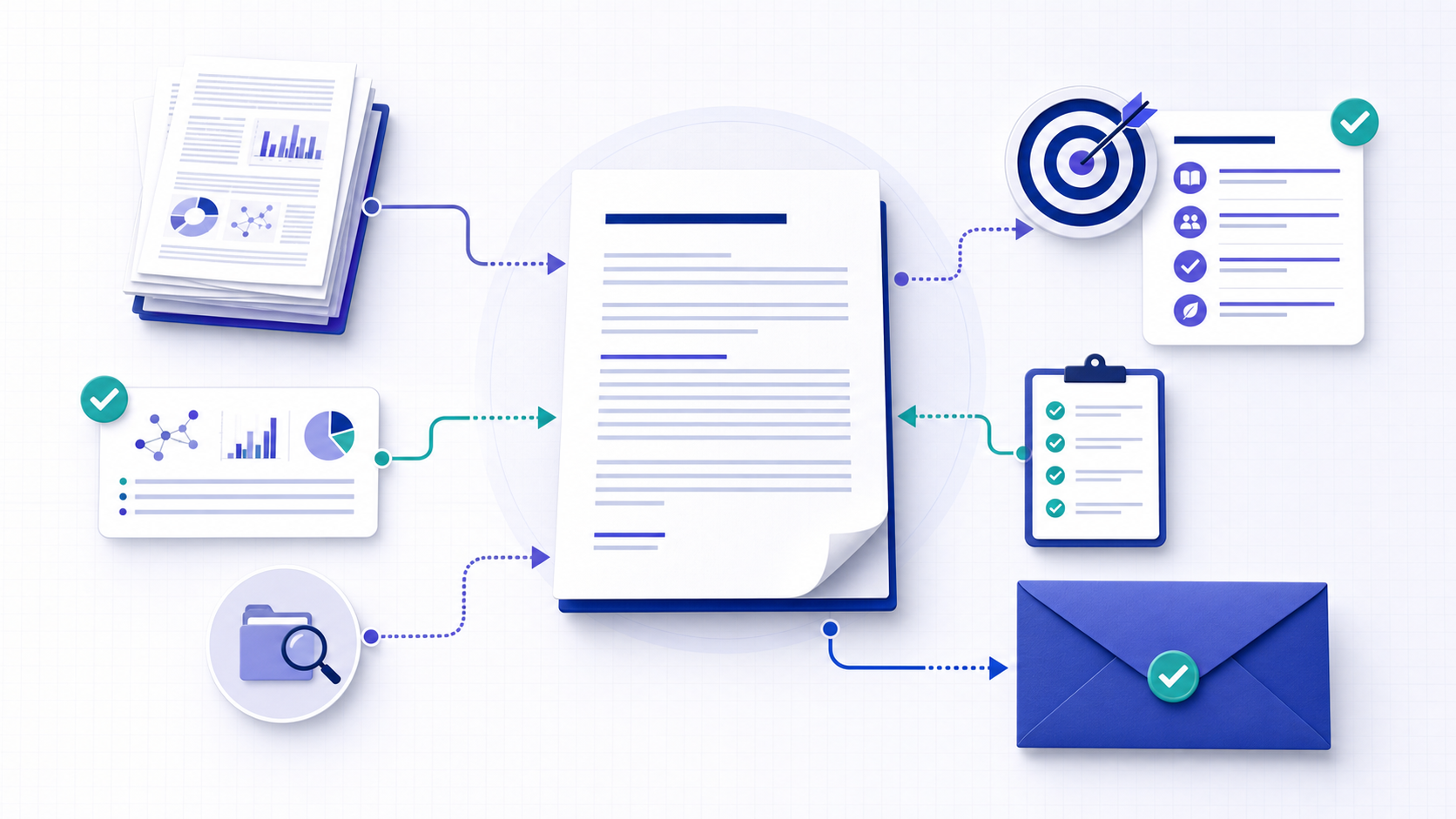
A cover letter for journal submission is a short, editor-facing document that introduces the manuscript, states its main contribution, explains its fit with the target journal and supplies required declarations. It is not a second abstract, a biography or a guarantee that the paper will enter peer review.
期刊投稿Cover Letter是一份面向编辑的简短文件,用于介绍稿件、说明核心贡献与目标期刊适配,并提供期刊要求的声明。它不是第二份摘要、作者传记,也不能保证稿件进入同行评审。
Start with the target journal's current author instructions. Some journals require a separate file, some provide a text box, and some collect declarations elsewhere in the submission system. Taylor & Francis and Springer Nature both advise authors to check journal-specific requirements first and keep the letter focused. The template below is therefore a drafting framework, not a substitute for the journal's rules.
首先查看目标期刊当前的作者指南。有些期刊要求单独文件,有些提供文本框,还有些在投稿系统其他位置收集声明。Taylor & Francis与Springer Nature均建议作者先核对期刊特定要求,并保持来信简洁。因此,下方模板是起草框架,不能替代期刊规则。
Writers often use “cover letter for journal submission” and “cover letter for manuscript submission” interchangeably, so this guide covers both uses. For the wider path from journal metrics and indexing to scope and submission decisions, use the Journal Impact Factor and journal-selection guide.
“期刊投稿 Cover Letter”和“稿件投稿 Cover Letter”通常指同一类编辑来信,因此本指南同时适用于两种表达。若要了解从期刊指标、数据库收录到范围适配与投稿决策的完整路径,请阅读Journal Impact Factor与选刊指南。
Prepare These Inputs Before You Write动笔前准备这些输入
A persuasive letter is built from verifiable manuscript and journal evidence. Collect the following before drafting so you do not invent claims or paste vague praise.
有说服力的来信来自可核验的稿件与期刊证据。起草前先收集以下信息,避免编造主张或粘贴空泛赞美。
Do not assume every declaration belongs in every letter. ICMJE recommends that a cover letter or submission form disclose related or potentially redundant work, relevant relationships and activities, authorship approval and corresponding-author contact when those items are not captured elsewhere. Other disciplines and journals may use different forms. Follow the target journal and applicable reporting standards.
不要假设每项声明都必须写进每封信。ICMJE建议,当投稿系统其他位置未收集时,Cover Letter或投稿表格应披露相关或可能重复的作品、相关关系与活动、作者批准以及通讯作者联系方式。其他学科与期刊可能使用不同表格,应遵循目标期刊和适用报告规范。
Cover Letter Structure, Paragraph by ParagraphCover Letter逐段结构
- Header and salutation页首与称呼Add the date, editor name when reliably known, editor role, journal name and a professional salutation. “Dear Editors” is safer than guessing a name.写明日期、可靠获知时的编辑姓名与职务、期刊名称及专业称呼。不确定姓名时,“Dear Editors”比猜测更稳妥。
- Submission statement投稿说明State the exact manuscript title, article type and journal. Make the editor's administrative task easy.准确写出稿件题目、文章类型与目标期刊,便于编辑快速识别投稿。
- Problem, approach and main finding问题、方法与主要发现Use two or three sentences: the unresolved problem, what you did and the most important supported result. Preserve qualifications from the manuscript.用两三句话说明未解决问题、采用的方法和最重要且有证据支持的结果,并保留稿件中的限定条件。
- Significance and journal fit研究意义与期刊适配Explain who can use the result and connect it to the journal's stated audience or scope. Specific fit beats generic praise.说明哪些读者能够使用该结果,并把它与期刊明确的读者或收稿范围连接起来。具体适配优于泛泛赞美。
- Declarations and close声明与结尾Include only accurate required statements, identify the corresponding author, thank the editor and sign with verifiable contact details.仅写入准确且必需的声明,明确通讯作者,感谢编辑,并使用可核验联系方式署名。
Length rule: one focused page is a useful default, not a universal law. If the journal requests questions, reviewer information, related-manuscript explanations or a special-issue statement, completeness takes priority over forcing the document into an arbitrary length.
篇幅规则:一页是实用默认值,并非普遍硬性规定。若期刊要求回答问题、提供审稿人信息、解释相关稿件或说明专刊,完整性优先于强行压缩到任意长度。
Cover Letter for Journal Submission Template期刊投稿Cover Letter可套用模板
Replace every bracketed field. Delete optional sentences that are not true or not requested; never leave alternatives in the submitted version.
替换所有方括号字段。删除不真实或未被要求的可选句,正式提交版本中不要保留多个备选表达。
[Date]
[Editor name or “Editors”]
[Journal name]
Dear [Dr/Professor surname or Editors],
Please consider our [article type], “[exact manuscript title],” for publication in [journal name].
[One sentence defining the problem or gap.] We [briefly describe the design, material or method] and found that [state the principal result with necessary qualification]. These findings [explain the practical or scholarly significance without exaggeration].
The manuscript fits [journal name] because [connect the question, article type and result to a stated scope area or audience]. We expect it will be relevant to readers working on [specific reader problem or field].
We confirm that [insert the journal's required originality, author-approval and competing-interest statements exactly as applicable]. [Disclose related manuscripts, prior editor discussion, ethics, funding, data or AI use when required.]
Thank you for considering our manuscript. Correspondence should be addressed to [name, affiliation, email].
Sincerely,
[Corresponding author name and contact details]
[日期]
[编辑姓名或“Editors”]
[期刊名称]
尊敬的[编辑姓氏或Editors]:
谨提交我们的[文章类型]《[准确稿件题目]》,申请在[期刊名称]发表。
[一句话界定问题或空白。]我们[简述设计、材料或方法],发现[在必要限定下陈述主要结果]。这些发现[不过度夸大地说明实践或学术意义]。
该稿件与[期刊名称]适配,因为[把问题、文章类型与结果连接到明确的范围或读者]。我们预计它将与研究[具体读者问题或领域]的读者相关。
我们确认[按实际情况写入期刊要求的原创性、作者批准与利益冲突声明]。[期刊要求时披露相关稿件、既往编辑沟通、伦理、资助、数据或AI使用。]
感谢您审阅本稿。投稿通信请联系[姓名、机构、邮箱]。
此致
[通讯作者姓名与联系方式]
Journal Submission Cover Letter Example期刊投稿Cover Letter完整示例
Hypothetical example: the journal, study and results below are invented only to demonstrate structure and tone. Replace them with accurate information from your own manuscript and target journal.
假设示例:下列期刊、研究与结果均为演示结构和语气而虚构。请使用自己稿件与目标期刊的准确信息替换。
24 August 2026
Editors
Journal of Urban Heat Methods
Dear Editors,
Please consider our Original Research Article, “Evaluating Low-Cost Sensor Calibration for Neighborhood Heat Mapping,” for publication in the Journal of Urban Heat Methods.
Neighborhood heat studies increasingly use low-cost sensors, but calibration differences can make measurements difficult to compare. We evaluated three calibration workflows across a hypothetical 12-week field campaign and found that the pre-registered co-location workflow reduced between-device measurement disagreement under the tested conditions. The result offers researchers a transparent way to plan calibration and report uncertainty; it does not establish performance outside the evaluated devices, climate and protocol.
The manuscript aligns with the journal's hypothetical focus on reproducible environmental measurement and method validation. It may be useful to readers designing distributed heat-monitoring studies or evaluating uncertainty in community sensor networks. The article includes the full protocol, sensitivity checks and a reusable reporting table.
We confirm that this manuscript is original, has not been published elsewhere and is not under consideration by another journal. All authors approved the manuscript and its submission. The authors declare no competing interests. The related conference abstract is identified in the manuscript and supplied with this submission. No generative AI tool was used to produce research data, analyses or manuscript text.
Thank you for considering our manuscript. Correspondence should be addressed to Dr. Maya Chen, Department of Environmental Methods, Example University, maya.chen@example.edu.
Sincerely,
Maya Chen, PhD
Corresponding author
2026年8月24日
编辑团队
Journal of Urban Heat Methods
尊敬的编辑:
谨提交我们的原创研究论文《Evaluating Low-Cost Sensor Calibration for Neighborhood Heat Mapping》,申请在Journal of Urban Heat Methods发表。
社区热环境研究越来越多地使用低成本传感器,但校准差异可能使测量难以比较。我们在一项为期12周的假设现场研究中评估三种校准流程,发现预注册的共址校准流程在测试条件下降低了设备间测量差异。该结果为研究人员规划校准与报告不确定性提供透明方法,但不能证明其适用于所评估设备、气候和方案以外的条件。
该稿件与本示例期刊关于可复现环境测量和方法验证的假设范围一致,可能对设计分布式热环境监测研究或评估社区传感器网络不确定性的读者有用。文章提供完整方案、敏感性检查与可复用报告表。
我们确认本稿件为原创,未在其他地方发表,目前未由其他期刊审理。全体作者均批准稿件及本次投稿。作者声明不存在利益冲突。相关会议摘要已在稿件中说明并随投稿提供。研究数据、分析与稿件文本未使用生成式AI工具制作。
感谢您审阅本稿。投稿通信请联系Example University环境方法系Maya Chen博士,maya.chen@example.edu。
此致
Maya Chen博士
通讯作者
Why this example works: it identifies the submission immediately, gives one bounded finding, names a specific audience, explains fit without flattering the journal, and makes declarations concrete. It also distinguishes a related conference abstract rather than hiding it. Your journal may require different wording or separate forms.
这个示例有效之处在于:立即识别投稿,用有边界的一项发现说明贡献,指出具体读者,不用奉承式语言解释适配,并把声明写具体;它还主动说明相关会议摘要,而不是隐瞒。你的期刊可能要求不同措辞或单独表格。
How to Write a Credible Journal-Fit Paragraph如何写可信的期刊适配段落
| Weak wording薄弱表达 | Why it fails问题 | Stronger pattern更强结构 |
|---|---|---|
| “Your prestigious journal is perfect.”“贵刊权威且完美适合。” | Generic praise supplies no fit evidence.泛泛赞美没有适配证据。 | Name the scope topic and reader task the study addresses.指出研究对应的范围主题与读者任务。 |
| “This groundbreaking study will transform the field.”“这项开创性研究将改变领域。” | Unbounded novelty and impact claims invite skepticism.无边界的新颖性与影响主张容易引起质疑。 | State the comparison, result and conditions that support significance.写出支持研究意义的比较、结果与条件。 |
| “The paper is relevant to all readers.”“论文与所有读者相关。” | No paper serves every reader.没有论文适合所有读者。 | Identify the researchers, practitioners or decision makers who face the problem.明确面临该问题的研究人员、实践者或决策者。 |
Read the aims and scope, article-type description and recent table of contents. Then write one sentence that connects your question to a stated theme and another that connects your result to a reader need. Do not cite impact factor as the reason for fit. Metrics can support journal research, but scope, audience, article type and policy compatibility are the relevant editorial signals. If you are still comparing candidates, organize this evidence before drafting the final letter.
阅读收稿范围、文章类型说明与近期目录,然后用一句话把研究问题连接到明确主题,再用一句话把研究结果连接到读者需求。不要把影响因子当作适配理由。指标可辅助期刊调研,但范围、读者、文章类型与政策兼容性才是相关编辑信号。若仍在比较候选期刊,应先整理这些证据,再起草最终来信。
Prepare the manuscript title, abstract, article type, research field, candidate journal URLs and policy questions. Journal Fit Navigator can help organize comparison evidence for your decision and cover-letter fit paragraph; it does not write the letter, replace journal instructions, access subscription-only databases or guarantee editorial outcomes.
准备稿件题目、摘要、文章类型、研究领域、候选期刊URL与政策问题。投刊罗盘可帮助整理选刊及Cover Letter适配段落所需的比较证据,但不会代写来信、替代期刊指南、访问订阅数据库或保证编辑结果。
Originality, Ethics, Conflicts and AI Disclosures原创性、伦理、利益冲突与AI披露
Declarations are factual records, not ceremonial language. Cross-check them against the manuscript, submission form, author agreements and journal policy. Never claim “no conflicts” until every author has completed the relevant disclosure process. If related work exists, name it and explain the relationship. If participant research required approval or consent, use the approved identifier and wording where the journal requests it.
声明是事实记录,不是礼仪用语。应与稿件、投稿表、作者协议及期刊政策交叉核对。在每位作者完成相关披露前,不要声称“无利益冲突”。若存在相关作品,应明确指出并解释关系;若受试者研究需要批准或同意,应在期刊要求的位置使用已批准的编号与措辞。
AI policies are evolving and differ across publishers and disciplines. ICMJE's current recommendations say authors should disclose at submission whether AI-assisted technologies were used and describe their use in the cover letter and submitted work when applicable. The target journal's policy remains decisive. Do not list an AI system as an author, do not upload confidential manuscript material to a service without appropriate authorization and safeguards, and keep humans responsible for accuracy, originality and citations.
AI政策仍在变化,不同出版社与学科要求不同。ICMJE当前建议作者在投稿时披露是否使用AI辅助技术,并在适用时于Cover Letter及稿件中说明使用方式。最终仍以目标期刊政策为准。不要把AI系统列为作者,不要在缺少适当授权与保护时把保密稿件上传到服务,并由人类对准确性、原创性与引用负责。
For what happens after editorial screening, including reviewer roles and decision paths, see What Is Peer Review? For practical reviewer-comment models, use the peer review example page.
若要了解编辑初筛之后的流程,包括审稿人角色与决定路径,请阅读What Is Peer Review?;若要查看实用审稿意见范例,请使用peer review example页面。
Common Cover Letter MistakesCover Letter常见错误
- Copying the abstract: the editor needs a concise significance-and-fit argument, not duplicated content.照抄摘要:编辑需要简洁的意义与适配论证,而不是重复内容。
- Using the wrong journal or editor name: template residue signals poor quality control.写错期刊或编辑姓名:模板残留说明质量控制不足。
- Overclaiming novelty: words such as “first,” “breakthrough” and “revolutionary” require unusually strong evidence.夸大新颖性:“首次”“突破性”“革命性”等词需要非常强的证据。
- Hiding related work: disclose overlapping manuscripts, preprints or conference reports according to policy.隐瞒相关作品:依据政策披露重叠稿件、预印本或会议报告。
- Inventing declarations: a generic template cannot know your authorship, conflicts, ethics, funding or data status.编造声明:通用模板无法知道你的作者、冲突、伦理、资助或数据状态。
- Sending a universal letter: replace journal name and fit evidence for every submission; do not mass-submit the same manuscript.发送万能来信:每次投稿都要替换期刊名称与适配证据,且不要同时向多本期刊提交同一稿件。
Submission-Ready Cover Letter Checklist可提交Cover Letter最终核对表
- The target journal's current instructions were checked on the submission date.已在投稿日期核对目标期刊当前指南。
- Journal name, editor name, manuscript title and article type exactly match the submission record.期刊名、编辑名、稿件题目与文章类型和投稿记录完全一致。
- The main finding is accurate, qualified and consistent with the abstract and results.主要发现准确、有适当限定,并与摘要和结果一致。
- The fit paragraph names a real scope area and a specific reader need.适配段落指出真实范围主题与具体读者需求。
- Every originality, authorship, conflict, ethics, funding, data and AI statement was verified.每项原创性、作者、冲突、伦理、资助、数据与AI声明均已核验。
- Related manuscripts, preprints, reports or prior editor discussions are disclosed where required.已按要求披露相关稿件、预印本、报告或既往编辑沟通。
- The letter contains no abstract copy, false praise, unsupported superlatives or template placeholders.来信不含摘要复制、虚假赞美、无证据最高级表达或模板占位符。
- Corresponding-author details are current, and all authors approved the submission.通讯作者信息有效,且全体作者批准投稿。
- The final file or text-box version follows the requested format and has been proofread.最终文件或文本框版本符合格式要求并已校对。
Read the final letter beside the submission form. A statement collected in a dedicated field may not need duplication, but it must not contradict the letter. Save the journal instructions, final letter and submission confirmation as a dated record.
把最终来信与投稿表并排核对。专用字段已收集的声明可能无需重复,但不得与来信矛盾。保存期刊指南、最终来信与投稿确认,形成带日期的记录。
Cover Letter for Journal Submission FAQ期刊投稿Cover Letter常见问题
Include the manuscript title and article type, a concise statement of the research question and main finding, why the work matters to the journal's readers, why it fits the journal, and every declaration the journal requests.
包括稿件题目与文章类型、研究问题与主要发现的简洁说明、研究对期刊读者的重要性、期刊适配理由,以及期刊要求的每项声明。
Unless the journal specifies otherwise, keep it focused and usually within one page. Journal instructions override any general template.
除非期刊另有要求,应保持聚焦,通常控制在一页以内。期刊指南优先于任何通用模板。
No. Translate the manuscript into an editor-facing argument: problem, result, significance and journal fit. Do not paste the abstract or repeat methods in detail.
不建议。应把稿件转化为面向编辑的问题、结果、意义与期刊适配论证,不要粘贴摘要或重复详细方法。
Only when the journal requests or permits it, and provide objective expertise or conflict reasons. Use the submission system's dedicated fields when available.
仅在期刊要求或允许时提供,并给出客观的专业领域或冲突理由;投稿系统有专用字段时优先使用。
Follow the target journal's current policy. Some standards and journals require disclosure at submission, so describe the tool and purpose accurately when required and retain human responsibility for the manuscript.
遵循目标期刊当前政策。一些标准与期刊要求投稿时披露,因此在需要时准确说明工具与用途,并由人类对稿件负责。